In this article
TL;DR
Retail qualitative research gives merchandising, brand, and insights teams the contextual "why" behind shopper behavior that transaction data and surveys cannot reach. Sales data tells you what happened. Qualitative research methods tell you the reasoning, consumer attitudes, and emotions behind it.
Four primary methods, four different trade-offs: in-depth interviews surface individual decision-making logic; focus groups reveal consumer behavior and category norms; ethnographic research captures real-world shopper context; AI-moderated video interviews deliver depth at the scale and speed that traditional qualitative market research methods cannot match.
Method selection follows the decision window. The tighter the timeline and the broader the geographic scope, the more an asynchronous AI-moderated approach becomes the only credible option.
Conveo compresses the retail research cycle from weeks to days: AI-led video interviews run in parallel across hundreds of participants, with thematic analysis that automatically captures facial expressions and tone shifts, delivering stakeholder-ready research findings before the decision closes.
Retail qualitative research arrives weeks after the decisions it was supposed to inform. Merchandising planners lock shelf layouts, promotional teams finalize campaign calendars, and category managers commit to ranging choices, all before the shopper feedback lands. By the time an agency delivers findings from a six- to twelve-week study, the organization has already moved on. Surveys close that timing gap but open a different one: they deliver numerical data on what shoppers did, rarely why they did it, and almost never what would have changed their behavior. For a small team serving category, brand, marketing, and commercial stakeholders simultaneously, continuous moderated interviews have never been operationally viable.
The constraints that made qualitative retail research slow are no longer structural factors. AI-led interviewing runs hundreds of conversations in parallel across markets and languages. Qualitative data analysis that once required weeks of manual coding now surfaces thematic patterns as recordings land. The result is a fundamentally different model. Consumer insights can now move at the pace of retail decisions rather than trailing behind them.
This article covers the primary methods retail teams use to understand shopper behavior, how each method trades off speed against depth and traceability, and how to choose among them based on decision windows and research objectives. The right method depends on what you need to learn, how fast you need to act, and what proof your stakeholders require.
What retail qualitative research actually measures
Retail qualitative research is the study of shopper motivations, customer behavior, and decision-making processes through open-ended conversations, observations, and contextual inquiry. It produces the nuanced insights that structured quantitative data cannot reach.
Quantitative research tells you what happened: purchase rates, basket size, and quantitative data on category conversion. Brand tracking captures shifts in consumer preferences over time but stops short of explaining the reasoning behind those shifts. Sales data and numerical data reveal outcomes, not causes. Qualitative data analysis picks up where those sources leave off, surfacing consumer attitudes, emotional triggers, and the friction points that drive the numbers you are already measuring.
Four questions sit at the core of what retail qual is built to answer:
Why do shoppers choose one brand over another? Not which brand won, but what consumer sentiments, habits, or associations tipped the decision.
What influences impulse purchases? Studying customer behavior in retail stores reveals that impulse decisions follow patterns of placement, packaging, and emotional state that surveys cannot reconstruct after the fact.
How do packaging and shelf placement affect consumer expectations? Shoppers form impressions in seconds. Qualitative insights capture the language and logic behind first reactions before they are rationalized away.
What pain points exist in the customer journey? Where do shoppers hesitate, backtrack, or abandon? What makes a category feel confusing, or a product feel inaccessible?
These questions feed directly into decisions with real commercial stakes: how products are shelved, how packaging is designed and iterated, how promotions are framed, and how the customer journey is structured from awareness through post-purchase.
Comparison table: Three approaches to retail qualitative research
| Dimension | Traditional Agency Qual | Survey Platforms | Conveo |
|---|---|---|---|
| Turnaround Time | 6–12 weeks from brief to findings | Days to weeks | Days |
| Depth of Insight | High: skilled moderators probe adaptively | Low: scripted questions miss the why | High: Video-first AI moderation adapts based on responses |
| Output Traceability | Findings in decks; limited video evidence | No video; text responses only | Every finding links to video clips and verbatim quotes |
| Multi-Market Support | Requires separate vendors per region | Limited language support | 50-plus languages, vetted global panels |
| Operational Overhead | High: recruiting, scheduling, moderation, analysis | Low: self-serve surveys | Low: built-in recruitment, fraud filtering, incentive management |
| Cost Model | High: full-service agency engagements ($50K-200K+ per study) | Low: per-response pricing | Up to 75% lower than agency-delivered programs. Enterprise credits-based model. |
4 common retail qualitative research methods
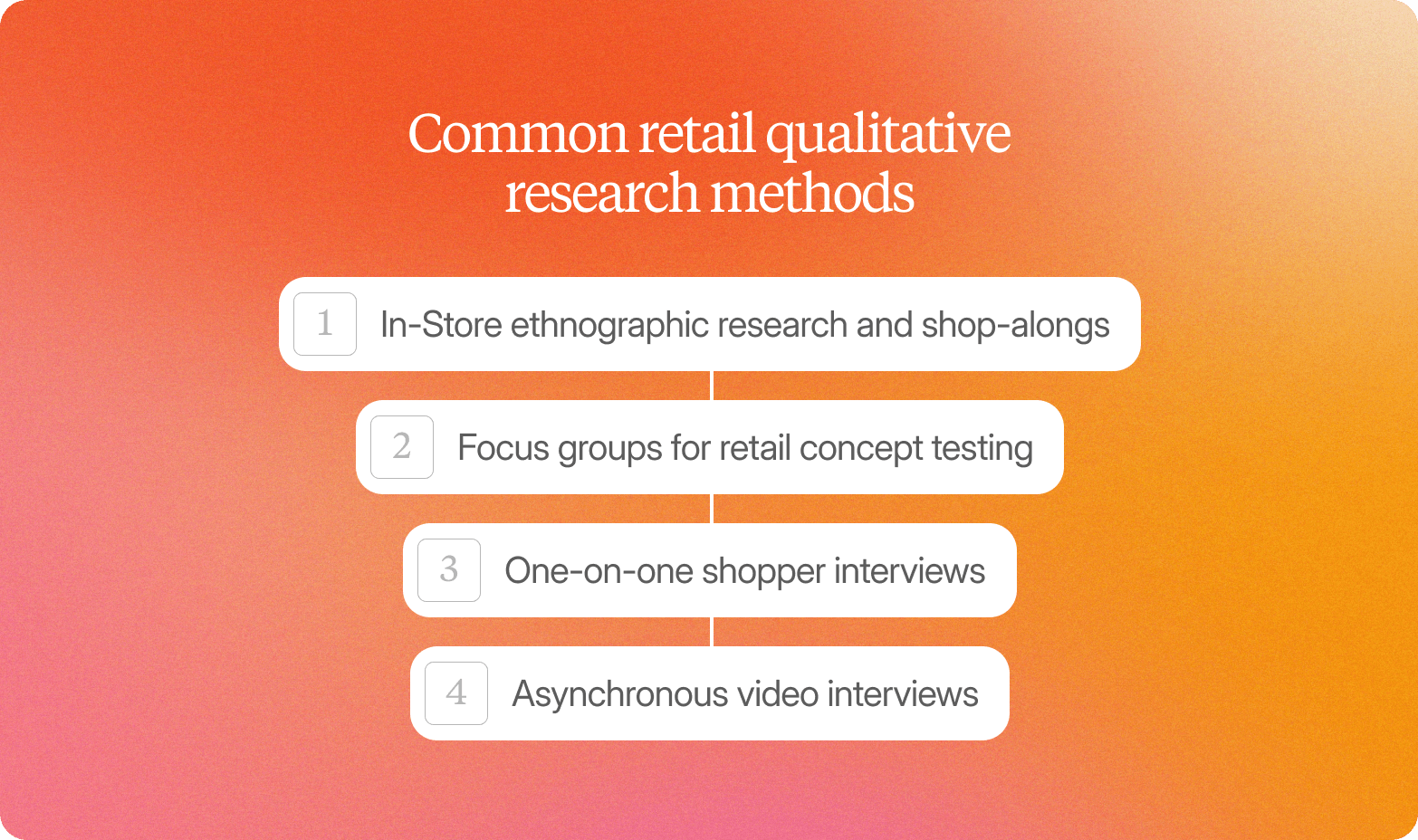
Retail teams use four primary qualitative research methods, each with distinct tradeoffs for speed, depth, and operational overhead.
In-Store ethnographic research and shop-alongs
Ethnographic research places a researcher alongside a shopper during an actual retail trip, observing shelf interactions and capturing impulse decisions and hesitations in real time. When a shopper reaches for one product, pauses at a competitor’s packaging, and switches back, that moment is visible in a way it simply is not when you ask someone to recall their shopping behavior two days later.
Shelf navigation, packaging comprehension, and in-store signage effectiveness all depend on the physical environment to surface. Shop-alongs are particularly valuable for understanding which visual cues drive attention and where comprehension breaks down at the point of decision. The defining limitation is geographic: coordinating field teams, moderators, and retailer access across multiple markets turns even a modest ethnographic research program into a multi-week research investment before a single finding lands.
Focus groups for retail concept testing
Focus groups in qualitative research surface rapid collective reactions to concepts before they reach the shelf. A single two-hour session can reveal diverse consumer attitudes, expose unexpected objections, and show whether a concept lands differently across shopper profiles, making them well-suited for early-stage exploratory research and concept validation.
The structural limitations are well-known. Group dynamics create groupthink pressure: research respondents hear each other’s opinions before forming their own, which compresses the range of qualitative data collected. Scheduling six to ten screened participants in the same session also limits how often teams can realistically run them, making focus groups a poor fit for decisions that require speed.
One-on-one shopper interviews
One-on-one in-depth interviews pursue the individual story: why this shopper switched brands, what made a new product feel worth a price premium, or what unspoken hesitation keeps them from entering a new category. When a participant speaks only to a moderator, social pressure drops, and the conversation moves toward real consumer motivations rather than the socially acceptable version.
Adaptive probing is where the most valuable consumer insights emerge: not in the prepared answer, but in the follow-up to the follow-up. This is where brand-switching stories unfold in full and where barriers to category entry reveal themselves as more specific than “price” or “awareness.” The constraint is scale: coordinating research respondents and skilled moderators across multiple markets can push timelines into the weeks.
Asynchronous video interviews
Asynchronous video interviews remove the scheduling constraint entirely. Research respondents open a link at their convenience and respond on camera to a structured set of questions. The critical distinction from a video survey lies in what happens next: the AI moderator adapts its follow-up probes based on what each participant actually says, rather than a fixed script. That adaptive depth sets this method apart from text-response platforms and makes the output usable for teams that need more than frequency counts.
Because sessions run in parallel, a team can gather 100 video interviews across five markets in the time it takes to schedule a single focus group. The resulting qualitative data captures tone, facial expression, and visible hesitation: multimodal signals that traditional retail research methods miss. Conveo is built around this approach: the platform conducts video sessions across 50-plus languages, adapts probing in real time, and feeds every session into thematic analysis without manual tagging. For CPG and FMCG research teams managing global product portfolios, this means packaging feedback and purchase-motivation data are collected across markets simultaneously, with stakeholder-ready research findings available within days.
The right method depends on your decision timeline, the depth of required evidence, and whether you need insights from one market or fifty.
How to choose the right research method
Choosing a retail qualitative research method requires matching four variables with your research objectives.
Decision window
Eight or more weeks of support agency-led ethnographic research or focus groups. Two to four weeks is ideal for asynchronous video interviews running in parallel, with qualitative data analysis beginning as recordings land. If you have days, quantitative surveys provide directional input on consumer preferences but miss the why. They are a starting point, not a substitute for in-depth understanding.
Required evidence depth
Stakeholders who need video proof and verbatim quotes to make informed decisions and align strategies need video interviews or ethnographic research. Exploratory research questions likely to surface unexpected consumer behavior require adaptive analysis methods, not scripted surveys.
Geographic scope
Single-market studies can use any method. Multi-market studies spanning three or more countries favor asynchronous video interviews with native-language support, since coordinating human moderators across time zones adds weeks and consistency risk. A research strategy designed for a US target audience may not transfer to Germany or Japan without cultural localization of discussion guides.
Knowledge continuity
One-off studies answer a single question. Research programs that maintain a structured insight library allow consumer data from previous studies to inform new research objectives. Longitudinal surveys alongside recurring qualitative programs compound strategic insights in ways that periodic projects cannot.
For teams whose decision windows are tight, geographic scope is broad, or stakeholder evidence requirements are high, Conveo is the platform built to meet those criteria simultaneously. Most retail teams need a portfolio approach: rapid video interviews for continuous feedback, and periodic ethnographic research or focus groups for deep-dive category exploration.
4 Retail qualitative research study templates
These qualitative research examples cover four core use cases that most shopper insights teams run on a recurring basis, spanning qualitative research topics for the retail industry across the full customer journey. Each requires distinct research objectives, screeners, and output formats.
Shopper journey mapping
Objective: understand the end-to-end shopping experience from awareness to post-purchase, including triggers, channels, and pain points at each stage. Recommended method: one-on-one depth interviews or asynchronous video interviews, which work particularly well here because shoppers can record reactions immediately after a purchase or return rather than reconstructing them days later. Output: journey map with pain points and emotional states, video clips of specific shopper frustrations, and verbatim quotes by journey phase. Conveo’s consumer behavior research methodology covers the study design for this use case in more detail.
Packaging and shelf comprehension
Objective: test whether packaging communicates brand perception clearly within a competitive landscape before production commitments. Recommended method: video interviews with shelf mockups, or in-store ethnographic research where physical context is essential. Video captures facial reactions to packaging stimuli in a way that text-based methods cannot, surfacing hesitation that participants may not articulate directly. Output: highlight reel of shopper reactions, comprehension scores by design element, and recommendations grounded in verbatim consumer data. Conveo’s concept and creative testing methodology cover shelf and packaging study design in detail.
Promotional messaging testing
Objective: validate marketing campaign claims before launch to confirm they resonate with target customers and drive the right behavior. Recommended method: asynchronous video interviews to test multiple variants in parallel against the target market. Output: message effectiveness summary ranked by variant, with video evidence behind each recommended edit.
Brand switching and loyalty drivers
Objective: understand what triggers shoppers to leave a brand and what sustains loyalty. Recommended method: one-on-one in-depth interviews: switching behavior is tied to emotionally loaded moments that adaptive probing surfaces more reliably than any scripted research method. Output: switching triggers by shopper profile, loyalty drivers ranked by frequency and intensity, and retention strategy recommendations grounded in verbatim qualitative data.
Trust-first AI guidance for retail qualitative research
AI-moderated retail qualitative research compresses timelines from weeks to days, but only if stakeholders trust the outputs. The adoption barrier is the trust gap: AI-generated summaries without a traceable connection to real consumer voices cannot be defended in a debrief and will not produce the actionable insights teams can act on.
Real human participants, not synthetic avatars
Platforms that use synthetic personas produce fabricated consumer sentiment that does not reflect real customer behavior. Conveo uses real participants in real video conversations. No avatars, no synthetic responses.
Video evidence and verbatim traceability
Every finding must link back to a video clip and a verbatim quote. Detailed insights without a traceable source are summaries, not research findings. When a stakeholder asks, “Where does this come from?”, the answer needs to be a timestamp and a face.
"Real conversations, real emotions, that's what makes Conveo different from every survey tool."
CMI Manager, Edgard & Cooper
Adaptive probing and thematic analysis
AI moderation that adapts follow-up questions based on what shoppers say produces a nuanced understanding that scripted surveys cannot reach. If a shopper mentions price sensitivity, the AI probes why price matters and what would justify a premium, the kind of consumer context that drives packaging and promotional decisions. Thematic and content analyses of real video conversations outperform qualitative analyses of static survey responses on precisely these questions.
Fraud filtering and participant verification
Built-in data collection safeguards, attention checks, and participant verification reduce low-quality responses before they contaminate the research data.
How Conveo compresses retail research timelines
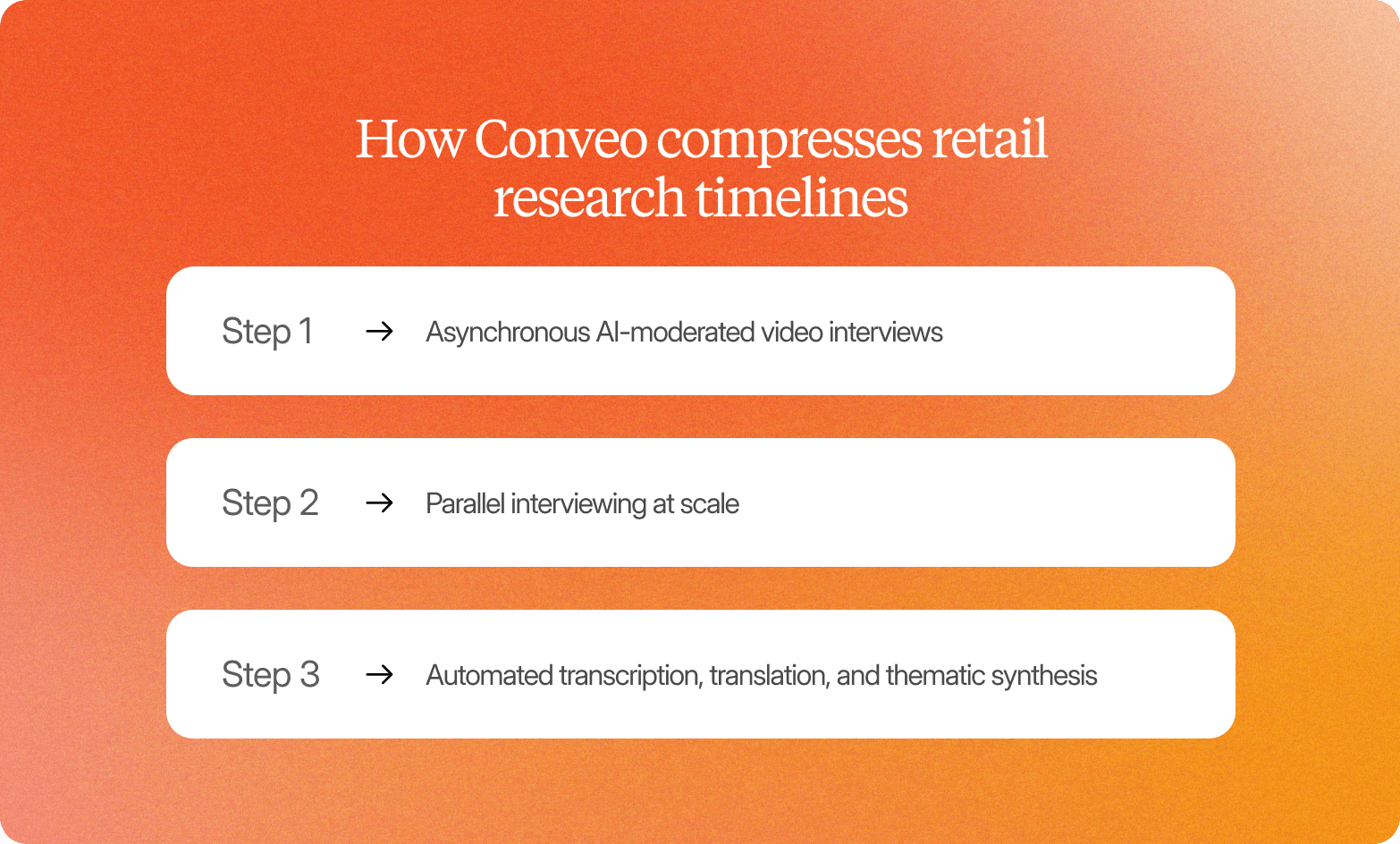
Traditional retail qualitative research via agencies takes 6–12 weeks from brief to findings. The Conveo platform compresses that timeline to days without sacrificing depth or traceability.
Step 1: Asynchronous AI-moderated video interviews
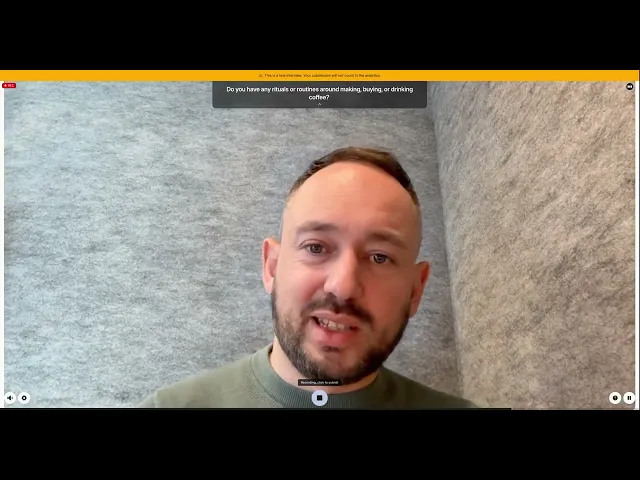
Shoppers record video responses on their own schedule. Conveo’s videoAI moderation adapts follow-up probes based on what each shopper actually says, producing the in-depth understanding that structured surveys miss. No scheduling friction, no moderator availability constraints.
How AI moderation adapts in a real shopper interview
Step 2: Parallel interviewing at scale
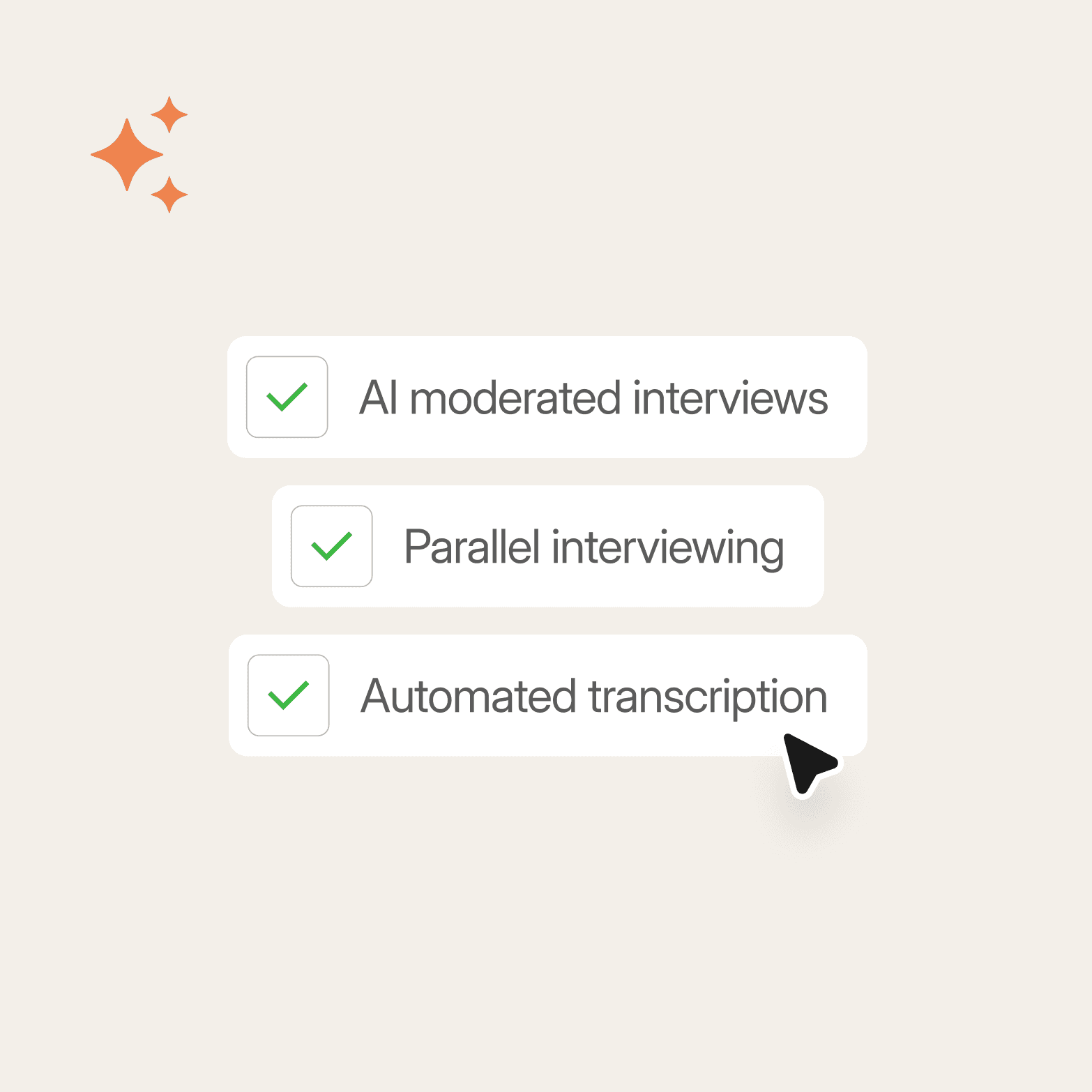
Ten conversations or 1,000 run simultaneously, matching peak research demand during launch planning. Built-in recruitment, fraud filtering, and incentive management remove the operational overhead that typically adds weeks to the data collection phase before a single interview begins.
Step 3: Automated transcription, translation, and thematic synthesis
Recordings are transcribed and translated across 50-plus languages. AI-assisted thematic analysis and content analysis compress qualitative analysis from weeks to hours. Every finding links back to the original video clip, so stakeholders can interrogate the research data directly rather than accepting a summary at face value. Conveo is SOC 2-certified and GDPR-compliant, with EU-region data hosting for enterprise procurement requirements.
Retail teams can collect consumer insights before merchandising decisions, launch calendars, and promotional plans are locked. Insights arrive early enough to inform business strategy rather than confirm decisions already made.
"Within days, we had insights that would've taken a traditional agency a month."
Head of Customer Insights, JDE Peet’s
Frequently Asked Questions
What is retail qualitative research used for?
Retail qualitative research uncovers consumer attitudes, motivations, and decision-making processes that quantitative data alone cannot explain. Sales data tells retail teams what happened; qualitative market research answers why. Primary use cases include understanding brand switching, conducting market research on packaging and messaging before launch, mapping the customer journey from first awareness through post-purchase, and identifying pain points in the shopping experience. Retail teams use these qualitative insights to make informed decisions about merchandising and promotional strategy, with evidence traceable to real consumer voices rather than aggregate research data.
What are the main qualitative research methods used in retail?
Retail qualitative market research methods include four primary approaches. Ethnographic research and shop-alongs capture real-time consumer behavior at the shelf level, including non-verbal cues that no interview can fully replicate. Focus groups bring six to ten research respondents together to gather qualitative data on concepts, packaging, or messaging. One-on-one in-depth interviews use adaptive probing to surface individual consumer preferences and purchase motivations. Asynchronous video interviews, guided by AI moderation, allow research respondents to participate on their own schedule while the platform conducts qualitative data analysis based on each participant's responses. The right research methodology depends on the decision window, geographic scope, and evidence depth required.
How does AI-moderated qualitative research differ from a traditional focus group?
AI-moderated qualitative research conducts individual video interviews asynchronously, with the AI adapting follow-up questions based on each participant's responses, rather than following a fixed script with a group. The core operational difference is scale: a focus group seats six to ten research respondents per session and requires coordinated timing; AI-moderated platforms run hundreds of conversations in parallel on participants' own schedules. Both methods produce the nuanced understanding that surveys miss. AI-moderated interviews also eliminate social dynamics that lead to self-censorship and compress timelines from weeks to days, often generating more candid consumer sentiment on sensitive topics.
How do retail research teams run qualitative studies across multiple markets?
Multi-market retail qualitative research requires standardizing research objectives while localizing discussion guides for each market. A universal research question needs culturally adapted examples and question phrasing for each region. Machine translation handles language but not cultural context. Teams need platforms that support native-language transcription and translation during fieldwork, not post-hoc. Vetted global panels covering 100-plus countries remove the overhead of managing separate regional recruitment vendors. The critical discipline is traceability: every research finding should link back to video clips and verbatim quotes in the original language, not just an English-language synthesis that loses the nuanced insights from each market.
What should stakeholders expect from a retail qualitative research report?
A retail qualitative research report should deliver traceable evidence, not summarized abstractions: verbatim quotes linked to specific research findings, video clips of real shopper reactions, thematic analysis with sample sizes behind each theme, and strategic insights tied to the specific business objectives the study was designed to inform. The most effective reports frame consumer data around a concrete decision: packaging redesign, promotional messaging, or launch go/no-go, rather than general consumer understanding. Reports from AI-moderated video interviews can include theme-based highlight reels, making actionable insights accessible to marketing directors and product leads who were not present during data collection.
About the author
Anna Sharp
Client Growth Manager
Anna got into market research by asking the CEO of one of the largest agencies in the world out for a juice. Eight years on she is an ethnographer who backs methods she believes in. She runs studies with media and consumer clients, including the one that went from a Friday-morning brief to a finished project by Saturday.
Meet Anna on film →Qualitative insights at the speed of your business.
Conveo runs AI-moderated video interviews and structures everything they say.