

TL;DR
If you’re evaluating AI tools for qualitative research, the biggest difference between platforms is how much of the workflow they actually cover.
Conveo is the strongest fit for teams that need an end-to-end qualitative research platform, from study design and recruitment to AI interviews and stakeholder-ready reporting.
Outset is a strong option for UX and product teams running conversational user research with an AI moderator.
Dovetail is best when your team already runs interviews elsewhere and needs a dedicated environment for qualitative data analysis and repository management.
Across this list, tools fall into two clear categories: Full-stack platforms that run the entire research cycle and point solutions that support only interviewing or analyzing qualitative data
The right choice depends on whether your team wants to replace a fragmented stack or strengthen one step in an existing workflow.
Most research teams aren’t evaluating interview tools. They’re evaluating how to run qualitative research programs reliably at scale.
Between recruitment, interviewing, transcription, and qualitative data analysis, the workflow often spans multiple systems. The wrong AI tools for qualitative research don’t reduce that complexity. They shift it elsewhere.
This guide compares platforms across the full qualitative workflow so you can see which support continuous research programs and which solve only one layer of the process.
What is AI qualitative research?
Using AI in qualitative research means applying machine learning and large language models to conduct, analyze, or synthesize data like interviews, focus groups, and video recordings. The category splits into four types:
Generic LLMs: Summarize transcripts and suggest themes, but lack participant grounding and audit trails.
QDA software with AI coding (NVivo, Dovetail, Notably): Accelerates analysis of research conducted elsewhere.
AI interview platforms: Automate collection, but leave analysis and reporting as separate manual steps.
End-to-end platforms: Cover study design, AI-led interviewing, and multimodal analysis with source-linked reporting on one platform. Conveo sits in this category.
None of these replaces the researcher. Study design, hypothesis framing, and interpretation still require human expertise; AI removes the manual steps that slow the work down, not the thinking behind it.
How we ranked our 12 qualitative research platforms
Not all AI qualitative research tools support the same parts of the workflow. This ranking reflects how modern research teams run continuous qualitative research programs, where recruitment, interviewing, qualitative data analysis, and reporting must work together to produce stakeholder-ready insights quickly and consistently.
Platforms are evaluated based on how well they support that end-to-end process, not just how effectively they run interviews in isolation.
The criteria
Workflow coverage
Does the platform support the full qualitative research cycle, from study setup and recruitment to AI interviews, qualitative data analysis, and reporting, or only one step?
AI moderation quality
Can the AI moderator adapt to participant responses and probe for depth, or does it behave like a scripted survey with voice?
Output credibility
Are findings grounded in traceable participant responses, verbatim evidence, and structured qualitative data your stakeholders can trust?
Enterprise fit
Does the platform support multilingual research, panel access, data security expectations, and collaboration across global markets?
Ease of adoption
Can your team launch research projects quickly without a steep learning curve, heavy setup, or additional technical expertise?
These criteria make it easier to see how the platforms compare at a glance before looking at each one in detail.
At-a-glance comparison: All 12 platforms
Before reviewing each option in detail, this table helps you quickly compare how the main AI qualitative research tools differ across workflow coverage, interviewing approach, and team fit.
Platform | Workflow coverage | AI modality | Best for | Multilingual | Pricing tier |
Conveo | End-to-end qual workflow | Adaptive AI video + voice interviews | Enterprise research programs | Yes (50+ languages) | Enterprise |
Listen Labs | AI interviewing layer | AI voice interviews | Consumer insights at scale | Yes | Enterprise |
Outset | Interviewing + synthesis | Adaptive AI interviews (“Leo”) | UX and product research | Yes | Mid-market |
GetWhy | Structured video interviews + analysis | Think-aloud video AI interviews | CPG concept testing | Yes | Enterprise |
Marvin | AI interviewing | Voice-to-voice AI interviews | Rapid conversational studies | Limited | Mid-market |
Voxpopme | Video capture + AI analysis | Video responses + analytics AI | Brand and CX research teams | Yes | Enterprise |
Dovetail | Analysis + repository | AI-assisted thematic analysis | Qualitative data analysis at scale | Yes | Mid-market |
Strella | Interviewing layer | Multilingual voice AI interviews | Global consumer research | Yes | Mid-market |
Glaut | Interviewing layer | Conversational voice AI interviews | Marketing and market research | Yes | Mid-market |
Yasna | Chat-based interviewing | Multilingual chatbot AI moderator | Agency-led qual programs | Yes | Mid-market |
Voiceform | Interviewing + sentiment analysis | Voice + video AI interviews | CX feedback loops | Yes | SMB–Mid-market |
Tellet | Interviewing + auto-analysis | Chat-based multimodal AI interviews | Fast exploratory studies | Yes | SMB–Mid-market |
Note: Comparison reflects publicly available information as of Q1 2026. Confirm features directly with vendors before making strategic decisions.
Seeing the differences side by side makes it easier to identify which platforms support your full workflow and which only handle a single step.
With that overview in mind, here’s how each platform performs when you look at them individually across real research workflows.
The 12 best AI tools for qualitative research in 2026
AI qualitative research platforms differ mainly in how much of the workflow they replace.
Some focus on interviewing or qualitative analysis. Others support full qualitative research programs and turn qualitative data into reusable research insights across teams and regions.
1. Conveo
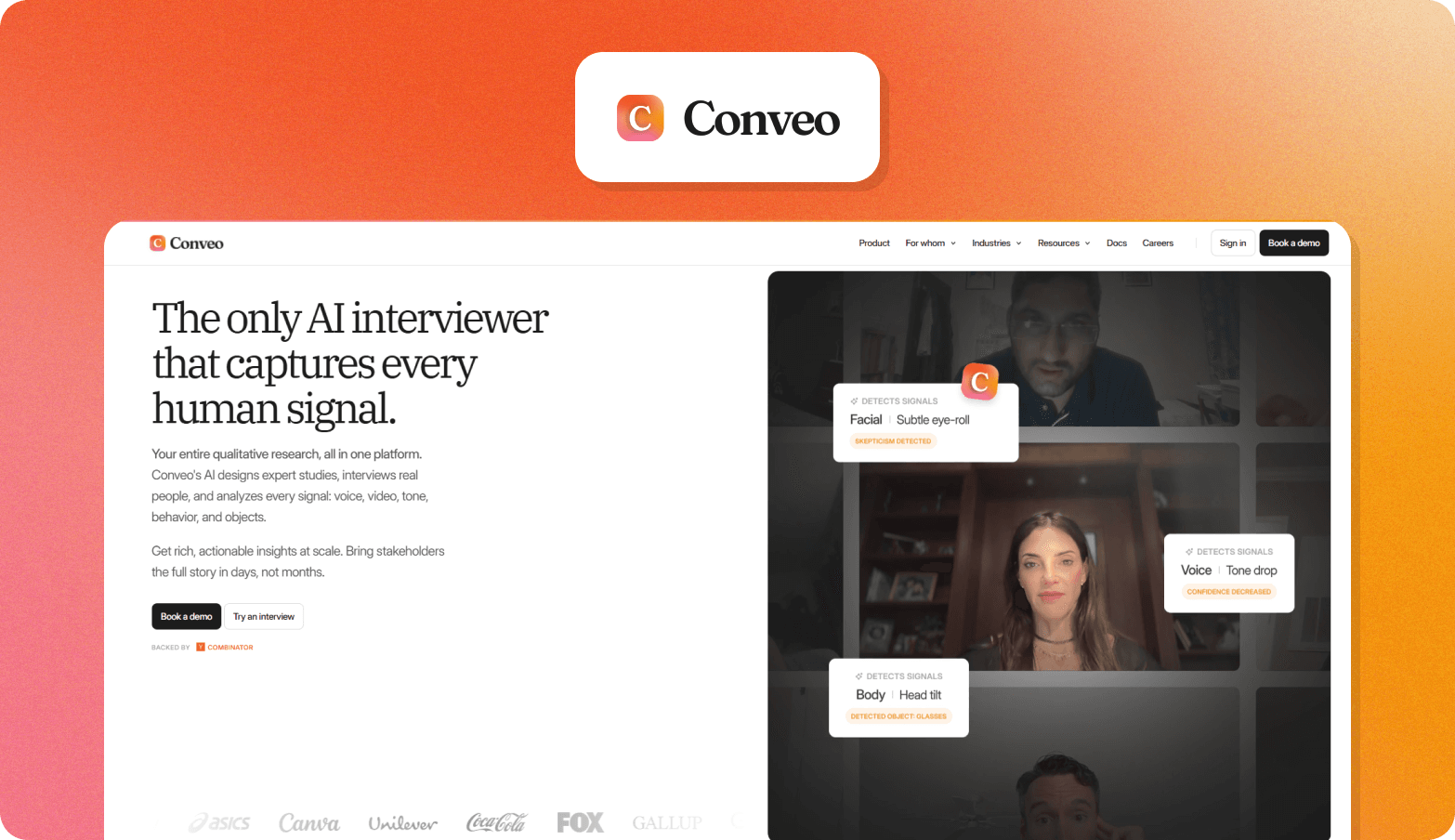
Conveo is an end-to-end AI qualitative research platform built for enterprise and mid-market teams that need to run real voice interviews and video-based user interviews at scale and turn them into stakeholder-ready insights in days rather than weeks.
What it does well
Supports the full qualitative research workflow in one platform, so teams can move from research objectives to stakeholder-ready outputs without coordinating multiple research tools or vendors
Runs adaptive conversational research sessions with real participants instead of synthetic data, helping teams generate credible evidence that stakeholders trust and act on
Participants give 3-4x longer responses in AI-moderated video vs. text surveys; 93% rate 4/5+
SOC 2, GDPR, regional hosting, SSO/RBAC, audit trails, retention policies, consent workflows
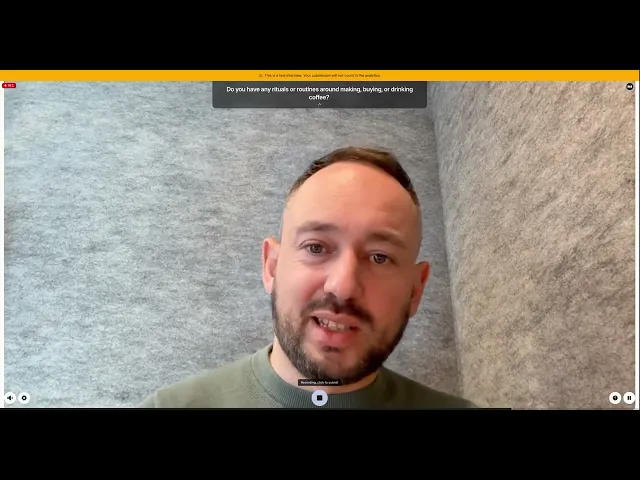
See it in action: How Conveo’s AI interviewer conducts a real research session →
Delivers multimodal qualitative analysis using natural language processing, thematic coding, and sentiment signals to produce structured outputs ready for reporting and decision-making
Builds a searchable insight library that connects findings across research projects, helping teams surface emerging themes faster and strengthen long-term consumer insights programs
Best for
Research Operations Managers, Consumer Insights Leaders, UX Research teams, and product managers running ongoing qualitative research studies and looking to consolidate fragmented workflows or reduce agency dependency.
One tradeoff to be aware of
Teams running occasional one-off interview studies may find the platform broader than their immediate needs, although many start with a pilot and expand as programs scale.
See how Conveo works → Book a demo
"Conveo's video-first approach is a real differentiating methodological advantage. The ability to distill insights from reactions and not just hear answers adds context you simply can't get from transcript-only tools, or any other tool in the market for that matter."
Senior Marketing Research & Insights Manager, Google
2. Listen Labs
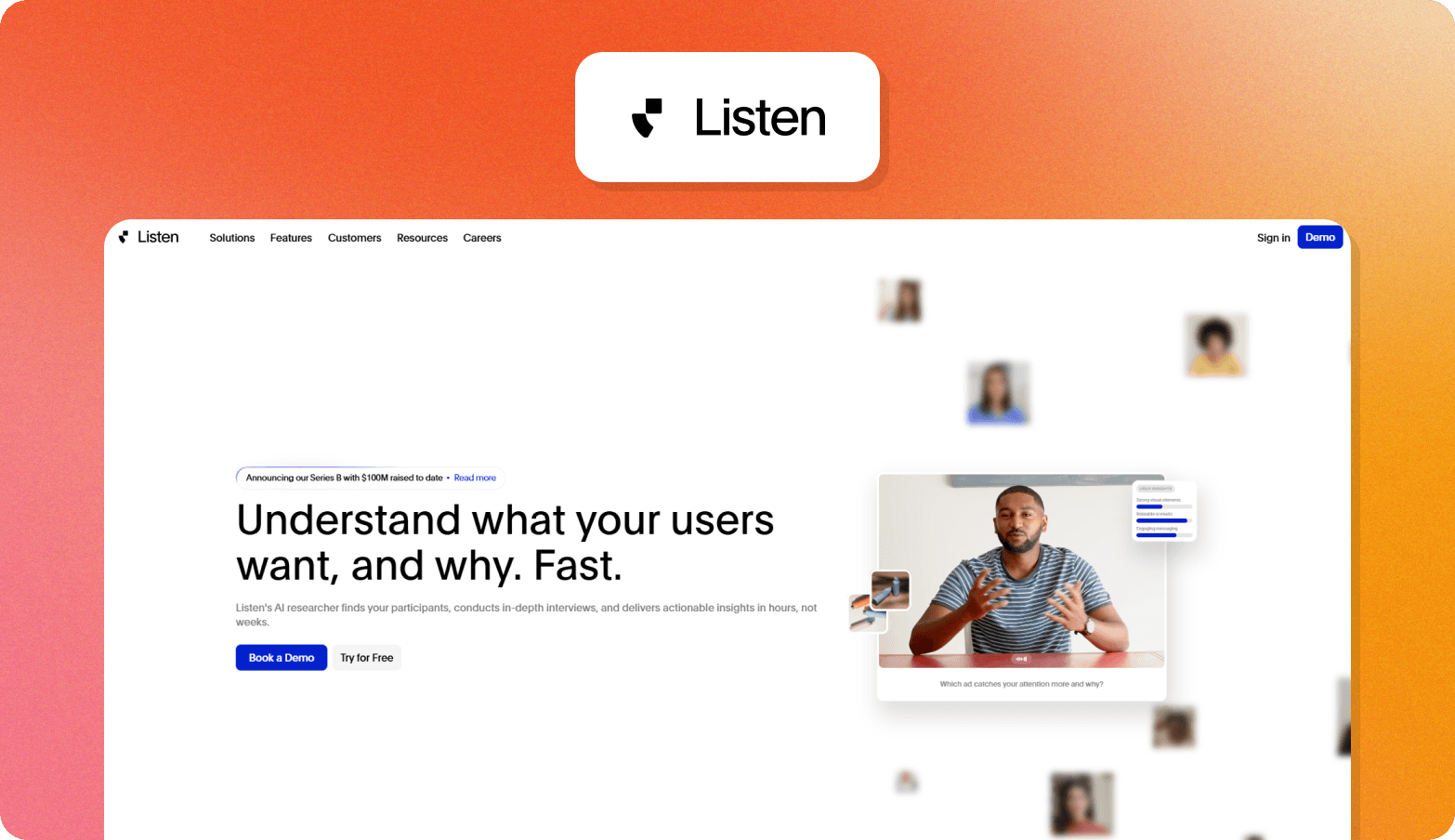
Listen Labs is an AI-powered platform for running large-scale conversational qualitative research studies with consumers and turning interview-based research data into structured outputs quickly.
What it does well
Runs adaptive AI interviews that support fast conversational research across distributed audiences in global markets
Helps teams analyze participant responses and customer feedback without manual coding or traditional research workflows
Produces structured research analysis outputs that help identify patterns across qualitative data from market research programs
Best for
Consumer insights and market research teams running high-volume qualitative research studies focused on external audiences, especially those studying consumer behavior across segments.
One tradeoff to be aware of
Listen Labs focuses primarily on interviewing rather than repository-level qualitative data analysis, so teams often pair it with additional AI qualitative analysis tools when scaling research projects across programs.
3. Outset
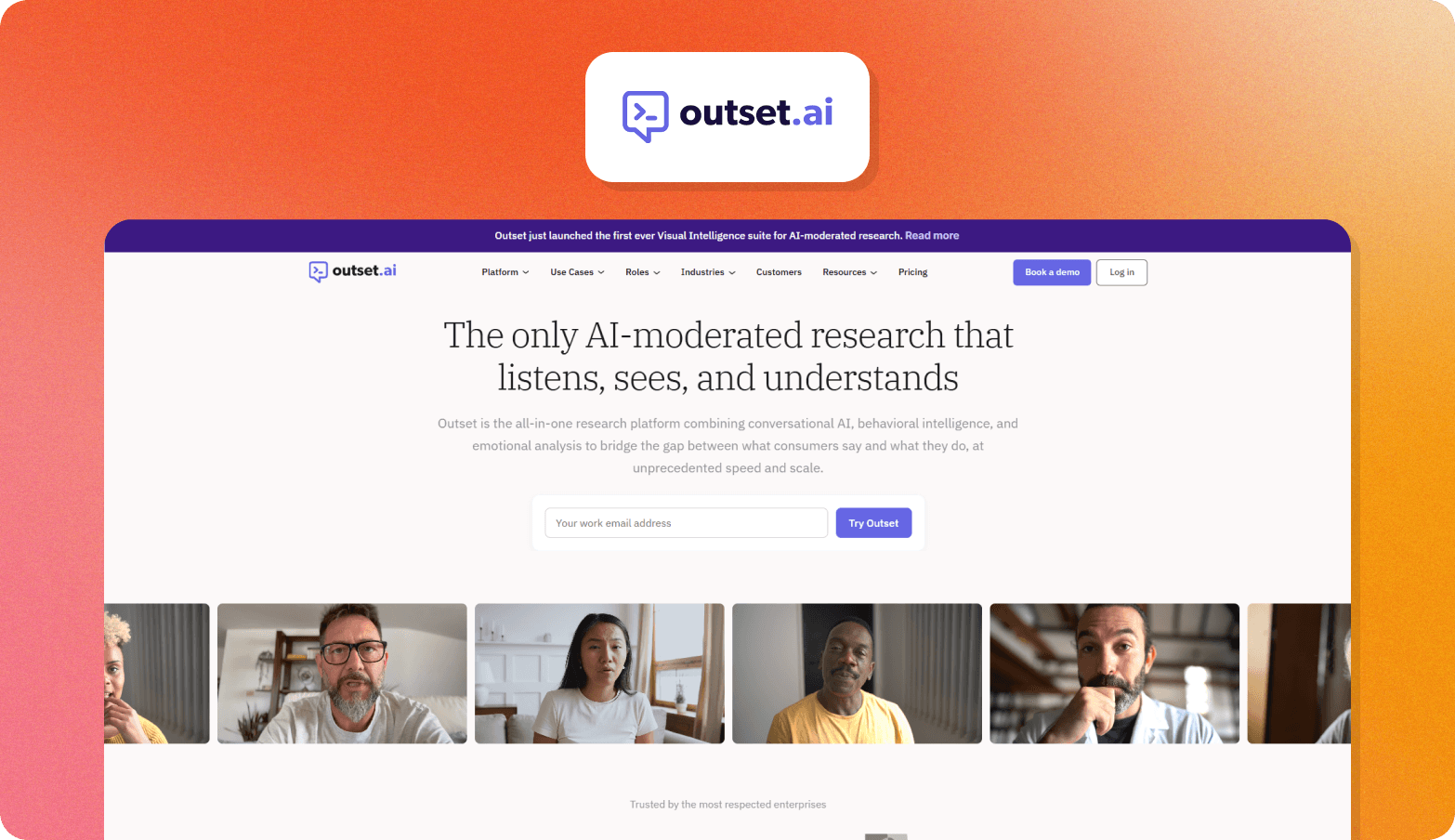
Outset is an AI-powered qualitative research platform designed for UX researchers and product managers to run fast user interviews during discovery and usability testing.
What it does well
Uses its AI interviewer “Leo” to run adaptive probing during conversational research sessions
Supports analyzing interviews and synthesizing qualitative data from prototype testing and early product exploration
Helps teams move quickly from participant responses to research insights using natural language processing
Best for
UX research teams and product managers running continuous discovery, usability testing, and iterative user research.
One tradeoff to be aware of
Outset is optimized for product-focused qualitative research workflows, so teams running broader market research or mixed qualitative and quantitative data programs may still rely on additional research tools outside the platform.
4. GetWhy
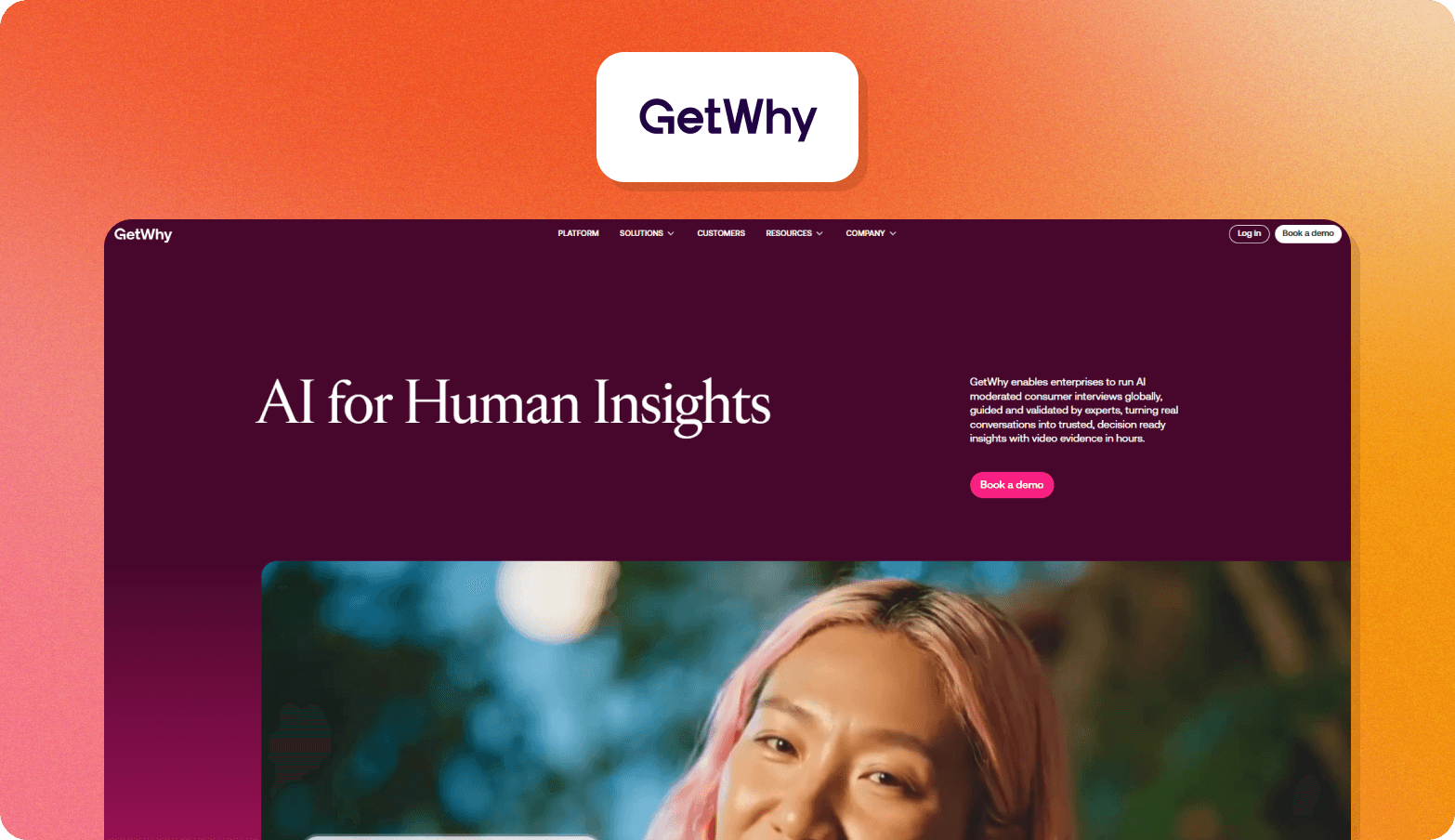
GetWhy is a video-based qualitative research platform built around AI-powered think-aloud interviews for concept testing and consumer decision research.
What it does well
Captures structured participant reactions during concept testing using guided video-based conversational research
Applies artificial intelligence and sentiment analysis to surface emerging themes across qualitative data and open-ended survey responses
Delivers rapid-turnaround outputs designed to support consumer insights and strategic insights in marketing environments
Best for
Consumer insights and brand teams running concept testing, packaging evaluation, and message validation across market research programs, especially in consumer packaged goods environments.
One tradeoff to be aware of
Its think-aloud interview structure works best for well-defined research objectives, so teams conducting exploratory qualitative or quantitative research alongside interviews may prefer more flexible interviewing approaches.
5. Marvin
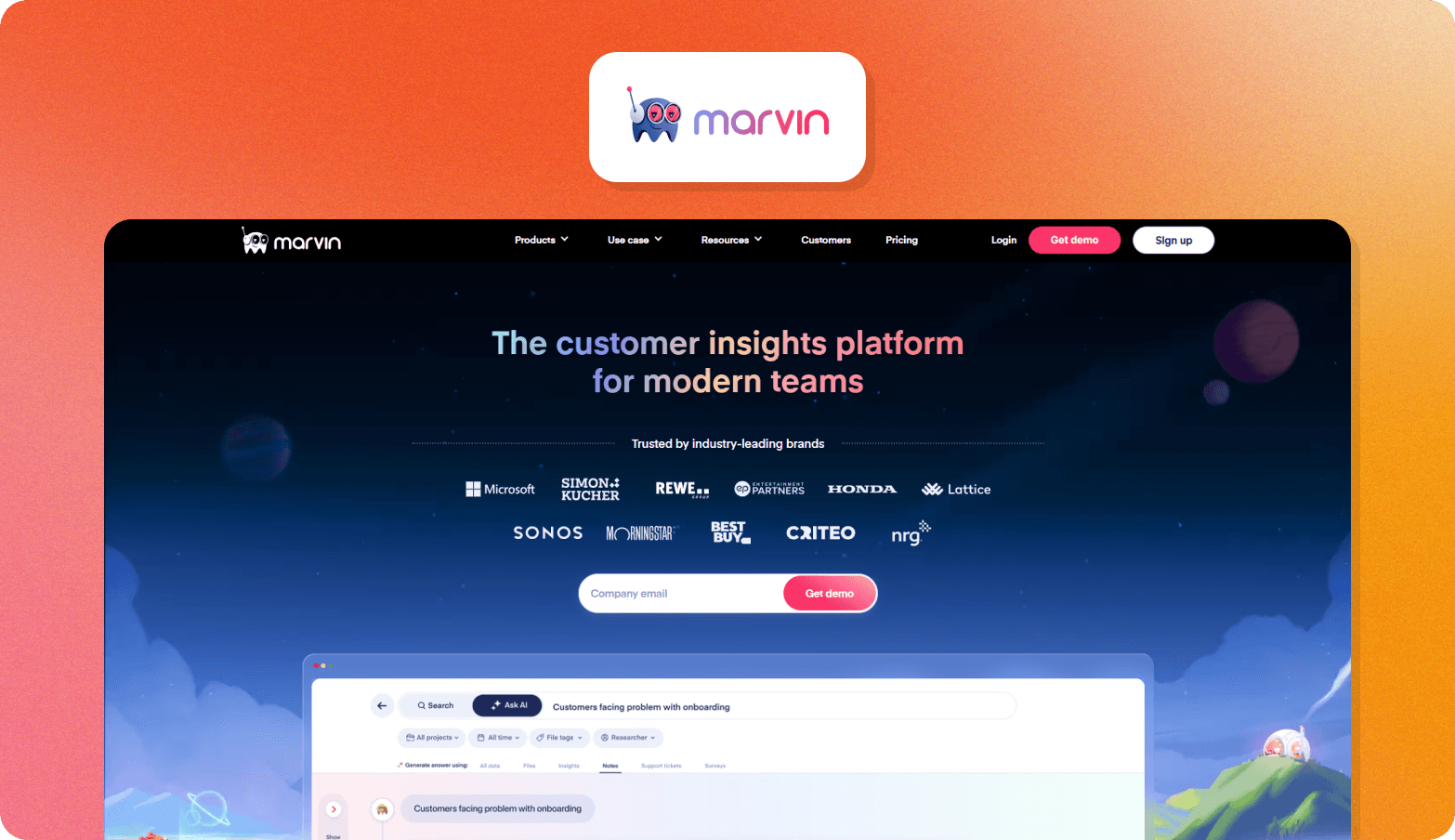
Marvin is a qualitative research platform that supports AI-assisted interviewing, thematic coding, and repository-based qualitative data analysis across multiple research projects.
What it does well
Centralizes research material from user interviews, focus groups, and other research data sources in one platform
Supports thematic analysis and AI coding workflows that help human researchers analyze textual data at scale
Helps teams surface emerging themes and deeper insights across qualitative research and quantitative data collected over time
Best for
UX research and research operations teams manage collaborative research environments and analyze qualitative data across large volumes of research material.
6. Voxpopme
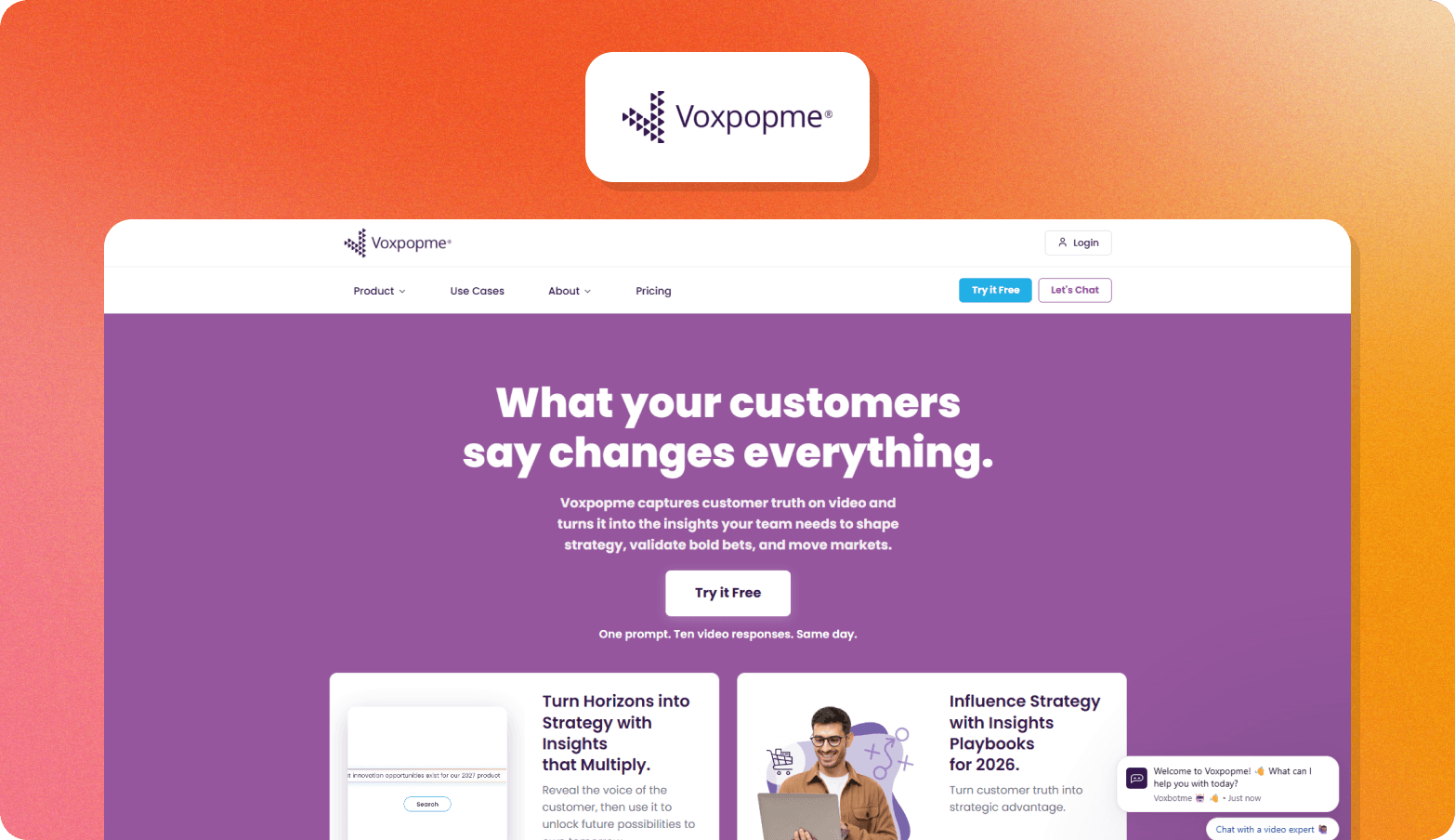
Voxpopme is a video-based qualitative research platform that combines recorded participant responses with AI-powered qualitative analysis for large-scale consumer insights programs.
What it does well
Captures structured video responses at scale across global markets using mobile-first research workflows
Applying artificial intelligence to support sentiment analysis and identifying patterns across large volumes of qualitative data
Helps teams generate detailed insights from customer feedback collected through video-based market research
Best for
Consumer insights teams at large brands running ongoing qualitative research studies based on video responses.
One tradeoff to be aware of
Voxpopme’s workflow is rooted in video survey capture rather than conversational AI interviews, so teams looking for fully adaptive conversational research may combine it with additional AI tools for qualitative research.
7. Dovetail
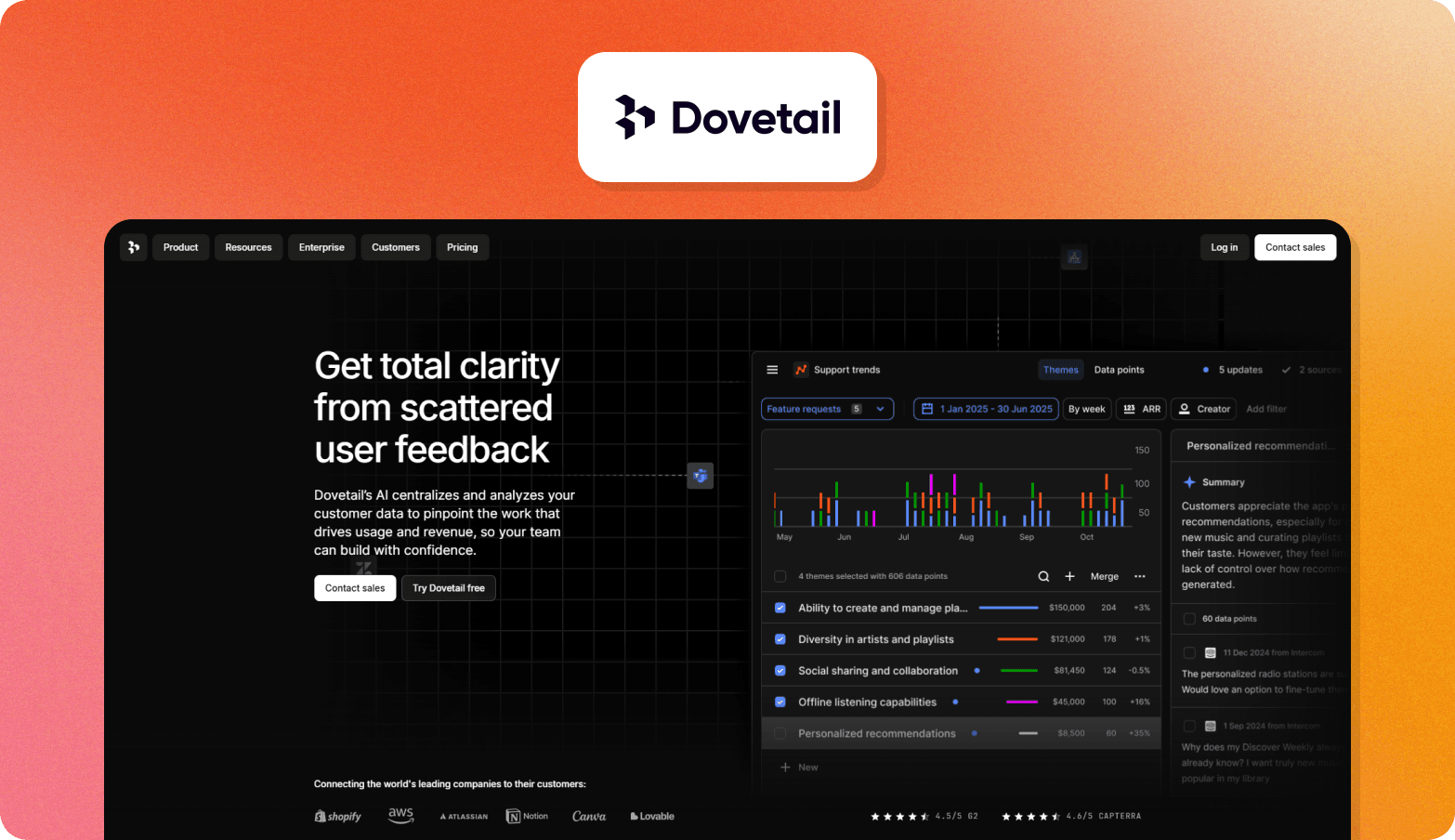
Dovetail is a qualitative research platform focused on qualitative data analysis, repository management, and collaborative research across large volumes of research material.
What it does well
Centralizes research data from user interviews, usability testing, focus groups, and open-ended survey responses in one platform
Supports thematic analysis, AI-assisted tagging, and analyzing qualitative data at scale across research projects
Helps teams generate strategic insights by connecting qualitative and quantitative data inside a shared research repository
Best for
Research Operations teams, UX research teams, and human researchers managing long-term research analysis across multiple research projects.
One tradeoff to be aware of
Dovetail is designed for qualitative analysis rather than interviewing, so teams typically pair it with separate interviewing platforms as part of a broader qualitative research workflow.
For teams comparing approaches to qualitative analysis across platforms, see our coverage on the 10 best qualitative research software platforms for 2026.
8. Strella
Strella is an AI qualitative research platform that uses multilingual voice interviews to help teams quickly collect conversational research data across multiple languages.
What it does well
Runs voice interviews in multiple languages to support qualitative research studies across global markets
Uses natural language processing to analyze participant responses and surface emerging themes
Helps teams collect customer feedback rapidly without relying on traditional research scheduling workflows
Best for
Consumer insights and product teams running multilingual qualitative research programs across regions.
One tradeoff to be aware of
As an early-stage qualitative research platform, teams running complex enterprise research projects may evaluate its workflow coverage alongside other research tools, depending on their data security and reporting requirements.
9. Glaut
Glaut is a voice-based AI interviewing platform designed for conversational market research and scalable qualitative data collection with external audiences.
What it does well
Runs AI-moderated voice interviews designed to capture customer feedback through conversational research sessions
Supports analyzing interviews quickly using automated research analysis workflows
Helps teams generate research insights from qualitative data collected across marketing-focused research projects
Best for
B2C marketing and consumer insights teams running conversational qualitative research studies.
One tradeoff to be aware of
Glaut focuses primarily on the interview layer of qualitative research, so teams managing broader qualitative data analysis or repository workflows may complement it with additional AI qualitative analysis tools.
10. Yasna
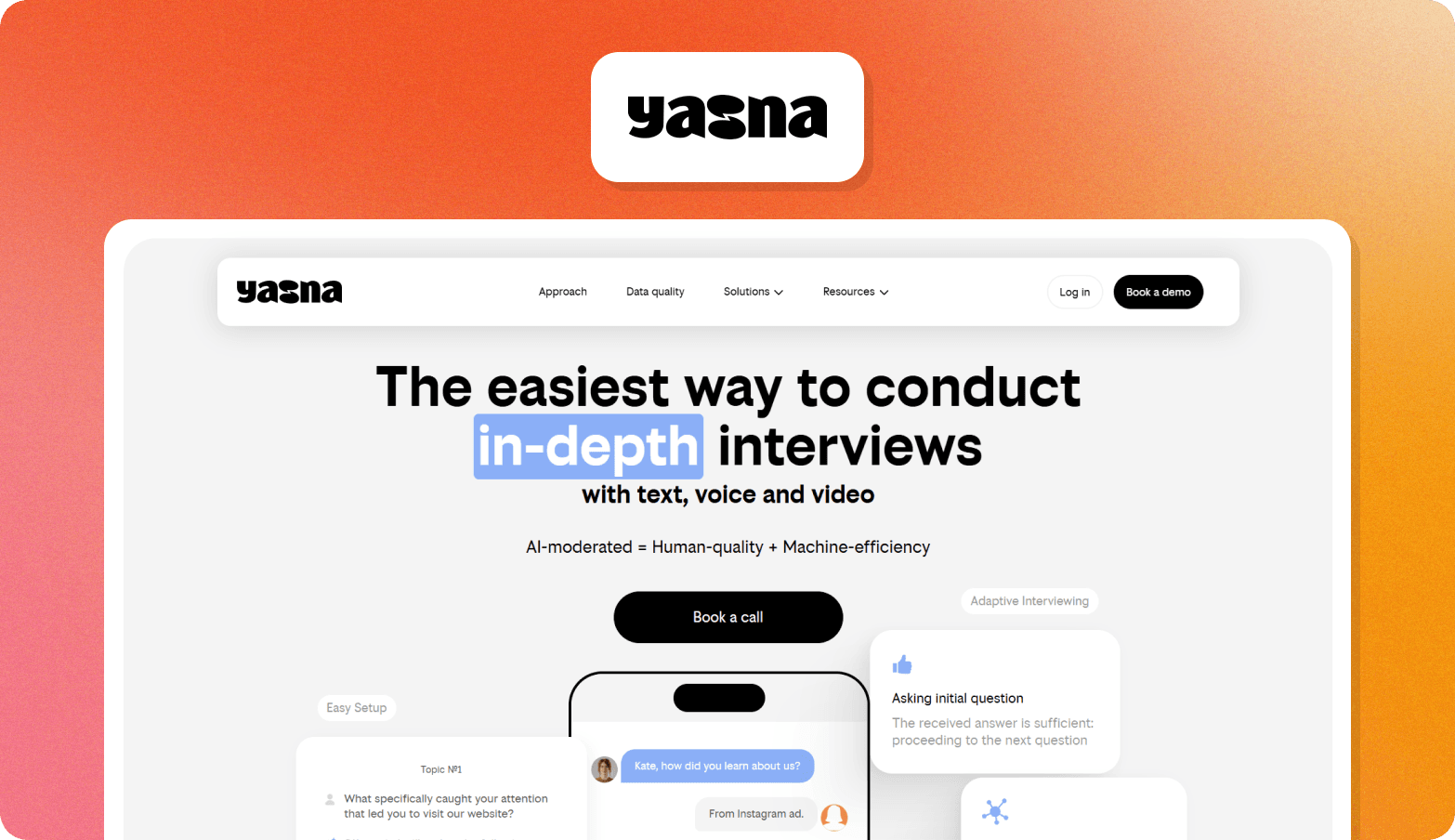
Yasna is a chatbot-style qualitative research platform that supports multilingual conversational research through messenger-based interactions with participants.
What it does well
Runs asynchronous conversational research sessions across multiple languages without scheduling interviews
Supports collecting qualitative data at scale across global markets through text-based workflows
Helps agencies manage qualitative research studies efficiently across distributed research projects
Best for
Research agencies running multilingual qualitative research programs across markets.
One tradeoff to be aware of
Because Yasna focuses on text-based conversational research rather than voice interviews or video interviews, teams studying user behavior or emotional reactions may supplement it with richer capture methods.
11. Voiceform
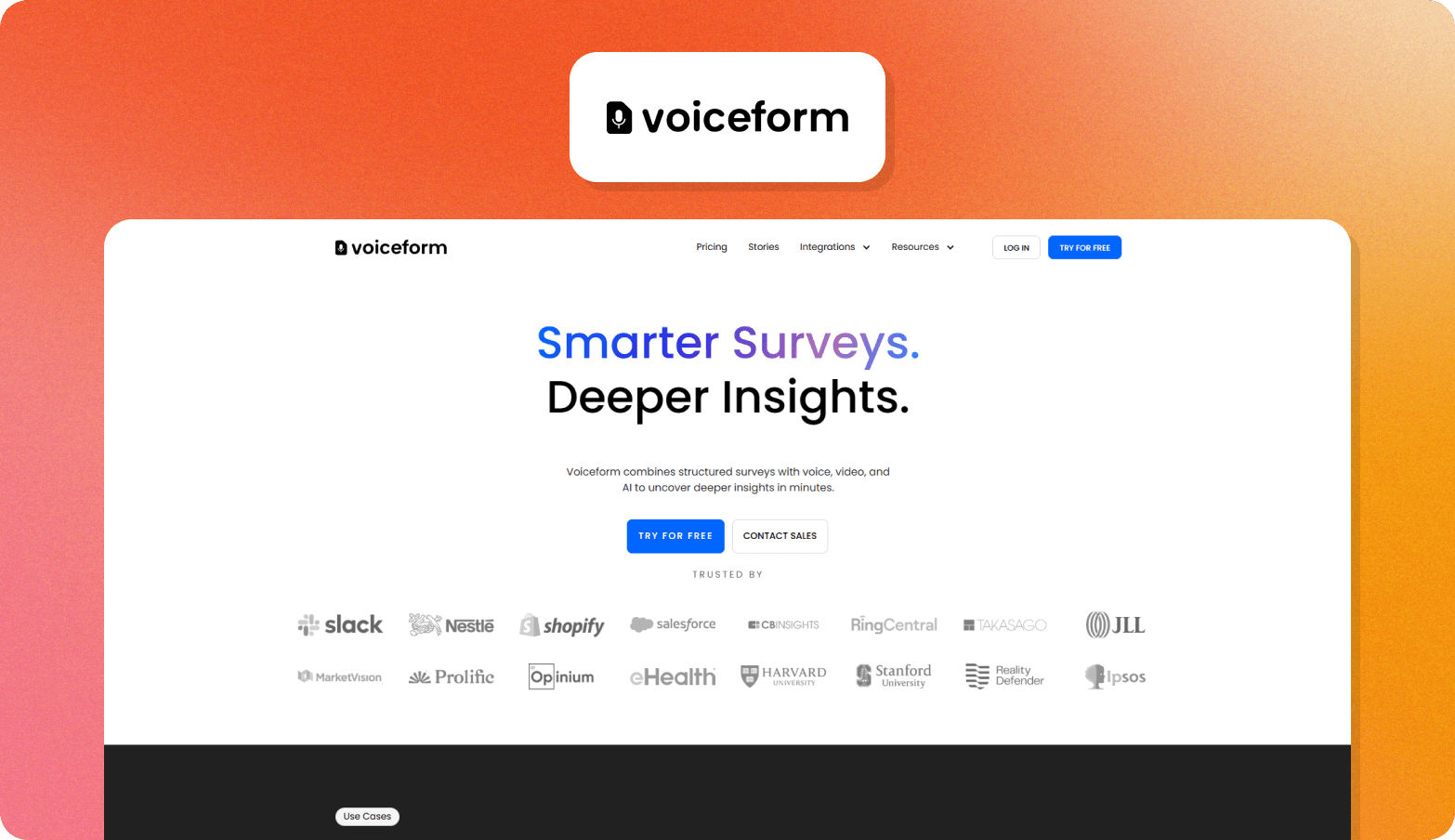
Voiceform is an AI-powered research tool that supports voice and video interviews, with automated sentiment analysis to enable fast customer feedback loops.
What it does well
Runs adaptive conversational research sessions using voice and video inputs
Applies sentiment analysis to help teams identify patterns across participant responses
Helps teams generate research insights quickly from qualitative data collected in CX and marketing workflows
Best for
CX teams and marketing teams running fast-turn qualitative research studies based on customer feedback.
One tradeoff to be aware of
Voiceform supports rapid interview-based research workflows, but teams running enterprise-scale qualitative research programs may evaluate its broader workflow coverage alongside other AI tools for qualitative research.
12. Tellet
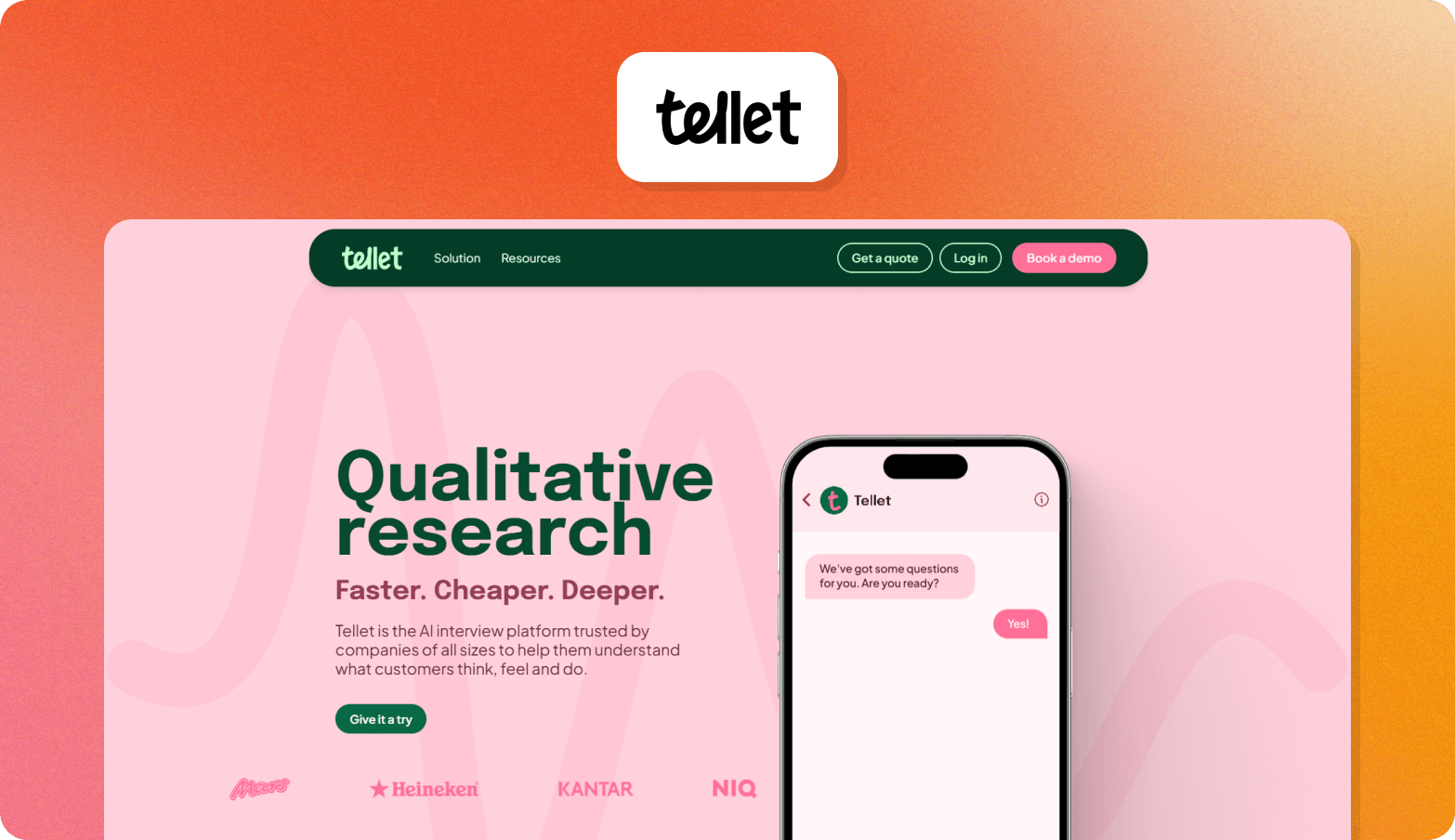
Tellet is an AI-powered conversational research assistant that supports voice, video, and photo-based responses with automated qualitative analysis.
What it does well
Collects qualitative data through multimodal participant responses, including voice, video, and images
Uses artificial intelligence to support analyzing interviews and identifying patterns across research material
Helps teams generate deeper insights quickly without manual coding across smaller research projects
Best for
Teams new to AI-moderated qualitative research or running focused qualitative research studies with limited setup time.
One tradeoff to be aware of
Tellet is best suited for discrete research projects rather than long-term repository-based qualitative research programs that require broader workflow infrastructure.
Most tools in this category excel at one stage of qualitative research: interviewing, analysis, or storage. Fewer support the entire workflow in one place. That difference shapes how fast teams move and how easily insights build over time.
The key question is whether your team needs a point solution for one stage of research or a full-stack platform that supports the entire workflow end-to-end.
The difference between full-stack platforms and point solutions
Many AI tools for qualitative research look similar at first glance. In practice, they support very different parts of the workflow. Some help you run interviews. Others specialize in qualitative data analysis or managing research repositories.
Only a small number support the full research cycle from raw data to reporting in one platform.
Understanding this distinction gives teams a practical framework for choosing the right type of AI-powered tool for their research objectives.
Full-stack platform | Point solution | |
What it covers | Study design → recruitment → AI interviews → analysis → reporting | One layer (for example, interviews only or analysis only) |
Best for | Teams running end-to-end qualitative research programs | Teams with existing infrastructure filling a specific gap |
Integration need | Low, everything in one place | High, requires connecting multiple research tools |
Examples | Conveo, Listen Labs, Outset | Dovetail, NVivo, ATLAS.ti |
Neither category is inherently better. The right choice depends on whether your team is assembling a research stack piece by piece or building workflows that combine AI capabilities with human input across the full research lifecycle.
"It's a massive time-saver. Conveo sits right between qual and quant."
CMI Marketeer, Edgar & Cooper
Our verdict: The best AI qualitative research platform for your team in 2026
If your team runs ongoing qualitative research, the biggest gains rarely come from faster interviews alone. They come from connecting recruitment, AI interviews, qualitative data analysis, and reporting in one platform, so research insights build over time instead of resetting with every study.
Among the AI tools for qualitative research reviewed here, Conveo is the strongest choice for teams that need a credible end-to-end workflow. As a fully video-first AI augmented interview platform, it helps teams reduce tool fragmentation, shorten time from fieldwork to stakeholder decisions, and generate research insights that scale across programs instead of staying tied to individual studies.
Other platforms on this list are strong point solutions. They work well if you are improving one stage of your workflow. But teams running continuous qualitative research studies typically benefit most from a unified qualitative research platform that improves delivery speed, reduces coordination overhead, and increases confidence in findings across stakeholders.
If you are evaluating platforms now, a useful next step is to:
Map which stages of your current workflow still rely on separate tools or manual coding
Identify where research timelines slow down between interviews and stakeholder reporting
Test one real study inside a full-stack platform to compare output quality and speed
See how that workflow operates in Conveo and book a demo.
Frequently Asked Questions
What’s the difference between an AI qualitative research platform and a point solution?
Can AI-moderated interviews produce the same quality of insight as human-moderated ones?
How do AI qualitative research tools handle multiple languages?
Are AI qualitative research platforms secure enough for enterprise use?
How long does it take to run a qualitative study with an AI research platform?