In this article
TL;DR
Markets shift faster than traditional research can track. Brands like Stanley and Abbott won by spotting signals early, other brands died missing them. By the time an ad hoc study lands, the shift already happened.
Three AI breakthroughs make continuous consumer understanding possible: qualitative depth at quantitative scale ("67% feel this way, and here's why"), proactive pattern detection across thousands of conversations, and a compounding knowledge base where every study makes the next smarter.
The payoff: spot billion-dollar opportunities before competitors, catch risks before they hit sales, stop paying for redundant research, and turn insights into the company's strategic nervous system.
StoryLines is Conveo's always-on insights layer that runs alongside (not instead of) ad hoc studies, spanning brand health, category shifts, campaign tracking, innovation, and CX in one program that gets more valuable every wave.
Consumer Understanding At The Speed Of Change
Most markets now live in permanent disruption. Macroeconomic shocks, compressed product cycles, fragmenting media, and shifting generational values all demand a constant finger on the pulse.
Missing the next shift is what kills established brands, and by the time a traditional study lands, the shift has usually already happened. Stanley grew from $70M to $750M by spotting early that women were adopting its flask. Oatly scaled past $200M by catching the "dairy guilt" conversation before competitors did. Abbott's Libre passed $5B when it discovered that healthy people, not just diabetics, wanted to monitor their blood sugar. Bed Bath & Beyond lost 70% of its revenue in five years by missing the move to curated, Instagram-driven home decor. The signal was there in every case. Someone saw it first, or someone paid for seeing it too late.
The pressure comes from every direction. Leadership teams need to find the next opportunity before a competitor does, and hedge the next risk before it becomes a crisis. Timing is the whole game: if you know which questions to ask, you can ask them before your rivals do and get the insight before it is too late.
Consumer insight is how you act on that pressure: understanding what people need, and deciding what to do about it. Yet most insight today is scattered, siloed, and commissioned project by project, arriving weeks after the decision it was meant to inform. So marketing and innovation run on anecdote and gut, not evidence. Ad hoc studies still matter for deep, bespoke questions. What has been missing is a continuous layer running alongside them, so you are never blind between studies and never caught out by a shift you had no study running for. And it works both ways: the ongoing stream constantly triggers sharper ad hoc questions, which plug straight back into the same body of research, so every deep-dive builds on the stream instead of starting cold.
Three Breakthroughs Make Continuous Understanding Possible
Three things have changed that make continuous consumer understanding possible for the first time.
AI Quantifies Deep Human Understanding
Qualitative research has always been the gold standard to understand the why behind people's motivations, emotions, and context. Its limit was scale: ten to twenty interviews per study, weeks of analysis, findings that could illustrate but never quantify or extrapolate.
AI now assists across the whole research process, from study design and adaptive interviewing to analysis and synthesis. Hundreds of real conversations and ongoing ethnographies run at once, in any market, with adaptive probing and contextual memory, then are analyzed the moment they close. You get qualitative depth at quantitative scale. Not "consumers feel this way," but "67% feel this way, here is why, and here is exactly what they mean by it."
"Quantifying the why" is what gets marketing and innovation taken seriously in the boardroom.
AI Spots The (Emerging) Patterns
An additional game changer is proactive pattern detection across large volumes of unstructured data. Every study used to be a disconnected snapshot. Wave five didn't build on wave one. A niche concern in wave two could become a category-wide driver by wave four, and you wouldn't see it happen.
When hundreds of interviews accumulate against what you already know, AI surfaces the emerging themes, sentiment shifts, and behavioral signals no human analyst could catch at that speed. This is what turns insight forward-looking and reflexive: Storylines tells you what you need to know before anyone thinks to ask, so you see the shift while you can still act on it.
Every Study Makes The Next One Smarter
Until now, studies lived in isolation. January's concept test sat in one report, March's brand health wave in another. Knowledge didn't build. It decayed.
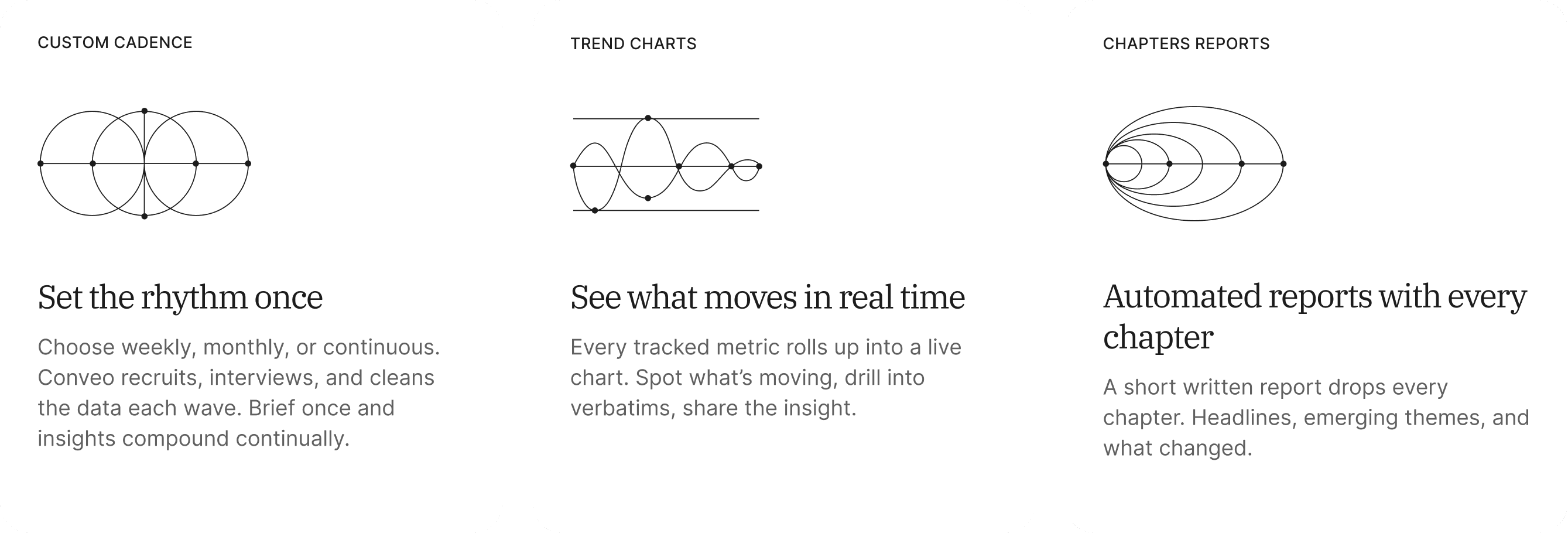
Now every study builds on the last. Conveo's AI connects findings across projects and over time, so you never run a study you have already answered. A finding from six months ago stays searchable and in context against everything learned since. The insight base compounds like interest: every study is worth more because of the studies before it. That reflective, compounding memory is what makes a Storylines program more valuable every wave.
The Outcomes Of StoryLines That Matter To Your Business
These changes enable a new insights infrastructure of continuous discovery. It does not mean "more research, more often," and it does not replace your ad hoc studies. It adds an always-on layer on top of them, and it pays off in four ways that all ladder up to revenue and margin.
Spot the Next Billion-Dollar Opportunity
Proactive pattern detection across thousands of live conversations surfaces emerging needs before they go mainstream: new usage occasions, cultural shifts, whitespace no one has named. You see them forming, quantify them, and place the growth bet before competitors can move.
Hedge Risk Before It Shows Up In Sales
The same sensing works as an early warning system. Shifting sentiment on a societal claim, scepticism creeping into a category, an insurgent brand disrupting a market: these appear in conversations long before they appear in sales data. A continuous program lets you act while the risk is still small, protecting margin before a problem compounds.
Avoid Redundancy
Insights teams routinely commission studies that have already been done or have marginal returns on insight. When every study feeds one compounding knowledge base, "has someone already explored this?" gets an instant answer. Fewer briefs, less agency coordination, faster answers, and every dedicated study starts from months of context. Companies spend less overall, and every dollar works harder.
Insights Become The Strategic Nervous System
When understanding is continuous and grounded in real context, the insights function stops being a service desk and becomes how the company senses its market. Leadership works from consumer evidence that updates continuously. The insights team stops reporting what happened and becomes the company's strategic central nervous system.
These outcomes show up across the business and every stakeholder, from the customer-facing rep in the field to the C-suite.
Use Cases Where Storylines Goes To Work
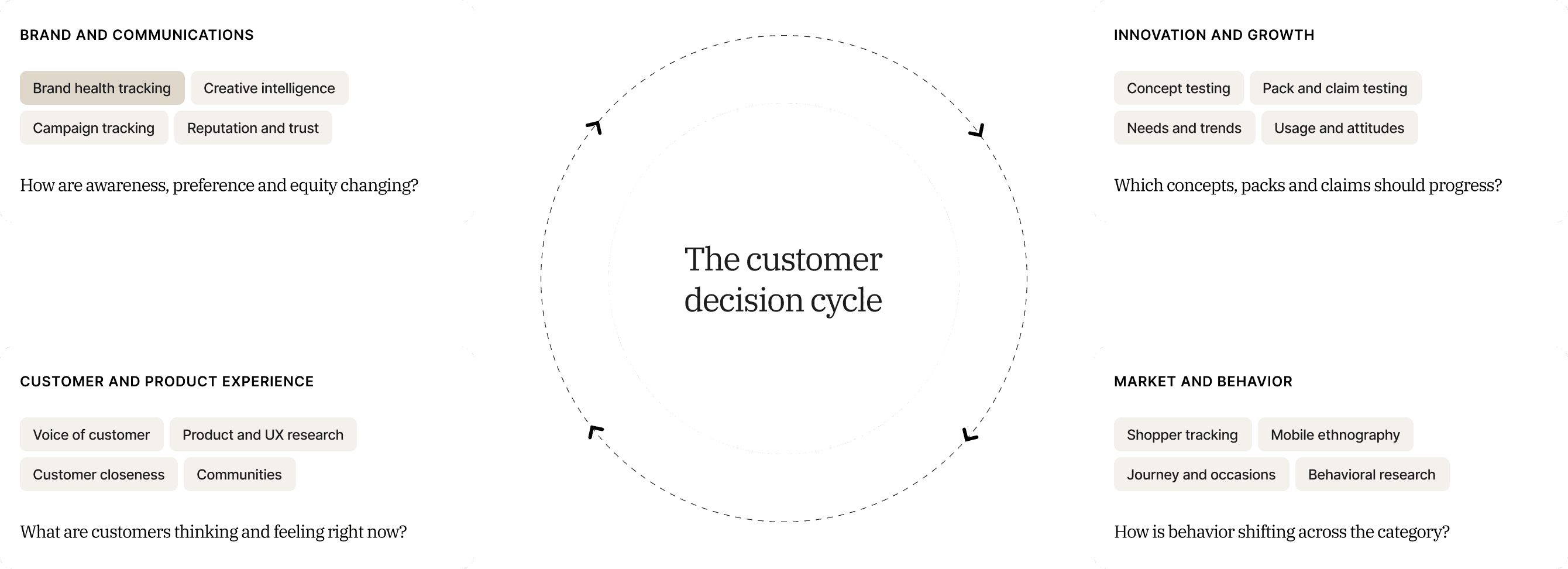
Here is what a continuous, AI-enabled program looks like applied to core objectives. Each one is really a timing play: catching the thing early enough to change the decision, with the depth to know why. The use cases are not siloed: you can run several together in one continuous program, and add an ad hoc deep-dive whenever a wave surfaces a question worth chasing.
Consumer Behavior and Category Shifts
Map how your category is moving as it moves: competitive dynamics, unmet needs or jobs-to-be-done, and where to play next. Always-on interviews, diaries and ongoing on-camera ethnographies let people document real routines as they happen, from family chores and grocery habits to the evening content choice and the morning scramble with kids. Run continuously, they reveal live demand spaces in unaided consumer language, not in next quarter's tracker, so you claim the next opportunity first.
Brand Health Measurement
Brand health monitoring tells you that awareness, consideration, preference, and loyalty moved. It does not tell you why, nor explain its nature. Continuous conversations about brand perception explain the forces behind the numbers, wave after wave, so you know not just that equity shifted but why, which associations are building or eroding, and how to respond early enough to defend equity, pricing power, and margin before a dip compounds.
Creative Production & Communication Campaign Tracking
The creative development process benefits from overnight iterations of consumer feedback, so the strongest ideas reach the next stage of work. Once in media, AI-enabled video interviews and analysis capture both rational comprehension and emotional response to advertising through non-verbal signals such as tone, pace, hesitation, and facial expression. Across campaign waves, brands watch perceptions build or fade and back the winners before committing the next spend, protecting media ROI.
Innovation Development and Launch
Run design thinking at speed. Diverge by exploring tensions and co-creating ideas. Converge by optimizing many concepts and prioritizing refined solutions through successive feedback, getting the right ideas to market ahead of the field. After launch, always-on monitoring and ongoing ethnographies sense real consumer experiences from week one: how people discover the product, how they actually use it in context, where expectations meet or miss reality, and how word of mouth forms, while you can still steer it.
Consumer Experience Sensing
Follow people across the decision and experience journey and pinpoint where and why you win or lose the sale. Ongoing ethnographies capture experiences in the real moment they happen, and a continuous experience program gives a live read at both the individual level, in the moment of the touchpoint, and across whole segments, so you act before consumers switch.
Built To Combine
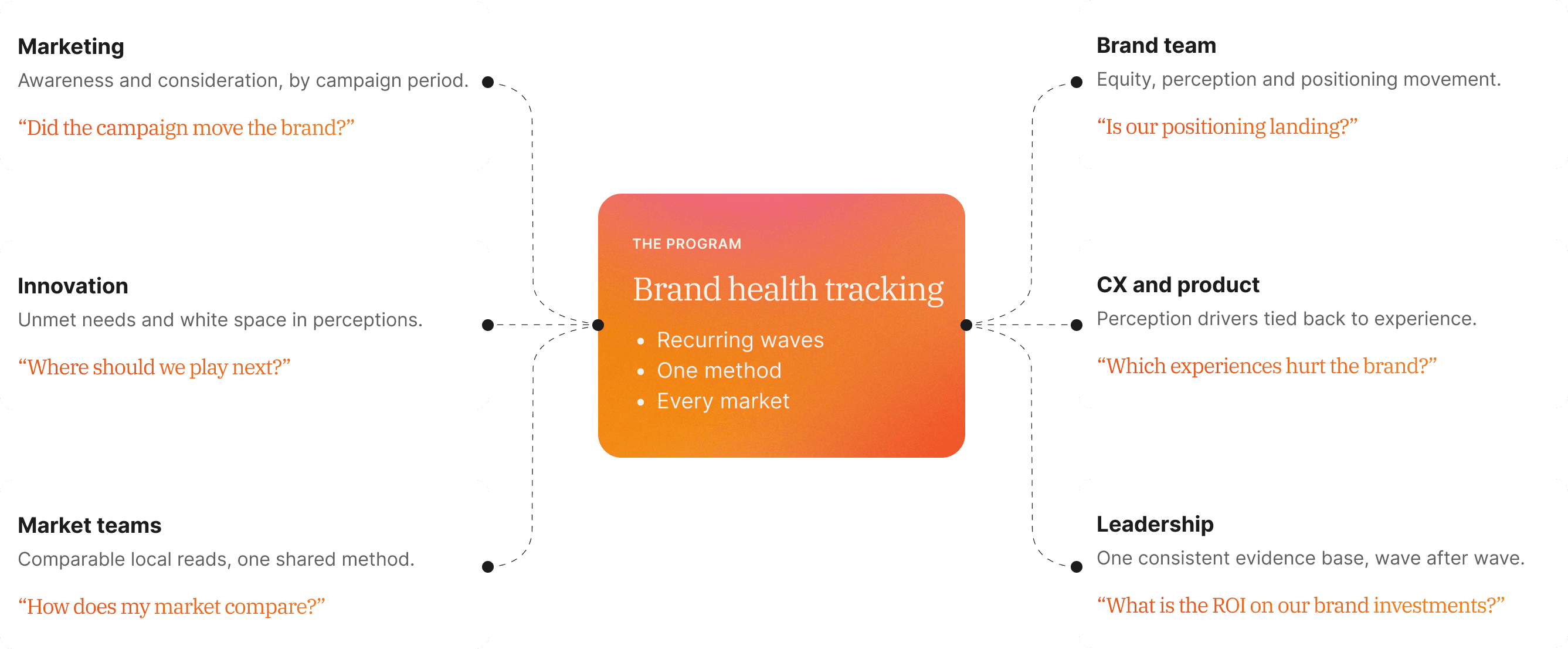
The real power comes from running these together. A single continuous StoryLines program can span several use cases at once, brand health alongside category shifts alongside campaign tracking, all feeding one compounding knowledge base. And the continuous layer does not replace ad hoc work: when a wave surfaces something worth a deeper look, you drop a bespoke study straight into the same program, with all the context already in place.
Case Studies In Point
A global CPG leader used the program where AI meets human-centered design. Across four iterative rounds (discovery, ideation, screening, and optimization) the team built cumulative consumer knowledge. Each phase compounded insights from the last: 76 interviews shaped the personas and foundational understanding, the personas fuelled workshops that generated 14 product ideas, and a follow-up concept study refined them to four. Months of conventional research compressed into rapid cycles, ending with two validated "superstar" concepts. (Customer named in the preserved original; on hold for external Storylines use pending approval.)
A Mag 7 technology company monitors authentic online behaviors for marketing and product strategy. Across seven countries, it takes a monthly read on how people use its digital services, feeding R&D, marketing, and sales. Building up over four months, the program gathered more than 12,000 interviews and counting on four core online behaviors. The richness and authenticity of people's own language, across verticals and cultures, changed what every stakeholder could see, and the knowledge keeps compounding.
From Faster Studies To The System You Run On
Seen as a whole, the potential of AI for insights is a ladder of five stages, with each rung worth more than the one below it. The industry is partway up it and companies can choose their level of entry for growth.
AI has already unlocked stage one, tactical research: run the studies you run today, faster and far cheaper, with no loss of quality. But the walls between studies, teams, and across the organization remain.
Levels two and three are where the market is now. Compound insight reuses every answer, so you stop paying twice for the same finding and avoid roughly half the portfolio's research spend. Strategic Storylines programs keep your beliefs live, replacing the stale snapshot with a continuous signal so you see shifts as they form, not after.
Levels four and five are the next horizon, and where the real prize sits. A self-driving sensing layer watches for shifts across the whole picture and flags the billion-dollar bets before they go wrong. At the ultimate level, consumer understanding stops being a service you buy and becomes the infrastructure the company and its AI agents run on: required to operate, and a structural competitive advantage.
Each level builds on the one below, and the whole stack compounds, worth more every year. Most companies are still on the first rung. The advantage goes to whoever climbs fastest. StoryLines is the hinge at level three that makes levels four and five possible.
Conclusion
StoryLines is not a better research tool, and it is not a replacement for the ad hoc work that still has its place. It is a continuous insights infrastructure for consumer understanding that runs alongside your studies and feeds every part of the business.
The biggest prize is in what you never thought to ask: letting people tell you what they want, so marketing and innovation can deliver on it better than anyone else. Not because you guessed right, but because you never stopped listening.
This is what Conveo builds with StoryLines: continuous consumer understanding, so the knowledge compounds, the walls between teams come down, and the next shift reaches you while you can still act on it.
Learn more here: /storylines
Frequently Asked Questions
What is Conveo StoryLines?
StoryLines is a continuous insights infrastructure that runs alongside your ad hoc research, giving you an always-on layer of consumer understanding rather than one-off, disconnected studies.
How is this different from traditional qualitative research or brand tracking?
Traditional studies are project by project snapshots that arrive weeks after the decision they were meant to inform, and don't build on each other. StoryLines connects every study to the ones before it, so insight compounds over time instead of decaying, and it surfaces emerging patterns across live conversations rather than one-off reports.
Does StoryLines replace ad hoc research studies?
No. It adds a continuous layer on top of ad hoc work, not a replacement for it. When a wave surfaces something worth a deeper look, you can still commission a bespoke study, and it plugs straight into the same compounding knowledge base.
What business outcomes does a continuous program actually deliver?
Four main ones: spotting emerging opportunities before competitors do, catching risk signals before they show up in sales data, cutting redundant research spend by reusing what's already been learned, and turning the insights function into a real-time strategic nervous system for the business.
What use cases can StoryLines support?
It spans category and consumer behavior shifts, brand health measurement, creative and campaign tracking, innovation development and launch, and consumer experience sensing, and these can all run together in a single continuous program feeding one knowledge base.
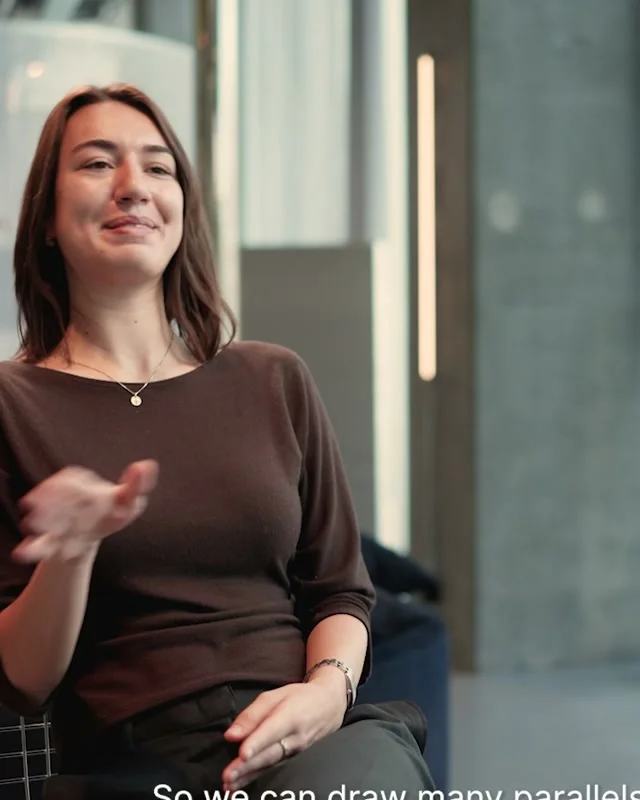
About the author
Charlotte Morelli
Research Impact Lead
Charlotte studied economics, joined Opinium as a research analyst and left it as a research manager, with Charles among her clients. She partners with clients as a researcher and thought partner, runs several StoryLines programs, and was the first person in the New York office. Outside work she screen prints her own art onto shirts.
Meet Charlotte on film →Qualitative insights at the speed of your business.
Conveo runs AI-moderated video interviews and structures everything they say.