In this article
TL;DR
Qualitative research has entered a new era of capability. AI-moderated video interviews now run asynchronously at scale, compressing timelines from weeks to days without trading away methodological depth.
Video-first interviews with adaptive probing surface the hesitations, tone shifts, and unprompted reactions that customer surveys cannot capture, and that strategy decisions turn on.
When every insight links back to a timestamped video clip, stakeholders can inspect the evidence themselves, thereby shortening alignment cycles and building confidence in the findings.
A searchable insight library that grows with every study creates institutional memory, so each new initiative builds on what the organization already knows rather than starting from scratch.
For decades, qualitative research was treated as the option you chose when you had time and budget to spare. The agency briefing, the recruiter pipeline, the moderation schedule, the manual coding process, and six to twelve weeks later, a polished deck that arrived after the decisions were already made. The methodology was valuable. The operational model made it nearly impossible to act on at the pace organizations actually move.
That constraint is dissolving. AI-augmented qualitative research now runs hundreds of real conversations in parallel, asynchronously, in 50+ languages. Thematic analysis runs automatically across all sessions simultaneously. Stakeholder-ready outputs, traceable to real participant video, land in days rather than months. The depth that made qual credible is no longer in tension with the speed and scale that strategy teams demand.
Understanding how consumer intelligence improves strategy starts there, with what's now possible, not with a scheduling problem to be solved. Customer intelligence, the structured, continuous understanding of customer behavior, motivations, and decision criteria, has historically been treated as a periodic event rather than an always-on capability. The benefits of customer intelligence materialize only when it becomes part of the decision-making workflow, not a debrief delivered after the fact. What follows covers how to compress research timelines without sacrificing the depth that makes findings credible, how to build institutional memory so every study compounds into actionable insights rather than disappearing into a deck, and how to produce outputs traceable enough to hold up when leadership asks where the evidence came from.
Why consumer intelligence arrives too late to influence strategy
Strategy teams operate on timelines that traditional qualitative research was never designed to match. A market entry decision, a pricing model, a new product positioning, these questions need consumer intelligence before the decision is made, not after three rounds of internal review have ratified it. Yet the standard agency qual process runs six to twelve weeks from brief to insight delivery. That gap turns consumer intelligence into a post-mortem rather than a strategic input.
The bottleneck is structural. Collecting customer data through one-at-a-time moderated sessions, manual transcription, and analyst synthesis creates a chain of sequential dependencies. Focus groups take weeks to recruit and schedule. Each step waits for the previous one to finish. A consumer packaged goods (CPG) brand testing new packaging concepts needs consumer feedback before the production run is ordered, not six weeks later when the packaging is already on shelves. These are not edge cases. They are standard customer-intelligence examples that play out in product launches, campaign approvals, and pricing decisions every quarter.
The types of customer intelligence that most teams rely on, periodic focus groups, annual tracking studies, and post-campaign customer surveys, share the same structural flaw: they generate data points that answer questions that have already been framed, rather than surfacing the attitudinal data and feedback data that reveal what questions should have been asked. Customer expectations, emotional drivers, and the language customers use to frame a decision, none of this survives a multiple-choice format. That depth is what separates consumer intelligence that sharpens strategy from data that simply confirms what the team already believed.
How consumer intelligence improves strategy execution: from weeks to days
The bottleneck in traditional qualitative research has never been the conversations themselves. It's the sequencing. One moderator, one participant, one hour at a time caps most teams at eight to twelve interviews per week. When a concept test requires thirty participants across three customer segments, that arithmetic produces a six-week timeline before a single theme is coded.
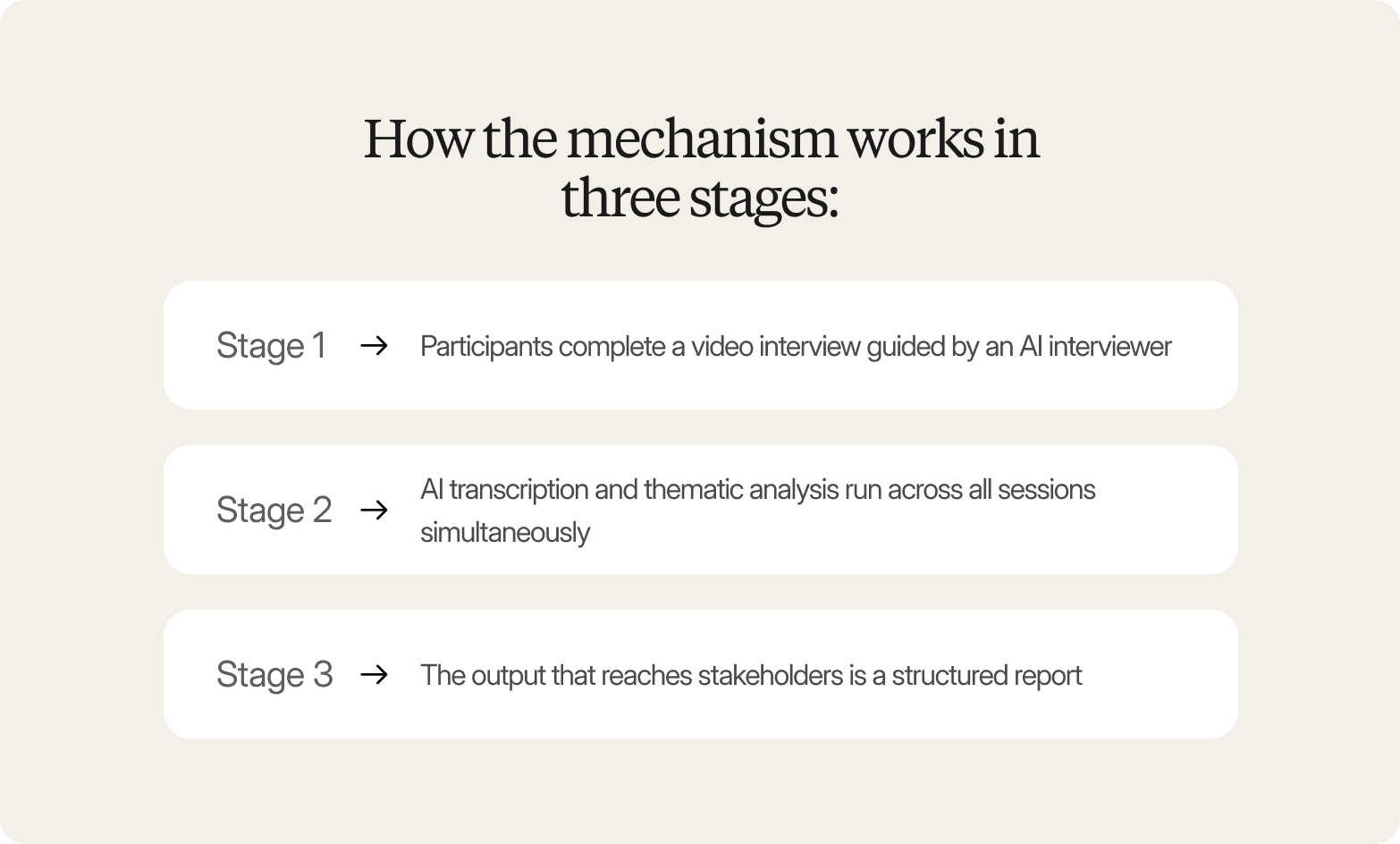
Asynchronous AI-moderated video interviews remove that constraint by running 10 to 1,000 conversations with individual customers in parallel, on participants' own schedules. The mechanism works in three stages:
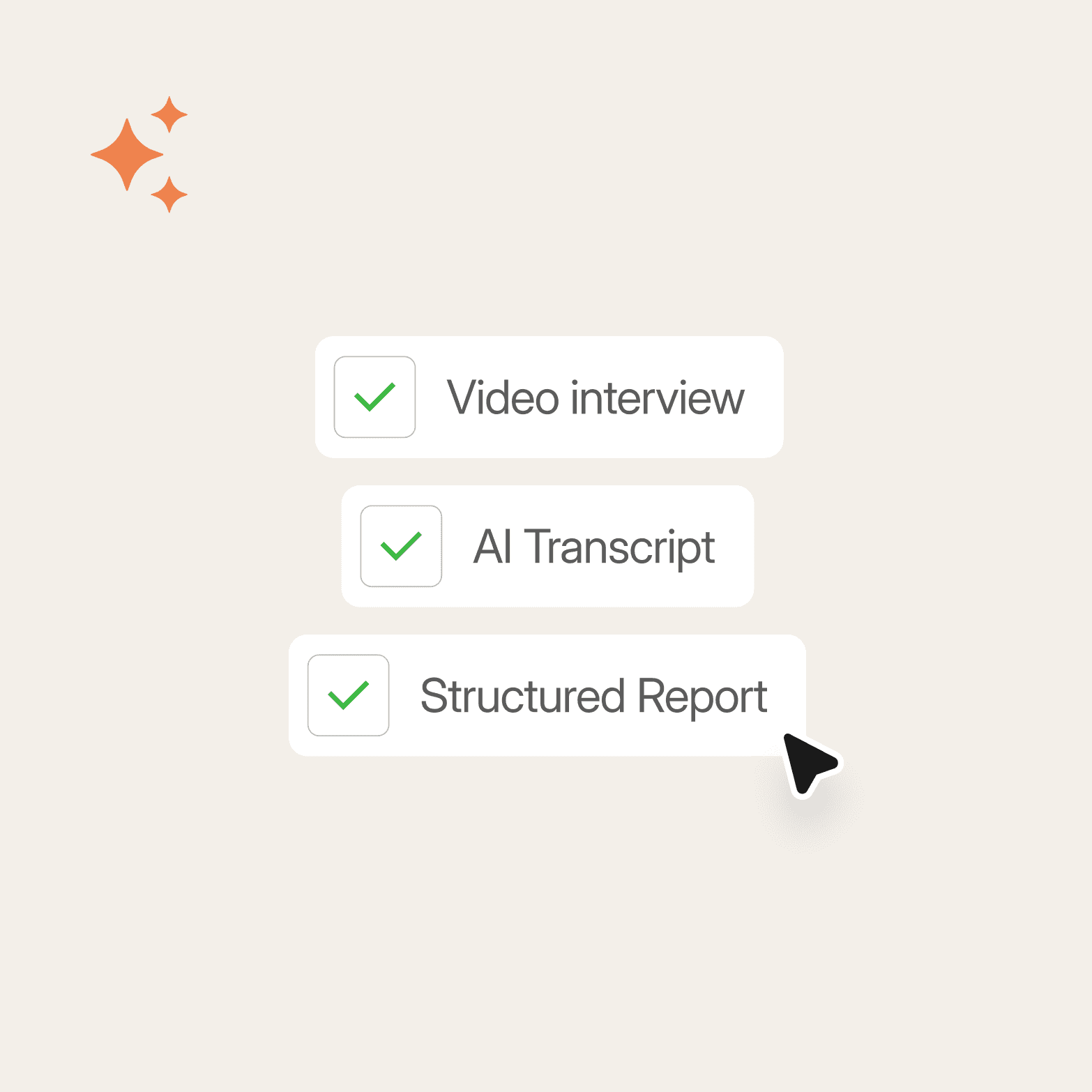
Participants complete a video interview guided by an AI interviewer that adapts its follow-up questions based on what each person actually says, not a rigid script. A participant who hesitates at a price point gets probed; one who responds strongly to a packaging detail gets asked why.
AI transcription and thematic analysis run across all sessions simultaneously, replacing weeks of manual data collection with automated customer analytics that identify patterns and surface verbatim quotes without human coding. This data integration across hundreds of interviews at once is what makes the timeline compression possible.
The output that reaches stakeholders is a structured report with video clips linked to themes, so the evidence behind each finding is one click away.
Conveo compresses the qual cycle from weeks to days by running AI-moderated video interviews asynchronously and delivering traceable, stakeholder-ready insights before the decision window closes. When a brand team can validate a product concept across three customer segments in five days instead of six weeks, the research lands before the creative brief is locked, not after the campaign ships.
Adaptive probing and the depth advantage
Customer surveys tell you what customers said. They rarely tell you why. A 60% "probably would use" score looks promising until you sit across from the customer and watch their expression change when they try to explain it.
That gap between stated preference and underlying motivation is where strategy breaks down, and where AI-moderated video interviews do their most consequential work. Unlike a fixed customer survey that accepts whatever response a participant provides, Conveo's AI interviewer probes based on what participants actually say. When a respondent hesitates, qualifies their answer, or mentions something unexpected, the AI follows up. The conversation follows the signal, not the script, capturing the behavioral data and customer sentiment that closed-ended questions systematically miss. This is how a customer intelligence strategy moves beyond tracking scores to understanding the reasoning behind them.
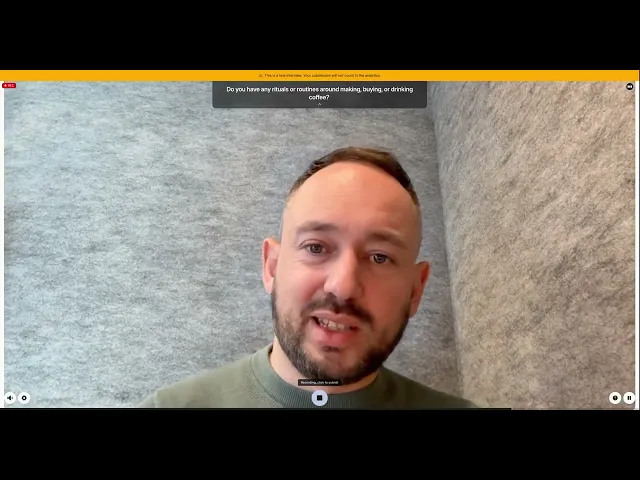
See Conveo's AI moderation in action:
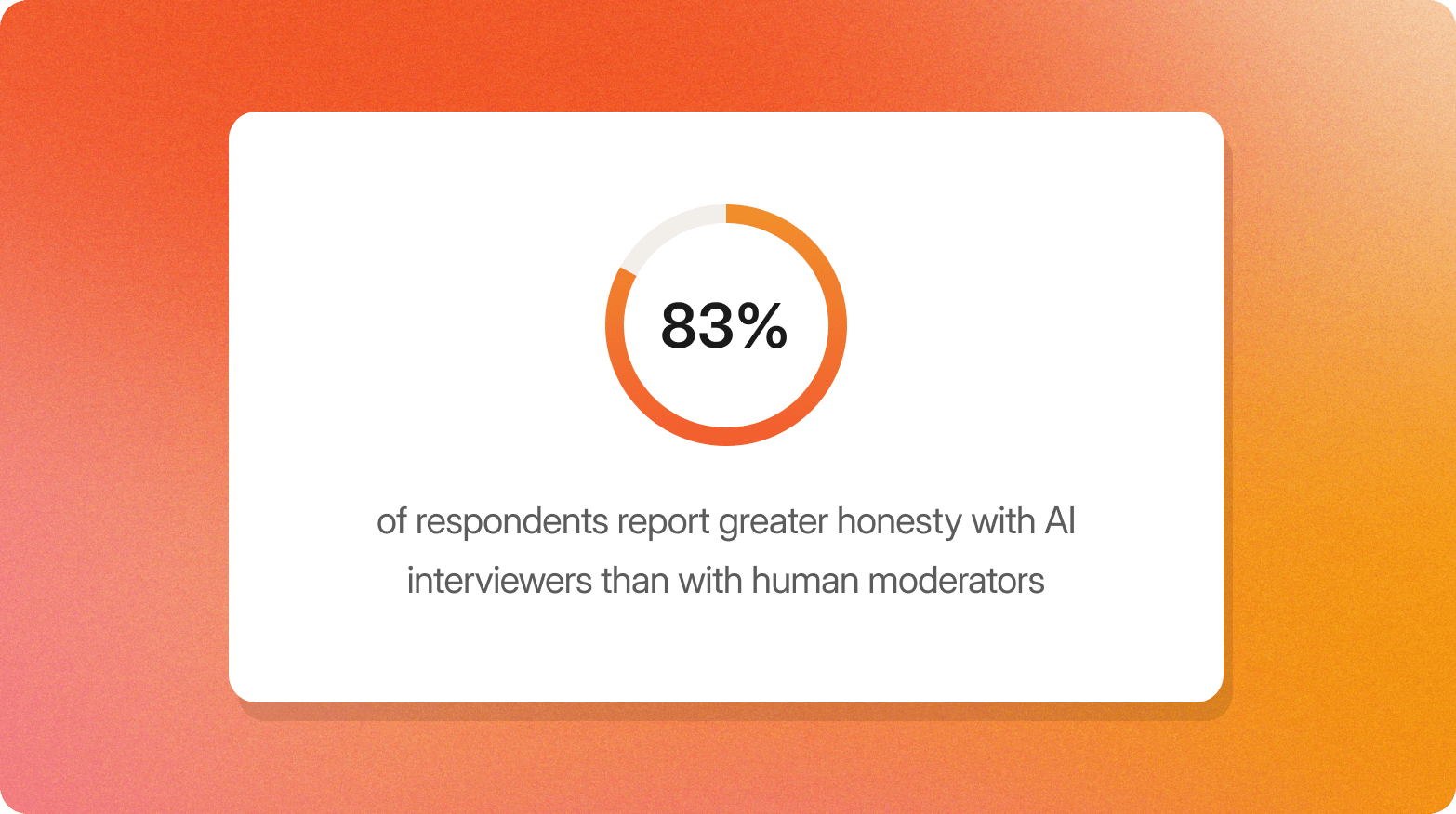
Eighty-three percent of respondents report greater honesty with AI interviewers than with human moderators, which means the adaptive model doesn't just capture more. It captures more accurately. Consider a financial services company testing a new app feature.
Surveys show 60% of users would "probably use it." Video interviews identify opportunities the survey obscured entirely: users associate the feature with complexity and distrust, and that surfaces in tone, in the pause before they answer, in the language they choose. That finding doesn't just inform the feature. It changes the positioning strategy entirely. Customer preferences and customer satisfaction drivers, it turns out, are rarely captured in the aggregate score. They live in the explanation behind it.
Video captures what text responses flatten. A hesitation, a shift in tone, a visible reaction to a price point, these signals don't survive a chat transcript. They do survive a video clip. And when stakeholders can see and hear the customer for themselves, the findings don't need defending before the strategy conversation starts.
Why traceability matters for strategic decisions
The hesitation is familiar: a senior leader reads a summary of consumer findings and then asks for the agency debrief before committing to anything. Not because the research was wrong, but because they couldn't verify it. When findings arrive as unsourced summaries, stakeholders treat them as opinions, not evidence.
Generic AI synthesis produces fast outputs, but it cannot answer the question that matters most in a strategic review: where does this come from? Customer intelligence data generated by predictive models or LLM synthesis may pattern-match well, but it cannot be traced back to real customer transactions, real customer interactions, or real human responses. Predictive analytics applied to passive behavioral signals can indicate what customers did. They cannot explain why. When a CMO pushes back on a positioning recommendation, there's nothing to show them except the summary itself.
Conveo's approach is built around a different standard. Every insight links back to the original video session that produced it. Stakeholders can watch a participant explain their hesitation about a price point, hear the tone shift when a competing brand is mentioned, or see the moment a concept lands. The finding isn't just stated. It's demonstrable. That auditability changes how quickly alignment forms and how confidently teams leverage customer intelligence to move decisions forward.
The same infrastructure meets enterprise governance requirements. SOC 2 certification, GDPR compliance, and California Consumer Privacy Act alignment ensure that traceable consumer intelligence satisfies enterprise security, data management, and procurement requirements. EU regional data hosting means the evidence chain doesn't create a compliance risk; at the same time, it's building strategic confidence.
From one-off studies to compounding customer insights
Most brand and marketing teams treat research as a one-time event. A study runs, findings land in a deck, the deck gets presented, and then it sits in a shared drive while the next initiative starts from scratch. The institutional knowledge never compounds. Every new campaign, concept, or market entry question begins without the benefit of what was already learned, including everything collected about consumer behavior, customer preferences, and broader market trends that prior studies surfaced.
The structural fix is an insight library that grows with every study. Instead of finding living in isolated deliverables, each interview, theme, and clip flows into a searchable workspace that teams can query across initiatives. A brand team testing new positioning can search for how individual customers responded to similar framing in prior studies. A product team entering a new category can review past conversations with that segment, including historical data on customer preferences, purchase history patterns, and unmet needs, before a single new interview runs. This is how teams start to leverage customer intelligence as a genuine strategic asset rather than a one-time diagnostic.
The compounding effect becomes most visible at scale. A CPG company running quarterly brand tracking builds a library of 2,000+ customer interactions over two years. When the innovation team tests a new product concept, they search the library for past conversations about the category, analyze trends around emerging trends and shifting customer expectations, and identify unmet needs that directly inform the positioning strategy, without commissioning a new study from zero. Marketing efforts become more targeted because teams aren't guessing at customer segments; they're drawing on existing evidence. Over time, this approach deepens customer retention insights and stronger customer relationships: teams learn not just what drives acquisition, but what shapes customer lifetime value across different audience groups. That is what it means for consumer intelligence to improve strategy over time, functioning alongside customer relationship management systems and customer intelligence analytics to create a complete picture of the customer journey, rather than generating an isolated project output.
Over 400 enterprises, including Google, FOX, and Bosch, use Conveo to build institutional consumer intelligence that compounds across studies rather than resetting with each new agency or consulting engagement.
"Powerful if you can just look back and just ask AI about the past."
Marketing Manager, ASICS
Why Conveo is built for this moment
Strategy teams evaluating consumer intelligence options typically default to one of three categories: traditional research agencies, customer survey platforms, and generic AI tools. Each solves part of the problem, and each forces a tradeoff that compounds over time.
Traditional agencies deliver the depth that consequential decisions require. The tradeoff is time. A six-week fieldwork-to-debrief cycle means consumer intelligence arrives after the meeting has already happened, the brief is locked, and the decision is in motion. Focus groups and one-at-a-time moderated interviews add recruiter lead times on top of that.
Survey platforms solve the speed problem, but create a different one. When a concept test returns a 6.2 out of 10 score and no explanation, the team is left guessing whether the issue was the price, the messaging, or the visual identity. What customers said is visible. Why did they say it is not? Business intelligence dashboards and transactional data can tell you what happened, but they can't explain the customer behavior or broader consumer behavior behind it. Targeted marketing strategies and personalized marketing built on survey scores alone tend to optimize for the wrong variable because they're missing the motivational context that only qualitative depth provides.
Generic AI tools and synthetic interview platforms are fast, but they create a credibility problem that surfaces at the worst moment. Customer intelligence analytics generated without grounding in real conversations cannot be audited. The market is splitting between platforms that rely on synthetic or avatar respondents and those committed to real participants with verifiable evidence, and that split matters when findings need to hold up in a strategic review.
Conveo is the customer intelligence platform built around a different model: one that doesn't force the tradeoff in the first place. Real AI-moderated video conversations, not synthetic respondents, run asynchronously at scale, across 50+ languages and multiple markets simultaneously, without multiplying agency costs. Customer intelligence tools that rely on polling, passive social media data, or behavioral signals alone miss the motivations and emotional context that video captures. Conveo doesn't. Findings arrive in days, tied to verbatim quotes and video clips that stakeholders can watch and verify directly. Every insight compounds into a searchable library that grows more valuable with each study. And the entire workflow, study design, recruitment, fraud filtering, incentives, AI-moderated interviewing, synthesis, and reporting, runs on a single platform, so teams that have relied on agencies as their default execution layer can improve customer retention, build marketing strategies grounded in real voice-of-customer evidence, and reduce agency dependency without reducing research quality.
Over 400 enterprises, including Google, FOX, and Bosch, have made Conveo the infrastructure layer for their consumer intelligence function. Teams report savings of up to 50-80% compared to traditional agency engagements, depending on study size, scope, and frequency. SOC 2 certification, GDPR compliance, and EU regional data hosting mean those savings don't come with a compliance risk attached.
Brand and marketing teams don't lack opinions about what consumers want. What they lack is verified consumer input that arrives before the briefing room fills up. Conveo closes that gap. Studies move from brief to fieldwork in hours, findings come back as traceable evidence tied to real participant video, and every insight is shareable enough to travel further than the meeting it was built for.
Frequently Asked Questions
What is consumer intelligence, and how does it differ from market research?
Market research is episodic. It answers a specific question on a defined timeline, then expires in a deck. Consumer intelligence is an ongoing infrastructure: searchable, compounding across studies, and available before the question is even asked. The types of customer intelligence this enables go beyond annual tracking or periodic deep dives. They include continuous behavioral data, attitudinal data, and qualitative context that improve customer service, inform product decisions, and strengthen marketing efforts over time. Where analyzing customer data from customer relationship management (CRM) systems tells you what happened, consumer intelligence captures the why behind customer behavior: the motivations, customer preferences, and customer expectations that drive decisions.
How does consumer intelligence improve product strategy?
It replaces internal assumptions with real customer evidence before development commitments are made. Customer intelligence analytics applied to video interviews surface the specific language individual customers use to describe a pain point, language that directly shapes positioning and messaging. A SaaS team testing three roadmap priorities might discover that the assumed top priority is actually low-value to most customer segments, and reallocate engineering resources before a single sprint is planned around the wrong problem. These are the customer intelligence examples that separate teams making evidence-led decisions from those validating assumptions after the fact. That outcome isn't available from demographic data or purchase history alone.
What are BCG consumer insights, and how does it relate to consumer intelligence platforms?
BCG's Center for Customer Insight helps enterprises structure their insights function through periodic strategic reviews. BCG's own maturity models describe the goal as continuous consumer intelligence: valuable insights flowing into decisions in real time, not landing as a periodic debrief. The limitation of consulting-led models is that they're designed for deep, periodic interventions. By the time an engagement concludes, the campaign brief may already be locked. Platforms like Conveo operationalize the continuous model directly, without waiting for an external engagement cycle to complete.
How do consumer insights reports differ from real-time consumer intelligence?
Traditional reports follow a sequential process: recruit, moderate, transcribe, synthesize, and present, which typically takes six to ten weeks. By then, the decision has usually been made. Real-time consumer intelligence runs AI-moderated interviews asynchronously, delivers customer intelligence data in days, and ties every insight to traceable video clips and verbatim quotes. Teams can then apply customer analytics and identify opportunities across the full dataset within the same week fieldwork closes, rather than waiting for an analyst to synthesize weeks of recorded sessions. Conveo's insight library also means past findings stay searchable, so teams aren't commissioning a new report every time a question resurfaces across customer segments.
Can small strategy teams use consumer intelligence platforms without research expertise?
Yes. Conveo's workflow, study setup, AI-moderated interviewing, and automated synthesis remove the operational complexity without requiring qualitative research training. The benefits of customer intelligence are most significant for teams that need findings traceable enough to defend a strategic decision, and that want to develop a customer intelligence strategy that builds compounding knowledge over time rather than resetting with each initiative. Teams looking for quick pulse checks may find a lighter-weight survey tool sufficient. But teams that want to improve customer retention, identify opportunities earlier in the planning cycle, and reduce reliance on external agencies will find Conveo purpose-built for that goal.
How does consumer intelligence support multi-market strategy?
Conveo runs AI-moderated video interviews across 50+ languages simultaneously, with automated transcription and translation built in. A brand testing positioning across North America, Europe, and APAC gets consumer data from all three regions in the same week, capturing not just demographic data but the psychographic data, emerging trends, and cultural nuance behind customer preferences in each market. This makes it possible to identify opportunities, adjust targeted marketing strategies, and refine messaging before regional launch dates diverge, rather than discovering misalignment after campaigns are already live.

About the author
Charlotte Morelli
Research Impact Lead
Charlotte studied economics, joined Opinium as a research analyst and left it as a research manager, with Charles among her clients. She partners with clients as a researcher and thought partner, runs several StoryLines programs, and was the first person in the New York office. Outside work she screen prints her own art onto shirts.
Meet Charlotte on film →Qualitative insights at the speed of your business.
Conveo runs AI-moderated video interviews and structures everything they say.