In this article
TL;DR
Most AI market research tools promise faster research, but speed alone isn't enough. If stakeholders can't see where insights came from or who provided the feedback, they're unlikely to trust the findings or act on them.
A good way to evaluate these tools is to focus on four areas: whether they collect feedback from real people, whether you can trace insights back to the original responses, whether they meet your security and compliance requirements, and how much of your research workflows they automate.
The biggest challenge is proving that findings come from real participant feedback. If leaders can't verify the source of an insight, they're less likely to use it when making decisions.
When used well, AI market research tools can reduce qualitative research timelines from more than six weeks to as little as three days while still giving stakeholders confidence in the results.
AI market research tools promise faster insights. The challenge is whether those insights are solid enough to base decisions on. The tools that genuinely deliver on both are harder to find than the number of options suggests, and evaluating them without a clear framework is difficult.
This article covers ten AI market research platforms worth evaluating in 2026, assessed on participant authenticity, evidence traceability, governance compliance, and workflow coverage. By the end, you'll have a clear picture of what separates credible AI market research tools from fast ones so you can make your shortlist with confidence.
The Trust Framework: How to Evaluate AI Market Research Tools for Enterprise Use
Four criteria separate tools that produce credible, decision-ready insights from those that produce fast outputs stakeholders won't act on.
Participant Authenticity: Real Humans vs. Synthetic Respondents
One way some AI-powered market research tools speed up studies is by using synthetic respondents to collect data. Rather than recruiting real people, the platform uses machine learning to simulate personas, or digital twins, similar to your target audience. The output can look convincing, but it reflects patterns in training data, not actual consumer behavior.
Synthetic personas have legitimate uses for market researchers, for example:
Early-stage hypothesis generation
Pressure-testing a discussion guide
Exploring a range of possible consumer perspectives before committing to a study
The problem arises when those synthetic data outputs get presented as consumer feedback and used to inform real decisions about brand, product, or positioning. A language model can tell you what a 35-year-old parent might say. It can't tell you what they genuinely think. For qualitative data that needs to hold up under scrutiny, you need real participants.
Evidence Traceability: Can Stakeholders Inspect the Source?
Speed only matters if stakeholders can trust the findings. To build that trust, teams need to see where insights came from. Evidence traceability means every theme, quote, or finding links back to a specific participant response, whether that's a video clip or a transcript. Tools that generate insights without showing the source data force stakeholders to trust the AI model, which isn’t enough for high-stakes decisions.
Governance & Compliance: SOC 2, GDPR, Regional Data Hosting
Most enterprise procurement teams require three things before a research tool can be approved:
SOC 2 certified: Security controls have been independently audited
GDPR compliant: The tool meets EU data protection requirements
Data hosting options: teams need to be able to choose where participant data is stored, whether in the EU, the US, or another region, depending on their legal and compliance requirements
Tools without these credentials won't pass legal or IT review. Treat any tool that lists compliance as "in progress" or doesn't address it publicly as unconfirmed until you have documentation.
Workflow Coverage: Which Steps Does AI Actually Compress?
AI market research tools don't speed up every part of the research process equally. Knowing what AI can automate and what still needs human input helps set realistic expectations.
AI tools can recruit participants faster, schedule sessions automatically, moderate interviews at scale, and analyze responses in a fraction of the time it would take a researcher to do the same work manually. The difference in timelines looks like this:
| Step | Traditional agency timeline | AI-compressed timeline |
|---|---|---|
| Recruiting | Researchers manually screen and recruit participants, which often takes 1 to 2 weeks. | AI matches participants from existing panels, often within 24 to 48 hours. |
| Scheduling | Teams spend days coordinating interview times through emails and calendar invites. | Participants can book sessions automatically, often on the same day. |
| Moderation | A researcher conducts interviews one at a time over several days or weeks. | AI can moderate multiple interviews at the same time through asynchronous sessions. |
| Transcription | Teams wait for transcripts to be created, which can take 2 to 5 days. | Transcripts are generated automatically as interviews are completed. |
| Coding | Researchers manually review responses and identify themes over 1 to 2 weeks. | AI can organize responses into initial themes within a few hours. |
| Synthesis and reporting | Researchers review findings and write reports over 1 to 2 weeks. | AI can generate a first draft of findings on the same day. |
| Total | Most projects take six weeks or longer to complete. | Some projects can be completed in as little as three days. |
AI can speed up fieldwork and analysis, but it can't determine what research questions matter most or how findings should influence strategic decision-making. Those decisions still depend on human judgment.
10 AI Market Research Tools Worth Evaluating
The table below gives you an overview of essential criteria for the best AI tools for market research.
| Tool | Best for | Core strength | Compliance | Traceability |
|---|---|---|---|---|
| Conveo | Enterprise, in-house research teams building continuous research programs | Compounding knowledge library, 50+ markets, real participants only | SOC 2: ✓ GDPR: ✓ | Video-first evidence trail from real participants, timestamped clips and quotes |
| Listen Labs | Teams running research without a research function | 30M+ participant pool, Quality Guard fraud detection | SOC 2: ✓ GDPR: ✓ | Timestamped video clips and quotes |
| GetWhy | Consumer goods concept and creative testing | PhD-level researcher oversight, cross-study Research Agent | SOC 2: ✓ GDPR: ✓ | Video clips and quotes |
| Voxpopme | Ongoing consumer research programs | Cross-project insights repository | SOC 2: ✓ GDPR: ✓ | Timestamped video clips |
| Discuss | Multi-market qualitative research at scale | AI and human moderation in one platform, 80+ languages | SOC 2: Not publicly confirmed GDPR: ✓ | Timestamped video clips and quotes |
| Suzy | Consumer research + live market monitoring | Structured research combined with real-time trend monitoring | SOC 2: ✓ GDPR: ✓ | Audio clips, transcripts, and quotes |
| Outset | Reaching large or distributed audiences quickly | 1.1 billion participant access, adaptive AI interviewer | SOC 2: ✓ GDPR: ✓ | Video clips and quotes |
| Strella | Fast-turnaround qualitative studies | Cross-study search via Explorer, flexible AI or human moderation | SOC 2: ✓ GDPR: ✓ | Video clips and quotes |
| Remesh | Group concept and message testing | Group voting surfaces consensus and disagreement at scale | SOC 2: ✓ GDPR: ✓ | Text citations for group sessions; video clips for 1:1 |
| User Intuition | Ongoing customer intelligence programs | Customer Intelligence Hub compounds findings across all studies | SOC 2: In progress GDPR: ✓ | Quotes |
You’ll find complete profiles for each platform further down so you can decide which AI tool is best for market research for your team.
1. Conveo
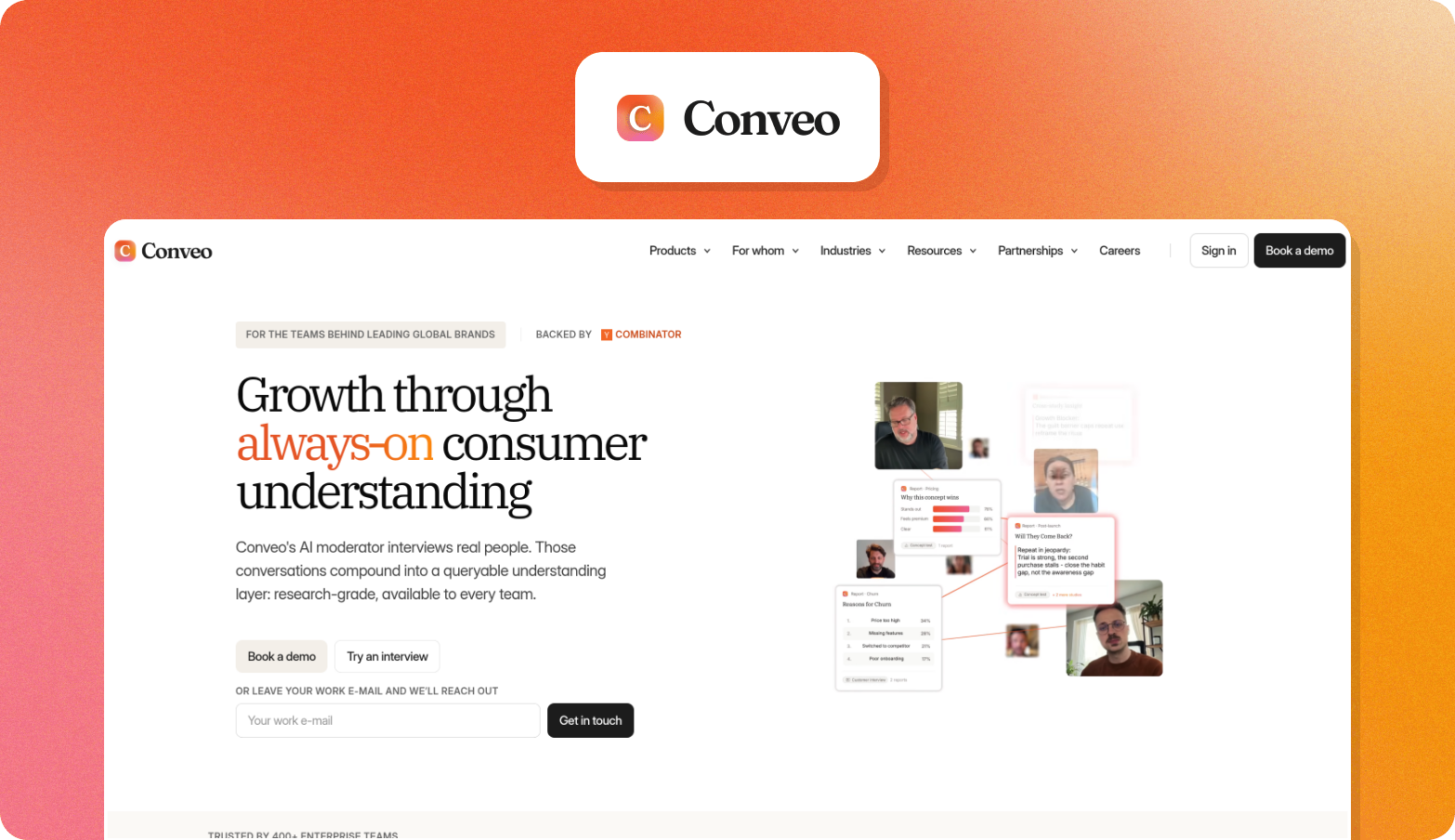
Conveo is a video-first AI research platform that conducts asynchronous interviews with real participants at scale, then automates transcription, organizes responses by theme, and summarizes key patterns.
Best For
CMI and insights teams running qualitative research at enterprise scale who need outputs that stakeholders will trust and act on.
Core Strength
Conveo produces findings that are traceable to real participants and built to withstand scrutiny.
"Conveo's video-first approach is a real differentiating methodological advantage. The ability to distill insights from reactions and not just hear answers adds context you simply can't get from transcript-only tools, or any other tool in the market for that matter."
Senior Marketing Research & Insights Manager, Google
Key Features
Video interviews with human participants, not synthetic AI participants, across 50+ markets. Our data shows that 83% of participants report being as open or more open with an AI moderator as with a human one, so the findings are as reliable as those from traditional methods.
Multimodal capture across video, audio, text, and on-screen audience behavior, so the full context of a response is recorded, not just the words.
Every finding links back to a timestamped video clip and quote, so stakeholders can directly verify the evidence behind any conclusion.
A compounding knowledge library that indexes findings across studies, so each new project can be interrogated alongside historical research rather than starting from scratch.
AI moderation runs in parallel across multiple participants simultaneously. Studies can cover thousands of participants with no limits on interview length or the number of questions asked. Studies that would take a traditional agency six or more weeks can be completed in as few as three days.
12+ panel partners are available in-product, and teams can invite participants directly from their own contact lists, rather than being locked to a single provider.
Built for large in-house research teams running multiple studies at once. Shared topic guides and locked templates let teams keep new studies consistent with historical research and avoid the coordination problems that arise when 50 or more researchers work on the same platform.
SOC 2 certified and GDPR compliant. Customers choose where their data is hosted, whether in the EU, the US, or another region, depending on their compliance requirements.
Key Limitation
Conveo is built for continuous qualitative research. Teams whose primary need is a quantitative survey tooling should look elsewhere.
Pricing
Pricing is available on request.
2. Listen Labs
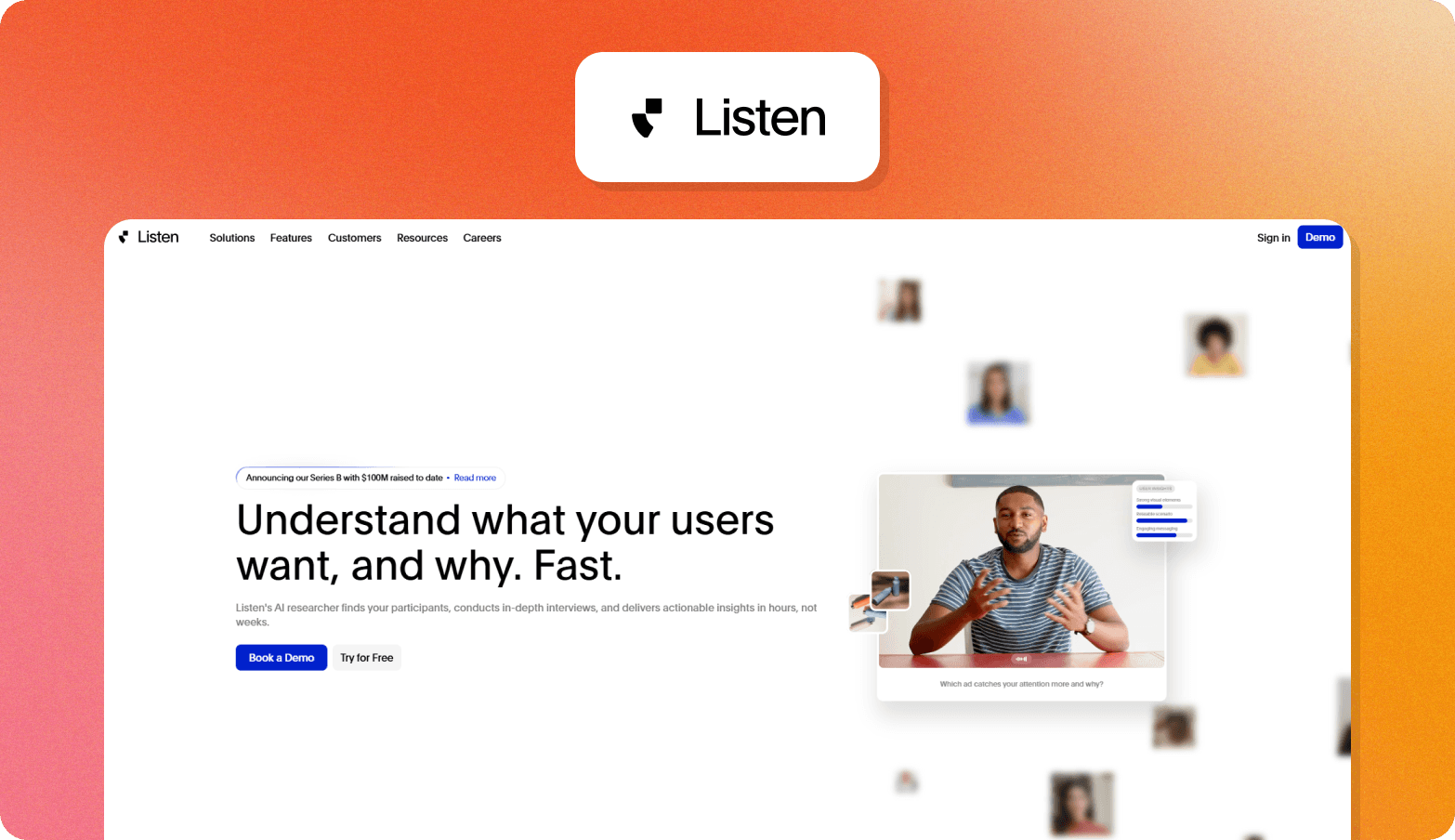
Listen Labs is an AI-moderated research platform for teams that want to run consumer studies without a dedicated insights function.
Best for: Insights and marketing teams that want to reach a wide range of participants or hard-to-reach audiences and don't have their own participant pool.
Core strength: Quality Guard screens every session in real time, checking for rushed responses and scripted language, so data quality issues are caught during the study rather than after.
Key limitation: Listen Labs was built to make research possible for any team member, so if you already have a fully staffed research function, it's probably not the tool you'd reach for.
Pricing: Pricing isn't publicly listed and is available on request.
3. GetWhy
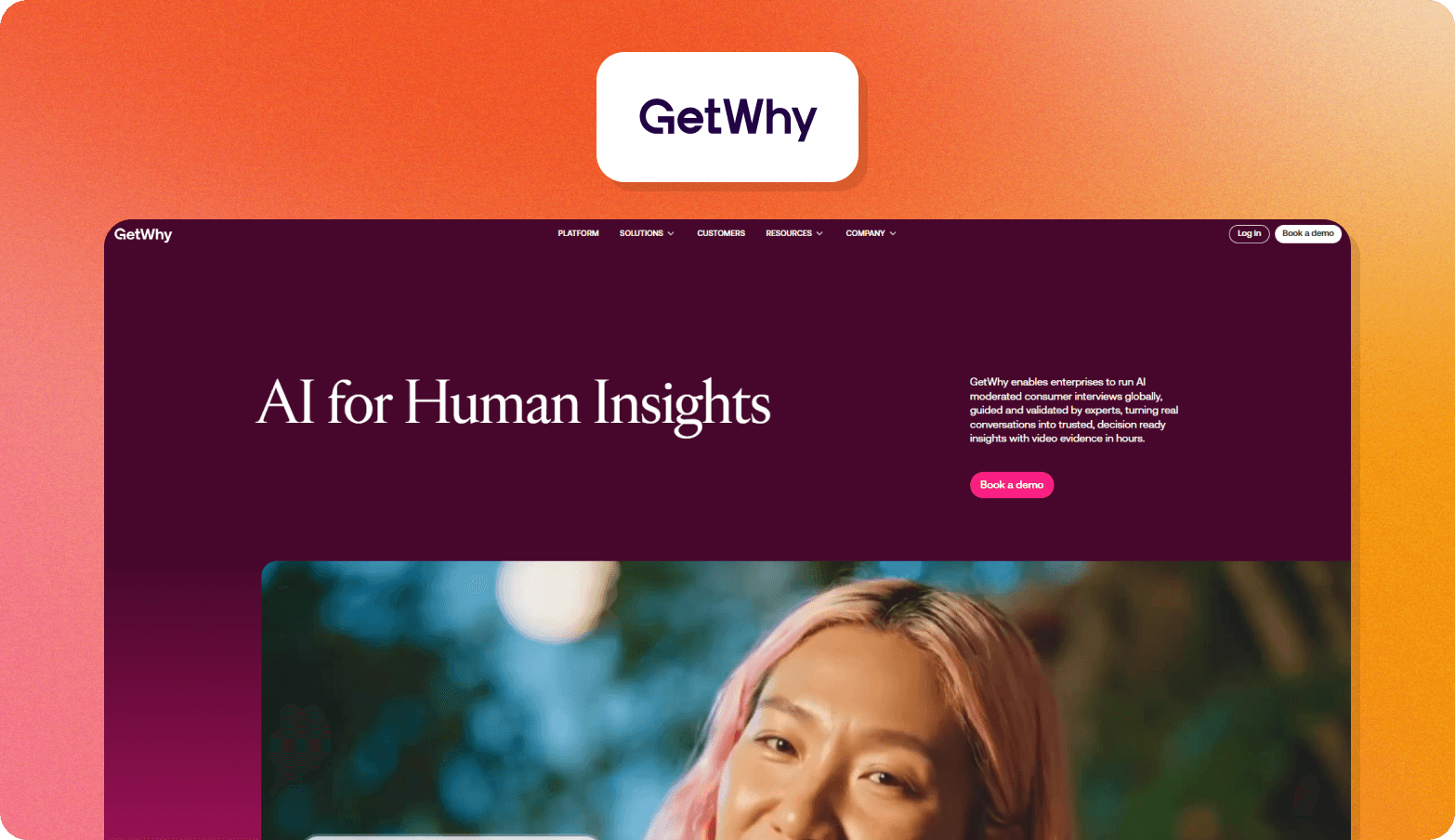
GetWhy pairs AI-moderated video interviews with the option of full-service delivery by a PhD-level researcher.
Best for: Consumer goods and retail teams running concept testing, creative testing, or packaging evaluation where findings will inform significant brand or product decisions.
Core strength: GetWhy Stories turns findings into different data visualization formats, including showreels, articles, and podcasts.
Key limitation: GetWhy’s customer base is largely major consumer goods companies, so B2B teams may find the platform and panel less suited to their needs.
Pricing: There are three tiers available (Starter, Basic, Custom), with pricing available on request.
4. Voxpopme
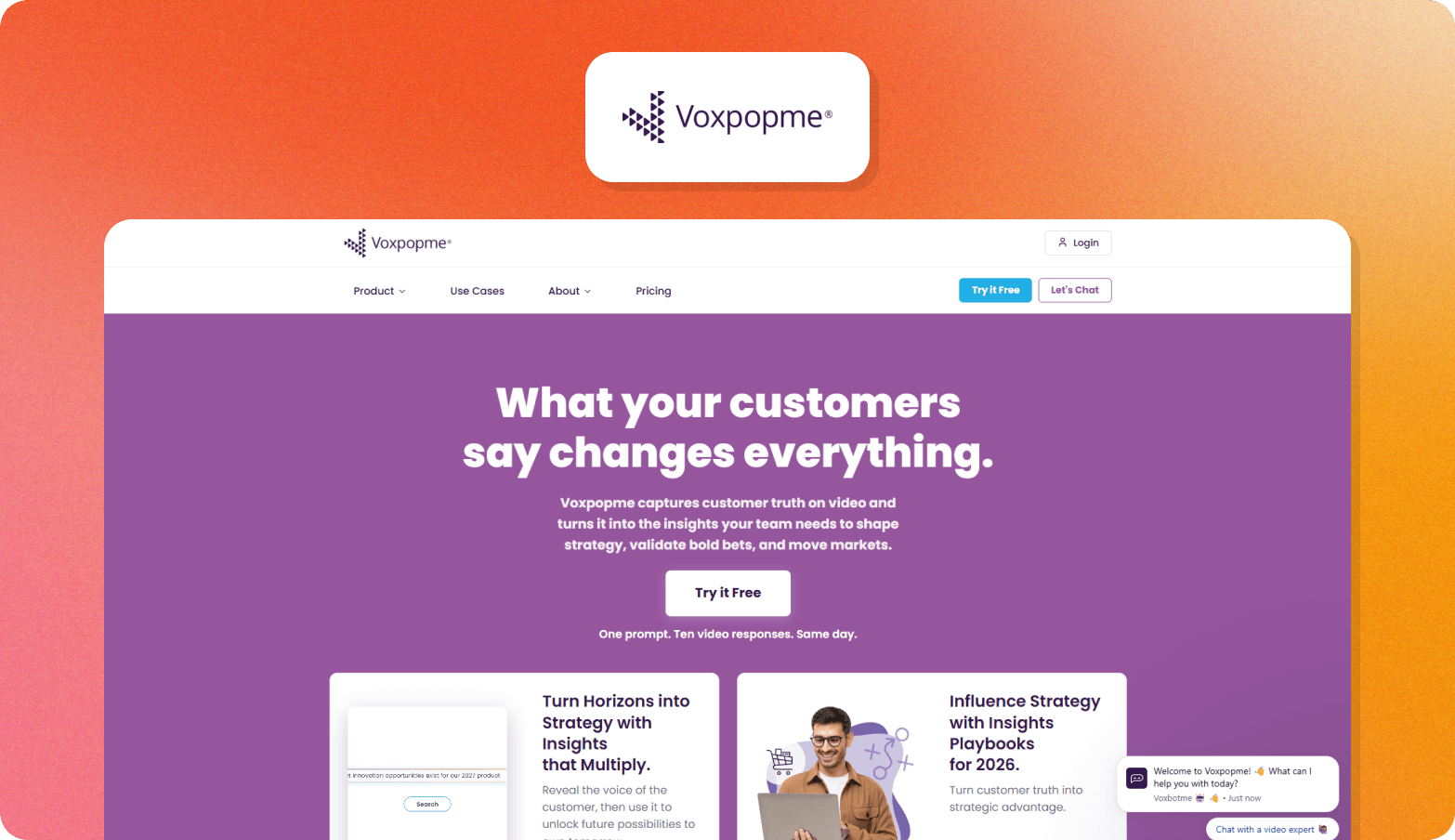
Voxpopme is a video research platform built for ongoing market research programs, including brand tracking, concept testing, and category research.
Best for: Consumer brand and insights teams running research programs in regular waves, where each study builds on the previous one.
Core strength: The cross-project Data and Insights Repository indexes findings from all studies and supports natural-language querying, enabling each new round of research to be compared against historical data.
Key limitation: Voxpopme was built around video surveys and also offers screen-based research, so teams that want to focus on AI-moderated interviews may prefer a dedicated platform.
Pricing: Pricing isn't publicly listed and is available on request.
5. Discuss
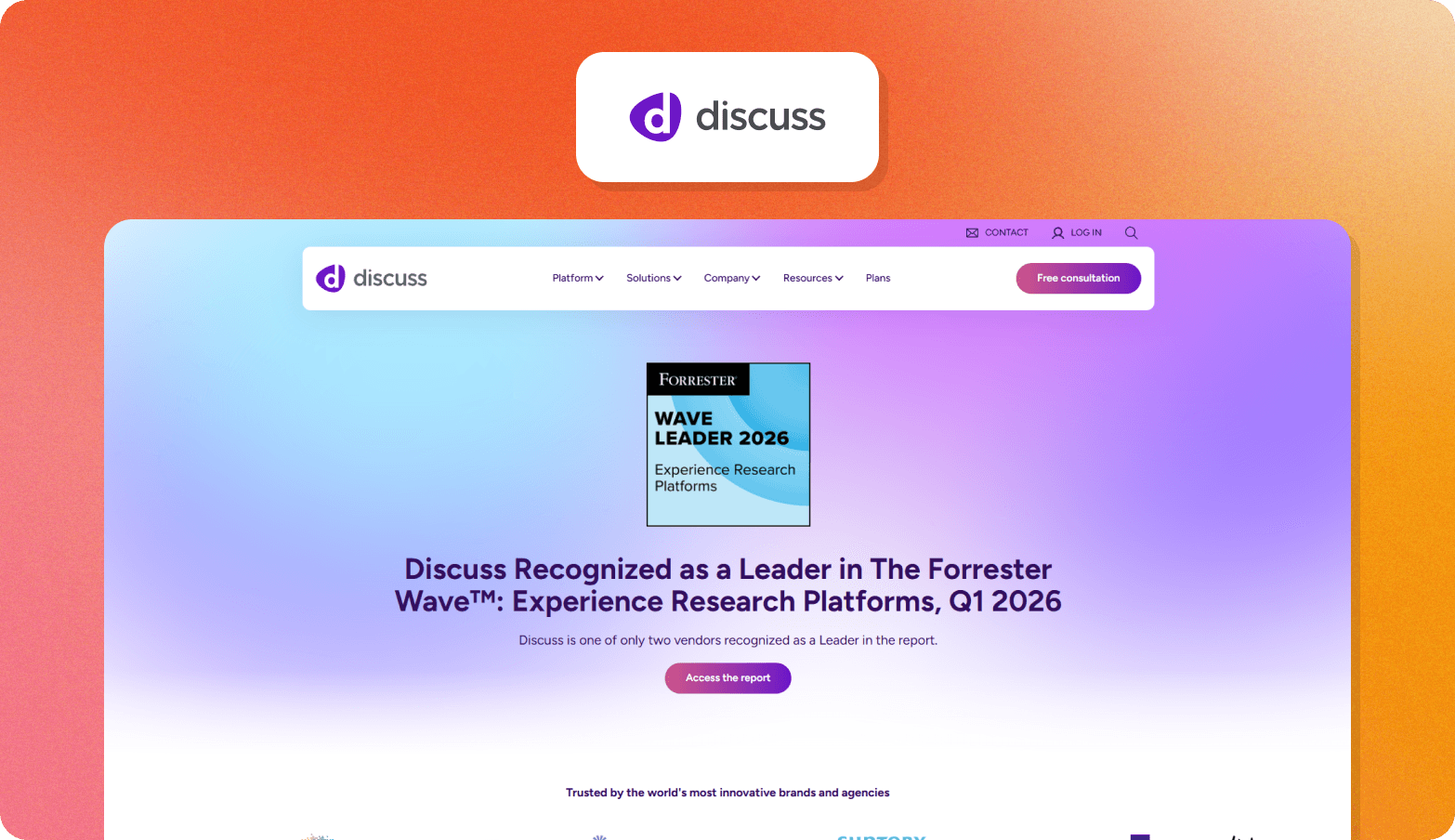
Discuss is a qualitative research platform that lets teams run studies with AI moderation or human moderation, depending on the research objective.
Best for: Market insights teams running large-scale qualitative research across multiple international markets.
Core strength: Genie, the platform's AI assistant, analyzes findings across studies to surface emerging trends.
Key limitation: SOC 2 certification isn't publicly confirmed, and data is hosted in the USA, which may create issues for legal and procurement teams with data residency requirements.
Pricing: Discuss has different pricing plans for brands and agencies with multiple tiers for each. Pricing is available on request.
6. Suzy
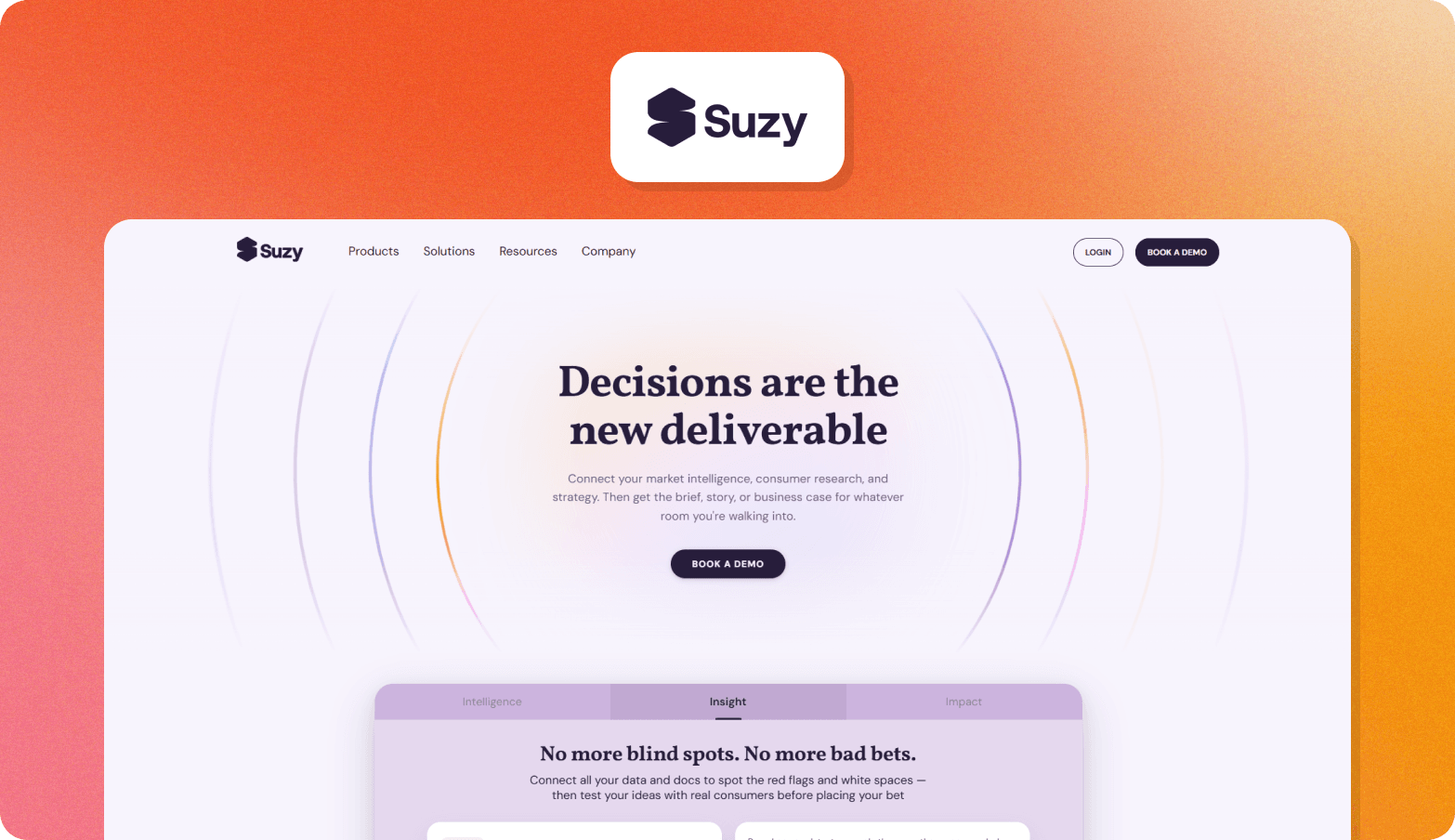
Suzy is a market research AI tool that combines surveys, live sessions, AI-moderated voice interviews, and social listening.
Best for: Brand and insights teams in consumer goods and retail who want to put research findings in the context of what's happening in the market right now.
Core strength: The combination of structured research and real-time trend monitoring is unusual, as most platforms focus on one or the other.
Key limitation: The platform is built around consumer research and physical products, so it may be less suited to B2B programs.
Pricing: Suzy has a credit-based model, with pricing available upon request.
7. Outset
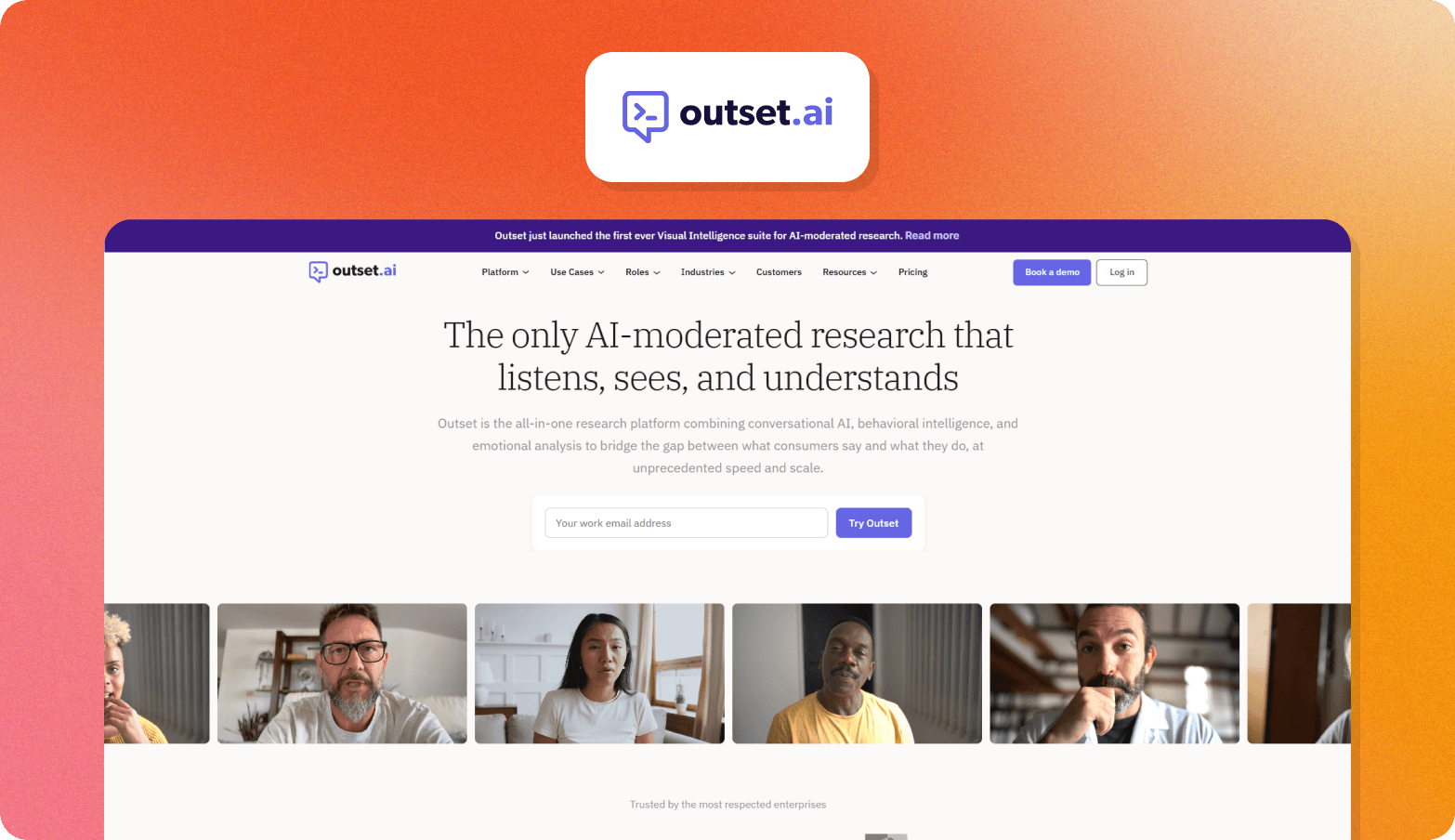
Outset is an AI tool for market research that runs asynchronous interviews across text, voice, and video formats.
Best for: Product and UX teams that need to reach large or geographically distributed consumer groups quickly.
Core strength: Participant access reaches 1.1 billion people via Prolific and User Interviews across 85+ countries, making it practical for multi-market consumer research
Key limitation: There's no built-in way to search or synthesize findings across studies without integrating with an additional platform.
Pricing: Outset offers custom pricing based on research and support needs.
8. Strella
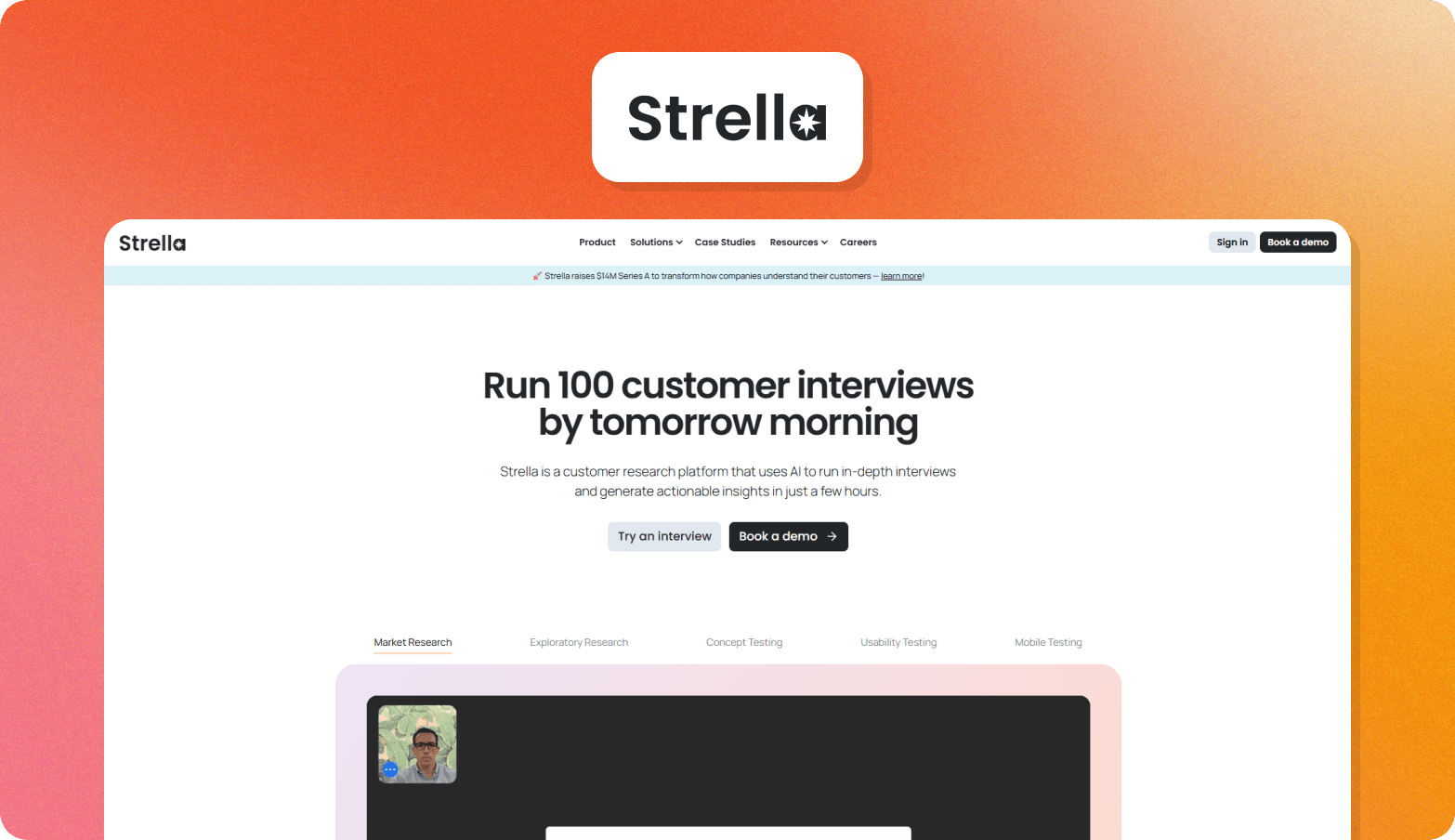
Strella is a self-serve platform for running AI-moderated or human-moderated video interviews.
Best for: Marketing and insights teams that need to turn around research quickly and want findings they can share directly with stakeholders.
Core strength: Explorer lets teams ask plain-language questions across all completed studies and pulls relevant video clips as answers.
Key limitation: Data is hosted in the US, which may create issues for EU-based teams with data residency requirements
Pricing: Pricing isn't publicly available and is available on request.
9. Remesh
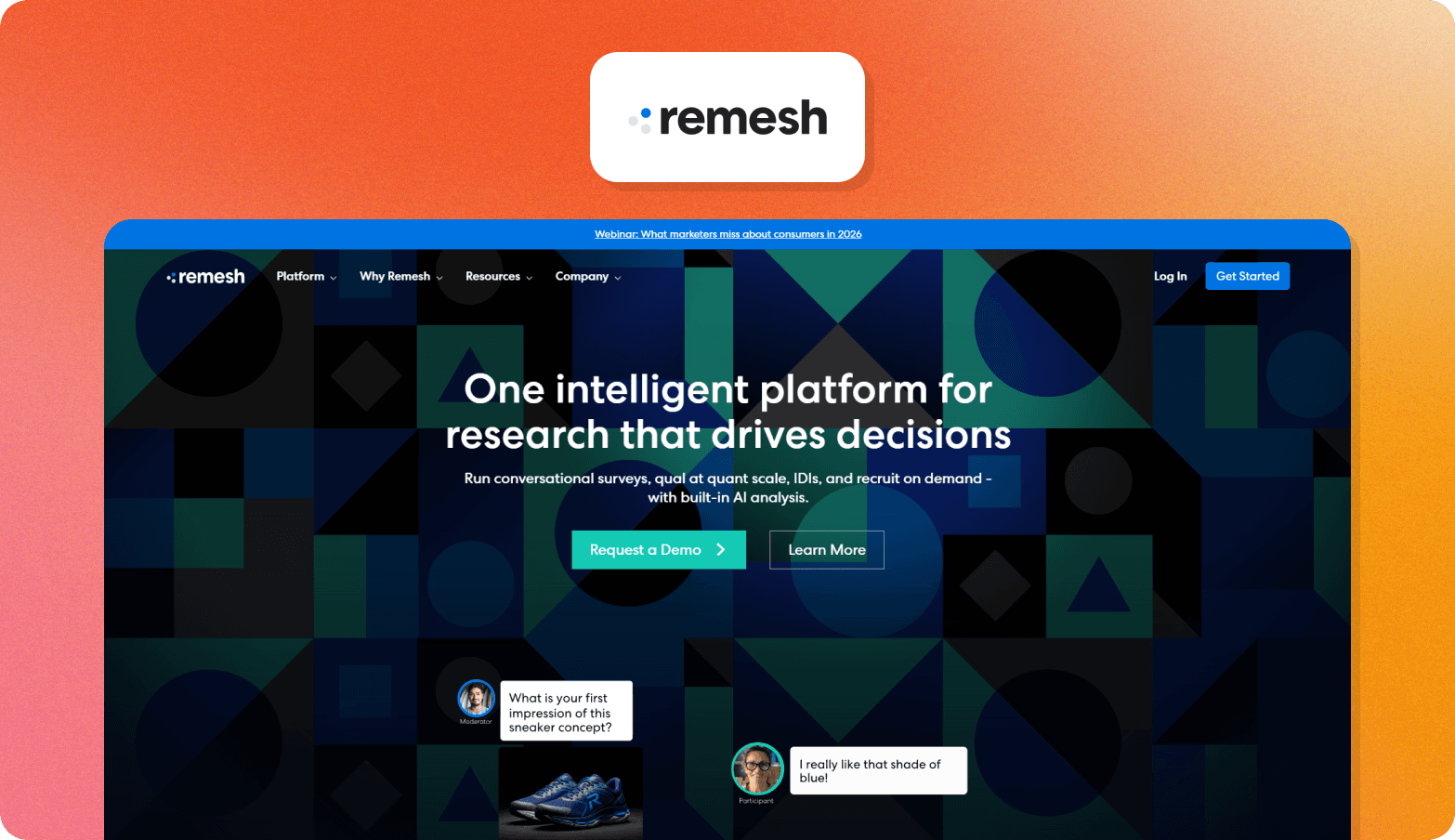
Remesh runs online focus groups where participants answer questions and vote on each other's responses.
Best for: Market research and consumer insights teams running concept tests or message tests where understanding how widely a view is shared matters as much as what people think.
Core strength: Remy, the AI agent, uses natural-language search to answer questions about the conversation data, with source citations.
Key limitation: AI moderation is available only for group sessions, not for one-on-one interviews.
Pricing: Remesh is priced per study, with pricing available on request.
10. User Intuition
User Intuition runs AI-moderated interviews using a structured questioning method designed to uncover the underlying motivations driving consumer behavior.
Best for: Fast-paced teams that want to build an ongoing customer intelligence practice rather than commission one-off studies.
Core strength: The Customer Intelligence Hub indexes every conversation using an ontology-based approach, so teams can ask plain-language questions across all their past studies
Key limitation: SOC 2 certification is still in progress, which may be a blocker for legal teams.
Pricing: Interviews start at $20 each, and new accounts get 3 free interviews on signup.
How to Choose the Right AI Market Research Tool for Your Team
Comparing AI features is important, but more useful starting points for choosing the best AI tool for market research are:
The research question your team wants to answer
Your current research workflow and any gaps you need to fill
What needs to happen with the findings once you have them
The table below maps four common buyer types across all three, along with the budget consideration that's usually most relevant for each. Find the row that matches your role and read across. If your work spans more than one, a CMI team that also supports product research, for example, prioritize the tool that fits your highest-volume use case first.
| Persona | Primary research question | What you need the platform to do | Output format | Budget consideration |
|---|---|---|---|---|
| CMI and insights teams | "Why are brand perceptions shifting in this segment?" | Run AI-moderated qualitative research with real participants, speed up analysis, and produce findings stakeholders can trust. | Video clips and quotes linked to findings, plus summaries that are ready to share. | Compare the cost against agency spend. If a platform delivers similar quality in less time, it may be a worthwhile replacement. |
| Brand and innovation teams | "Will this concept resonate with our target audience?" | Test concepts with real participants and return findings quickly enough to support upcoming decisions. | Video clips and summaries that stakeholders can review directly. | The key question is whether the platform delivers reliable findings quickly enough to be useful. |
| Product and UX teams | "What friction points are users experiencing in this flow?" | Run regular video interviews as part of an ongoing research program rather than occasional projects. | Video clips and quotes that teams can review directly, along with findings linked to specific parts of the user experience. | Teams running research frequently need pricing that makes regular studies affordable. |
| Agencies | "How can we deliver qualitative work faster without adding headcount?" | Automate moderation, transcription, and initial analysis while keeping researchers involved where their expertise adds value. | Client-ready reports, video clips, and supporting evidence that shows where findings came from. | The key question is whether the platform helps you take on more client work while maintaining quality. |
Remember that governance requirements can override fit entirely. Tools for AI market research that match your workflow perfectly but fail your legal or IT review is still a no. Check SOC 2 certification, GDPR compliance, and data hosting options before you make your shortlist of the best AI tools for marketing research.
How Conveo Approaches AI Market Research
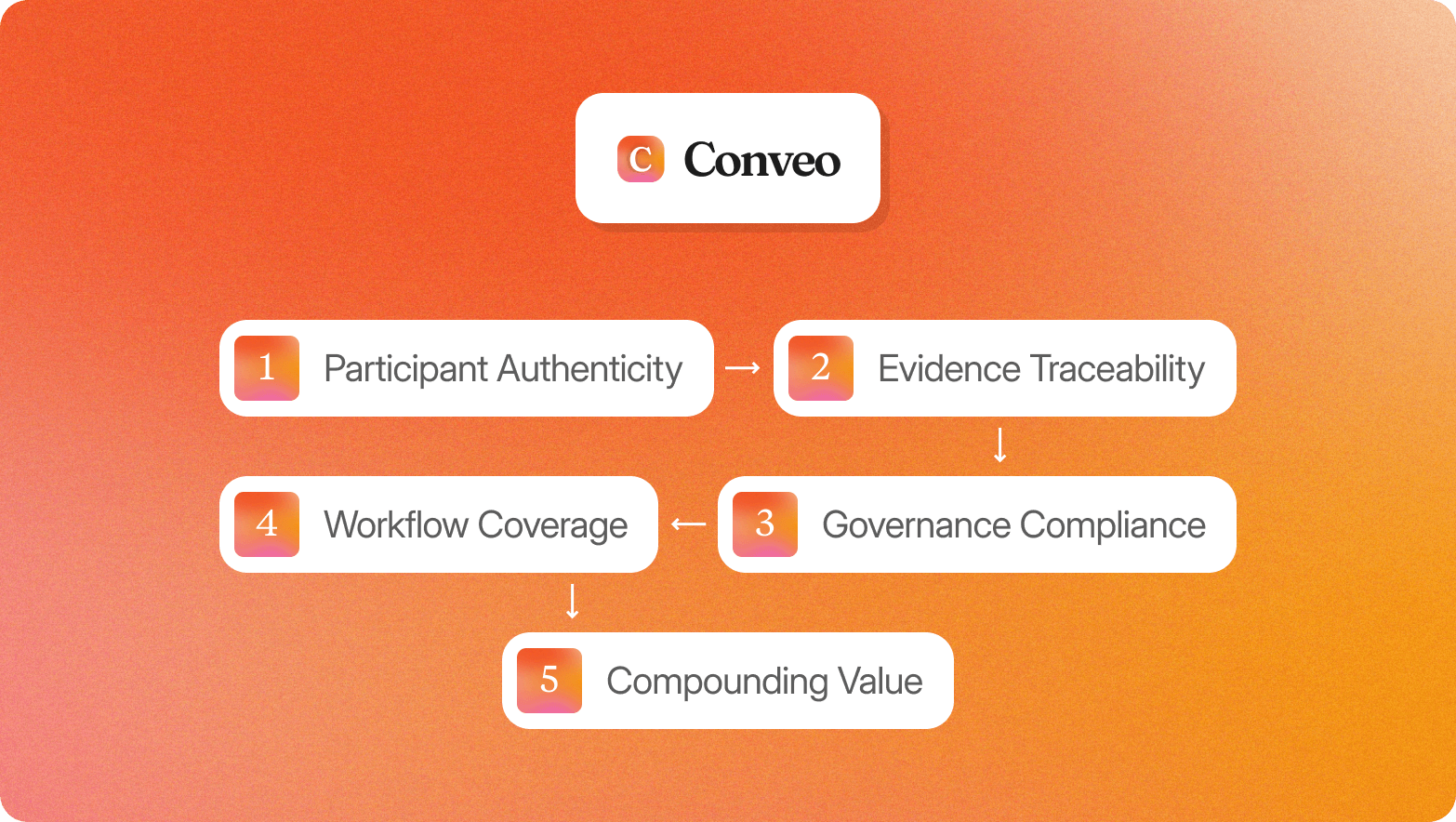
Conveo was built to keep real people at the center of market research while using AI to reduce the slow, manual parts of the process. Here’s how the platform focuses on making insights easier to trust and act on:
Participant Authenticity
Conveo runs real video interviews with human participants. There are no synthetic respondents. Teams can watch full conversations and hear how people actually respond, not just read summaries.
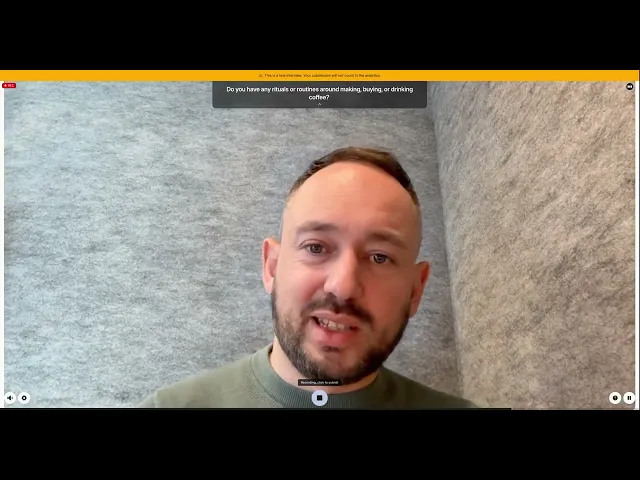
See the AI moderator in action: watch a real Conveo session
Evidence Traceability
Every insight links back to a timestamped video clip and a quote. This lets stakeholders check the source directly and see exactly how a conclusion was formed.
"The video clips make it tangible. It's not just data anymore, it's real people with real emotions."
CMI Lead, Edgard & Cooper
Governance Compliance
Conveo is SOC 2-certified and GDPR-compliant, with EU hosting available. This helps enterprise teams pass security and legal reviews without added complexity.
Workflow Coverage
Conveo speeds up recruiting, moderation, transcription, and analysis. Studies that normally take more than six weeks can often be completed in as little as three days, including work across 50+ languages and 50+ markets.
Compounding Value
Each study is stored in a shared knowledge library. Over time, teams can reuse past insights and build on what they already know instead of starting from scratch.
Frequently Asked Questions
How do AI market research tools speed up qualitative research without removing human expertise?
AI market research tools speed up recruiting, scheduling, transcription, and data analysis. They reduce the time teams spend on repetitive tasks and help researchers move through the research process faster. Human researchers and strategy teams still need to design discussion guides and interpret findings in the context of business goals.
How can I tell whether an AI market research tool's insights are traceable to real participant responses rather than just a model summary?
You should be able to trace every insight from a marketing research AI tool back to a participant response through video clips or quotes. The best tools show exactly how they arrived at a finding. If a tool can't connect its insights to source data, it isn't a reliable option for actionable insights.
What are realistic turnaround times for AI-moderated qualitative studies compared to using an agency, and where do delays usually come from?
A traditional agency-led study often takes six weeks or more because teams need time to recruit participants and schedule sessions. AI-powered tools can cut that timeline to as little as three days by automating much of the workflow. Most delays come from participant recruitment or internal review processes.
How do these AI market research tools handle multi-market studies without losing nuance?
Many AI market research tools support moderation in 50+ languages and participant recruitment across multiple markets. Teams can use the same discussion guide across a broad range of regions while still capturing local, real-world contexts. Tools without built-in multilingual support create extra work and make cross-market comparisons harder.
What are generative AI tools for market research?
Generative AI tools for market research use natural language processing to support tasks like survey creation, discussion guide drafting, and report generation. Because these tools produce outputs based on AI algorithms rather than real consumer feedback, leveraging AI in this way works best as a support layer rather than a primary research method. The platforms in this list work differently. They use AI to automate the research process, but they use your own data from real participants.
What's the difference between AI marketing research tools and AI market research tools?
The terms are often used interchangeably, but AI marketing research tools are a broader category that can include competitive intelligence platforms, social listening tools, and brand tracking software that marketing teams use alongside structured consumer research to inform their campaigns. AI market research tools (and the AI-powered market research tools in this article) are platforms designed to conduct structured consumer research through surveys or interviews.

About the author
Dieter De Mesmaeker
Co-Founder & CEO
Dieter is CEO and co-founder of Conveo. Before starting the company, he founded DataCamp and scaled it into one of the leading edtech platforms in the world.
More by Dieter →Qualitative insights at the speed of your business.
Conveo runs AI-moderated video interviews and structures everything they say.