In this article
TL;DR
Research teams face pressure to scale qualitative research without growing agency spend or headcount
This guide compares 19 AI-moderated tools designed for recurring, scalable customer research programs
Tools are evaluated against criteria that matter for ongoing consumer insights work, not one-off studies
For end-to-end qualitative insights, Conveo is the standout choice, built for continuous consumer research at scale
Other tools in the list are strong options for narrower, more specific qualitative data collection workflows
Research teams are being asked to run more studies without increasing agency spend or headcount. The bottleneck is no longer participant access. It’s moderation and synthesis capacity.
AI moderation removes that constraint, but the tools in this category aren’t interchangeable. Some support interviewing only, some focus on analysis, and only a few support recurring consumer insights programs end-to-end.
This guide is for Insights Managers, Consumer Insights Managers, and Research Operations teams evaluating platforms for ongoing research programs, not one-off studies or UX workflows.
Quick comparison: 19 tools for scaling qualitative insights with AI moderation
Use this table to quickly identify which research platforms support recurring qualitative research programs and which are better suited for one-off studies or UX workflows. It helps you narrow down the right customer insights platforms before reviewing individual tools in detail.
| Tool | Best for | Moderation type | Full workflow | Multilingual | Best fit |
|---|---|---|---|---|---|
| Conveo | End-to-end AI qual at enterprise scale | Adaptive voice + video | ✓ | ✓ (50+ languages) | Consumer insights, CMI, Research Ops |
| Listen Labs | Fast AI consumer research | Chatbot (audio/video) | ✓ | ✓ | Enterprise consumer brands |
| Outset | Structured product + brand research | Adaptive voice/text | Partial | ✓ | Product and brand teams |
| GetWhy | Video think-aloud consumer insights | Video think-aloud | ✓ | ✓ | CPG and FMCG brands |
| Marvin | Voice AI interviewing | Voice AI | Partial | Limited | Product and market research |
| Discuss | Enterprise AI interview agents | Chat/voice adaptive | Partial | ✓ | Global enterprise and CPG |
| Voxpopme | Video insight management | Video response + AI | Partial | ✓ | Consumer brand insights teams |
| Bolt Insight | Global AI moderation at scale | Chatbot (text/voice) | ✓ | ✓ (45 countries) | CPG and FMCG global brands |
| Strella | Multilingual voice AI research | Multilingual voice | Partial | ✓ | Tech and consumer brand research |
| Tellet | Quick-turn AI consumer interviews | Chat/voice | Partial | ✓ | Consumer goods and tech |
| Glaut | Voice AI for consumer research | Voice AI (AIMI) | Partial | ✓ | B2C marketing and consumer research |
| Yasna | Multilingual empathetic AI interviews | Chatbot adaptive | Partial | ✓ (any language) | Enterprise and research agencies |
| Maze | AI-moderated UX research | Voice/text | ✓ | ✓ | Product and UX teams |
| Recollective | Asynchronous research communities | Async community moderation | Partial | ✓ | Enterprise insights and longitudinal research programs |
| Voiceform | Voice/video AI interviews | Voice/video + probing | Partial | Limited | CX and marketing teams |
| Remesh | Live AI-moderated group research | Text-based live groups | Partial | Limited | Enterprise, policy, agencies |
| Suzy | Real-time consumer insights | Voice AI moderated | Partial | Limited | Enterprise CPG and consumer brands |
| UserCall | AI voice interviewing for UX | Voice AI | Partial | Limited | UX and product research teams |
| Voicepanel | AI voice + video interviews | Voice/video adaptive | Partial | ✓ | Product and consumer brand teams |
This comparison gives you a fast way to see which platforms support recurring qualitative research programs and which are better suited to narrower research workflows.
Next, you’ll see where each tool fits, what it helps your team do differently, and when it makes sense to include it on your shortlist.
The 19 best tools for scaling qualitative insights with AI moderation in 2026
Choosing the right platform for AI-moderated qualitative research can feel overwhelming when many tools look similar on the surface.
This list will help you quickly identify which platforms support real research programs, not just one-off studies, so you can focus on the options that match how your team actually works.
1. Conveo: Best end-to-end platform for AI-moderated qualitative research at enterprise scale
What it does
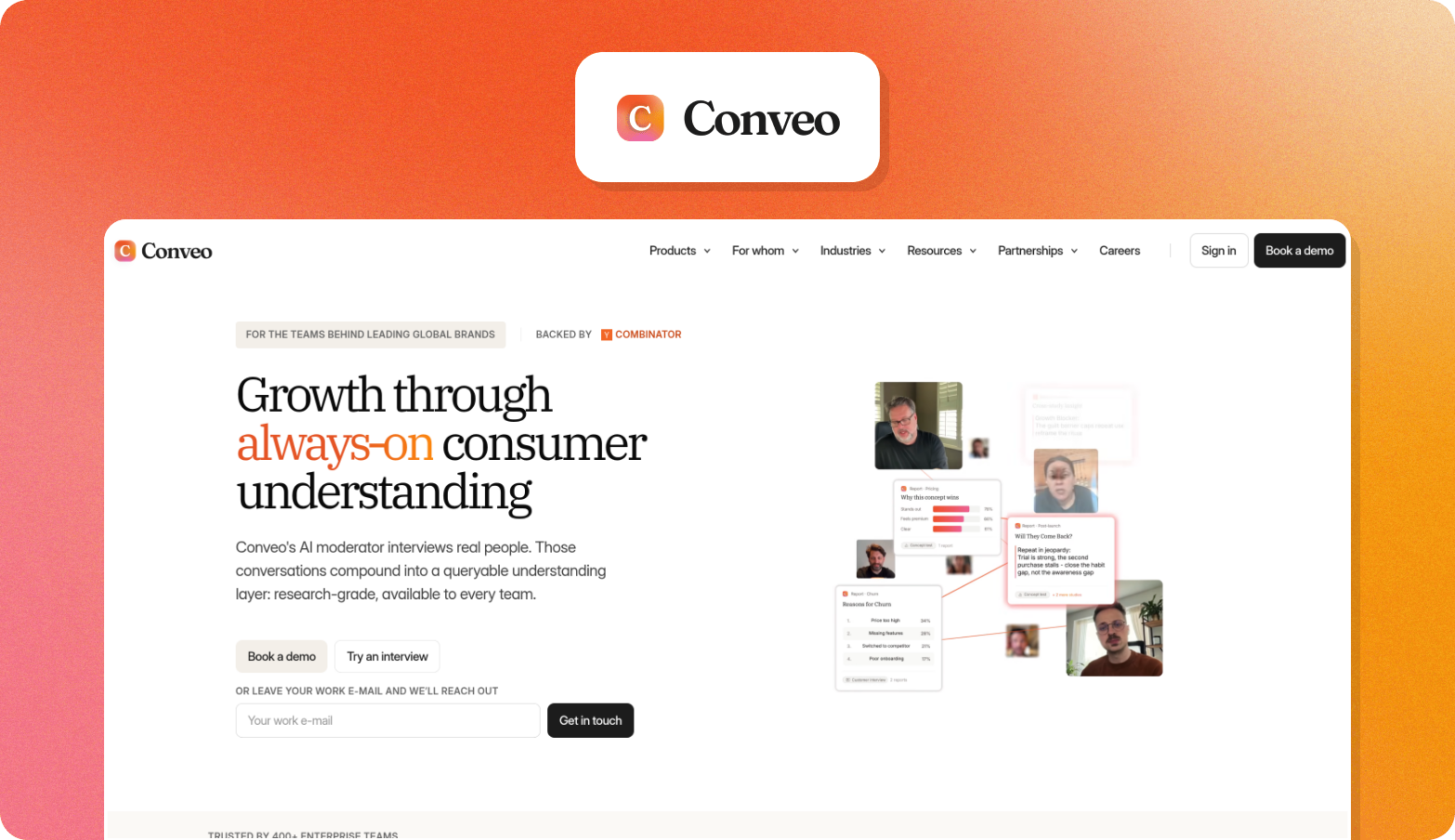
Conveo supports the full workflow from study setup through interviewing, analysis, and long-term insight reuse.
Study design and recruitment: Launch higher-quality studies faster without coordinating multiple tools or vendors. Teams run qualitative, quantitative, or mixed-methods studies from scratch or reuse earlier designs, while Conveo supports panel access, screening, and incentives in a single workflow before fieldwork begins.
AI-moderated interviewing: Run more interviews without increasing moderator workload while maintaining conversational depth. Participants join via a secure link at their convenience, and the AI interviewer asks adaptive follow-up questions based on participants’ responses rather than relying on fixed scripts.
Multimodal analysis: Turn recorded interviews into decision-ready evidence without manual preprocessing. As sessions complete, recordings are transcribed, translated, and coded, combining spoken responses with tone shifts, facial cues, and visible context to produce themes, sentiment patterns, and traceable highlight clips.
The insight library: Build continuity between studies instead of rebuilding synthesis each time. Findings flow into a searchable repository that connects quotes, clips, and patterns, enabling teams to reuse evidence quickly. Over time, research compounds rather than resets between projects.
AI assistant: Surface cross-study patterns in seconds instead of manually reviewing past research. Researchers query prior studies in natural language and compare responses across segments, markets, or time periods.
| Capability | Conveo |
|---|---|
| Moderation type | Adaptive voice and video with real participants |
| Workflow coverage | Study design, recruitment, interviews, analysis, insight library |
| Multilingual | 50+ languages supported natively |
| Multimodal analysis | Speech, tone, facial cues, on-screen context |
| Cross-study intelligence | Connected insight library across studies |
| Stakeholder-ready outputs | Clips, summaries, traceable verbatim evidence |
| Enterprise security | SOC 2, SSO, encryption at rest, regional hosting |
Best for:
Consumer Insights, CMI, and Research Operations teams running recurring qualitative programs across markets, segments, or product areas.
One consideration:
Teams running occasional ad hoc studies may not benefit from the long-term value of a cumulative insight library.
Book a demo to see Conveo in action | See how enterprise teams use Conveo
2. Listen Labs: Best for fast AI consumer research at enterprise scale
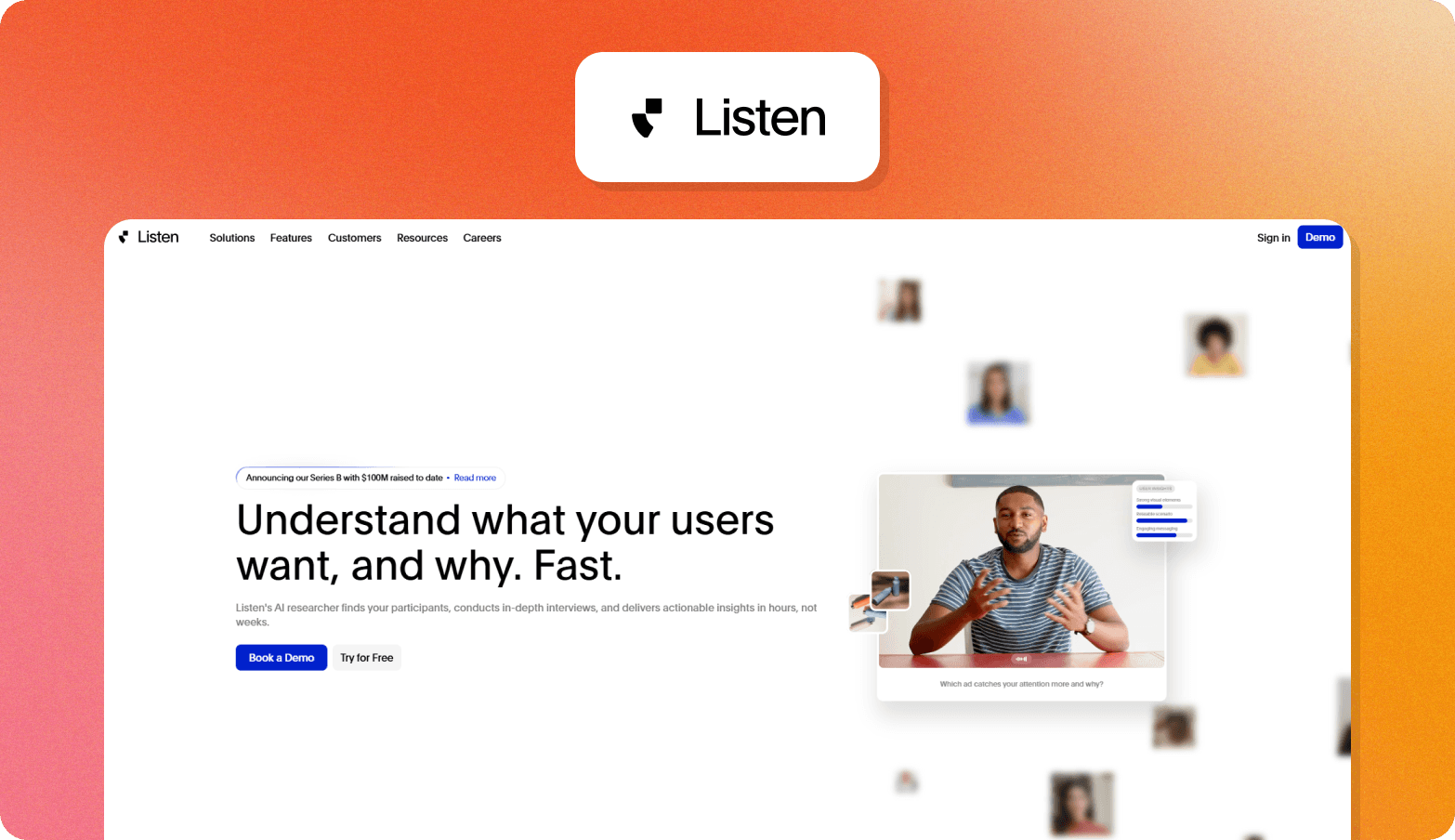
Listen Labs runs AI-moderated interviews with recruited participants and delivers structured findings within hours, making it a strong option for teams that need rapid customer insights at scale.
What it does:
Recruits participants and launches AI-moderated qualitative research quickly
Automates qualitative data analysis to surface themes and customer behavior patterns
Produces structured summaries that support fast, actionable insights
Best for:
Enterprise research teams prioritizing fast-turnaround qualitative research across large audiences. Often evaluated among the best platforms for qualitative data collection for customer insights when speed is the main requirement.
One consideration:
Study design flexibility and long-term qualitative data storage are more limited than in platforms built as a full enterprise research environment.
3. Outset: Best for structured AI interview research in product and brand contexts
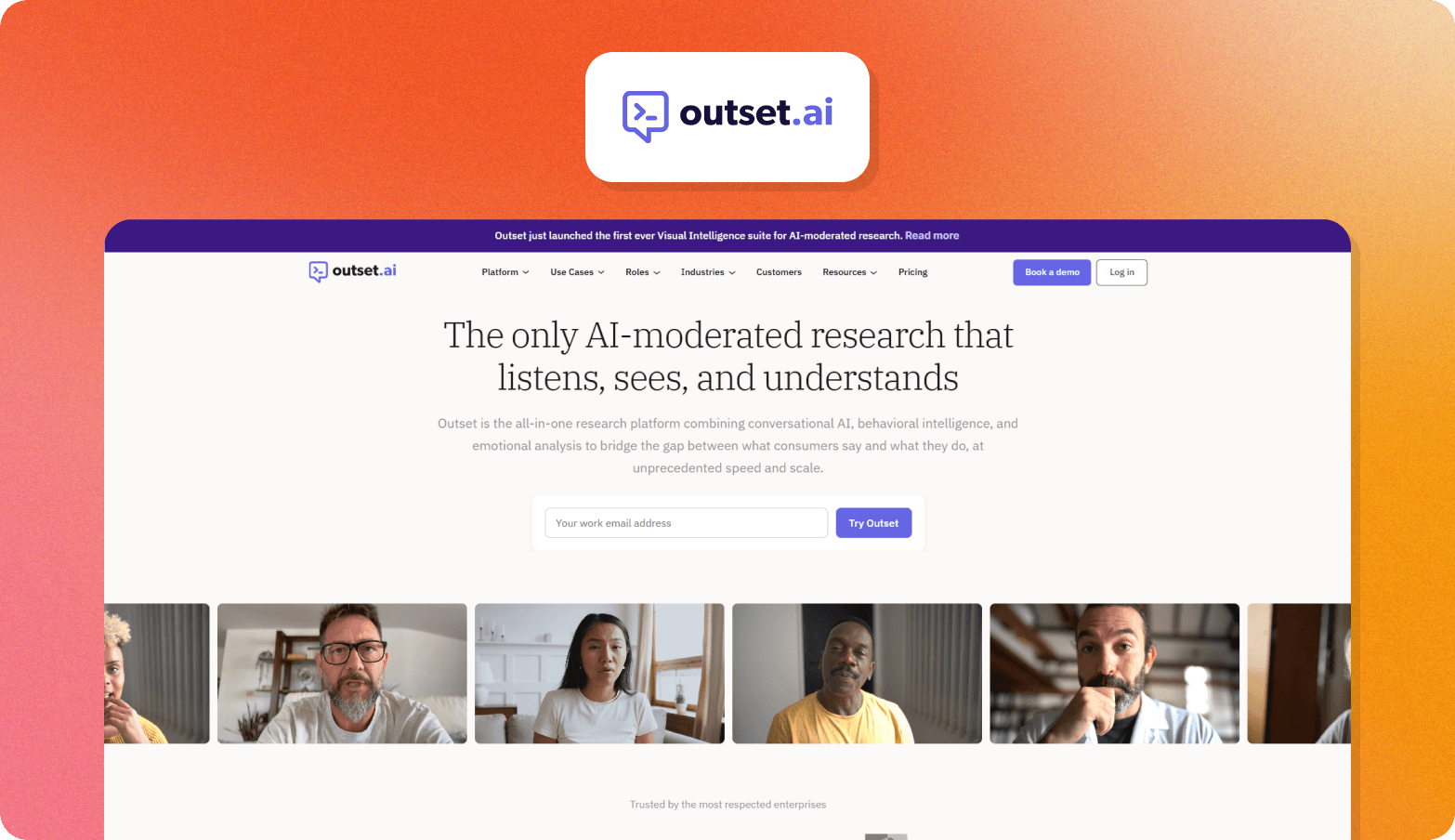
Outset provides adaptive AI-moderated interviews across voice, video, and text, with automatic synthesis of quotes and themes after sessions close.
What it does:
Runs adaptive interviews that respond dynamically to participant input
Generates structured qualitative insights through automated thematic analysis
Helps product teams uncover valuable customer insights across repeated studies
Best for:
Product and brand research teams running structured interview programs. Often considered among the best user research tools for qualitative insights in 2026 for repeatable insight generation.
One consideration:
Pricing is typically project-based, which can create friction for organizations scaling continuous qualitative research programs.
4. GetWhy: Best for video think-aloud consumer insights in CPG and FMCG
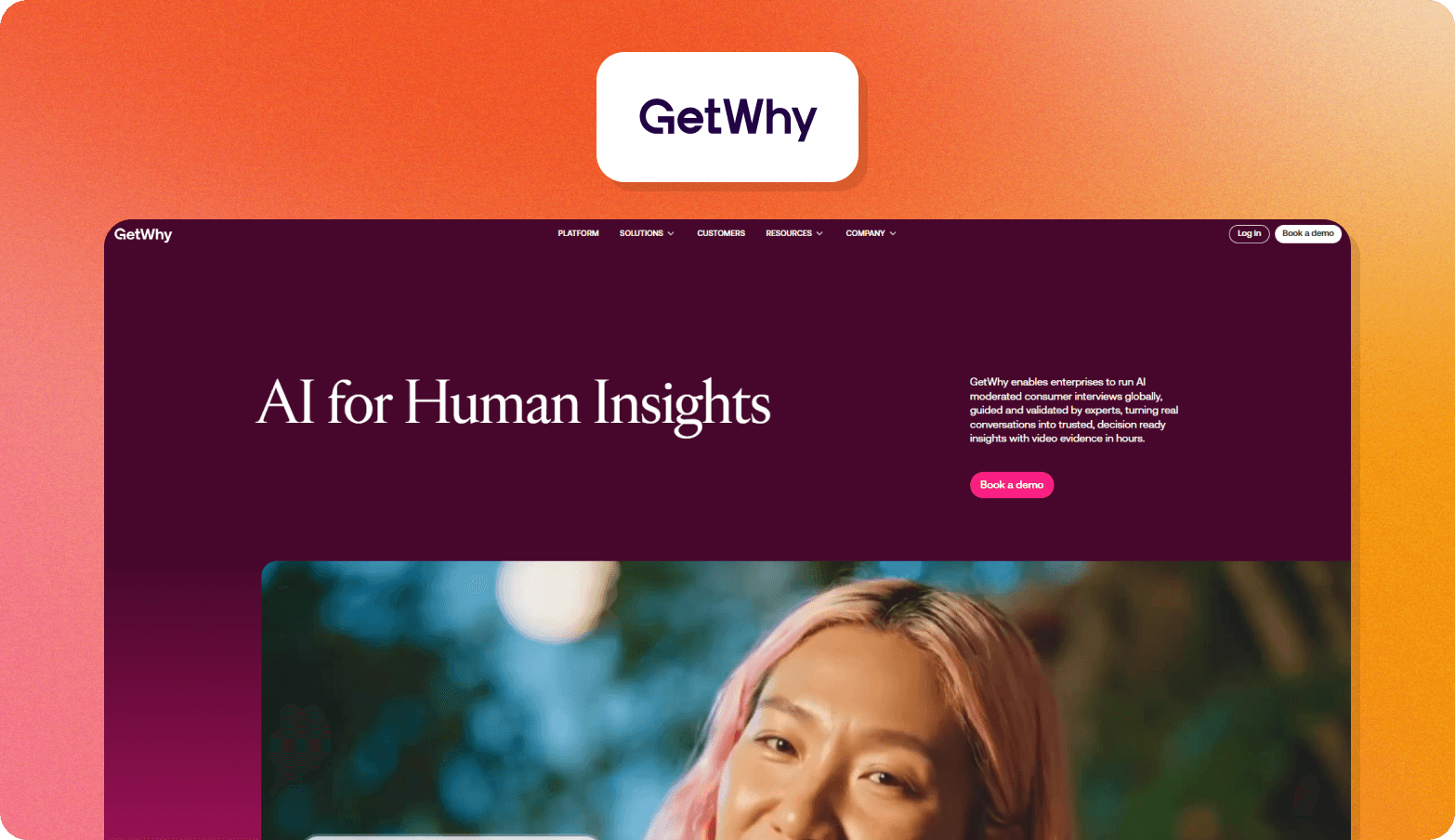
GetWhy runs AI-moderated video think-aloud interviews that capture reactions to packaging, concepts, and creative in near real time.
What it does:
Conducts video-based qualitative research focused on concept and packaging evaluation
Applies automated qualitative data analysis to identify trends in consumer behavior
Delivers structured outputs quickly for fast-moving market research workflows
Best for:
CPG, FMCG, and retail teams running concept validation and packaging studies. Frequently evaluated alongside tools that combine usage data with qualitative feedback insights in rapid consumer research workflows.
One consideration:
The think-aloud format is optimized for concept testing rather than broader exploratory qualitative research programs.
5. Marvin: Best for research repository workflows with emerging AI interviewing
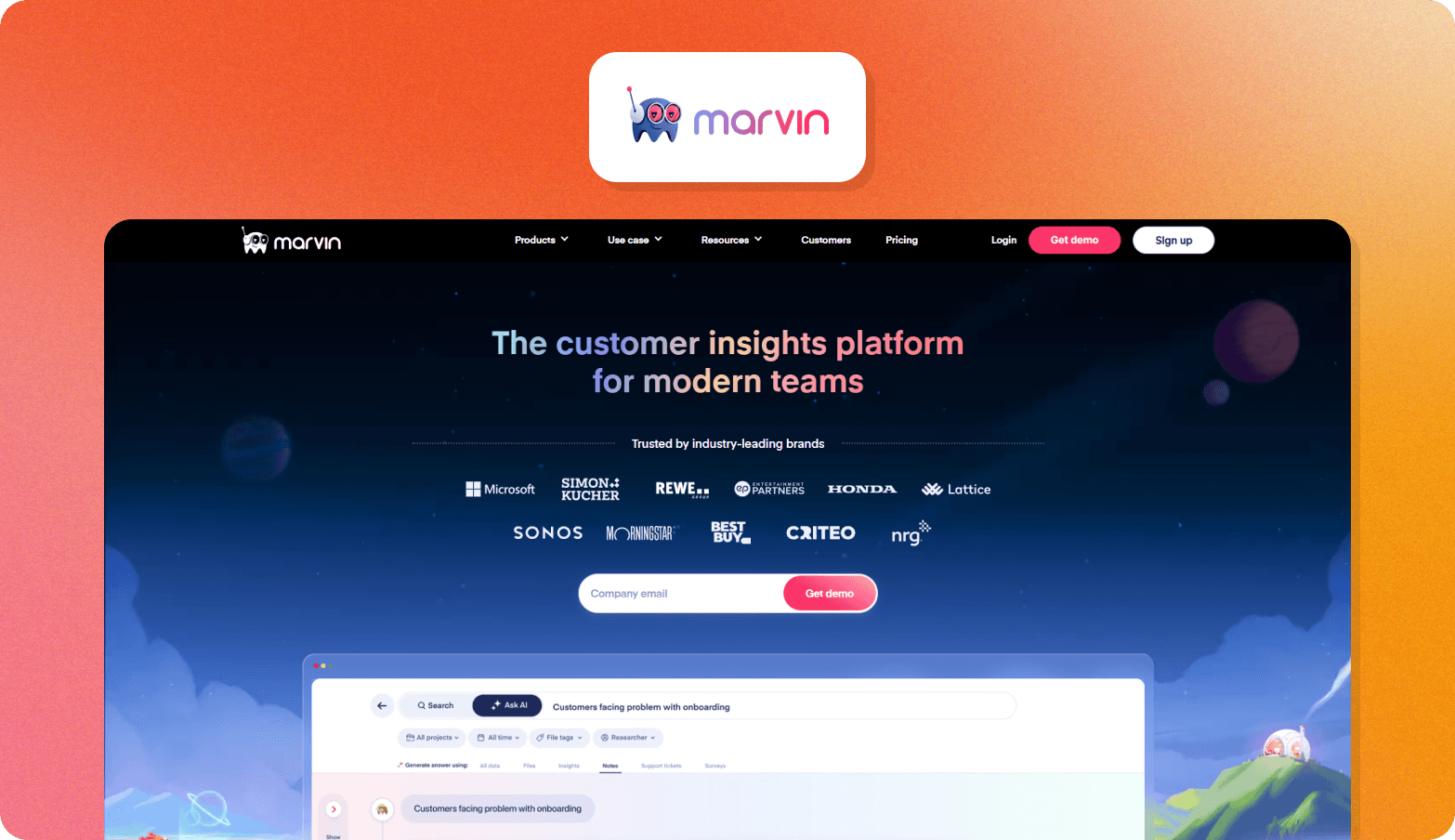
Marvin is a qualitative insights software platform designed to store, organize, and analyze qualitative data across interviews and research studies.
What it does:
Centralizes qualitative data from interviews, documents, and repositories
Supports tagging, clustering, and qualitative data analysis software workflows
Helps teams share customer research across product teams and stakeholders
Best for:
Research teams evaluating qualitative data storage and analysis platforms for consumer insights across multiple sources.
One consideration:
AI moderation capabilities are newer compared to platforms built primarily around automated interviewing.
6. Discuss: Best for enterprise AI interview agents with global research coverage
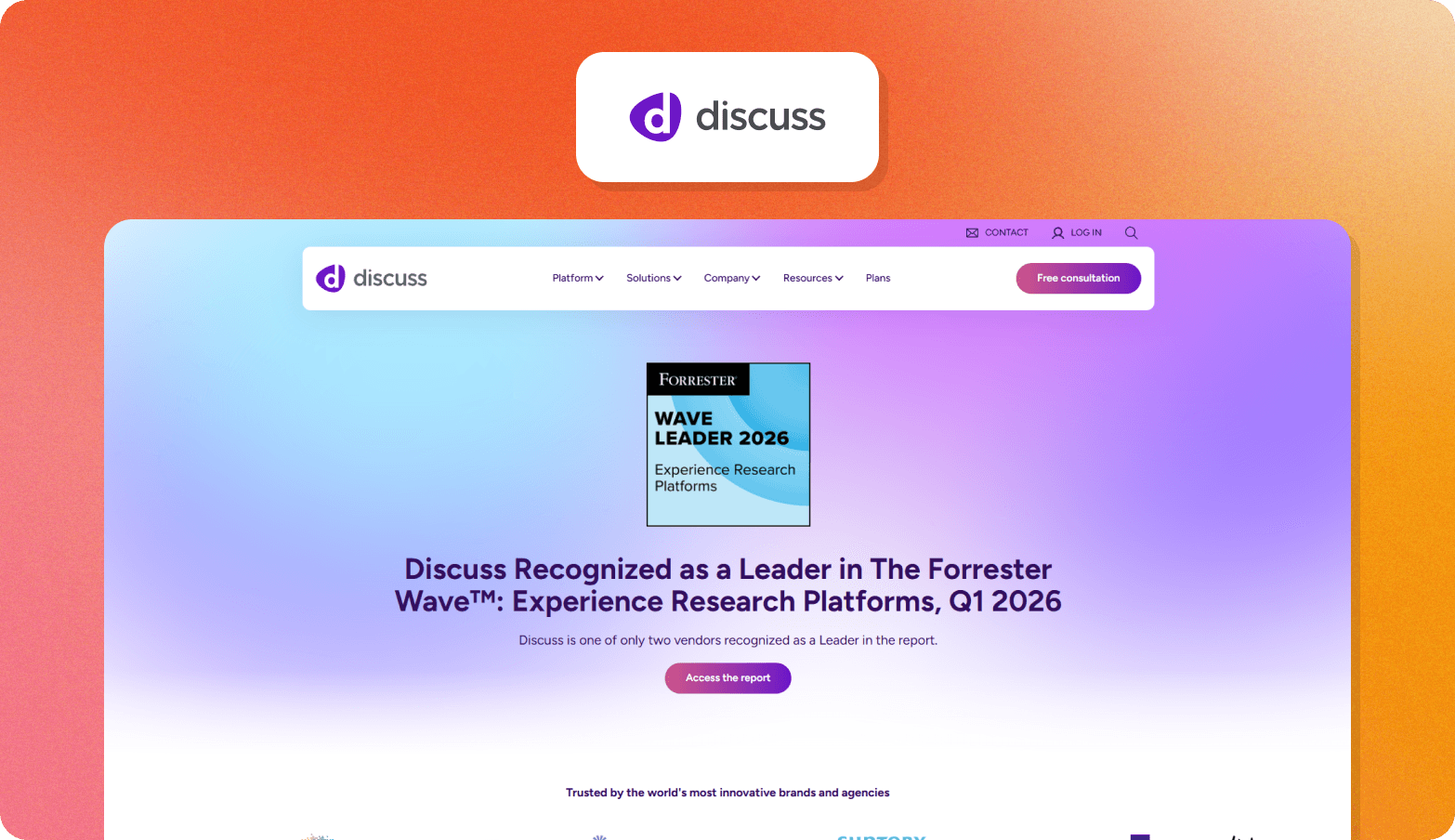
Discuss provides AI interview agents that support large-scale qualitative research across markets and time zones with integrated recruitment infrastructure through Dynata.
What it does:
Runs AI-moderated interviews continuously across global participant panels
Supports multilingual qualitative research across distributed research teams
Synthesizes findings automatically to help teams gather customer insights faster
Best for:
Enterprise insights teams running international qualitative research across multiple languages and audiences. Often shortlisted among the best tools for qualitative data collection for customer insights in global research environments.
One consideration:
As part of a larger market research ecosystem, platform roadmap priorities may differ from standalone qualitative research tools.
7. Voxpopme: Best for video insight management and consumer storytelling
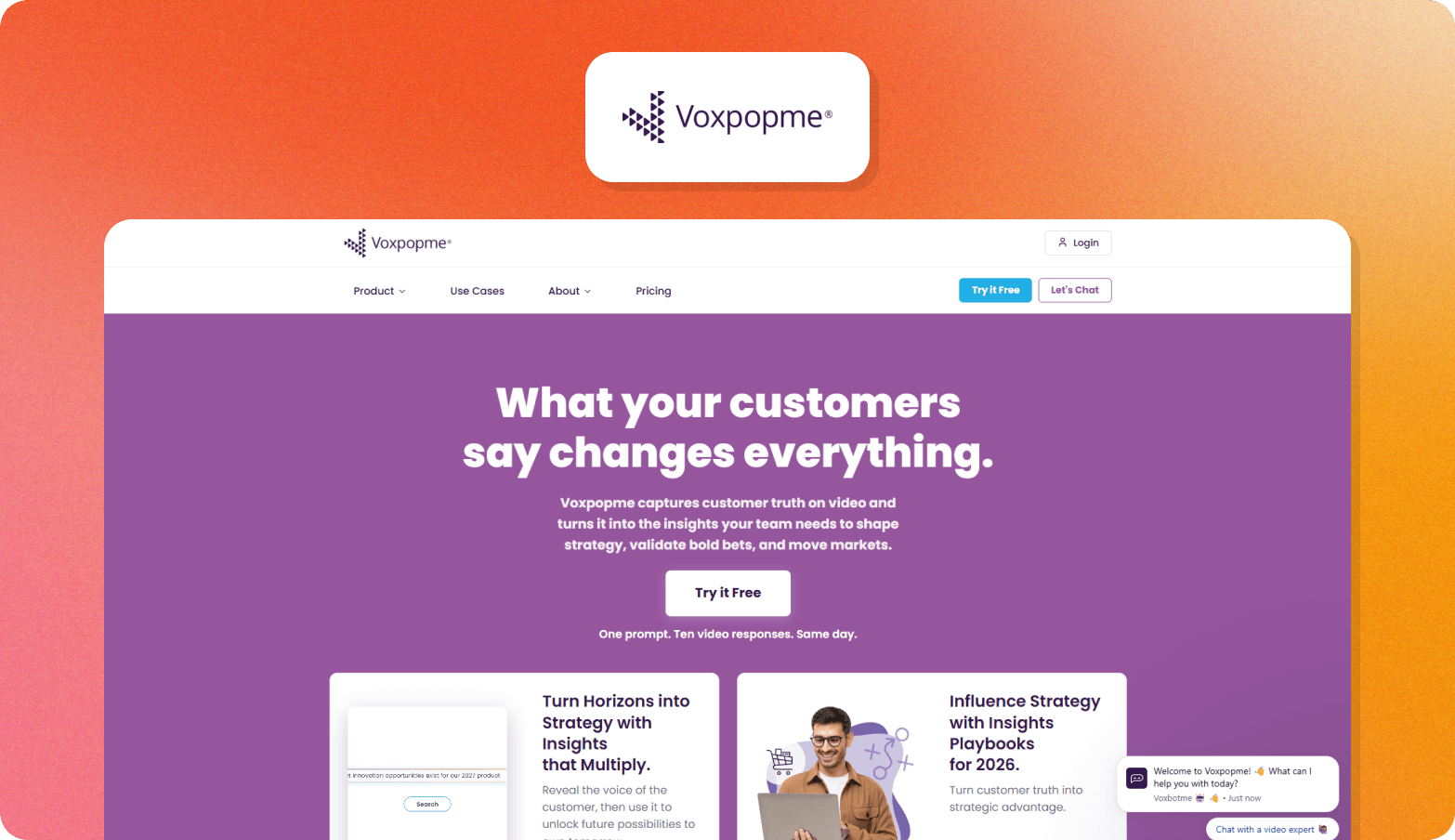
Voxpopme captures participant-recorded video responses and applies AI-powered qualitative data analysis to help research teams uncover valuable customer insights and share customer research clearly across stakeholders.
What it does:
Collects structured video-based customer feedback across markets and customer segments
Applies sentiment analysis and thematic analysis to organize qualitative data into stakeholder-ready outputs
Generates highlight reels that help teams communicate key insights and support informed decisions
Best for:
Consumer insights teams at global brands that need stakeholder-ready video outputs from qualitative research tools. Often evaluated alongside the best platforms combining qualitative and quantitative profiling insights when insight delivery matters as much as insight generation.
One consideration:
Stronger on capturing and activating qualitative insights than on running adaptive probe-led interview dialogue across full research workflows.
8. Bolt Insight: Best for AI-moderated global research across 45+ countries
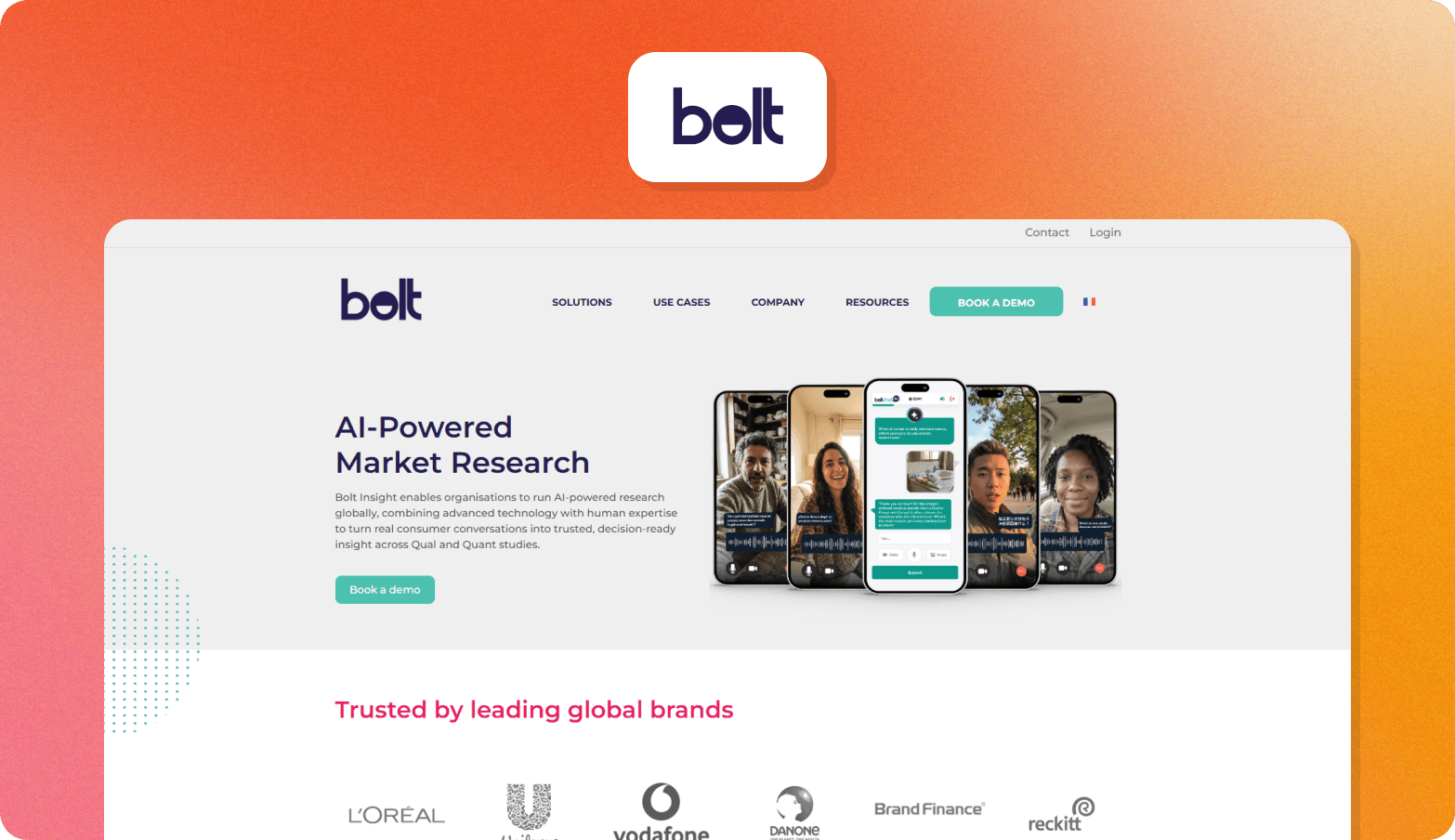
Bolt Insight provides AI-moderated interviews across international markets, helping research teams run enterprise research programs and gather customer insights across multiple languages and regions.
What it does:
Runs AI-powered interviews across global participant panels in more than 45 markets
Automates qualitative data analysis and reporting to identify trends across consumer behavior
Supports multilingual market research programs designed for global customer research coverage
Best for:
CPG and FMCG research teams running multi-country qualitative research at scale. Often shortlisted among platforms providing quantitative and qualitative user insights, where geographic reach is the primary requirement.
One consideration:
Less focused on long-term qualitative data storage or cross-study knowledge layers than full enterprise insights platform alternatives.
9. Strella: Best for multilingual voice AI research with real-time analysis
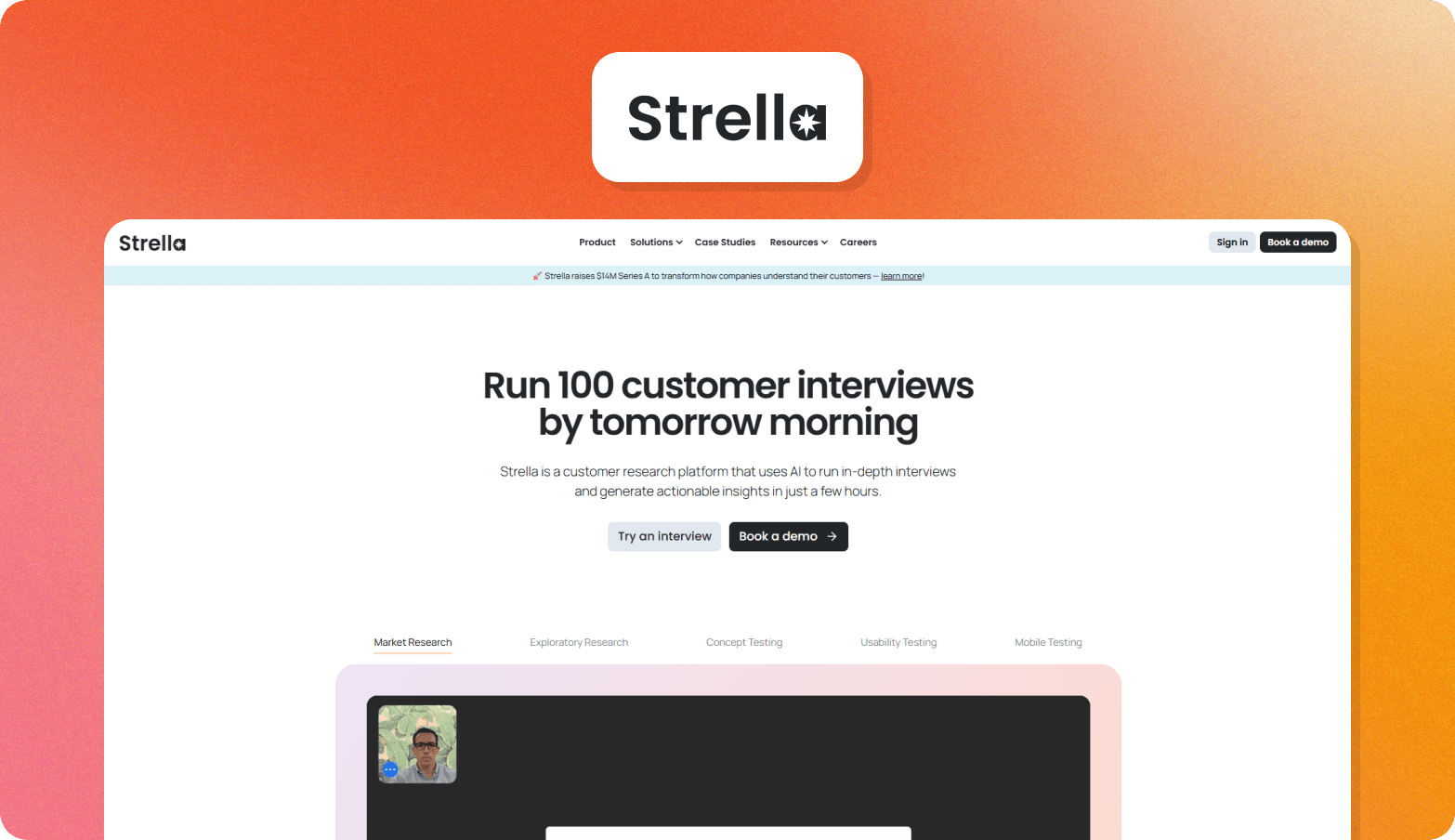
Strella delivers voice-based AI moderation that adapts interview questions in real time and helps research teams analyze qualitative data across international audiences.
What it does:
Runs adaptive voice AI interviews across multiple languages for distributed customer research
Performs real-time qualitative data analysis to surface emerging trends and detailed insights
Supports audience analysis across customer segments in global qualitative research workflows
Best for:
Tech and consumer research teams running multilingual qualitative research programs across markets. Often evaluated among the best user research tools for in-depth qualitative and quantitative insights when language flexibility is essential.
One consideration:
As an early-stage enterprise research platform, teams with strict procurement or compliance requirements should carefully evaluate the platform’s infrastructure maturity.
10. Tellet: Best for quick-turn AI consumer interviews with multi-format responses
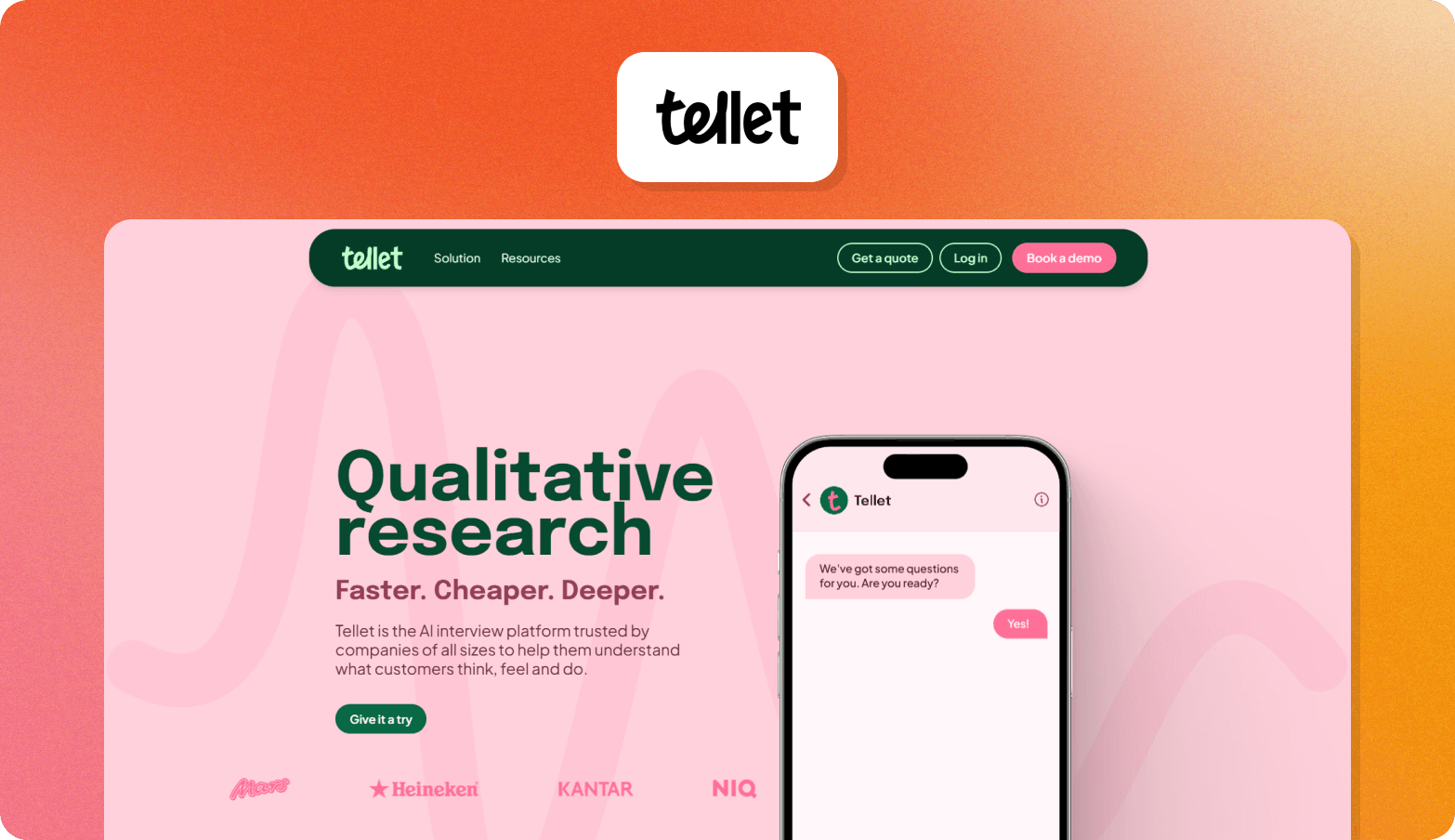
Tellet runs conversational AI interviews that accept voice, video, and photo responses, helping research teams collect customer insights quickly from distributed participants.
What it does:
Conducts AI-moderated interviews across voice, video, and image-based qualitative feedback formats
Automates qualitative data analysis software workflows for faster synthesis after fieldwork
Supports rapid tactical customer research across product validation and concept testing studies
Best for:
Consumer goods and product teams running fast-turnaround qualitative research studies with limited setup overhead. Often evaluated alongside software for insights from qualitative customer interviews in tactical research environments.
One consideration:
Analysis depth and compounding cross-study intelligence are more limited than in platforms designed for scaling qualitative insights with AI moderation across ongoing research programs.
11. Glaut: Best for voice AI consumer research with personalized adaptive probing
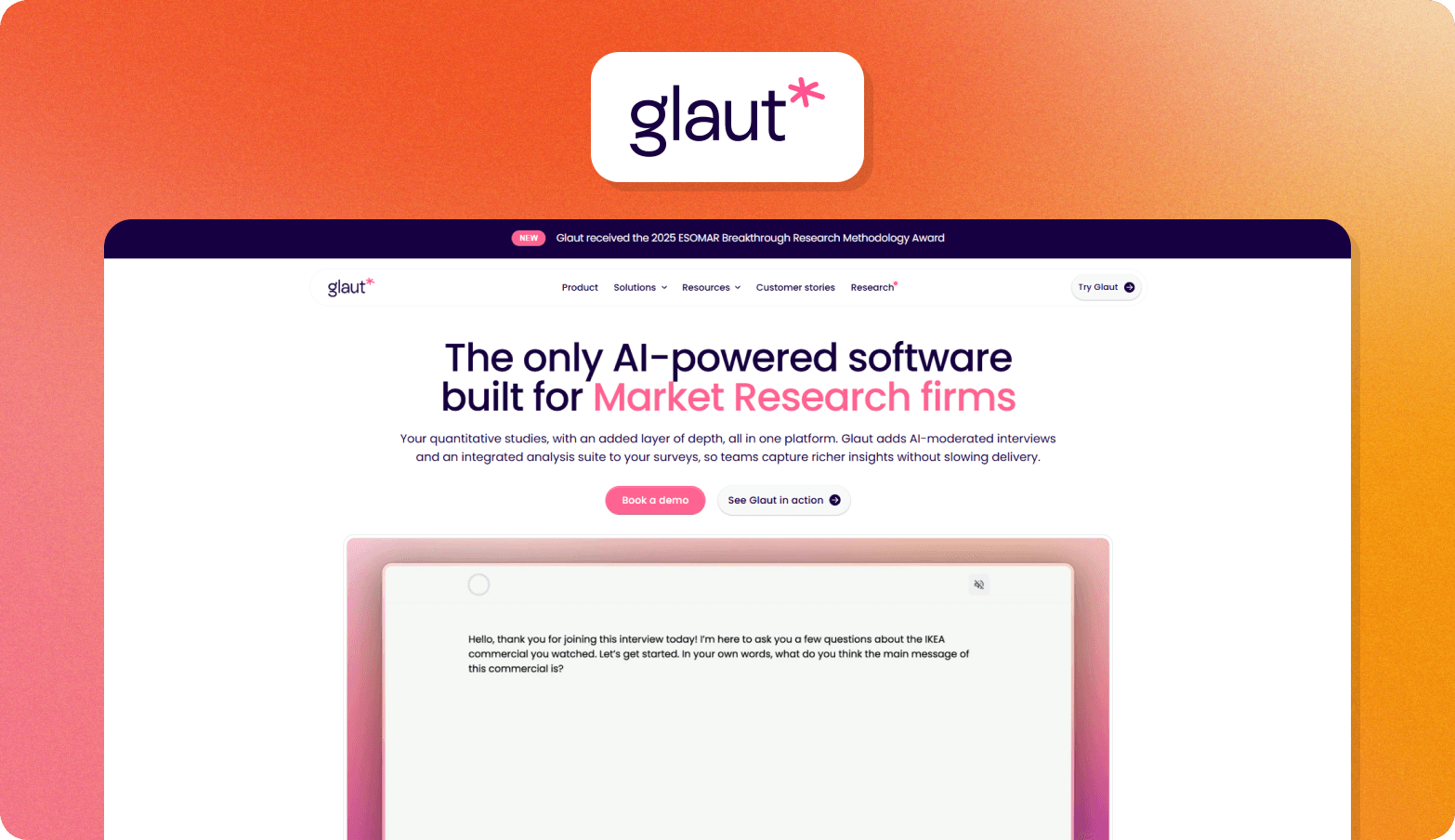
Glaut provides conversational voice AI moderation designed to help research teams gather qualitative insights through natural-feeling participant dialogue.
What it does:
Runs adaptive voice-based qualitative research interviews with personalized follow-up probing
Applies machine learning to organize qualitative data and surface valuable insights
Supports customer engagement research across marketing and consumer behavior studies
Best for:
B2C marketing and consumer insights teams seeking lightweight voice-based qualitative research tools with minimal setup complexity. Often evaluated among the best customer insights tools for conversational interview workflows.
One consideration:
As a newer platform launched in 2024, enterprise teams should evaluate integration depth, participant management support, and security readiness before adoption.
12. Yasna: Best for multilingual empathetic AI interviews across any language
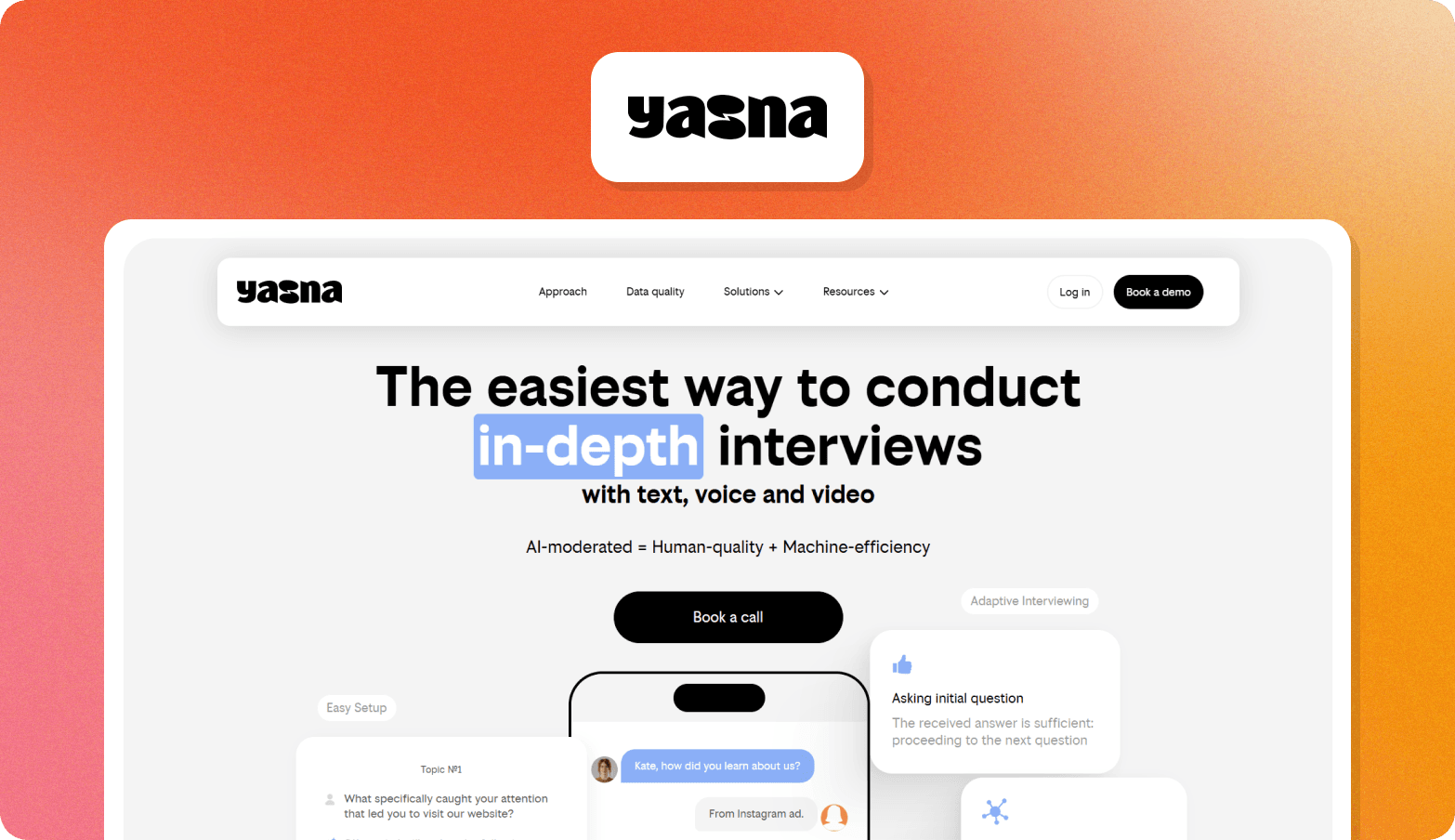
Yasna runs messenger-style AI-powered qualitative research interviews that adapt questions in context and translate responses automatically across multiple languages.
What it does:
Conducts adaptive text-based qualitative research interviews across global customer segments
Translates qualitative data automatically to support multilingual enterprise research workflows
Helps research teams gather customer insights across culturally diverse audiences without manual localization steps
Best for:
Enterprise research teams and agencies running multilingual qualitative research programs where language coverage and interview tone shape participant engagement. Often evaluated as a flexible qualitative insights tool for cross-cultural studies.
One consideration:
The platform focuses on text-first qualitative feedback rather than voice or video formats used in some multimodal research platforms.
13. Maze: Best for AI-moderated UX research and product testing
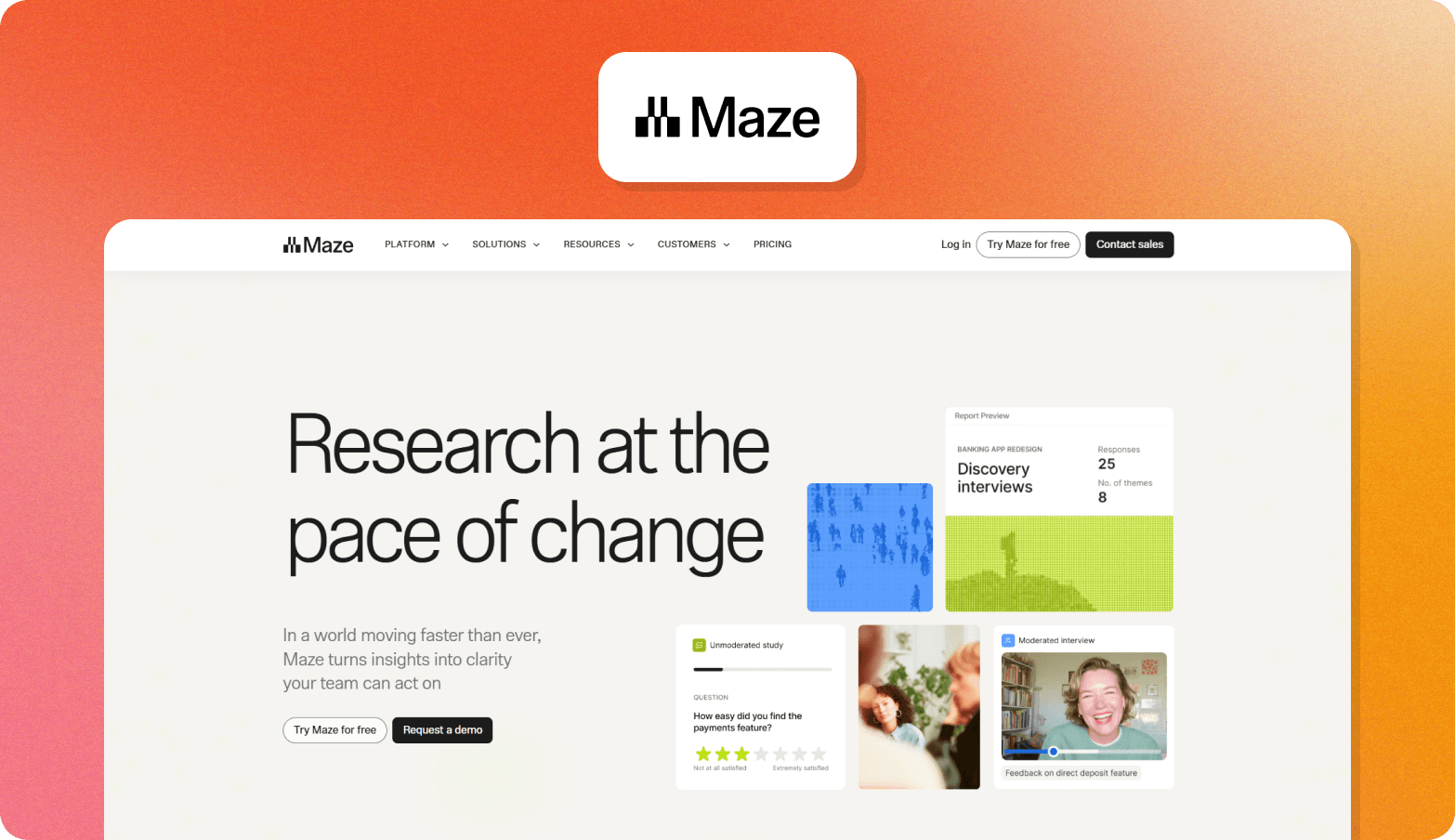
Maze combines AI-powered interviews with usability testing and survey tools, helping product teams collect customer feedback and analyze qualitative data inside integrated product research workflows.
What it does:
Runs AI-moderated interviews alongside usability testing and survey tools in one environment
Combines qualitative data with survey data to support mixed methods research across product development cycles
Helps product teams identify trends in user behavior and improve customer experience decisions faster
Best for:
Product teams that need qualitative research tools integrated with usability testing inside a broader qualitative insights platform supporting continuous discovery.
One consideration:
Built primarily for UX workflows rather than enterprise consumer insights programs requiring panel infrastructure or cross-study knowledge layers.
14. Recollective: Best for asynchronous global qualitative research communities and diary studies
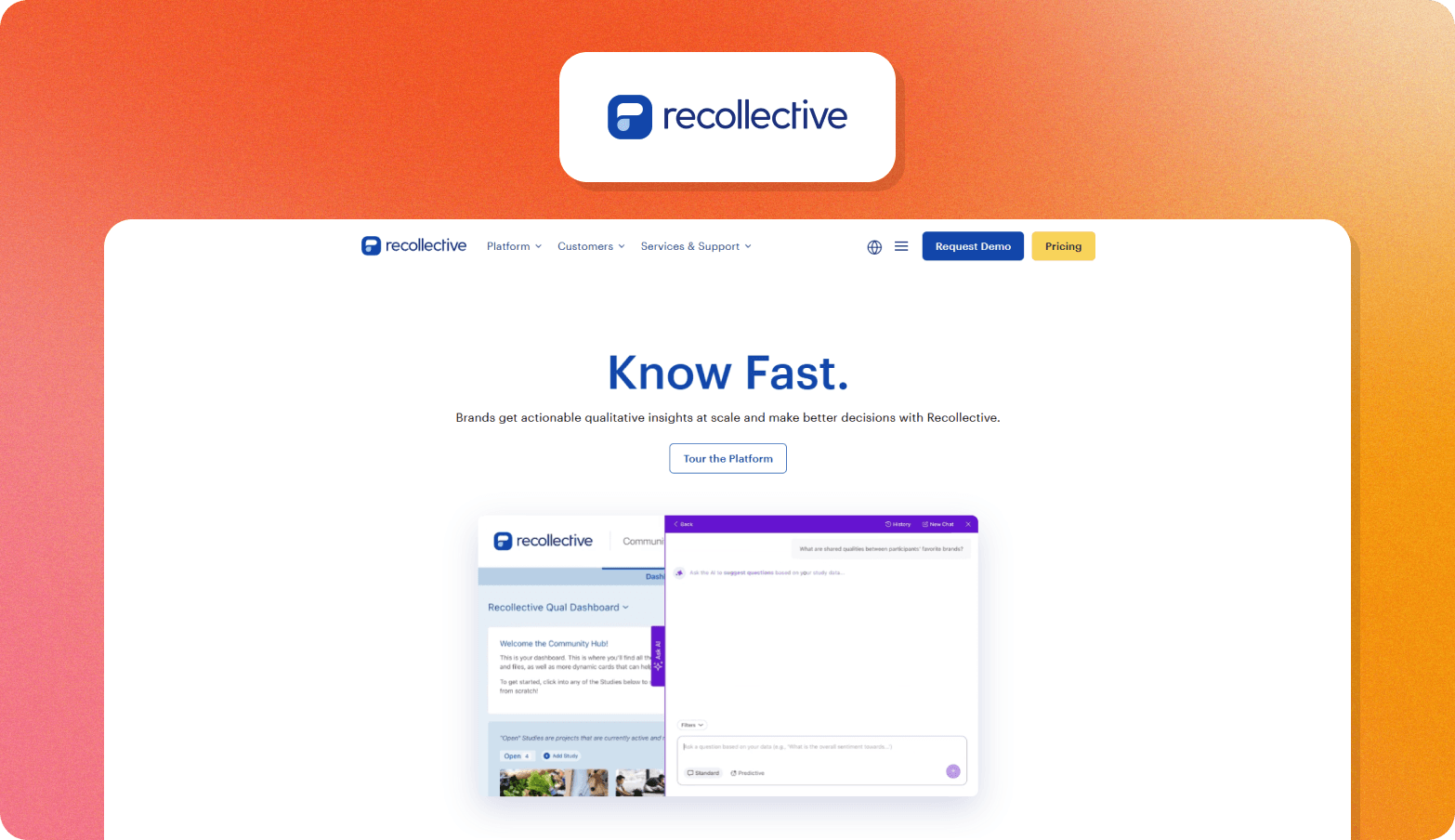
Recollective supports asynchronous qualitative research through mobile-first activities, diary studies, and moderated research communities across global audiences.
What it does:
Runs asynchronous qualitative research interviews and diary-based studies across distributed participants
Supports multilingual research workflows for international audience analysis
Helps teams organize qualitative data and generate structured insights from longitudinal studies
Best for:
Enterprise research teams running global qualitative programs that require community-based engagement inside a qualitative insights platform supporting recurring studies.
One consideration:
AI moderation is lighter than newer adaptive interview platforms designed specifically for automated probing.
15. Voiceform: Best for voice and video AI interviews in CX and marketing research
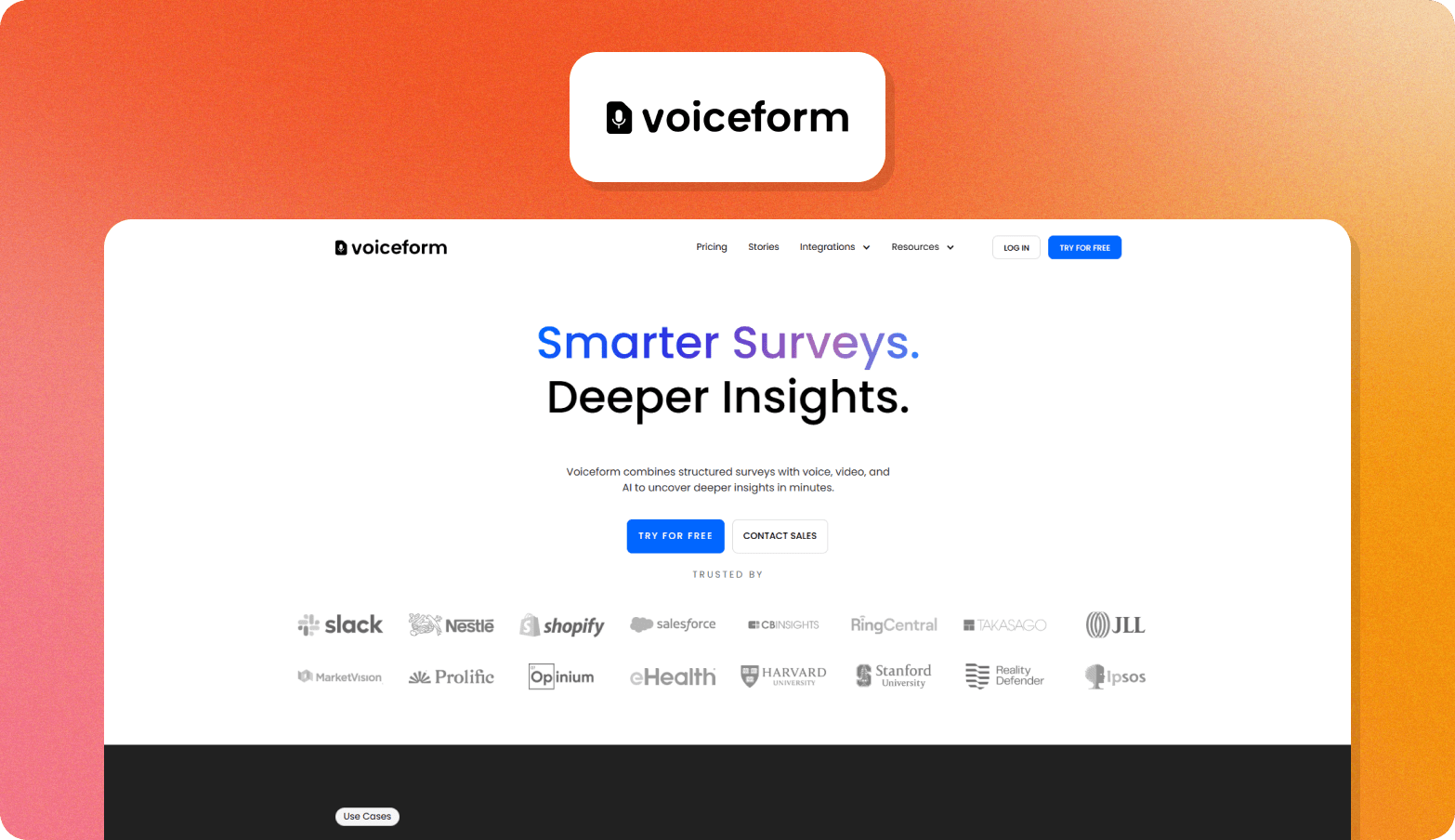
Voiceform enables AI-powered voice and video interviews designed for customer experience and marketing-focused qualitative research programs.
What it does:
Runs voice and video qualitative research interviews with adaptive probing across customer segments
Applies sentiment analysis and thematic analysis to generate detailed insights from recorded responses
Helps teams collect customer insights across voice-of-customer programs and customer journey research workflows
Best for:
CX and marketing research teams running continuous customer feedback programs that depend on voice and video capture for actionable insights.
One consideration:
Language coverage is narrower than global-first platforms supporting large-scale multilingual research environments.
16. Remesh: Best for live AI-moderated group research at scale
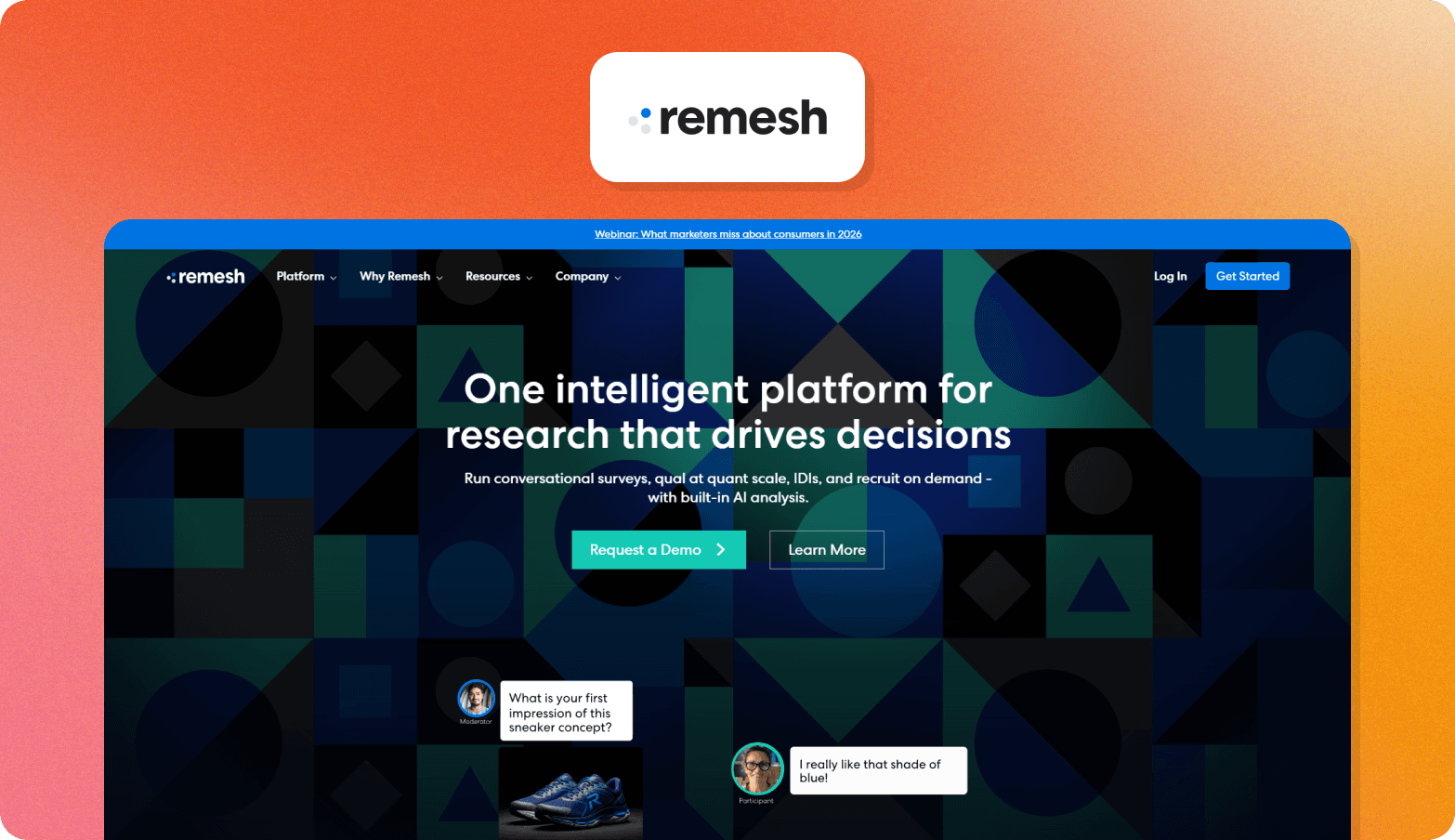
Remesh supports large synchronous qualitative research sessions where hundreds of participants respond simultaneously, and machine learning organizes representative responses in real time.
What it does:
Runs large-scale digital focus groups that extend beyond traditional focus groups in size and speed
Uses machine learning to cluster qualitative data and surface key insights during live sessions
Helps research teams analyze data quickly across large audiences participating in shared research workflows
Best for:
Enterprise research teams, policy researchers, and agencies running large-scale market research sessions where simultaneous participation supports broader audience analysis.
One consideration:
Live scheduling requirements make the platform less flexible than asynchronous qualitative research tools designed for continuous enterprise research programs.
17. Suzy: Best for AI-moderated consumer insights at the intersection of qual and quant
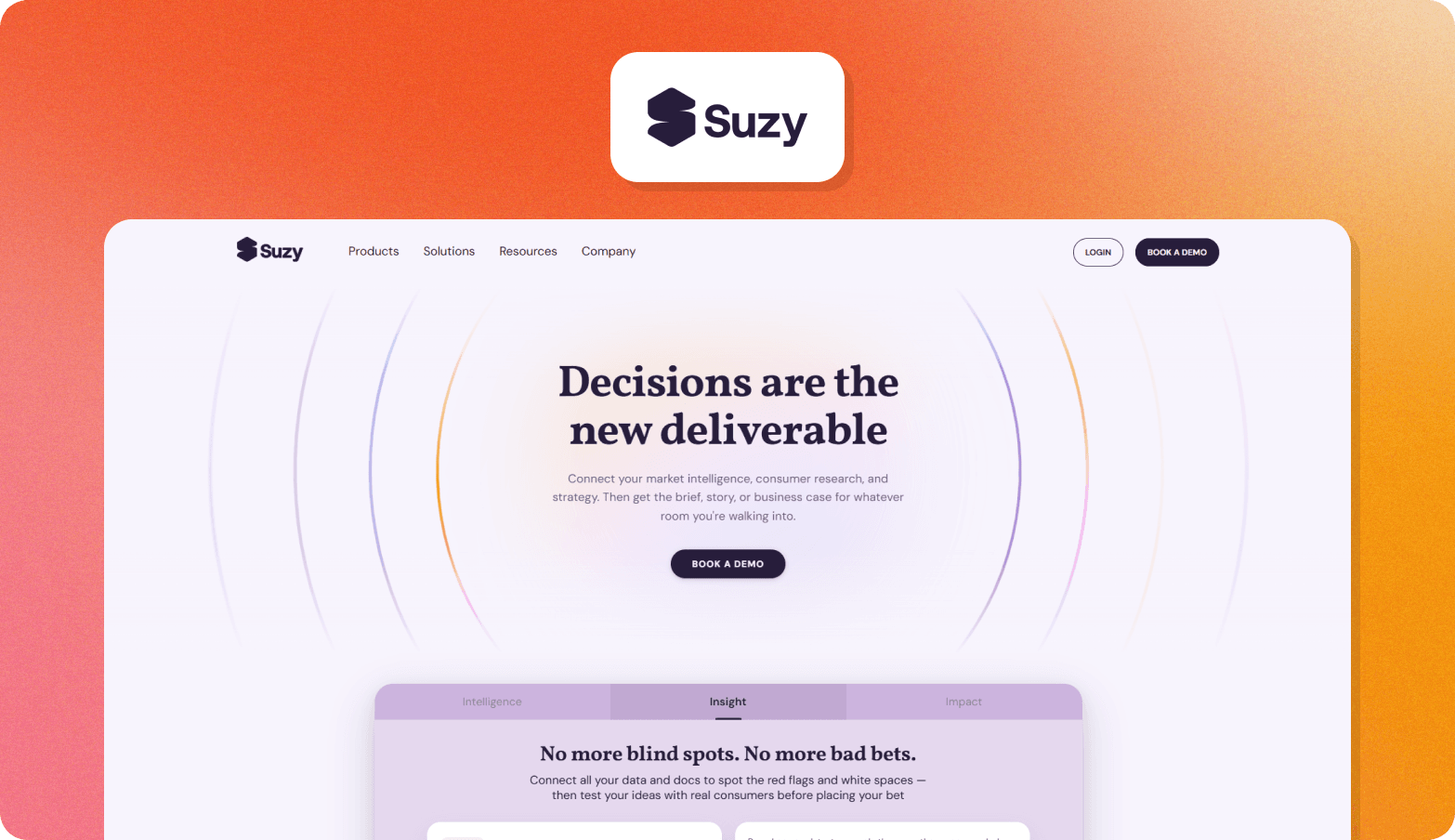
Suzy combines AI-powered voice moderation with survey tools to help research teams gather customer insights that connect qualitative depth with quantitative scale.
What it does:
Runs adaptive voice-based qualitative research interviews across large participant panels
Integrates qualitative feedback with survey data to support data-driven decisions across research workflows
Helps teams identify trends in consumer behavior and market trends inside a unified customer insights software environment
Best for:
Enterprise CPG and consumer brand research teams blending qualitative research with quantitative inputs inside platforms, providing quantitative and qualitative user insights.
One consideration:
As a broad multi-method platform, the feature set may introduce complexity for teams seeking a dedicated qualitative research workflow.
18. UserCall: Best for AI voice interviewing for UX and product teams
UserCall runs parallel AI-powered voice interviews designed to help product teams collect customer feedback quickly without manual moderation overhead.
What it does:
Conducts scalable voice-based qualitative research interviews across distributed participants
Helps teams analyze qualitative data efficiently across usability and product validation workflows
Supports rapid customer research programs where speed of interview completion is critical
Best for:
Product teams running high-volume usability studies and early-stage discovery programs using lightweight qualitative research tools.
One consideration:
Earlier-stage platform maturity means enterprise research teams should evaluate compliance readiness, participant management support, and integration depth carefully.
19. Voicepanel: Best for adaptive AI voice and video interviews in product and consumer research
Voicepanel provides multilingual AI-powered voice and video moderation that adapts questions dynamically and organizes qualitative data instantly after sessions close.
What it does:
Runs multimodal qualitative research interviews across voice and video formats
Applies automated qualitative data analysis tools to surface themes and organize insights rapidly
Supports multilingual customer research across product teams and global brands
Best for:
Product and consumer insights teams seeking flexible multimodal moderation across international research workflows and evaluating alternatives to an end-to-end qualitative insights platform.
One consideration:
As a newer platform, enterprise research teams should evaluate infrastructure maturity, integration capability, and security readiness before adoption.
Main takeaways:
Most tools no longer support just interviews. Strong platforms now connect interviews, synthesis, and reuse in one workflow. That matters because the real challenge is turning conversations into decisions.
Here are five criteria that help identify a qualitative insights tool your team can rely on long-term.
5 criteria to look for in a qualitative insights tool
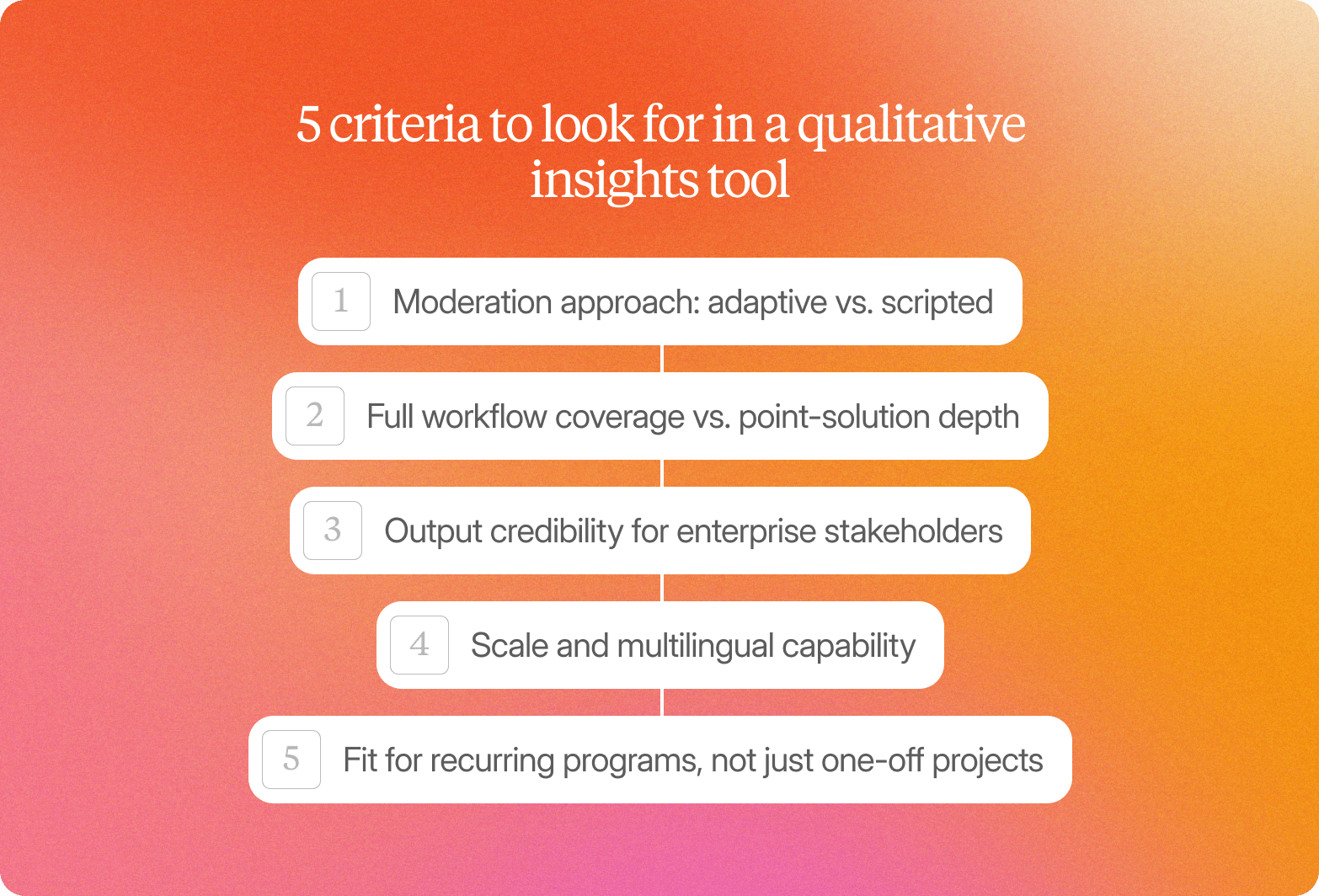
These five criteria reflect a shift in qualitative research. Teams are no longer choosing tools just to run interviews faster. They are choosing platforms that turn repeated studies into a durable insight base that the organization can reuse over time.
1. Moderation approach: adaptive vs. scripted
Scripted moderation follows fixed prompts. Adaptive moderation reacts to how users interact and probes unexpected answers.
Look for AI that asks real follow-ups instead of advancing through pre-set questions. This is essential for collecting meaningful user feedback and data-driven insights from interviews.
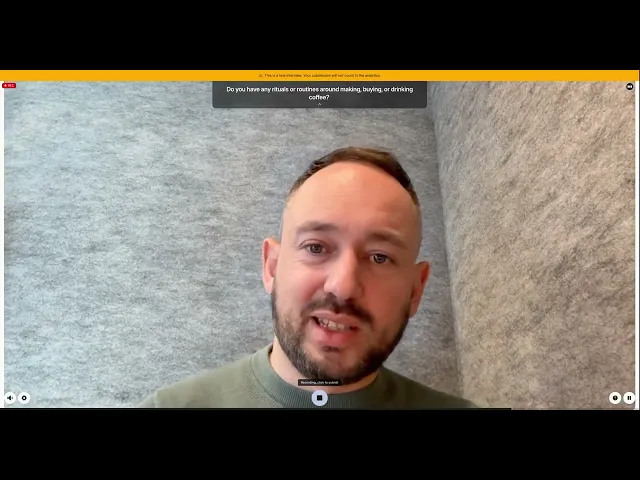
See Conveo’s AI moderation in action:
2. Full workflow coverage vs. point-solution depth
Some tools support only interviews or only analysis. Others cover recruitment, moderation, synthesis, and delivery in one environment.
Platforms built for managing qualitative research reduce coordination overhead and keep customer data connected across studies.
3. Output credibility for enterprise stakeholders
Summaries alone rarely build trust. Stakeholders need traceable evidence.
Look for verbatim clips, sourced quotes, structured themes, and outputs that translate raw data into decisions about customer satisfaction, customer churn, or customer segmentation.
4. Scale and multilingual capability
Global research requires consistent moderation across languages.
Check whether multilingual support is native or translation-layered afterward, especially if teams analyze website traffic signals, social media platforms, or regional behavior patterns together with interview data.
5. Fit for recurring programs, not just one-off projects
Concept testing tools solve short studies. Continuous research platforms support long-term learning.
Teams running ongoing programs across CMI, CX, and brand and marketing need consumer intelligence platforms that accumulate insights over time instead of resetting after each project.
Narrow your shortlist to one: Conveo
AI moderation expands how many interviews your team can run. Conveo extends that impact across the full workflow, from study setup through multimodal analysis to a searchable insight library that compounds learning across studies.
If your team is scaling a recurring qualitative research program without adding headcount or agency spend, Conveo helps turn individual studies into a continuous source of decision-ready evidence.
Frequently Asked Questions
Will participants engage authentically with an AI moderator?
Yes. When moderation is adaptive, participants respond naturally and share detailed user feedback, similar to that in human-led interviews, especially in asynchronous formats.
How do I know AI-generated analysis is accurate and trustworthy?
Look for outputs backed by sourced quotes, verbatim clips, and transparent thematic coding that connect insights directly to raw data.
What is the difference between an AI moderation tool and an end-to-end qualitative research platform?
AI moderation tools run interviews. End-to-end platforms support recruitment, moderation, analysis, storage, and retrieval across ongoing research programs.
How do AI moderation tools compare to traditional agencies for qualitative research?
They reduce turnaround time and cost while allowing teams to run more studies internally without adding headcount or agency spend.
Can AI moderation tools handle the scale of an enterprise research program?
Yes, if the platform supports multilingual moderation, centralized customer data, and reusable insights across studies and teams.

About the author
Alex de Hemptinne
Business Impact Lead
Alex is a Business Impact Lead at Conveo, partnering with enterprise teams to embed AI-led research into their workflows. From the first study to full-scale rollout, she helps customers shift from project-based research to continuous customer intelligence.
Meet Alex on film →Qualitative insights at the speed of your business.
Conveo runs AI-moderated video interviews and structures everything they say.