

TL;DR
Survey trackers quantify shifts in brand perception by measuring brand awareness, brand loyalty, and perceived brand value across large samples, but can’t explain the emotional and contextual reasons behind them.
This guide compares seven brand equity analysis tools across four categories: survey-based brand trackers, digital listening platforms, qualitative video interview platforms, and enterprise consulting solutions.
The shortlisting framework covers five criteria to help you make the best choice: the depth of "why" captured, speed to insight, evidence traceability, participant authentication, and compliance.
Brand equity dashboards sound the alarm when consumer perceptions slip. But when you’ve already made positioning and campaign decisions, quarterly reports showing drops in brand loyalty or awareness often come too late.
The problem is that these dashboards are built on scale rather than depth. The emotional drivers behind brand preference and how customers describe a brand are invisible. The method simply wasn’t built to capture them.
Research teams at Google, FOX, Reddit, and Bosch have shifted part of their brand equity programs toward qualitative video interviews for exactly this reason. This article compares seven tools across four categories to help brand and insights teams shortlist the right approach for their next brand equity study.
What brand equity measurement actually means
Brand equity measurement is the systematic tracking of how consumers perceive your brand: the perceptions, associations, and behaviors that determine its commercial value over time. It is not a one-time audit or a metric you pull when leadership asks for it. It is an ongoing practice, directly tied to the company’s success across every function that touches the customer.
Every brand equity measurement system must cover the three dimensions that determine brand equity:
Awareness: How familiar consumers are with the brand
Meaning: What the brand represents, its brand image, and associations
Preference: Whether customers would choose this particular brand over alternatives
Tracking metrics tell you whether these dimensions are moving; qualitative evidence reveals why.
Metric category | Example metrics | What it tells you |
Awareness | Unaided awareness, top-of-mind awareness, and website search volumes | Whether customers know the brand exists |
Perception | Brand associations, perceived quality, brand relevance, brand image | What the brand means to customers |
Behavioral | Purchase intent, repeat purchases, NPS, willingness to pay a premium | Whether customers will choose the brand |
Full Comparison Table
The table below compares all seven tools across the criteria that matter most for brand equity research procurement. Use it to get a clear overview of each platform before you read the individual profiles.
Platform | Category | Depth of “why” captured | Speed to insight | Evidence traceability | Real participant verification | Enterprise compliance | Cost model | Best for |
Conveo | Qualitative video | High | Days | Clip-level | Yes | SOC 2, GDPR, EU hosting | Custom enterprise pricing (pilot available) | Continuous brand equity research with stakeholder-ready evidence |
Outset | Qualitative video | High | Days | Clip-level | Yes | SOC 2 Type II, GDPR | Subscription | Exploratory studies and concept testing |
Kantar BrandZ | Consulting | Low | Weeks to months | Report summary | Syndicated panel | Enterprise-grade (details vary) | Project-based / agency fee | Global brand benchmarking and valuation |
YouGov BrandIndex | Survey tracker | Low | Real-time | None | Syndicated panel | Not publicly verified, check with the vendor | Subscription | Daily brand monitoring and PR tracking |
Brandwatch | Digital listening | Low | Real-time | None | No verified participants | Not publicly verified, check with the vendor | Custom subscription | Real-time sentiment and crisis monitoring |
Qualtrics BrandXM | Enterprise platform | Medium | Weeks | Transcript | Syndicated panel | Enterprise-grade (details vary) | Enterprise license | Brand tracking within the existing Qualtrics infrastructure |
Ipsos | Consulting | Medium | Weeks to months | Report summary | Syndicated panel | Enterprise-grade (details vary) | Project-based consulting | Periodic high-stakes studies with expert validation |
5 Things to Look for in Brand Equity Analysis Tools
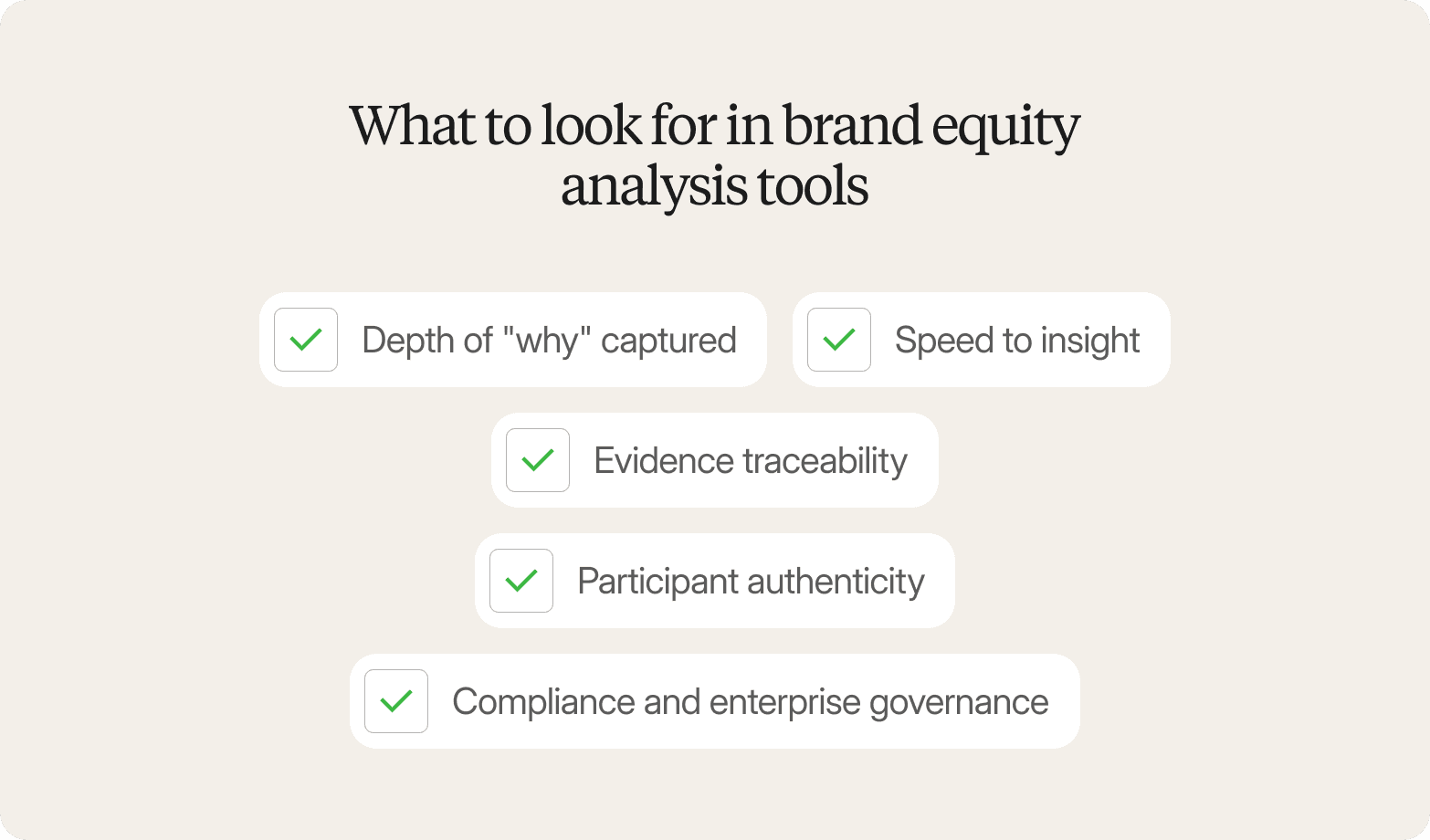
To get all the information you need to build consumer perception and drive long-term growth, your brand equity analysis tool should meet five core criteria.
1. Depth of “why” captured
The emotional and contextual reasons behind a shift in brand perception are invisible to quantitative trackers. Look for tools that surface qualitative insights into what’s driving a change, not just what happened.
2. Speed to insight
Most brand equity tools weren’t built for the pace of real campaign decisions. Traditional studies run on 6- to 12-week cycles. AI-augmented qualitative platforms deliver insight into what’s affecting brand health in days from a 15 to 30-interview wave. The tool either fits your decision cadence or it doesn’t. Confirm this before shortlisting.
3. Evidence traceability
Can stakeholders watch clips, read verbatim quotes, and trace themes back to individual participants? Or does the tool produce aggregate outputs with no visible evidence chain? Traceability matters for internal credibility and for defending brand strategy recommendations to senior stakeholders. Without it, a stakeholder who challenges your findings has nothing to interrogate but a score.
4. Participant authenticity
Some platforms use AI-synthesized avatars rather than real, verified participants. For brand equity work, where emotional nuance and participant identity are part of the research value, synthetic data can’t capture the genuine emotional responses that make brand equity research valid. Confirm that real participants from your target audience are participating before a tool makes your shortlist.
5. Compliance and enterprise governance
SOC 2 certification, GDPR compliance, EU data hosting, and audit trail support aren’t optional for enterprise procurement. These requirements tend to surface late in vendor conversations, so check them early.
Qualitative Video Interview Platforms
Traditional brand equity research used to mean a trade-off between depth and speed. Qualitative video interview platforms have changed the equation, enabling brand and insights teams to run 15 to 30 async interviews with follow-up questions that adapt to each response, capturing tone and expression alongside the transcript. The result is in-depth, stakeholder-ready findings within the same week.
As AI research platforms grow in number, some use synthetic respondent data rather than real participants. For brand equity work, where the value is in genuine emotional responses from your target audience, real customer data is what makes brand equity research valid. Both tools in this category use real people, but you should verify this with any other platforms you shortlist.
1. Conveo
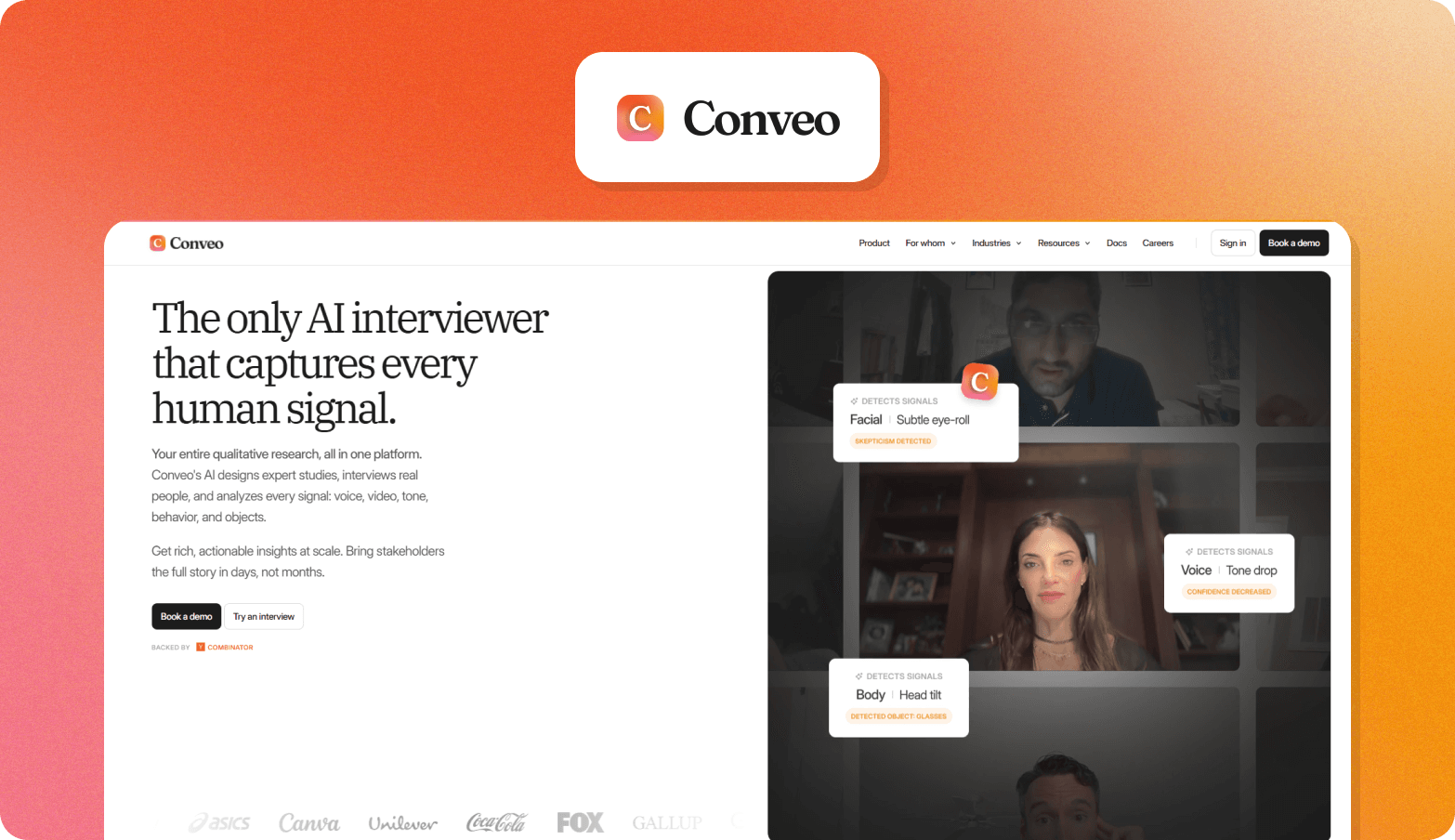
Conveo is a video-first AI qualitative research platform built for brand and insights teams that need consumer perception data fast enough to support marketing activities and competitive positioning decisions.
Teams using Conveo can run 20 to 30 AI-moderated video interviews, receive automated thematic analysis with clip-level evidence, and share findings with stakeholders within days of fielding.
Research teams at Google, FOX, Reddit, and Bosch use Conveo to understand the emotional drivers of brand perception without waiting 6 to 8 weeks for results.
Key Capabilities
AI-moderated video interviews use adaptive follow-up questions to uncover the emotional and contextual reasons behind changes in brand perception.
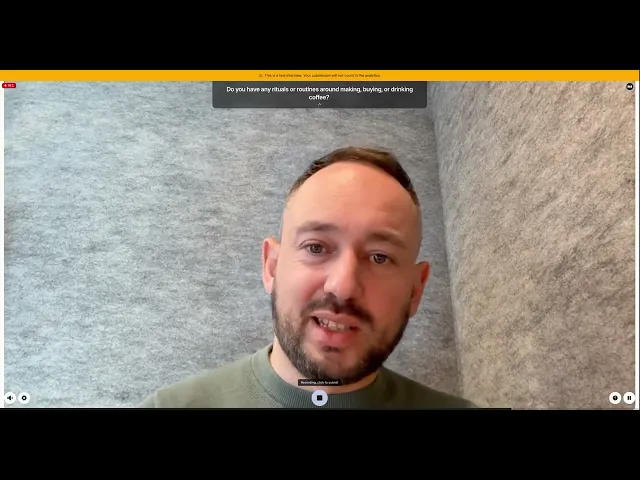
See Conveo’s AI moderation in action:
The platform transcribes interview footage, identifies themes, and automatically generates findings, removing manual work from the research process.
Teams can search past studies in the insight library to build historical data, avoid repeating research, and spot emerging trends across projects.
Stakeholders can trace every theme back to tangible assets, such as participant clips and verbatim quotes, rather than relying on high-level summaries.
Strengths For Brand Equity Analysis
Conveo surfaces the emotional and contextual drivers behind shifts in brand perception, giving brand teams the qualitative evidence they need to explain why perceptions are changing.
Every theme links to specific clips and verbatim quotes from real participants, so stakeholders can inspect the source material rather than take the output on trust. For teams defending brand strategy recommendations internally, that evidence chain is what makes qualitative findings credible for driving future growth.
Consideration
Conveo delivers the most value for teams measuring brand equity continuously, not as a one-off or occasional study. Teams without a dedicated insights function are less likely to benefit from the platform’s long-term view of brand perception.
Compliance
Conveo holds SOC 2 certification, complies with GDPR, and offers EU data hosting as standard. For enterprise teams running brand equity research with real consumer data, these certifications are the baseline for passing procurement and keeping participant data secure and defensible with legal and security teams.
Best For
Mid-market and enterprise brand and insights teams moving from quarterly tracking to continuous consumer understanding, with outputs that must withstand internal scrutiny.
"Conveo's video-first approach is a real differentiating methodological advantage. The ability to distill insights from reactions and not just hear answers adds context you simply can't get from transcript-only tools, or any other tool in the market for that matter."
Senior Marketing Research and Insights Manager, Google
2. Outset
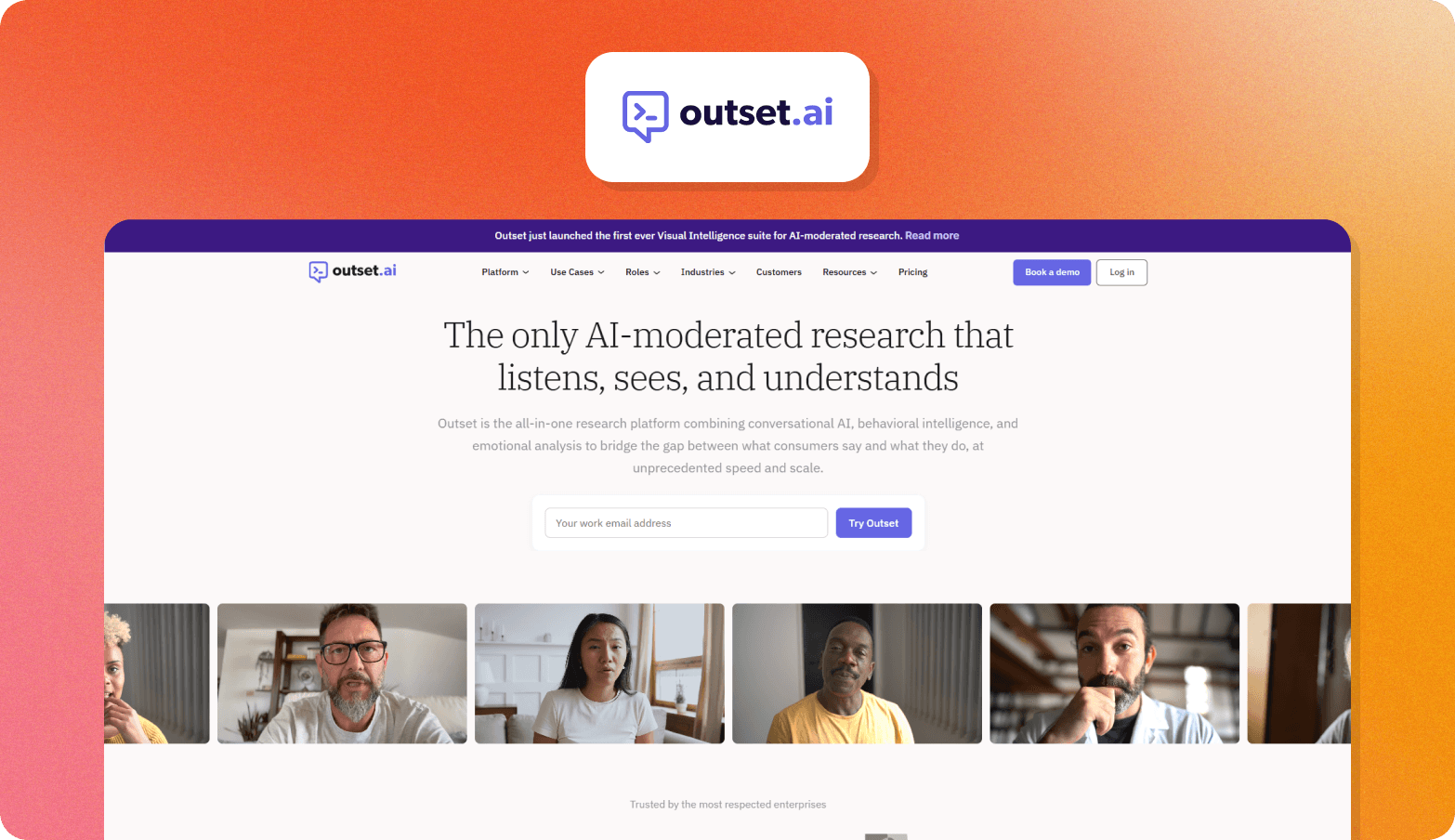
Outset is an AI-moderated research platform that conducts asynchronous interviews in text, voice, and video formats.
Strengths For Brand Equity Analysis
Outset’s async format removes the scheduling overhead of live moderation, making it accessible for teams running exploratory brand research across time zones. The AI interviewer adapts follow-up questions based on participants’ responses, and the findings are traceable to the source clips through auto-generated highlight reels.
Limitations For Brand Equity Analysis
Outset primarily serves UX and product research, such as concept testing, usability, and discovery, rather than brand equity programs. Outset doesn’t publicly confirm EU data hosting, which may create friction for enterprise procurement teams in Europe.
Best For
Teams are exploring AI-moderated research for exploratory studies and concept testing on a smaller scale.
Survey-Based Brand Trackers
Survey-based brand trackers measure awareness, consideration, preference, and NPS-style metrics at regular intervals, providing teams with statistically robust trend data from large samples. They’re the right tool for benchmarking brand performance over time and tracking whether brand metrics, such as customer satisfaction, are moving in the right direction.
The drawback is that surveys don’t tell you the “why” behind the “what”. You need to pair surveys with qualitative research to understand the customer sentiment driving the answers.
3. Kantar BrandZ
Kantar BrandZ is a global brand equity database and valuation service that combines consumer perception data with financial analysis.
Strengths For Brand Equity Analysis
BrandZ provides brand teams with global and local brand equity benchmarks across many markets, helping them see how their brand compares with competitors in the category. Its Meaningful, Different, and Salient framework connects perception metrics with sales data to help teams identify what is driving or limiting the brand’s financial growth.
Limitations For Brand Equity Analysis
BrandZ is better at measuring brand equity and competitive benchmarking than explaining it in rich qualitative detail. It also operates as an agency engagement rather than a self-serve platform, which makes it less suited to teams that need continuous or fast-moving insights.
Best For
Large global brands with established equity tracking programs that need external benchmarks, evidence of competitive advantage, and stakeholder-ready brand valuation data.
4. YouGov BrandIndex
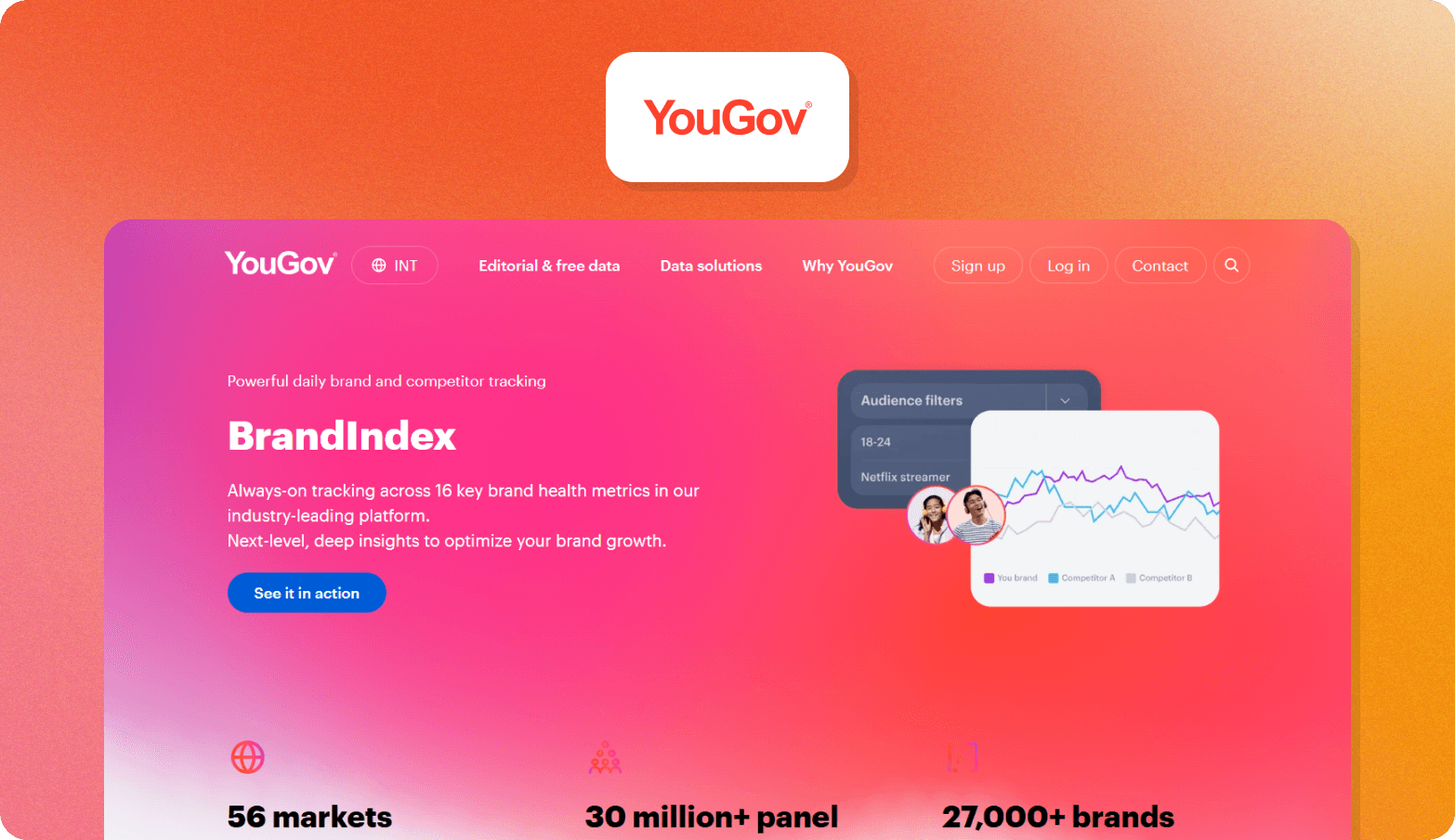
YouGov BrandIndex is a continuous brand-tracking service that uses regular consumer surveys to measure brand metrics, including buzz, impression, quality perception, and purchase consideration.
Strengths For Brand Equity Analysis
BrandIndex gives fast brand health signals with daily updates, making it useful for tracking campaign or PR impact in near real time. It also offers syndicated benchmarks, so teams can compare performance across competitors and markets.
Limitations For Brand Equity Analysis
BrandIndex is mainly quantitative, so it shows what’s changing but not why. While its AI-led interview solution BrandIndex Voices adds a qualitative layer, it’s secondary to the core survey model.
Best For
Brand and communications teams that need fast sector benchmarking or PR monitoring.
Digital Listening and Social VoC Platforms
Tools in this category capture what customers say publicly about brands in forums, in the news, and through social media engagement rather than gathering insights directly.
The strength is real-time volume and broad coverage across key brand visibility channels. The limitation is that the data comes from unprompted, unverified public posts, so you can’t verify participant identity. The absence of structured questioning also makes brand growth difficult, as it’s unclear how to derive actionable insights from consumer feedback to build brand value.
5. Brandwatch
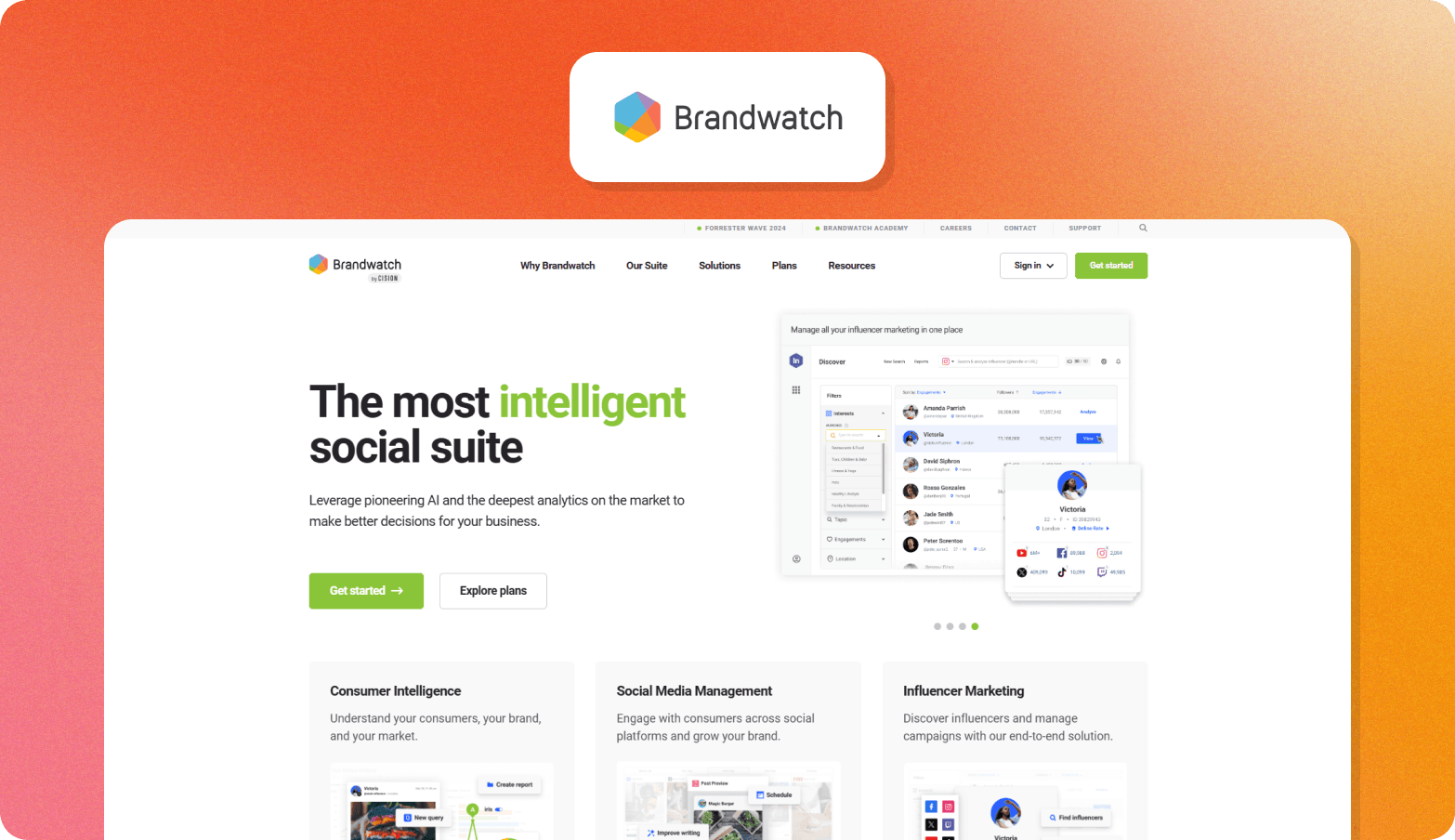
Brandwatch is a social media analytics platform that tracks brand mentions, consumer sentiment, and conversation trends across public online channels at scale.
Strengths For Brand Equity Analysis
Brandwatch processes large volumes of public data in near real time, giving brand and communications teams a fast signal of brand visibility. Automated alerts help teams track sentiment shifts during campaigns or spot emerging issues before they influence target customers.
Limitations For Brand Equity Analysis
Brandwatch data comes from public, unprompted online posts and doesn’t provide verified respondent identities as survey or interview research does. Social listening captures what people are saying and overall customer perceptions, but surfacing the emotional reasons behind those shifts needs structured research alongside it.
Best For
Brand and communications teams who need an up-to-date pulse on brand sentiment and crisis monitoring, as a complement to, not a replacement for, structured consumer research.
Enterprise Research Platforms and Consulting Solutions
This category brings together two types of solutions that enterprise brand teams often evaluate together: platforms that include brand tracking within broader experience management suites, and specialist consultancies that deliver brand equity research as a managed service.
Both require significant time and budget. The key difference is whether they support ongoing learning over time or focus on a single strategic review.
6. Qualtrics BrandXM
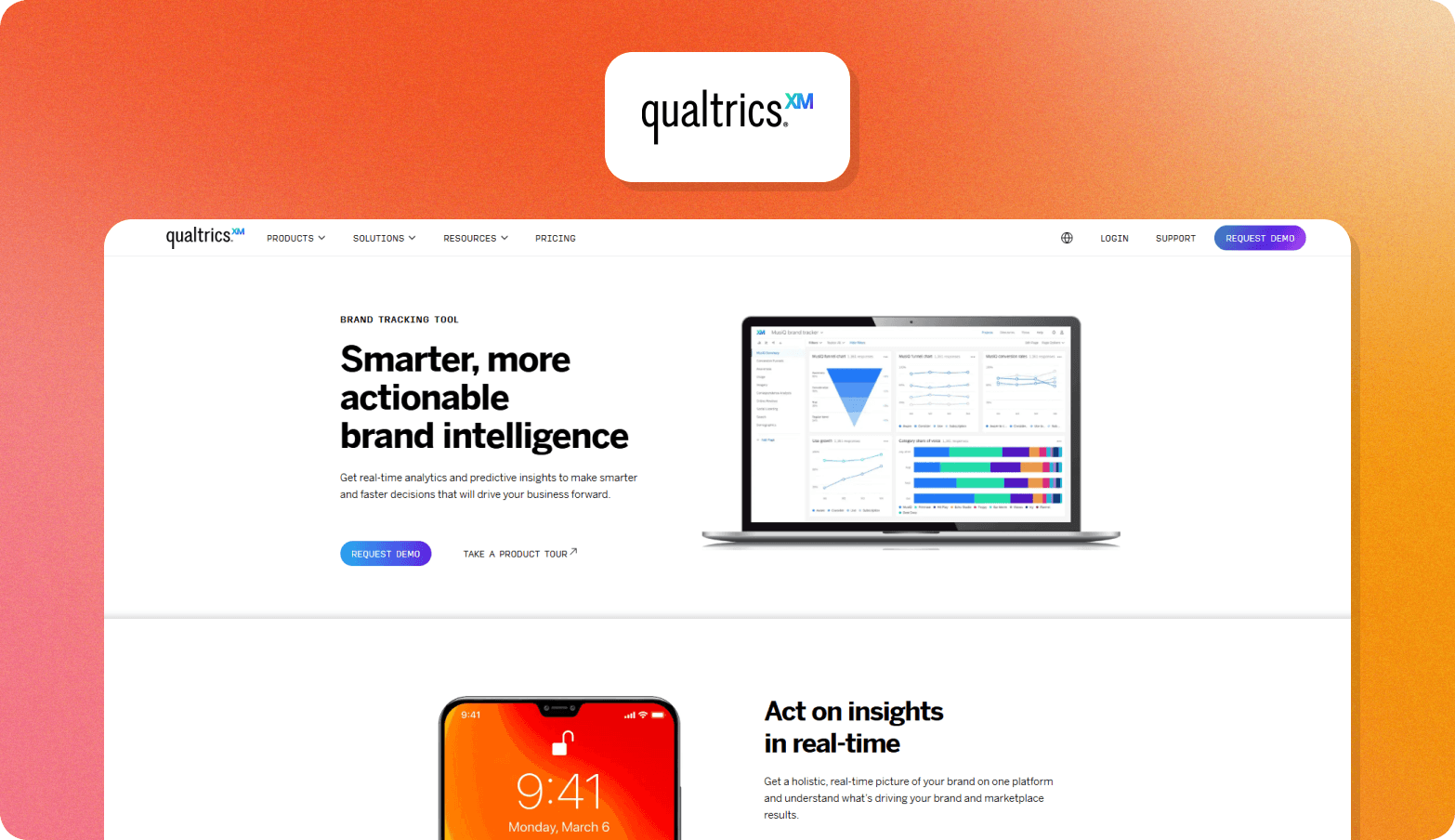
Qualtrics BrandXM is a brand experience and tracking solution within Qualtrics’ broader experience management platform for companies that want to measure brand equity alongside employee and customer experience data.
Strengths For Brand Equity Analysis
The platform supports brand measurement with driver analysis and real-time alerting, so teams can move from tracking to identifying what’s impacting brand performance and act on changes as they happen. It also integrates external data sources such as social media and search, with machine learning for sentiment analysis.
Limitations For Brand Equity Analysis
BrandXM is primarily survey-based, so it’s strongest at measuring and explaining brand performance quantitatively. It can identify drivers and priorities, but teams that need deeper contextual or emotional nuance will still want qualitative research alongside it.
Best For
Large enterprise teams with existing Qualtrics infrastructure who need brand equity measurement tools integrated with broader experience program data.
7. Ipsos Brand Tracking
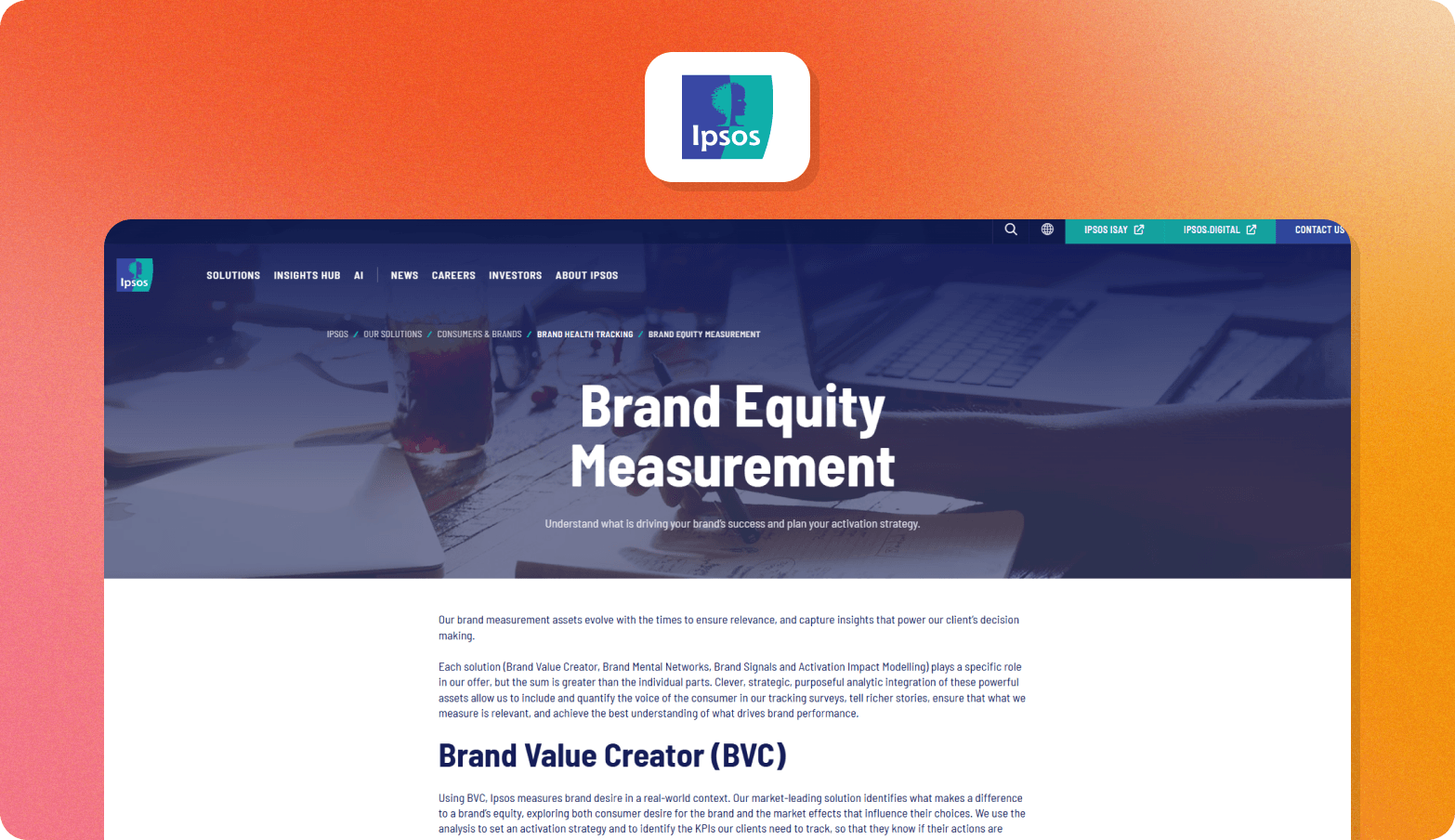
Ipsos is a global brand research and consulting provider that delivers brand equity frameworks, custom tracking studies, and brand health measurement across markets.
Strengths For Brand Equity Analysis
Ipsos brings strong methodological expertise, making it well-suited for high-stakes brand decisions that require external validation. Some frameworks, like Brand Mental Networks, capture how consumers describe brands in their own words, while Brand Signals combines social data with brand health tracking to show how perception forms in-market.
Limitations For Brand Equity Analysis
Ipsos operates as a consulting service rather than a self-serve platform, so it’s less immediate and less flexible than always-on software tools. Teams that need continuous, real-time data between studies will find it less suitable.
Best For
Teams running periodic high-stakes brand equity studies, annual or biannual, that need external expert validation and global reach.
Why Conveo Is the Right Choice for Brand Equity Research
For brand and insights teams that need to understand why consumer perception is changing and act on that understanding before the next campaign concept decision is made, Conveo is the right choice.
Survey trackers and social listening platforms show what is changing. Consulting engagements deliver that explanation with statistical rigor, but on timelines that rarely fit campaign cycles. Conveo delivers the qualitative depth and clip-level evidence that brand equity research demands, at a pace that fits enterprise strategic decision-making. Here’s how.
Depth that stakeholders can interrogate
Every theme Conveo surfaces links to specific clips from real participants. Stakeholders can watch the footage, read the verbatim quotes, and trace the evidence behind any finding before acting on it. That evidence chain changes the relationship between research and the decisions it supports. Stakeholders engage with source material directly.
Speed that fits how brand decisions get made
Positioning calls, campaign briefs, and messaging frameworks don’t wait for quarterly reports. A Conveo wave of 15 to 30 interviews delivers insight into what’s driving shifts in perception within days. Brand teams can test perceptions, understand reactions, and iterate competitive positioning or brand messaging within the same cycle as the work it informs.
Knowledge that compounds across studies
Each Conveo study adds to a searchable insight library. Over time, that library becomes institutional memory: researchers can surface what consumers said today about the brand versus what they said two years ago, and see how their brand evaluation has changed across specific themes. That picture is only available when research compounds across studies, rather than being reset per project.
Conveo is built for mid-market and enterprise teams running continuous research cycles who need outputs that their senior stakeholders will trust. For teams that also need large-scale annual benchmarking with external validity, a Kantar or Ipsos engagement works well. For teams that need continuous, evidence-backed consumer understanding at a pace that fits campaign cycles, Conveo delivers.