

TL;DR
Price for time, cognitive burden, and privacy exposure; never clock time alone.
Incentives are a lever on participant quality and the credibility of qualitative insight, not a back-office task.
Benchmark by method and region, and apply regional multipliers rather than flat US rates.
Automate payout triggers, keep a structured audit trail, and screen for fraud before any payout fires.
Multi-market incentives are an infrastructure problem: currency, payout method, and compliance all vary by country.
Set your screened-out compensation policy before the screener begins to prevent complaints.
Research incentives should never rise to the level of undue influence, particularly when recruiting from vulnerable populations.
Conveo, a video-first AI research platform, consolidates recruitment, screening, moderation, and incentive management so that fast payouts and clean audit trails are the default.
Qualitative research has changed. Teams can now hold real conversations at scale and turn them into stakeholder-ready evidence in days, not weeks. But that evidence is only as good as who you recruit and how you treat them. Incentives sit at that root: get them right and you protect participant quality, panel sustainability, and the credibility of everything downstream. Get them wrong, and such risks compound quietly: the best analysis in the world is built on a compromised sample, and the research results it produces don't hold up under scrutiny.
Getting incentives for research participants right looks straightforward until it breaks at scale. A team running three studies a year can manage payout logistics manually; a team running 30 studies across five markets cannot, not without coordinators chasing fulfillment vendors, resolving delayed payouts, and fielding complaints that land days after fieldwork closes. That gap between the research and incentive timelines is where recruiting efficiency quietly collapses: fieldwork wraps in 48 hours, but fulfillment takes a week, and the insights team bears the reputational cost on the panel community it depends on. The tension is structural, too: enterprise programs need faster recruiting without creating compliance gaps that finance and procurement teams cannot audit, since tax reporting obligations and gift card disclosure thresholds vary by region.
This guide covers incentive benchmarking by method and region; operational playbooks for automating incentives and preventing fraud; multi-market governance across jurisdictions for international research; and quality guardrails that protect signal integrity. It also covers the ethical concerns that shape fair compensation, since commercial and academic research share the same basic obligation: participants should understand what study participation actually requires before they opt in.
Why Incentive Management Extends Research Timelines
Most research timelines don't collapse at the interview stage. They collapse before and after it, in the logistics surrounding participant management: recruiting, screening, scheduling, and paying participants are treated as separate operational problems, handled by separate people using separate systems. Screeners and other recruitment materials also double as documentation of research procedures, which matters the moment a compliance team asks how a sample was assembled.
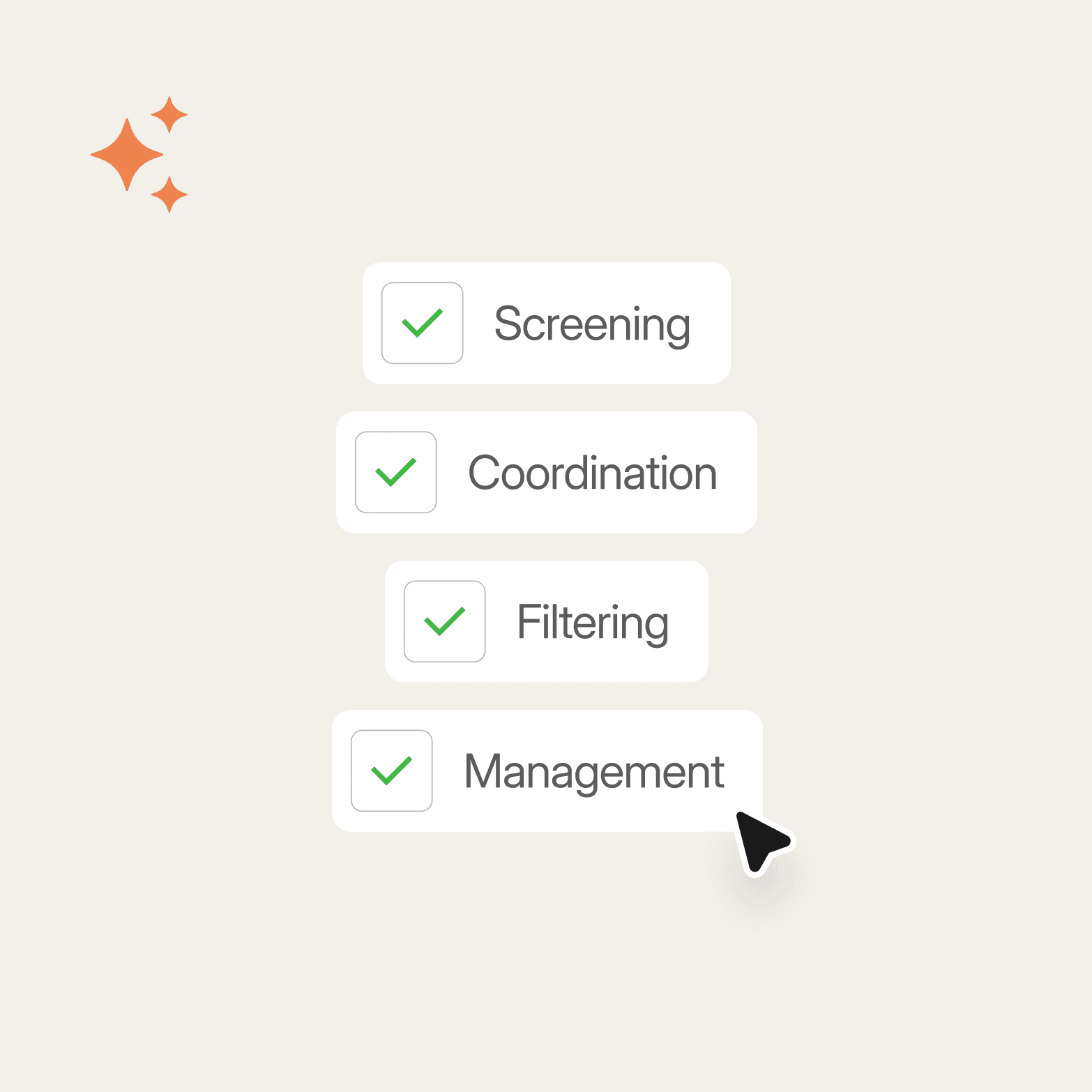
External panel providers typically add one to two weeks to the front of any study, across four steps that all happen before a single interview runs:
Briefing the vendor
Defining the screener
Running the recruitment process to quota
Confirming eligibility
On the back end, incentives are often processed through a separate fulfillment workflow, adding another three to seven days after fieldwork closes. A 10-participant UX study that should take days to field instead stretches into weeks once both are accounted for.
Manual tracking is where most teams underestimate the drag. Spreadsheets logging participant status and payout eligibility require constant updating; follow-up emails confirm bank details; and participants screened out mid-study raise disputes over partial compensation, pulling a researcher away from the work that actually produces insight.
The audit problem is equally serious, even if it surfaces later. Finance and compliance functions require a verifiable record of who was paid, how much, when, and under what conditions. Manual tracking across spreadsheets and email rarely produces a clean audit trail, and when finance requests documentation months later, records are often incomplete or split across systems, creating real compliance exposure and sometimes delaying future study approvals.
Integrated incentive management changes the operational model. When recruitment, screening, and payout occur within a single platform rather than across separate vendors and a spreadsheet, the lag between fieldwork completion and participant payment shrinks from days to hours, and the research process becomes something a compliance team can actually audit end-to-end.
"We pull richer insight in hours, not weeks"
— Head of Customer Insights, JDE Peet’s
Conveo's incentive management is built on this integrated model. Conveo is a video-first AI research platform designed for teams that need findings to hold up under procurement and compliance scrutiny, not just move quickly. Because recruitment, screening, AI-moderated interviews, and incentive management run in a single system, the audit trail and speed come from the same system rather than competing with each other.
Incentive Benchmarking by Research Method and Participant Profile
"How much should I pay?" is the question every research team asks, and the average research incentive varies far more than most published guidance admits. The typical answer, $50 to $150 per hour, is accurate for standard US consumer research and usability testing, but it breaks down once you change the method, participant profile, or degree of intrusion involved. Incentive decisions require three inputs: time, cognitive burden, and privacy exposure. Screener language that undersells the ask can also exert undue influence on potential participants' decisions about whether to join, since people who don't fully understand what they're agreeing to aren't making an informed choice.
The table below provides working benchmark ranges for the five research methods most commonly run by enterprise insights teams, consistent with current published incentive benchmarks. Consumer participants in moderated sessions typically command $60 to $100 per hour, professionals run $100 to $200 per hour, and executives or medical professionals can reach $150 to $300 or more per session.
Financial Incentives for Research Participants: US Benchmark Ranges by Method
Research Method | Participant Burden | Consumer Range (US) | B2B / Professional Range (US) | Key Adjustment Factor |
30-min remote interview | Low: scheduled time, minimal setup | $40 to $75 | $75 to $150 | Add 25 to 40% for in-person |
60-min remote interview | Medium: sustained attention, scheduling | $75 to $125 | $125 to $250 | Specialized expertise adds 50 to 100% |
90-min workshop or group | High: group dynamics, longer commitment | $100 to $175 | $175 to $350 | Add premium for senior titles |
7-day diary study | High: repeated effort, daily cognitive load | $125 to $200 | $200 to $400 | Rate total time, not session count |
In-home video ethnography | Very high: privacy intrusion, setup, environment access | $150 to $300 | $300 to $500+ | Highest burden category, never underpay |
Note: Ranges reflect US consumer and professional participants. Apply regional multipliers for non-US recruitment. Panel-sourced participants incur meaningfully higher recruiting costs than social or CRM-based recruiting, which affects the total budget but not the incentive rate directly.
The decision rule most teams get wrong is treating all 30-minute studies as equivalent. An in-home video ethnography asks participants to invite a camera into their living space, a materially different ask than joining a call from a desk, and justifies a higher rate regardless of clock time. B2B participants expect significantly higher incentives than general consumers: professionals typically need 1.5x the consumer rate, while C-suite executives may need 2.5x to 3x the consumer rate, reflecting higher opportunity costs and more difficult recruitment. Underpaying relative to the burden also skews the sample toward less representative participants, since only people with fewer alternatives will accept the offer, making it harder to recruit participants who actually reflect the target market.
Regional adjustment matters too. US rates are the highest benchmark, with UK rates roughly 5% lower, EU rates about 10% lower, and Asia-Pacific rates 30-40% lower. Panel-sourced participants also cost more to access than those recruited through owned channels or CRM lists, a premium that lives in the recruiting budget, not the incentive rate.
Multi-Market and Multilingual Incentive Governance
Running a multi-market study sounds like a research problem until the invoices start coming in. Then it becomes a finance, compliance, and participant-experience problem all at once. International research adds a layer most single-market teams never have to think about.
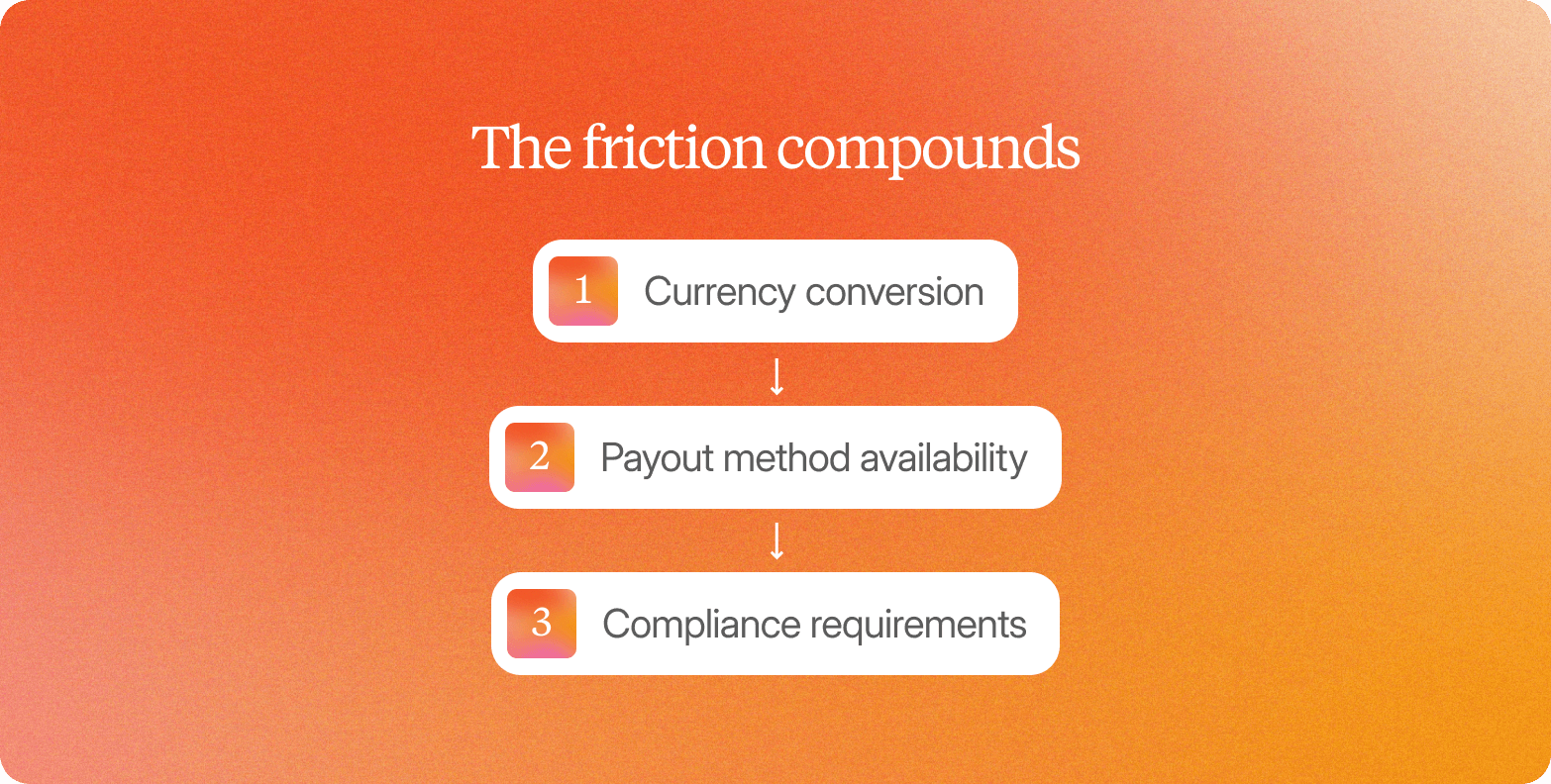
The friction compounds at three points:
Currency conversion. A $75 US incentive translates to roughly €70 in Germany, but local norms for a 60-minute interview may put the expected rate closer to €50, so teams applying US rates globally either overspend or under-recruit.
Payout method availability. This varies by country: gift cards are the default in North America, but bank transfer is often expected across DACH and Benelux markets, and certain payment platforms are restricted in specific geographies. This matters even more for remote studies spanning several time zones, where fulfillment delays compound faster than anyone notices until a participant complains.
Compliance requirements. These differ by jurisdiction: GDPR governs participant data handling across the EU, data residency rules in Germany and France affect where recordings can be stored, and tax reporting thresholds for incentive payments vary by country.
Conveo moderates interviews in 50+ languages and recruits across 50+ markets through its integrated panel network, removing the sourcing overhead that typically adds days to multi-country timelines. Fulfillment logic runs regionally, automatically applying the appropriate payout method for each market, with compliance documentation maintained within the same infrastructure that governs data residency and GDPR obligations.
Why incentives matter for payout timing is easy to underestimate. Immediate post-session delivery reduces disputes and improves panel retention, while manual multi-timezone fulfillment introduces delays that fall on the research team rather than finance, consuming time better spent on synthesis. Multi-market incentive governance is an infrastructure question, not a methodological one: managing it through spreadsheets and country-by-country compliance checks is a vendor-management burden that grows with every new market, while consolidating it into a single platform removes a category of operational risk.
Operational Playbook for Automating Participant Incentives
Automating participant incentives may seem minor on a project plan but becomes a recurring time drain in practice. When incentive fulfillment sits outside the research workflow, coordinators manage a separate queue of follow-up emails, chase down missing payouts, and resolve disputes from people who believe they qualified even though they didn't. The fix isn't a faster email template. It's removing the manual handoff entirely.
A well-designed incentive workflow has three functional layers, all operating inside the research platform rather than alongside it:
Automated payout triggers fired by defined events (session completion, screener qualification, study completion, voluntary withdrawal), configured once at study setup rather than adjudicated case by case.
An audit trail that lets procurement and compliance teams know who approved each payout, when, and by what method, without manual investigation.
Fraud prevention that flags rapid completions, duplicate device signatures, and attention-check failures before a payout fires.
The most widely used incentive formats for research participation are digital gift cards (Tremendous, Rybbon), direct digital payments via PayPal or prepaid Visa, and panel points for panel-sourced participants. Gift cards let participants choose from a large catalog, improving redemption rates, while panel points work well for repeat participants, as accumulated value increases retention.
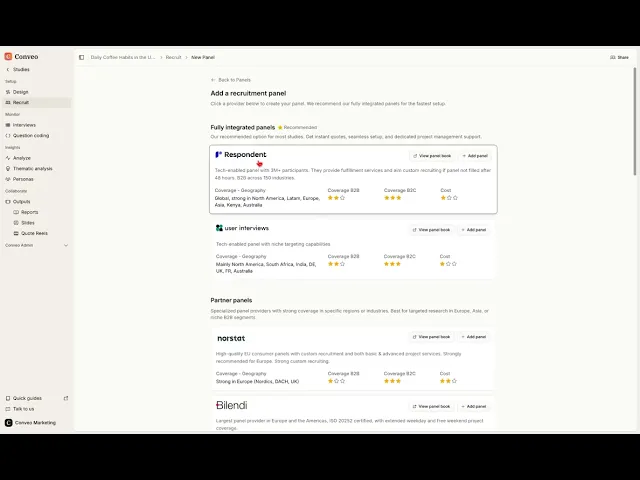
Conveo manages participant sourcing, screening, fraud filtering, and incentive management within a single workflow, with no manual handoffs between separate recruiting, moderation, and incentive platforms. That consolidation is what reduces recruiting timelines from weeks to days.
Watch the walkthrough: How Conveo Handles Participant Recruitment →
One of the most consistent sources of participant complaints is ambiguity around screened-out compensation. Participants who spend five to ten minutes on a screener and are then disqualified frequently expect some payment, and an unset expectation generates complaints and drop-off. The framework is straightforward: pay a partial incentive for screener completion, commonly $10 for five minutes, or communicate clearly upfront that only qualified participants receive compensation. Both work, but the policy must be stated before the screener begins.
When incentive payments involve personal financial data and participant identifiers, the platform handling that data is subject to the same procurement scrutiny as any other enterprise system. Conveo is SOC 2-certified and GDPR-compliant.
Quality Guardrails: When Incentives Change What People Say
Incentives are necessary for research, but they introduce two quality risks that compound each other if left unmanaged: the professional participant problem, where participants who treat interviews as income optimize for throughput over honesty and give answers they believe researchers want rather than what they actually think, and social desirability bias, where participants soften criticism to secure future invitations. Both distort findings before analysis begins.
Low-quality participants create a problem of sample contamination upstream of synthesis. Duplicates, speeders, and low-effort participants pass screeners and trigger payouts without announcing themselves, and by the time analysis identifies inconsistencies, the research data is already in the dataset. Managing this requires controls at multiple points:
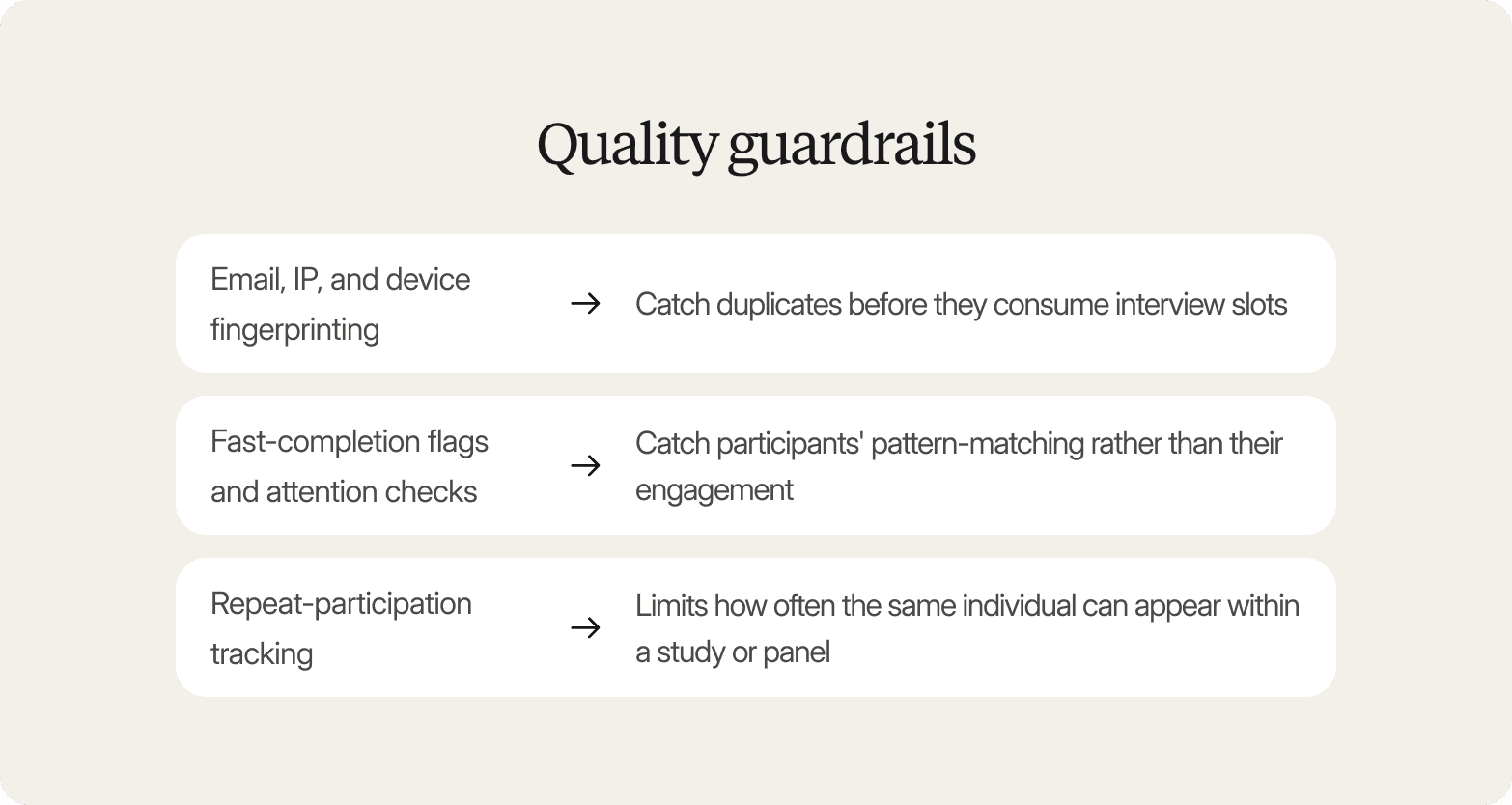
Email, IP, and device fingerprinting catch duplicates before they consume interview slots.
Fast-completion flags and attention checks catch participants' pattern-matching rather than their engagement.
Repeat-participation tracking limits how often the same individual can appear within a study or panel.
Video-based participation adds authenticity that text-only screeners cannot replicate; tone, expression, hesitation, and spontaneity are visible, and delivering a credible answer naturally on camera is considerably harder than typing one. Duplicate risk also compounds when teams combine recruitment channels, since a participant recruited through a panel and again through a social post appears as two distinct individuals in each channel's own database but as a single duplicate in the same study. Integrated recruitment records that track participants across all channels close that gap.
Conveo applies behavioral screening before sessions are scheduled, reducing the disqualification rates common in panel-based recruitment and protecting sample integrity before analysis begins. Every theme Conveo surfaces also links directly to the specific video clips that generated it, so stakeholders can watch original responses rather than take the analysis on faith, which is what separates credible, incentivized findings from a summary written without talking to anyone.
Incentives vs. Reimbursement: Getting the Distinction Right
Incentives, reimbursement, and bonus payments get used interchangeably, but they carry different tax and compliance implications, and mixing them up in a payout record is a common way to fail an audit.
Category | Purpose | Tax treatment | Example |
Incentive/bonus payment | Compensation for participation in research and study participation | Taxable income above certain thresholds in most jurisdictions | Cash payments, cash equivalents like gift cards |
Reimbursement | Covers out-of-pocket expenses (travel, parking, childcare) | Typically not treated as taxable income | Making a participant whole for money they spent to show up |
Finder's fee | Recruiting cost for referring qualified colleagues | Tracked separately as a recruiting cost, not a research incentive | Paid to participants who refer others |
When a study needs to reimburse participants for expenses in addition to a standard incentive, itemize the two separately in the payout record, since combining them makes documentation harder to defend under audit.
Compensation offered should also match the burden of the research activities involved, not just the clock time: payment amounts that ignore travel, disclosure of sensitive information, or repeat participation risk being seen as unfair even when the total incentive amounts look reasonable on paper. In certain contexts, finder's fees should be tracked separately from participant reimbursement so that the two categories are never blended. Common practice across enterprise research programs is to keep incentive amounts, reimbursement, and referral fees distinct. For participants, what matters most is clarity: the money or benefit on offer should be stated plainly before they commit their time, since ambiguity erodes trust in a panel over repeated studies.
Comparison Table: Manual vs. Integrated Incentive Management
Manual incentive workflows create operational drag that compounds across studies, and a three-market concept test with 60 participants can generate weeks of post-fieldwork administration before a team can close the project.
Dimension | Manual Incentive Management | Integrated Incentive Management |
Recruiting timeline | Weeks | Days |
Payout timing | 3 to 7 days post-study | Immediate |
Audit trail | Spreadsheet tracking | Automated logs |
Fraud prevention | Manual review | Behavioral screening + deduplication |
Multi-market support | Manual currency conversion | Automated regional payout |
Compliance | Manual documentation | SOC 2 + GDPR + EU hosting |
Note: "Days" in the recruiting timeline assumes integrated panel access with an automated screener and incentive configuration. Manual workflows include separate vendor coordination for recruitment, incentive fulfillment, and currency handling.
Integrated incentive management removes the follow-up emails, delayed payouts, and disputes that consume coordinator time after fieldwork ends: the platform handles fulfillment at session completion with a full audit trail, automated regional payout eliminates manual currency conversion, and compliance documentation is built into the infrastructure by default rather than assembled before a security review.
Conveo consolidates incentive management with the rest of the qual workflow: recruitment through integrated panels, behavioral screening and fraud filtering before sessions, AI-moderated interviews with real participants, and automated regional payouts logged against every study. Because every theme traces back to the original video, the findings you pay participants to produce stay defensible all the way to the stakeholder readout.
Frequently Asked Questions
What are examples of incentives for research participants?
How much should I pay research participants?
Should I pay participants who don't qualify for my study?
What are financial incentives for research participants?
How do I automate participant incentives for research studies?
Can I give an incentive for research participation?