
In this article
TL;DR
We ran 47 recorded interviews with US consumers about the new documentary “You Can See Everything” and a moment from its trailer.
Among the 20 film viewers who rated her before and after, mean genuineness ratings rose from 24 to 34 out of 100 after the film. The sample is small, so read this as directional.
The trailer moment scored a mean believability of 23.3 and a median of 11 out of 100.
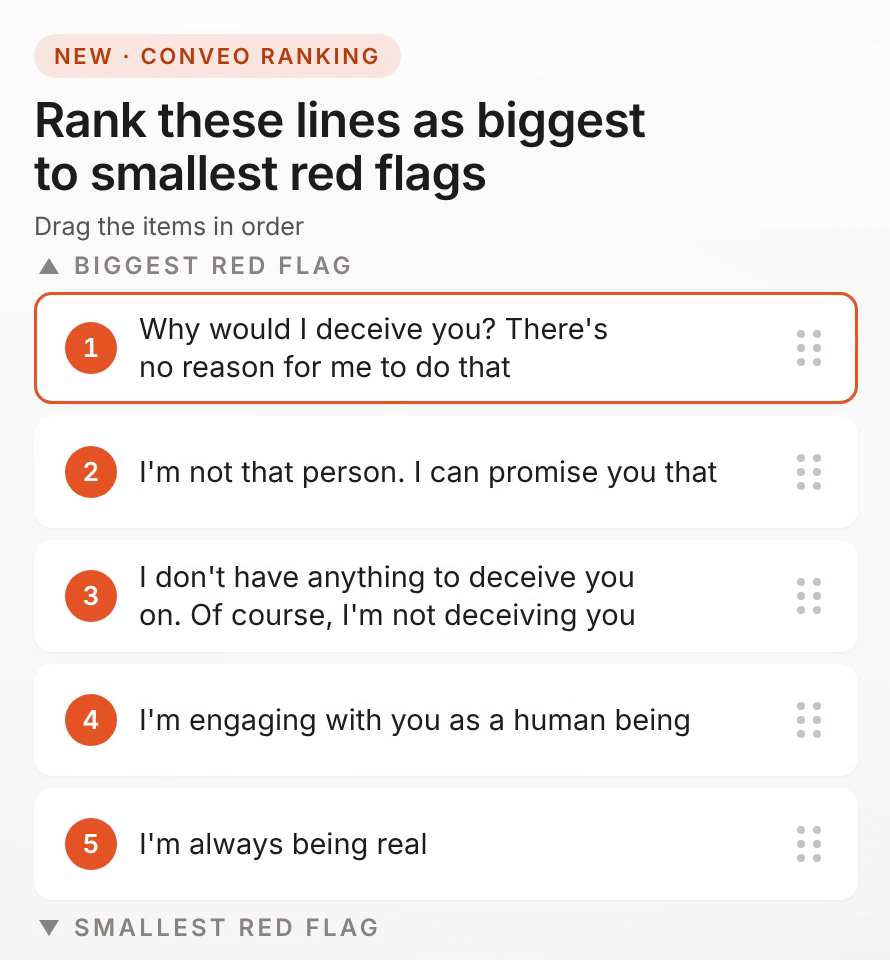
“Why would I deceive you?” was the line most often ranked the biggest red flag, by 48% of film viewers and 33% of non-viewers.
Social Studies is a Conveo series that runs studies on today’s trending topics. Elizabeth Holmes founded the blood-testing startup Theranos and was convicted of defrauding investors in 2022. “You Can See Everything” is the new documentary directed by Nathan Fielder and Lance Oppenheim, built around Holmes. We asked US consumers how the film changes the way they see her, and how a moment from its official trailer reads.
How we ran the study
Conveo ran 47 recorded interviews with US consumers. Conveo’s AI research assistant moderated every interview, and interviews averaged 13.5 minutes.
We used Conveo’s new slider and ranking question features in every interview. Inside each interview, participants:
talked through the film, or what they already knew about the case
reacted to a public moment from the trailer
rated how genuine and how believable Holmes seemed on 0 to 100 sliders, with the new slider question
ranked five lines from the clip, from biggest red flag to smallest, with the new ranking question
Slider results with fewer than 30 answers are directional, not conclusive.
1. The film makes Holmes more human, but doubt remains
Viewers pointed to family, caregiving and prison-preparation scenes as the moments that made the consequences feel real. Those scenes gave them a fuller picture of Holmes’s life. They did not settle whether she is telling the truth.
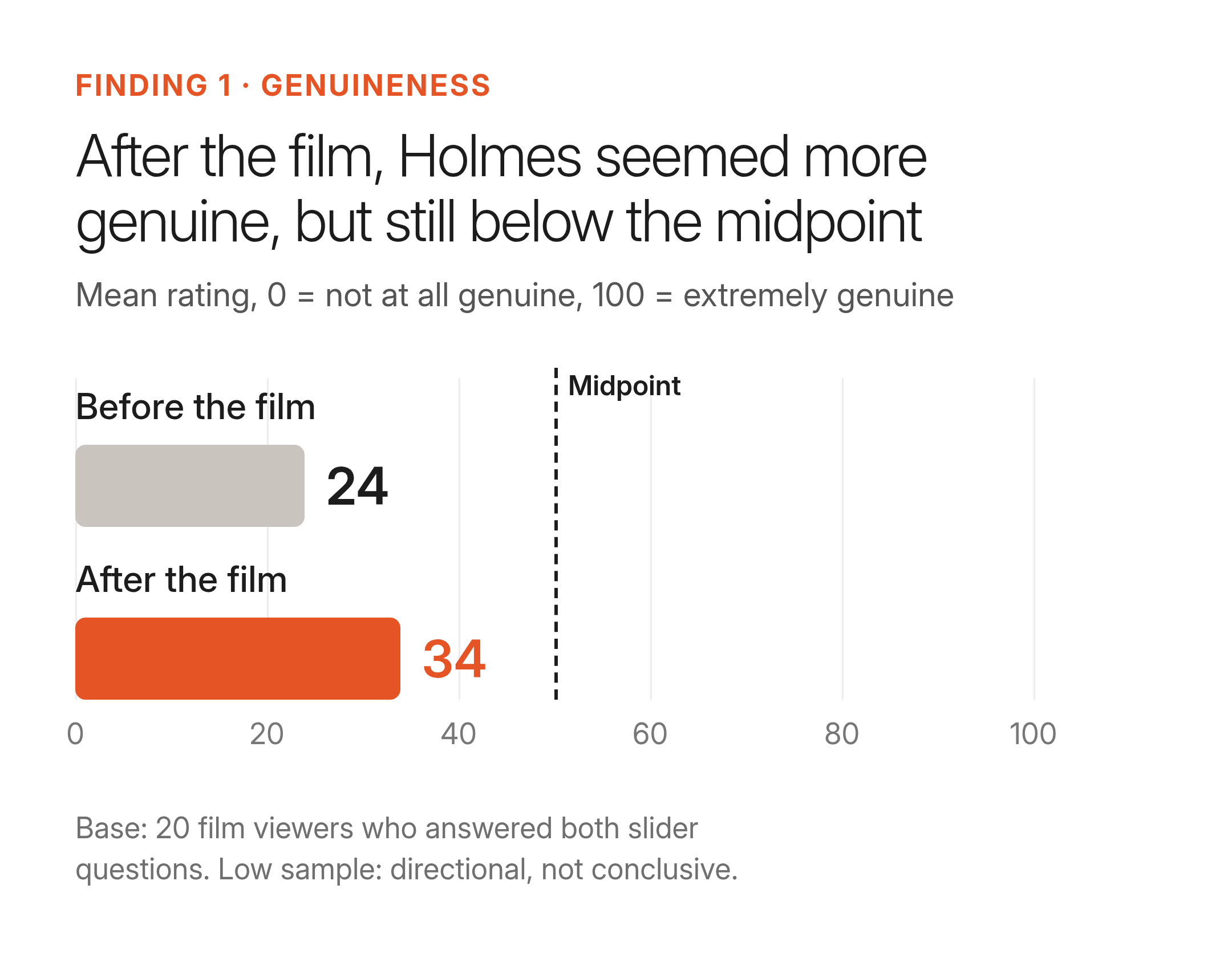
Among the 20 film viewers who answered both slider questions, mean genuineness rose from 24 before the film to 34 after it, on a scale from 0 (not at all genuine) to 100 (extremely genuine). Both scores sit below the midpoint. With 20 people, treat this as directional, not conclusive.
“Just because she’s more human doesn’t mean she’s more genuine.”
US participant
2. The trailer moment makes most people doubt her
All participants rated how believable Holmes seemed in a public moment from the trailer, on a scale from 0 (not at all believable) to 100 (completely believable). The mean was 23.3 and the median was 11.
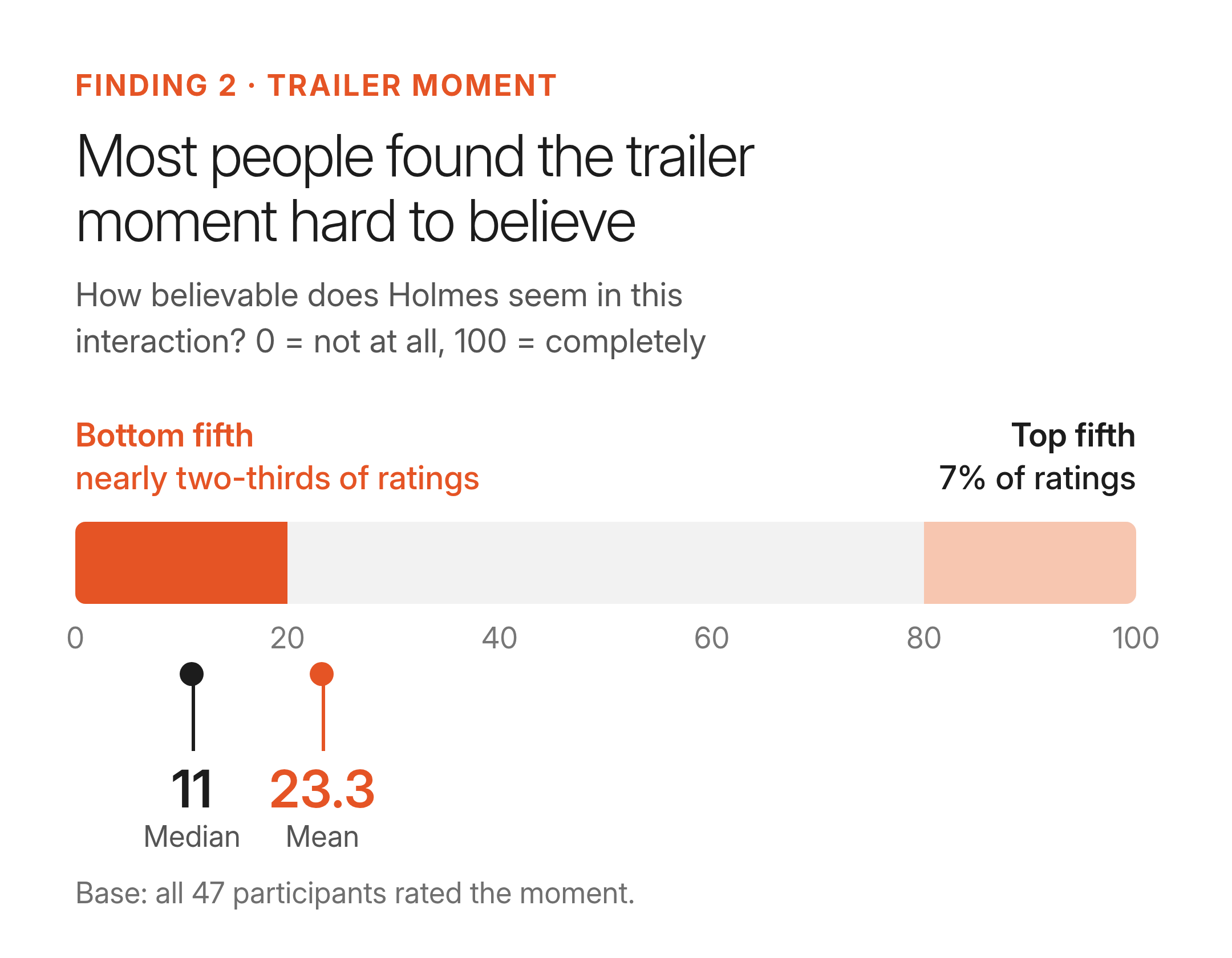
Nearly two-thirds of participants put the moment in the bottom fifth of the scale. Only 7% put it in the top fifth. People called out the unblinking eye contact, the frozen smile and the rehearsed cadence.
“It almost looked like she was wearing a mask.”
US participant
3. Denials of deception are the clearest red flag
Participants ranked five lines from the clip, from biggest red flag to smallest. “Why would I deceive you? There’s no reason for me to do that” was the line most often ranked the biggest red flag: 48% of film viewers and 33% of non-viewers put it first. Across all participants, it ties at the top with “I don’t have anything to deceive you on. Of course, I’m not deceiving you”, because their 95% intervals overlap.
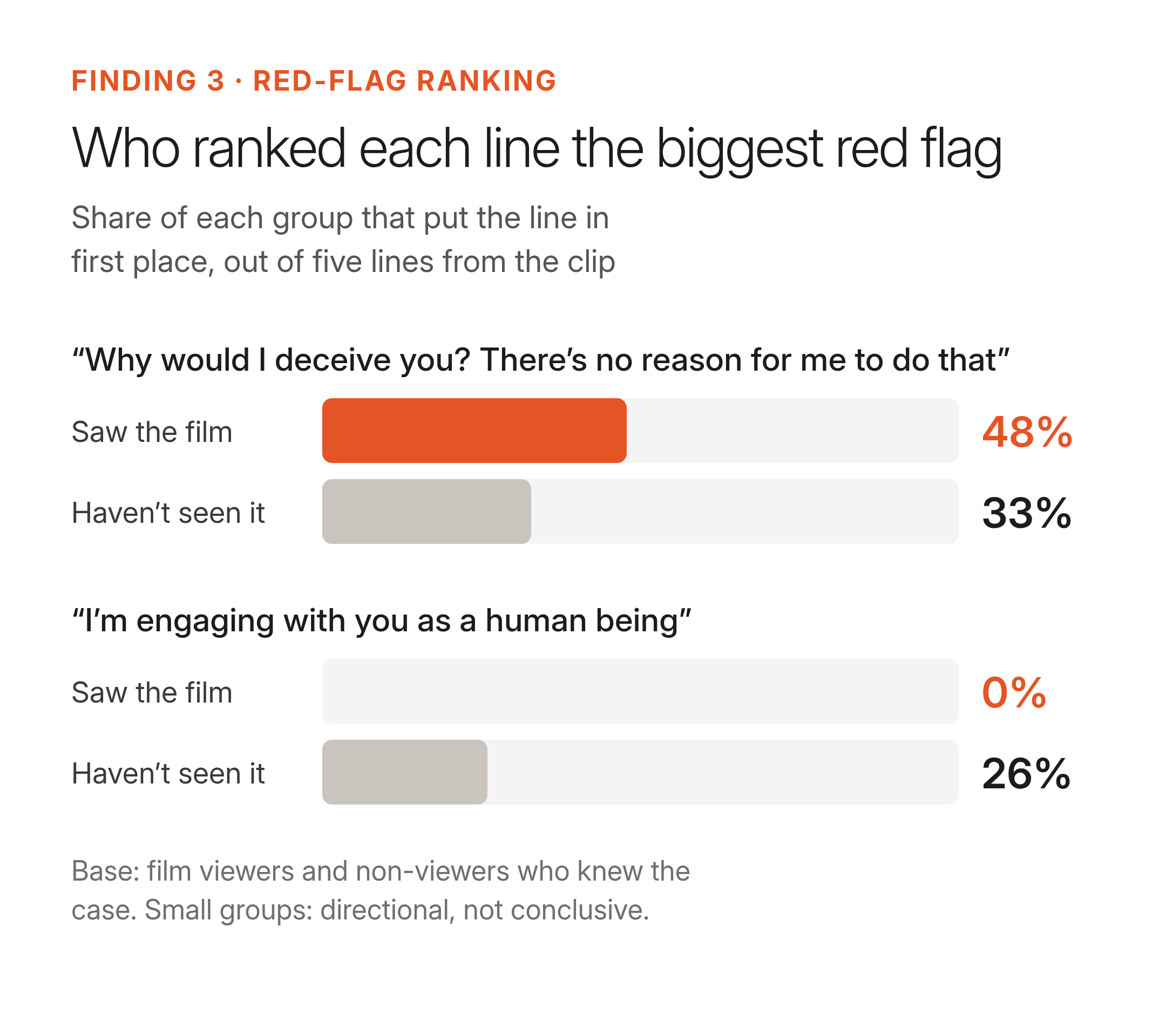
“I’m engaging with you as a human being” came last overall, with 47% ranking it last. It still split the room: no film viewer ranked it the biggest red flag, but 26% of non-viewers did.
“Answer a question with a question to put the onus back on him rather than just being direct.”
US participant
What this means
Personal access to Holmes earns attention. Credibility comes from scenes, evidence and visible scrutiny, and declarations of honesty work against it.
Run your own social study
In Conveo, every finding in this study links back to the recorded interviews behind it. Run the same kind of study on the stories, campaigns and products your audience is talking about.
Cover photo: U.S. Department of Defense / Glenn Fawcett, public domain. Taken at Stanford University in April 2013. Its use does not imply endorsement by the Department of Defense.