In this article
TL;DR
Change the yardstick. New offerings need a new measure, and lifetime customer value is a better one than unit sales.
Purpose points the way. Walmart's purpose, reframed around time, led to online grocery pickup.
Plan for macro shifts. A trend is a symptom; the shift underneath is where durable launches live.
Real behavior settles debates. Nike+ found its real value only once runners used it.
Culture blocks launches. Proto's founders say the biggest barrier to a new launch sits inside the company.
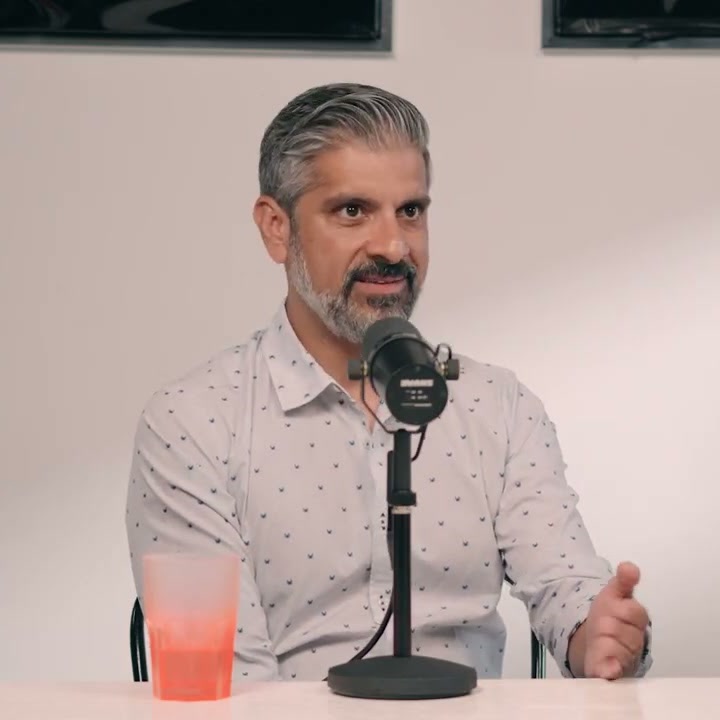
Saneel Radia and Barry Wacksman, co-founders of the innovation firm Proto and both formerly of R/GA, have helped launch some of the best-known products of the last two decades, from Nike+ to PepsiCo's Bubly sparkling water. Their sharpest advice for anyone launching something new is about measurement. Unit sales, the count of how many cans or units moved this month, is the wrong yardstick. New offerings should be judged on customer lifetime value, and you only learn what drives that value by getting real products in front of real customers.
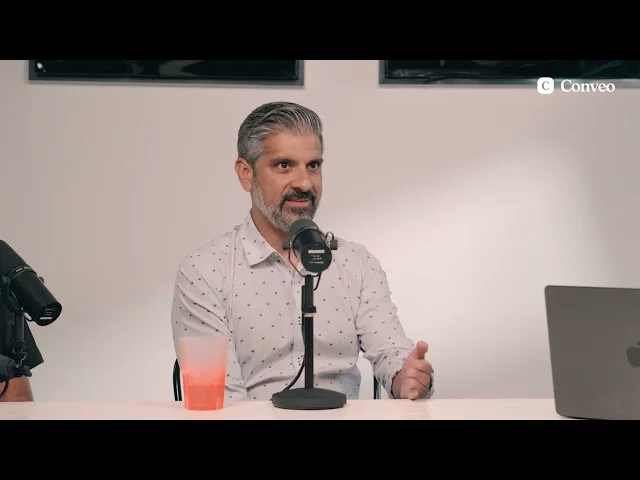
The pair made the case on Conveo's podcast, recorded live at Cannes Lions 2026. Asked for the most overrated metric, Wacksman answered in two words: "Unit sales." Radia added a plus one.
New launches die when they are judged with an old measuring stick
The clearest example comes from Walmart. Radia recalls that the biggest internal objection to investing in online grocery was margin: groceries make less profit than general merchandise, so the message was not to come back with a grocery idea. That logic holds for the existing business and fails for the new one.
"You can't use an old measuring stick for evaluating how your new thing is doing."
Saneel Radia, Co-founder, Proto
A grocery customer who orders online, Radia argues, is worth far more than the margin on an apple. The data tells you whether they host people, have children or travel, and that knowledge helps you serve them in other ways. Measure on the profit of a single item, and the idea never gets made. "I need a new measuring stick to do something new and it turns out lifetime customer value is very different," he says. Radia credits the resulting work with adding $200 billion of market cap to Walmart.
Wacksman sees the same pattern across their client work. A lot of it, he says, is about getting clients and their customers "to think more broadly about the lifetime value of customers. And I think that's one of the biggest opportunity spaces that companies haven't embraced fully." The pair connect the idea to habit. If a product becomes part of someone's everyday life, a lower margin per can matters far less than the relationship it creates.
Radia's three-point "update" for marketers starts in the same place. The first point: "very likely you are not starting with your strengths." The second is the new measuring stick. The third is to use AI to build and test real products with real people far earlier than before.
Purpose and a macro shift point to the right launch
Radia draws a sharp line between trends and macro shifts. Fresh dog food is a trend, and probably a lasting one. But "the macro shift is the humanization of your pet," he says, the change from a dog in the backyard to a dog sleeping in your bed. Launching another fresh food brand because others are making money on it, in his words, sits at the wrong altitude.
Radia treats brand as a lens for innovation: ask what role you play in people's lives and what you are already great at, then lay the macro shift over it. Wacksman adds that purpose-driven companies tend to innovate better because they have a mandate to invest against their purpose. Nike's stated purpose, to bring inspiration and motivation to every athlete, made Nike+ an obvious bet once the technology existed.
Walmart's purpose, as Wacksman tells it, was defined by Sam Walton: help people save money so they can live better. The company lived the first half so completely that it was slow to respond to Amazon, an asymmetric competitor that won on convenience. Proto's work was to show that "live better" now included time. Radia puts the customer truth plainly:
"I'm actually not willing to wait in line for 20 minutes at a grocery store to save a dollar on pickles. It doesn't matter who I am. Everyone's time is valuable."
Saneel Radia, Co-founder, Proto
When customers were asked what living better looked like, Radia says, they asked to save time and to make it more convenient. That led to online grocery pickup, which he calls the most successful thing Walmart had ever launched. It also played to a strength Amazon could not match: Radia says 80% of Americans live under 10 minutes' drive from a Walmart.
Customers reveal what they value once the product is in their hands
Nike+ began in the mid-2000s, before the iPhone and before GPS was widely available, when a hardware developer showed Nike an accelerometer small enough to fit in a running shoe. Wacksman walks through how R/GA, Nike and Apple turned it into one of the first wearable devices, with the iPod as the receiver for running data.

The product sold for around 30 dollars, but Wacksman says "the halo effect of it was that it reinvigorated Nike's business in running shoes at the time." The lesson for insights teams is how the product's real value was found. Much of the early thinking assumed that music was what runners cared about most. It was the data. As Wacksman puts it, "what people think that they want is different from what they actually do want."
Radia says the team shipped an ecosystem of features, including music, community, competition and running data, and let usage show which one was the anchor. Comparing yourself with other runners appealed to serious runners. The broadest appeal came from something simpler: "if you just give people running data, their own running data, they run more." In his words, "the killer app becomes just give people their data and present it to them in a simple human way that people love."
That changes how Radia thinks about research in the age of generative AI. Flat personas, like a made-up millennial mom in Brooklyn, existed because people could not process much data at once. AI makes early concepting much faster. But he draws a clear line:
"I am not a believer in the ability for a synthetic audience alone to tell you anything about an actual human being."
Saneel Radia, Co-founder, Proto
Real people, he says, remain a critical part of the process. The same thinking shapes his view of who to test with. Management consultants talk about a "next best customer" you have yet to find. Radia prefers to ask "who's your first best customer, and that's almost always someone you already have as a customer." For a microscope maker exploring an AI-driven future, that meant building new offerings with three or four existing enterprise clients. The pair also say they will not take on a client who will not let them talk to its customers, because the work cannot succeed without that access. Our comparison of synthetic participants and real participants goes deeper on why that distinction matters.
The hardest barrier to a launch sits inside the company
Proto's starting belief is that if a launch never reaches the market, it does not count. Radia, who is also the firm's chief innovation officer, puts the industry's failure rate at 97% and estimates that roughly three in four of Proto's projects do not come out. He says the gap comes from putting every discipline in the room at once, so blind spots in pricing, distribution or production surface early.
What usually kills a good idea is internal. "The number one barrier to launching something successful is cultural," Radia says. A large company is operationally excellent because it is built to protect proven processes, which also means it is built to shut new ideas down. His benchmark for approvals is memorable: "if the US government can launch a nuclear missile off a submarine with two people turning a key, I should not need to get 150 people at your company to turn a key."
Wacksman notes that the launches that succeed most often come when "clients are at an inflection point where their business is on the line." PepsiCo needed growth outside sugary drinks, which led to Bubly. Nike was losing share in running before Nike+. A threat clears internal barriers. Radia also argues that AI may now tip the balance toward big companies, because "big organizations have the advantage for the first time": they hold the data and existing customers that AI-driven experimentation depends on.
What it means for insights and marketing leaders
The Proto founders' stories add up to a few concrete changes in how insights and marketing teams work.
Bring the right metric to the table early. If a new offering will be judged on unit sales or item margin, it will lose to the core business. Insights teams can help build the case for lifetime value by showing how a product fits into customers' habits and lives.
Ask about the macro shift. The useful question is what deeper change a trend points to, and whether the brand's purpose and strengths fit it. Our article on the innovation pipeline covers how research feeds each stage.
Test with real behavior as early as possible. Nike+ shows how wrong confident assumptions about what people value can be. Pair early conversations with real usage, and treat what customers do as the deciding evidence.
Keep real humans in the loop. AI speeds up concepting, and Radia is clear that real people stay in the process. Start with the customers you already have.
Plan for the culture. The organization is usually a bigger obstacle than the idea. Fewer approvers and a clear owner give a new launch a fair chance.
Lifetime value starts with knowing the customer
Unit sales captures a moment. Lifetime customer value captures a relationship, and a relationship depends on understanding what people value: time at Walmart, their own data at Nike, play in a can of Bubly. In each case the answer came from real customers.
For insights leaders, that makes customer access the starting point for any new launch. Conveo's AI research assistant runs video conversations with real consumers, so insights teams can get to the why behind behavior faster, and bring real customer evidence into the room before a new product is judged with the wrong yardstick. Kees Kruythoff makes a related point about product quality and staying close to consumers in his Cannes conversation on disruption and research rigor.
Frequently Asked Questions
Why do Proto's founders call unit sales an overrated metric?
Unit sales count how many items sold in a period. Barry Wacksman and Saneel Radia argue that new offerings should be judged on lifetime customer value, because a lower-margin product can build habits, data and long-term relationships that are worth far more.
How did Walmart's purpose lead to online grocery pickup?
According to Proto, Walmart's purpose of helping people save money so they can live better was reframed to include saving time. That opened the door to online grocery pickup, which Radia says became the most successful thing Walmart had launched.
What is the difference between a trend and a macro shift?
Radia describes a trend as something like fresh dog food, and the macro shift as the bigger change underneath it, such as the humanization of pets. He argues that launches should be planned at the level of the macro shift.
Can synthetic audiences replace real customers in innovation research?
Radia says no. Generative AI speeds up early concepting, but he does not believe a synthetic audience alone can tell you anything about an actual human being. Real people remain a critical part of the process.
What did Nike+ teach about customer understanding?
The team expected music to be the key benefit for runners. Once the product was in market, it turned out that giving people their own running data was what they valued most, and it made them run more.

About the author
Tom Husson
CMO
Tom is CMO at Conveo, where he leads marketing and builds the company's AI-native go-to-market engine. He hosts the Conveo podcast, recorded at Cannes Lions 2026 with brand, insights and marketing leaders.
More by Tom →Qualitative insights at the speed of your business.
Conveo runs AI-moderated video interviews and structures everything they say.