In this article
TL;DR
Best for: Enterprise insights and CX teams who need journey evidence that stays current with customer behavior between workshops.
The problem: journey maps get built in workshops and then age quietly, so planning runs on a customer picture that stopped being accurate months ago.
The evidence gap: analytics show where customers stall, and surveys capture stated preference, but neither explains why a customer paused, abandoned, or built a workaround.
The credibility cost: when a stakeholder asks who actually said this, workshop consensus and inferred personas have no answer, so journey recommendations lose roadmap arguments.
The mechanism: teams run continuous AI-moderated interviews against the specific journey stage in question, then connect each wave of findings in a searchable insight library.
The outcome: maps get revised when customer behavior moves, and every stage claim traces back to a named participant on video.
What is customer journey management?
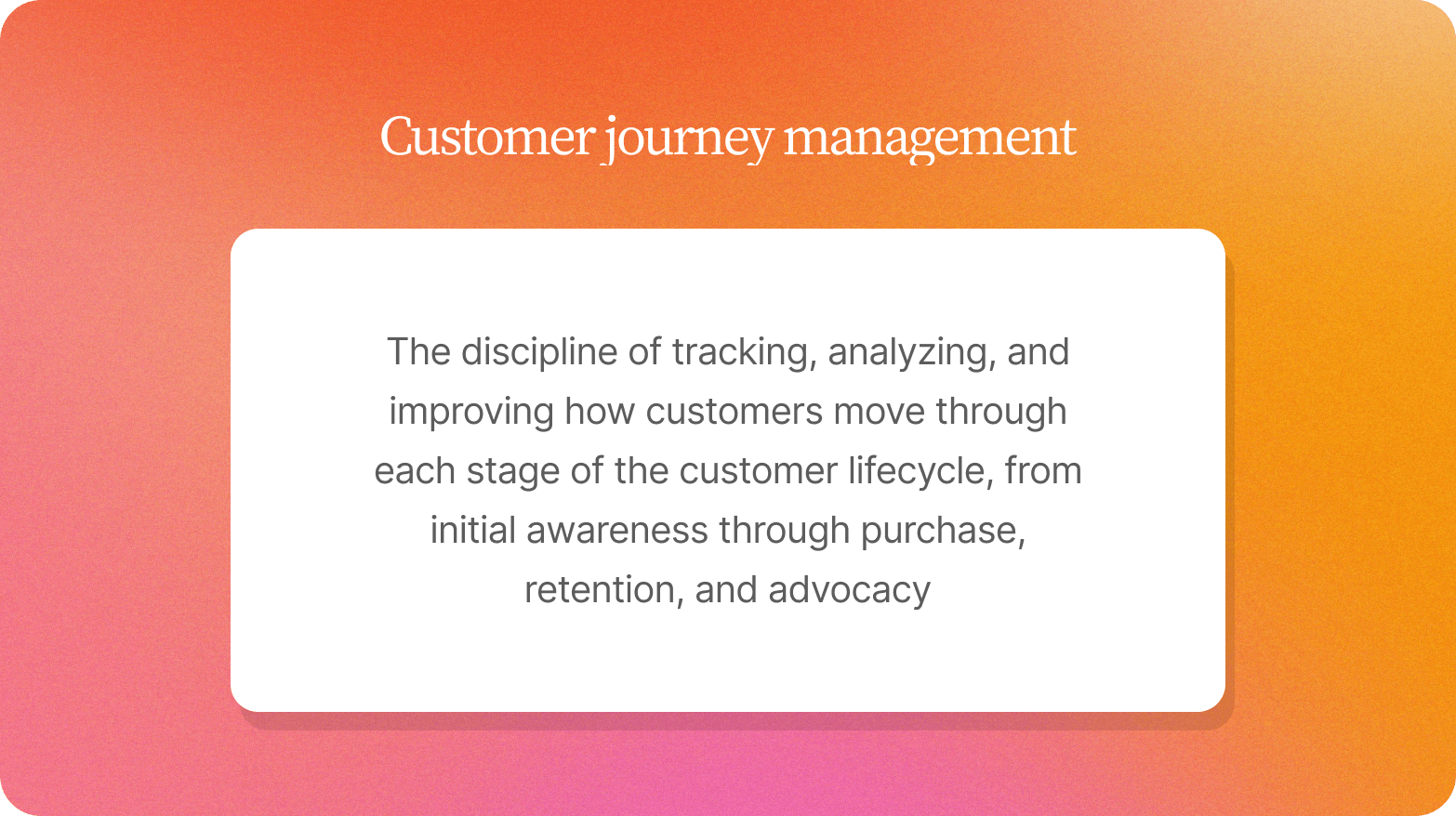
Customer journey management is the discipline of tracking, analyzing, and improving how customers move through each stage of the customer lifecycle, from initial awareness through purchase, retention, and advocacy. A journey map is typically a visual representation of the customer touchpoints along that path: where customers enter a brand's product or service, how customers interact with each stage, where they stall, and where they leave. The path a customer takes rarely matches the straight line a workshop draws. It's an ongoing practice rather than a deliverable. Where a one-time journey mapping workshop produces an artifact, journey management keeps the picture current as customer expectations and the broader customer experience shift.
The discipline has three working components:
Mapping. A shared view of the entire customer journey and its touchpoints: where customers first encounter the brand, what triggers evaluation, where they stall, and what brings them back.
Analytics. What happens at each of the key stages: drop-off, time to next action, channel performance, and the ability to track customer interactions across paid, owned, and organic channels.
Orchestration. The coordinated response across marketing, customer service, and sales teams.
The gap most approaches leave open sits between what happened and why. Analytics can show that customers abandon at a particular stage; mapping can show the touchpoints leading up to that moment. Neither says what the customer needed or what workaround they found instead.
That gap gets expensive in stakeholder reviews. Journey maps built in workshops rest on team assumptions and secondhand observation. When a VP asks who actually said this, the honest answer is often that nobody can point to a participant who did.
Continuous qualitative evidence, grounded in real conversations with real customers, closes that gap and turns a static map into a working record of the customer's perspective.
Why journey maps age quietly
Most journey maps leave the workshop looking finished, and in the most literal sense they are: a fixed picture of customer behavior captured on a specific day, with no mechanism to stay current after the sticky notes come down.
Customers shift to new channels, including social media, raise their expectations, and invent workarounds for friction points the map still lists as customer pain points being addressed. Nothing in the map updates, because no continuous evidence layer is refreshing the assumptions behind each stage.
Customer journey analysis, the practice of connecting what dashboards show to what customers actually experience, needs ongoing input from real people. Workshop consensus, however carefully constructed, rarely captures customer feedback in the customer's own words.
By the time the next mapping exercise is scheduled, campaign briefs are written, and roadmap priorities are locked. Teams commission agency-led qualitative work to understand where a journey broke down, and those findings return weeks to months later, well beyond the decision window.
The cost of that lag shows up as marketing efforts committed to the wrong channel and product launches timed against customer needs that have already moved on. When journey recommendations cite workshop consensus rather than traceable customer evidence, roadmap debates turn into opinion contests, and a product lead who heard something different on a sales call has no less standing than the researcher presenting the map.
The planning cycle then runs on an increasingly inaccurate picture of the customer, corrected only when something breaks visibly enough to fund another round of research.
The evidence gap in customer journey analytics
Three sources typically try to close the why gap, and each falls short:
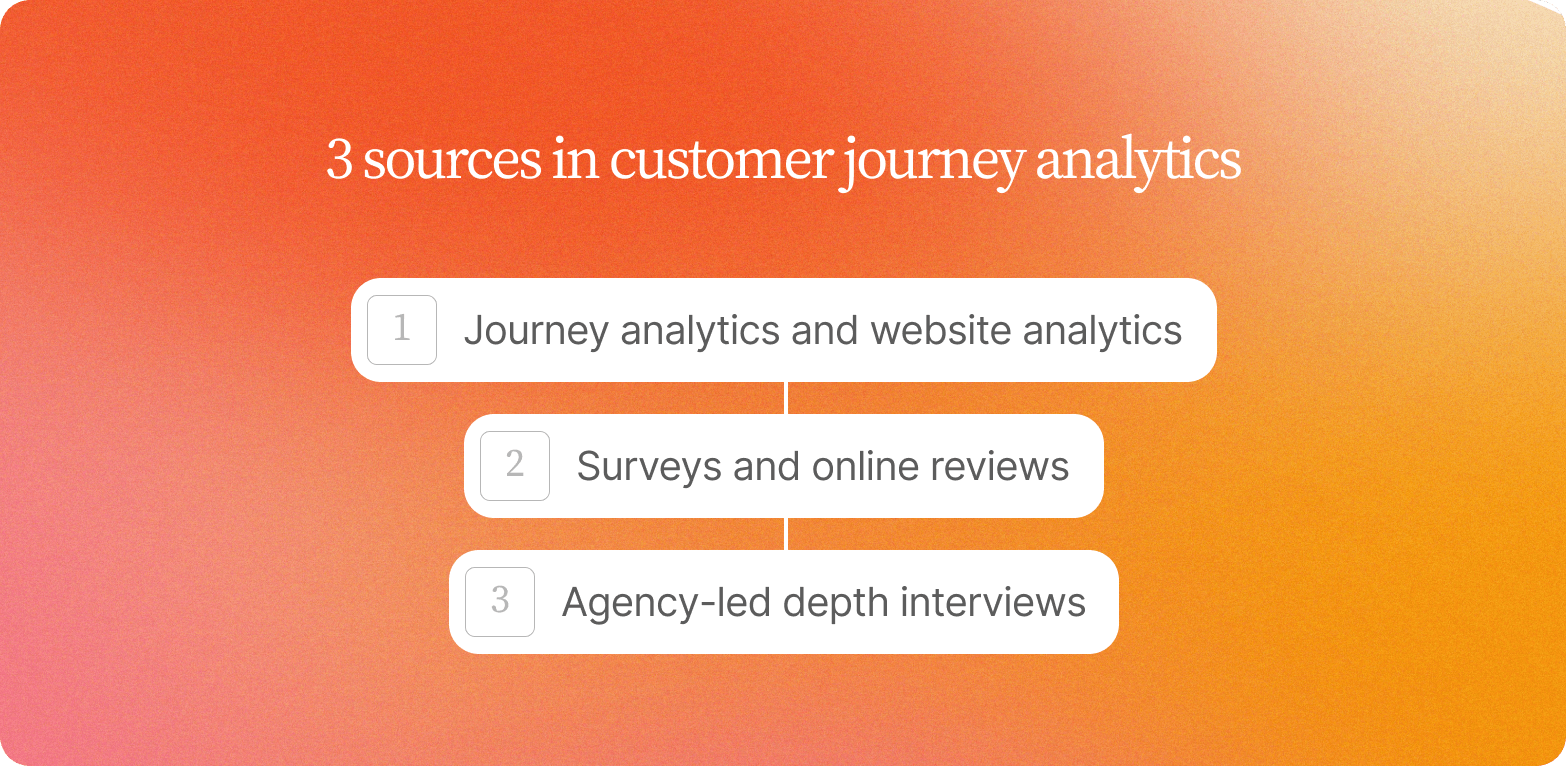
Journey analytics and website analytics. Show where customers dropped off: time on page, conversion by stage, the exact funnel step where attention ran out. They cannot show why. If a checkout loses a third of its traffic, the dashboard cannot name the cause.
Surveys and online reviews. A structured questionnaire captures stated preference, not the hesitation or contradiction that reveals actual friction. Online reviews capture public sentiment but rarely explain the specific moment when a customer stalled, and customer data alone cannot explain the reason.
Agency-led depth interviews. Real rigor, real tradeoff: findings typically return weeks to months after the brief. Research that lands after a decision has no decision to inform.
There is a newer failure mode worth naming: AI-generated buyer personas. Feeding behavioral data into a language model and asking it to describe "the hesitant checkout customer" produces confident prose with no traceable source. Stakeholders read it, nod, and then ask the question that ends the room: who said this? Nobody did.
Video-first qualitative evidence directly closes that traceability problem. When each journey claim links to a timestamped clip and a verbatim quote, "who said this?" has a specific answer. Stakeholders can watch a participant pause at the payment screen and hear the reasoning in their own words.
See it in action in How AI-Moderated Video Interviews Actually Work:
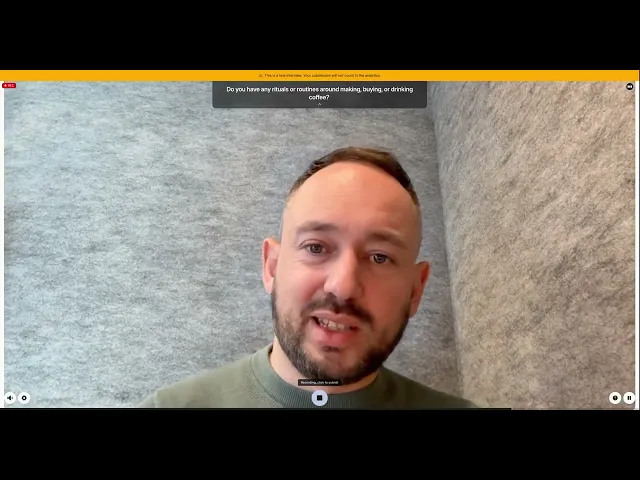
Because interviews run in parallel across markets and time zones, findings arrive while the journey decision is still open.
Building behavior-based journey segments
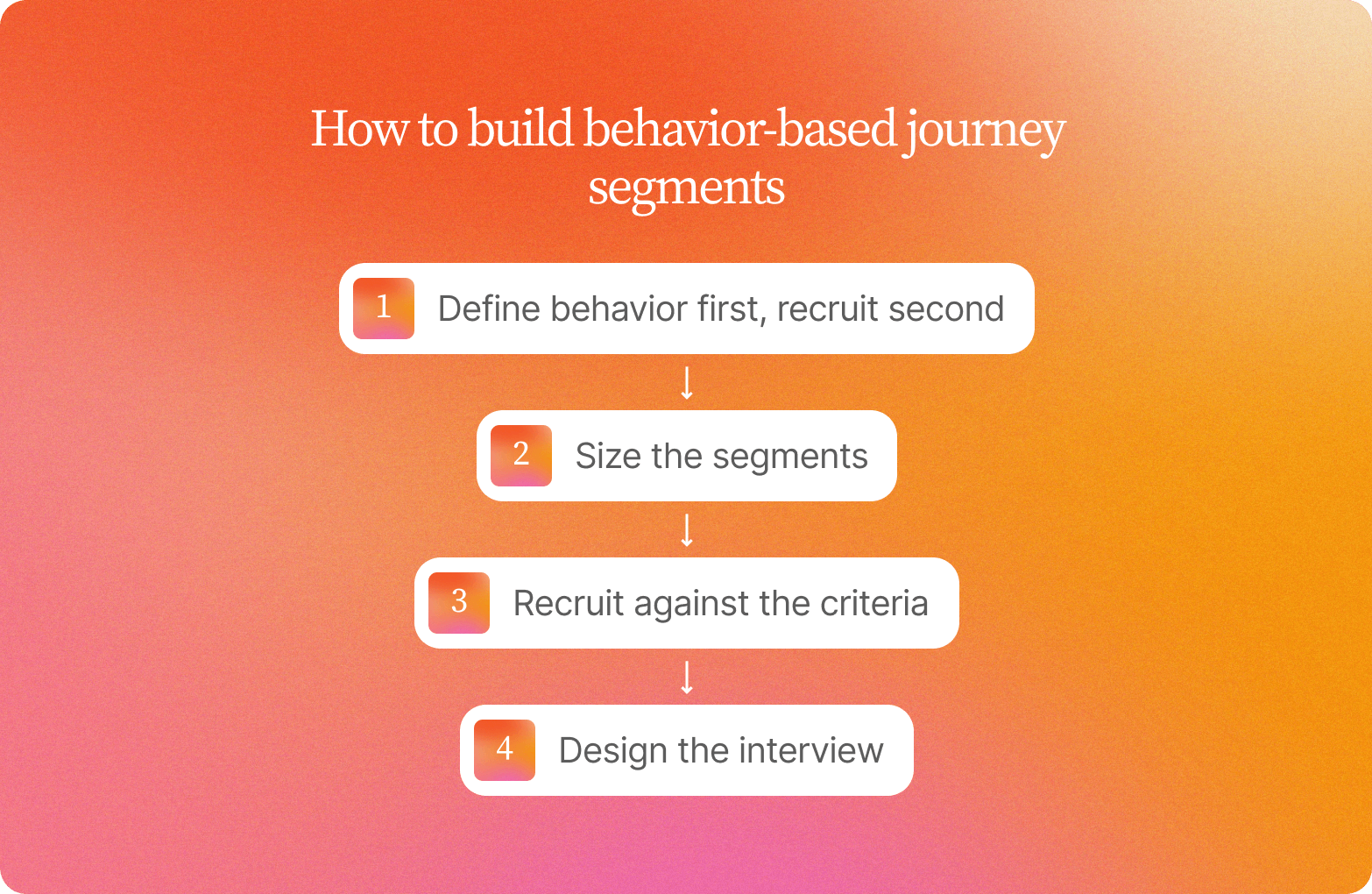
Define behavior first, recruit second. Each segment should represent a distinct pattern across the journey stages that matter to the decision at hand: what triggered the need, which risks participants weighed, which channels they used to evaluate options. Demographic archetypes fail here because they describe who a customer is, not what they did or why they stopped, and neither purchase history nor a target audience label explains the difference on its own.
Size the segments. Most products need two to five behavior-based segments, whether the goal is to retain customers already on the books, convert potential customers into new ones, or keep satisfied customers engaged. That number is uncomfortable for teams used to presenting 12 detailed buyer personas, but 12 overlapping customer personas yield 12 versions of the same insight.
Recruit against the criteria. Five to fifteen participants per segment are usually sufficient, with high-value customers sampled separately. The real constraint is segment specificity: vague criteria require larger sample sizes to capture variation within a single group.
Design the interview. Depth interviews that ask participants to reconstruct a recent, specific experience surface where they paused and what they tried instead. A fixed question sequence mostly confirms what the researcher already suspected, while an AI research assistant probing what a participant just said can uncover the reason behind a stated preference and identify areas a survey would have missed entirely.
The output is a journey map that explains movement and stall points at each stage.
Keeping journey evidence current
The shift from episodic workshops to continuous customer journey management addresses a structural problem: customer behavior does not pause between planning cycles, and a map accurate in January is often misleading by Q3.
Teams keep journey evidence continuously refreshed with Conveo, so a map gets revised when customer behavior changes rather than when the next workshop is scheduled. Instead of commissioning one full journey study a year, teams run smaller, targeted studies aligned to sprint cycles, product launches, and campaign windows, each one closing a specific gap rather than resurveying the entire customer experience.
Conveo StoryLines is built for that rhythm: a continuous, wave-based AI-moderated research program, for example, every two weeks or monthly per market, tagline: "Continuous Consumer Understanding." A team sees post-purchase behavior shift across waves, including early signs of customer churn, rather than discovering it at the next annual review. The trigger stays human: a planner notices movement, a pricing change goes live, or a competitor repositions, and they commission the next wave against that specific stage.
The mechanism that makes this sustainable is the searchable insight library. Every study feeds a repository of clips, themes, and verbatim quotes teams can search before commissioning anything new, cutting repeat research and giving marketing teams and sales teams a shared source of findings instead of a deck each side interprets differently. Because studies span quarters, teams can see how behavior at a given stage shifted between waves.
For global teams, AI moderation across 50+ languages makes multi-market journey validation feasible without localization bottlenecks. Conveo is SOC 2 Type II certified, GDPR compliant, and offers European hosting with primary infrastructure in Belgium, addressing the procurement questions that research operations teams face when consolidating vendors around a continuous program.
Journey recommendations that cite direct customer video evidence change the nature of roadmap and creative reviews. Instead of debating what customers want, the room asks what participants said and where the clip is.
Customer journey management approaches compared
Customer journey management platforms cluster into three approaches, and choosing the wrong one costs both budget and credibility.
| Approach | What it does well | Where it falls short | Fits best when |
|---|---|---|---|
| Mapping-first | Makes complexity visible and builds cross-functional alignment through the customer journey mapping process | Accurate only on the day it's built; no refresh mechanism | The journey is stable, and planning runs on an annual cycle |
| Orchestration-first | Coordinates actions across channels from behavioral triggers, aimed at improved customer satisfaction and customer loyalty | Dashboards cannot explain why a customer hesitated | The journey is well understood, and the goal is optimization, not discovery |
| Evidence-first | Pairs continuous qualitative research with journey analytics so every stage claim connects to traceable video evidence, in service of customer journey optimization | Requires a shift away from one big annual study | Journey assumptions change fast, and stakeholders need defensible evidence |
The practical difference between agency-led qualitative work and AI-moderated interviews sits inside that last row. Orchestration-first fits teams that refine known journeys rather than discover new customer pain points, which is exactly the gap evidence-first closes. Agencies produce research-grade rigor, and that rigor is real; the tradeoff is time, since traditional qual on a journey question typically returns findings weeks to months after the brief. Conveo removes the scheduling, recruitment, and coordination bottlenecks that account for most of that timeline, so the methodology holds while the timeline shortens.
"I don't think it's the case anymore that doing research has to be this big investment in time and money, but mainly time, this chore that slows everything down. I think it can be a resource that you can just and should just tap into constantly and frequently as you're making decisions."
Matt Harris, Research & Insights Lead EMEA, Canva
What separates evidence-first from the other two is continuity. Mapping-first refreshes on a workshop cadence, orchestration-first on behavioral data, and evidence-first on customer behavior itself, with each new study connecting to prior findings in the same insight library, giving business leaders a value proposition they can defend in a boardroom.
2 persistent journey management failure modes
Workshop aging, dashboard blind spots, and slow research each get a section above. Two failure modes are quieter, and they survive even in programs that have addressed the first three.
1. Personas no one can source
Journey recommendations cite workshop consensus or, increasingly, AI-generated synthetic personas. When a stakeholder asks who said this, the honest answer is often "nobody, exactly."
2. Knowledge loss between cycles
Insights from the last journey study sit in a deck that nobody searches. The next team commissions new research to answer questions that have already been answered, because no searchable repository connects what was learned over time, and marketing practices built around last year's findings quietly fall out of date.
Both failure modes share one root cause: no current, traceable, searchable qualitative evidence sitting behind each journey stage, whether the account is a new lead or an existing customer. Fix the sourcing problem, and recommendations survive review; fix the retention problem, and customer retention no longer depends on whoever remembers the last workshop.
Activation and measurement playbook
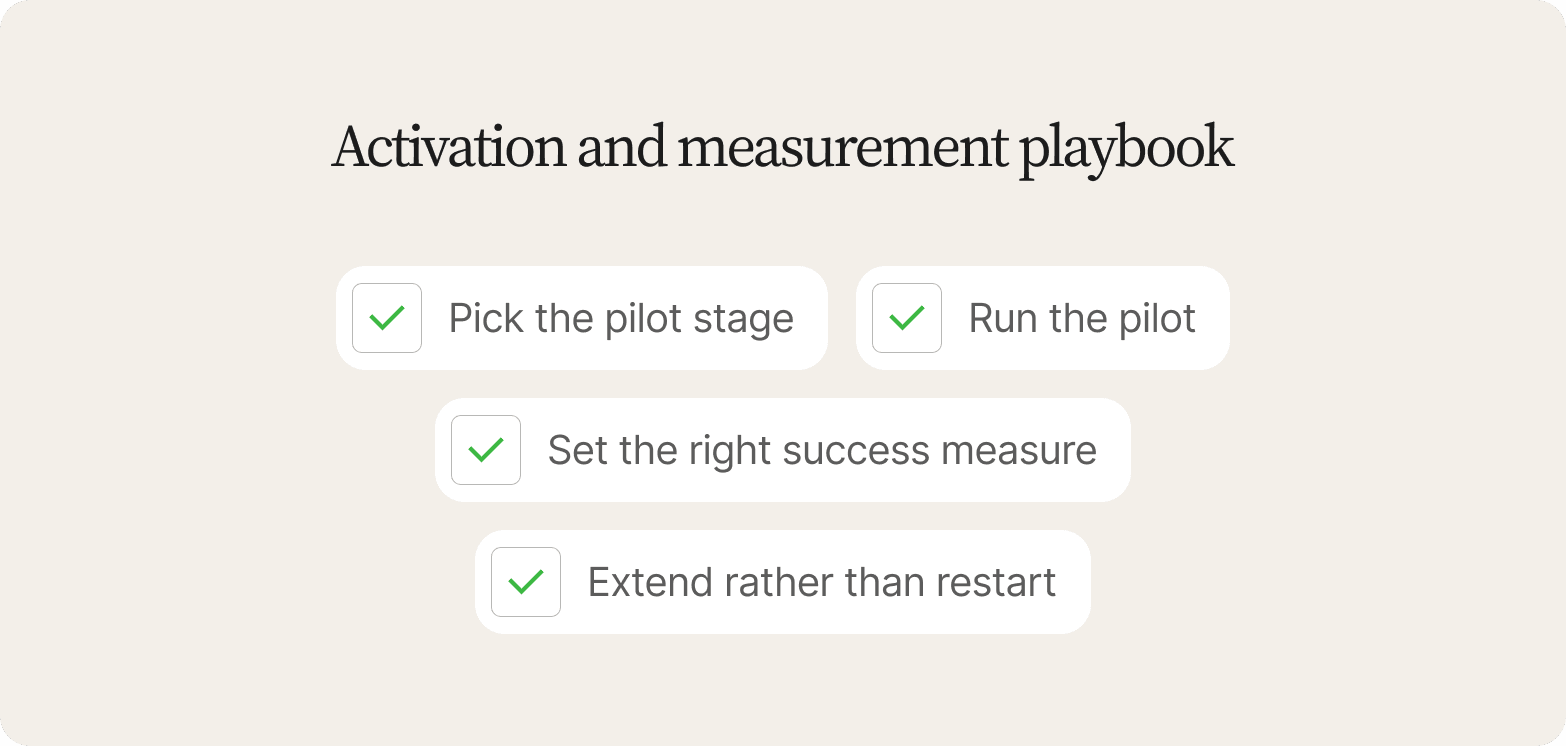
Pick the pilot stage. Start where decisions are already being made without customer evidence: one journey stage where a roadmap call or a prioritization meeting regularly runs on assumption rather than traceable input.
Run the pilot. Recruit 5 to 15 participants per behavioral segment, defined by what they actually did rather than who they are demographically. Run depth interviews reconstructing a recent experience at that stage, whether it sits near the initial purchase, later in the purchasing process, or well into the broader buying process that surrounds it, surfacing detail usually buried in a support ticket and asking what customers feel but did not say. Findings need to reach the team inside one sprint cycle; research that arrives after the next decision point is too late to matter.
Set the right success measure. Success means changing a roadmap priority, a creative direction, or a feature sequence based on traceable customer evidence. If nothing moved, the pilot answered the wrong question or landed too late.
Extend rather than restart. Once one stage is evidence-backed, extend to adjacent stages rather than rebuilding from scratch, using each cycle to identify opportunities the last one missed. Track the reuse rate: how often prior journey evidence gets cited in roadmap reviews, creative critiques, and briefing documents, and how often it helps multiple stakeholders reach the same conclusion faster.
How Conveo supports continuous customer journey management
Journey decisions do not wait for the research calendar, so the practical question is whether consumer understanding is available when a stage comes up for review. Conveo is Consumer Understanding Infrastructure: a platform for keeping consumer understanding current and available to the teams making journey decisions.
Rigor is what makes that usable in a stakeholder review. Conveo is built by researchers, behavioral screening at recruitment controls who enter a study, and every finding traces back to a participant who said it on video. For always-on coverage, teams run Conveo StoryLines waves, for example every two weeks or monthly per market, seeing movement in consumer engagement as it happens rather than a quarter later.
The evidence carries the argument here, and interviews running in parallel across markets and time zones simply mean it arrives while the journey decision is still open.
Frequently Asked Questions
What are the main stages of the customer journey?
The five core customer journey stages are: 1. Awareness: the customer recognizes a need. 2. Consideration: they evaluate options. 3. Decision: they choose. 4. Retention: they keep using. 5. Advocacy: they recommend, referring new customers along the way. Stage labels vary by industry, but the principle holds: customers move through a sequence of decisions, and friction at any stage causes drop-off or workarounds. Depth interviews that reconstruct a recent purchase or onboarding experience surface where a participant hesitated and what ultimately caused them to abandon or commit.
How is customer journey management different from customer journey mapping?
Customer journey management is the ongoing discipline of tracking, analyzing, and improving the way customers progress through each stage of their relationship with a brand. Journey mapping is a one-time exercise, a workshop artifact that visualizes stages and touchpoints at a single point in time. Mapping produces a document. Management produces a practice that keeps that document current as customer behavior shifts. Teams keep journey evidence continuously refreshed with Conveo, so a map gets revised as customer behavior evolves, on its own schedule rather than a fixed calendar slot.
What platforms are used for customer journey management?
Customer journey management platforms fall into three categories. Journey mapping platforms visualize stages of the customer relationship and touchpoints. Journey analytics platforms measure behavior at each stage, surfacing drop-off rates and conversion by touchpoint. Journey orchestration platforms coordinate actions across channels such as social media monitoring and email. What the three share is a behavioral lens: they show what customers did. Why a customer paused, or what belief caused them to stop trusting the brand, is a separate question. AI-moderated interviews fill that gap. Because interviews run video-first, teams can link every journey insight to timestamped clips and verbatim quotes, so stakeholders hear what a participant said at the moment a journey broke down.
How do you measure customer journey success?
Customer journey success runs on two measurement layers, and teams tracking only one tend to mistake activity for progress. The behavioral layer: conversion by stage, time to decision, and drop-off at specific touchpoints. A steep drop-off at the consideration stage signals a problem without diagnosing it. The evidential layer: how often prior journey research gets cited in new briefs, roadmap reviews, and creative critiques. A study from six months ago still shaping decisions today is research that compounds. The clearest alignment signal is journey recommendations accompanied by traceable customer video evidence. One outcome worth watching for: opinion contests in review meetings tend to get shorter once a recommendation is anchored to a participant's own words on screen, rather than to whoever spoke last in the room.
What is a customer journey management framework?
A customer journey management framework is a structured approach to defining, measuring, and governing the way customers progress through their relationship with a brand. It typically covers stage definitions, success metrics, and a process for connecting research to business objectives. The gap frameworks do not close is operational: a framework says when to revisit journey assumptions, but it does not solve the problem of having current qualitative evidence ready when that moment arrives. What keeps a framework accurate is a continuous feed of real consumer voices refreshing the assumptions behind each stage.

About the author
Hendrik Van Hove
Founder & CPO
Hendrik is Conveo’s Chief Product Officer and co-founder. He's extremely passionate about technology and the real positive impact it can bring. Before Conveo, he ran AI strategy projects at McKinsey for the Fortune 2000, working with boards and every function from marketing, to sales to insights.
More by Hendrik →Qualitative insights at the speed of your business.
Conveo runs AI-moderated video interviews and structures everything they say.