
TL;DR
This guide is for insights, UX, marketing, and product research teams at mid-market and enterprise companies that are actively evaluating qualitative research software and platforms before selecting a solution.
The market divides into three categories: end-to-end platforms that run interviews and deliver insights, qualitative research data analysis software that works on existing qualitative data, and research ops platforms that manage participant recruitment and panels.
The 12 platforms covered:
Conveo (end-to-end AI video interviews at scale),
Listen Labs (AI interviews with integrated sourcing),
Outset (agile UX and product interview workflows),
GetWhy (video-based concept testing)
Marvin (voice-to-voice AI interviews),
Voxpopme (enterprise customer video feedback),
NVivo (advanced qualitative research analysis software for complex coding),
MAXQDA (mixed methods qualitative research computer software),
ATLAS.ti (multimedia qualitative analysis across data types),
Dovetail (collaborative qualitative research data analysis tools and repository workflows),
Conveo is the recommended qualitative research platform for enterprise and mid-market teams running AI-moderated video interviews at scale.
The biggest risk when choosing qualitative research software isn’t missing features. It’s choosing a platform that doesn’t match how your team actually runs research. That mismatch slows recruitment, interviews, and qualitative data analysis across entire programs.
For this guide, we evaluated 30+ qualitative research platforms using five criteria: depth of AI moderation, methodological credibility, participant sourcing, speed to insight, and enterprise readiness. We want to help you compare tools based on how they support real research workflows, not just feature lists.
Most qualitative research software falls into three categories. End-to-end platforms run studies and interviews and deliver structured outputs.
Qualitative data analysis software supports coding and thematic analysis on the qualitative data you have already collected.
Research ops platforms focus on sourcing participants for studies, such as in-depth interviews and remote focus groups. The platforms are grouped to help you shortlist faster based on workflow fit.
Quick Comparison: The 10 Best Qualitative Research Software Platforms
If you already have a shortlist, this table helps you compare the leading qualitative research software options side by side. It highlights which platforms run fieldwork, which focus on qualitative data analysis, and which act as data collection tools in qualitative research programs.
Platform | Category | Best For | AI Depth | Recruitment Included | Starting Price |
Conveo | End-to-end qualitative market research platform | Enterprise teams running AI-moderated video interviews at scale | Conducts interviews and performs automatic coding, thematic analysis, and mixed methods analysis | Yes | Contact for pricing |
Listen Labs | End-to-end online qualitative research platform | Rapid AI-moderated interviews with integrated participant sourcing | Conducts interviews and generates structured qualitative analysis outputs | Yes | Contact for pricing |
Outset | End-to-end qualitative research tool | Product and UX research teams running iterative studies | Conducts AI interviews with integrated qualitative data analysis tools | Limited | Contact for pricing |
GetWhy | End-to-end qualitative market research platform | Concept testing with video-based qualitative and quantitative data | Conducts interviews and analyzes multimedia data and survey data together | Yes | Contact for pricing |
Marvin | AI interview platform | Researchers running conversational voice interviews | Conducts interviews and produces immediate qualitative data analysis | No | Contact for pricing |
Voxpopme | Enterprise video feedback platform | Large-scale customer video feedback and focus groups with larger groups | AI-assisted qualitative analysis across video and audio responses | Limited | Contact for pricing |
NVivo | QDA software | Deep coding across complex qualitative data and mixed methods research | Automatic coding, text mining, and content analysis on existing raw data | No | From ~$1,249/year |
MAXQDA | QDA tools | Mixed methods projects combining qualitative and quantitative data | Advanced qualitative data analysis QDA with statistical analysis support | No | From ~$999/year |
ATLAS.ti | Qualitative research analysis software | Researchers working with multimedia data and focus group transcripts | Supports thematic analysis, coding, and text mining across data types | No | From ~$99/month |
Dovetail | Repository and qualitative analysis tools | Research teams centralizing interview transcripts and insights | AI-assisted coding and collaboration features across research workflow | No | Free tier available; paid team plans available |
This comparison helps you quickly distinguish end-to-end platforms from qualitative research analysis software and recruitment-only tools before moving on to deeper evaluations.
The 10 Best Qualitative Research Software Platforms, Reviewed
If you’re selecting qualitative research software, the differences between platforms become clearer once you look at how each one supports fieldwork, qualitative data analysis, and participant recruitment in practice.
The tools we curated follow the same evaluation structure, so you can quickly compare capabilities and decide which qualitative research tool best fits your existing workflow.
1. Conveo: Best for end-to-end qualitative research at enterprise scale
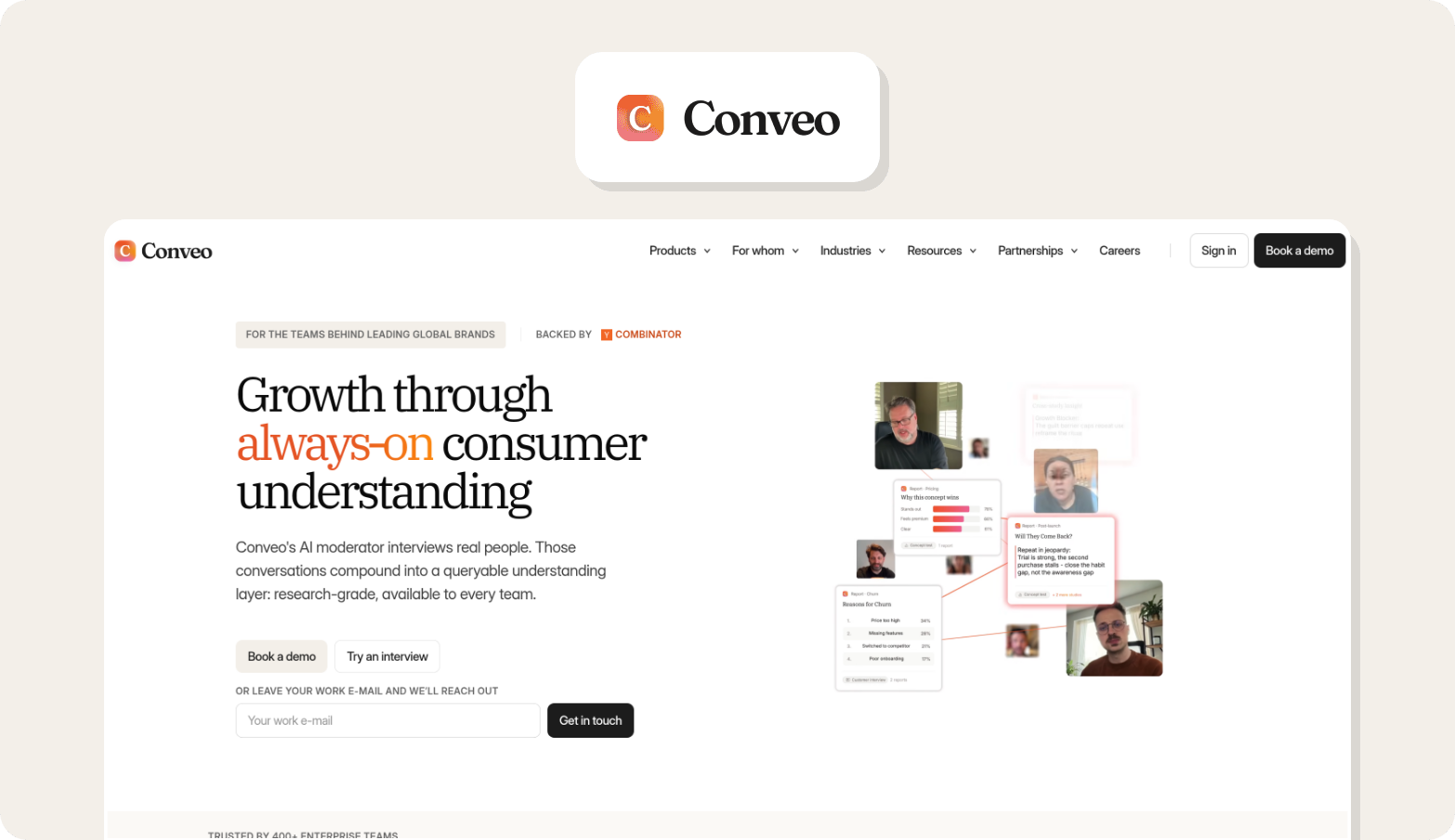
Conveo is an end-to-end qualitative research platform that supports study design, participant recruitment, AI-moderated video interviews, thematic coding, and insight delivery in one place. It reduces the time it takes to form research insights from weeks to days and is used by 400+ enterprise teams, including Google, Unilever, and Visa, to run credible continuous research across consumer insights, UX, marketing, and product workflows without relying on agency-led fieldwork.
Best for
Consumer insights, UX research, marketing, and product teams running ongoing qualitative programs such as concept testing, voice-of-customer research, packaging validation, brand and ad testing, or segmentation studies.
It is especially useful for organizations shifting research in-house and reducing reliance on external recruitment agencies or fieldwork partners.
Strengths
Run hundreds of interviews simultaneously without moderator scheduling. Conveo’s AI interviewer conducts real video and voice conversations asynchronously, adapts discussion guides in real time, probes follow-up questions based on participant responses, and supports interviews across 50+ languages with no avatars.
Field full studies without external recruitment partners. Conveo sources participants from vetted global panels, applies screeners, filters fraudulent responses, and manages incentives so teams can launch research without agency dependencies.
Move beyond transcript-only analysis. Conveo transcribes, translates, and codes sessions while analyzing speech, tone, facial cues, and visible context such as products or environments to produce thematic clusters, sentiment arcs, and highlight-ready clips for stakeholder reporting.
Query findings like you would ask a research colleague. Teams can compare reactions across segments, concepts, or demographics using plain-language questions that return sourced quotes, clips, and thematic evidence from current and previous studies.
Build a secure insight library that compounds across projects. Findings flow into a searchable workspace protected by SOC 2 certification, encryption at rest, SSO, and regional data hosting, helping organizations connect patterns across qual, quant, and mixed-method research over time.
Customers commonly report compressing research timelines from six to ten weeks with traditional agency fieldwork to three to five days using Conveo.
Might not be a fit if
Pricing requires a conversation and reflects Conveo’s positioning as an enterprise platform for ongoing research programs rather than single-study use. Teams running occasional projects may not see the full value of the compounding insight library immediately.
Pricing model
Contact for pricing. Enterprise SaaS model. No public tiers.
Book a Conveo demo to explore how teams run end-to-end qualitative data collection and qualitative data analysis workflows.
2. Listen Labs: Best for AI-moderated interviews with integrated participant sourcing
What it is
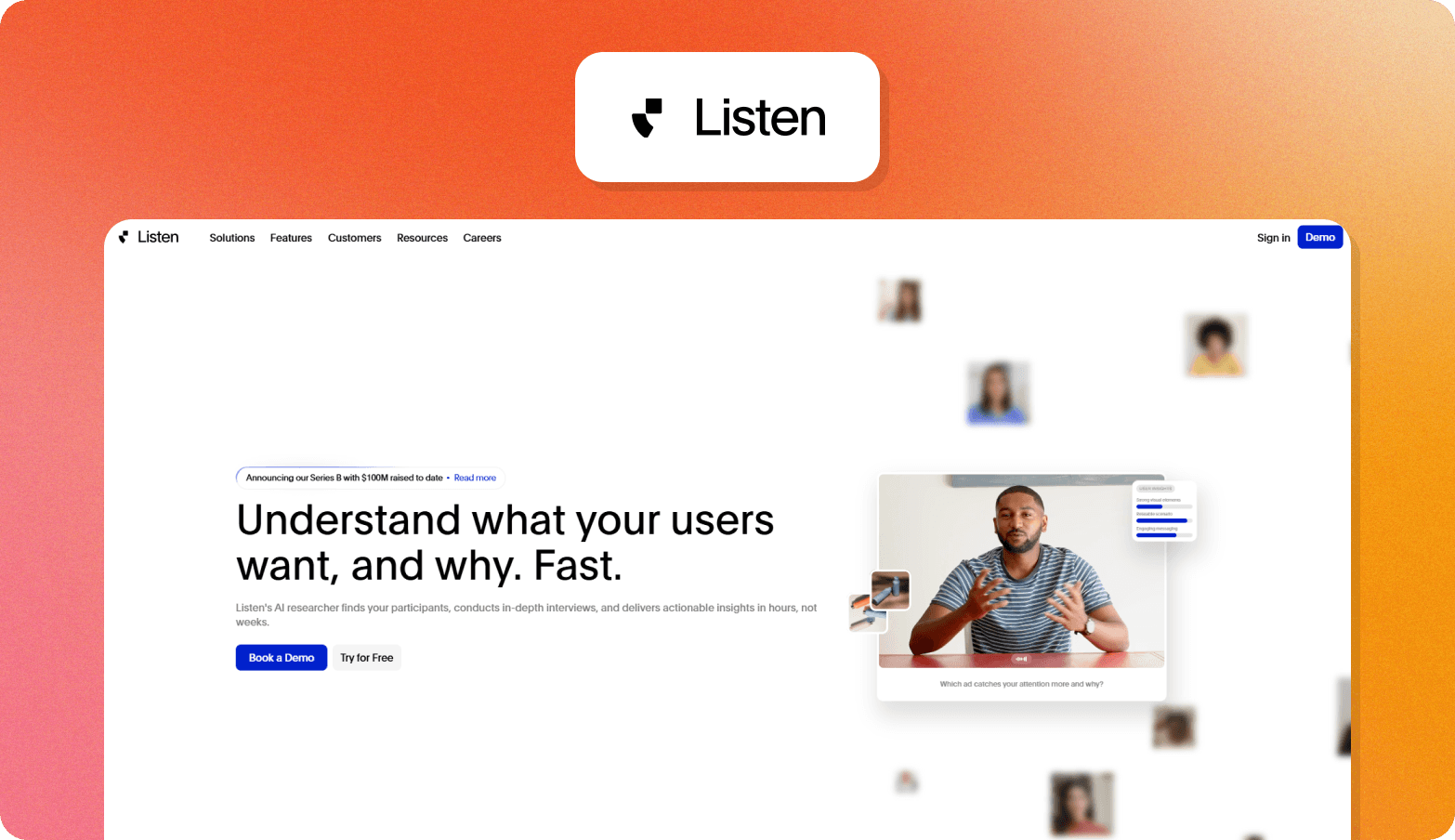
Listen Labs is a qualitative research platform that combines participant sourcing, AI-moderated interviews, and built-in tools for analysis in one platform so teams can create meaningful insights without coordinating separate vendors.
Best for
Product, UX, and consumer insights teams that need a fast process for running interview studies and generating better research without managing external recruitment partners.
Key features
Run AI-moderated interviews in parallel so teams can create findings quickly without scheduling moderators.
Source qualified participants inside the same platform, reducing coordination time and cost across research workflows.
Generate structured summaries with themes, clips, and supporting evidence that help teams produce meaningful insights faster.
Use built-in tools to organize interview findings and share results across stakeholders.
AI depth
Listen Labs uses AI to conduct asynchronous interviews and process responses into structured thematic summaries for faster interpretation.
Limitations
Listen Labs focuses on individual studies rather than continuous research programs, so teams building long-term repositories may need additional infrastructure over time.
Pricing
Custom enterprise plans tied to usage and recruitment.
3. Outset: Best for agile UX and product interview workflows
What it is
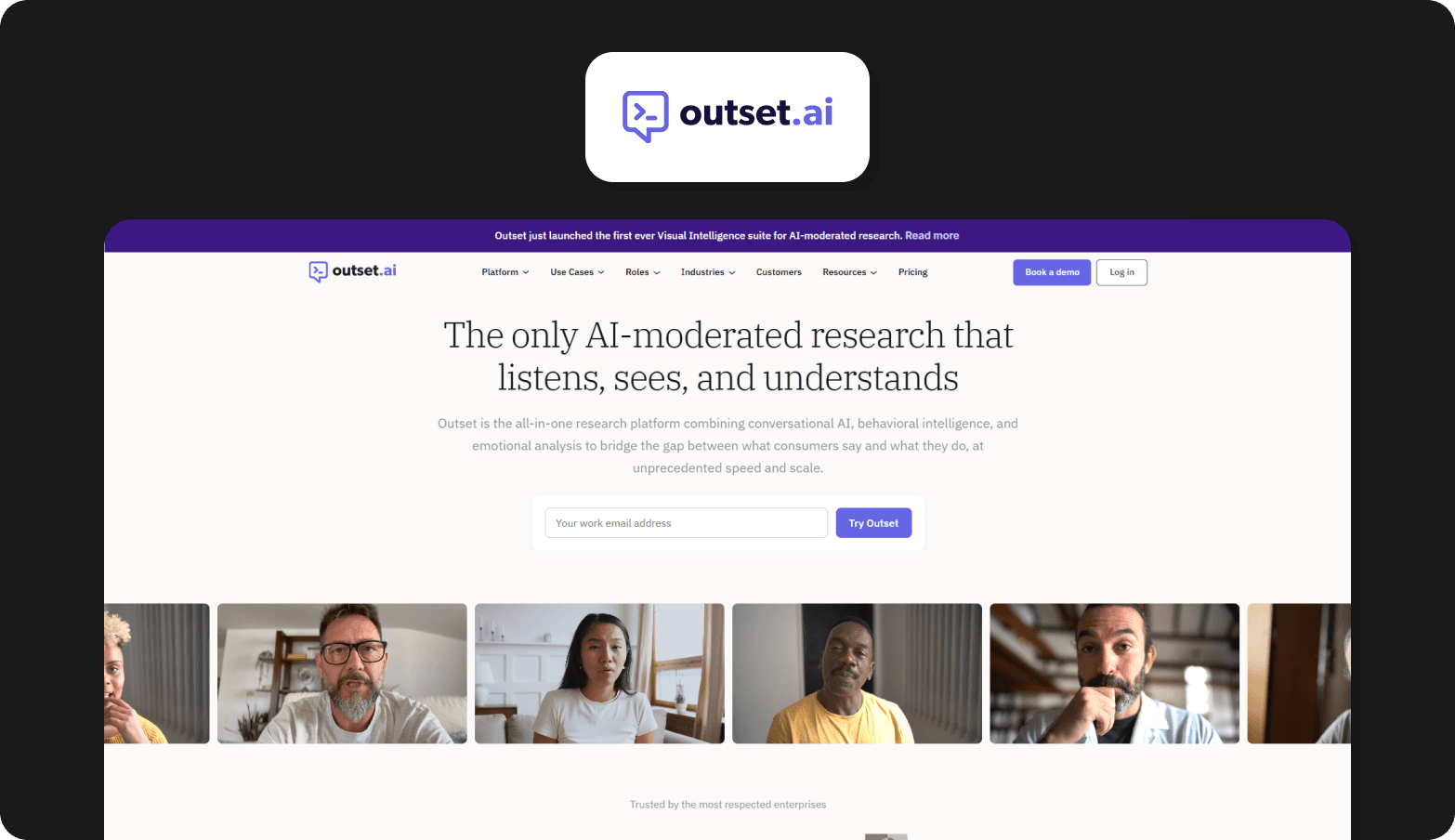
Outset is an AI-moderated interview platform designed to help product and UX teams run rapid qualitative research across multiple studies without relying on live moderation.
Best for
Product managers, UX researchers, and design teams running iterative discovery interviews, usability testing, and early concept validation across fast-moving development cycles.
Key features
Conduct AI-moderated interviews that adapt follow-up questions based on participant responses during the study.
Launch multiple interview studies quickly across teams working in different operating systems and distributed environments.
Support structured workflows that help teams code interviews and organize findings across repeated product discovery cycles.
Enable flexible research methodologies suited to continuous UX testing and concept evaluation.
AI depth
Outset uses AI to moderate interviews in real time and adapt discussion flows based on participant input during each session.
Limitations
Outset focuses on interview execution rather than full research infrastructure, so teams needing recruitment support or long-term repositories often pair it with additional tools.
Pricing
Seat + usage-based enterprise structure.
4. GetWhy: Best for video-based concept testing and customer reaction studies
What it is
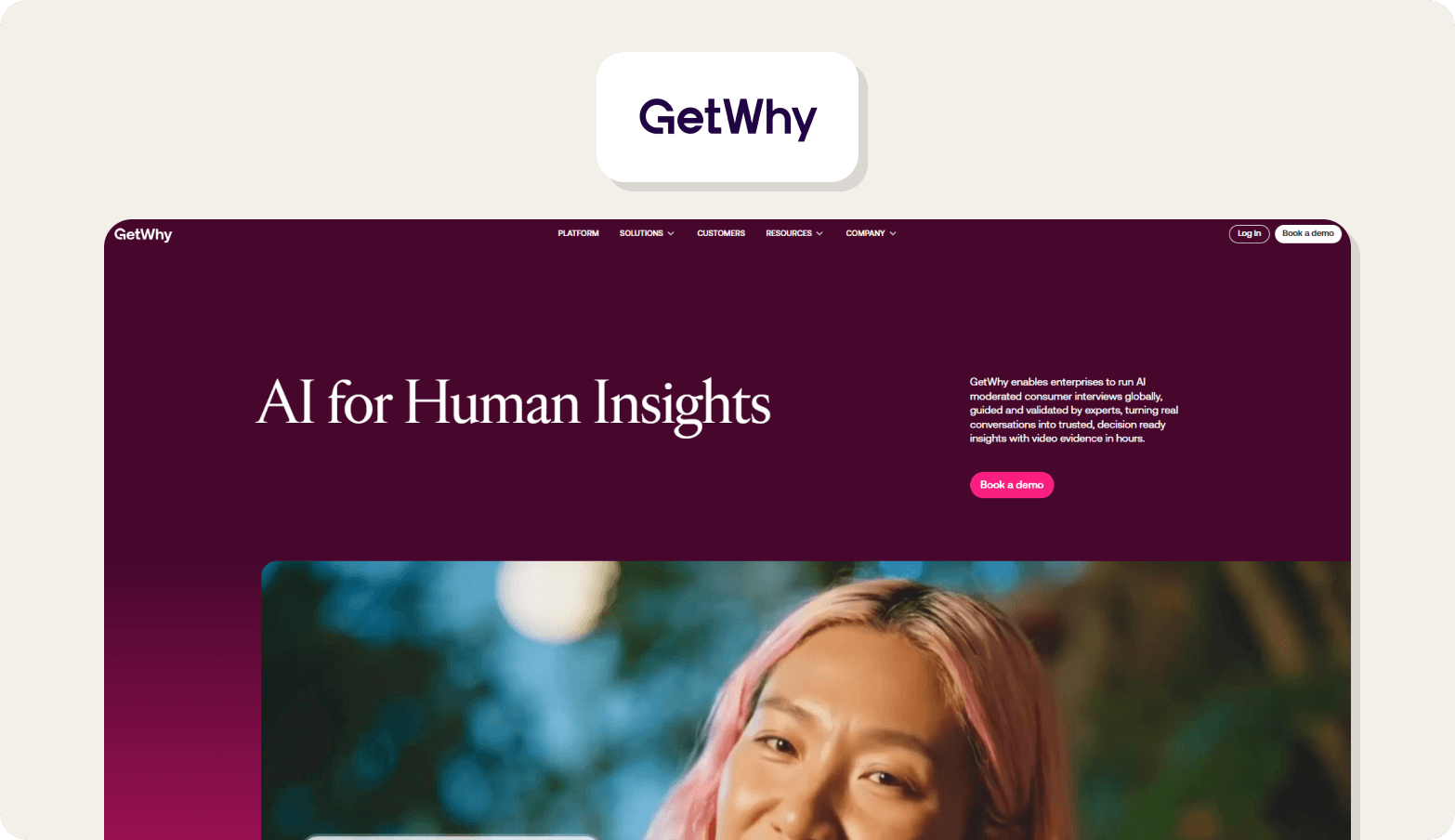
GetWhy is a video-based qualitative market research platform that combines AI interviews with structured quantitative inputs to evaluate reactions to concepts, campaigns, and messaging.
Best for
Consumer insights and marketing teams testing ads, packaging, brand positioning, and creative concepts with participants before launch.
Key features
Capture video responses at scale to evaluate customer reactions across multiple creative directions.
Combine qualitative feedback with structured scoring to compare concepts across segments and audiences.
Support mixed-method methodologies that connect interview responses with measurable preference signals.
Provide dashboards that help teams review findings without exporting data into separate QDA programs.
AI depth
GetWhy uses AI to conduct structured video interviews and synthesize responses into segment-level insight summaries.
Limitations
GetWhy is optimized for concept and campaign testing rather than open-ended exploratory interviews or continuous research repositories.
Pricing
Enterprise-only access model.
5. Marvin: Best for voice-to-voice AI interviews with immediate analysis
What it is
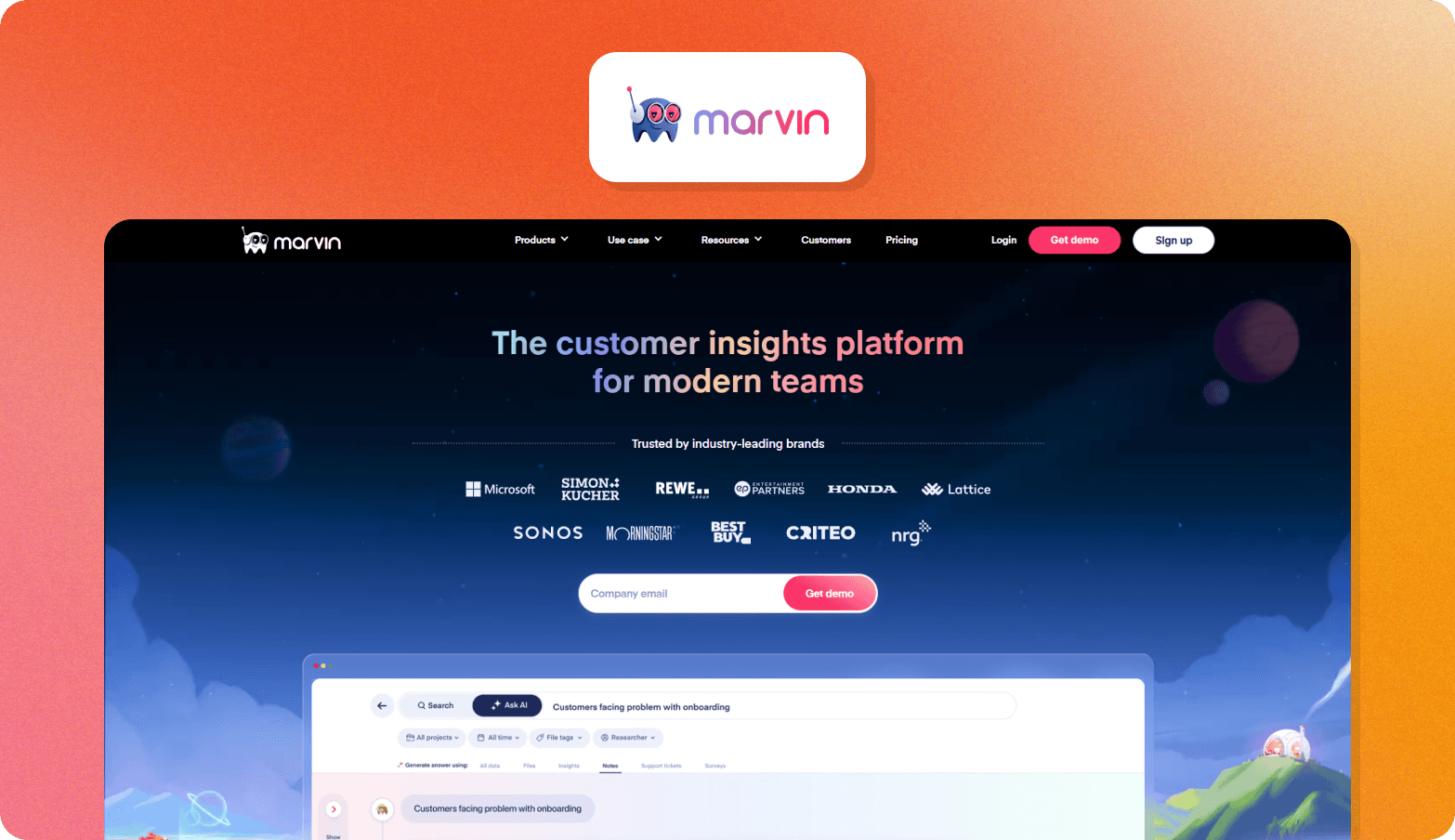
Marvin is a voice-to-voice AI interview platform that conducts conversational research sessions and returns structured analysis shortly after interviews are complete.
Best for
Research and product teams that want fast exploratory interviews and rapid feedback loops without running live moderated sessions.
Key features
Run conversational AI interviews that respond naturally to participants and reduce moderator workload during early discovery studies.
Review structured themes and clips quickly after sessions instead of waiting through long manual analysis cycles that can waste time.
Compare findings across studies using advanced features that support recurring product and customer feedback programs.
Export results into formats that support downstream synthesis alongside spreadsheets or word documents used in reporting workflows.
AI depth
Marvin conducts voice-to-voice interviews and generates immediate thematic summaries based on participant responses.
Limitations
Marvin focuses on interview execution and analysis rather than recruitment infrastructure or long-term repositories, and teams evaluating how many features they need for continuous research programs may compare it with broader platforms.
Pricing
Contact for pricing. Seat-based SaaS pricing. No public entry tier.
6. Voxpopme: Best for enterprise customer video feedback at scale
What it is
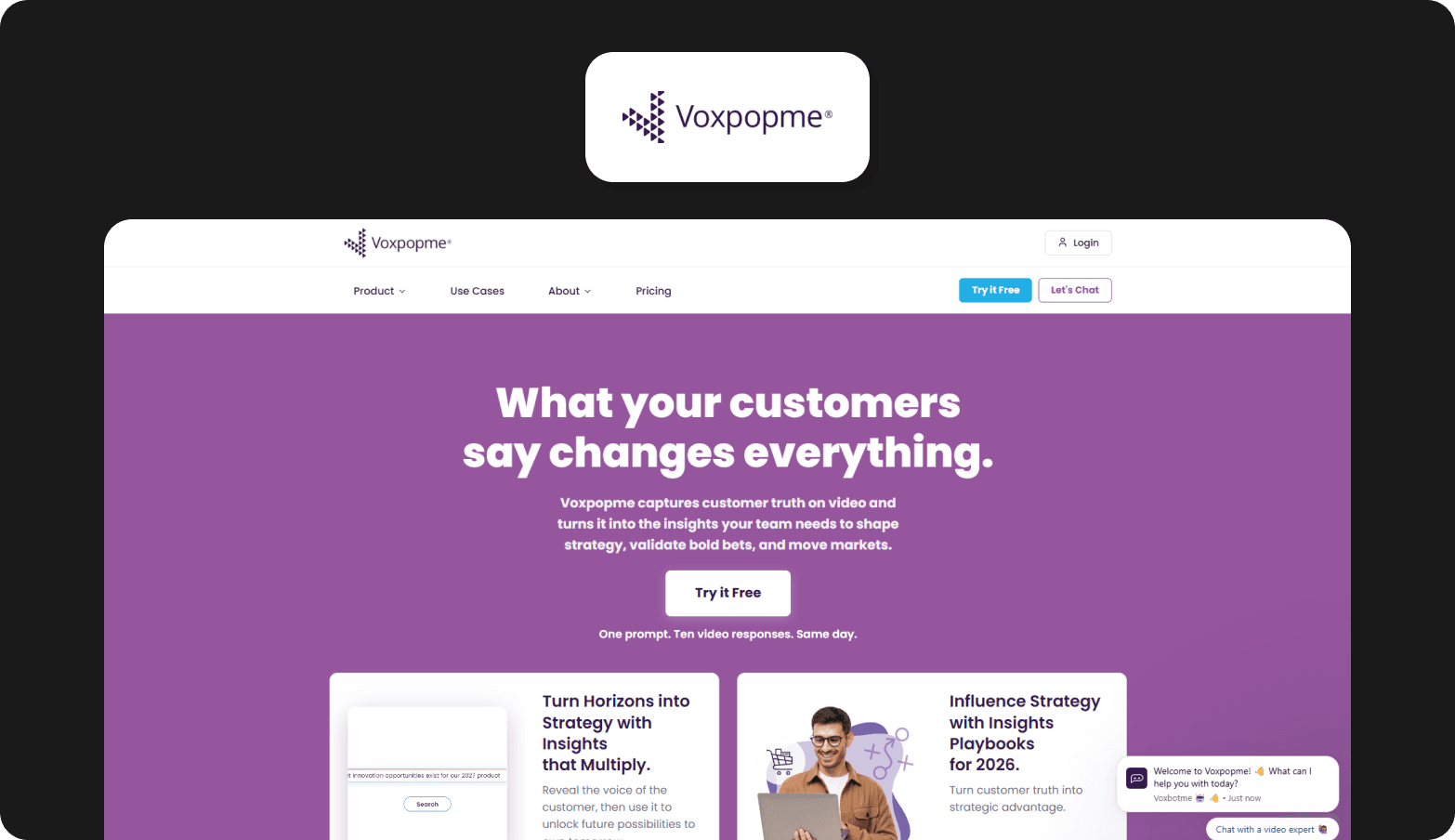
Voxpopme is a customer video feedback platform that helps organizations capture and review participant responses across concept testing, brand tracking, and experience evaluation studies.
Best for
Consumer insights and marketing teams running global feedback programs that rely on video responses to understand reactions to campaigns, products, and messaging.
Key features
Collect customer video responses across large participant groups to support faster evaluation of creative and experience changes.
Access participant panels and study management tools designed for enterprise-scale feedback collection.
Share short video clips with stakeholders to support interpretation without requiring specialist training or a steep learning curve.
Use a user-friendly interface to help teams quickly review findings across distributed insight workflows.
AI depth
Voxpopme uses AI to organize and summarize video responses, enabling teams to review patterns in participant reactions more efficiently.
Limitations
Voxpopme focuses on structured video feedback rather than deep qualitative coding environments, and it is not primarily designed for students or educational settings conducting academic qualitative analysis.
Pricing
Contact for pricing. Enterprise contracts based on study volume.
7. NVivo (by Lumivero): Best for advanced coding across complex qualitative datasets
What it is
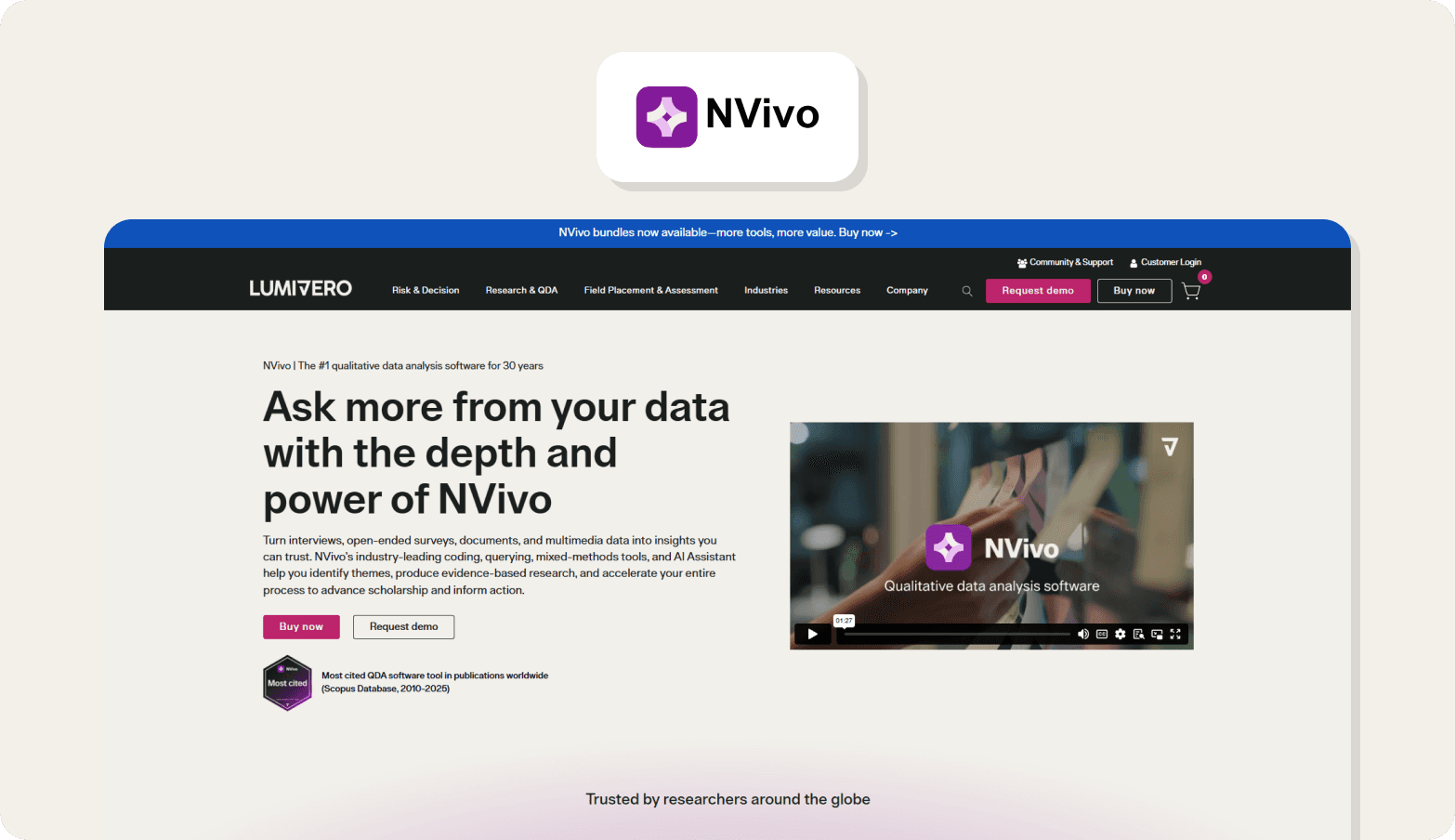
NVivo is qualitative data analysis software from Lumivero designed to organize, code, and interpret text, audio, video, and survey data for structured research workflows.
Best for
Academic researchers, consultants, and enterprise teams conducting complex thematic analysis or mixed-methods studies using existing datasets.
Key features
Code interviews, transcripts, and documents across multiple source types in one workspace
Run queries that support comparison across cases, attributes, and datasets
Analyze Word documents, PDFs, audio, and video inside a single analysis environment
AI depth
NVivo includes AI-assisted coding and text analysis but does not conduct interviews or recruitment.
Limitations
Like most QDA programs, NVivo assumes data collection is already complete and can involve a steep learning curve for new users.
Pricing
From ~$1,249/year per license. Public subscription and license pricing available, including discounted plans for students and education users.
8. MAXQDA: Best for mixed methods qualitative research workflows
What it is
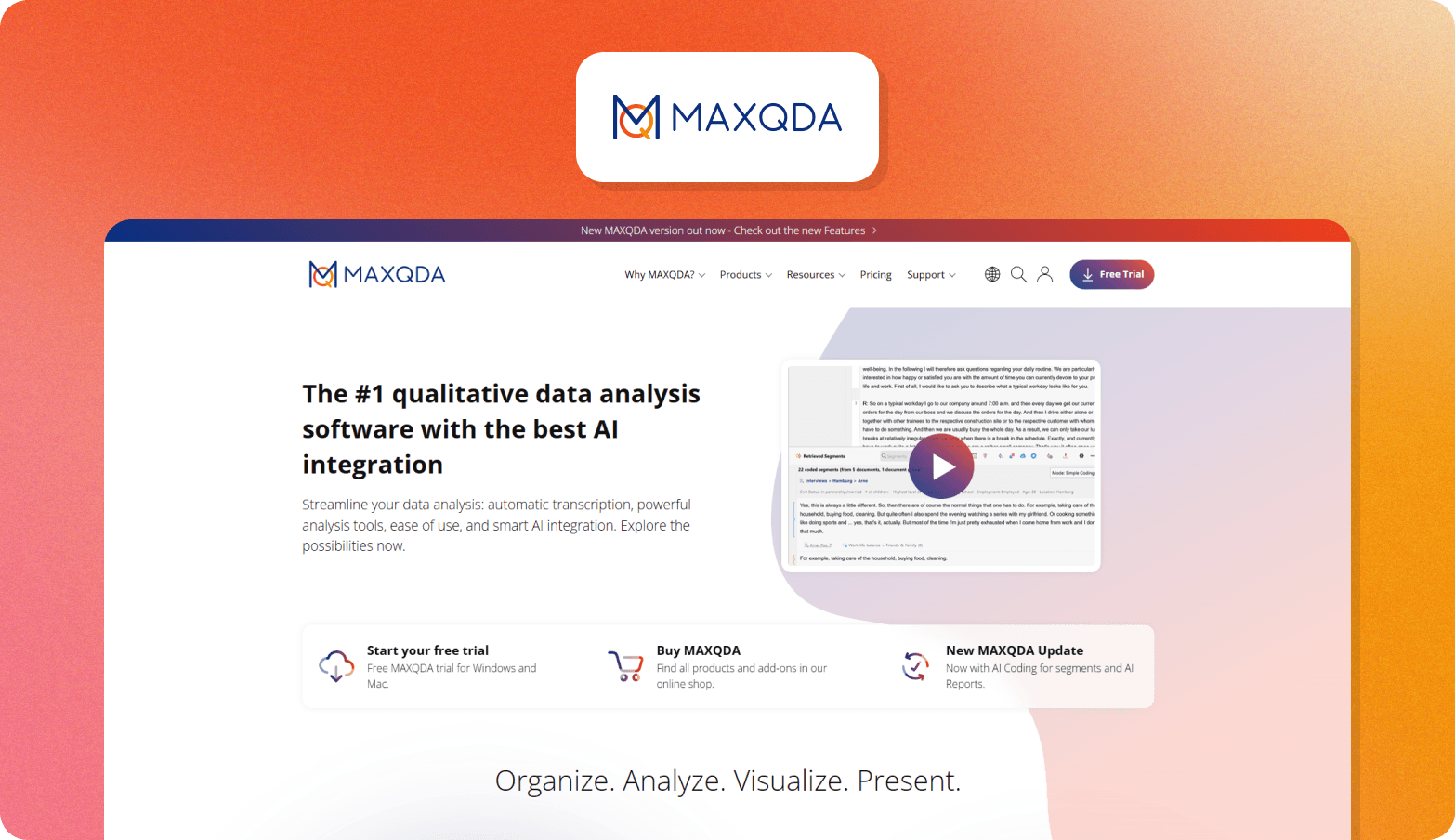
MAXQDA is qualitative research computer software designed to support mixed-methods analysis across text, multimedia, and structured datasets.
Best for
Researchers working across methodologies that combine qualitative coding with quantitative variables in academic or applied research settings.
Key features
Analyze interviews, multimedia files, and survey data in one project workspace
Support mixed methods workflows used across social science and policy research
Export coded results into structured outputs for reporting and collaboration
AI depth
MAXQDA includes AI-assisted coding features that support thematic analysis across large datasets.
Limitations
MAXQDA focuses on post-fieldwork analysis rather than participant recruitment or interview execution.
Pricing
From ~$999 per license per year. License tiers vary by version and analytics add-ons.
9. ATLAS.ti: Best for multimedia qualitative analysis across data types
What it is
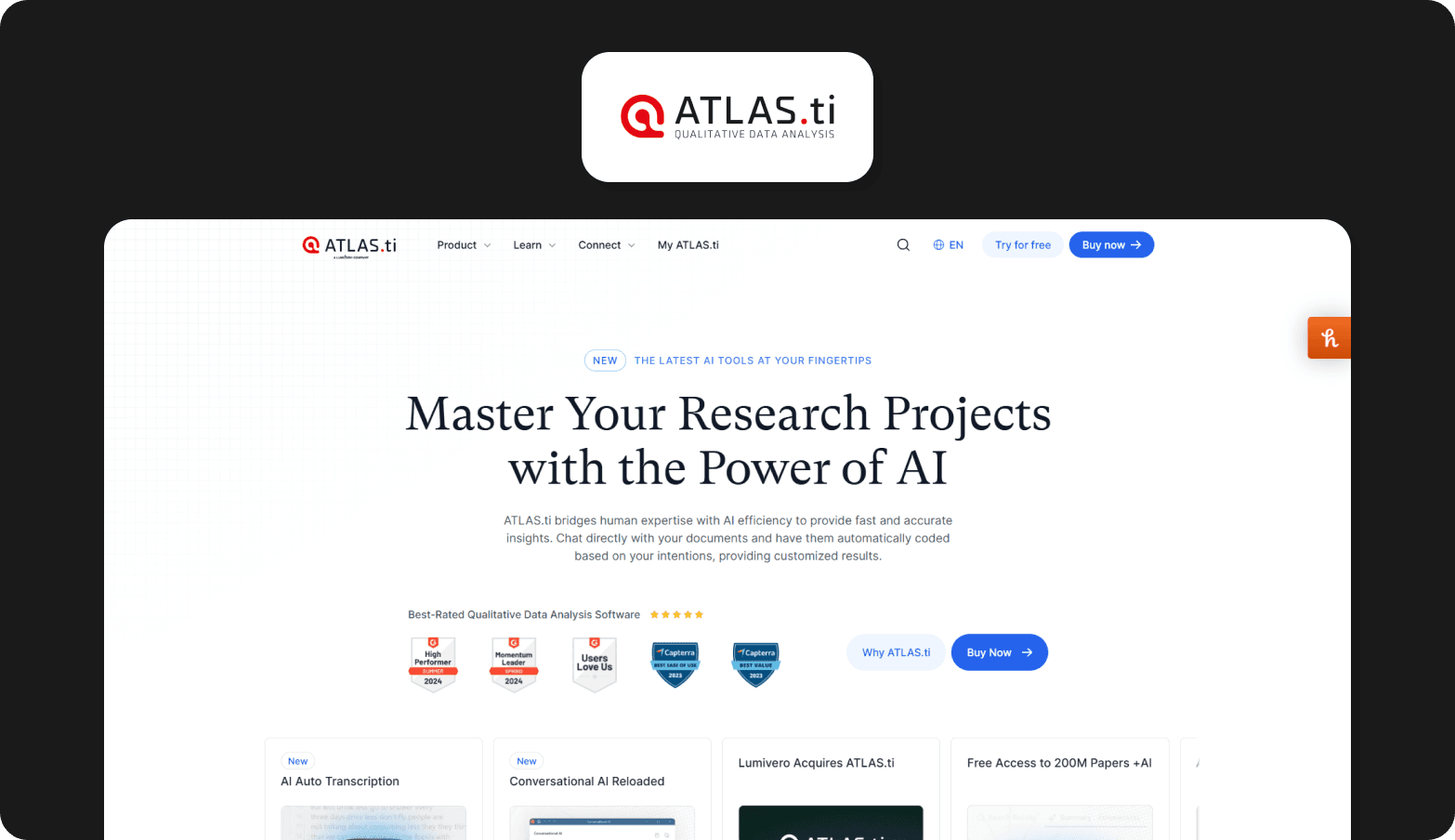
ATLAS.ti is qualitative analysis software designed to process documents, transcripts, audio, and video within structured coding workflows.
Best for
Researchers working with multimedia datasets who need flexible coding across interviews, focus groups, and document collections.
Key features
Code interviews and multimedia sources inside one analysis workspace
Support diverse research methodologies across disciplines
Organize complex datasets without splitting material across multiple tools
AI depth
ATLAS.ti includes AI-assisted transcription and coding support for document-level analysis.
Limitations
ATLAS.ti does not conduct recruitment or interviews and is primarily designed for structured post-fieldwork analysis.
Pricing
From ~$99/month or perpetual license option. Subscription + one-time license models available.
10. Dovetail: Best for collaborative research repositories and synthesis workflows
What it is
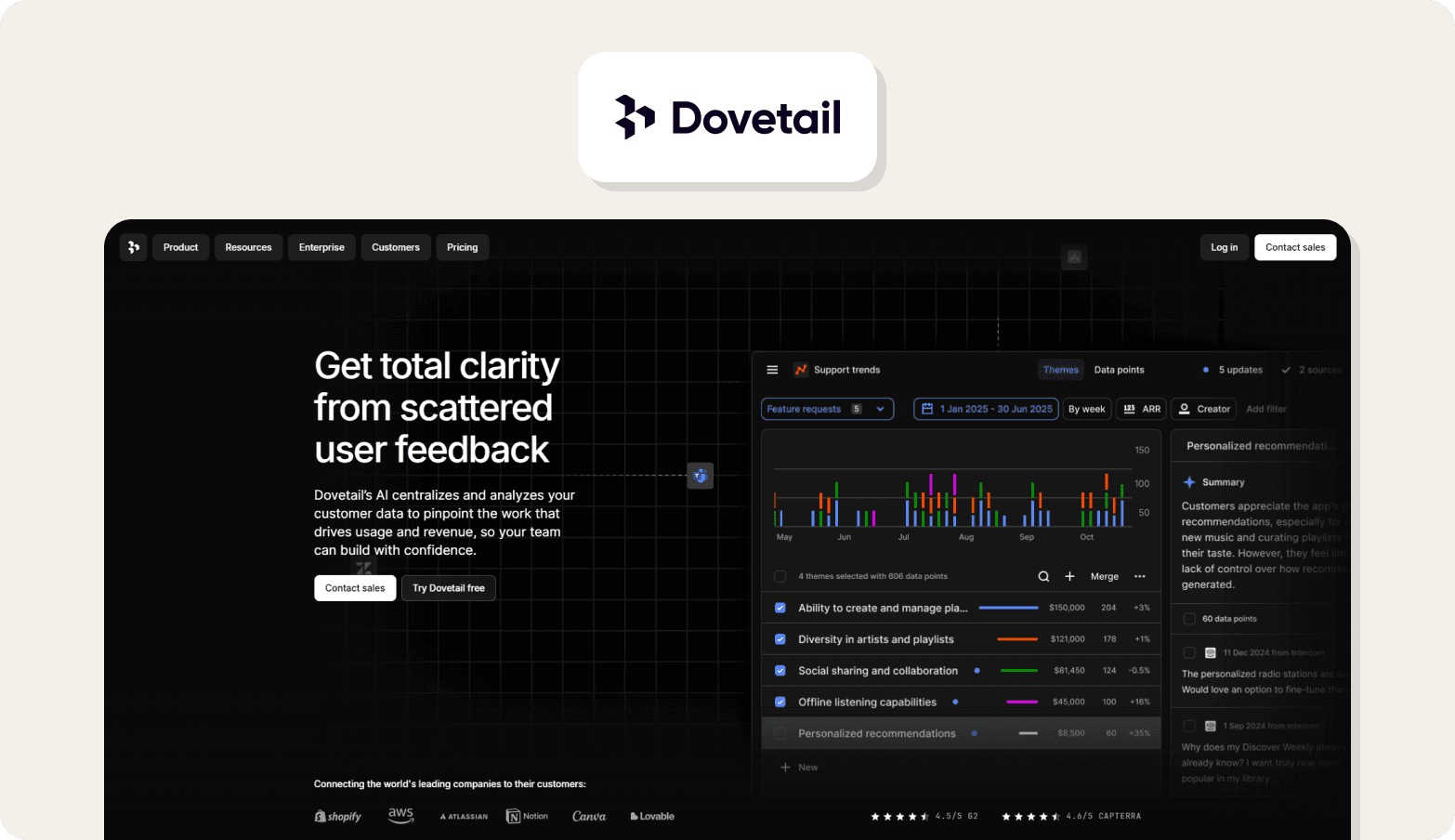
Dovetail is a research repository platform that centralizes feedback, interviews, surveys, and documents, enabling teams to synthesize insights collaboratively.
Best for
Product, UX, and research ops teams managing shared research repositories across multiple studies.
Key features
Store and organize qualitative data from interviews, calls, and surveys
Support synthesis workflows across distributed research teams
Share findings through searchable insight libraries
AI depth
Dovetail uses AI to cluster feedback and surface themes from qualitative datasets.
Limitations
Dovetail does not recruit participants or conduct interviews and is positioned as a research hub rather than a fieldwork platform.
Pricing
Free plan available; paid team plans. Seat-based upgrades for collaboration and storage.
These platforms support different parts of the qualitative research process. The right choice depends on where your workflow slows down and what capability you want to build next.
Here’s a guide you can use to match platforms to your team’s research priorities and shortlist more confidently.
How to choose the right qualitative research software for your team
If you are narrowing a shortlist, start by matching platforms to the stage of the research process you need to support most. Some tools focus on data collection, others on coding and synthesis, and a smaller group supports continuous research programs end-to-end.
If your priority is… | Look for… | Strong options |
Running AI-moderated interviews at scale | End-to-end fieldwork capability with integrated participant sourcing and structured outputs that combine data collection tools, and qualitative research teams can deploy quickly with analysis support | Conveo, Listen Labs, Outset |
Analyzing transcripts or existing qualitative data | Established data analysis software for qualitative research with coding frameworks and mixed-methods support | NVivo, MAXQDA, ATLAS.ti |
Running studies without a research ops function | Online qualitative research tools that combine recruitment, interviewing, and interpretation in one workflow | Conveo, Listen Labs |
Building a continuous enterprise research program | Platforms that connect studies over time and act as long-term tools for qualitative research analysis across teams | Conveo |
At this point, you probably have a shortlist. The next step is deciding which platform actually fits how your team runs research today and how you want that capability to grow over time.
That matters more than it used to.
Qualitative research is moving away from stitched-together workflows that rely on separate recruitment tools, interview software, and data analysis tools for qualitative research.
More teams are choosing platforms that bring the process together and make each study easier to build on than the last.
Why Conveo fits the future of qualitative research
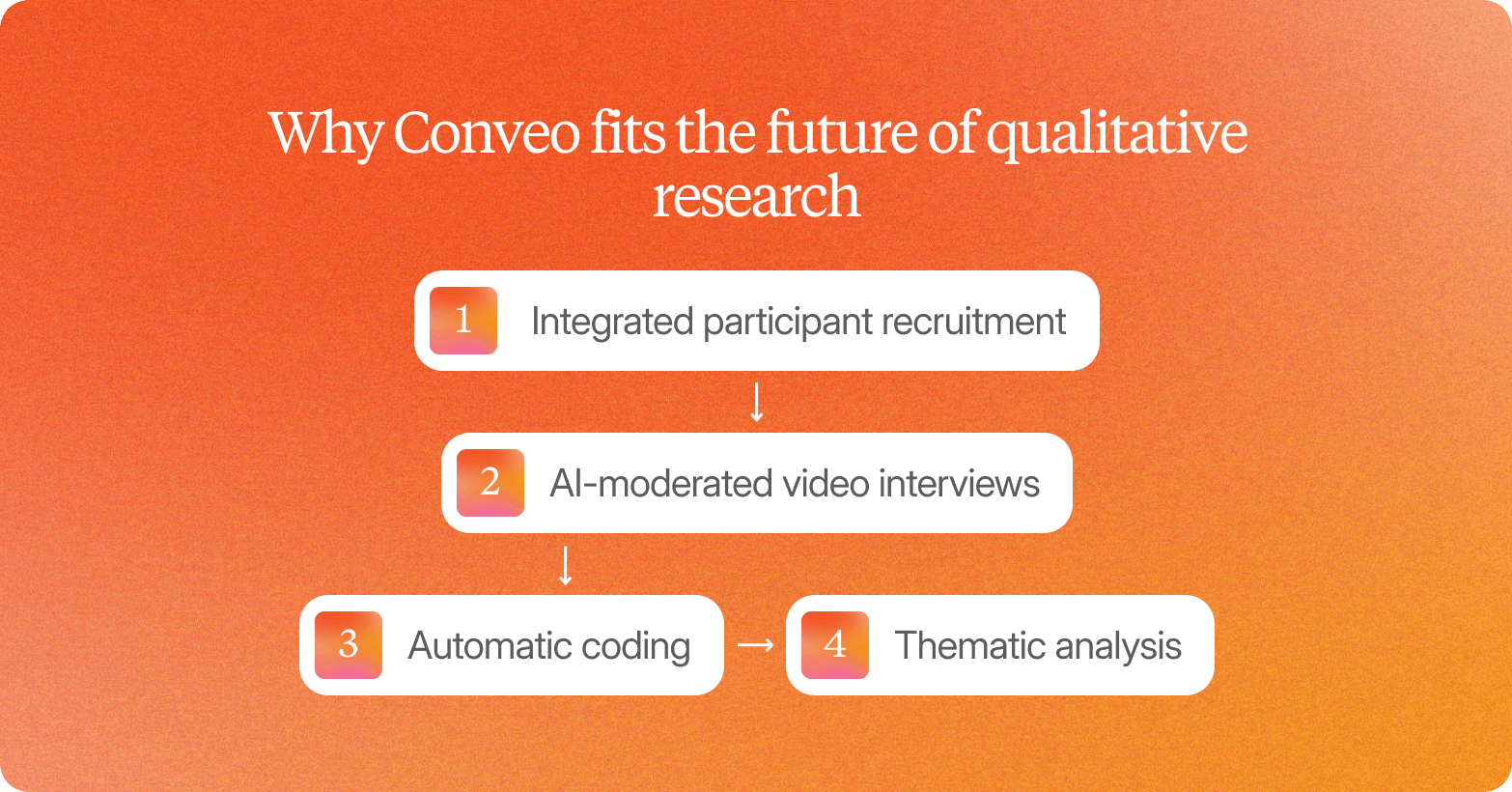
Qualitative research is shifting toward platforms that connect recruitment, interviews, and analysis in a single workflow. This makes it easier to run continuous studies and build insight over time, rather than starting from scratch each round.
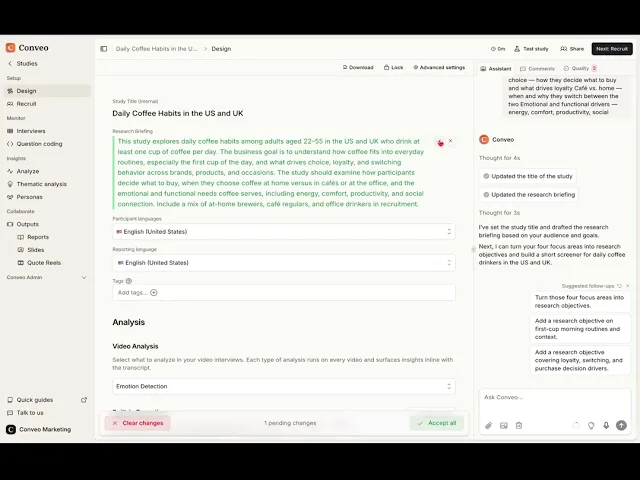
Discover how to build and launch a study in Conveo:
Conveo supports this model with integrated participant recruitment, AI-moderated video interviews, and automatic coding and thematic analysis. Teams can move from a discussion guide to usable qualitative data faster while building a reusable insight base across studies.
Frequently Asked Questions
What is the difference between AI-moderated research platforms and traditional QDA software?
Will participants actually open up to an AI interviewer?
How much does qualitative research software typically cost?
Can AI-moderated research produce outputs that stakeholders will trust?
How long does it take to go from study brief to shareable insight deliverables?