
In this article
TL;DR
We interviewed 79 shoppers in the US, UK, Germany and Brazil about the first Christmas display they saw in a store this year.
Early November was the most popular start date, picked by 44 of 79.
The perfect month varied by country: 17 of 20 in Brazil chose early November, while in Germany 9 of 19 would wait until mid-November.
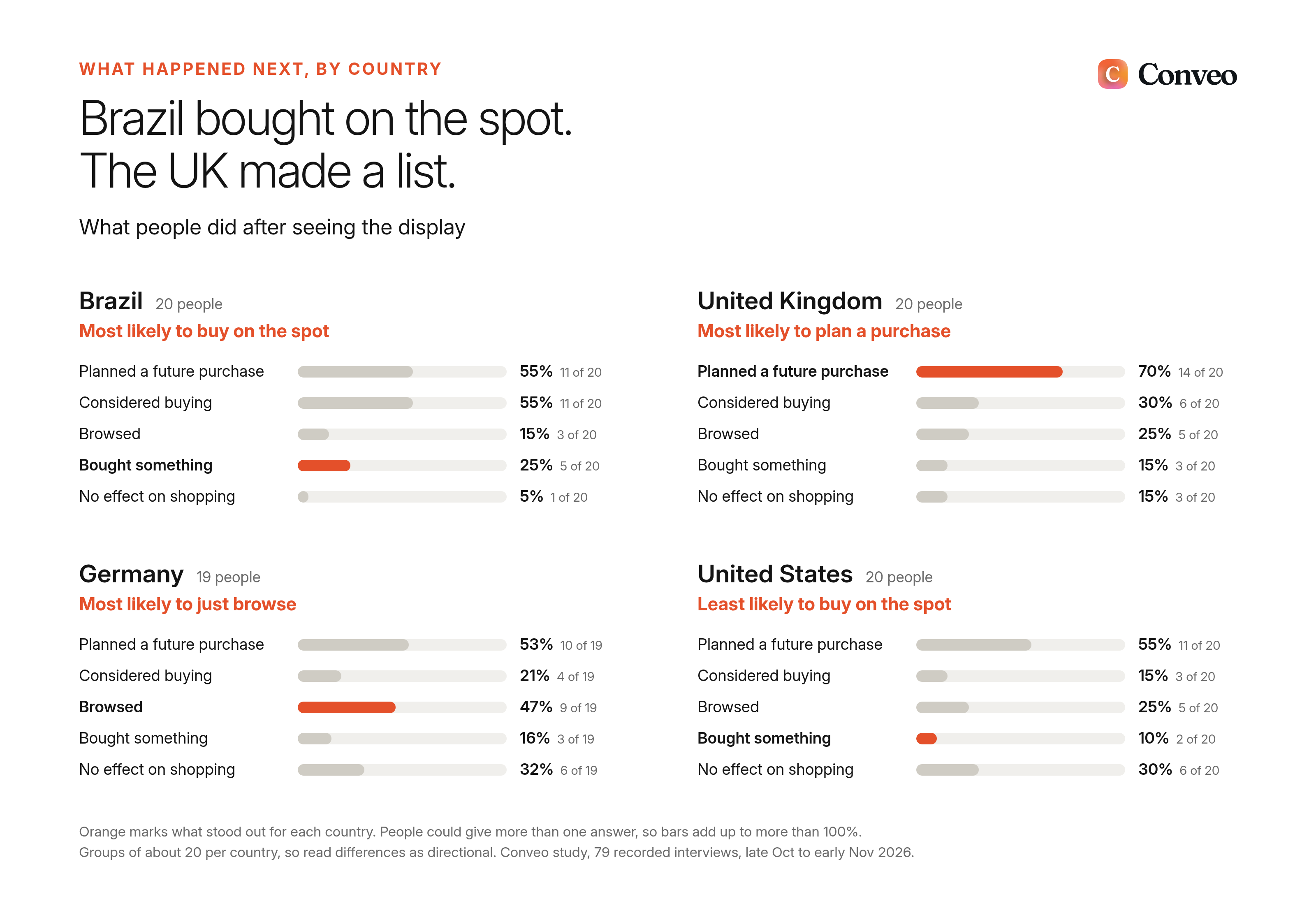
Displays mostly got people planning: 46 of 79 planned a future purchase and 13 bought something on the spot.
Brazil bought right away, the UK made a list, Germany browsed and the US split 10 to 10 on whether it was too early.
Christmas displays seem to arrive earlier every year, so we asked 79 shoppers in four countries how they felt about the first one they saw.
Most of them didn’t mind an early start: 49 said their display felt about right and 28 said it was too early. Their problem was with the order of the holidays.
“Christmas should begin after Halloween. I kind of like to take these celebrations in order.”
Shopper, US
A UK shopper described the flip side: “The moment we see a Christmas display, we’re like, ‘Next. Okay, straight onto Christmas stress.’” Asked when stores should start, 44 picked early November.
49 of 79 said their first display felt about right
44 said early November is the right time to start
46 planned a future purchase after seeing a display
The perfect month, by country
We asked everyone when stores should start putting up Christmas displays. Early November won in three of the four countries. Germany was the exception.
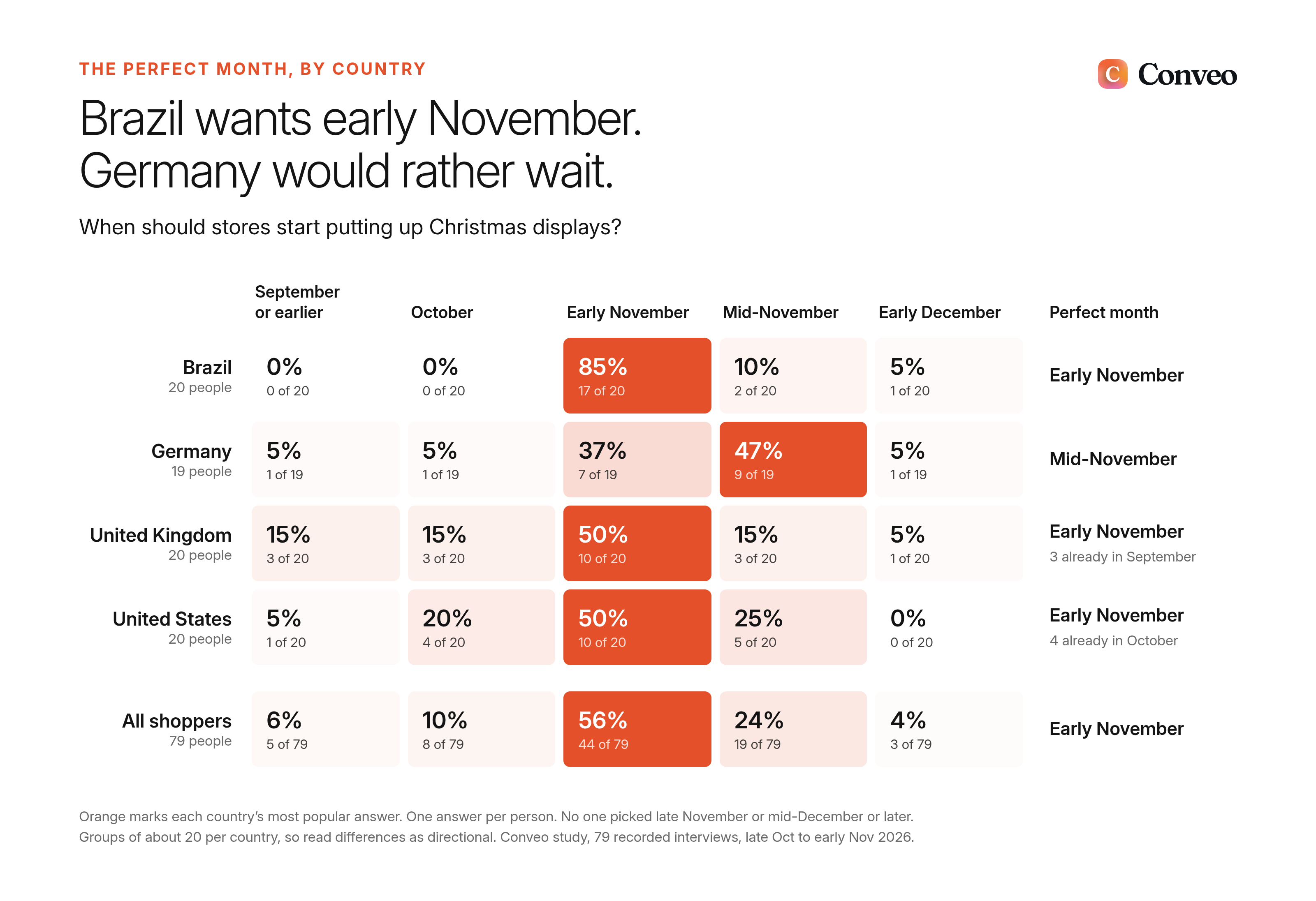
Brazil: early November. 17 of 20, the clearest answer in the study.
Germany: mid-November. 9 of 19 would wait, and only 7 picked early November.
UK: early November, chosen by 10 of 20, though 3 would happily start in September.
US: early November, chosen by 10 of 20, with 4 already fine with October.
But the start date only tells part of the story. The same kind of display got very different reactions depending on which country the shopper was in.
Four countries, four attitudes
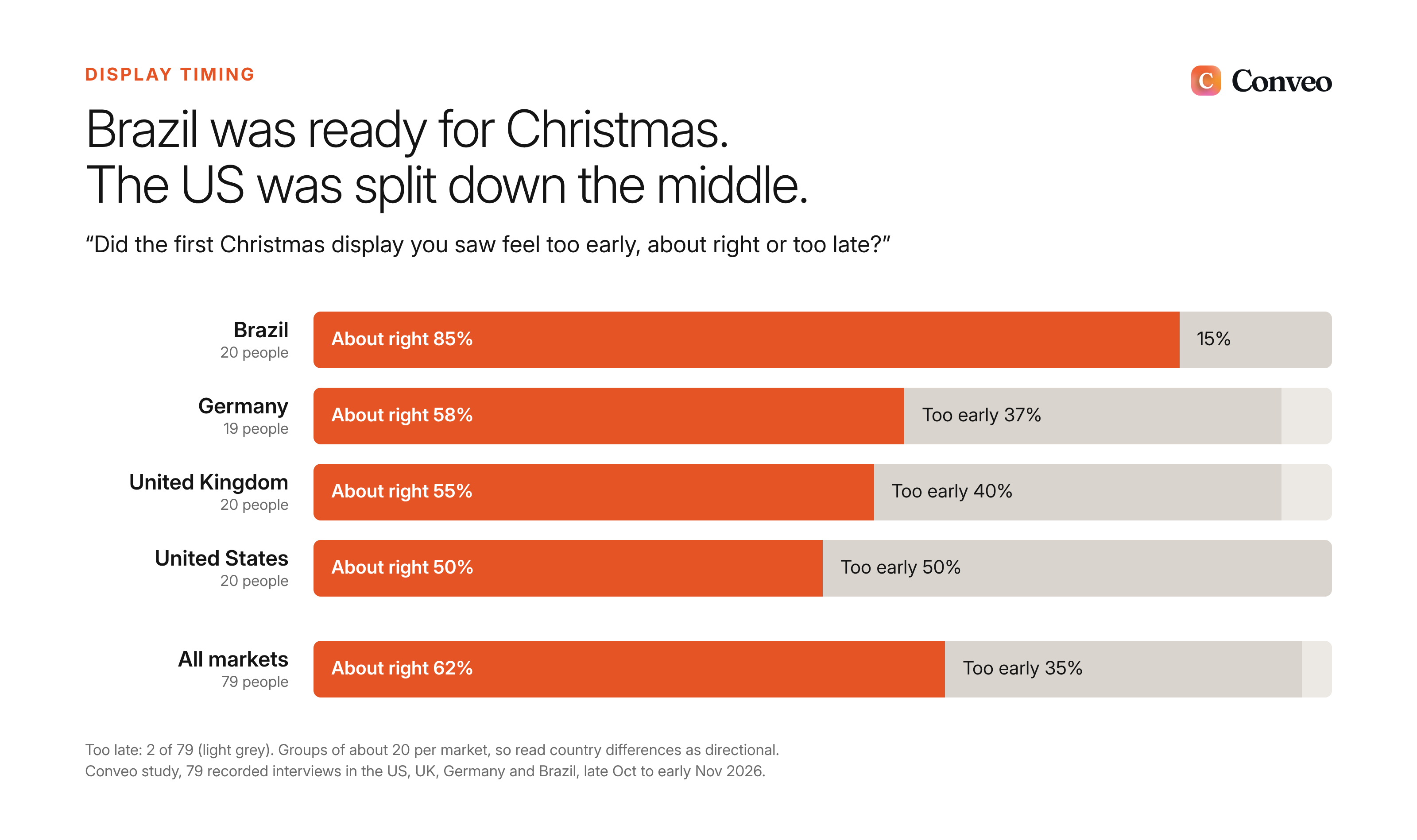
Each country group had about 20 people, so these are patterns among the people we interviewed, not national rankings.
Brazil: ready, and already buying
17 of 20 shoppers in Brazil said their display felt about right, more than in any other country. They were also the most likely to act on it straight away: 11 of 20 considered buying something and 5 of 20 actually bought.
For several of them, shopping early was about money as much as mood.
“I already prepared myself and got ahead on these promotions in advance... at the last minute prices are much higher.”
Shopper, Brazil
United Kingdom: fine, as long as it’s for planning
The UK was more divided, with 8 of 20 calling their display too early. Yet UK shoppers were the most likely to plan a future purchase after seeing one: 14 of 20. Big displays and signage caught their eye more than in other countries.
The same person can dread the season and still want to get ahead of it. One UK shopper talked about “Christmas stress”, while another said “Christmas gifts maybe actually would work as early as September... people probably want to stagger their purchases.”
Germany: browsing, not buying yet
In Germany, 7 of 19 said their display was too early. German shoppers browsed more than anyone else (9 of 19), but almost a third (6 of 19) said the display didn’t change their shopping at all. Decorations and colors were what they noticed first.
They liked having time to plan, but they didn’t want the season to drag on.
“By mid-November, it’s slowly becoming the Christmas period... Otherwise, I think it’s a bit worn out.”
Shopper, Germany
United States: split down the middle
The US was evenly split: 10 said about right and 10 said too early. US shoppers were the only group who noticed products as often as decorations, and the least likely to buy on the spot (2 of 20). 6 of 20 said the display had no effect on their shopping.
The split often came down to one date: “I feel like generally November 1st is the answer. It starts tomorrow... today is Halloween.” Others were simply delighted: “I was surprised by the date... I was very happy, very excited about that.”
What people did after seeing the display
Across all four countries, displays mostly got people planning rather than buying. 46 of the 79 planned a future purchase, and 13 bought something on the spot. How they got there was different in each country.
“You have enough time, you have no time pressure, no stress, and you can think and plan calmly.”
Shopper, Germany
Sometimes it led to a sale right away: “I went there for Halloween candy, but I instead was distracted by [the display]... then I went to buy some decorations for Christmas” (Brazil).

Decorations caught the eye first
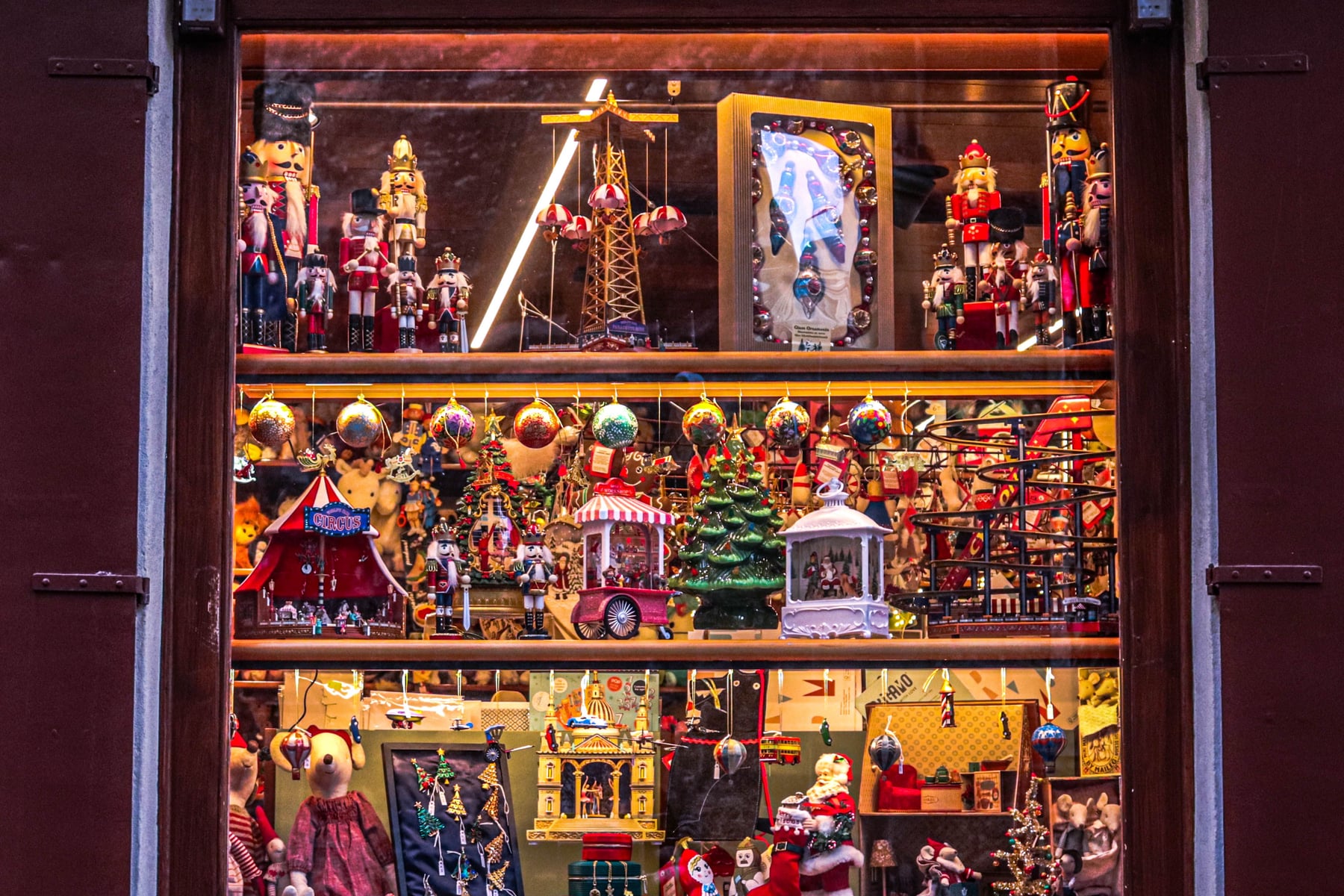
Decorations were what 37 people noticed first, ahead of colors and products. Displays near the entrance were hard to miss, and the best ones felt like a finished scene.
“It made me smile... I could almost smell and taste gingerbread.”
Shopper, UK
One display, four reactions
Shoppers in Brazil buy right away. In the UK they make a list, in Germany they browse, and in the US they’re still arguing about Halloween. For retailers, the question isn’t only when to put Christmas out. It’s what shoppers in each country will do once they see it.
Early Christmas works when it gives people time to plan, not when it asks them to celebrate before they’re ready.
About this study: a rapid, photo-led qualitative study with 79 recorded interviews across the US, UK, Germany and Brazil, run on Conveo from late October to early November 2026. Results describe the people we interviewed and are not nationally representative.