In this article
TL;DR
Customer feedback software does three jobs: gathering feedback, analyzing it, and explaining why scores move. Platforms differ in which of those they cover.
AI-moderated interview platforms like Conveo, Listen Labs, and Outset ask customers follow-up questions, so you hear the reasons behind a score.
Feedback analysis platforms like Dovetail and Thematic sort comments you already have into themes.
Enterprise CX suites and survey tools track scores at scale, and product feedback tools tie feedback to how people use your product.
To narrow 15 platforms down to three to five, start from the problem you need to solve, then check each option against five criteria.
An NPS survey tool and an AI-moderated interview platform can both be sold as customer feedback software, even though they do very different things. That makes them hard to compare. Feature lists overlap, and two tools that look alike on paper can cover different parts of the work: one gathers feedback, another analyzes what customers have already said, and a third asks follow-up questions to find out why.
This guide sorts 15 customer feedback platforms by category and by which of those jobs they cover, with each one’s strengths, trade-offs, and pricing model. By the end, you’ll feel confident in what type of feedback tool you need, and have a framework and criteria to shortlist the best platforms for your research and insight team’s needs.
What customer feedback software does
Customer feedback software is any tool a business uses to gather or make sense of what customers say about it. The concept of “customer feedback” is broad, so the tools cover several different jobs. Here are the main ones:
1. Gathering feedback
Almost every customer feedback platform gathers feedback in some form. Survey tools and in-app prompts ask customers open-ended or set questions, such as a Net Promoter Score (NPS) or Customer Satisfaction Score (CSAT) rating, making them the easiest way to track a score over time.
Other tools pull in unsolicited feedback from reviews and support tickets, and interview platforms gather it through conversation.
2. Analyzing feedback
Customer feedback analysis software sorts what customers said into themes and customer sentiment, so teams can see what people mention most and how that changes over time. Most tools use a form of thematic analysis, with AI doing the first pass. Analysis works with feedback that’s already been collected, so it can only go as deep as the original answers.
3. Explaining feedback
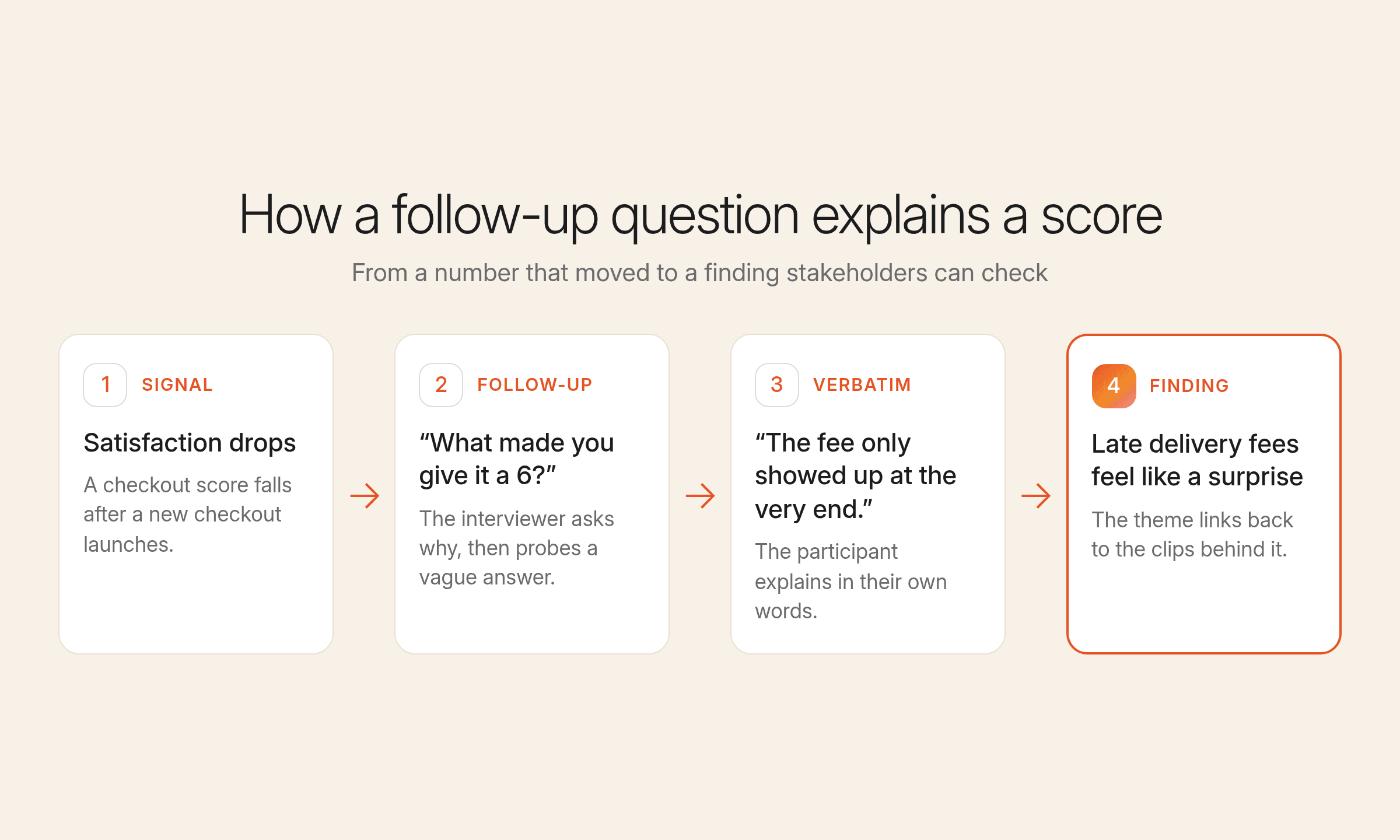
Explaining feedback means finding out why customers gave a score or said what they did. That usually takes a follow-up question. When a comment says “it’s fine,” or a customer feedback score drops with no clear reason, someone has to ask what’s behind it.
The video below shows Conveo's AI research assistant asking participants follow-up questions about their answers.

Researchers have long done this in interviews for market research and user research, and AI-moderated interviews let teams ask those follow-ups with many more people at once. Companies can pair those interviews with their survey data to get more in-depth customer insights.
Some customer feedback platforms only focus on one or two of these jobs, while others tackle the end-to-end process.
5 criteria for evaluating a customer feedback platform
Customer feedback tools, especially those in the same categories, usually offer similar sets of features that can be hard to distinguish at first glance. To get a clearer idea of what each platform can do and how it fits your workflows, use the following criteria:
| Criterion | Why it matters | What to look for |
|---|---|---|
| Explains why scores move | A score shows that something changed but not the cause, making it hard to know what action to take. | Open-ended questions, and follow-up questions when an answer is vague or incomplete |
| Findings link back to real participants | You need to show where a finding came from before others will act on it. | Each theme links to the quotes or clips behind it, and all responses come from real people |
| Feedback reaches the team that can act | If feedback stays in one tool, the people who can fix the problem may never see it. | CRM and Slack integrations, rules that send issues to the right team, and a way to reply to the customer |
| Security and data compliance | Feedback contains personal data, and video and voice recordings contain more. Legal and procurement teams will check this before you can sign. | SOC 2 Type II certification, GDPR compliance, where data is stored, SSO and user permissions |
| How cost scales with volume | Pricing per seat, per response, per tracked user, or by credits gives very different totals as volume grows. | What it costs if your response volume doubles, and which features need a paid plan |
To use the criteria, take the same business question to every demo and ask each vendor to show you every row: a follow-up on a vague answer, a finding traced back to the participant, how an issue reaches the right team, their security documentation, and a price at double your current volume.
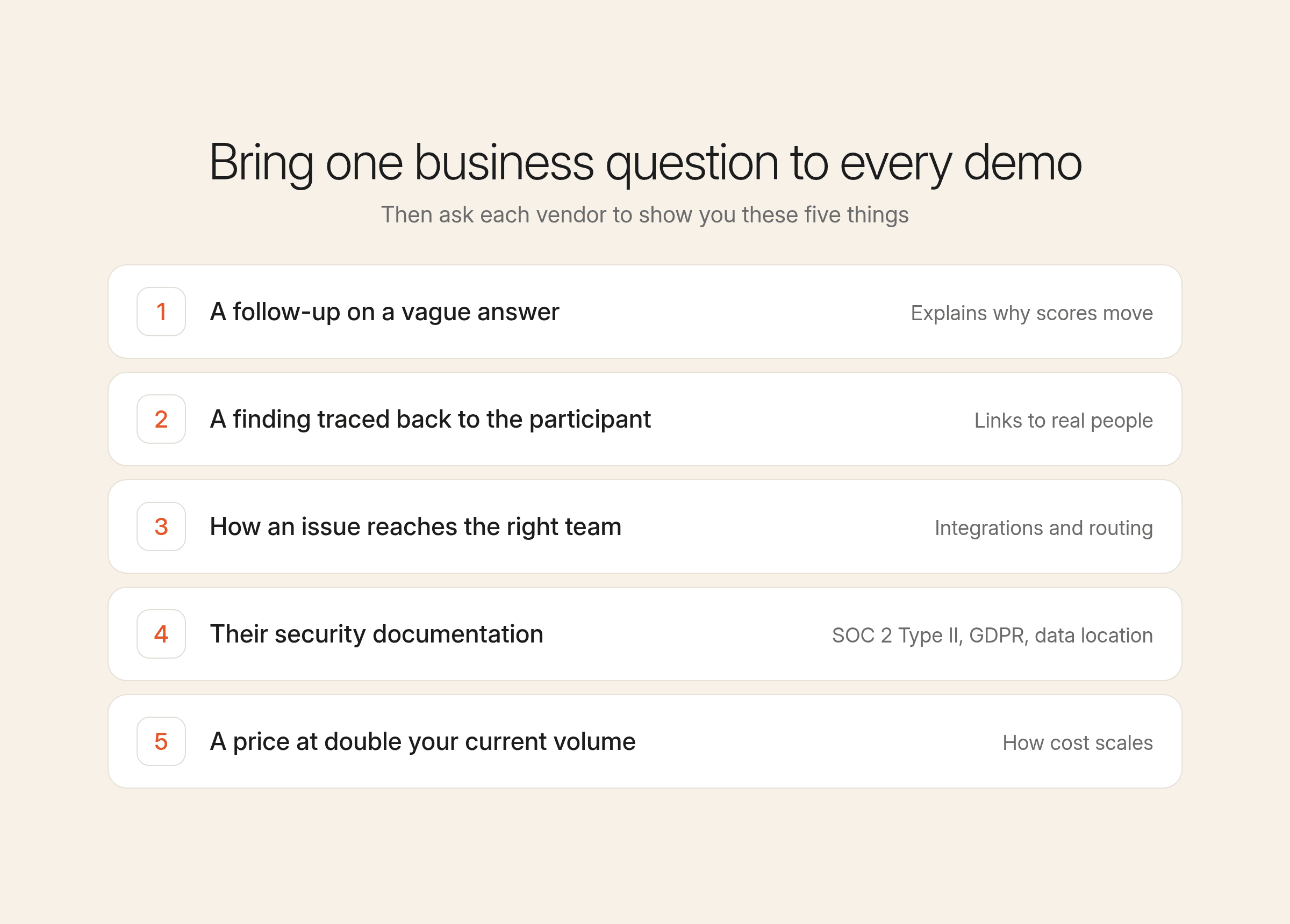
Seeing every platform work on the same question makes the differences easier to compare. With those criteria in hand, here’s how 15 customer feedback platforms stack up.
15 best customer feedback software platforms
The table below splits up each platform into categories and covers how they cover each of the customer feedback tool jobs defined earlier.
| Platform | Category | Gathering | Analyzing | Explaining |
|---|---|---|---|---|
| Conveo | AI-moderated interview platform | Video and voice interviews in 48+ languages | Themes linked to clips and quotes | AI follow-ups when an answer is vague or leaves a gap |
| Listen Labs | AI-moderated interview platform | Video interviews with its own panel | Themes linked to quotes and timestamped clips | AI follow-up questions in interviews |
| Outset | AI-moderated interview platform | Video, voice or text interviews | Themes linked to quotes and clips | AI follow-ups, with researcher-set depth |
| Dovetail | Feedback analysis platform | Imports calls, tickets, surveys and research | AI insights linked to source | Answers questions from feedback already collected, using AI Chat |
| Thematic | Feedback analysis platform | Imports surveys, tickets, reviews and calls | Themes and sentiment tied to NPS, CSAT and CES | Links score changes to themes in existing comments |
| Zonka Feedback | Feedback analysis platform | Surveys by email, SMS, WhatsApp, in-app and kiosk | AI themes and sentiment (separate plan) | Branching logic shows pre-written follow-up questions based on earlier answers |
| Qualtrics | Enterprise CX and voice of customer suite | Surveys, calls, chat, social and digital behavior | AI analysis and churn prediction | AI follow-ups on open-text survey answers; human-moderated interviews |
| Medallia | Enterprise CX and voice of customer suite | Contact center, digital and in-person channels | Generative AI themes | Root Cause Assist finds likely causes in existing feedback |
| SurveyMonkey | Survey tool | Surveys, plus a paid panel | Thematic and sentiment analysis on open text | Skip and branching logic show follow-up questions based on earlier answers |
| Typeform | Survey tool | One-question-at-a-time forms | Smart Insights (Growth Flow plan and up) | AI-moderated interviews in Research Flow (beta) |
| Survicate | Survey tool | In-app, website and email surveys | AI themes and sentiment that cite sources | AI follow-up questions in surveys |
| Contentsquare (formerly Hotjar) | Product and in-app feedback tool | On-site surveys, heatmaps and recordings | AI summaries (Growth plan and up) | Human-moderated interviews via Engage |
| Pendo | Product and in-app feedback tool | In-app NPS and CSAT surveys tied to usage | AI sorting into requests, bugs and complaints | Links each score to the user’s product usage and session replay |
| Canny | Product and in-app feedback tool | Feedback boards, tickets and call transcripts | AI deduplication and summaries | AI Smart Replies ask clarifying questions on submitted feedback |
| Usersnap | Product and in-app feedback tool | Widgets with screenshots, in-app surveys | AI topics and sentiment | AI pattern and root cause analysis on collected feedback |
The full profiles below provide a more comprehensive look at each software for customer feedback.
1. Conveo
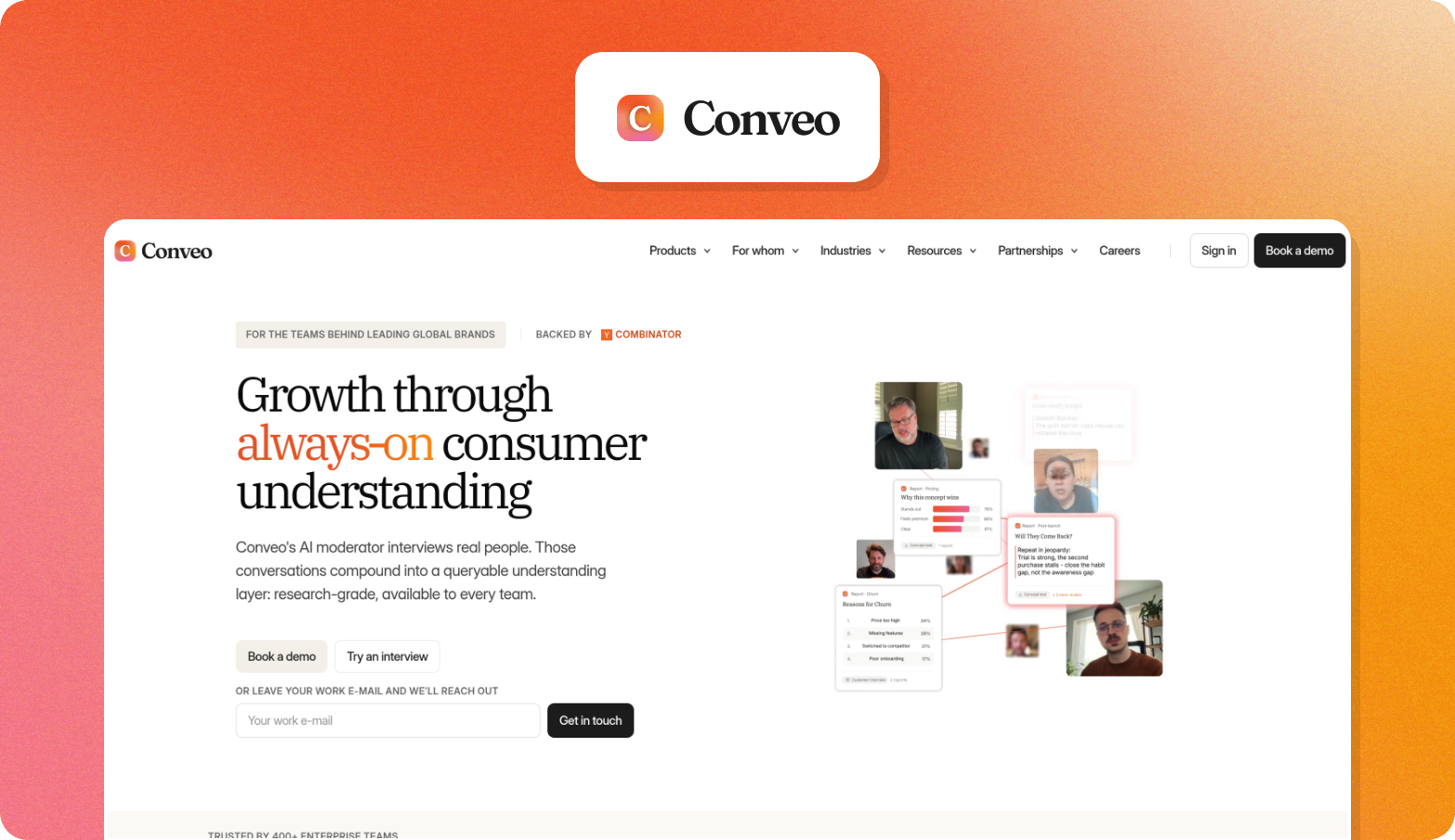
Conveo runs AI-moderated interviews on video or voice, so when a score drops, teams can ask real consumers what changed and hear the answer in their own words.
Teams can ask for a satisfaction score inside the interview in more than 48 languages, or run a diary study where the AI research assistant follows up on each person's earlier entries.
Analysis covers what people say along with their tone and facial expressions, and question coding can split any theme by market or age group.
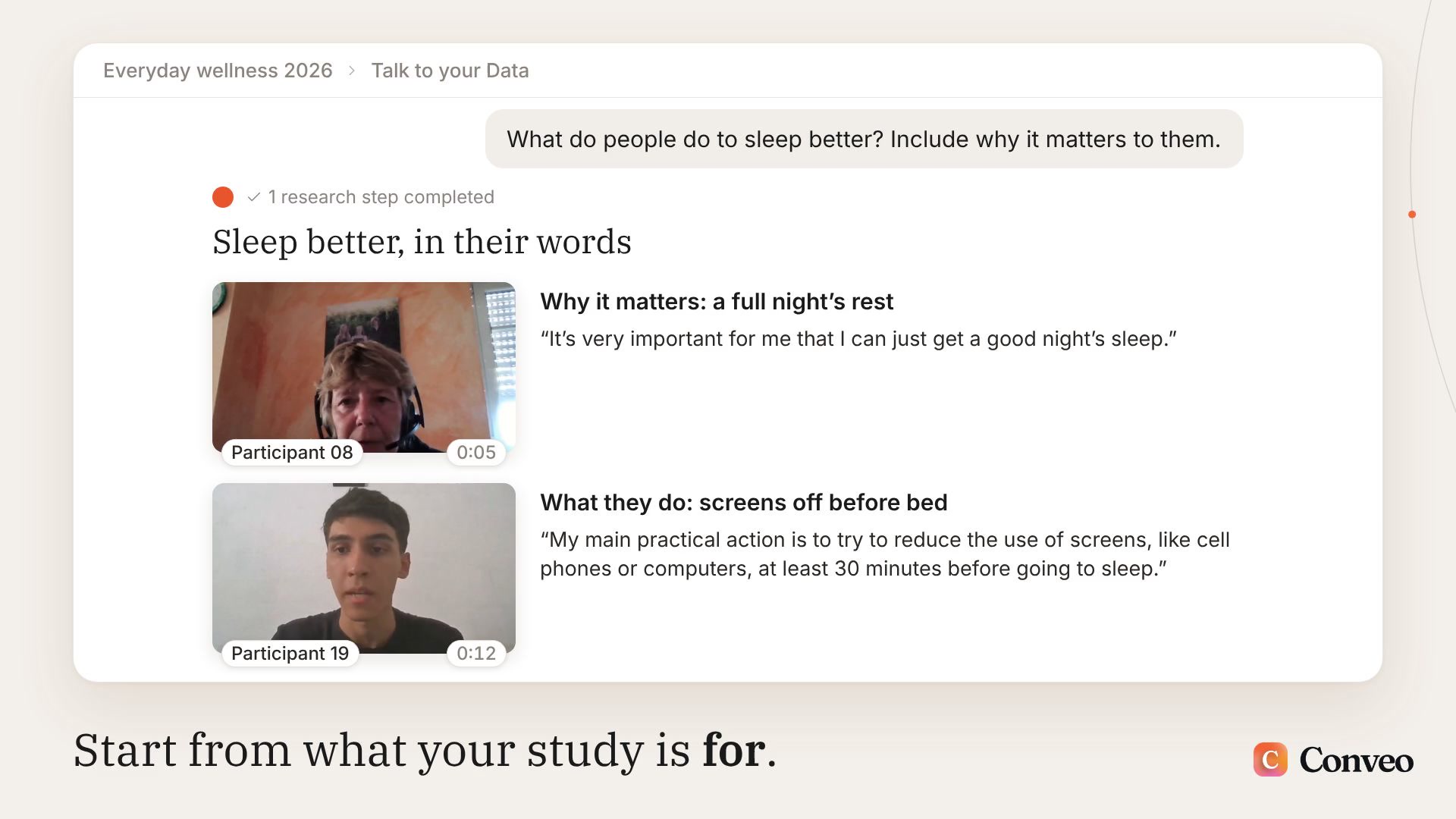
After the study is complete, stakeholders can ask their own questions in Talk to Your Data, starting from prompts written by Conveo’s research team, and get answers with the quotes behind them.
Best for: Insights and CMI teams at consumer brands that need to explain a score change to stakeholders.
Strength: The AI research assistant asks a follow-up when an answer is vague or leaves a gap, and every theme links to the clips and quotes behind it.
Trade-off: It runs new interviews rather than theming tickets and reviews you already have, so it's more than a team needs for NPS dashboards or backlog analysis alone.
Pricing model: Start for free, or book a demo for enterprise pricing.
2. Listen Labs
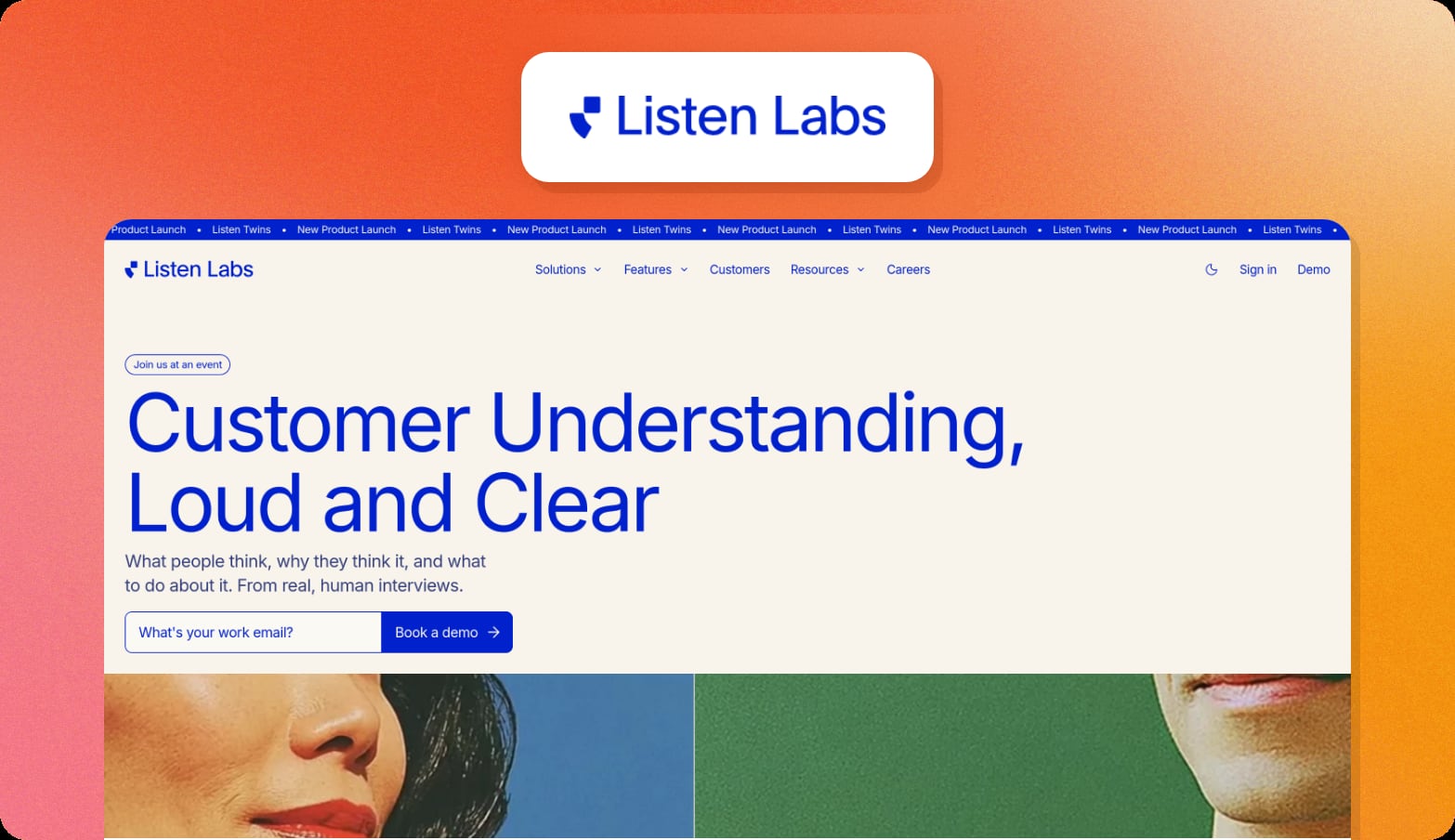
Listen Labs runs AI-moderated video interviews with participants from its own panel, so teams can gather qualitative feedback on a concept or brand at large sample sizes.
Best for: Consumer insights and marketing teams without in-house research operations that want qualitative answers quickly.
Strength: It recruits, interviews, and analyzes in one workflow, with insights linked to quotes and timestamped clips.
Trade-off: Salesforce acquired Listen Labs in November 2026. Plans for standalone availability and pricing haven’t been announced.
Pricing model: Custom pricing.
3. Outset
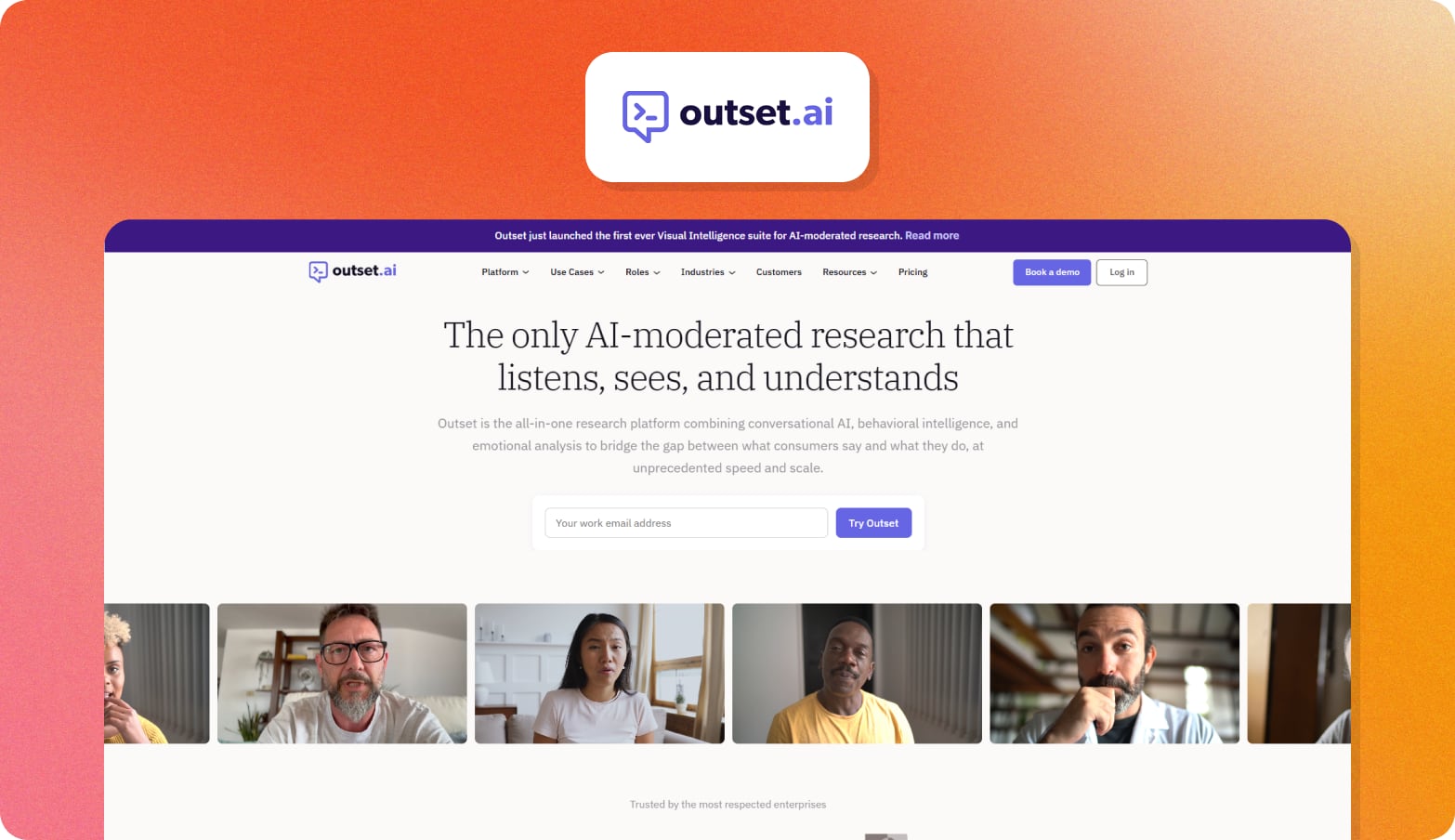
Outset is a customer feedback platform that runs AI-moderated interviews by video, voice, or text, which participants complete in their own time.
Best for: Product, UX and research teams running discovery and concept studies across markets.
Strength: Researchers control how deeply the AI follows up, and themes trace back to participant quotes and video clips.
Trade-off: Its security page lists SOC 2 Type II, GDPR, and HIPAA but no hosting region, which EU teams will want to confirm.
Pricing model: Custom quote based on seats plus usage.
4. Dovetail
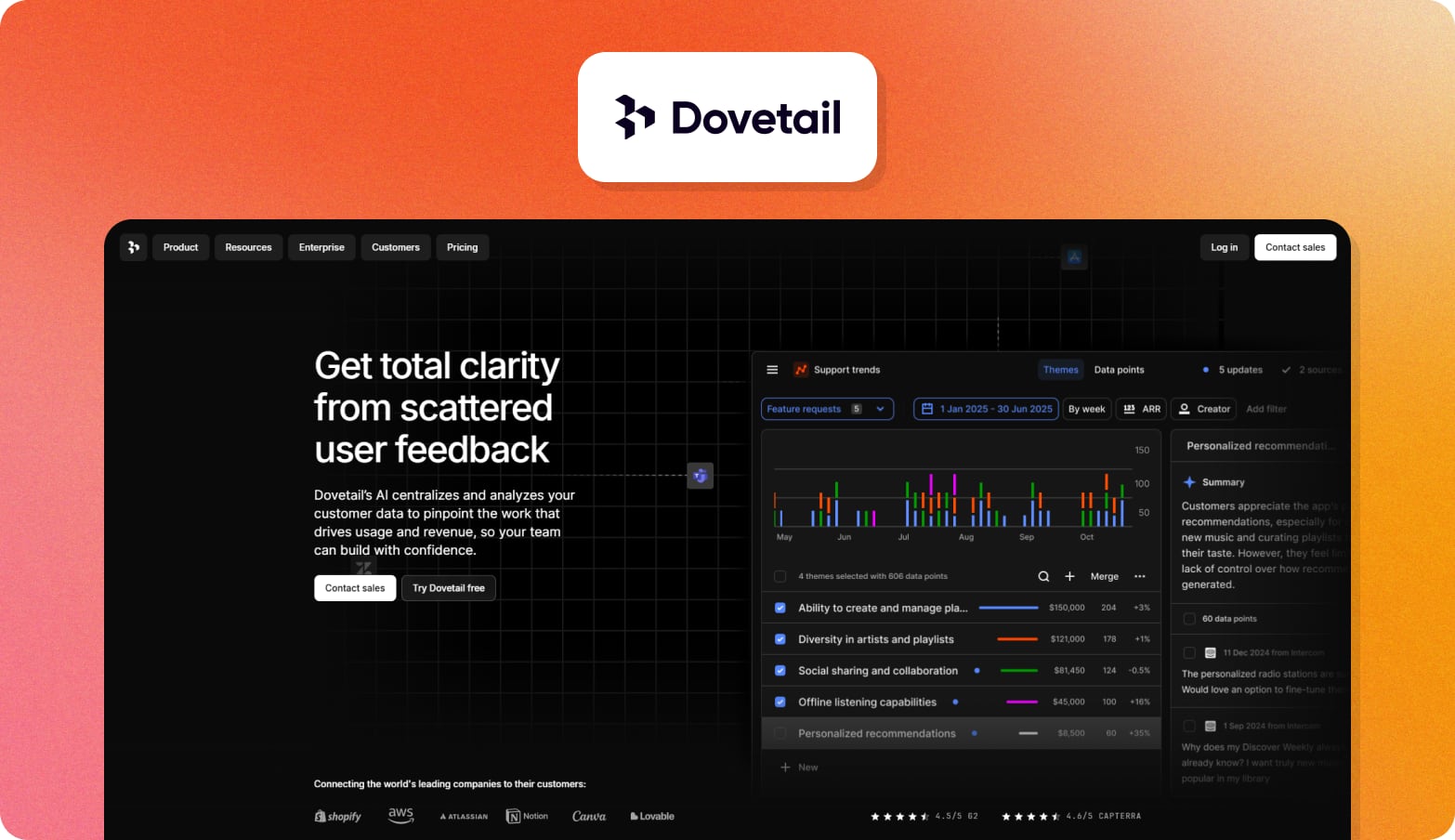
Dovetail brings in feedback from sales calls, support tickets, surveys, and research sessions, then uses AI to find patterns across it.
Best for: Teams with feedback spread across many tools that want one place to search and analyze it.
Strength: Every AI-generated insight links back to its source, and integrations cover Gong, Zendesk, Intercom, and Qualtrics.
Trade-off: It works with feedback you bring to it. New interviews or surveys need a separate tool.
Pricing model: Free plan for individuals; Enterprise is custom-priced.
5. Thematic
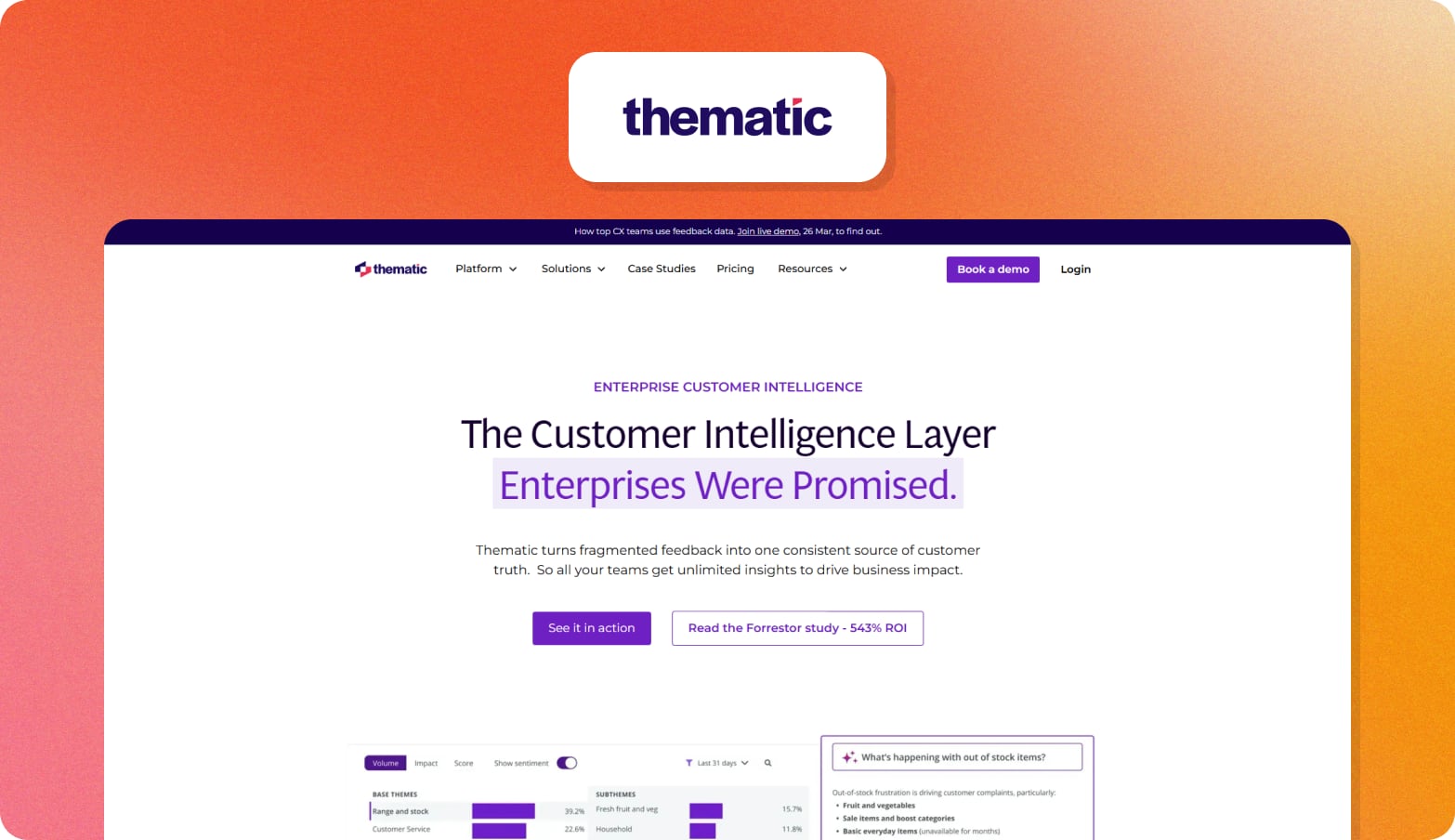
Thematic analyzes open-text feedback from surveys, tickets, reviews, and calls, and shows which themes are moving scores like NPS, CSAT, and Customer Effort Score (CES).
Best for: Enterprise CX teams with large volumes of comments across several channels.
Strength: Score Change Analysis links score movement to specific themes, and each theme links back to the comments behind it.
Trade-off: It can only analyze what customers have already written, and the entry plan starts at $25,000 a year with no free trial.
Pricing model: Annual, priced by comment volume. Foundation is $25,000 a year for up to 25,000 comments.
6. Zonka Feedback
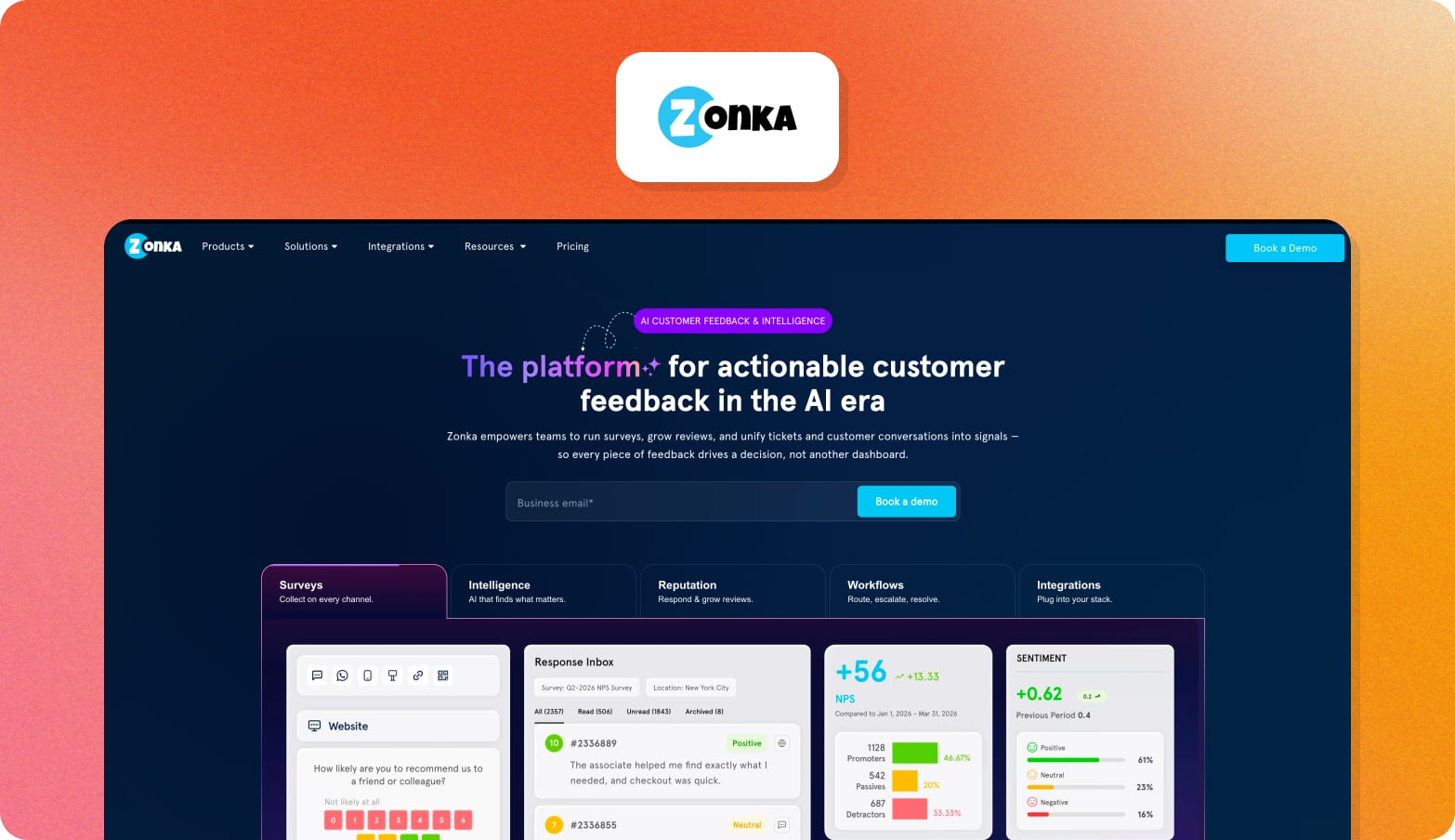
Zonka Feedback runs NPS, CSAT, and CES surveys over email, SMS, WhatsApp, in-app, and offline kiosks, then uses AI to theme and score the responses.
Best for: CX teams that want to collect feedback and analyze it without buying two separate customer feedback management software.
Strength: It covers many channels, and data can be hosted in the US, Europe, Australia, or India.
Trade-off: AI Feedback Intelligence is sold as a separate plan, priced on data credits on top of the survey product.
Pricing model: Custom, based on response volume and data credits, with a 14-day free trial.
7. Qualtrics
Qualtrics collects feedback across surveys, calls, chat, social, and digital behavior, and adds AI analysis and predictive churn models.
Best for: Large enterprises running CX and Voice of Customer analytics programs across many touchpoints and markets.
Strength: It covers contact center conversations, digital analytics, and surveys in one suite.
Trade-off: It doesn’t run AI-moderated interviews. Live interviews use a human moderator over Zoom.
Pricing model: Custom quote.
8. Medallia
Medallia captures feedback across contact center, digital, and in-person channels, and uses generative AI to surface themes in text.
Best for: Enterprises that want customer and employee experience data managed in one platform.
Strength: Wide channel coverage, plus Root Cause Assist and AI summaries for frontline teams.
Trade-off: Reviewers describe a steep learning curve for advanced dashboards and a costly setup.
Pricing model: Custom quote.
9. SurveyMonkey
SurveyMonkey offers 400+ templates, AI survey creation, and thematic and sentiment analysis on open-ended answers.
Best for: Teams that run regular surveys and sometimes need to reach people outside their customer base.
Strength: 200+ integrations and a paid panel of 335M+ people in 130+ countries.
Trade-off: Team plans need at least three seats, and each plan has a yearly response cap.
Pricing model: Per user. Team Advantage is $30 per user per month, billed annually; panel responses cost from $1 each.
10. Typeform
Typeform shows one question at a time, which makes a form feel closer to a conversation.
Best for: Marketing and product teams that care about completion rates and brand look.
Strength: 300+ integrations, and Research Flow (beta) adds AI-moderated video interviews.
Trade-off: Research Flow is a separate beta product, and key features like SSO and EU data hosting need the Enterprise plan.
Pricing model: Tiers by monthly responses, from $39 a month for 100 responses.
11. Survicate
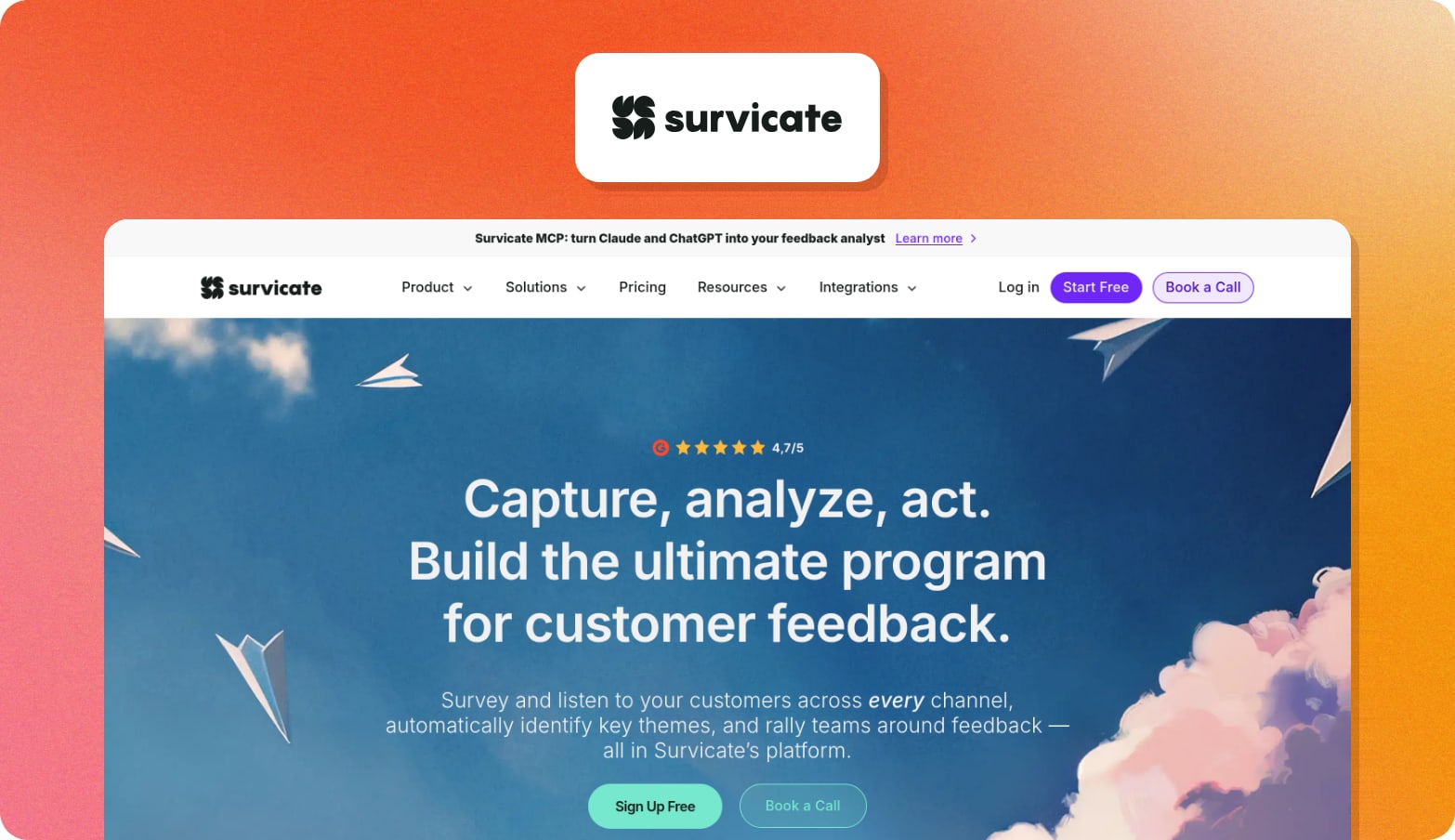
Survicate runs in-app, website, and email surveys, and its AI asks follow-up questions based on each answer.
Best for: Product and marketing teams that want surveys and other feedback in one hub.
Strength: The Research Hub brings in app store reviews and emails, and AI insights cite the source feedback.
Trade-off: The Growth plan caps responses at 250 a month, and SSO starts on Pro.
Pricing model: Tiers by monthly responses, from £89 a month billed annually.
12. Contentsquare (formerly Hotjar)
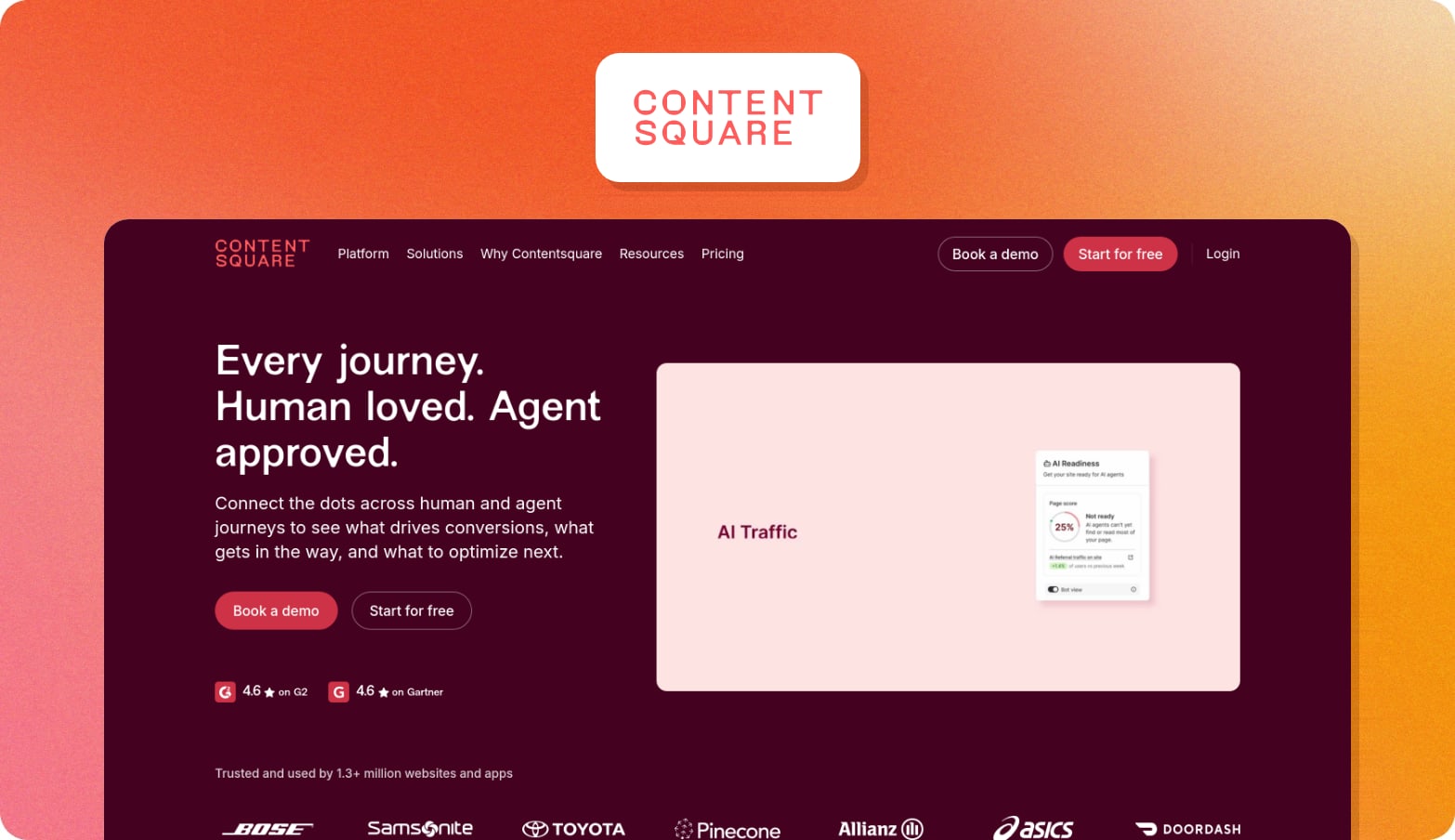
Contentsquare, which took over Hotjar, combines heatmaps and session recordings with on-site surveys.
Best for: Teams that want to see what a user did before they gave feedback.
Strength: Survey responses link to the session recording of the person who answered.
Trade-off: Surveys are sold as a separate Voice of Customer product, and the free plan stops at 100 responses a month.
Pricing model: By monthly sessions and responses. Free plan; Voice of Customer Growth from $79 a month.
13. Pendo
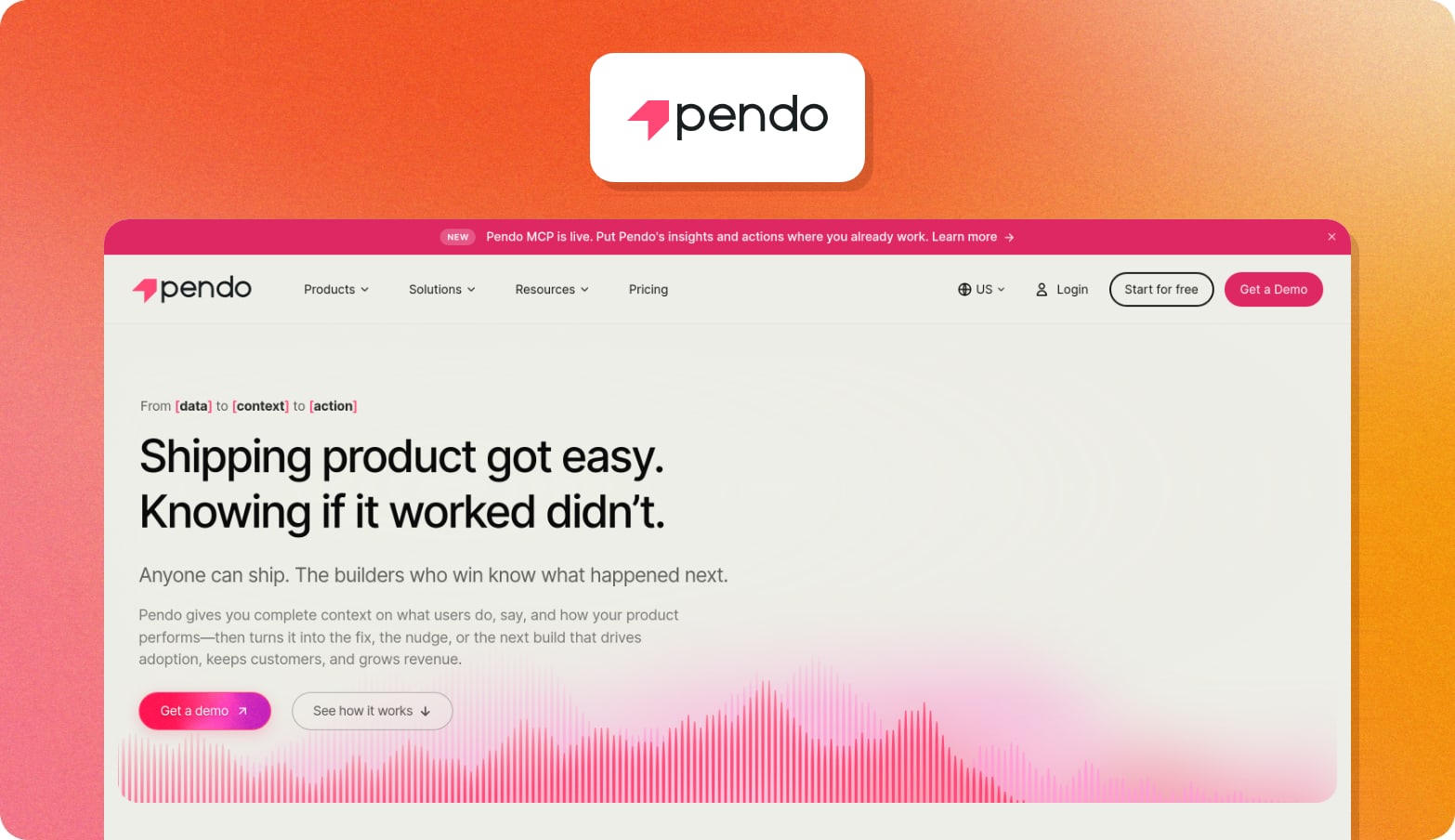
Pendo triggers NPS and CSAT surveys inside a software product based on what users have done, such as finishing onboarding.
Best for: SaaS product teams that want scores alongside usage data.
Strength: Each response is tied to the user’s product history and session replay, and AI sorts feedback into feature requests, bugs, and complaints.
Trade-off: Surveys are one module in a product analytics suite, so it fits teams with a logged-in software product.
Pricing model: Free tier; paid plans by quote.
14. Canny
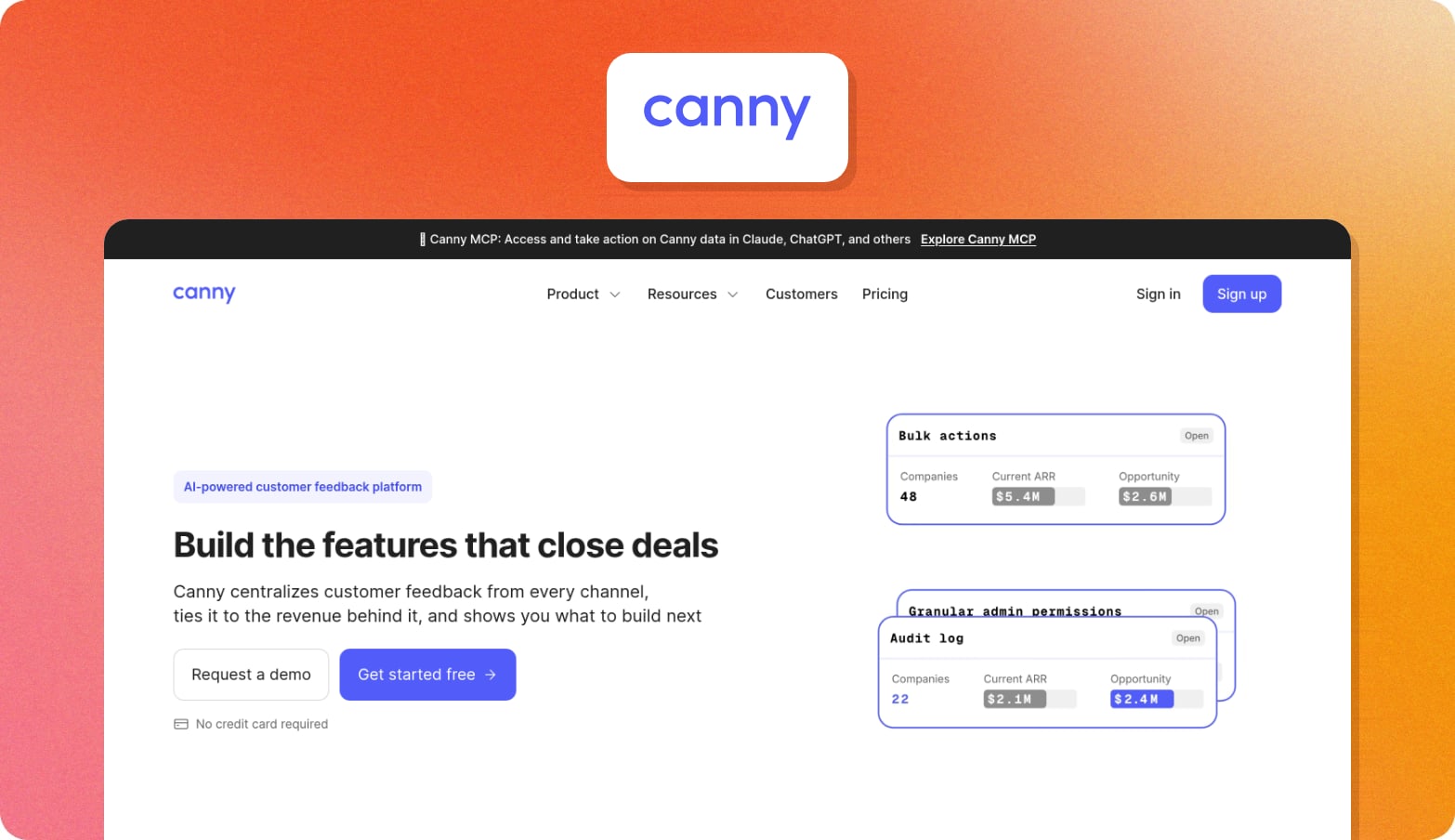
Canny is one of the product feedback tools built around feature requests. Users post and vote on ideas on a feedback board, and its AI pulls more requests from support tickets and call transcripts.
Best for: Product teams deciding what to build next.
Strength: It removes duplicate requests and ties each one to the revenue of the customers asking for it.
Trade-off: It’s built around feature requests, so it won’t explain a drop in satisfaction.
Pricing model: Per tracked user. Free for 25 tracked users; Pro from $79 a month billed yearly.
15. Usersnap
Usersnap collects feedback through on-page widgets with screenshots and annotations, plus in-app surveys and imports from tools like Zendesk and Gong.
Best for: Product and QA teams in Europe that need feedback with visual context.
Strength: AI classifies topics and sentiment, and customer data is hosted in AWS’s Frankfurt region.
Trade-off: Several AI features are paid add-ons on lower plans.
Pricing model: Flat monthly tiers, from €49 a month for two seats; Enterprise is custom.
Fifteen platforms are too many to trial, so the next step is narrowing the list to the three to five that fit your situation.
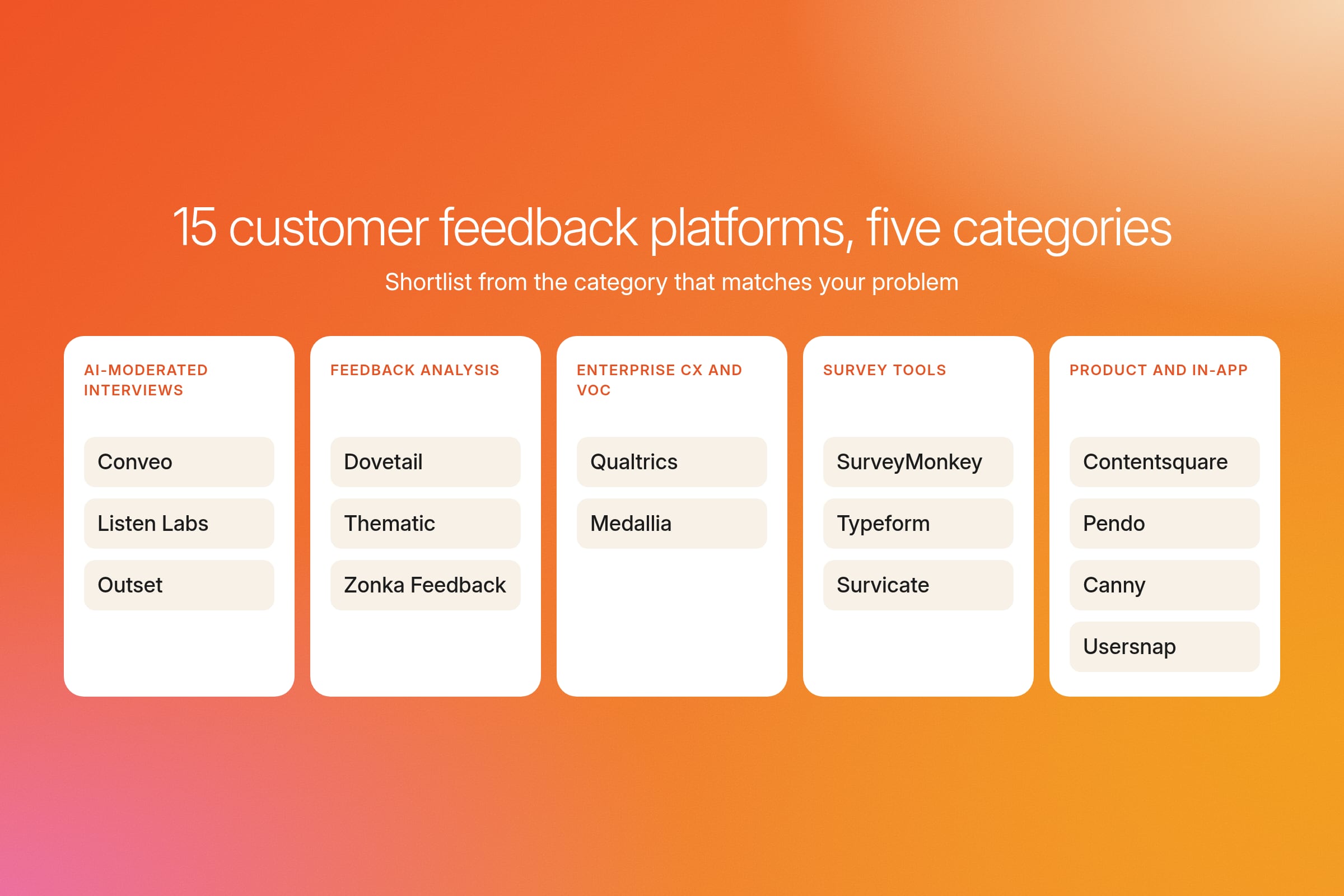
How to build your shortlist based on common customer feedback challenges
The quickest way to a shortlist is to start from the problem you need to solve. Use this framework to narrow down your options before booking demos or starting trials.
| Scenario | Platforms to shortlist | Why these |
|---|---|---|
| NPS dropped, and the open-text answers don’t say why | Conveo, Listen Labs, Outset, plus your current survey tool | Your survey shows where the score fell. An interview platform asks the people behind it what changed. Consumer insights teams often pair the two. |
| You want a continuous read on how consumers feel, with the reason next to every score | Conveo StoryLines | Each wave asks the core score questions and follows up on the answers. |
| There’s too much open text for anyone to read | Thematic, Dovetail, Zonka Feedback | These sort comments into themes and link each theme back to the comments it came from. |
| You run a CX program across many touchpoints | Qualtrics, Medallia, Zonka Feedback | These handle surveys, contact center data, and digital feedback at scale for large CX teams. |
| You need regular surveys at a low cost per response | SurveyMonkey, Typeform, Survicate | These are quick to set up and priced for high response volumes. |
| Your product team needs to prioritize feature requests | Canny, Pendo, Contentsquare, Usersnap | These tie feedback to how people use your product and what they ask for. |
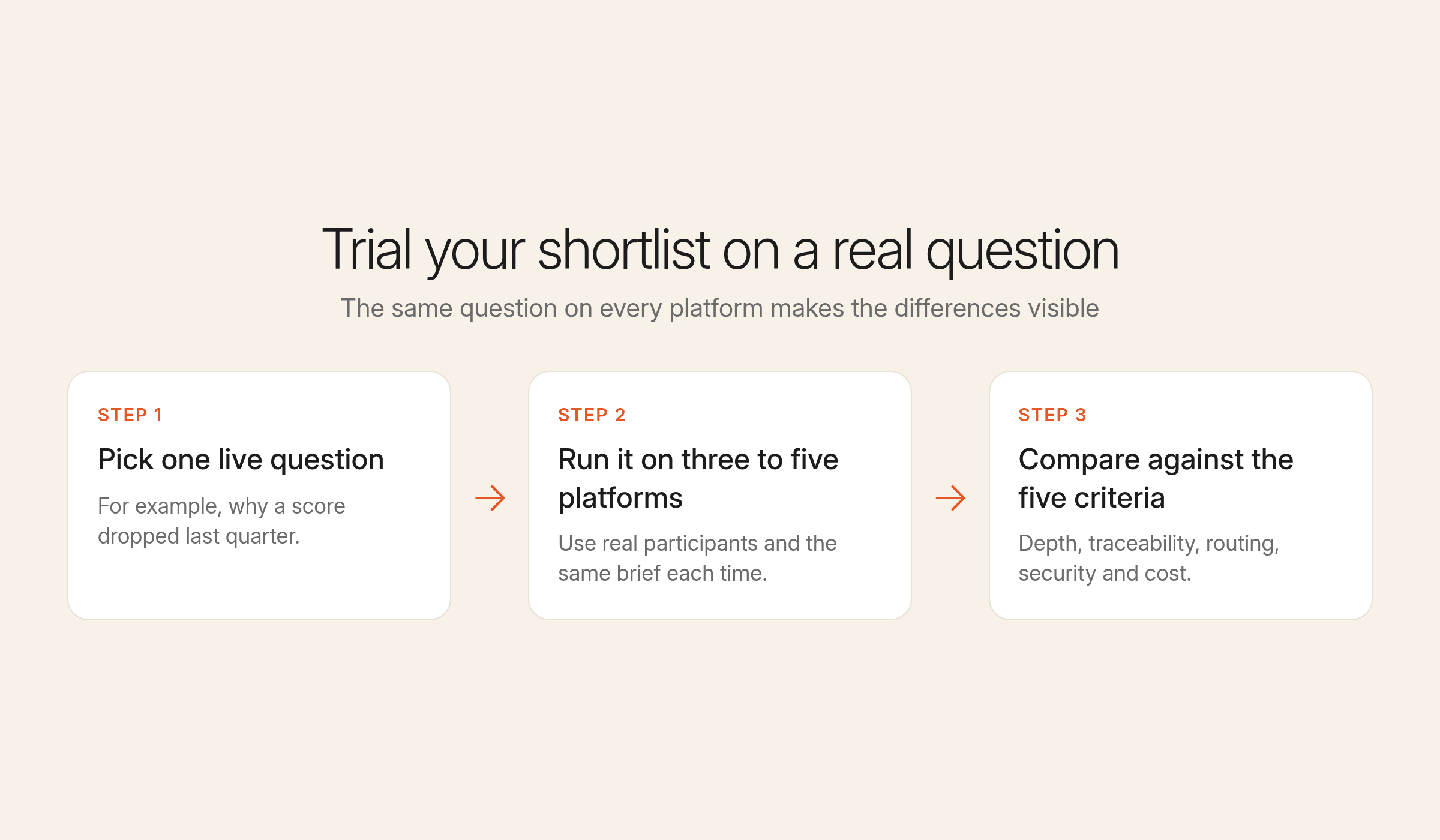
Once you have three to five platforms to trial, test each one on a real question your team needs answered now, such as why a score dropped last quarter, so you can compare tools easily.
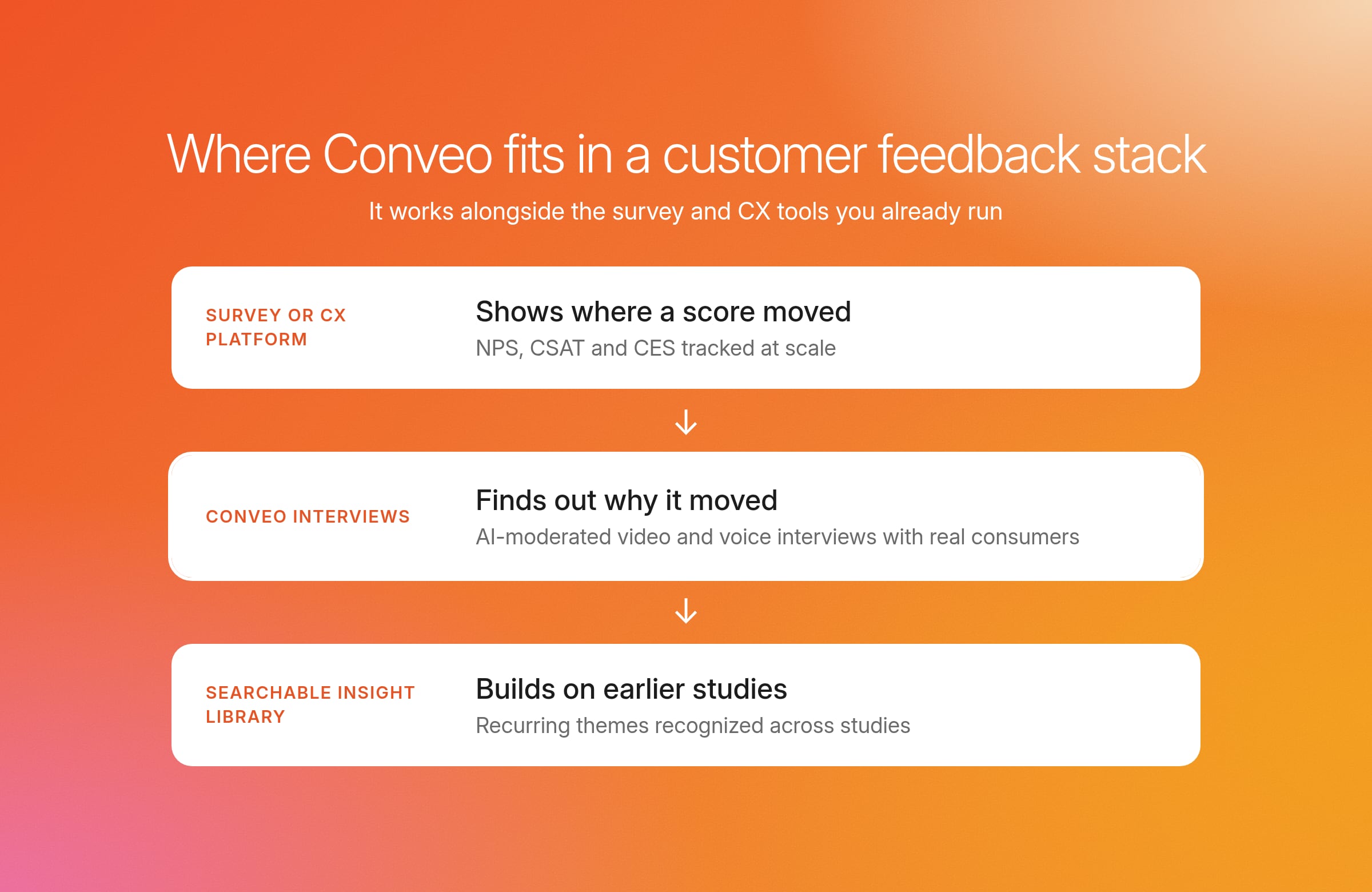
Where Conveo fits in your customer feedback stack
Conveo runs AI-moderated interviews with real consumers, either as a one-off study or as an ongoing program. Here’s what the platform adds to your customer feedback stack:
Answers when a score moves. With Conveo StoryLines, interviews run in waves, for example, monthly, so you can check the latest wave for what changed.
Findings that hold up with stakeholders. When someone asks where a finding came from, you can play them the clip. Every participant is a real person, never a synthetic respondent.
Security your legal team will be happy with. Conveo is SOC 2 Type II and ISO 27001:2022 certified, GDPR compliant, with EU hosting in Belgium.
Each study builds on the last. Recurring themes and facets are recognized across studies in a searchable insight library, so the next wave starts from what earlier ones established instead of a blank codebook.
More than 400 enterprises, including Google, Unilever, AB InBev and Canva, use Conveo to understand their consumers.
"The pace, responsiveness, and research expertise of the Conveo team, on top of the top AI-moderated qual platform, have been invaluable to us in scaling brand advertising internationally."
Matt Harris, Research & Insights Lead, EMEA, Canva
Frequently asked questions
What’s the difference between customer feedback management and customer feedback analysis?
Customer feedback management covers feedback collection and what happens next: sending feedback surveys, routing issues to the right team, and following up with customers. Customer feedback analysis works out what the feedback means by sorting raw feedback into themes and measuring customer sentiment. Most platforms do some of both, with real-time dashboards that show response rates and help teams identify trends as new survey data comes in.
Can AI accurately analyze open-text customer feedback?
AI is accurate enough to sort large volumes of open-text feedback into themes and to label each comment’s sentiment as positive, negative, or neutral. Qualaroo, for example, offers AI sentiment analysis on survey responses. Accuracy drops with sarcasm, mixed opinions, and very short answers, so check a sample by hand. AI can only analyze what customers wrote, so getting detailed feedback on a vague comment means asking a follow-up question.
What does closing the feedback loop mean?
Closing the feedback loop means making sure the right team acts on feedback and then telling the customer what happened. That might be a support agent replying to a low NPS score, or a product team tracking feature requests and letting users know when the one they asked for ships. When customers see their feedback lead to a change, they’re more likely to keep giving it, which builds customer loyalty and trust.
Do I need to replace my survey platform to understand why scores change?
Not necessarily. Survey platforms are built to measure customer satisfaction at scale and show where a score moved, and they keep doing that job well. To find out why it moved, add a method that asks follow-up questions, such as interviews with customers from the customer segments where the score dropped. Many teams keep their survey software for tracking and run interviews when they need the reasons behind a change.
How do AI-moderated interviews differ from surveys?
A survey asks everyone the same fixed questions, which makes it the best way to measure how many customers feel a certain way. An AI-moderated interview asks open questions on video, voice, or text and follows up when an answer is vague or incomplete, so you hear customer opinions in their own words. Teams usually run interviews with smaller groups and read them alongside their survey data.
How much does customer feedback software cost?
Customer feedback software ranges from free plans to six-figure enterprise contracts. Survey tools often start at around $30 to $40 a month, and product feedback tools often charge per tracked user. Enterprise CX suites and AI-moderated research platforms are usually priced on request. Features like SSO and advanced reporting tend to sit on higher plans, so compare costs at the response volume you expect when choosing the right customer feedback tool.

About the author
Florian Hendrickx
Head of Growth
Florian is Conveo’s Chief Growth Officer, leading growth strategy and go-to-market execution as the company scales. He’s held growth leadership roles at companies like Deliverect, Robovision, and Aikido Security, and brings hands-on experience across marketing, sales, and product.
More by Florian →