In this article
TL;DR
Research collaboration software helps enterprise insights teams streamline workflows from planning and data analysis through to sharing research materials. They’re built for business research rather than general collaboration or communication tools.
They keep research insights tied to their source material, so teams can trace findings back to interviews or other evidence. They also meet security and compliance requirements like SOC 2, GDPR, and EU data hosting.
Using separate tools for transcription, analysis, and reporting often creates silos and adds extra vendor overhead as research scales.
End-to-end platforms reduce this by centralizing everything in one place and creating a searchable archive of past research that teams can reuse and build on.
AI-moderated interviewing and automated analysis have cut qualitative research timelines from weeks to days for in-house insights teams. The challenge now is finding a platform to consolidate your workflow, rather than spreading it across four or five separate tools.
This article covers 15 research collaboration software platforms, comparing them on evidence traceability, workflow coverage, participant authenticity, and enterprise-grade security. By the end, you’ll have a clear framework for shortlisting the right research collaboration tools for your team.
Why Research Collaboration Fails (And the Types of Platform That Fix it)
Using separate tools for each stage of the research workflow creates operational problems once you start to scale.
First, there’s no shared space to search prior findings, so when team members move on, their knowledge goes with them. Second, it’s harder for stakeholders to trace conclusions back to real participant evidence, which makes findings harder to trust and act on. Third, each separate tool in the research stack needs its own security review, data processing agreement, and access audit. For teams running 20 or more studies a year, that adds up to weeks of procurement time.
"No more waiting weeks for an agency to summarize what consumers said."
CMI Lead, Edgard & Cooper
The platforms that solve these common challenges share four qualities:
Real participants. Check that the platform runs studies with real people before evaluating anything else. Some use AI-generated personas, which can be useful for early hypothesis testing, but findings built on them won’t hold up when stakeholders ask where the data came from.
Links between insights and evidence. Every finding from your research activities should connect directly to a quote or video clip from the original session. Without that, there’s no way for a stakeholder to verify where a conclusion came from.
Coverage of the full research process. Study setup, interviewing, transcription, analysis, and reporting should all live in one place. Every gap creates more integration work for the research team.
Security measures and compliance. SOC 2 certification, GDPR compliance, and regional data hosting options are required for IT and legal approval at most enterprise organizations. Without them, a platform won’t make it past procurement.
The platforms below range from end-to-end research suites to specialist point solutions. Not all of them cover every stage of the research workflow, and not all of them need to. The best research collaboration software for your team depends on your study volume, workflow maturity, and compliance requirements, covered in the decision framework further down.
15 Research Collaboration Platforms Compared
The table below gives an overview of 15 platforms across the criteria that matter most for enterprise insights teams.
| Platform | Best For | Compliance | Pricing | Workflow Coverage |
|---|---|---|---|---|
| Conveo | Enterprise CMI teams running 20+ qualitative studies per year | SOC 2: ✓ | On request | Study setup / Interviewing / Analysis / Reporting / Insight library |
| Aurelius | UX and product teams that need a dedicated place to store and share findings | SOC 2: Not publicly confirmed | From $49/month | Analysis / Insight library |
| Dovetail | Research teams that need a shared home for accumulated findings | SOC 2: ✓ | Free plan available; enterprise on request | Analysis / Insight library |
| Condens | UX research teams that need analysis tools and a self-serve insight portal | SOC 2: Not publicly confirmed | Pricing starts from €15 per month for the Lite plan and €500 per month for the Business plan. | Analysis / Insight library |
| Looppanel | UX research teams running a steady volume of interviews who want automated analysis | SOC 2: ✓ | From $395/month | Analysis / Insight library |
| Marvin | UX researchers who want to analyze large volumes of data | SOC 2: ✓ | Free plan available; paid on request | Interviewing / Analysis / Insight library |
| Lookback | Product and UX teams running regular usability tests who want stakeholders to observe directly | SOC 2: Not publicly confirmed | On request | Interviewing |
| Maze | Product and UX teams running frequent usability tests and lightweight discovery studies | SOC 2: ✓ | On request; panel recruitment credits-based | Study setup / Interviewing / Analysis / Reporting |
| Great Question | Product managers and designers who need to run their own studies without a dedicated research function | SOC 2: ✓ | From $1,290/seat/year | Study setup / Interviewing / Analysis / Insight library |
| Discuss | Enterprise teams running qualitative research across multiple languages with flexible moderation | SOC 2: Not publicly confirmed | On request | Study setup / Interviewing / Analysis / Insight library |
| Strella | Marketing and product teams that need findings quickly with flexible moderation | SOC 2: ✓ | On request | Study setup / Interviewing / Analysis / Insight library |
| UserTesting | Enterprise UX and CX teams running high volumes of usability tests | SOC 2: ✓ | On request | Study setup / Interviewing / Analysis / Reporting / Insight library |
| Qualtrics Strategy & Research | Large enterprises already running Qualtrics for CX or experience management | SOC 2: ✓ | On request | Study setup / Analysis / Reporting / Insight library |
| Optimal Workshop | Product, design, and content teams that need a broad range of research methods | SOC 2: ✓ | From $199/month; enterprise on request | Study setup / Interviewing / Analysis / Reporting |
| dscout | Research teams that need to capture participant behavior in natural environments | SOC 2: ✓ | On request | Study setup / Interviewing / Analysis |
Compliance data reflects publicly available information as of June 2026. Verify your compliance requirements directly with vendors.
1. Conveo
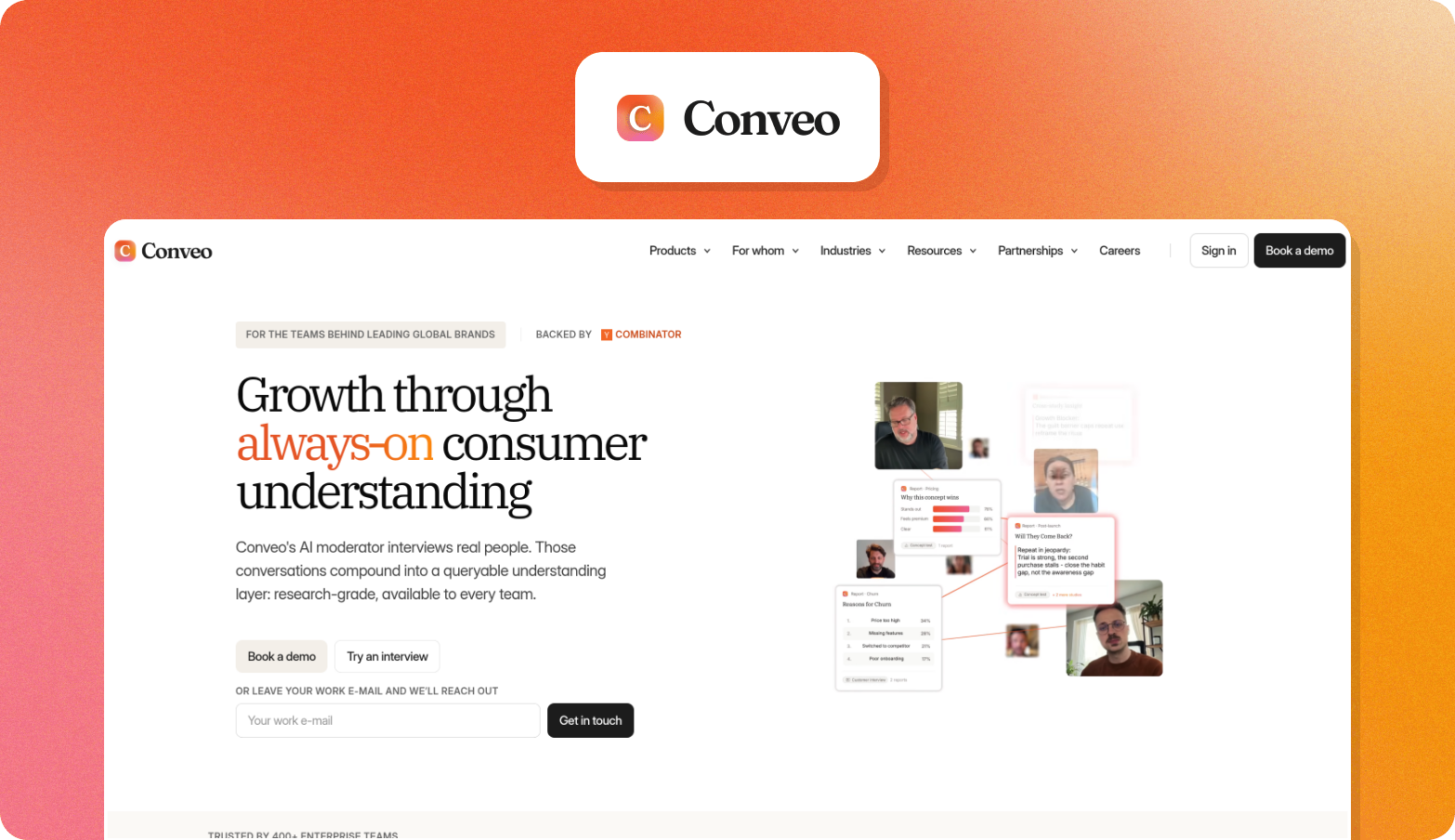
Conveo is a video-first AI research platform that connects AI-moderated interviewing, analysis across video, audio, and text, and stakeholder-ready reporting into a single searchable knowledge library.
Best For
Enterprise CMI and insights teams running 20 or more qualitative studies per year who need compliance that clears IT and legal review, and findings that stakeholders will act on.
Core Strengths and Key Features
Every AI-generated theme links directly to a timestamped video clip and participant quote. Stakeholders can inspect the evidence behind any conclusion without asking a researcher to reconstruct it.
The AI moderator adapts in real time, following up when a participant hesitates or gives an unexpected answer. 83% of participants report being as open or more open with an AI moderator than with a human one, and responses run three to four times longer than static survey answers.
Conveo analyzes video, audio, and transcript together, so tone, hesitation, and non-verbal signals are part of the research record.
Teams recruit through 12 or more panel partners in-product or invite their own participants, with no lock-in to a single provider.
Studies run in more than 50 languages with real-time AI adaptation, so multi-market research doesn’t require separate regional vendors.
The knowledge library indexes every completed study and makes findings searchable across the full archive, so each new research project builds on prior work.
Studies that would take a traditional agency six or more weeks can be completed in as few as three days.
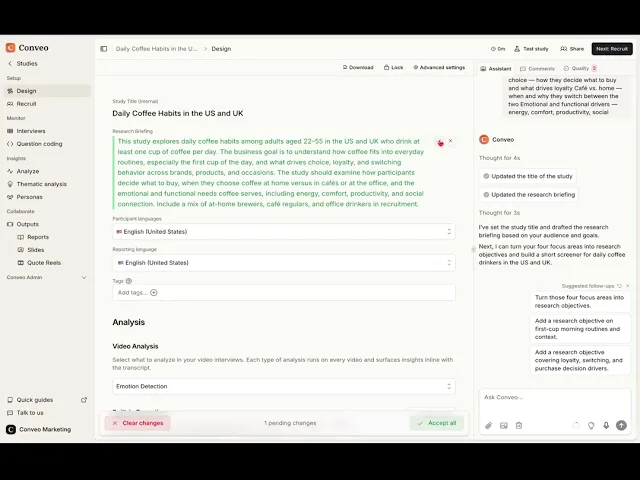
Watch how to build and launch a study in Conveo
Key Limitation
Conveo is built for qualitative research. Teams whose primary need is a quantitative survey tooling should evaluate other platforms.
Compliance
Conveo is SOC 2 certified and GDPR compliant with regional data hosting.
Pricing
Available on request.
2. Dovetail
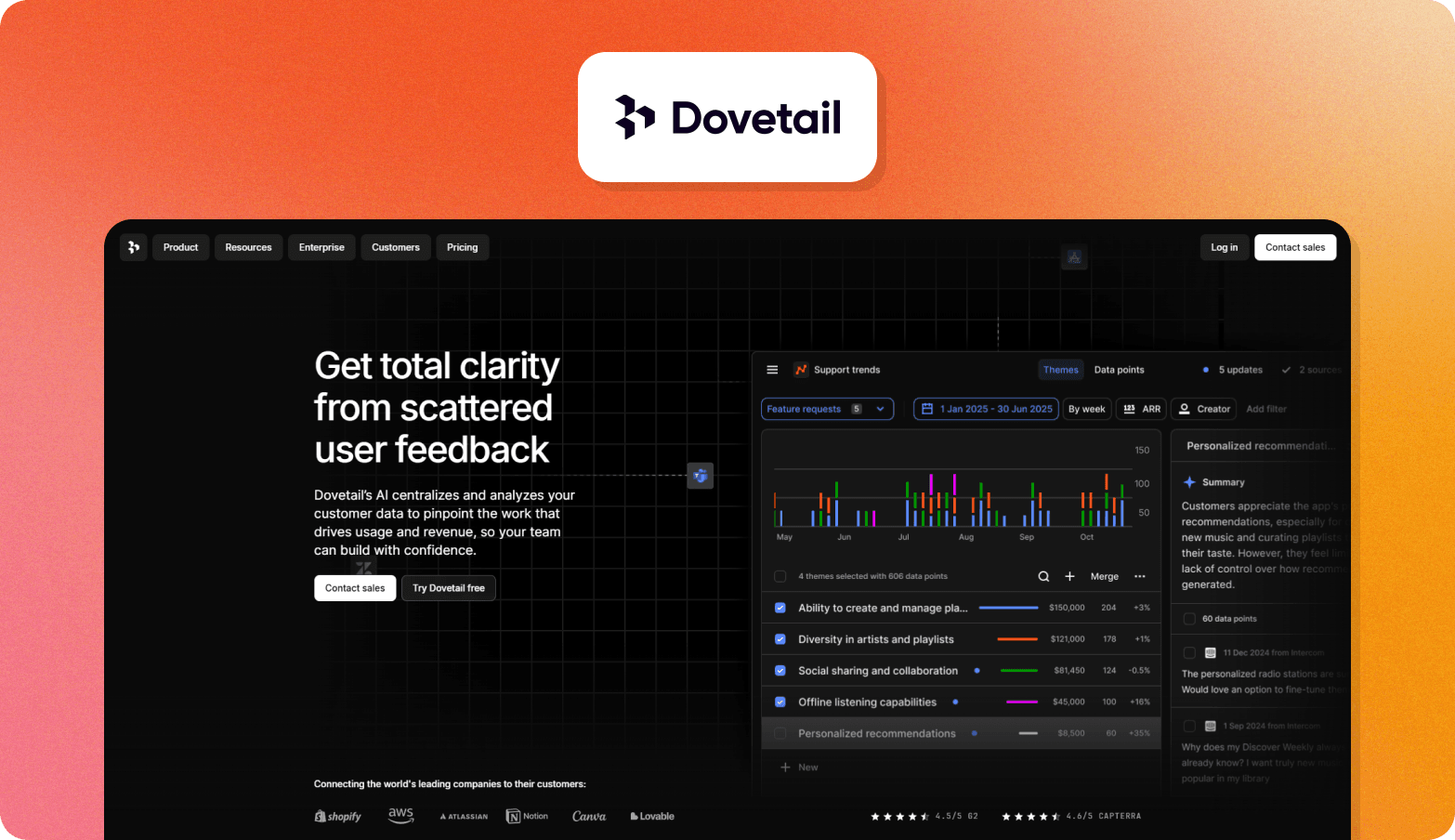
Dovetail is a research repository and analysis platform that centralizes transcripts, recordings, and notes in a searchable knowledge base.
Best For
Research teams that need a shared home for accumulated findings and want non-researchers to be able to search past studies.
Core Strength
Dovetail integrates with tools like Gong, Zoom, and Salesforce to pull in data from across the business alongside research.
Key Limitation
Dovetail has no interview moderation or participant recruitment capability. Teams using it for a complete research workflow still need a separate tool for primary research.
Compliance
SOC 2: ✓
GDPR: ✓
Pricing
A free plan is available for individuals. Enterprise plans are custom-priced and available on request.
3. Condens
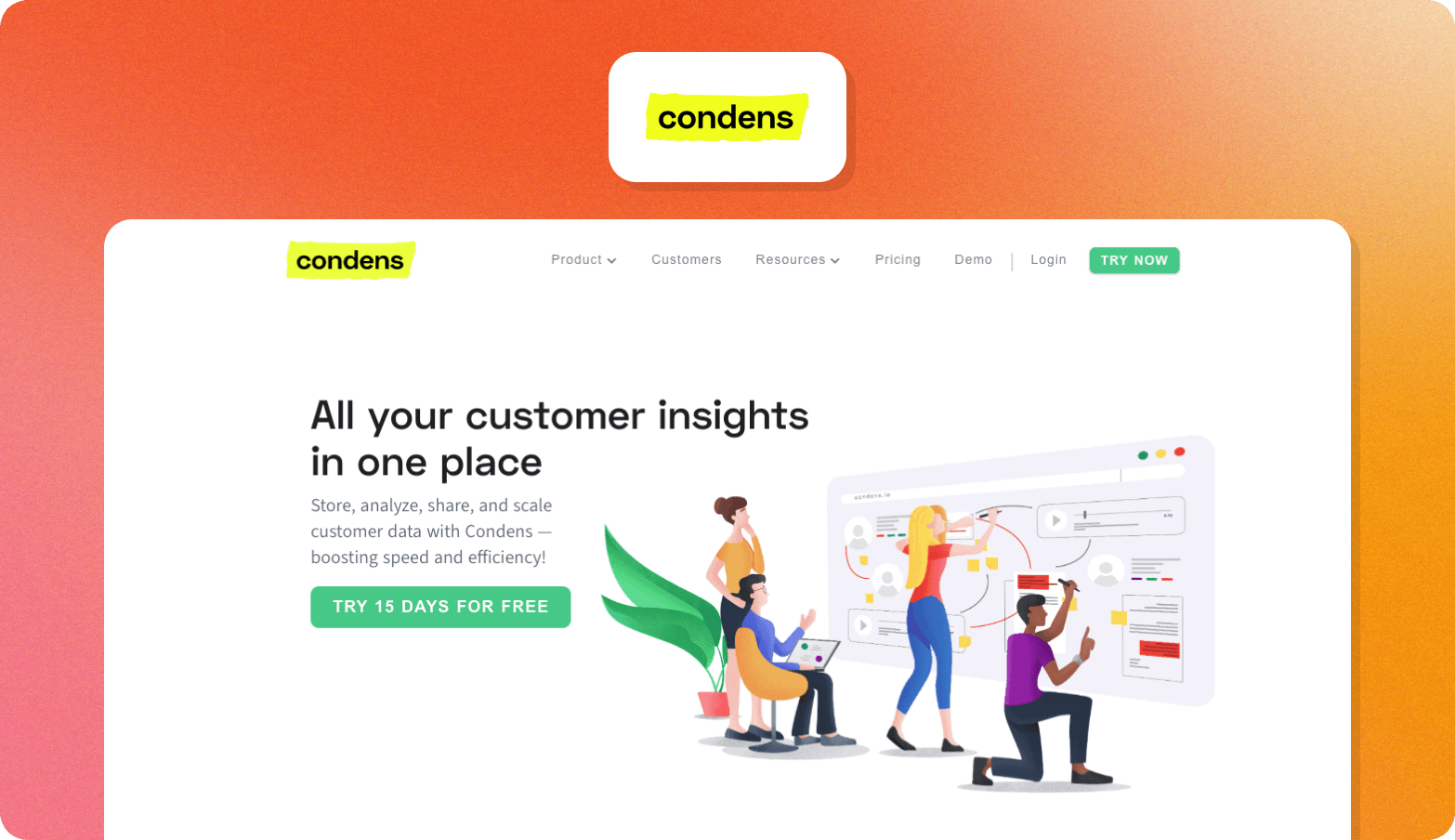
Condens is a research repository and analysis platform with AI-powered tagging and a self-serve insight portal.
Best For
UX research teams need analysis tools and a simple way to share key insights with stakeholders.
Core Strength
The Insights Magazine lets non-researchers browse published findings and ask AI questions directly.
Key Limitation
Condens covers analysis and insight sharing only. Study setup, recruitment, and interviewing all require separate tools.
Compliance
SOC 2: Not publicly confirmed
GDPR: Not publicly confirmed
Pricing
Pricing starts from €15 per month for the Lite plan and €500 per month for the Business plan.
4. Looppanel
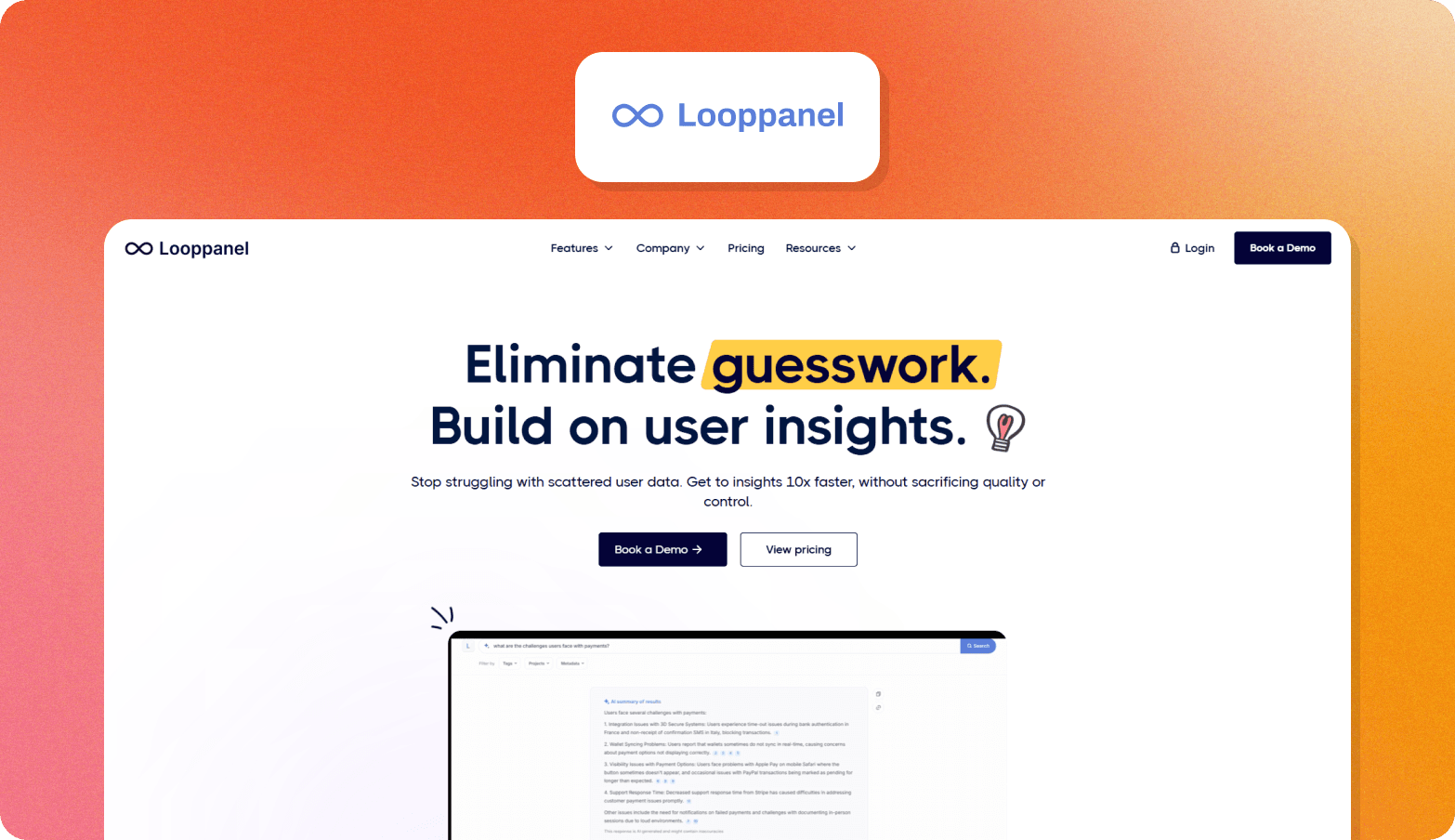
Looppanel is a research repository that uses AI to handle transcription, theme identification, and knowledge base organization after interviews are complete.
Best For
UX research teams running a steady volume of interviews who want automated analysis.
Core Strength
The knowledge base automatically groups notes by question and theme, so the archive stays usable without researchers having to maintain it.
Key Limitation
The platform handles post-interview work only. Study setup, participant recruitment, and interviewing all require other tools.
Compliance
SOC 2: ✓ Type II
GDPR: ✓
Pricing
Plans start from $395 per month. Enterprise plans are available on request.
5. Marvin
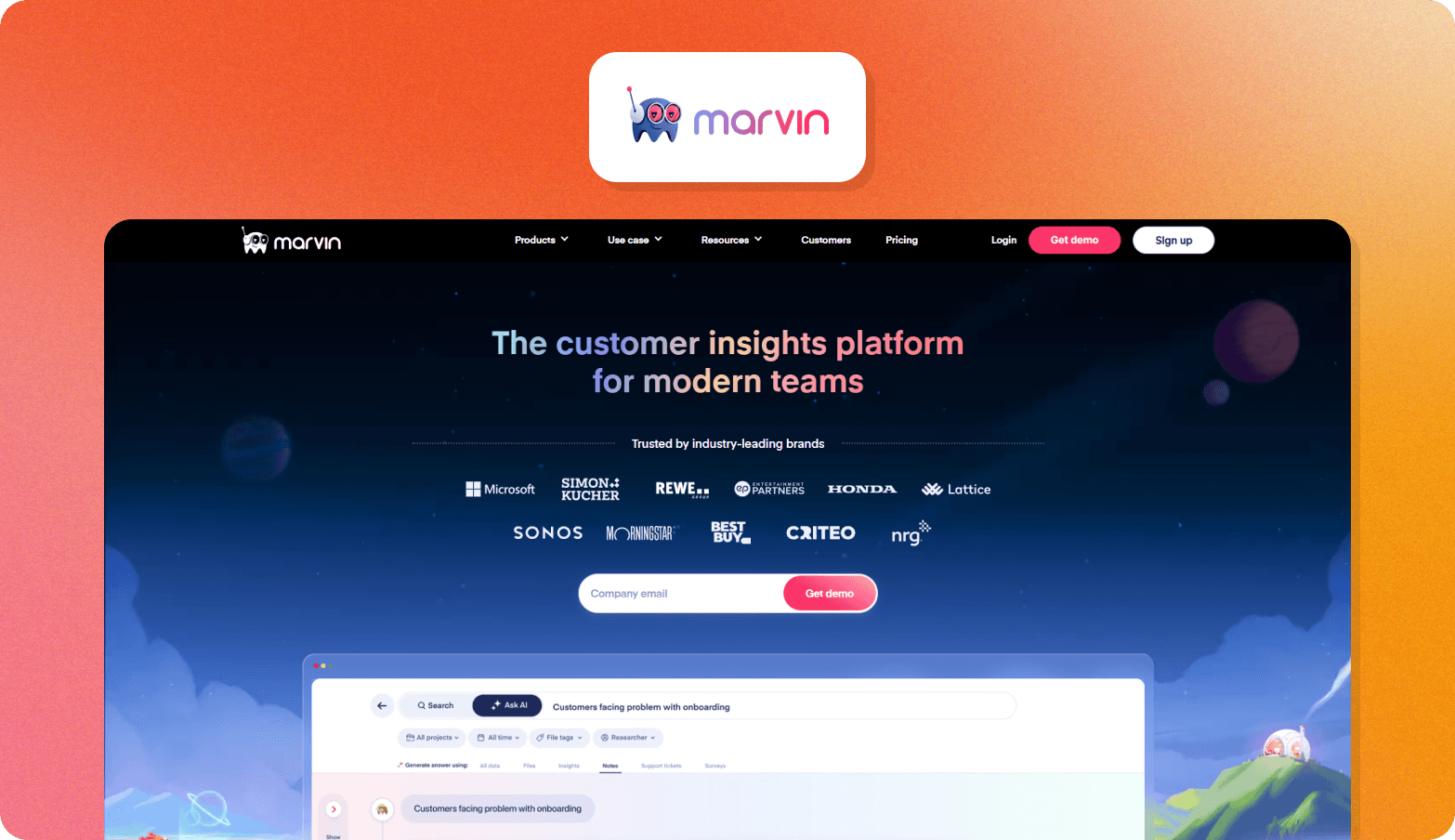
Marvin is a qualitative research repository with AI-assisted analysis across studies and AI-moderated interviews.
Best For
UX research and research ops teams managing large volumes of qualitative data who need cross-study analysis alongside the option to run new AI-moderated interviews.
Core Strength
Teams can search across studies using natural language queries, keeping prior research accessible and usable rather than requiring a manual trawl through past transcripts.
Key Limitation
Repository-wide search and multi-agent synthesis are gated behind the Enterprise plan. There’s also no native participant recruitment so you’ll need a separate tool or your own panel.
Compliance
SOC 2: ✓
GDPR: ✓
Pricing
A free plan is available for repository access. Paid plans are available on request.
6. Lookback
Lookback is a UX research platform for usability testing across mobile and desktop, with built-in session recording and team observation tools.
Best For
Product and UX teams running regular usability tests who want stakeholders to observe sessions directly rather than read a report.
Core Strength
Built-in real-time collaboration tools let observers review and annotate recordings together, which reduces the gap between a session completing and stakeholders seeing the findings.
Key Limitation
Lookback covers session capture and collaborative review only. There’s no recruitment, AI moderation, or cross-study knowledge library.
Compliance
SOC 2: Not publicly confirmed
GDPR: Not publicly confirmed
Pricing
Pricing is not publicly listed.
7. Maze
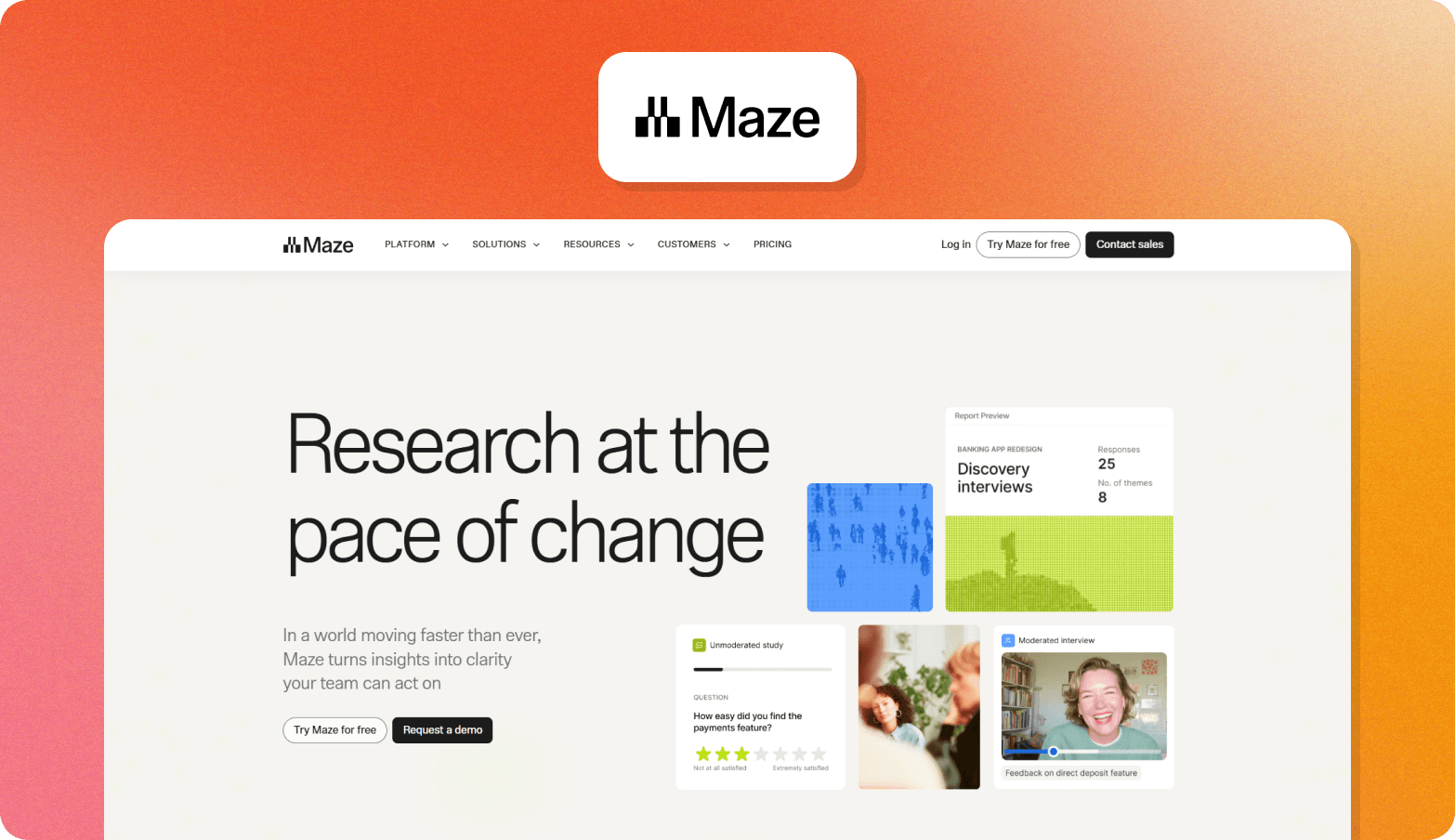
Maze is a product research platform combining unmoderated usability testing, surveys, and AI-moderated interviews.
Best For
Product and UX teams running frequent usability tests and lightweight discovery studies tied closely to release cycles.
Core Strength
Teams can clip and share highlights from any session directly inside the platform.
Key Limitation
The AI moderator is an Enterprise add-on, so teams on lower tiers are limited to unmoderated testing.
Compliance
SOC 2: ✓
GDPR: ✓
Pricing
Pricing is available on request. Panel recruitment is credits-based.
8. Great Question
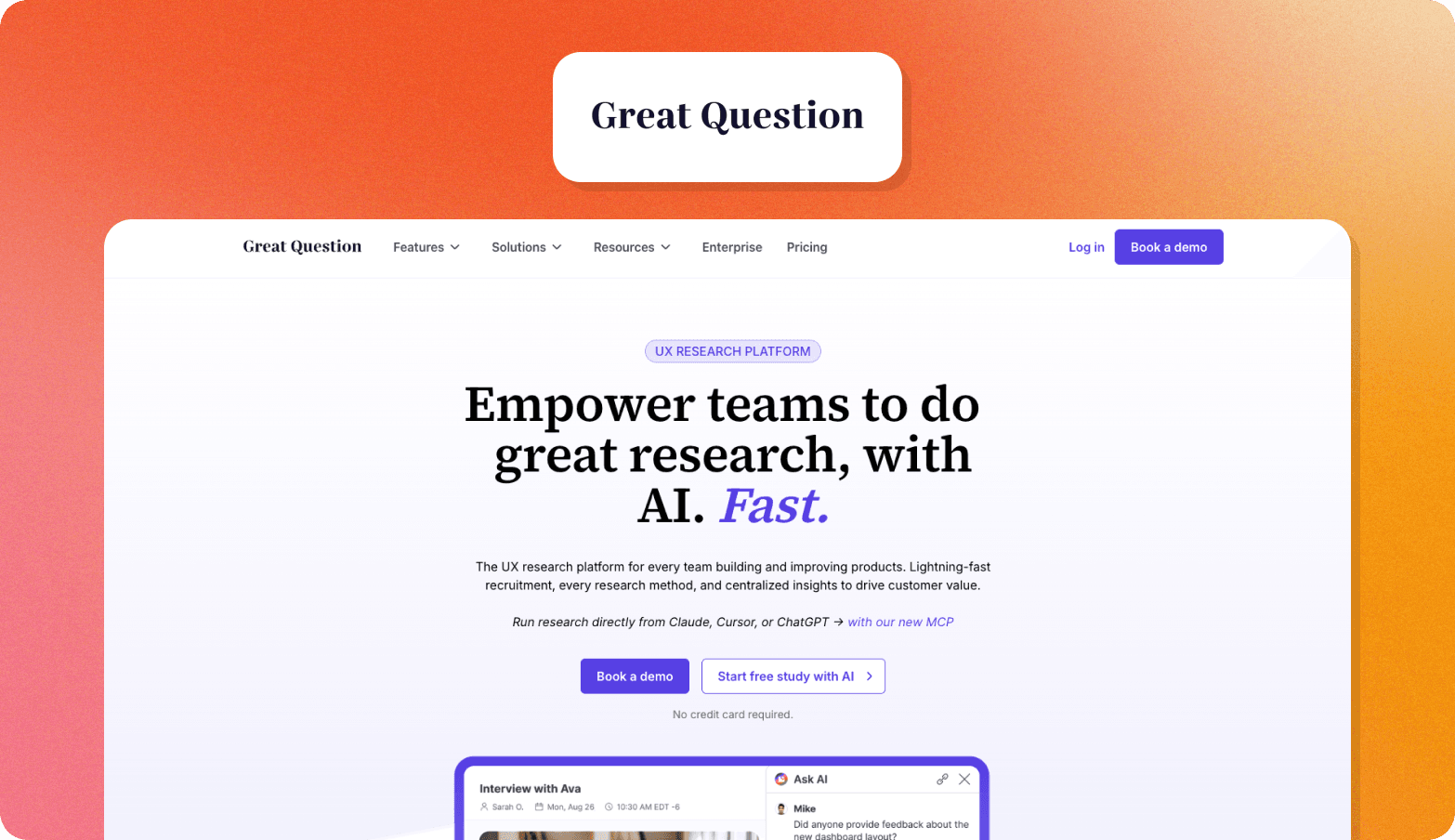
Great Question is a research operations platform built for product managers and designers to run their own interviews, surveys, and usability tests.
Best For
Product managers and designers who need to run their own studies without a dedicated research function.
Core Strength
Teams can build a participant panel from their own users via CSV import or CRM integration, with the User Interviews panel available as a paid add-on.
Key Limitation
Great Question is built for product managers and designers running their own studies rather than dedicated research functions. It doesn’t include AI-moderated interviewing.
Compliance
SOC 2: ✓
GDPR: ✓
Pricing
Self-serve plans start from $1,290 per seat per year. Enterprise plans are available on request.
9. Discuss
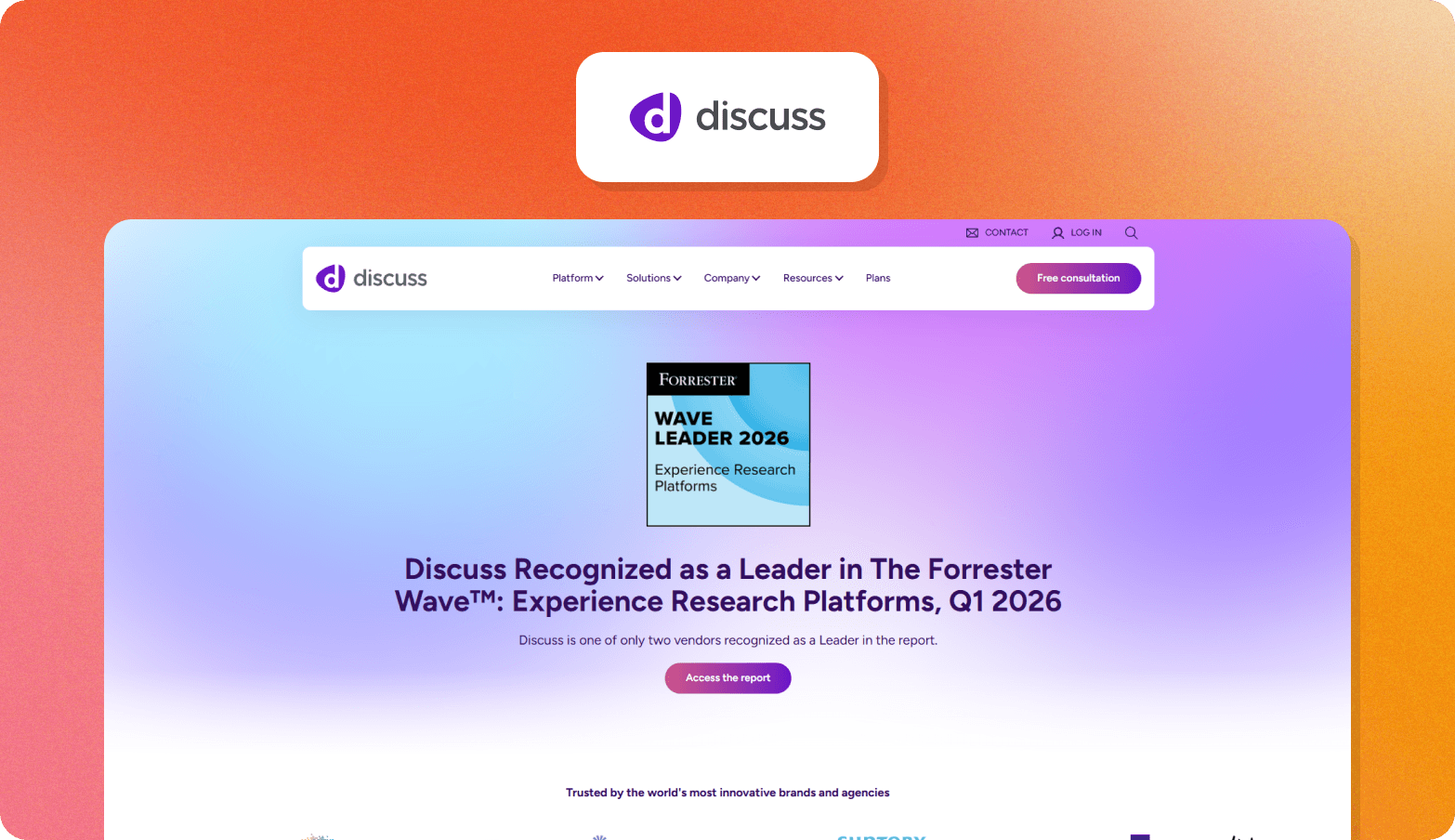
Discuss blends human-led and AI-led qualitative research in one platform, with a cross-study repository teams can add to from other sources.
Best For
Enterprise insights and UX teams running qualitative research across different locations who want the flexibility to switch between AI and human moderation within the same study.
Core Strength
Teams can upload research from other tools alongside Discuss studies, so the archive isn’t limited to work done inside the platform.
Key Limitation
SOC 2 certification isn’t publicly confirmed. Teams with strict security requirements will need to verify compliance documentation directly with Discuss.
Compliance
SOC 2: Not publicly confirmed
GDPR: ✓
Pricing
Pricing is available on request.
10. UserTesting
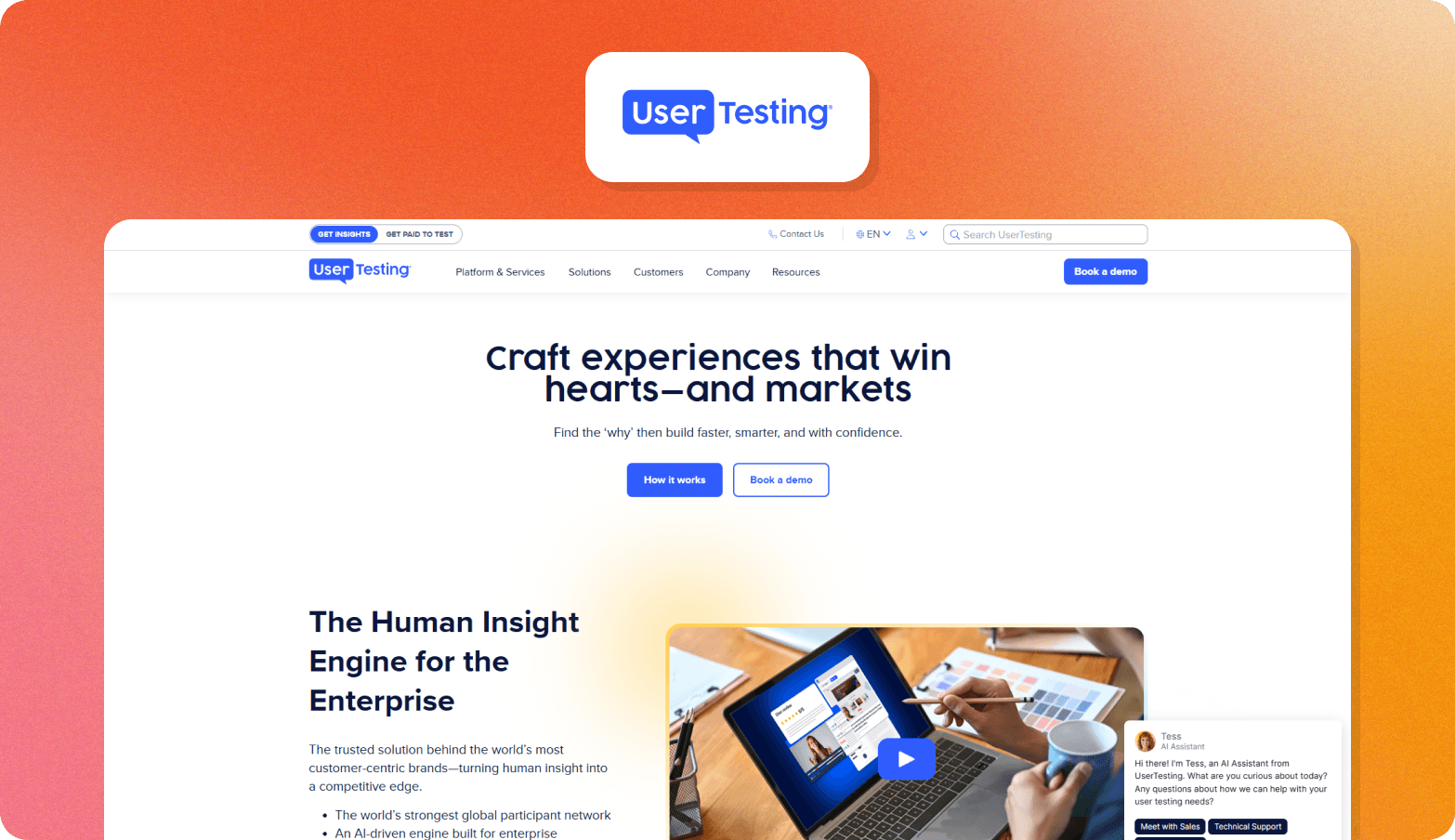
UserTesting is an enterprise human insights platform for unmoderated usability testing and think-out-loud studies, with AI-powered analysis and a cross-study research repository.
Best For
Enterprise UX and CX teams running high volumes of usability tests who need consistent panel access and a shared research archive.
Core Strength
Insights Discovery (Ultimate tier) runs natural language queries and links results to video timestamps.
Key Limitation
Insights Discovery doesn’t yet cover Live Conversations, so cross-study search isn’t consistent across all study types.
Compliance
SOC 2: ✓
GDPR: ✓
Pricing
Pricing is available on request.
11. Qualtrics Strategy & Research
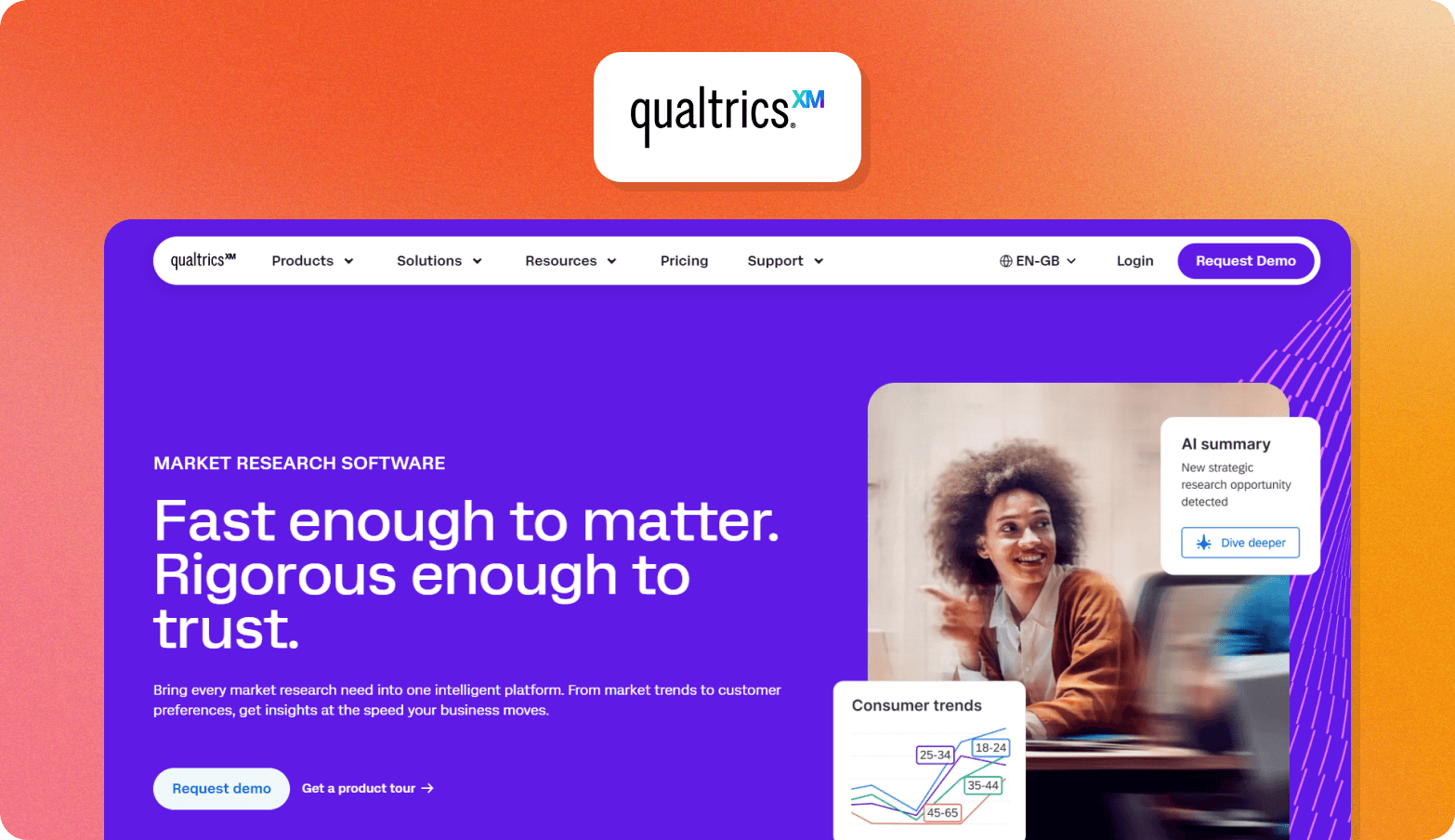
Qualtrics Strategy & Research is the market research arm of the Qualtrics XM suite, covering surveys, video feedback, concept testing, and brand research.
Best For
Large enterprises already running Qualtrics for CX or experience management who want to bring research into the same platform.
Core Strength
The Research Hub gives a searchable view across all surveys and dashboards in a Qualtrics license.
Key Limitation
The Research Hub is gated to newer pricing plans, so existing customers may need a plan change to access it. AI-moderated interviewing (Agentic Research) is listed as coming soon as of June 2026, so teams that need it now will require a separate tool.
Compliance
SOC 2: ✓
GDPR: ✓
Pricing
Pricing is available on request.
12. Aurelius
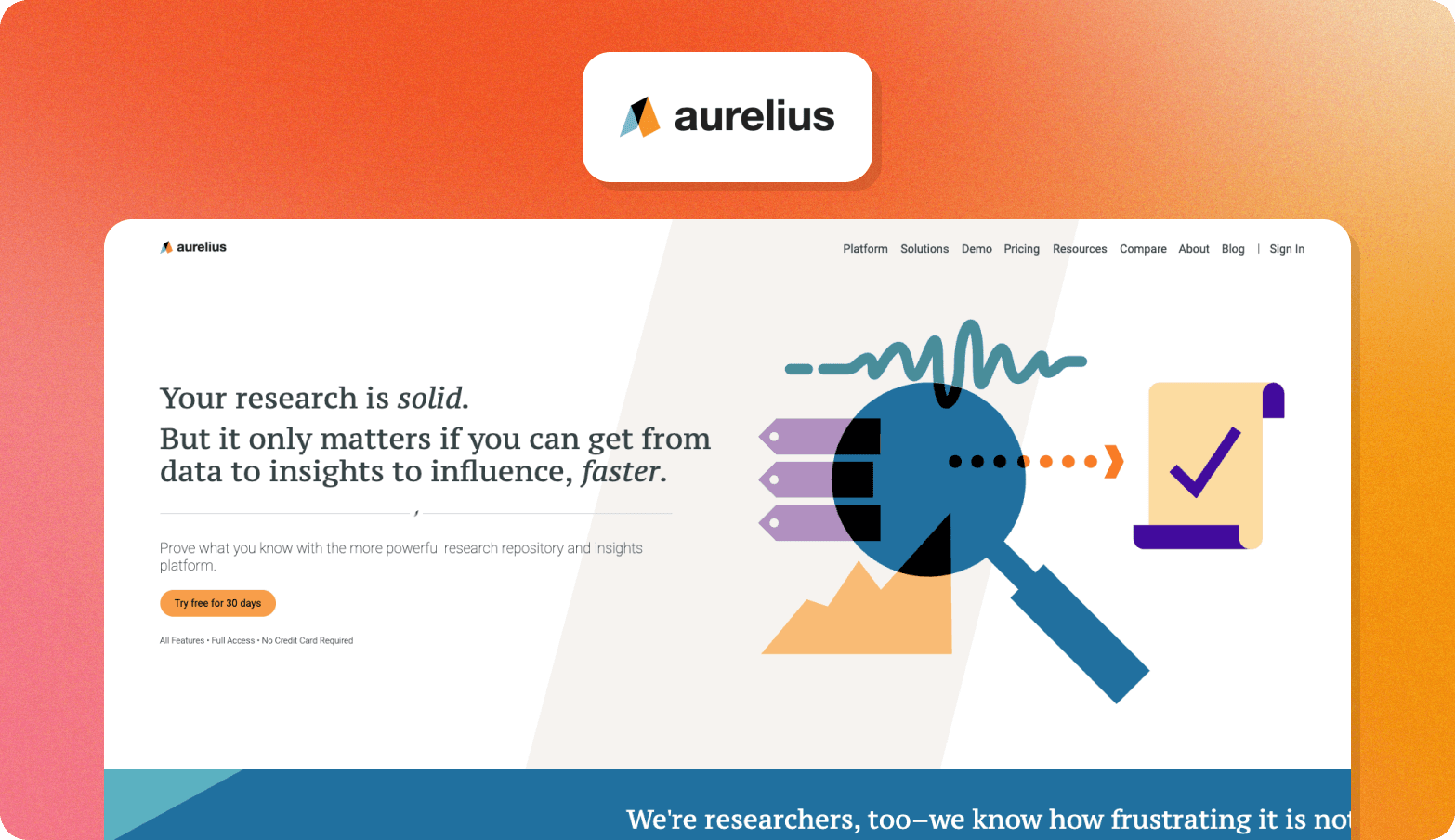
Aurelius is a research repository and analysis platform for organizing, tagging, and sharing qualitative research after it’s been collected.
Best For
UX and product research teams that need a dedicated place to store findings and share results with stakeholders, without building workarounds in Confluence or spreadsheets.
Core Strength
An AI Assist feature generates summaries and key themes from imported notes.
Key Limitation
Aurelius covers what happens after research is collected. There’s no interviewing, recruitment, or moderation.
Compliance
SOC 2: Not publicly confirmed
GDPR: Not publicly confirmed
Pricing
A 30-day free trial is available. The Professional plan costs $49 per month, billed annually, and the Premium plan costs $199 per month billed annually. Enterprise pricing is available on request.
13. Optimal Workshop
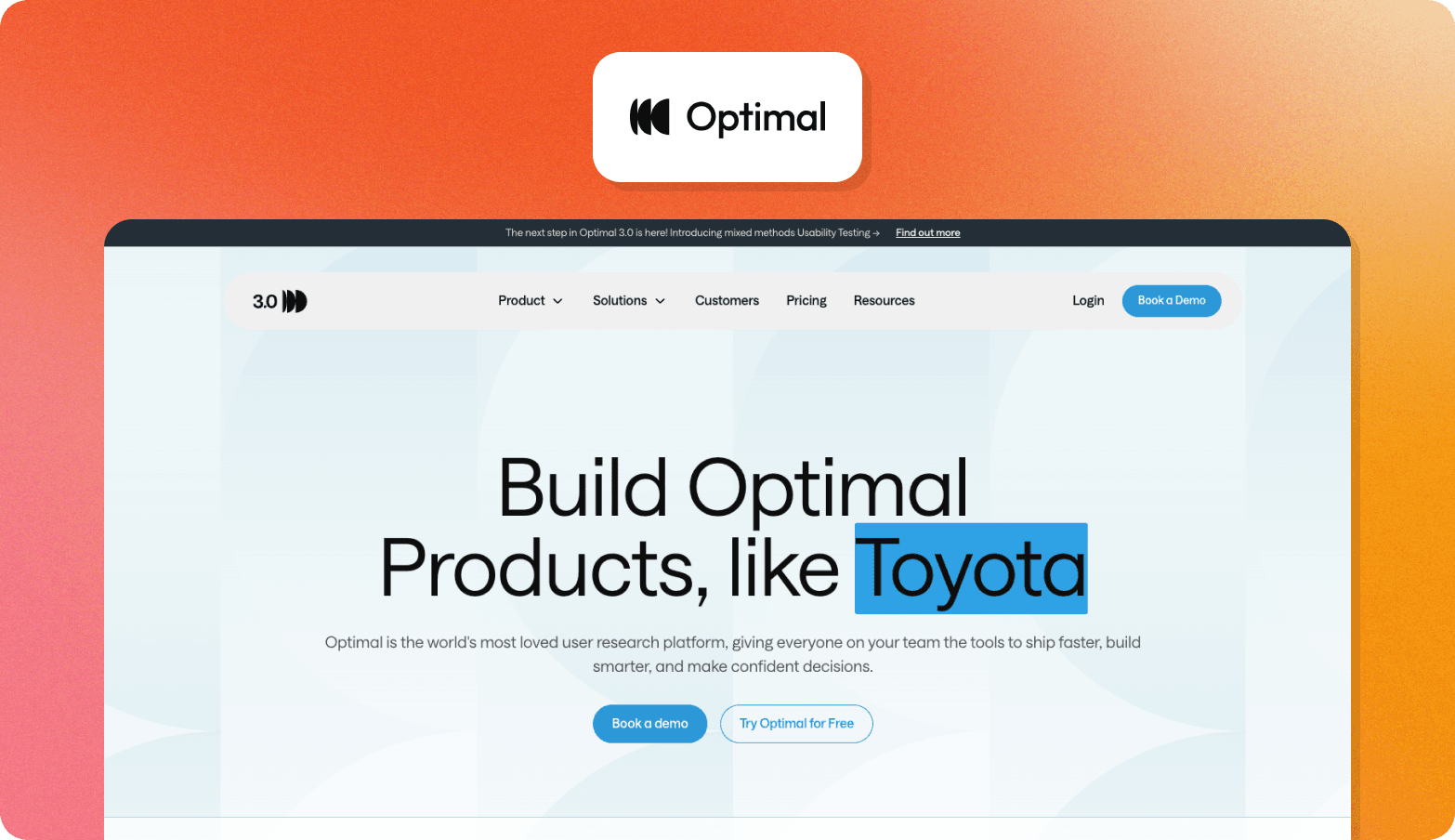
Optimal Workshop is a user research platform covering usability testing, information architecture research, surveys, and interviews, with AI-powered analysis across all study types.
Best For
Product, design, and content teams that need a broad range of research methods in one platform, without restricting access to specialist researchers.
Core Strength
All tools and study types are available on every plan, with unlimited seats and participant responses.
Key Limitation
Optimal Workshop is strongest in usability and information architecture research rather than large-scale qualitative interviewing at scale.
Compliance
SOC 2: ✓
GDPR: ✓
Pricing
The Starter plan costs $199 per month billed annually and includes five studies per year. Enterprise plans are custom-priced and available on request.
14. dscout
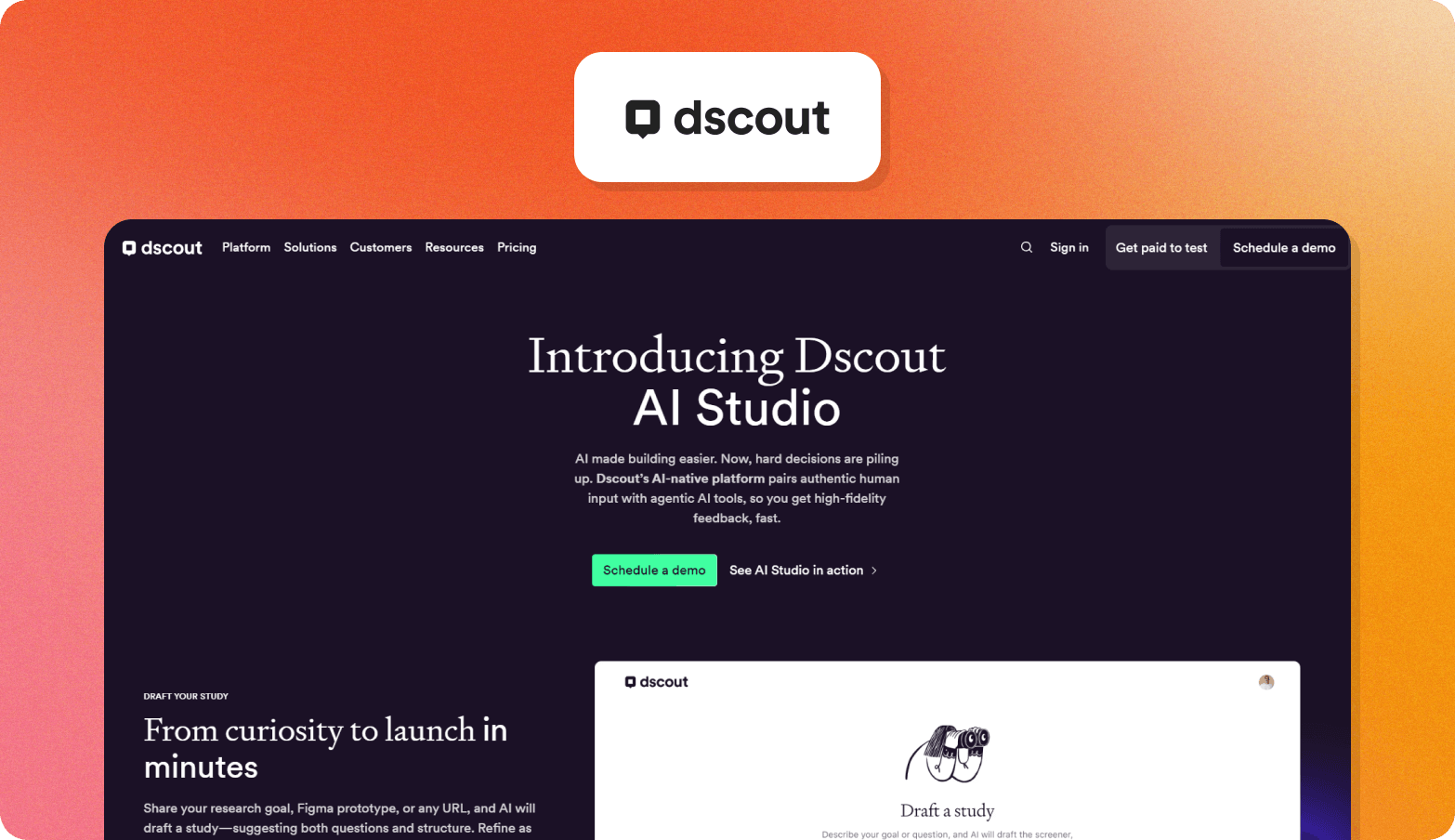
dscout is a mobile research platform combining diary studies, real-time intercepts, field studies, usability testing, and live interviews, with AI-powered analysis across all study types.
Best For
Product, UX, and design research teams who need to capture participant behavior in natural environments rather than in a lab or scheduled interview setting.
Core Strength
Interview sessions record automatically, transcripts sync with video, and teams can create clips from any moment in a recording.
Key Limitation
Language support is limited to nine languages with no automated translation, which creates gaps for global research programs.
Compliance
SOC 2: ✓
GDPR: ✓
Pricing
Pricing isn’t publicly listed.
15. Strella
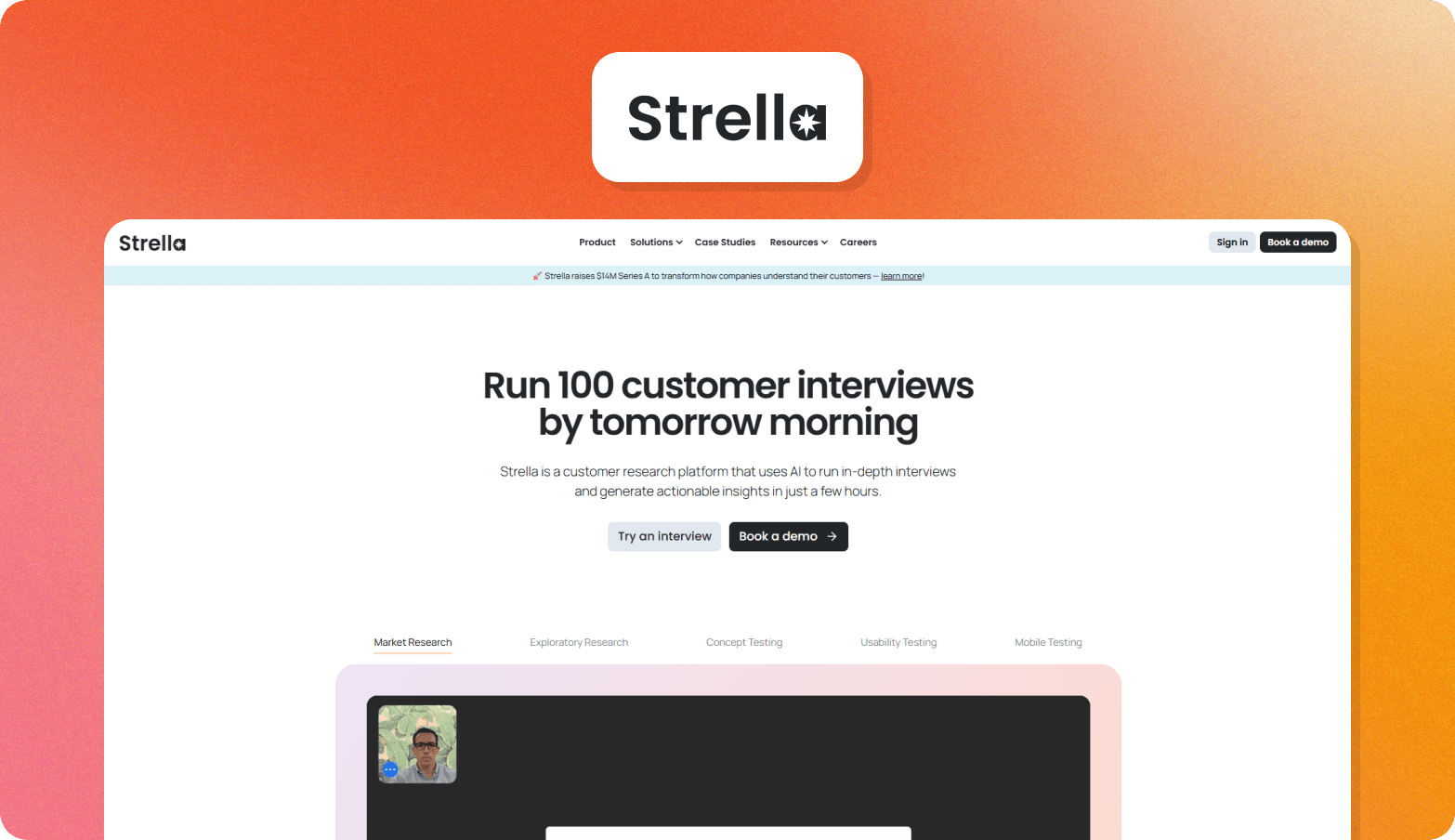
Strella is a self-serve platform for running AI-moderated and human-moderated video and voice interviews, with a cross-study search built in.
Best For
Marketing and product teams that need findings quickly and want the flexibility to switch between AI and human moderation depending on the study.
Core Strength
Explorer, a chat interface, lets teams run natural language queries across all completed studies and surfaces clip-level evidence as answers.
Key Limitation
Data is processed in the US, which may be a consideration for teams with data residency requirements.
Compliance
SOC 2: ✓
GDPR: ✓
Pricing
Pricing isn’t publicly listed.
How to Decide if You Need an End-to-End Platform or a Point Solution
The platforms above range from full-workflow solutions to tools that help teams collaborate better on specific parts of the research process. Three things determine which type fits your team.
Study Volume
If you run fewer than 20 studies a year, a point solution alongside your existing tools may be enough. As research volume grows, fragmented tools often create more coordination work than they save. They also make it harder to build on previous research because knowledge is scattered across systems. An end-to-end platform keeps findings searchable and easy to reuse.
Workflow Maturity
Teams running research on an ad hoc basis can usually manage the friction of moving between tools. Teams with established processes need consistency across studies, which becomes harder when data is spread across multiple platforms.
Compliance Requirements
Most tools meet basic GDPR and security standards. Enterprise requirements such as SOC 2 Type II, regional data hosting, and SSO can be more difficult to manage across several vendors. An end-to-end platform simplifies procurement and security reviews by bringing everything under one roof.
How to Evaluate Research Collaboration Software
Once you know which type of platform fits, use the checklist below to evaluate vendors. It covers security requirements and research workflow fit, along with the questions to ask before signing.
| Criterion | What to Look For | What to Ask Vendors |
|---|---|---|
| SOC 2 certification | An independent auditor has confirmed the vendor’s security controls meet SOC 2 Type II standards. | “Can you share your most recent SOC 2 Type II report?” |
| GDPR compliance | Documented data management and processing agreements and a clear process for handling deletion requests. | “Where is participant data stored by default, and how do deletion requests work?” |
| Data hosting | Customers can choose where their data is stored: US, EU, or another region, depending on their legal requirements. | “Can we choose our data hosting region, and is that included in our contract tier?” |
| SSO support | SAML compatibility with your organization’s identity provider. | “Do you support SAML-based SSO, and is it included in the enterprise plan?” |
| Audit logs | Logs of who accessed or exported research data that can’t be altered. | “Do you provide audit logs, and how long are they retained?” |
| Data retention controls | Settings that let your legal team control how long the platform keeps sensitive data. | “Can we set custom data retention periods?” |
| Access controls | Role-based permissions covering at least admin, researcher, and viewer levels. | “Can we restrict which team members can design studies vs. view findings?” |
| Participant authenticity | Studies run with real human participants, not AI-generated personas. | “Are all study participants real people, and how do you verify that?” |
| Evidence traceability | Every insight links to a participant quote or video clip. | “Can a stakeholder click on a theme and see the original participant response?” |
| Workflow coverage | The platform handles study setup, interviewing, transcription, analysis, and reporting. | “Which steps of our research process still need external tools?” |
| Cross-study search | The platform indexes findings across all completed studies and makes them searchable. | “Can we search themes and quotes across our entire research archive?” |
| Integrations | The platform connects to tools your team already uses: Slack, Teams, Jira, Notion. | “What integrations are available natively, and what requires custom API work?” |
Even the best research collaboration tool that can’t link insights to source evidence will still face pushback from stakeholders. Every criterion on this list needs to pass before a tool goes on the shortlist.
What Global Teams Should Look For
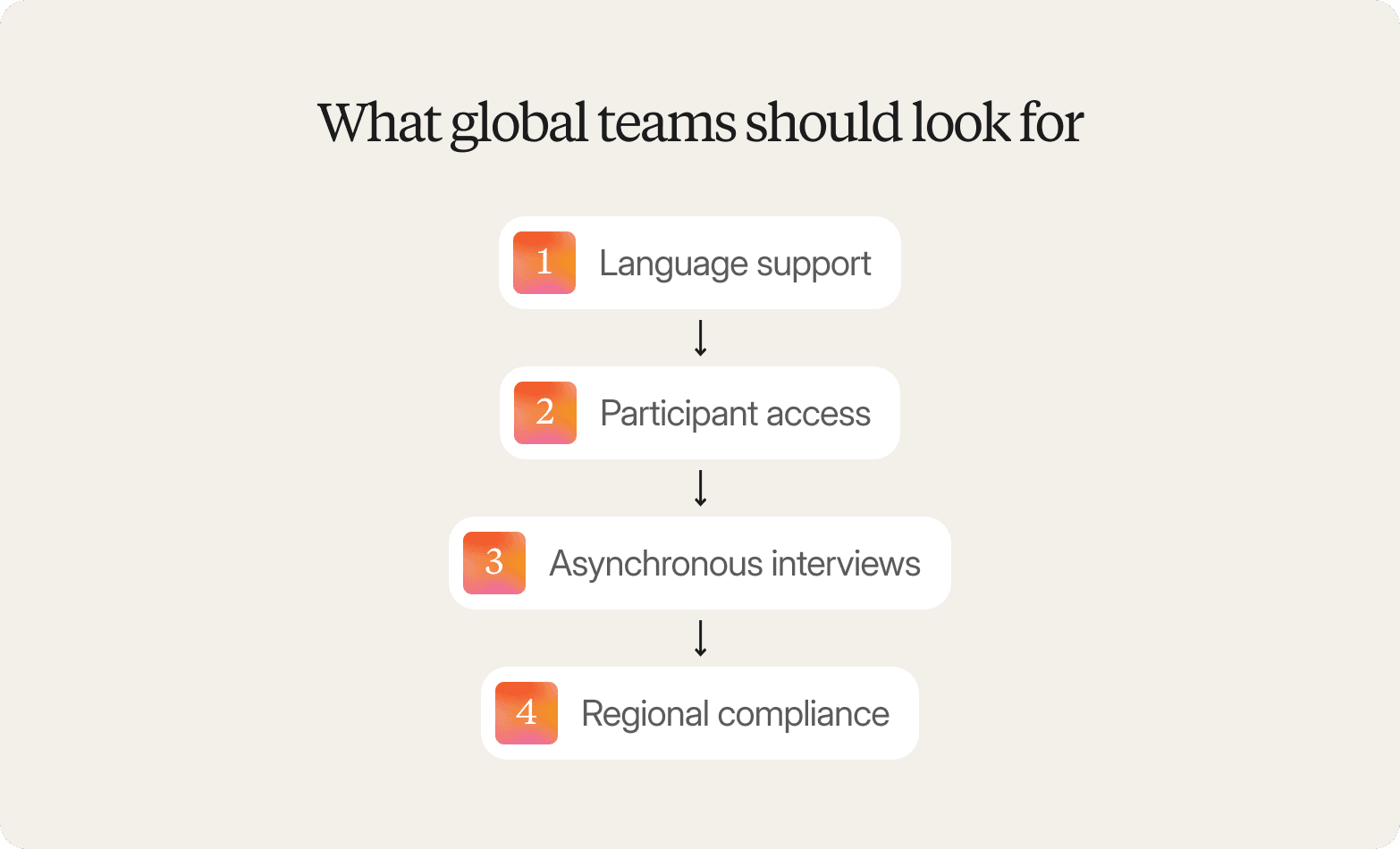
Many research teams run studies across multiple markets. Then, the requirements become more demanding. A platform that works in one market may not support global research without adding more vendors and more coordination. Check these four areas of your shortlisted platforms:
Language support: Look for AI moderation in at least 20 languages, with transcription included. Limited language coverage forces teams to use regional vendors, making results harder to compare across markets.
Participant access: Make sure the platform can recruit participants in 50+ markets to support diversity in your research. Every additional panel provider adds another contract, compliance review, and data source to manage.
Asynchronous interviews: Participants record responses when it suits them, eliminating the challenge of scheduling live sessions across time zones. Shared templates and standardized question sets keep studies consistent and make cross-market comparisons easier.
Regional compliance: GDPR applies to any organization that handles data from EU residents, regardless of where the organization operates. Confirm that the platform offers data hosting in your required region as a standard option, not just on higher-priced plans.
How to Implement Your New Collaborative Research Platform
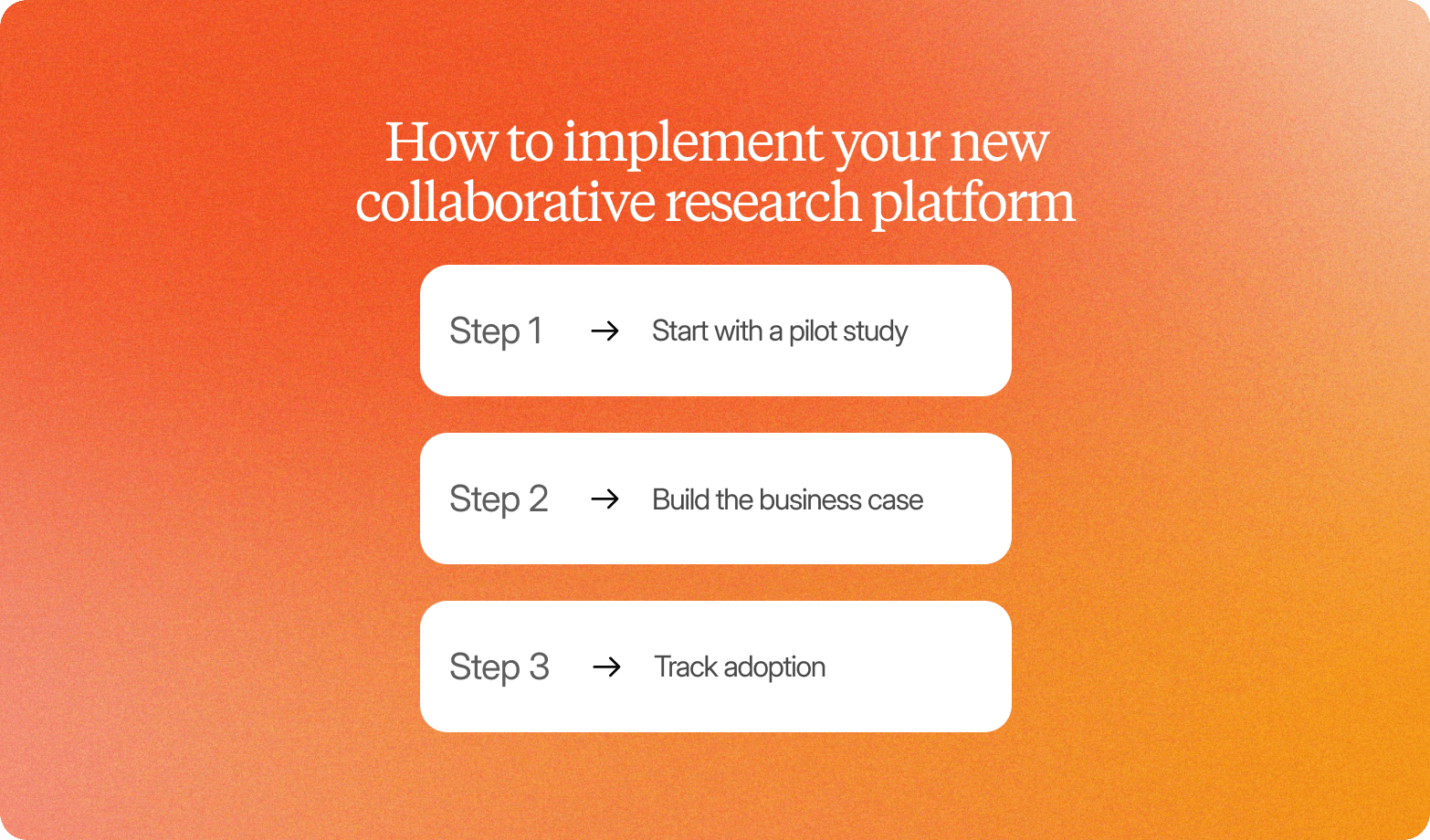
Once you’ve shortlisted a platform, the biggest challenge is often internal adoption. IT and legal need to approve it, stakeholders need to see the value, and researchers need to use it consistently. Here’s how to approach the rollout.
1. Start With A Pilot Study
Choose a study with a clear objective and stakeholders who care about the outcome. Track how long it takes to move from setup to insight delivery, and pay attention to stakeholder reactions when they can view the evidence behind a finding.
Invite at least one senior stakeholder to review the results. Their feedback will carry significant weight when you discuss wider adoption.
2. Build The Business Case
A live demonstration is often more convincing than a presentation. Open a completed study, select a finding, and show the supporting video clip. Seeing the participant behind the insight helps answer questions about credibility and evidence.
You should also compare costs. Add up the annual spend on the tools the platform would replace, along with the time researchers spend moving information between them. Use that total as your baseline when evaluating the platform’s value.
3. Track Adoption
During the first 90 days, monitor:
The percentage of studies completed entirely within the platform.
How often stakeholders search the knowledge library, view clips, or share findings.
Changes in spending on tools the platform replaces.
If adoption remains low, identify which parts of the workflow researchers still complete elsewhere. In many cases, the cause is a missing integration or a feature gap that the vendor may be able to address.
How Conveo Supports Research Collaboration at Scale
"Conveo's video-first approach is a real differentiating methodological advantage. The ability to distill insights from reactions and not just hear answers adds context you simply can't get from transcript-only tools, or any other tool in the market for that matter."
Senior Marketing Research & Insights Manager, Google
Conveo is built for enterprise insights teams running qualitative research continuously. It covers the full workflow in one platform, so findings don’t get lost between tools.
When a study is completed, transcription happens automatically. A study with 50 participants produces 50 searchable, tagged sessions with no manual handoff between tools. Because Conveo captures video, audio, and text together, tone, hesitation, and non-verbal signals are part of the research record alongside what participants say.
Every completed study feeds into a shared knowledge library, searchable by theme, keyword, or participant attribute. Findings from two years ago are as accessible as findings from last week, so each new study can draw on everything the team already knows.
SOC 2 certification, GDPR compliance, and customer choice of data hosting region are included as standard. That means one security review covers the full research stack, rather than one review per tool.
Frequently Asked Questions
What Is Research Collaboration Software?
Research collaboration software is a platform that helps research teams design studies, collect participant data, analyze data, and create actionable insights for stakeholders.
How Is Research Collaboration Software Different From Project Management Tools?
Project management collaborative tools like Jira or Notion help teams track progress across tasks and deadlines. Research collaboration platforms are built for research content, with collaborative features for storing and analyzing participant responses, surfacing patterns across studies, and giving stakeholders direct access to the evidence behind findings.
What Compliance Certifications Should Research Collaboration Software Have?
SOC 2 Type II certification and GDPR compliance are the baseline for most enterprise procurement teams. If your organization collects data from EU residents, verify that EU data hosting is available as a contract option. Ask vendors for their current SOC 2 report and documented data processing agreements before signing.
Can Research Collaboration Software Integrate With Existing Tools?
Most enterprise platforms integrate with Slack, Microsoft Teams, Google Workspace, and Jira. Deeper integrations, such as connecting to analytics tools or CRM data, vary by platform. Ask vendors which integrations are native and which require custom API work.
What Is Evidence Traceability in Research Collaboration?
Evidence traceability means that every insight in a research report links to the participant response that supports it, such as a timestamped video clip, an audio recording, or a verbatim quote. It lets stakeholders verify the source of a conclusion directly rather than trusting the researcher's summary.
How Do I Evaluate Research Collaboration Software for Multi-Market Teams?
Look for AI moderation in at least 20 languages, participant recruitment across 50 or more markets, and automated transcription. Confirm regional data hosting is available as a standard contract option, and verify that reporting formats are consistent across markets so findings can be compared directly.

About the author
Florian Hendrickx
Head of Growth
Florian is Conveo’s Chief Growth Officer, leading growth strategy and go-to-market execution as the company scales. He’s held growth leadership roles at companies like Deliverect, Robovision, and Aikido Security, and brings hands-on experience across marketing, sales, and product.
More by Florian →Qualitative insights at the speed of your business.
Conveo runs AI-moderated video interviews and structures everything they say.