
TL;DR
Most brand tracking runs on an annual cycle; consumer opinion doesn't, so a survey that closed six months ago describes a world that no longer exists.
Standard satisfaction and NPS scores, the "would you recommend this brand to a friend" style of question, confirm an attitude but never explain what created it or what would move it.
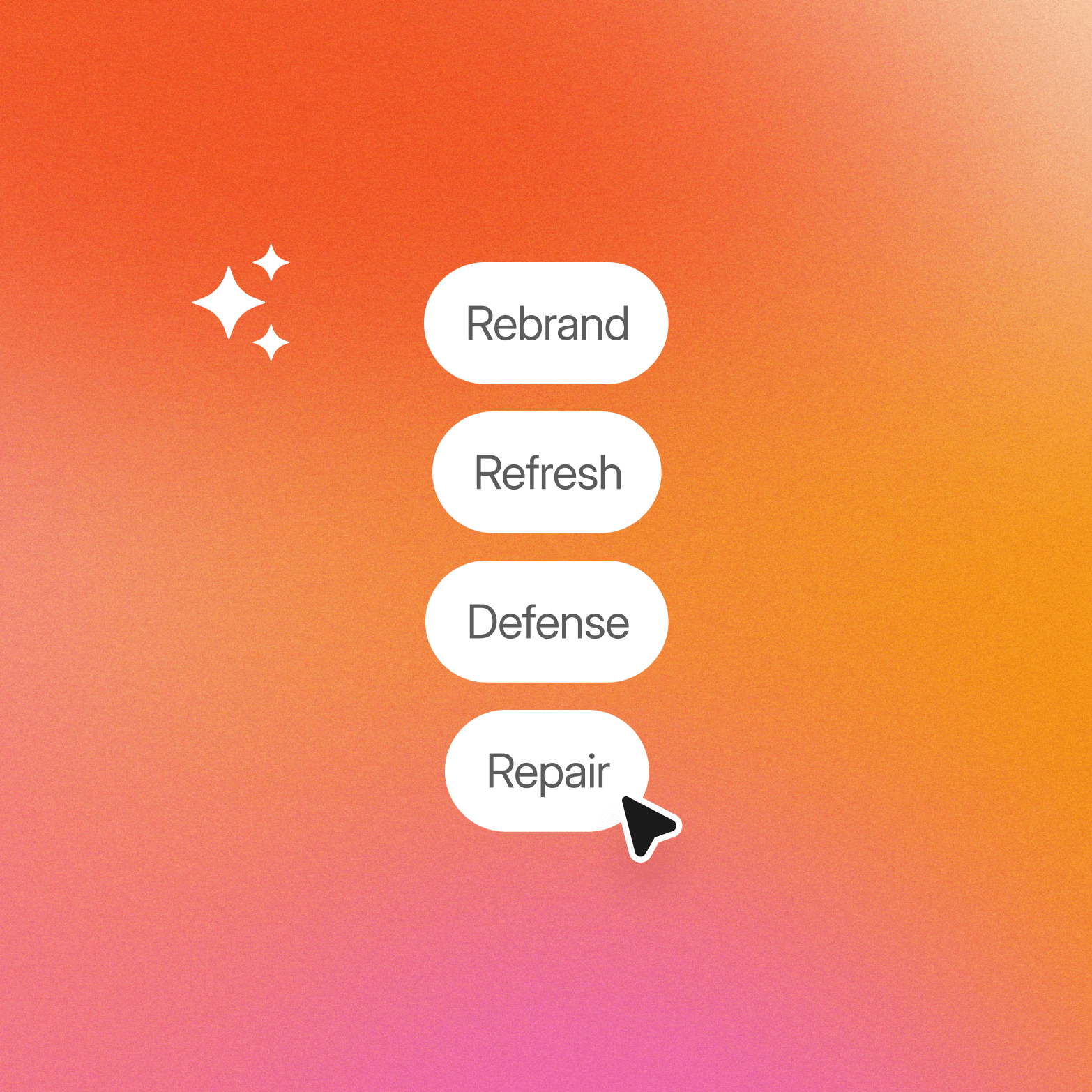
Organize brand perception survey questions by the decision that triggered the research (rebrand, campaign, pricing, competitive entry, crisis) rather than by topic, and keep your target audience for each study clearly in view.
Behavioral questions anchor answers in real decisions; projective questions, including prompts like "what three words describe this brand," surface associations people can't state directly. Sequence: warm-up, behavioral, motivational, projective.
Quantitative questions establish scale and track brand awareness and brand equity over time; short asynchronous video interviews explain why the numbers moved.
Conveo, a video-first AI research platform, runs adaptive, AI-moderated interviews at survey scale so brand perception insights arrive in days, not months, for any target market.
Most brand tracking programs run on an annual or biannual cycle. Consumer opinion doesn't. In a market where a competitor repositions, a cultural moment shifts sentiment, or a product recall rewrites category trust overnight, a survey that closed six months ago is describing a world that no longer exists.
The deeper problem isn't just timing. Standard satisfaction and NPS-style questions- the classic "would you recommend this brand to a friend" measure- confirm an attitude exists but don't explain what created it or what would move it. Knowing that your brand's favorability score moved tells you where you stand, not why it shifted or what a new market entrant is doing to erode your consideration set.
This article organizes brand perception survey questions by the decision they inform: rebrands, campaign launches, pricing, competitive entry, and crisis, plus where surveys alone fall short.
What Brand Perception Survey Questions Actually Measure
Brand perception is the sum of associations, emotions, and expectations that customers attach to a brand, built over time through direct experience, word-of-mouth, and marketing exposure. It's a layered construct tied to personal values and identity, which is why a single score misleads teams into thinking they understand something they've only confirmed.
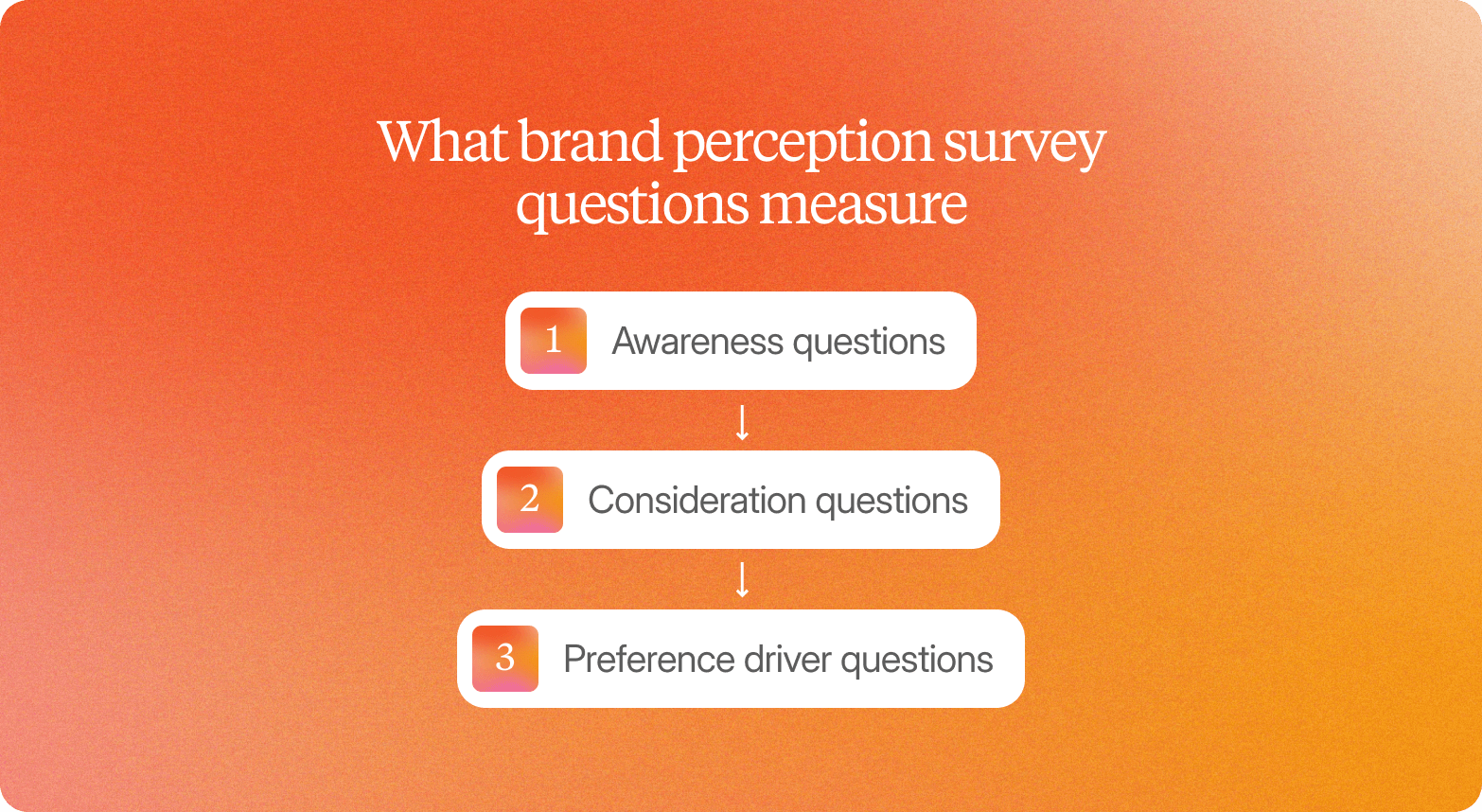
Survey questions for brand perception fall into three distinct categories, and they overlap with what most brand awareness surveys try to capture, but go a layer deeper:
Awareness questions establish whether people recognize you and what they associate with that recognition (classic brand awareness territory).
Consideration questions probe whether customers would include you in an active decision.
Preference driver questions go deeper: they ask why customers perceive one brand as preferable to another, and what would have to change for that answer to shift.
Behavioral anchoring separates a distribution from a diagnosis. Rather than asking customers how they feel in the abstract, anchored questions force recall of real decisions: the last time they switched, the last time they considered an alternative, the last time they stayed despite a problem. "How satisfied are you overall?" produces a distribution. "What triggered your last consideration to switch?" produces the event that made the brand vulnerable.
Decision-First Framework: Mapping Brand Perception Survey Questions to Business Triggers
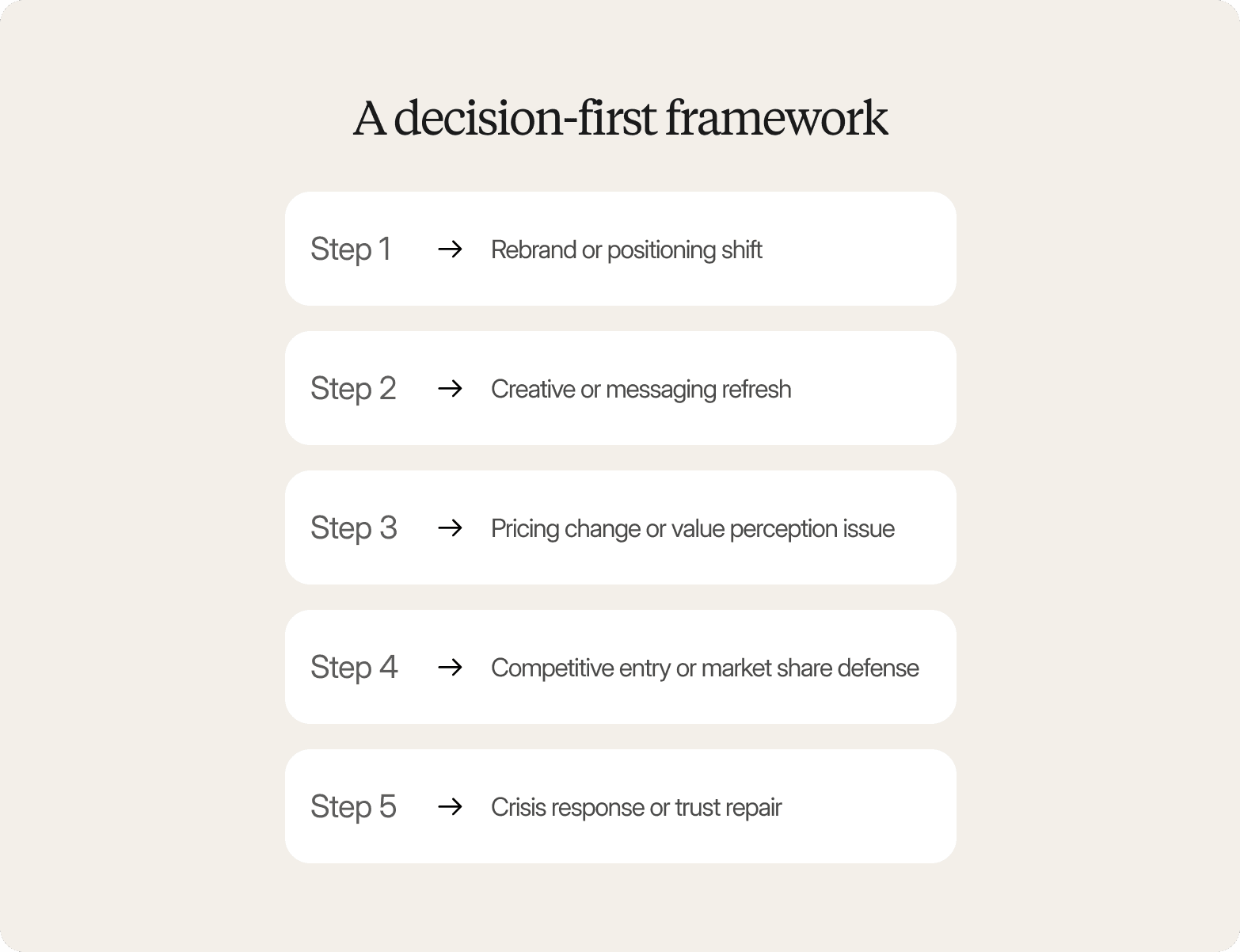
The most useful brand perception survey questions aren't organized by topic, but by the decision that triggered the research. Generic brand health tracking produces findings that are hard to act on because the questions weren't designed with a specific outcome in mind. The framework below maps five common enterprise triggers to questions that are likely to yield usable intelligence.
1. Rebrand or Positioning Shift
When leadership is considering a repositioning, the question isn't "how do people recognize us?" It's about whether current customer language matches your intended brand identity, and whether your visual identity still aligns with what customers believe.
"Describe what this brand is really for and who it's for."
"Which brand in this category feels like it understands you, and what gives you that impression?"
The first surfaces gaps between the positioning your team wrote and what the brand stands for in customers' minds. The second identifies the brand qualities that drive perceived empathy, which is rarely what the creative brief assumed.
2. Creative or Messaging Refresh
Before investing in new marketing campaigns, teams need to know what customers actually retained from the last one, and whether the marketing efforts behind it landed.
"Walk me through the last time you saw an ad from this brand. What did you remember, and how did it make you feel?"
This separates actual recall from intended message, the gap where the creative brief needs to change before the next round ships.
3. Pricing Change or Value Perception Issue
When customers are churning or resisting a price increase, the issue is rarely price alone. It's often a mismatch between perceived quality and the price customers believe your products and services deserve.
"What are you using right now, what works, and what doesn't?"
"If this existed today, what would you stop using?"
The first maps the competitive landscape from the customer's perspective. The second tests whether the brand can displace existing behavior, a harder and more honest test than asking about purchase intent.
4. Competitive Entry or Market Share Defense
When a new entrant is gaining ground, the instinct is to ask about brand preference. The more useful question is about switching triggers and which brand qualities the challenger wins on.
"What triggered your last switch or consideration to switch?"
"What were you looking for that you weren't getting?"
These identify the moment of vulnerability and the unmet job a competitor is winning, a gap most market research programs spot only months after the damage is done.
5. Crisis Response or Trust Repair
Sentiment tracking tells you trust has eroded, often traced to a single negative experience that spread faster than the brand could respond. It doesn't tell you what would rebuild it.
"What would need to change for you to trust this brand again?"
This surfaces specific, actionable requirements rather than vague dissatisfaction scores. Each trigger requires a different question sequence, and the insights from a crisis-response study rarely resemble those from a routine brand survey.
Behavioral vs. Projective Brand Perception Questions
A well-designed brand perception survey question forces recall of real decisions, actions, or events rather than asking how someone feels in the abstract. Behavioral questions anchor responses in what actually happened; episodic memory produces specific, actionable detail that opinion questions rarely surface, and tends to sidestep respondent fatigue better than a long block of rating scales.
Type | What it does | Example from this article |
Behavioral | Anchors answers in real decisions and events | "What triggered your last switch, or your last serious consideration of switching?" |
Projective | Bypasses rehearsed answers to surface associations | "What three words would you use to describe this brand?" |
Three behavioral questions that consistently produce usable findings:
"Walk me through the last time you ran into this problem."
Replaces hypothetical opinions with episodic detail, surfacing the triggers behind the behavior, including any negative experience that shaped current perception.
"What are you using right now, what works, and what doesn't?"
Establishes baseline behavior so feedback stays anchored to real alternatives.
"What triggered your last switch, or your last serious consideration of switching?"
Identifies the moment a brand became vulnerable, usually a failure of expectation or a competitor's move, rather than price alone.
Projective questions bypass the rehearsed answers participants have ready and surface associations, often rooted in personal values, that are harder to articulate directly.
"Imagine this brand as a person at a dinner party. How do they act, what do they talk about, who do they gravitate toward?"
Extracts personality traits and social signals that customers associate with the brand without asking them to describe brand qualities directly.
"If this brand were a car, what kind would it be and why?"
Status, reliability, and aspiration associations emerge here in ways direct brand attribute questions rarely produce.
"What three words would you use to describe this brand?"
Ask enough people the same three words, followed by words to describe a brand, and clear patterns emerge before you've run a single statistical test.
"Which brand feels like it understands you, and what gives you that impression?"
Exposes the cues driving perceived empathy rather than a generic satisfaction score.
A useful sequence moves warm-up, then behavioral, then motivational, then projective. It's also how Conveo structures a discussion guide, so each stage builds on the last.
Sample Brand Perception Survey Questions Bank
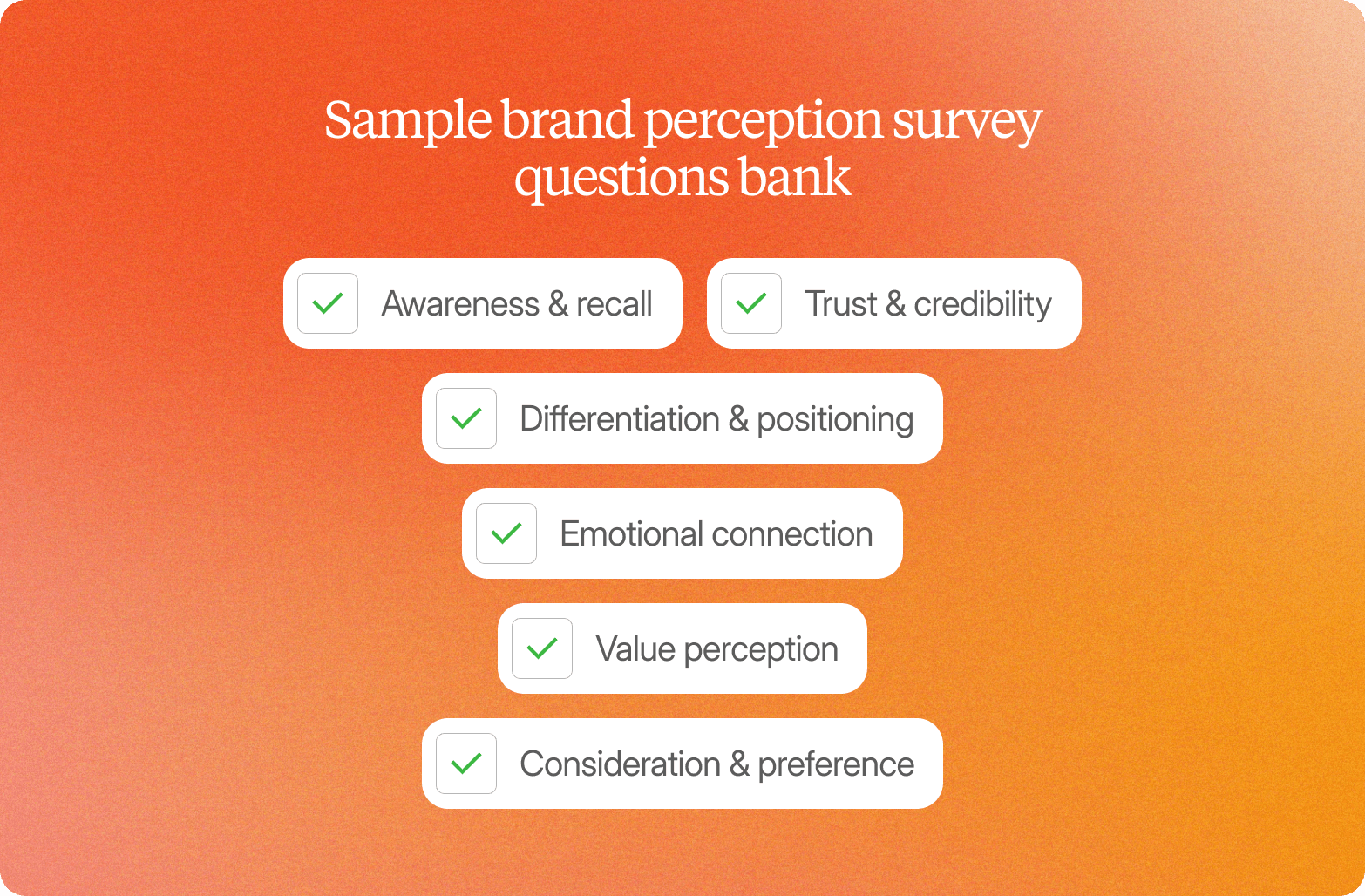
The following brand perception survey question sample bank is organized by perception dimension and doubles as a ready-made brand perception survey template to adapt per trigger, not to run as a linear script.
Awareness & Recall
Which brands in [category] come to mind first?
Where have you seen or heard about [brand] recently?
What do you remember about the last time you encountered [brand]?
How familiar are you with [brand], and where did that familiarity come from?
This is where classic brand awareness surveys live, but "have you heard of us" alone rarely tells you whether people recognize the brand strongly enough to affect a purchase decision.
Trust & Credibility
Which brand in this category do you trust most, and why?
What would make you stop trusting [brand]?
What evidence would you need to believe [brand] delivers on [claim]?
Differentiation & Positioning
Describe what this brand is really for and who it's for.
How is [brand] different from [competitor]?
If [brand] disappeared tomorrow, what would you miss?
Answers here often reveal as much about visual identity as the product itself; customers rarely cleanly separate the two.
Emotional Connection
How does [brand] make you feel?
Which brand feels like it understands you, and what gives you that impression?
Imagine the brand as a person at a dinner party. How would they act?
Would you recommend this brand to a friend or family member, and why?
Value Perception
Is [brand] worth the price? Why or why not?
What are you using right now, what works, and what doesn't?
If this existed today, what would you stop using?
This is where perceived quality shows up most directly: customers rarely separate "is it good" from "is it worth what it costs."
Consideration & Preference
What triggered your last switch or your consideration of switching?
What were you looking for that you weren't getting?
What would need to change for you to choose [brand] over [current choice]?
These brand survey questions work best when intentionally sequenced: baseline behavior first, then evaluation, then emotion, then preference. Questions asked before anchoring to real alternatives tend to produce abstract answers and can inflate respondent fatigue.
Writing Follow-Up Questions That Reduce Ambiguity
A rating of 6 out of 10 tells you a participant wasn't convinced, not why or what would change their mind. The same problem appears with one-word responses: "interesting," "fine," "okay." Fixed questionnaire brand perception survey questions, and branding questionnaires more broadly, are vulnerable here because a scripted survey can't detect hesitation or the qualified praise that signals a real concern below the surface. This is the gap an AI moderator closes: it treats every open-ended question as an open door and probes in the moment.
For vague positive responses, press for specificity: "You said it's interesting, what specifically caught your attention?" This separates genuine enthusiasm from polite deflection.
For hesitation or qualified praise, name what you observed: "You paused before answering, what were you weighing?" Participants rarely volunteer the friction unless asked directly.
For negative reactions, resist the instinct to move on. Responses like "I wouldn't pay that much" contain the clearest signal in any study, and often trace back to a specific negative experience worth naming. Follow with: "What would make it worth the price?"
For unexplained ratings, build a bridge: "You gave it a 6, what would make it an 8?"
The goal is to turn every ambiguous response into a concrete insight, not a sentiment score that raises more questions than it answers.
"It truly blows my mind how much better any single question in our platform is compared to what we could traditionally do with open-ended answers"
— Charles Allison, Instacart
When Surveys Alone Are Insufficient
Surveys are the default starting point for brand perception research: they scale, they're fast, and quantitative questions produce trackable numbers. But three situations expose where that model breaks down.
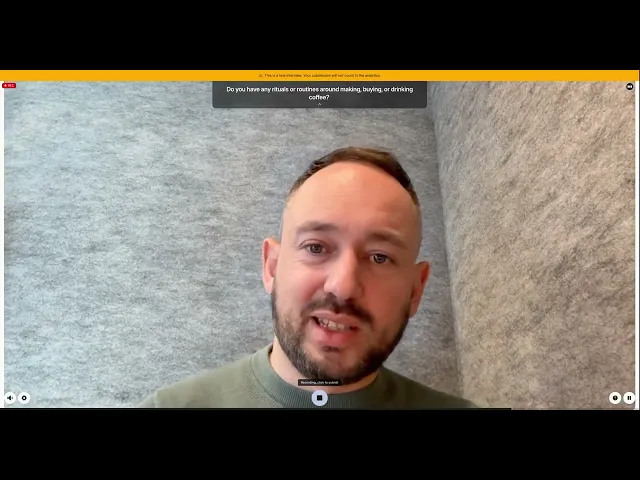
When perception shifts are recent or unexpected. Annual brand trackers confirm sentiment moved but rarely capture the moment it changed. Asynchronous video interviews surface brand perception insights within hours or days, capturing behavioral triggers while they're still fresh.
When nonverbal signals carry the real meaning. A rating scale can't register a pause before someone answers or the flat tone behind a "yes." Video-based conversations capture those signals alongside the spoken response, where the emotional drivers behind brand perception often live.
When answers are vague or contradictory. Fixed survey scripts treat "it's interesting" as a complete response. Adaptive AI-moderated interviews treat it as the beginning of one, pursuing the hesitation and contradiction closed scales leave untouched.
The practical solution isn't to abandon surveys, but to pair quantitative questions with short asynchronous interviews that explain what the numbers can't. This is what Conveo, a video-first AI research platform, is built for: real conversations with real participants, moderated by AI at survey scale, so you get the reach of a survey and the depth of an interview in one study. If stakeholders need to act in days, not months, surveys alone won't deliver the evidence they need.
Multi-Market and Multilingual Considerations
Running brand perception research across multiple markets is coordination-heavy: translation, cultural calibration, and agency briefing each add weeks and budget before an insight lands on a stakeholder's desk. Three problems compound that overhead:
Translation equivalence. Direct translation rarely preserves the meaning that matters. "Premium" carries weight in English that may not transfer cleanly into German, Mandarin, or Brazilian Portuguese, so the data measures different things across markets without anyone realizing it.
Localized attribute relevance. Teams sample brand attributes from their home market and assume they travel. "Innovative" or "bold" may resonate with a North American audience, while APAC participants may place greater weight on "reliable" and "trustworthy" in the same category.
Cross-market comparability. When separate agencies run fieldwork with different question framing, aligning the outputs and underlying data collection often takes longer than the fieldwork itself.
Conveo moderates interviews in 50+ languages and recruits across 50+ markets, so the same study runs in parallel across regions, calibrated to each participant's context. Every interview is transcribed, translated, and stored in one place, compounding into a knowledge library the team can query later.
Interpreting and Activating Brand Perception Survey Results
Most brand perception survey results end up in a slide deck presented once and referenced never. Three steps close that gap:
Segment by behavior, not demographics. Group participants by relationship to the brand: loyal customers with high brand loyalty who haven't considered switching, considerers who didn't convert, and switchers who left. "What triggered your last switch or consideration to switch?" surfaces the segmentation variable worth building strategy around.
Connect quant scores to open-ends. A score of 6 out of 10 is a flag, not a finding; the finding lives in the verbatim response. Running open-ends through a word cloud is often enough to spot which words most often describe the brand before digging into transcripts.
Map findings to decision levers. For each insight, answer three questions before the debrief ends:
What changes: messaging, pricing, product, or channel?
Who owns the change: brand, product, or the marketing team?
What's the timeline: immediate, next quarter, or next year?
The goal is a set of decisions the business can act on before the next planning cycle closes.
Run Brand Perception Research That Keeps Pace With the Decision
The decision-first approach only works if research keeps pace with the decision. As a video-first AI research platform built for enterprise market research, Conveo runs adaptive, AI-moderated interviews at survey scale, so the questions in this article get asked, probed, and followed up in the participant's own words, not flattened into a rating scale.
See it in action: How AI-Moderated Video Interviews Actually Work →
Three things matter for an insights team, or any company, choosing where brand perception research lives:
Real participants, not synthetic responses. Findings come from actual people recruited through integrated panel partners or your own list.
A knowledge library that compounds. Every interview is transcribed, translated, and searchable, so this quarter's study builds on the last one.
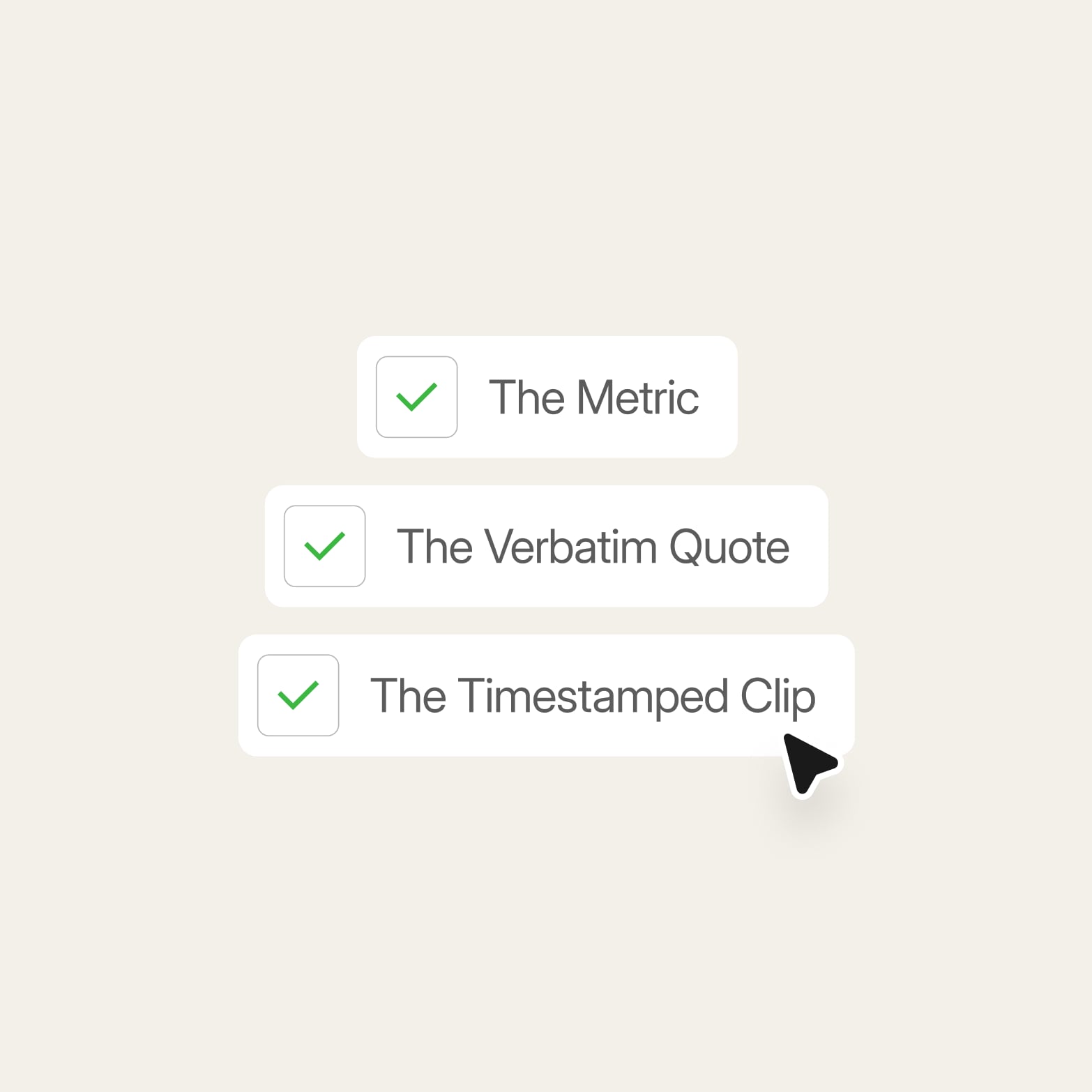
Traceable, stakeholder-ready evidence in days. Video, transcript, and analysis stay linked, so a claim in the readout traces back to the moment a participant said it.
If you're deciding a rebrand, defending share, or repairing trust, this combination turns a brand perception survey into a decision.
Frequently Asked Questions
What Are the Best Brand Perception Survey Questions?
What Is the Difference Between Behavioral and Projective Brand Perception Questions?
How Many Questions Should a Brand Perception Survey Include?
Should I Survey Customers or Non-Customers for Brand Perception Research?
How Often Should We Run Brand Perception Research?