In this article
TL;DR
Insight starts small. Kruythoff says powerful insights grow from small nuggets that teams dig into extremely deep.
Models expire. At Dollar Shave Club, rising acquisition costs made the model obsolete while the team stayed loyal to it.
Findings need courage. Leaders have to hear the consumer even after they have committed to a decision.
Make prior knowledge visible. Schillewaert's flip chart trick shows stakeholders what they did not know before the research.
ROI is an outcome. Treating it as an input, Kruythoff argues, drives short-termism.
Kees Kruythoff, former President of Unilever North America and a member of Conveo's board of advisors, has launched a brand from a blank page, bought a disruptor for what everyone knew was about a billion dollars, and left a 27-year corporate career to found a startup. His view on disruption and research rigor runs through all three stories: consumer insight pays off only when you go extremely deep, keep bringing the consumer's voice back into the room, and find the courage to act when that voice tells you something you would prefer not to hear.
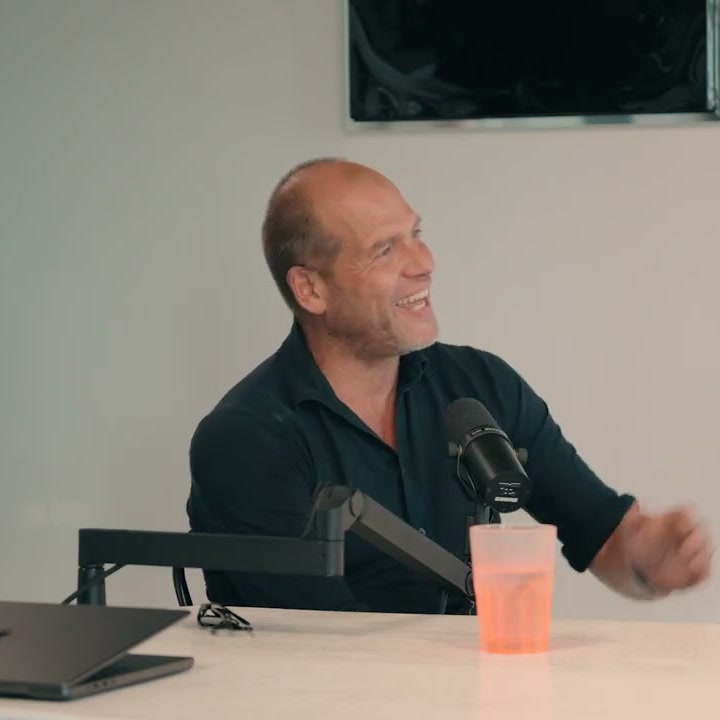
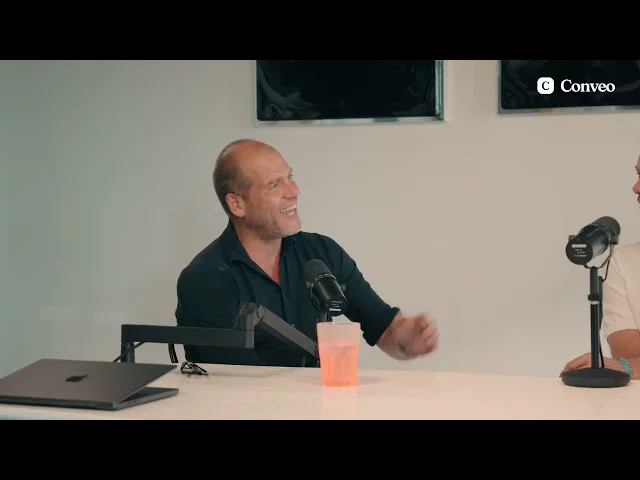
He made the case on Conveo's podcast, recorded live at Cannes Lions 2026, alongside Niels Schillewaert, Conveo's Chief Science Officer. Schillewaert added the researcher's half of the problem: marketers and researchers fall in love with their own findings, and there is a simple way to show a room how much it did not know.
Small nuggets become powerful insights when teams dig extremely deep
Love Beauty and Planet started with a lost deal. Unilever wanted to buy OGX to fill a gap for natural, clean-label personal care, and J&J got it first. The gap in the portfolio was still there, so Kruythoff decided Unilever should build the brand itself. Starting from nothing, he says, felt like a candy shop, because no part of the marketing mix was decided in advance.
The insight work grew out of a habit of noticing, as Kruythoff describes it.
"For me, insights come from everywhere, always, and the interesting part, they come from small nuggets and then you go deeper and deeper and you see is that the small nugget actually becomes super powerful insight."
Kees Kruythoff, Former President, Unilever North America
On Love Beauty and Planet, depth meant specific things. The team worked with one of the big flavor and fragrance houses on sensory cues that would read as pure and natural. Premium pricing paid for that investment in product. The TRESemmé acquisition brought salon-grade hair technology, and the team asked many hairdressers what they would design if they could start from scratch. A senior merchant from Target joined the process early, which helped at launch. Target got an exclusive window, and because the relationship was close, it accepted that the window should last only three months.
Kruythoff is skeptical of conversations that stay at the level of research process and methodology. "Very often it's too shallow," he says. His alternative is to go extremely deep: on sensory with sensory experts, on efficacy with hair care experts, and then ladder the findings up into a concept.
The team itself was built to be different. Two people from the failed OGX deal joined colleagues who had never seen it. Kruythoff gave them three rules: anything is possible, the work is 100% dedicated, and there is no budget limit in development. Unilever had just lost an acquisition worth billions, so he asked why one dollar should be treated differently from another. "Very often what you need to do to be able to create new, especially if you talk about future proofing, you need to do something iconically different," he says.
A business model can expire while the team is still in love with it
Dollar Shave Club was the opposite case: a brand Unilever bought. Unilever North America was not in shaving, had almost no first-party data and wanted to learn direct-to-consumer selling. Founder Michael Dubin had started the company out of frustration with razors locked behind a key at the drugstore and priced, in his view, as a rip-off. Kruythoff pitched him a reverse framing, and Unilever announced the deal to the staff with one sentence: "Congratulations, you've just bought [Unilever]."
Looking back, Kruythoff is frank about what did not work. The plan to move digital skills into Unilever was, in his words, "conceptually right but practically wrong. It just never happens." Then the economics moved. He says Google and Facebook pulled the profit pool toward themselves, and the cost of acquiring a customer went from $42 to 120. Harry's, which his team had expected to fail, got listed at Target with a store-in-store experience, and its acquisition costs dropped sharply because first purchases in the store led to replenishment online.
"We were just in love with that what we bought instead of with the new reality."
Kees Kruythoff, Former President, Unilever North America
The deepest lesson was the product. Kruythoff says Dollar Shave Club's blades were good, but "nobody wants to compromise on real product quality and experience." He adds that this is an old lesson, one of the things "you need to learn, relearn, relearn, relearn and relearn again."
Teams fall in love with their own findings, and a flip chart proves it
Both stories point to the same failure mode. Once a team is inside a system, Kruythoff says, it has to be on and in the system at the same time. "If you become too myopic, you believe your own BS actually," he says. The fix is to keep cycling the voice of the consumer back in, and then to act on it.
"Have the courage to listen, and I deliberately say the courage to listen because there's so much once you are in, on the role, you've made your decisions, then it's very difficult to be able to go back and say we have a problem here."
Kees Kruythoff, Former President, Unilever North America
Ego and career motives, he notes, make that harder the further a project gets.
Schillewaert sees the same thing from the research side. Earlier in his career, stakeholders would often respond to a study by saying they had known 70 to 80% of it already. So he changed how he ran workshops. Before presenting, he asked the room three to five questions, wrote the answers on a flip chart and turned it over. After the presentation, he could show them that "out of the five things that you said you only knew two or three." Nobody could deny it, because their own handwriting was on the board.
Schillewaert explains the moment in this clip.
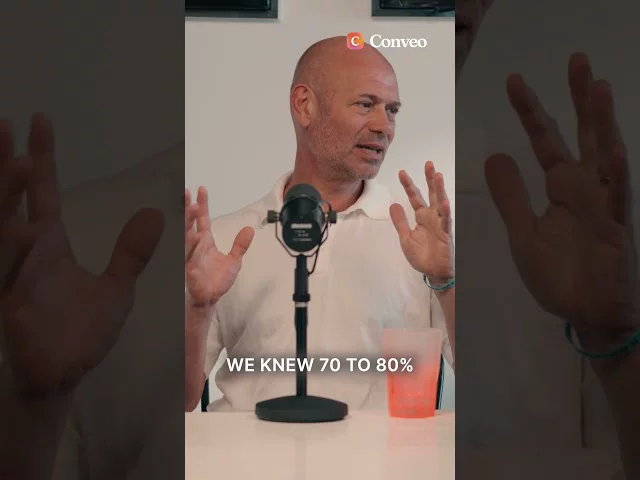
He calls it a human problem: whether you are myopic or in love with your work, "it's hard to change your mental models." In his view, "that's an important learning also for insights to bring." Teams that want stakeholders to act on research can borrow the technique directly, and our guide on presenting qualitative data so stakeholders act on it covers the rest of that job.
The fastest route to a real need is standing where failure costs the consumer
Asked for the fastest way he ever understood a customer, Kruythoff named a place: washing clothes by hand alongside consumers in the slums of India, in a dirty river.
"She can't get it wrong because she doesn't have the money to have it wrong, but also because of the pride and the family judgment, especially the husband's judgment."
Kees Kruythoff, Former President, Unilever North America
Standing there, he says, you only hope the product you just handed her performs, because if it fails you have ruined her clothes. That kind of exposure turns a consumer need from a slide into a responsibility. It is the extreme version of the ethnographic market research many insights teams already run, and it shows why seeing the context firsthand changes what a team believes.
What it means for insights and marketing leaders
Kruythoff's stories translate into a short operating list for anyone who owns consumer understanding.
Go deep before you go wide. Expert-led, specific work on sensory, efficacy or usage beats broad, shallow surveys of opinion. The small nugget only becomes a powerful insight when someone follows it down.
Keep the consumer in the loop after launch. He wants teams to "continue to cycle and get the reality, the voice of the consumer, every time in there," then challenge their assumptions each time. A launch decision is a starting point for the evidence, and an always-on voice of the customer program is one way to keep that cycle running.
Make prior beliefs visible. Schillewaert's flip chart separates what stakeholders actually knew from what they think they knew, which gives new findings a fair hearing.
Treat ROI as a result. Asked for the most overrated metric, Kruythoff answered ROI because it drives short-termism. "It needs to be an outcome," he says, and it is too often treated as an input.
Hold quality as a fixed constraint. On shaving, he concedes that the customer truth is that Gillette is really better, and that "quality of your delivery, you can never compromise."
Balance conviction and openness. Leaders need the perseverance to build consistently and the willingness to change course when new data arrives. In his words, "both needs to be true."
Disruptors earn their place by staying close to the consumer
The launch Kruythoff wishes he had worked on is On, the running shoe brand. He points to the insight behind its growth: the target audience aged 30 to 45 owns around five pairs of shoes, he believes, one each for running, padel, leisure and other occasions. Brands that shake up a category long held by Nike and Adidas appeal to him. "It's nice to be part of the disruption," he says, and he sees the same opportunity for challengers in categories long dominated by giants.
That is the thread through his career. Love Beauty and Planet worked because the team went extremely deep. Dollar Shave Club struggled because the team stopped seeing the new reality. Disruption depends on going deep, hearing the consumer often and having the courage to act on it. Conveo's AI research assistant runs video conversations with real consumers, so insights teams can get to the why behind behavior faster and bring that voice back into the room each time a decision is on the line.
Frequently Asked Questions
Who is Kees Kruythoff?
Kees Kruythoff is the former President of Unilever North America and a member of Conveo's board of advisors. He spent 27 years at Unilever, then founded a plant-based foods company.
What did Kees Kruythoff learn from the Dollar Shave Club acquisition?
He says the planned skills transfer never really happened, the direct-to-consumer model was overtaken when customer acquisition costs rose, and the product itself was not good enough. Nobody compromises on product quality.
How did Unilever build Love Beauty and Planet from scratch?
Kruythoff describes a dedicated team with no creative boundaries and an unlimited development budget, deep sensory work with a fragrance house, input from many hairdressers and a Target merchant brought into the process early.
What is the flip chart trick for presenting research findings?
Niels Schillewaert asks stakeholders a few questions before a presentation, writes their answers on a flip chart and turns it over. After presenting, he shows how many of the findings they actually predicted, which is usually far fewer than they claim.
Why does Kees Kruythoff call ROI an overrated metric?
He says ROI drives short-term thinking because companies too often treat it as an input to decisions, when it should be the outcome of doing the right things for consumers.

About the author
Tom Husson
CMO
Tom is CMO at Conveo, where he leads marketing and builds the company's AI-native go-to-market engine. He hosts the Conveo podcast, recorded at Cannes Lions 2026 with brand, insights and marketing leaders.
More by Tom →Qualitative insights at the speed of your business.
Conveo runs AI-moderated video interviews and structures everything they say.