In this article
TL;DR
Persona development tools fall into four categories: template and AI-generator tools, analytics tools, synthetic participant tools, and interview tools.
Personas built on assumptions or synthetic data can be useful for early drafts, but they fall apart under scrutiny because there's no real user feedback behind them.
Evidence-backed personas trace every claim back to a real user interview, giving stakeholders the confidence to use them for decision-making.
Conveo leads the real-interview-based category, helping product and marketing teams turn video interviews into personas backed by quotes and timestamped clips.
Building a persona often means a workshop, a whiteboard, and lots of best guesses. The problem comes when a stakeholder asks how you know this persona reflects real customers, and the honest answer is that you don't. Nothing connects the static template to the real people.
There are platforms that help by providing a faster, more structured way to create personas, from quick online persona creators to user research platforms. But they vary hugely in whether the result connects back to real evidence.
This article compares fifteen persona development tools. You'll learn which category fits your current need, and how to pick a tool that produces personas your stakeholders can rely on.
What Makes a Persona Development Tool Credible
A persona development tool is credible when every claim it produces traces back to a real person. If a stakeholder asks how you know something is true and your answer cites research data from a recorded interview, the evidence chain holds. If the answer is "the team agreed this felt right," it doesn't.
Most tools help you create personas, but don’t check whether the information behind them is true. Persona validation is a separate step that confirms the data came from real people, which matters when high-stakes decisions are at stake.
"Real conversations, real emotions. That's what makes Conveo different from every survey tool."
CMI Lead, Edgard & Cooper
Choosing the Right Category of Persona Tool for Your Situation
Before comparing all fifteen tools, find the category below that matches your situation.
| Category | Use case | Where this persona stands up, and where it doesn't |
|---|---|---|
| Template and AI-generator tools | You need a persona quickly, working from what your team already knows. | This persona works fine for internal alignment, but it won't hold up if presented as market research or used to convince anyone outside the team. |
| Analytics-enriched tools | You already have product, CRM, or web behavior data, and want to turn it into personas. | This persona works fine for operational decisions, since the data is real, but it doesn't explain why users behave that way, so it won't hold up for high-stakes calls on its own. |
| Synthetic participant tools | You don't have access to real participants yet, but you want a persona to start refining your concept or messaging. | This persona works fine as a draft to build on, but it won't hold up to even basic questioning if it's mistaken for real customer feedback. |
| Real-interview-based tools | You need a persona that can survive a stakeholder asking, "How do we know this is true?" | This persona holds up to scrutiny because every claim traces back to a real person. |
15 Persona Development Tools Compared
Now you know which category best fits your use case and what to expect from it, this table gives a quick view of all fifteen tools.
| Tool | Category | Best For | Pricing |
|---|---|---|---|
| Conveo | Real-interview-based | Creating complete personas backed by real interviews, with full evidence traceability | Available on request |
| Dovetail | Real-interview-based | A searchable repository for turning past interviews into personas | Free for individuals |
| Marvin (HeyMarvin) | Real-interview-based | Cross-study synthesis of qualitative research into personas | Free plan available |
| UserTesting | Real-interview-based | Personas backed by a large, repeatable participant panel | Available on request |
| Xtensio | Template and AI-generator | Branded, shareable persona documents for agencies and consultants | Free to start |
| Miro | Template and AI-generator | Collaborative, structured persona boards alongside other planning work | Free tier available |
| HubSpot Make My Persona | Template and AI-generator | A free, fast AI-generated persona document | Free |
| Kollabe Persona Generator | Template and AI-generator | A quick AI-generated starting persona for small teams | Free |
| Userdoc | Template and AI-generator | AI personas alongside requirements and user stories | Free plan available |
| Delve.ai | Analytics-enriched | Personas generated automatically from CRM, web, and social data | From $89/month |
| Userpilot | Analytics-enriched | Personas built from in-app behavior patterns and engagement analytics | From $299/month |
| Amplitude | Analytics-enriched | Behavioral clusters as a starting point for personas | Free tier available |
| Hotjar | Analytics-enriched | Session and survey data to ground personas built elsewhere | From $39/month |
| Synthetic Users | Synthetic participant | AI participants for pressure-testing research questions | $2 to $60 per interview |
| Marketing Mary | Synthetic participant | Synthetic B2B buyer personas you can talk to | From £99/month |
Dive into the complete profiles below for more information on your shortlisted platforms.
Interview Tools
These tools help you build distinct personas from interviews with real participants, and every claim traces back to a transcript, clip, or recording. This is the category to use when a persona needs to survive stakeholder scrutiny.
1. Conveo
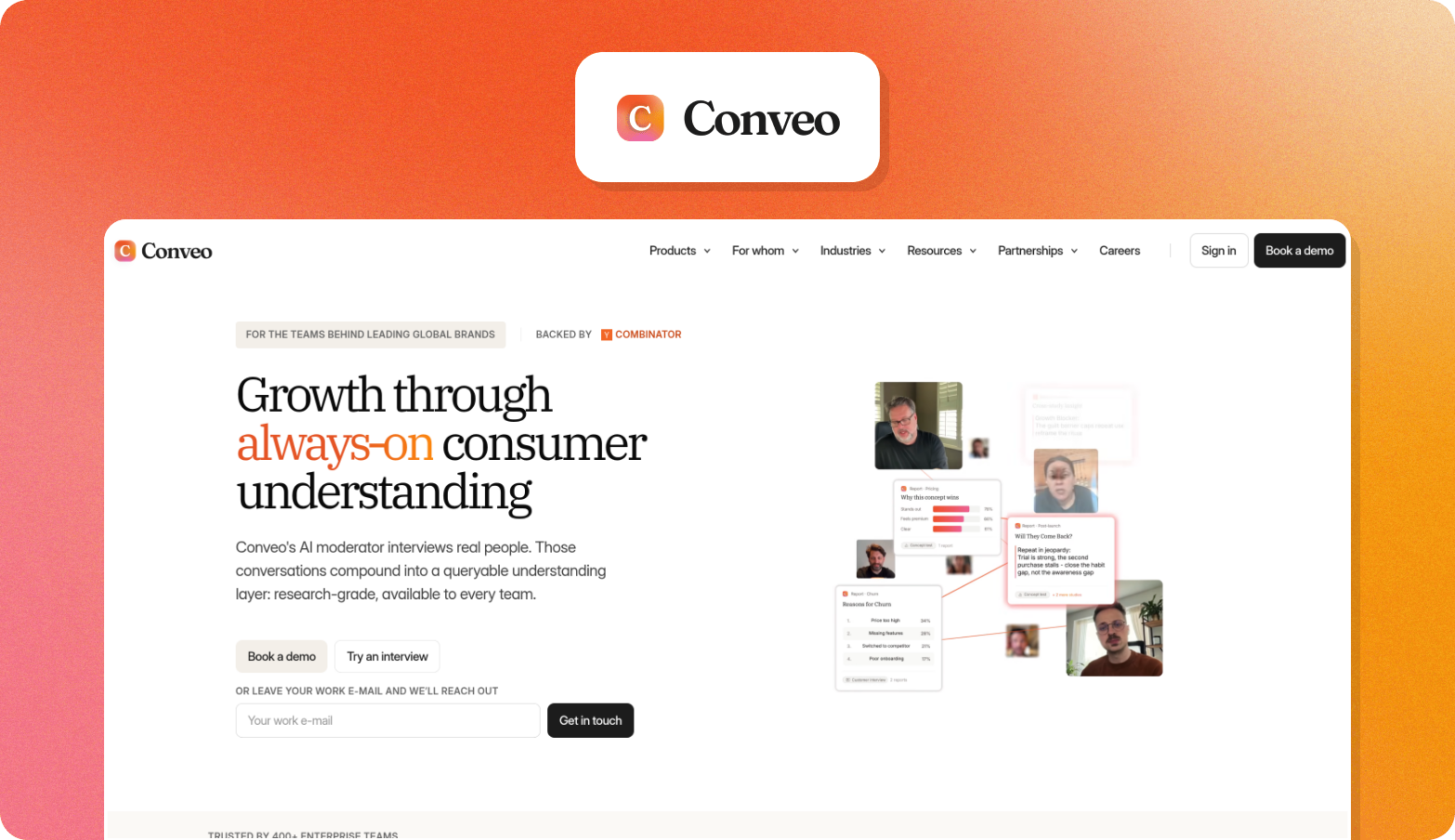
Conveo is a video-first AI research platform built for teams that need personas stakeholders can verify.
Its AI moderator runs interviews with real participants and analyzes video, audio, and text together. In its analysis, the platform picks up on facial expressions, tone, and word choice, alongside what people say, to give you a deeper understanding of your customers. You can build the persona directly from the output, so each trait or pain point traces back to a specific moment in a specific interview.
Best For
Insights, brand, and product teams running continuous discovery who need personas backed by verifiable participant conversations.
Core Strength
The AI-moderated interviews adapt in real time, asking follow-up questions when an answer is vague or unexpected. In testing, 83% of participants reported being as open, or more open, with an AI moderator than with a human one, so you can be sure you build personas from genuine responses.
"The AI doesn't just summarize, it surfaces patterns I wouldn't have spotted reading transcripts."
CMI Lead, Edgard & Cooper
Key Limitation
Conveo is built for continuous qualitative consumer research, so it’s not the right fit for teams that only need quick, one-off demographic segments.
Pricing
Available on request.
2. Dovetail
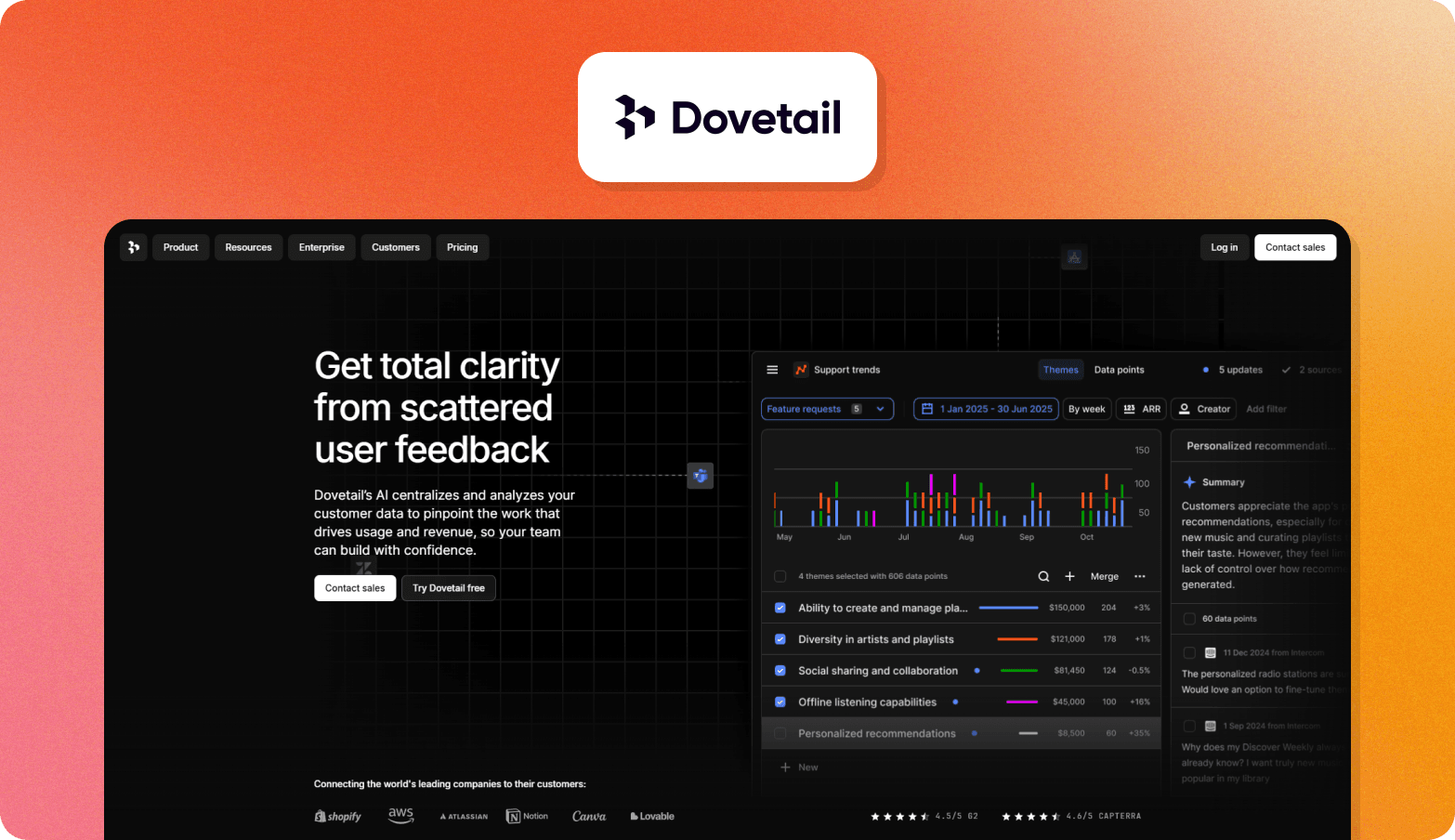
Dovetail is a research repository that organizes and analyzes qualitative data you've already collected.
Best For
Research teams with an existing interview workflow who want a structured, searchable place to turn past studies into personas.
Core Strength
Dovetail surfaces themes and patterns across uploaded transcripts and recordings, so you can quickly identify them to inform your personas.
Key Limitation
Dovetail has no built-in interview moderation or participant recruitment. Teams need a separate tool to run the interviews before Dovetail can help organize and analyze them.
Pricing
Free for individuals. Enterprise plans are custom-priced and available on request.
3. Marvin (HeyMarvin)
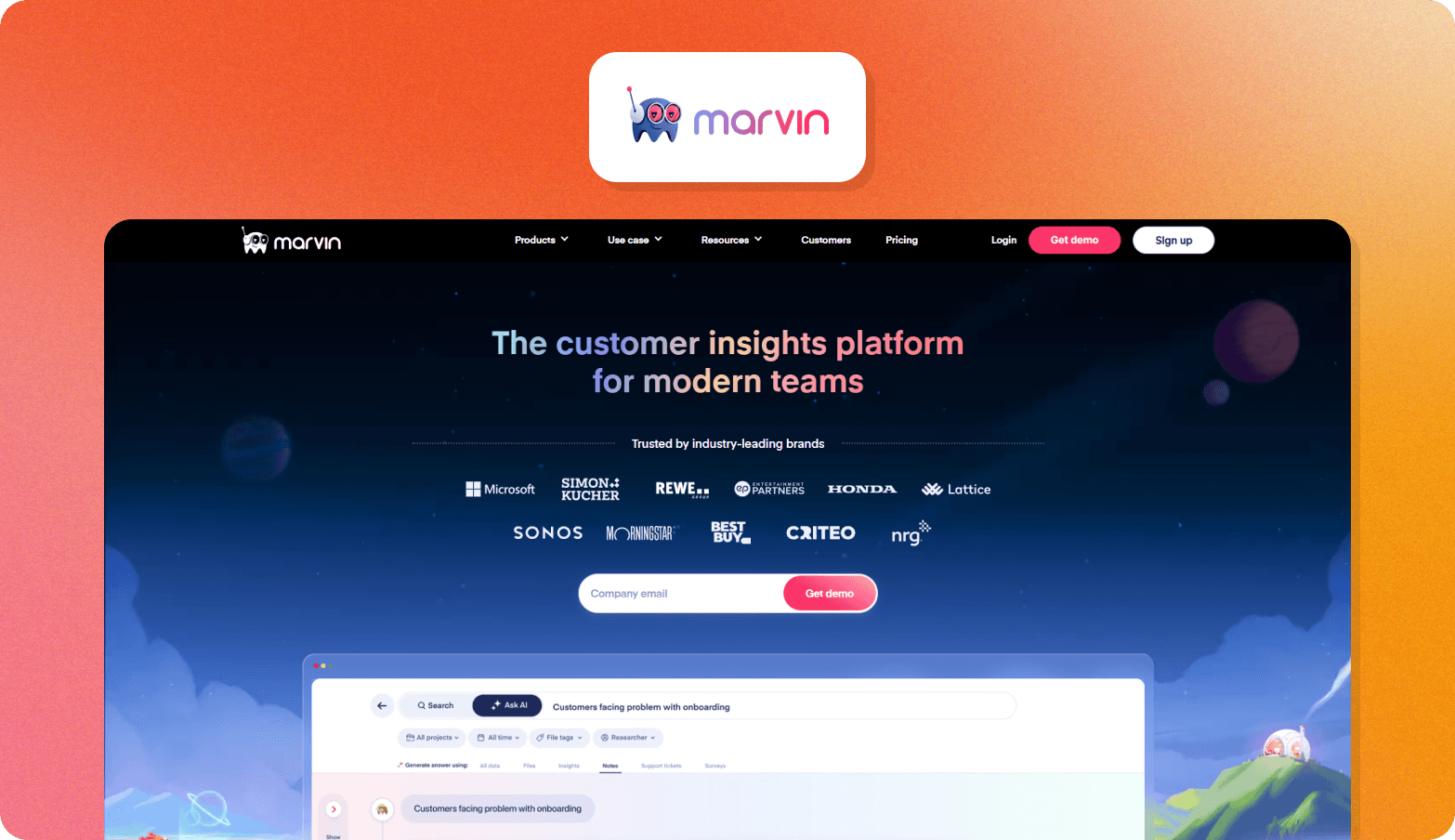
Marvin is an AI-powered research repository that organizes and analyzes qualitative research across studies, with an AI-moderated interview layer for collecting new data.
Best For
Research ops teams are building personas from a large backlog of past studies.
Core Strength
The AI-moderated interview layer means teams can collect new data directly in the platform if they find gaps in their persona research.
Key Limitation
Searching across the full repository is limited to the Enterprise plan.
Pricing
Free plan for repository access. Paid plans unlock the full platform and aren't publicly listed.
4. UserTesting
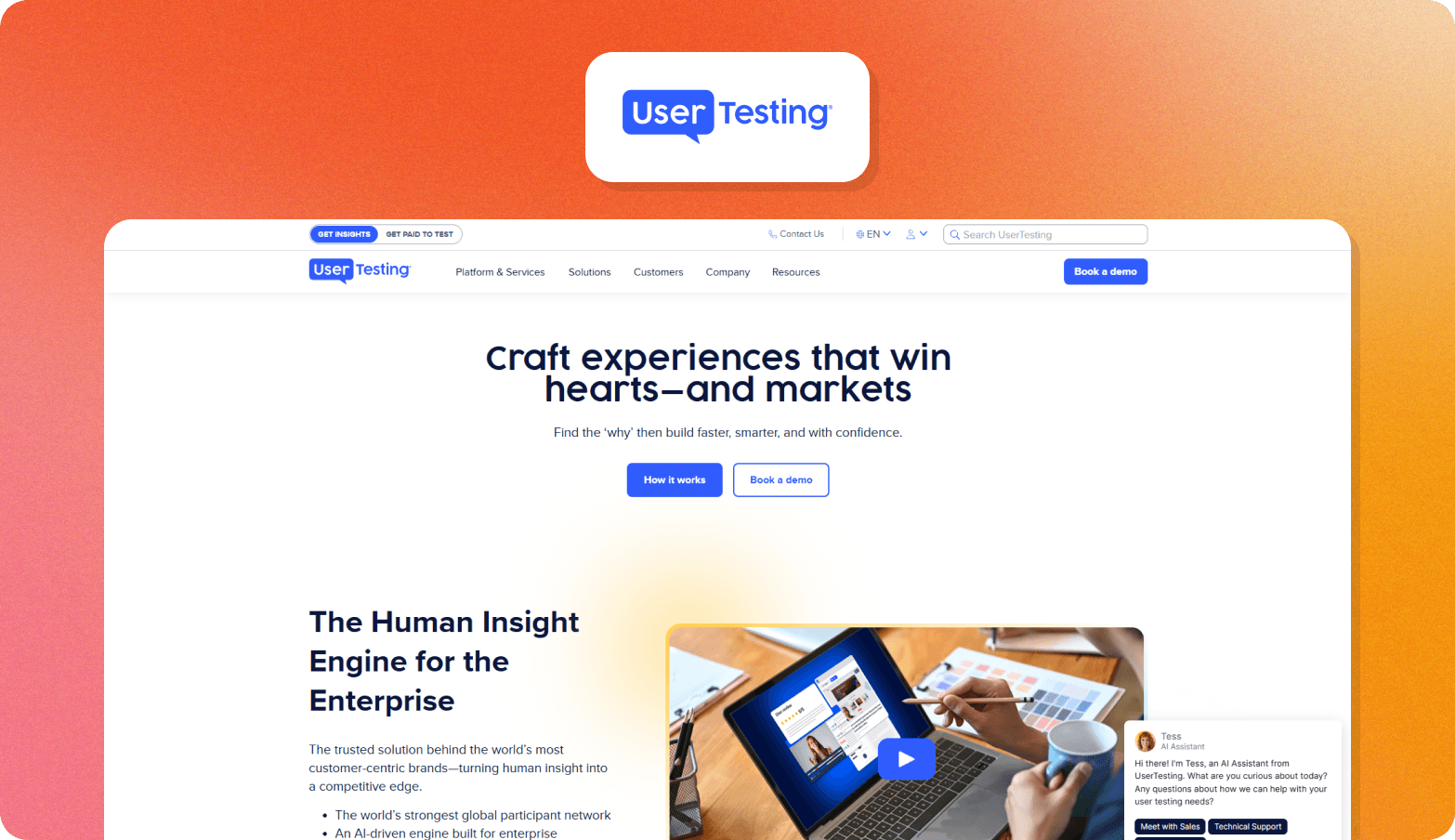
UserTesting is a human insights platform combining usability testing, think-aloud studies, and a cross-study research repository.
Best For
Enterprise product, UX, and CX teams that want personas built on a large participant panel.
Core Strength
UserTesting's first-party panel of validated participants returns most sessions within hours, which makes it practical to gather fresh interview data for a persona on a regular cycle.
Key Limitation
Insights Discovery, the AI tool for natural-language search across studies linked to video timestamps, is available only on the Ultimate tier or as an add-on and doesn't cover live moderated conversations.
Pricing
Available on request.
Template and AI-Generator Tools
These tools give you a persona structure, and some are AI-powered, acting as persona builders that generate a persona from a short description. Either way, the persona reflects what your team already knows or types in. None of these tools gathers or verifies data from real users.
5. Xtensio
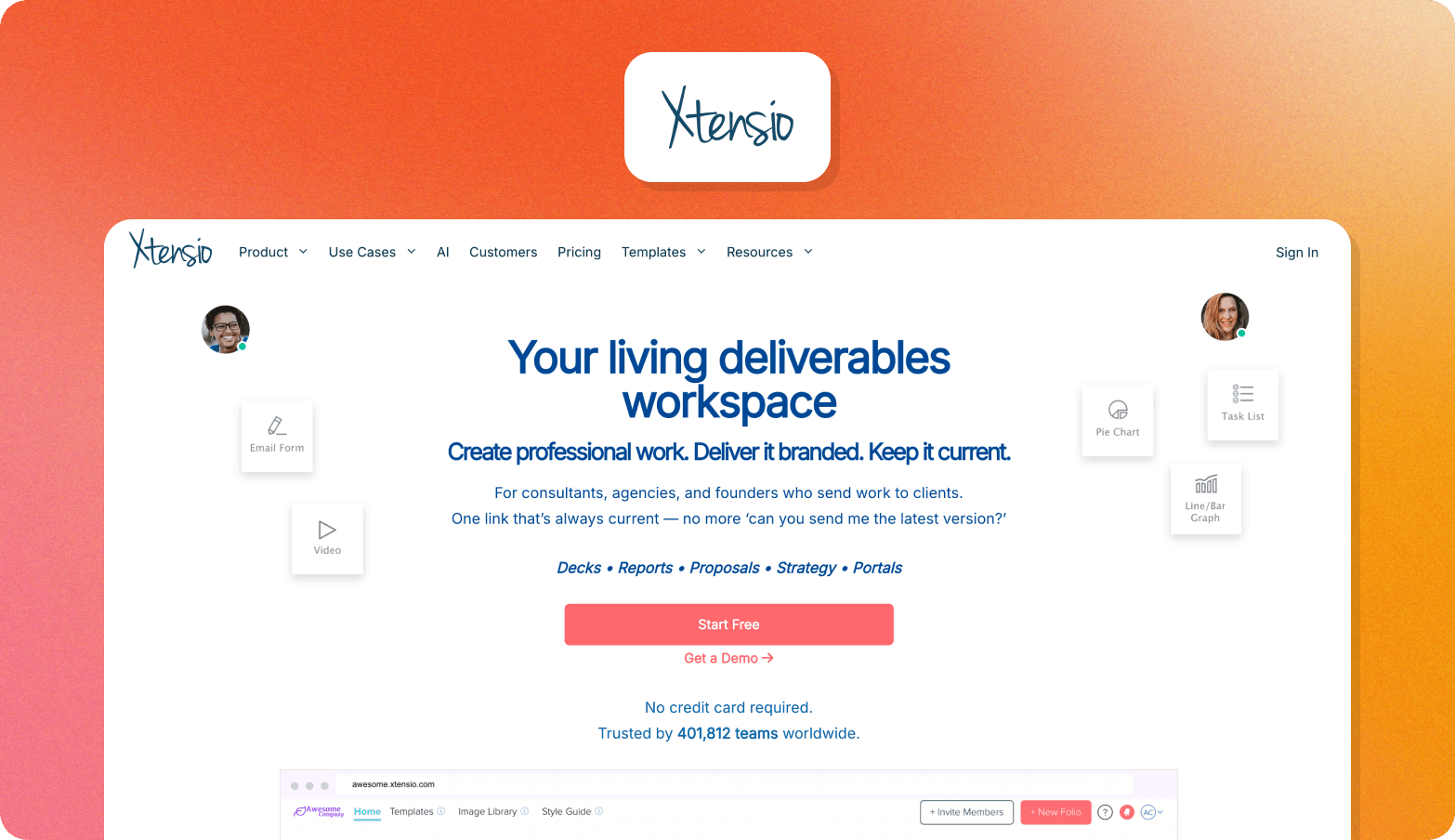
Xtensio is a workspace for building branded, collaborative persona documents that connect to journey maps and pitch decks.
Best For
Agencies and consultants who need to deliver polished, on-brand persona documents to clients and reuse them across projects.
Core Strength
A persona built in Xtensio automatically carries a client's branding, so a persona created for one project can be reused for another without starting over.
Key Limitation
Xtensio has no way to gather that information from real users, so the persona is only as good as the research behind it.
Pricing
Free to start, with paid plans for teams that need more workspace features.
6. Miro
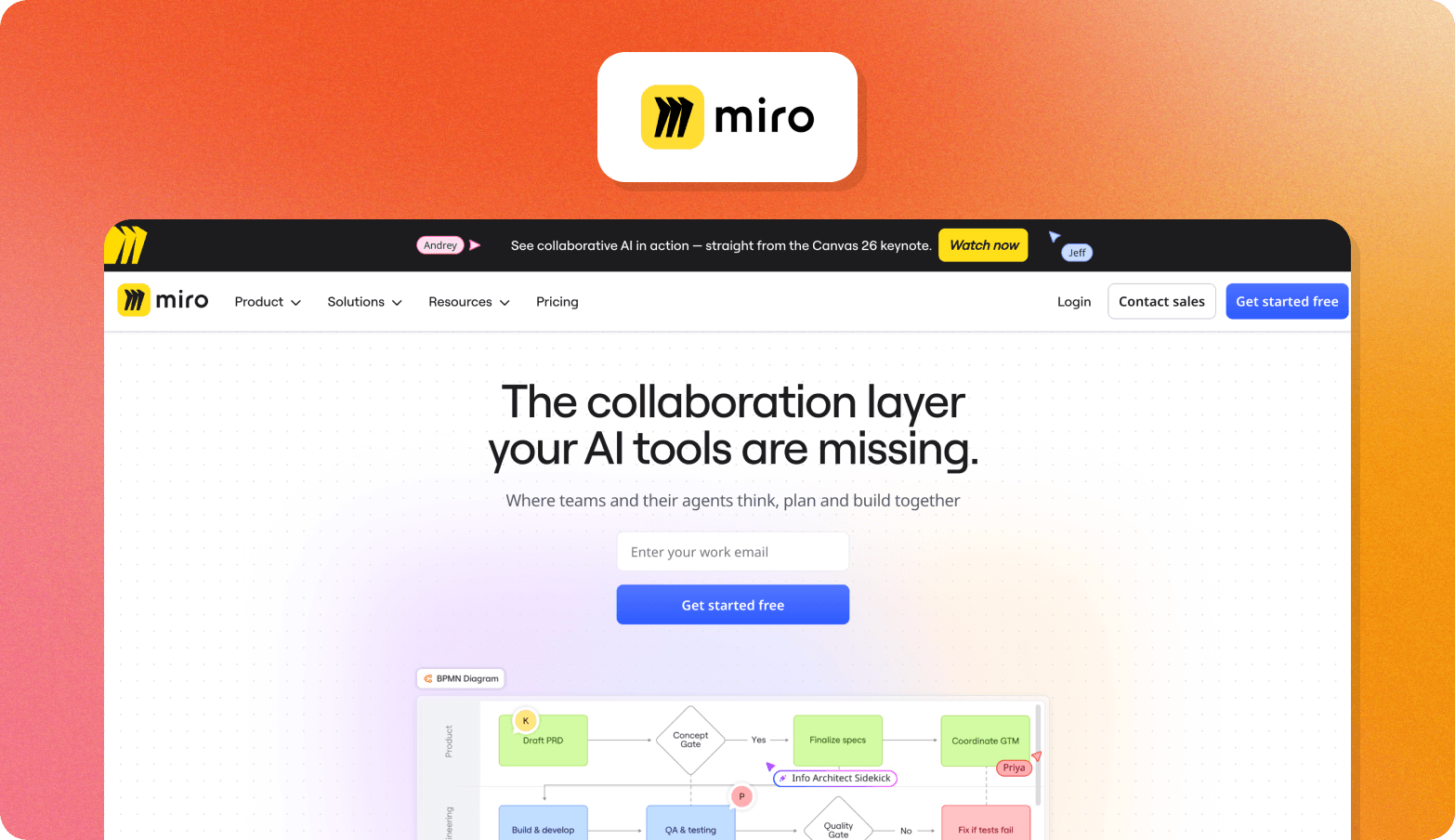
Miro is a visual, real-time collaboration platform, and its user persona template gives teams a canvas to build, compare, and update personas together.
Best For
Teams that want to build personas as part of a broader planning session, alongside journey maps and other research boards.
Core Strength
Miro's canvas has no fixed size, so teams can copy the persona frame as many times as needed and place personas for different segments side by side.
Key Limitation
The template provides structure for fields such as demographics, goals, and pain points, but it doesn't collect or verify that information.
Pricing
Free tier available, with paid plans for larger teams.
7. HubSpot Make My Persona
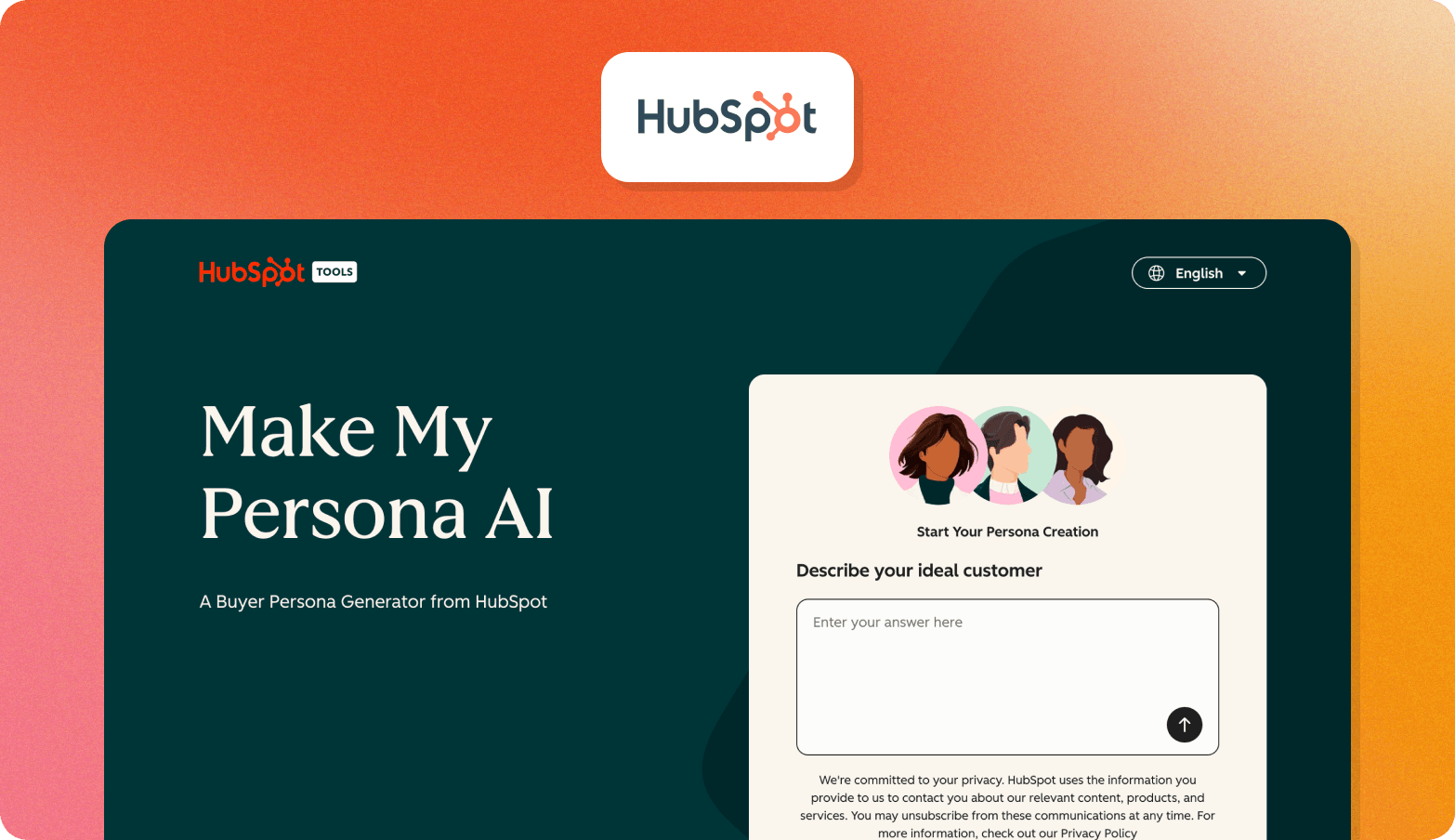
Make My Persona is a free buyer persona tool from HubSpot. You describe your ideal customer, and its AI turns that description into a structured buyer persona template.
Best For
Small teams or solo marketers creating buyer personas who need a quick, professional-looking persona without design work or research budget.
Core Strength
HubSpot's tool lets you create as many buyer personas as you need without having to create an account.
Key Limitation
It quickly turns assumptions into a shareable format, but it can't generate or verify data from actual users.
Pricing
Free, with no usage limits.
8. Kollabe Persona Generator
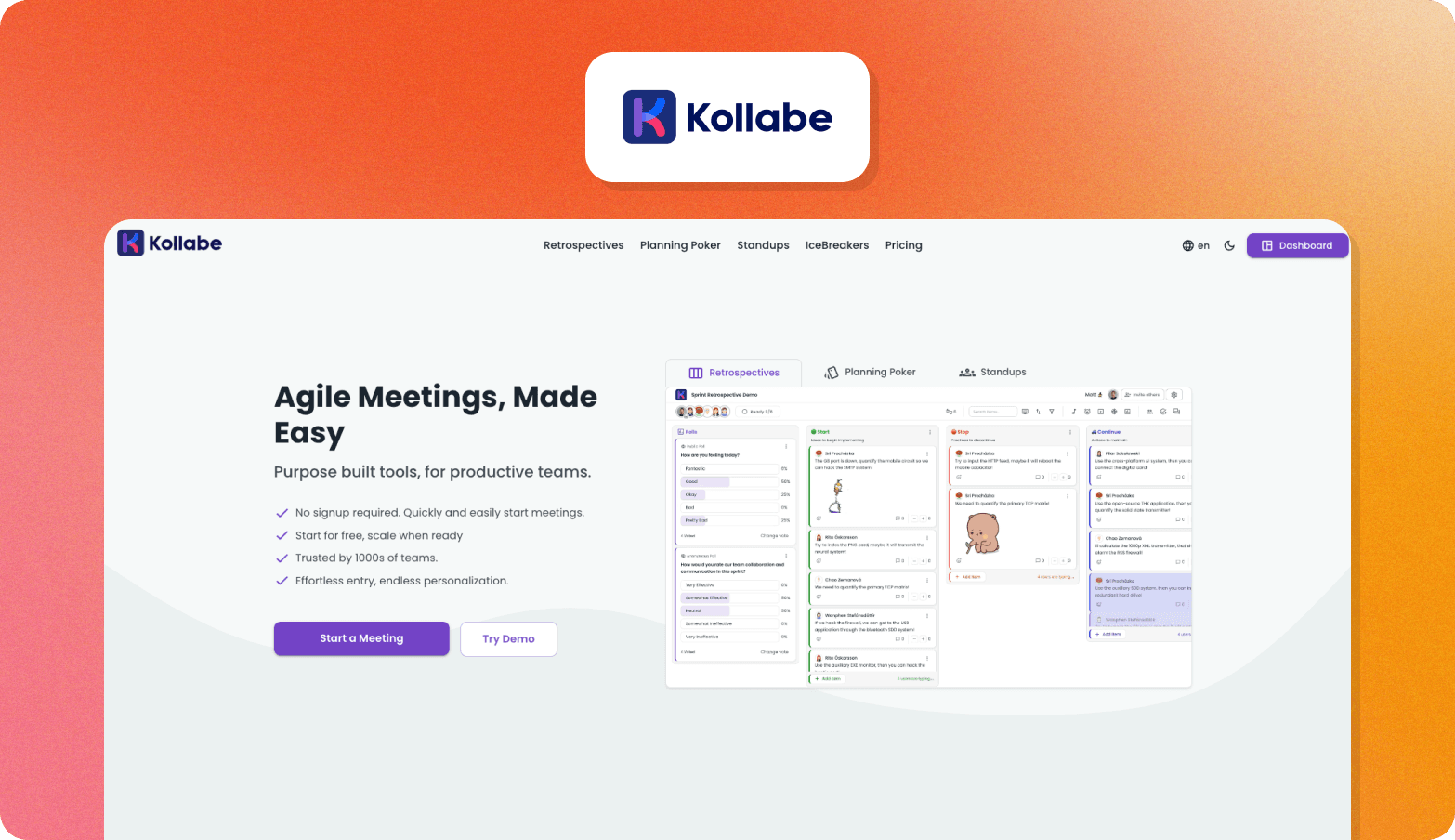
Kollabe is a planning tool for software teams. One of its free features generates an AI persona from a short product description.
Best For
Small teams that want a quick starting persona alongside the planning tools they're already using.
Core Strength
You describe your product, industry, and target market in a single input, and the AI returns a persona that covers demographics, goals, pain points, and technical context within seconds.
Key Limitation
Kollabe itself recommends checking the output against real user interviews before relying on it.
Pricing
Free, with paid plans from $12 per month for teams that want Kollabe's wider toolset.
9. Userdoc
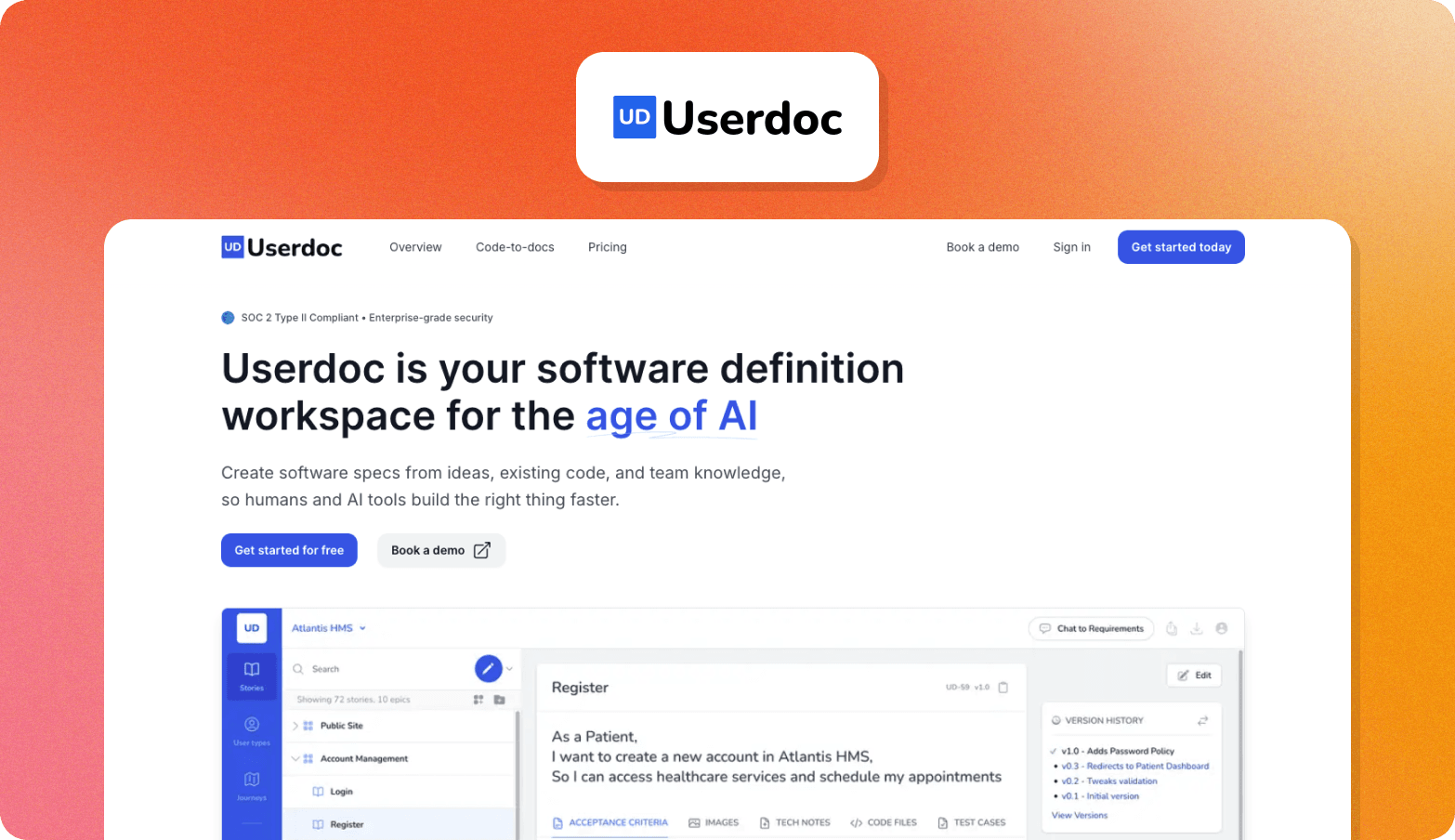
Userdoc is a requirements management platform with a built-in AI persona maker that generates personas alongside the user stories and journeys teams document there.
Best For
Product teams that want personas to live alongside the requirements they're already documenting, with AI help getting started.
Core Strength
Userdoc's AI reviews the project information you've already entered and generates a matching persona, so your persona stays linked to the documents that reference it.
Key Limitation
It doesn't gather new information from real users, so the persona is only as strong as the research that went into the project information beforehand.
Pricing
Free plan available. Paid plans start at $19 per seat per month.
Analytics Tools
These tools build personas, or the inputs for one, from data about how real users behave: product usage, web traffic, CRM contact records, or on-page sessions. They show patterns at scale, though not always why those patterns exist.
10. Delve.ai
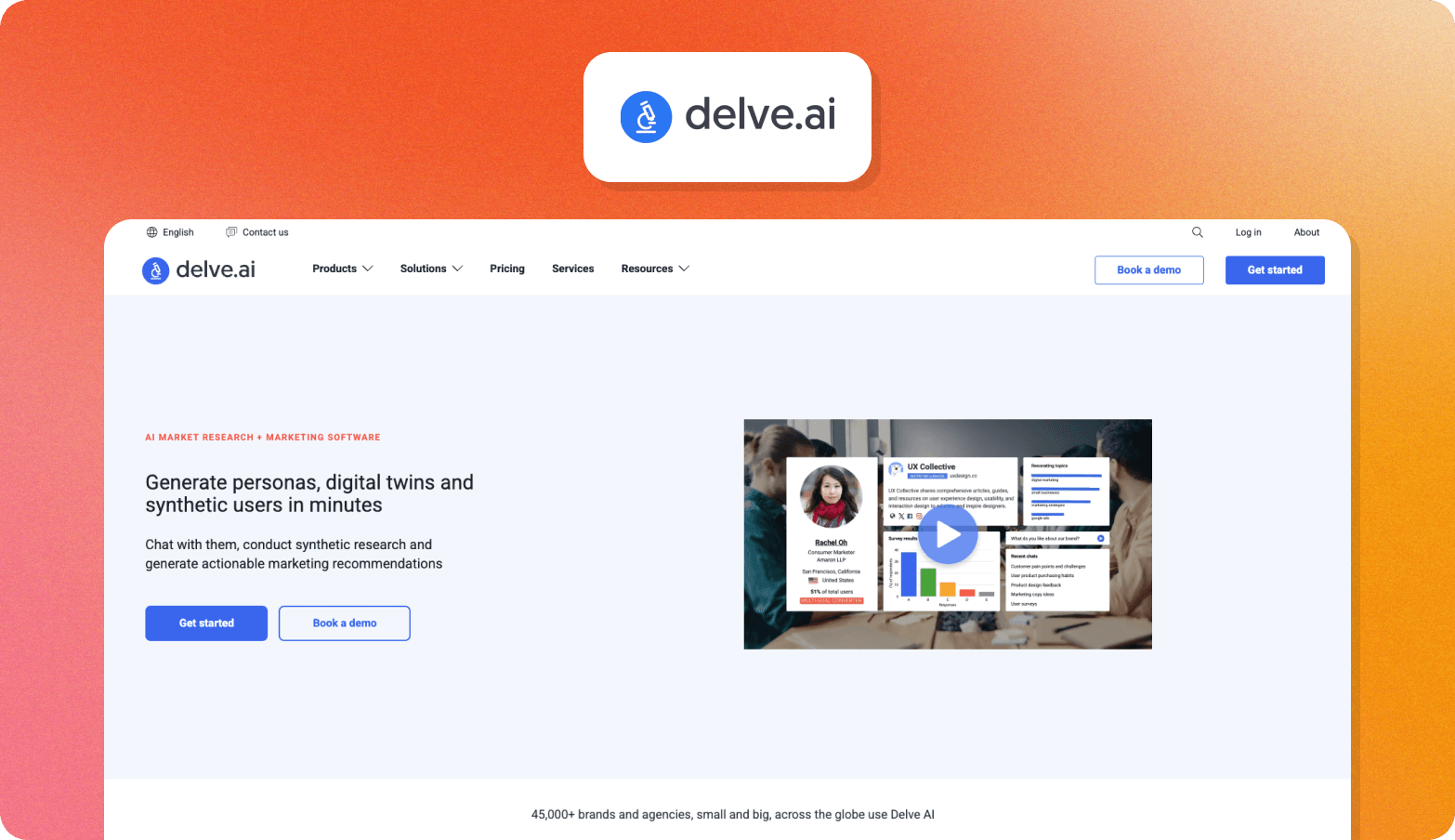
Delve.ai is an AI persona generator that builds personas automatically from your CRM, website, and social data.
Best For
Marketing and growth teams that want personas generated from existing data without running new research.
Core Strength
Personas update as the underlying data changes, so they don't need to be rebuilt manually.
Key Limitation
There's no way to click through to a specific person and hear them speak in their own words.
Pricing
From $89 per month for website and competitor personas, with research and CRM-based personas priced separately from $99 and $470 per month.
11. Userpilot
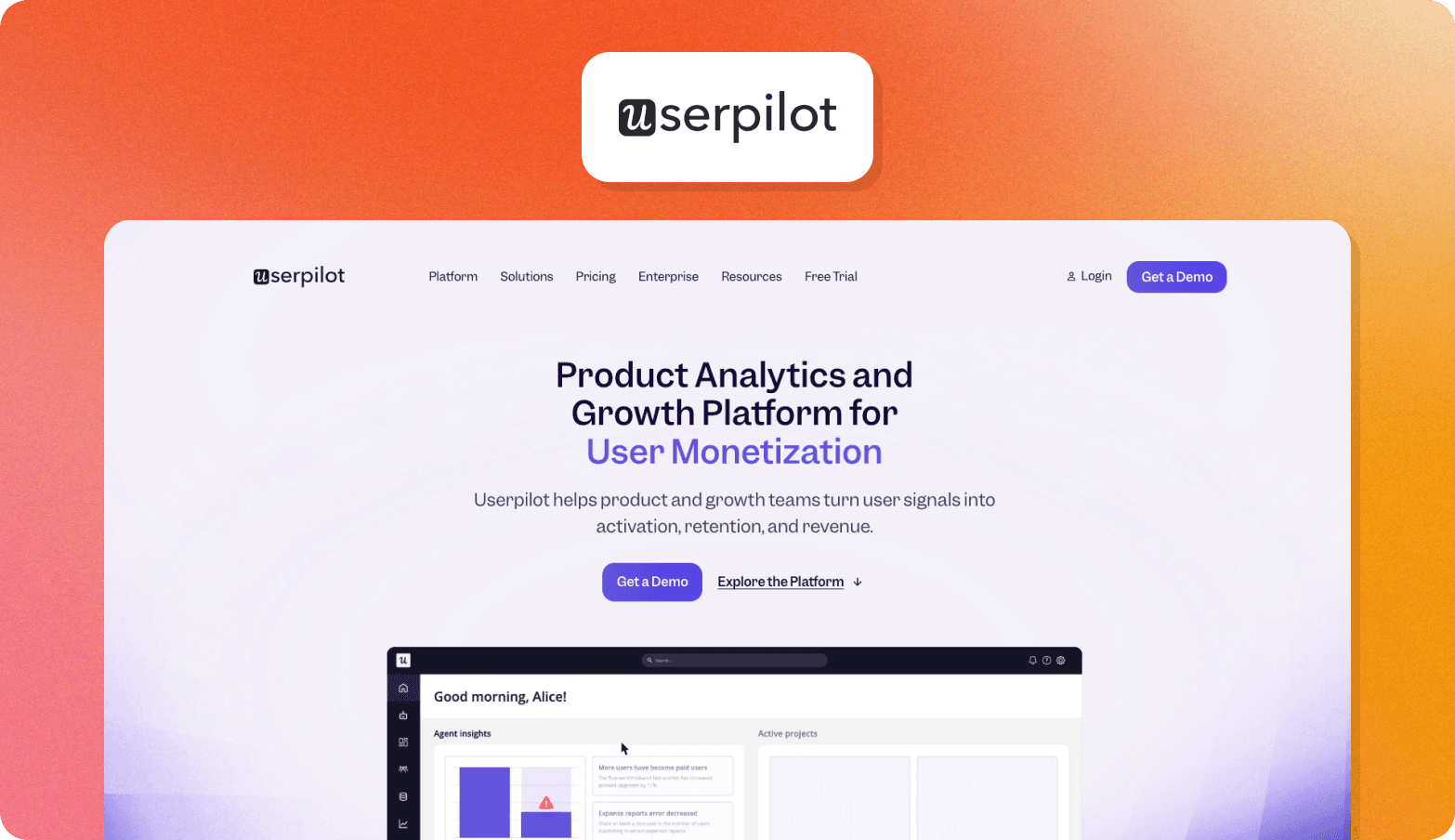
Userpilot is a product analytics platform. It has no dedicated persona builder, but teams commonly use its usage data to build personas grounded in real product behavior.
Best For
Product teams that want personas grounded in how users actually behave inside the product, not just what they say in interviews.
Core Strength
Userpilot tracks how users move through your product, so you can use this data to build a persona based on behavior rather than job titles or demographics.
Key Limitation
There's no built-in persona template or generator.
Pricing
From $299 per month, based on monthly active users.
12. Amplitude
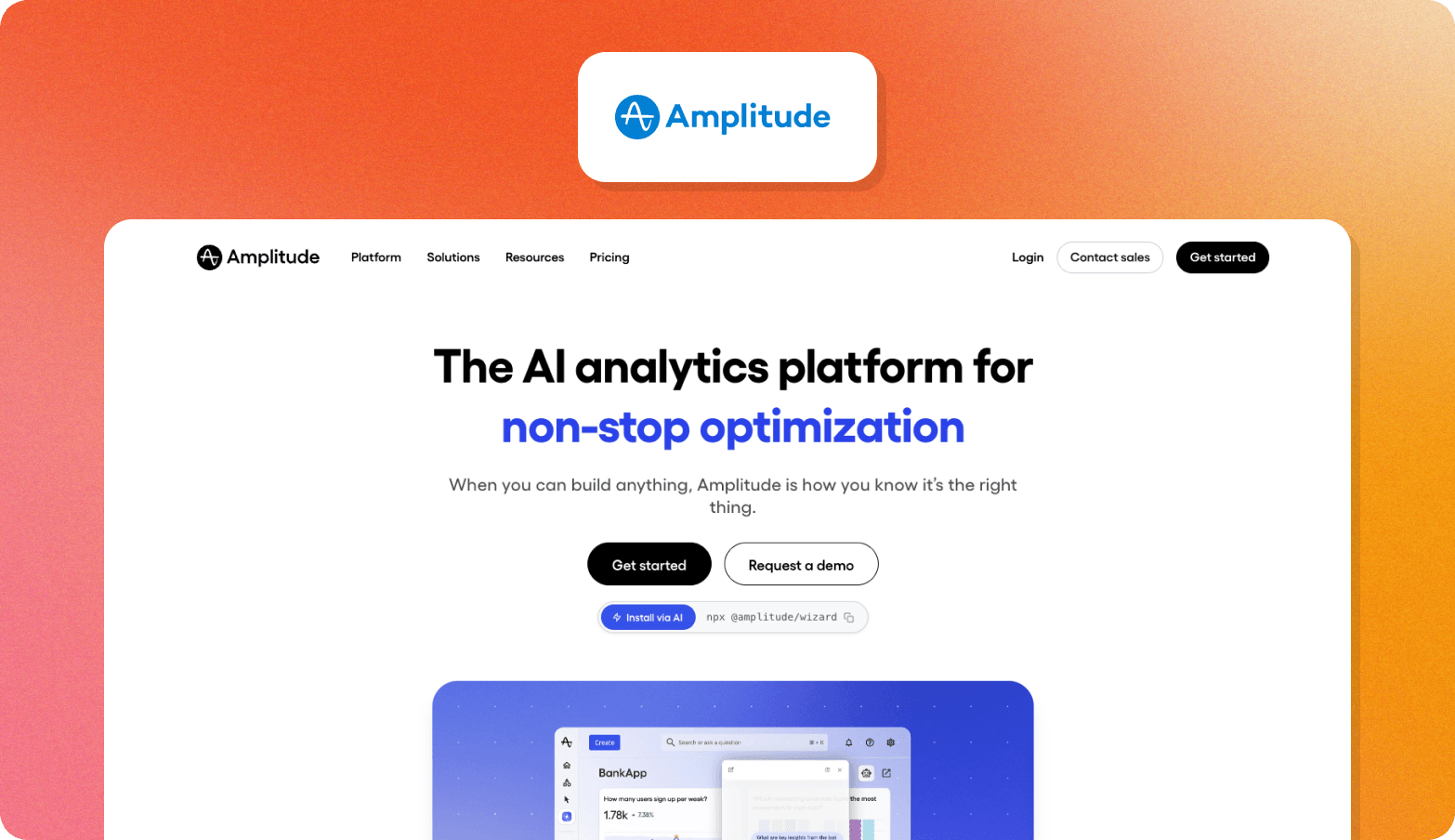
Amplitude is a product analytics platform that uses Personas to group users into clusters based on shared behavior.
Best For
Product teams exploring how their user base splits into behavioral groups, before building those groups out into full personas.
Core Strength
Amplitude's Personas chart automatically groups users who behave similarly, so you can use each group as the starting point for a persona.
Key Limitation
The output is a behavioral cluster, not a written persona, and the chart doesn't capture the reasoning behind the behavior.
Pricing
Free tier available for up to 10,000 tracked users per month. Paid plans start at $49 per month.
13. Hotjar
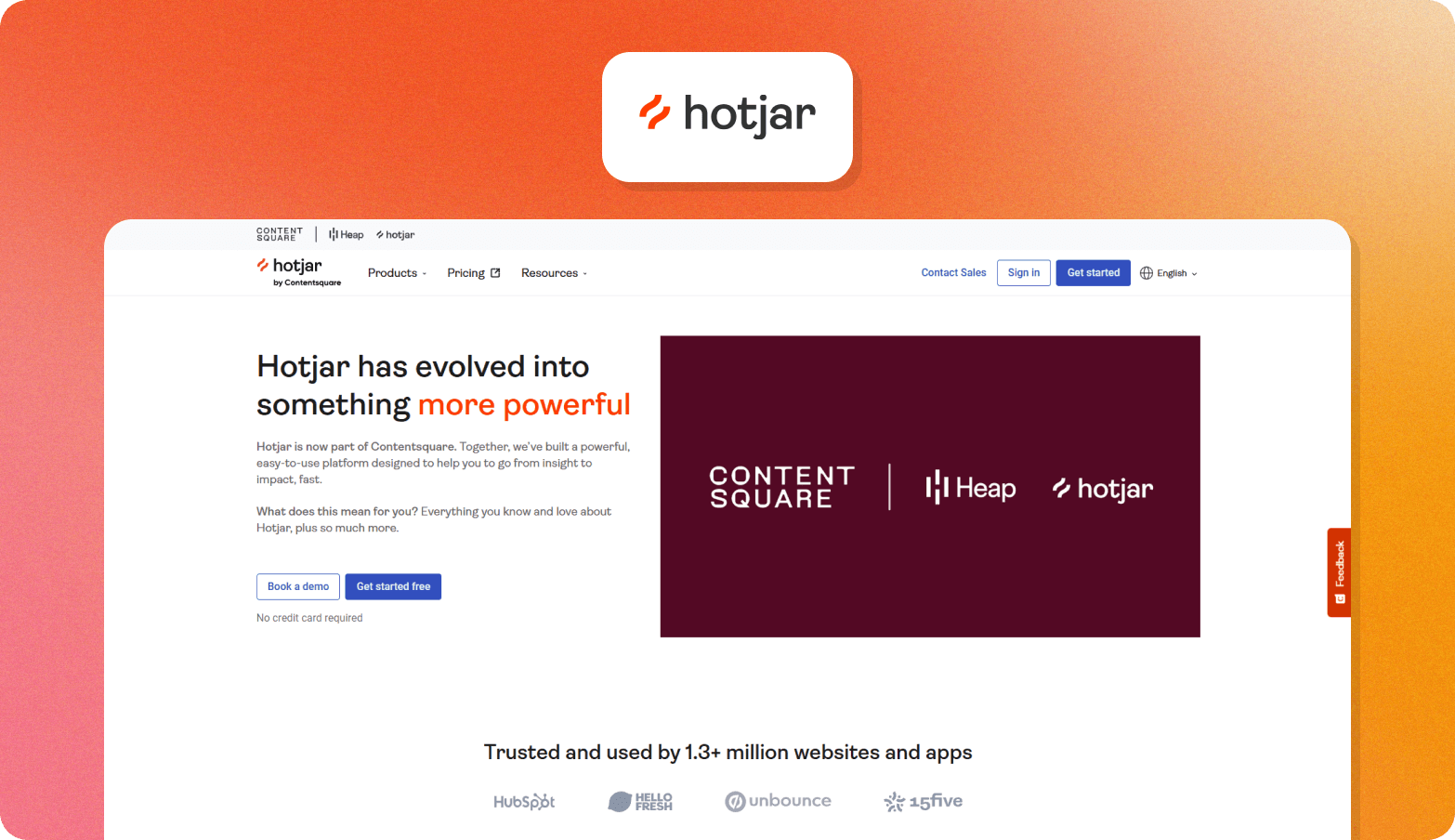
Hotjar, now part of Contentsquare, is a behavior analytics tool offering heatmaps, session replays, and on-page surveys.
Best For
Teams that want qualitative, page-level evidence, like where users hesitate or drop off, to ground a persona built in another tool.
Core Strength
Session replays and heatmaps show exactly how users interact with specific pages, and on-page surveys capture feedback in the moment. This gives a persona's pain points a concrete, observable source rather than a guess.
Key Limitation
Hotjar has no persona feature of its own. It's a source of input data, not a place to build or store a persona.
Pricing
From $39 per month, now sold as part of Contentsquare's Experience Analytics plans.
Synthetic Participant Tools
These tools generate AI personas you can interview. No real participants are involved, so treat the result as a starting draft rather than the final product, and validate it with real users.
14. Synthetic Users
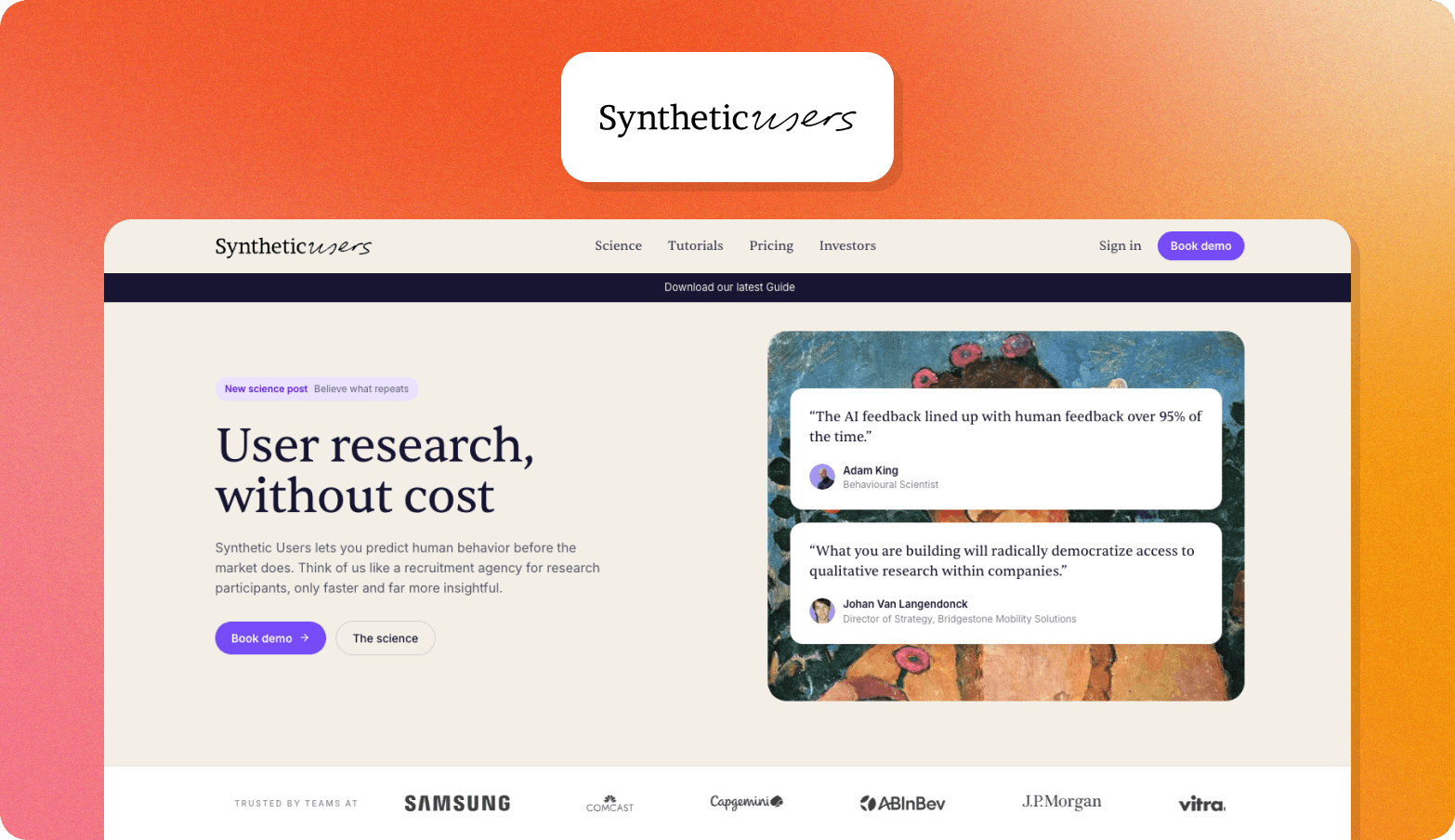
Synthetic Users generates AI participants with stable personality profiles that can be interviewed like real research subjects.
Best For
Teams that want to explore a concept, refine a discussion guide, or test messaging directions before committing budget to real participant research.
Core Strength
Each AI participant maintains a consistent personality throughout the interview rather than answering each question as a fresh prompt.
Key Limitation
The output reflects patterns in the AI's training data and any data you provide, not statements from actual customers.
Pricing
$2 to $60 per interview, depending on study complexity.
15. Marketing Mary
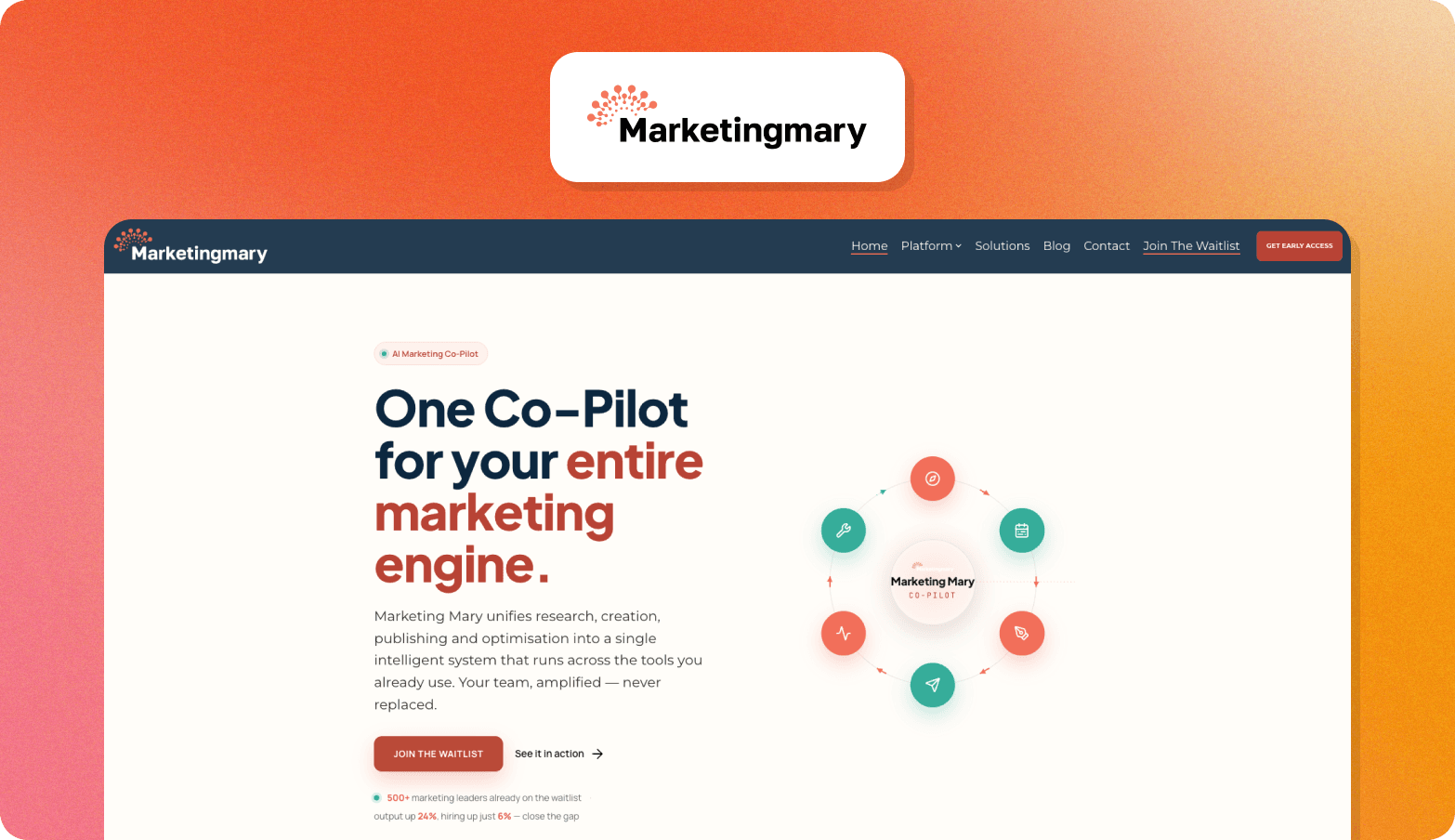
Marketing Mary is an AI marketing platform that generates synthetic buyer personas from connected CRM and analytics data.
Best For
B2B marketing teams at small and mid-sized companies who want to test concepts or messaging across a buying committee before launching campaigns.
Core Strength
Teams can hold a conversation with a persona to test how a message or pricing change might land.
Key Limitation
Conversations with the customer persona reflect the model's prediction of how that buyer type would respond, not verified statements from your target audience.
Pricing
From £99 per month for the Starter plan.
How to Build Evidence-Backed Personas from Real Interviews
From this list, it’s clear that real interviews with real customers produce the strongest evidence for persona creation. Here’s how to build your own qualitative research process from setting up interviews through to presenting personas to stakeholders.
| Stage | Duration | Owner | Output |
|---|---|---|---|
| Study setup | Around thirty minutes | Researcher | Discussion guide and participant criteria |
| AI-moderated async interviews | One to two days | AI moderator | Recorded interviews with real participants |
| Analyzing video, audio, and text | Automated | AI | Tagged themes, quotes, and clips |
| Writing up the persona | A few hours | Researcher | Draft persona linked to source evidence |
| Stakeholder evidence pack | Shareable immediately | Researcher | Persona plus supporting clips and quotes for review |
By using AI moderation rather than traditional, human-moderated interviews, you can cut down study timelines from weeks to days.
Enterprise Considerations: Governance and Compliance
If you opt for an AI platform to run interviews, it will handle real customer conversations and data. So before you choose, you need to check that the data will stay secure. Here’s what to look for:
Who can access the data, and how? Check that the platform lets you control who can view, edit, or export persona data, and that permissions can be managed across your research team.
Independent security audits. Look for SOC 2 certification and GDPR compliance, which confirm a vendor's security controls and data handling have been independently reviewed.
Where the data is stored. If you're in the EU, US, or another region with data residency rules, check that you can choose where participant data is hosted.
A record of what happened to the data. Make sure the platform keeps an audit trail of what was collected, when, and how it was used, so you can review it later if needed.
Conveo is SOC 2-certified and GDPR-compliant, with regional data hosting available based on a team's requirements.
How Conveo Builds Decision-Grade Personas from Real Conversations
A persona is only as strong as the real people behind it. Conveo is a video-first AI research platform built for exactly that kind of evidence: real interviews, with everything traceable back to the person who said it. Here's what that looks like in practice for personas.
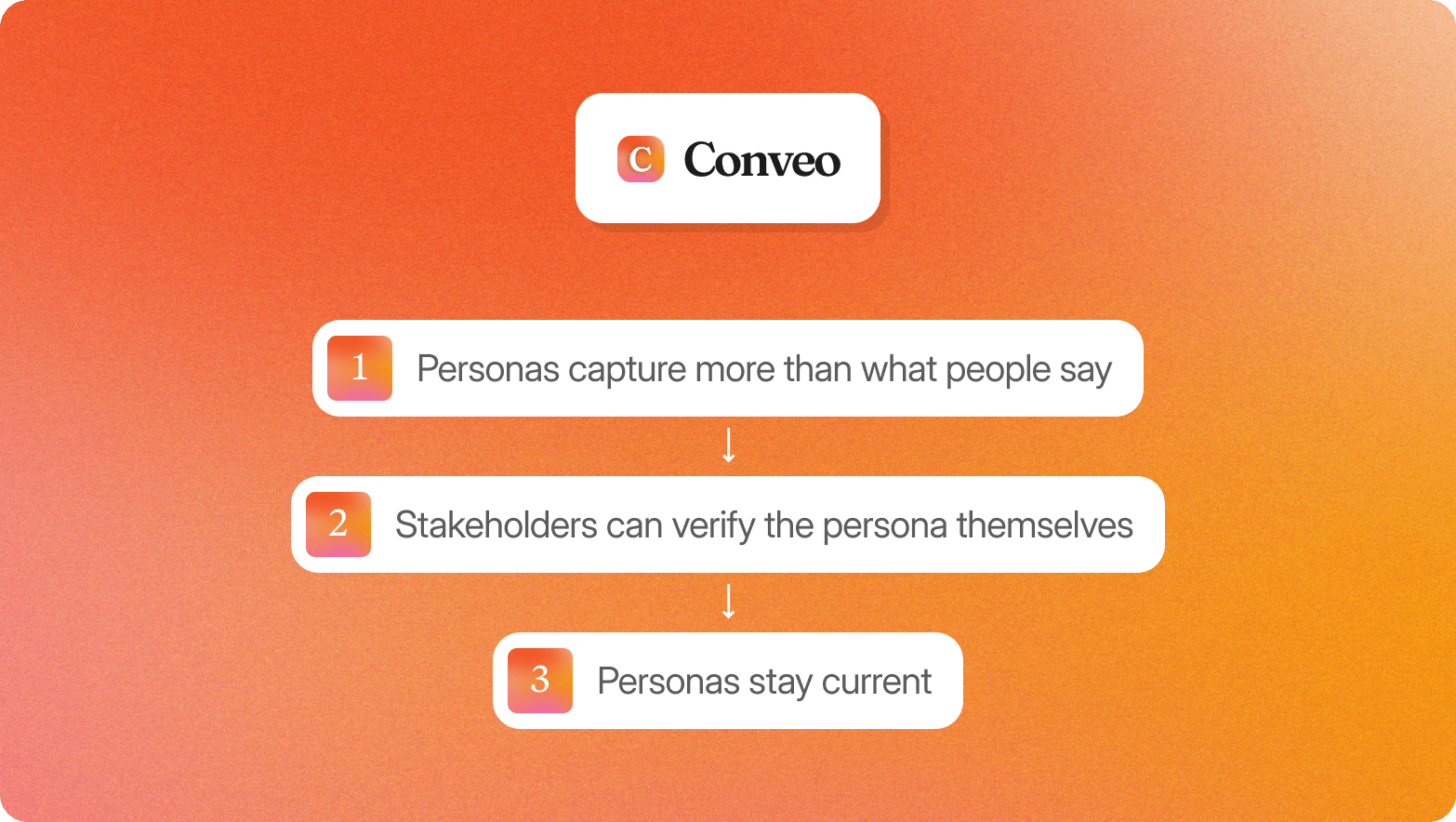
Personas capture more than what people say. Conveo's AI moderator analyzes video, audio, and text together, picking up hesitation, tone, and emotional reactions that a text-only survey would miss.
Stakeholders can verify the persona themselves. Every claim links to a timestamped clip or a quote, so anyone reviewing the persona can see exactly where it came from, without taking it on trust.
Personas stay current. Every new study feeds into the same searchable insight library, so you can check a persona built six months ago against current data.
See how Conveo turns interviews into traceable insights
Frequently Asked Questions
What is the best persona development tool?
The best persona development tool depends on how much scrutiny the persona must withstand. For early drafts and internal alignment, a template or synthetic tool may be enough. For decision-grade personas, where stakeholders need to trust the claims enough to act on them, the tool needs to trace every detail back to real participant data. This is the approach Conveo takes, building personas from real video interviews with evidence that stakeholders can check directly.
What are examples of persona development tools?
Persona development tools generally fall into four groups: Template and AI-generator tools give you a persona structure, sometimes filled in by AI from a short description. Xtensio, Miro, and HubSpot's Make My Persona are examples. Analytics-enriched tools build personas, or the inputs for one, from product, web behavior, or CRM data. Delve AI and Amplitude are examples. Synthetic participant tools generate AI personas you can interview or converse with directly, like Synthetic Users. Real-interview-based tools, like Conveo, build personas from real user interviews, with every claim traceable to a transcript or video clip.
Are there free persona development tools?
Yes, several persona development tools are completely free, particularly template and AI-generator options. These work well for organizing existing knowledge into a shared format. The trade-off is evidence. Free tools rarely connect persona claims to real participant data. For internal use, where no one will ask where the details came from, this is fine. For personas that need to withstand stakeholder scrutiny, relying on a free tool creates a false economy: the persona may look complete, but you can’t verify the data behind it.
What is a persona creation tool?
A persona creation tool is software that helps format and organize persona profiles, typically through templates that cover details such as demographics, job titles, goals, and pain points. These tools are usually the first step in the persona creation process. Creation is different from validation. A creation tool organizes the information you give it. A validation tool, or a platform with built-in validation, confirms that the information came from real users and shows where each claim originated.
What are user persona tools?
User persona tools focus specifically on product and UX contexts, building profiles around how users behave within a product rather than on general demographic details. Product, design, and sales teams use these personas to guide decisions across customer journeys, from onboarding through to renewal. The strongest user personas are built on behavioral evidence from real conversations with users, not assumptions about what a user in a given market segment is likely to do. Behavioral evidence shows what users actually did and why, which is a stronger foundation than demographic details alone.
What are the best persona development tools for small businesses?
Small businesses often benefit from lightweight tools with low setup overhead, since there is rarely a dedicated research team to manage a complex platform. That said, the size of the business doesn't change whether stakeholders will ask how a persona was built. A small business making a significant product or marketing decision still needs evidence to back up the persona if that decision is questioned later. The scale of the tool matters less than the quality of the data source behind it.

About the author
Alex de Hemptinne
Business Impact Lead
Alex is a Business Impact Lead at Conveo, partnering with enterprise teams to embed AI-led research into their workflows. From the first study to full-scale rollout, she helps customers shift from project-based research to continuous customer intelligence.
Meet Alex on film →Qualitative insights at the speed of your business.
Conveo runs AI-moderated video interviews and structures everything they say.