In this article
TL;DR
Stop waiting for a brief. Consumer-centric teams track what people say about their category 24/7, before anyone asks a question.
Fix the basics first. Maragkou standardized brand health, creative and pack testing globally before adding new tools.
Your heaviest users can show you the growth. Splitting Halls data by heavy and light users revealed a year-round refreshing occasion.
Tools fail without habits. Marketers and insights teams both prefer a neat deck to doing the work themselves.
Keep insights independent. A head of insights reporting to marketing struggles to say a beloved campaign is not working.
Angeliki Maragkou, a marketing and insights leader at Kimberly-Clark, built her case for always-on consumer research over years of insights leadership, including as global head of insights at Bayer Consumer Health. Her argument is that a truly consumer-centric company stays close to consumers all the time and has answers ready before a brief lands on someone's desk.
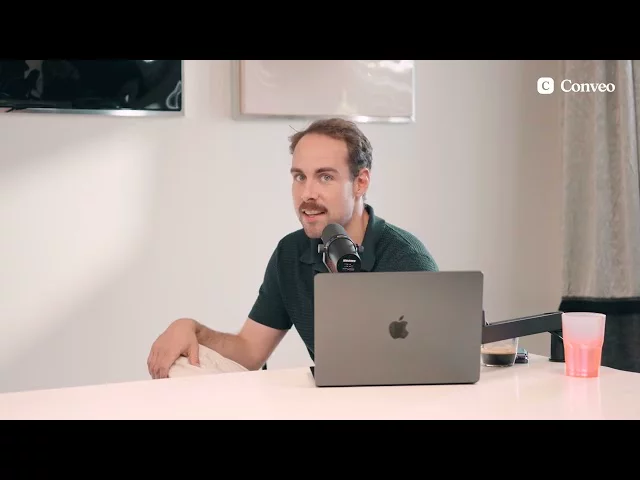
She shared the stories behind that view on Conveo's podcast, recorded live at Cannes Lions 2026. They cover rebuilding a fractured insights department, repositioning the Halls candy brand by studying its most loyal buyers, and a product launch that failed because the business asked for an insight to fit a product it had already chosen.
Consumer-centric teams stay close to consumers before the brief arrives
Most research is reactive. A brand has a problem, someone writes a brief, a study runs, and a deck comes back weeks later. Maragkou thinks that model leaves value on the table.
"If you want to be really consumer centric, you don't need to expect a brief. You don't need to expect a specific brand or business challenge."
Angeliki Maragkou, Marketing and Insights Leader, Kimberly-Clark
At Bayer she put that belief into practice by rolling out an enterprise-level social media platform so teams could follow their own brands, their competitors and the forums where consumers discussed pain points. She says she often could not understand why marketers were not already doing this with technology that was freely available. Her answer was to give them the tools and take away the pain of doing it one account at a time.
She also built an agile toolkit with technology vendors about ten years ago, well before the current AI wave. The vendors promised speed that sounded unrealistic at the time: "you will have 1,000 responses for x number of questions in 45 minutes and it was true." Those tools replaced more expensive ad hoc studies that markets had been commissioning and gave innovation teams rapid feedback.
Always-on only works once the basics are standardized
Before any of the faster tools, Maragkou started with foundations. When she joined Bayer Consumer Health, she says, the business still carried the legacy of its pharmaceutical parent. Every market could run any type of research, reports arrived in local languages, and learnings from a Chinese study never reached a German team. Brand health alone was measured ten different ways, so nobody had a global picture of how the brands were doing.
Her first move was a single global brand health program, followed by standard approaches to creative effectiveness before airing, pack design and marketing mix. She calls these the must-haves for knowing whether the marketing mix works. Markets objected that some of the global programs cost more than what they already had. She answered with tiered depth: lighter tracking for some brands, the full set of modules every three years for others, because a brand's image does not change month to month. Scale with agency partners brought better prices, and she stopped studies that duplicated what other programs already covered.
Her method for change is consistent across the conversation. "I never start with a solution because I might not know it. I discuss the challenge and we brainstorm." She applies that to agency partners too, expecting them to help design something new when their portfolio has no ready answer. Teams setting up the same foundations can start with brand health tracking that explains the numbers, then build toward always-on market research intelligence.
Your heaviest users can show you where growth is hiding
The Halls story is her clearest example of what close consumer contact buys. Halls stood for cough and cold. It was a market leader and had hit a growth plateau, and with warmer winters cutting into the cold season, staying a seasonal product looked dangerous.
The team began with the data. Totals and averages always showed the same seasonal peak. When they split the data by heavy and light users, a different pattern appeared: heavy users bought Halls throughout the year. That group is usually ignored, Maragkou notes, because "you usually want to understand the light and the light buyers or the ones that have tried you but they did not repeat the purchase."
Talking to the heavy users explained the pattern. As she relays what they told the team:
"We don't do it only when we have a sore throat or an irritation, we actually find menthol very refreshing."
Angeliki Maragkou, Marketing and Insights Leader, Kimberly-Clark
The product could deliver on that, so the brand began a multi-year shift from cough and cold toward a year-round refreshing proposition, helped by flavor extensions in some Latin American markets. Growth came first in countries such as Greece and in Latin America, she says, and later in North America. Further work on barriers led to smaller candies in new shapes for on-the-go occasions, which also brought hard lessons about stability testing: candies that stuck to their wrappers or to each other in kiosk heat. A similar pattern of growth hidden in unplanned use appears in Ozge Akcizmeci's Swiffer story.
Tools fail when nobody wants to get their hands dirty
Maragkou is candid about adoption. The social media platform worked well as long as the vendor's service hours covered extracting insights for the teams. When teams had to do it themselves, usage dropped. People wanted, in her words, "Give me the insights in the neat PowerPoint and with the recommendations."
She sees the same habit on both sides. Marketers do not dig in, and insights teams often take the easy route too, handing questions to a tool or a vendor instead of learning alongside the business. She contrasts that with the passion people bring to a new campaign and suggests insights need to be sold the same way, as nuggets that feed the campaign.
Budget pressure makes it worse. "When companies are looking for savings they are not cutting from the data, so the third party data, meaning your in market performance, it usually comes from the qualitative." In her view, the qualitative work that builds consumer closeness is the more valuable part, and it is the first to go.
One fix she used was immersion. With an agency, her team built a program that took a day out of leadership calendars to experience consumers' problems directly, wearing glasses and gloves that mimicked the eyesight and joint problems some consumers live with, then trying to read and open the company's own products. She says such immersions are rare, and companies should run more of them.
What this means for insights and marketing leaders
Maragkou now works on marketing transformation, and she has carried her insights habits into it. She treats the marketers who use internal processes and tools as her consumers, asking why a good tool goes unused and hearing answers like a platform that is not user friendly or takes too much time. Her rule is to treat every project, every transformation project in marketing, in this way, and her recipe is short: "find the tension, find the solution and work both on the rational and the emotional side." Repeat the message, and leave people room to play inside clear guardrails, freedom within a frame.
Four practical points follow for leaders:
Get a senior sponsor and earn their trust with results. She credits a CMO who came from Unilever and backed the program, and says trust grew as her team delivered.
Put insights where it can speak freely. She argues the head of insights should report to the CEO, because when your boss runs marketing, telling them that a campaign they love is not working gets hard. Her blunt version: "Your boss, you need to be independent."
Resist reverse-engineered insights. Her most painful failure began when a business asked her team to "find an insight to build a product that has this characteristics. So reverse engineer the needs." The product earned trial without repeat purchase and was discontinued within about six months. The insights team had warned the business: "We had highlighted all these risks and that there was not real tension, we don't solve any problem."
Measure the right things. Asked for an overrated metric, she named brand love. "Consumers don't love brands." As she put it, "They love their parents, their kids." Her conclusion: "I don't believe in brand love."
Close to consumers before the question arrives
Maragkou's career makes the same point from several angles. The Halls repositioning came from talking to people the business usually ignored. Her failure came from skipping real tension. Her adoption struggles came from teams that preferred a finished deck to staying close to consumers themselves. She says "you learn more from the failure." Her failures point the same way as her wins.
Always-on research is how insights teams keep that closeness without waiting to be asked. Conveo's AI research assistant runs video conversations with real consumers, so insights teams can get to the why behind behavior faster and bring it to the business before the brief arrives.
Frequently Asked Questions
What is always-on consumer research?
In Angeliki Maragkou's framing, it means staying close to consumers continuously through social media, forums and other open sources, so a team understands them before any brief or business problem arrives.
Who is Angeliki Maragkou?
Angeliki Maragkou is a marketing and insights leader at Kimberly-Clark working on marketing transformation. She previously led insights at Bayer Consumer Health and worked on the Halls candy brand earlier in her career.
Why does Maragkou think the insights function should be independent?
If the head of insights reports to the head of marketing, it becomes hard to say that a campaign marketing loves is not working. She argues insights should report to the CEO.
How did heavy users help reposition Halls?
Splitting the data by heavy and light users showed heavy users bought Halls all year. Talking to them revealed they found menthol refreshing, which opened a path from a cough and cold candy to a year-round refreshing one.
Why does Maragkou say brand love is overrated?
She argues consumers do not love brands the way they love their parents or children, so brand love is the wrong thing to measure or chase.

About the author
Tom Husson
CMO
Tom is CMO at Conveo, where he leads marketing and builds the company's AI-native go-to-market engine. He hosts the Conveo podcast, recorded at Cannes Lions 2026 with brand, insights and marketing leaders.
More by Tom →Qualitative insights at the speed of your business.
Conveo runs AI-moderated video interviews and structures everything they say.