In this article
TL;DR
Unplanned uses are gold. Swiffer buyers used the cloths without the mop, a detail that changed demand for refills.
Stated intent overstates. Purchase intent scores vary wildly by country and only mean something against a benchmark.
Trust carries the insight. Clients act on findings when they trust the person delivering them.
Borrow qual techniques for quant. Projective questions and careful data cleaning get closer to real needs.
Look for data you already have. A dormant 1.5 million person contest list became research at almost no cost.
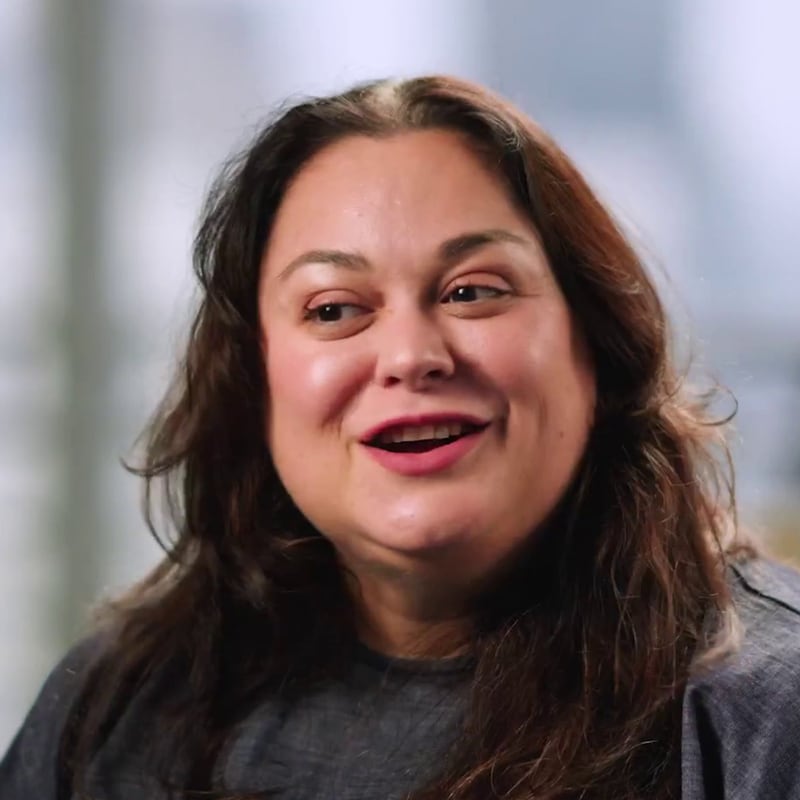
Özge Akcizmeci has spent her career finding things marketers did not know to look for. She founded Nielsen BASES in Turkey, worked for Ipsos in Turkey and Geneva, and later founded Vici, which was acquired by YouGov. The Swiffer insight she helped surface captures her view of research: its biggest value lies in revealing how people actually use a product, including uses nobody planned, and that value only lands when the client trusts the person delivering it.
She shared that view on Conveo's podcast, recorded live at Cannes Lions 2026. Her examples cover a cleaning launch in Europe, an investment app in a country with 65% inflation, and a Unilever contest database that had sat unused for years.

Consumers reveal uses no marketer planned
Nielsen BASES, as Akcizmeci describes it, is a forecasting tool that combined consumer concept tests with a client's three-year marketing plan. The output answered two questions: does the concept resonate, and how much will it sell in a given country, so the client could judge profitability and factory capacity.
One of the launches she remembers best is Swiffer, the mop with a disposable cloth, in what she recalls as its first European launch around 2005 or 2006. The research showed consumers were doing something the brand had not designed for. They found the cloths so effective that they took them off the mop and used them by hand on counters, on the TV and to dust. For the business, that meant more demand for refills than the plan assumed.
"These kind of details that a marketer could not see."
Özge Akcizmeci, Founder, Vici (acquired by YouGov)
The second value, she says, was accuracy. Realistic forecasts let marketers and senior leaders build plans on solid assumptions. And outside evidence matters because teams fall in love with their own launches. As she puts it, "we could be blind to what we are doing, it's like our baby." Hearing that the value perception is wrong for a country can shake a team into better action.
Stated purchase intent overstates what people will buy
Asked for an overrated metric, Akcizmeci named purchase intent, while joking that her industry would kill her for saying it. Her objection comes from years of benchmarking. On some measures, she says, an average of 85% of Turkish consumers would buy anything. "So then everybody will sell millions," she adds.
The reason BASES worked was that it always read a score against a benchmark. "Every country overstates differently," she says. In her memory, average scores in Japan sat around 20 to 25%, while in Saudi Arabia an average score was 90. "So you cannot really cross compare the categories or the countries." Every concept was benchmarked against others in the same category and country, which told marketers whether a result was above or below average.
She thinks the standard way of asking about purchase intent needs to change. For research teams, the practical lesson is to treat stated intent as a relative signal and look for evidence of real behavior. Our piece on research participant bias covers the forces that inflate what people say.
Insights change decisions only when clients trust the researcher
Akcizmeci notes that at Cannes, brand after brand was talking about trust. She thinks it applies to researchers as much as to brands.
"If your client does not trust you as a person, like of course as an agency as well but also as a person, then I think you cannot have an impact on any business decision."
Özge Akcizmeci, Founder, Vici (acquired by YouGov)
Insights are analyzed and interpreted by people, she explains, so the researcher's credibility carries the finding. That matters most when you say something beyond the data or connect a result to trends in the wider world. She even gives Steve Jobs, often seen as a research skeptic, some credit: "we have to always go beyond the data with a bit of gut feeling with the experience."
She breaks trust into three parts. The first is a track record, built project by project. The second is understanding the client's real constraints. Some global launches will happen regardless, so the useful recommendation is how to make that launch most effective. If the client must use the blue pack even though the green tested better, a researcher who insists on green loses the room. "You have to be understanding the client," she says. The third is bringing a broad view, constantly noticing things in supermarkets and daily life that could help a client, even from unrelated categories.
Getting to real needs takes projective questions and clean data
Akcizmeci pushes back on reading consumer responses as a linear set of scores. A 65 and a 75 tell you little until you go deeper into what people are trying to say. She also warns against going too deep: "sometimes some clients are very much bogged down in detail that they lost all the big picture."
Her most reliable technique is borrowing from qualitative research.
"Using qualitative projective techniques in quant works."
Özge Akcizmeci, Founder, Vici (acquired by YouGov)
Instead of asking whether an app is for you, ask whether your best friend would use it, whether people like you would, or what the concept would be like as a person. She adds careful localization, knowing what each translated word really corresponds to, and reading verbatims, since some people volunteer more than others.
Her final point is a warning about speed. "Because of the speed pressure you don't have time so much to check sometimes the data," she says. If someone claims to love an app but their other answers do not match, the gap deserves a check before the result goes into a deck.
The investment app launch she worked on in Turkey shows the method in action. The app was founded by a former bank vice president, and the team ran the usual qual and quant phases with segmentation. Then they went further: they selected 200 people across segments, had them download the app, gave them virtual money, and compared what they said in surveys with what they actually did. In a country that she says had 65% inflation a couple of years earlier, investing had become a need for everyone, including people with no investing knowledge. The app, she says, now has 150,000 users. Pairing stated responses with observed behavior is the core idea in our guide to multimodal research.
The cheapest research may already sit in your database
Akcizmeci founded Vici in 2017 with a simple idea. Online panels in Turkey were small, so she borrowed the targeting tools advertisers use on social media. Instead of an ad, the banner carried a link to the research. "So all social media was my panel," she says. She could reach audiences like jazz lovers, about 0.7% of the population in her example, or parents of young children, quickly and cheaply, and the targeting reflected real interests people had chosen to share.
That approach also let marketers act on research. For a Magnum vegan launch at Unilever, she says, the brand could retarget the vegan consumers found through research and use lookalike audiences to reach more people like them.
Her fastest moment of understanding came from the same client relationship. A Unilever contact mentioned that every Magnum prize draw, with a Ferrari as the prize, attracted around 1.5 million consumers who had given consent under GDPR, and the brand was not using that data. Akcizmeci's reaction: "that's something not to be missed." They ran research through the next draw, which ended up with "8,000 people answering the research with zero costs basically."
What this means for insights and marketing leaders
Akcizmeci's career offers a short checklist.
Look for off-label use. Ask how people actually use a product, and treat surprises like the Swiffer cloths as demand signals.
Benchmark every stated score. Read purchase intent against the same category and country, and pair it with behavioral evidence.
Invest in credibility. Researchers build influence through track record, by working within the client's real constraints, and by bringing a wide view of the world.
Use projective questions at scale. Indirect questions borrowed from qual can make quant answers more honest.
Protect time to check the data. Speed pressure is real, and inconsistent answers deserve a second look.
Audit the data you already own. Contest entries, CRM lists and past studies can become research audiences.
She also had a message for the industry, especially for mothers and women considering founding a company. She founded Vici while breastfeeding, after promising her former employer she would not approach the clients she had served for the previous two years, and built everything from scratch. Her advice is that "you could be both authentic and brave to do that if you're really willing to."
Seeing what people actually do is still the edge
Akcizmeci's stories share one idea: the most valuable findings sit in the gap between what a brand planned and what people actually do, and they only change decisions when the researcher has earned the client's trust. Swiffer cloths without the mop, investors whose actions differed from their answers, a contest list nobody had tapped: each was there for whoever looked closely.
Conveo's AI research assistant runs video conversations with real consumers, so insights teams can get to the why behind behavior faster. The judgment about what a surprise means, and the trust to make a client act on it, still belongs to researchers like Akcizmeci. Another Cannes guest, Carole Irgang, makes a similar case with her story about the consumer truths behind Downy. For more on running concept research that holds up, see our guide to concept testing.
Frequently Asked Questions
Who is Özge Akcizmeci?
Özge Akcizmeci is a market research veteran who founded Nielsen BASES in Turkey and later founded Vici, which was acquired by YouGov. She also worked for Ipsos in Turkey and Geneva and has lived in six countries.
What was the Swiffer insight Akcizmeci describes?
During Swiffer's first European launch, which she places around 2005 or 2006, research showed consumers were taking the cloths off the mop and using them on their own to dust counters and TVs. That pointed to more demand for refills, a detail marketers had not planned for.
Why does Akcizmeci call purchase intent overrated?
Stated purchase intent overstates what people will buy. She notes that average scores differ hugely by country, from around 20 to 25 percent in Japan to around 90 in Saudi Arabia, so scores only make sense against country and category benchmarks.
Why does trust matter so much in market research?
Akcizmeci argues that insights are interpreted by people, so the researcher has to be trusted personally. Without that trust, even a strong finding will not change a business decision.
How did Akcizmeci use social media as a research panel?
At Vici, starting in 2017, she used social media ad targeting to reach precise audiences, such as jazz lovers or parents of young children, and placed a research link where the ad would normally go. That gave her targeted samples quickly and cheaply.

About the author
Tom Husson
CMO
Tom is CMO at Conveo, where he leads marketing and builds the company's AI-native go-to-market engine. He hosts the Conveo podcast, recorded at Cannes Lions 2026 with brand, insights and marketing leaders.
More by Tom →Qualitative insights at the speed of your business.
Conveo runs AI-moderated video interviews and structures everything they say.