In this article
TL;DR
Voice of the Customer tools vary widely in what they can tell you. Some are built to monitor feedback at scale, while others are built to explain why customers think or behave the way they do.
Beyond features, look at the evidence each tool gives you to base decisions on: can findings be traced back to real customer feedback, and can that evidence be reused across future research?
This guide compares 15 Voice of the Customer tools so research, insights, product and CX teams can match the tool to the kind of evidence they need.
Conveo runs VOC research as an ongoing program where each new study adds to what the team already knows.
Companies collect customer feedback from more channels than ever before, and more channels still don't guarantee a clear understanding of why customers think and behave the way they do. High satisfaction scores can hide a specific frustration, while recurring comments can tell you that something is wrong without explaining what's driving it.
A strong Voice of the Customer program turns those signals into evidence teams can use to make decisions. That means going deeper when the answer alone isn't enough, and making sure new research adds to what the business already knows.
This guide compares 15 Voice of the Customer tools across research depth, evidence quality, governance, speed, and how well findings can be reused over time. By the end, you'll know which tools can give your team enough context and evidence to make customer-led decisions with confidence.
When surveys fail: the case for VOC interviews
Many companies start with surveys when they need to collect customer feedback, because they're easy to set up and cost-effective. The problem arises when you need to go deeper than what customers say and understand why they say it.
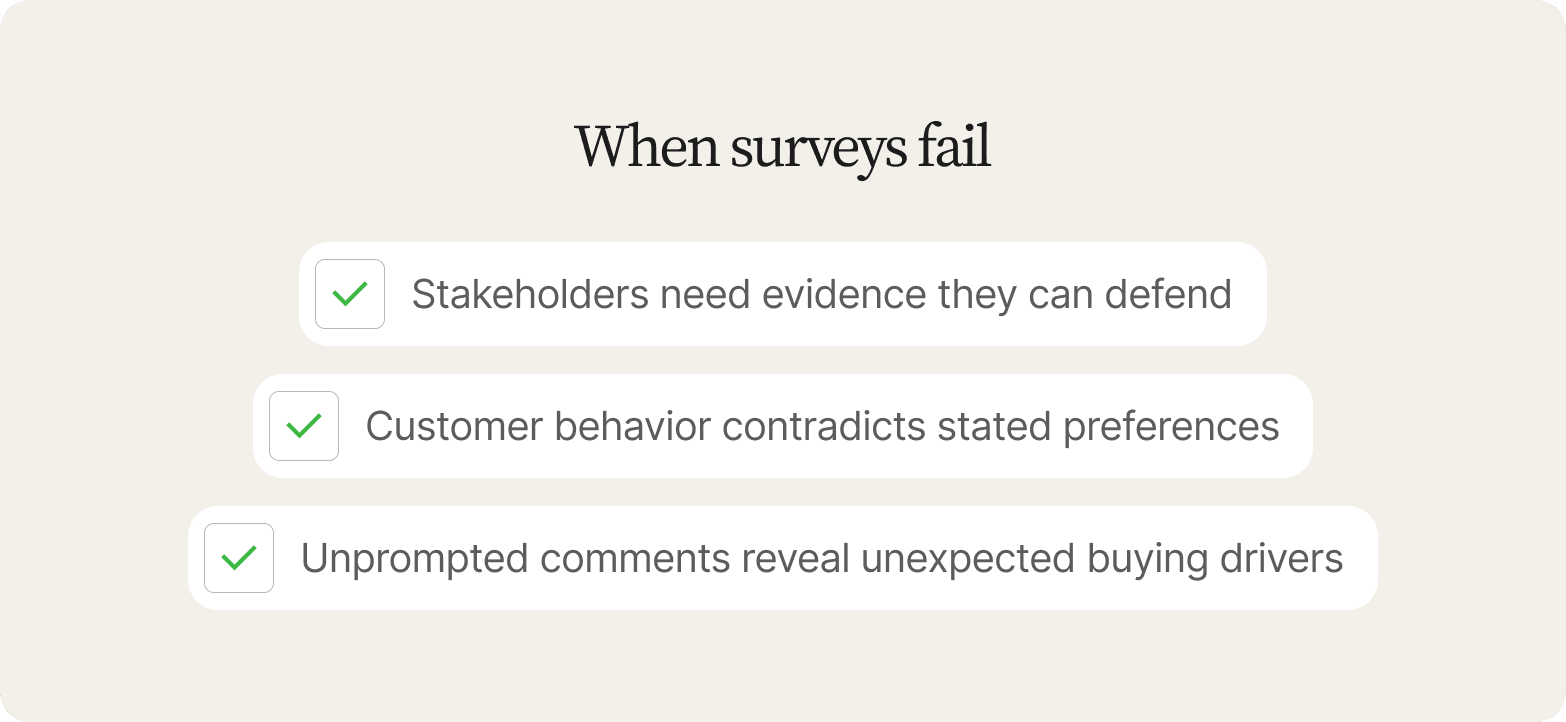
Customer surveys can struggle when:
Stakeholders need evidence they can defend. A team might know that customers prefer a new onboarding flow, while executives want to understand what specifically made the old experience frustrating.
Customer behavior contradicts stated preferences. Customers might say they want more product features, while usage data shows they rarely use the features they already have.
Unprompted comments reveal unexpected buying drivers. A customer might hesitate when discussing price, then mention an unfamiliar competitor or an internal approval process that the survey never covered.
VOC interviews reveal why customers give those answers by responding to what each person says. If someone contradicts themselves or gives a vague answer, the interviewer can ask a follow-up question to understand what's behind it. With every response traceable to the participant who gave it, teams can see the evidence behind a finding and the reasoning they need to make and defend a decision.
How to evaluate VOC tools against your business outcomes
Comparing VOC tools is easier with a consistent framework. Score each tool against the criteria below to see where it's strongest and where it may create problems for your team.
| What to evaluate | Weight | Why it matters |
|---|---|---|
| Evidence from real participants | 25% | Shows whether findings can be tied back to the people who gave the feedback, so stakeholders can check the evidence behind a claim. |
| Interview depth | 20% | Shows whether the tool can ask follow-up interview questions or sticks to a fixed VOC template. |
| Governance and compliance | 20% | Helps you assess whether the tool meets your requirements for data protection, access, security and auditability. |
| Speed to findings | 15% | Measures how quickly you can move from completed interviews to usable findings, which matters when research capacity is limited. |
| Value of the growing insight library | 10% | Considers whether findings can be searched and reused over time, so new VOC research builds on what you've already learned. |
| Integrations | 10% | Shows how easily research fits into your existing tools and workflows without creating extra manual work. |
These weights are a good starting point for most teams, and you can adjust them to your priorities. Healthcare and other regulated businesses may give governance and compliance more weight, while small research or insights teams may weight speed higher. For enterprise teams that regularly present research to senior leadership, evidence from real participants may matter most.
15 Voice of the Customer tools compared
Voice of the Customer tools take different approaches to gathering and understanding customer feedback. Some focus on measuring feedback at scale, while others help teams investigate customer concerns in more depth.
This comparison looks at where each approach is useful and what kind of evidence it can provide. Here's a quick overview before the full profiles:
| Tool | Approach | What it helps you understand | Evidence | Best suited to |
|---|---|---|---|---|
| Qualtrics | Survey-led VOC | Satisfaction, sentiment and feedback across channels | Survey and feedback data, with AI analysis of themes and sentiment | Enterprise teams managing feedback across multiple channels |
| Medallia | Survey-led VOC | Customer experience across online, in-person, contact center and chat interactions | Survey responses and existing conversations | Large enterprises monitoring CX across many touchpoints |
| Zonka Feedback | Survey-led VOC | Recurring customer problems across feedback channels | Customer feedback and recurring themes | Teams managing feedback across multiple locations |
| SurveyMonkey | Survey-led VOC | Customer preferences and feedback through quantitative research | Survey responses and text-based open-ended feedback | Product and UX teams running survey-led programs |
| Glassbox | Digital experience analytics | Where digital experiences break down, by connecting feedback with behavior | Direct feedback plus session data | Teams investigating website and app experiences |
| CallMiner | Conversation analytics | Recurring issues, pain points and competitor mentions in customer conversations | Existing customer service conversations | Teams with large volumes of customer interactions |
| Conveo | AI-moderated interviews | Why customers think or behave a certain way, through ongoing interviews | Participant video, transcripts, quotes and findings | Teams that need defensible qualitative evidence over time |
| Outset | AI-moderated interviews | Customer responses through AI-moderated qualitative research | Interview quotes and video clips | Product and UX teams running qualitative research at scale |
| Discuss | AI- or human-moderated interviews | Qualitative insight through AI- or human-moderated interviews | Timestamped quotes and video clips | Enterprise teams running multilingual qualitative research |
| UserTesting | Usability and customer research | How people use and react to products and experiences | Participant sessions and research repositories | Product, UX and CX teams running frequent usability research |
| Remesh | Group research | Areas of agreement and disagreement in large groups | Participant responses and AI analysis | Teams running concept and messaging research |
| Dovetail | Research repository and analysis | Patterns across existing customer research | Source material linked to AI-generated insights | Companies with large amounts of existing research |
| Thematic | Feedback analysis | Recurring themes in existing feedback, connected to business metrics | Customer feedback, themes and VOC metrics | Enterprises analyzing large feedback volumes |
| Salesforce Service Cloud | CRM-based VOC | Feedback connected to service cases and customer records | Survey results and service interactions | Teams already using Salesforce Service Cloud |
| Forsta | Research and CX platform | Themes and emerging issues across VOC and wider business data | Customer feedback and other business data | Enterprise teams already using Forsta |
The profiles below are grouped by category, so you can compare the tools within the approach most relevant to your team.
Survey-led VOC platforms
Survey-led VOC platforms capture customer feedback at scale and measure how sentiment changes over time.
1. Qualtrics
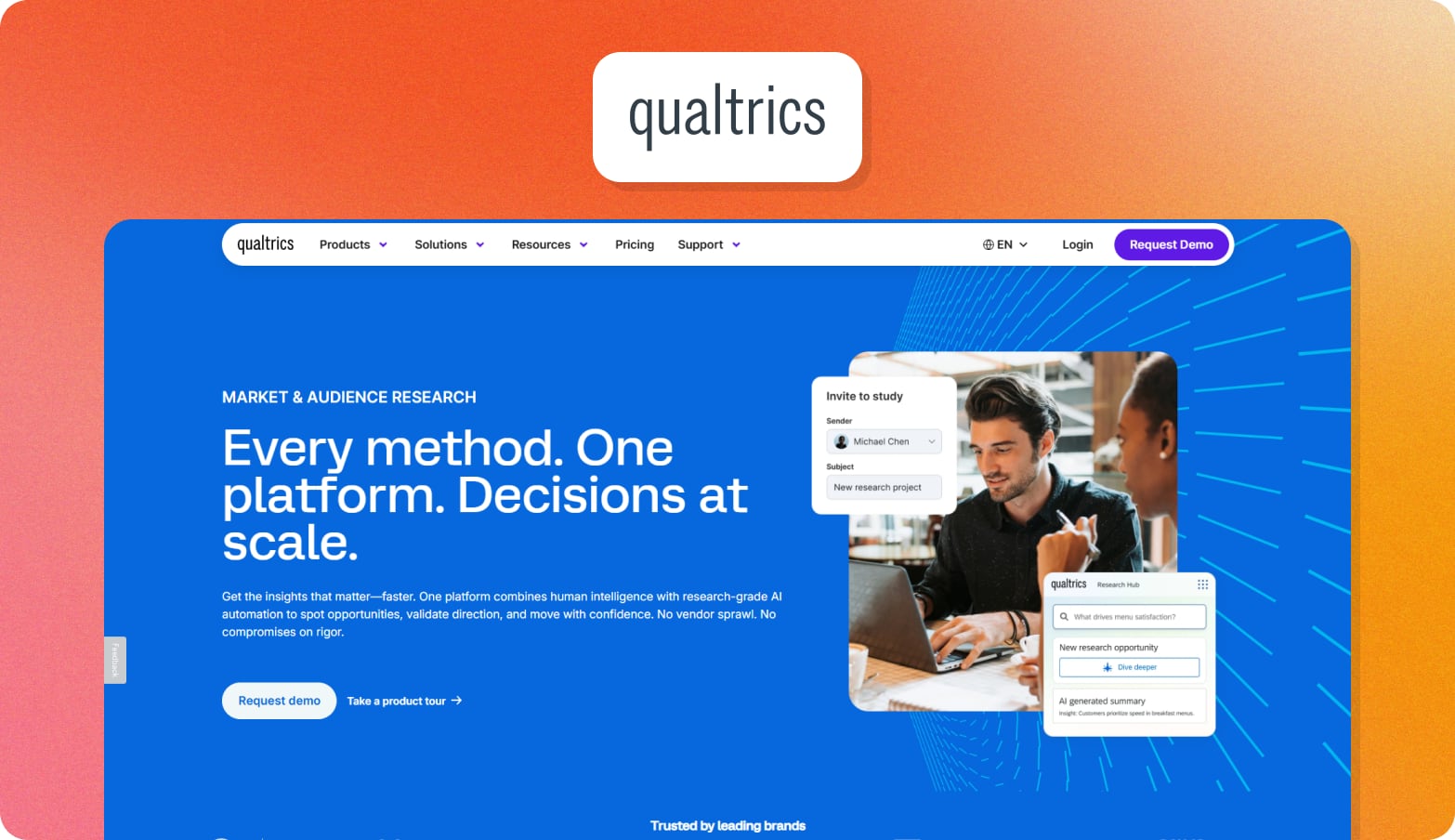
Qualtrics is an experience management platform with VOC tools that bring customer feedback from surveys and other interactions into a single system. It analyzes structured and unstructured feedback for themes and sentiment, with workflows that can route issues for follow-up.
Strengths:
Broad channel coverage reduces the need to stitch together separate feedback sources.
Qualtrics Assist lets teams query feedback themes and sentiment in natural language and analyze large volumes of responses quickly.
Built-in workflow automation can create cases in tools like Zendesk and Salesforce and route recurring issues to the right teams.
Limitations:
Its conversational feedback feature adds AI-generated follow-up questions to survey responses, with less depth than an open-ended interview.
Best for: Enterprise teams that need to collect and manage customer feedback across multiple channels and connect it to existing workflows.
2. Medallia
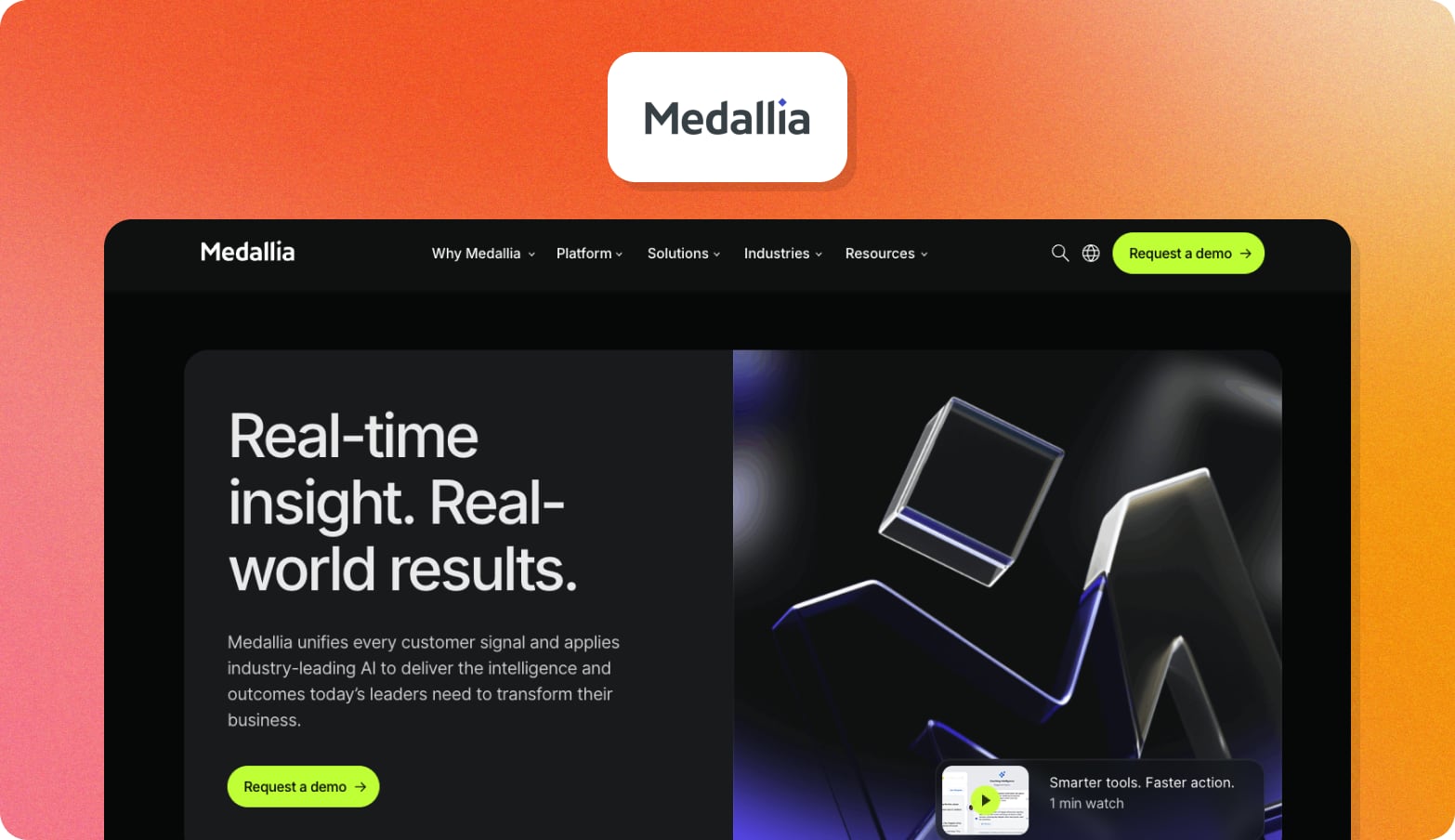
Medallia is a customer experience platform that gathers Voice of the Customer feedback across online and in-person interactions, with AI that turns that feedback into insights and next-best actions.
Strengths:
Captures feedback from online, in-person, contact center and chat interactions, giving teams a broader view of customer experience.
Can analyze conversations as well as survey responses to find common themes and changes in customer sentiment.
Strong compliance coverage, including SOC 2 Type II and GDPR.
Limitations:
Medallia doesn't run moderated or AI-moderated interviews. Its Video Research tool transcribes and analyzes video content like focus groups or video survey responses after the fact.
Best for: Large enterprises that want to monitor and analyze customer experience across multiple touchpoints in one platform.
3. Zonka Feedback
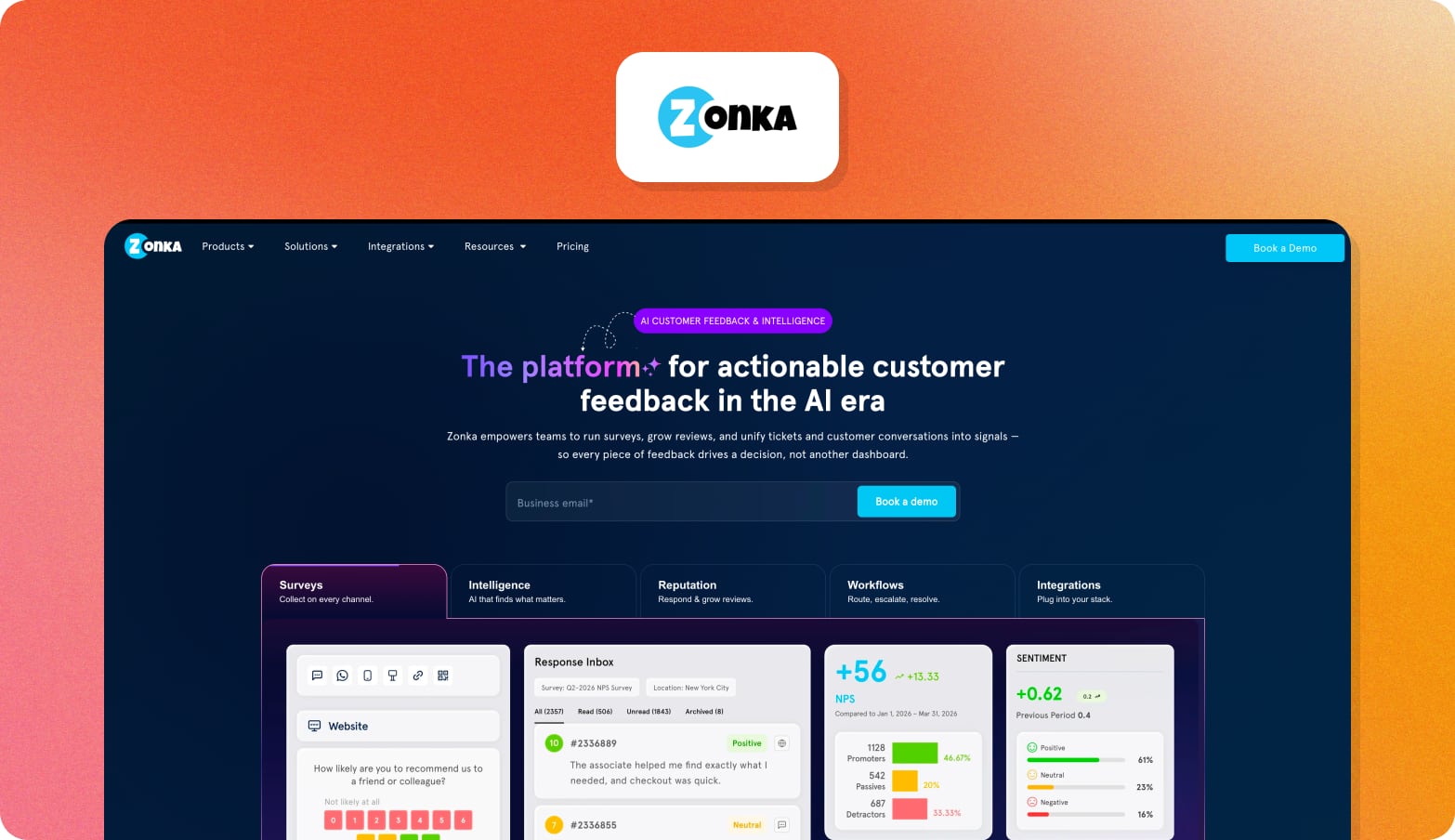
Zonka Feedback analyzes customer feedback across different channels to identify recurring problems and send them to the people responsible for resolving them.
Strengths:
Collects feedback from new and existing customer interactions.
Identifies recurring themes and ranks them by their potential impact on customer experience, helping teams focus on the issues that matter most.
Connects feedback to existing workflows, so issues can be assigned and followed up without leaving the tools teams already use.
Limitations:
Zonka doesn't run moderated or AI-moderated interviews.
Pricing is custom and quote-based, which may make it less accessible for small teams.
Best for: Multi-location enterprises that need one centralized system for collecting and prioritizing feedback across many channels.
4. SurveyMonkey
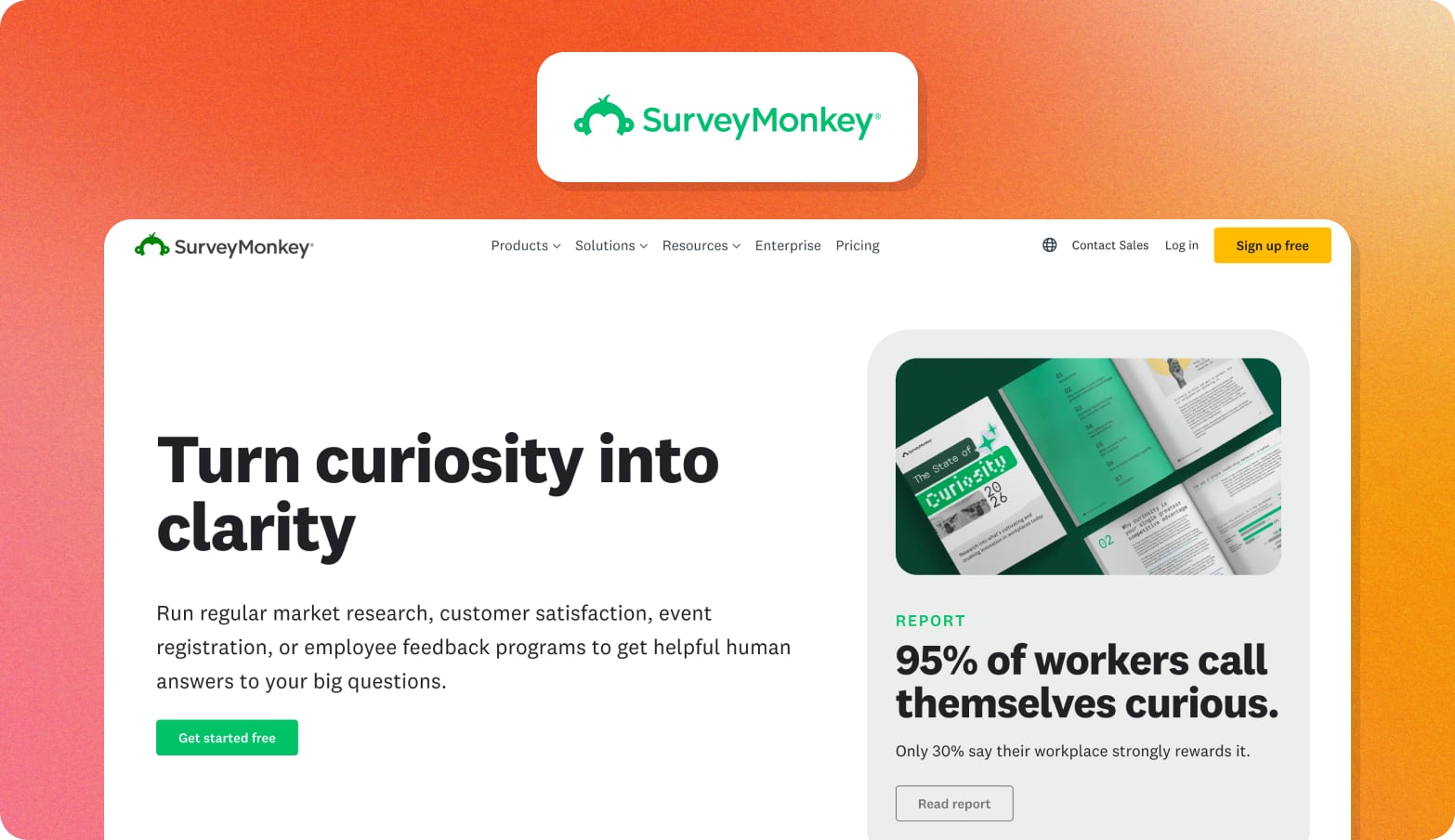
SurveyMonkey treats VOC as one use case within a broader survey platform. It supports feedback collection across channels such as email, SMS, WhatsApp, QR codes and in-app prompts, with AI analysis of themes and sentiment in open-ended responses.
Strengths:
Access to a panel of more than 335 million people with detailed targeting and census balancing.
Advanced methods such as MaxDiff and Van Westendorp price optimization support more sophisticated quantitative research than basic satisfaction surveys.
Feedback can be pushed into Slack or Microsoft Teams, so relevant responses reach existing workflows.
Limitations:
It doesn't offer qualitative interviews or video and audio evidence. Analysis of open-ended feedback is text-based.
VOC is one application of a general-purpose survey platform, so teams looking for dedicated qualitative research or VOC capabilities may need another tool.
Enterprise controls such as SSO and data-center selection are limited to the Enterprise plan.
Best for: Product and UX teams running quantitative feedback programs that want panel access.
Multi-channel analytics platforms
Multi-channel analytics platforms combine customer feedback with data from customer service interactions and digital experiences, showing what customers do alongside what they say.
5. Glassbox
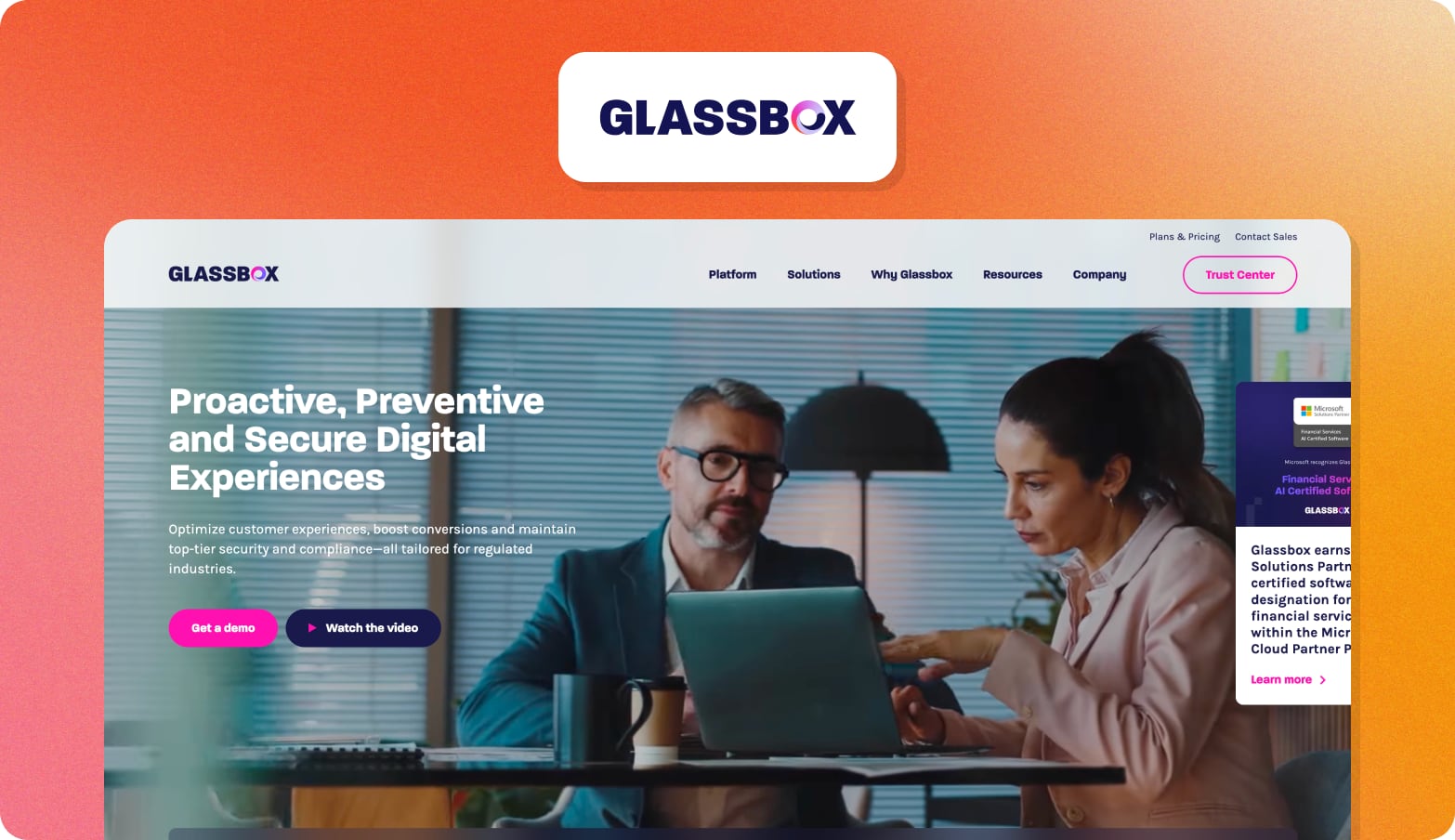
Glassbox uses digital behavior data to help teams understand what happens during customer journeys on websites and apps. Its Voice of the Silent tool connects feedback from customers who respond with session data from customers showing similar behavior.
Strengths:
Extends feedback beyond survey respondents by finding similar behavior among customers who don't leave feedback.
Links feedback scores to session recordings, so teams can see what happened during the customer's digital experience.
Can trigger feedback requests when it detects signs of struggle.
Limitations:
Voice of the Silent infers what silent customers may have experienced from similar behavior. Teams can't treat those explanations as direct customer evidence.
Best for: Teams that want to connect customer feedback with website and app behavior to understand where digital experiences break down.
6. CallMiner
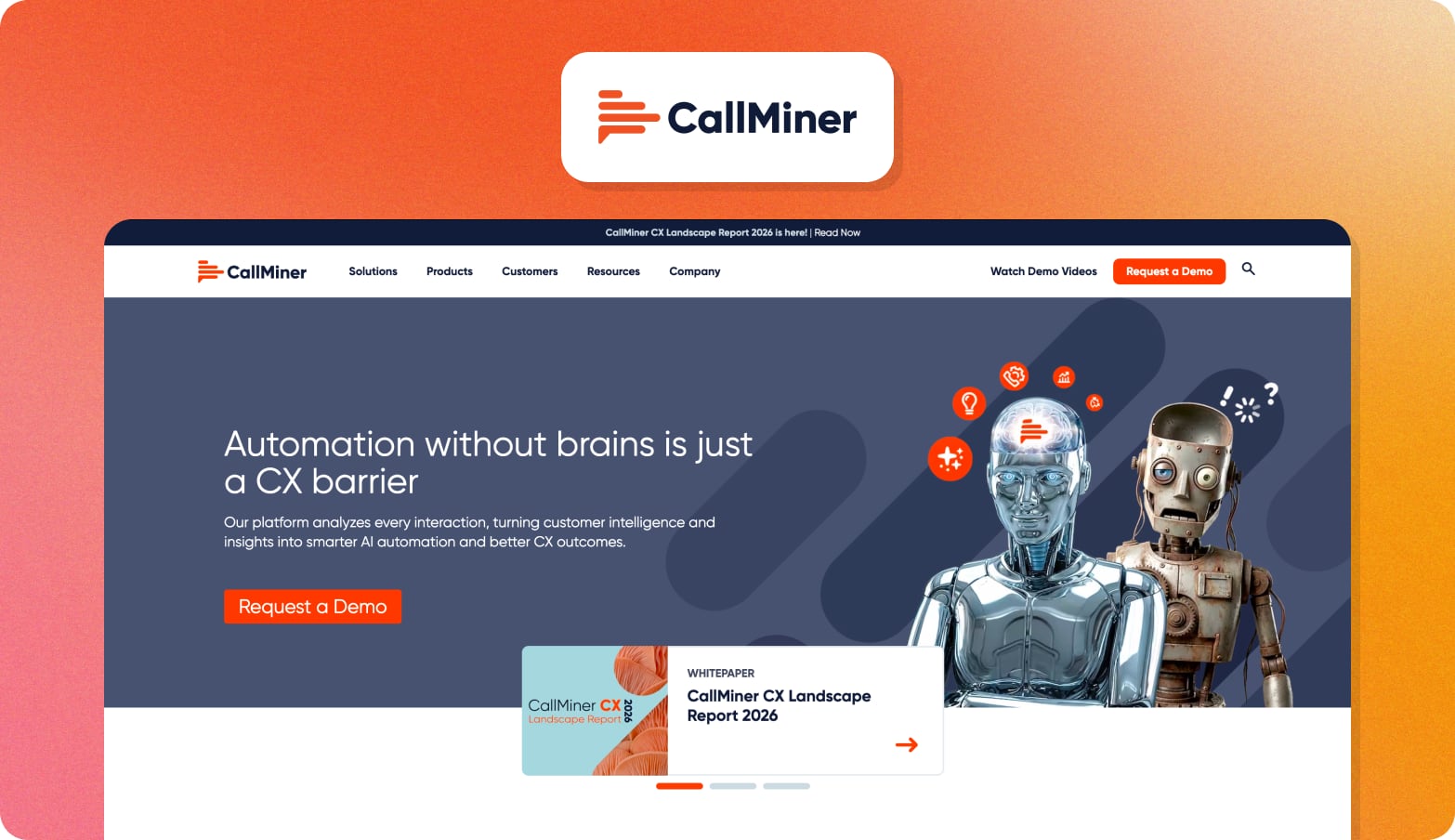
CallMiner analyzes conversations that have already taken place between customers and a business. It turns those conversations into structured feedback that teams can use to understand recurring customer issues and sentiment.
Strengths:
Analyzes large volumes of customer interactions, giving teams a broad view of what customers are saying without relying on survey responses.
Can surface issues people raise in their own words, including pain points and competitor mentions.
Connects customer feedback analysis with quality management, helping teams assess both the customer experience and how interactions are handled.
Limitations:
Feedback comes indirectly from conversations that already happened. Teams can analyze what customers said, but can't steer the conversation to explore a specific question in depth.
Its value depends on the volume and type of customer interactions a company already has.
Best for: Teams with large volumes of existing customer conversations that want to identify patterns in what customers say and how those interactions are handled.
AI-moderated interview platforms
AI-moderated interview platforms use qualitative research to explore why customers think or behave a certain way, giving teams deeper insight than survey data alone.
7. Conveo
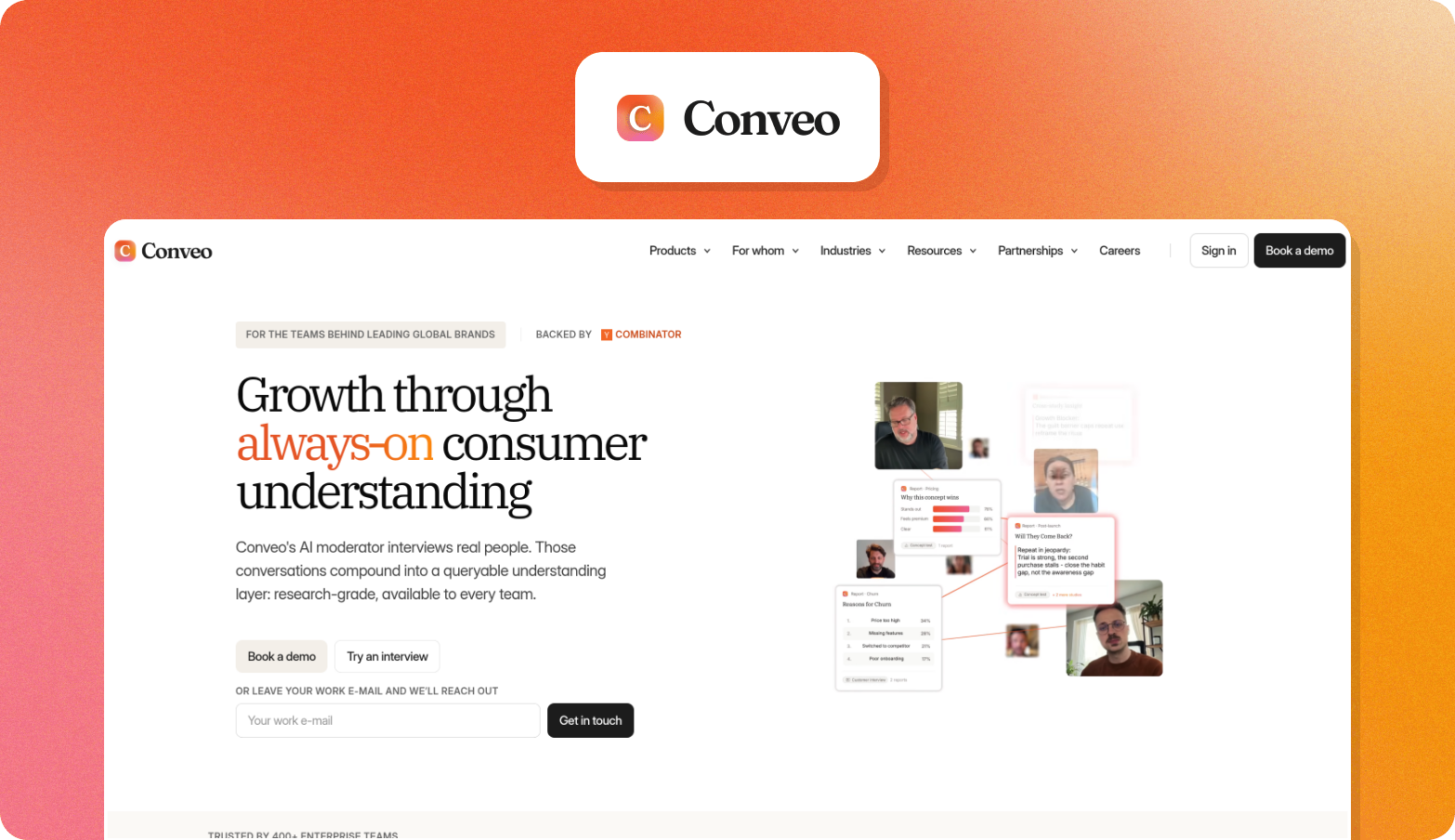
Conveo is consumer understanding infrastructure for ongoing customer research. It uses AI-moderated video interviews with real participants to help teams understand what customers think and why.
With StoryLines, studies run in waves on a set cadence. After each wave closes, Conveo checks the new results against earlier waves and flags changes in customer feedback, including shifts in existing views and emerging themes. Teams can investigate specific questions as they come up, compare new feedback with what came before, and keep the evidence behind each finding available for future decisions.
Strengths:
The AI research assistant responds to what each participant says and can ask a follow-up when an answer reveals something unexpected. VOC interviews get more depth than open-ended survey responses, while the core questions stay consistent across participants.
Every finding traces back to the original transcript and video clip, giving stakeholders something concrete to check beyond an aggregated score or AI summary.
As new studies come in, Conveo automatically connects related findings, with no one lining up the data by hand.
Conveo turns open-ended interview answers into comparable data, so a team can count how many customers raised a particular issue and still trace that number back to the exact quotes behind it.
Conveo is SOC 2 Type II certified and GDPR compliant, with data hosted in Europe.
Limitations:
Conveo is built around primary research with real participants, so teams that mainly need to analyze existing customer data will still need complementary tools.
Best for: Research, insights, product and CX teams that need defensible VOC evidence from real customers and want to build an ongoing body of customer understanding across studies.
"The pace, responsiveness, and research expertise of the Conveo team, on top of the top AI-moderated qual platform, have been invaluable to us in scaling brand advertising internationally."
Matt Harris, Research & Insights Lead, EMEA, Canva
8. Outset
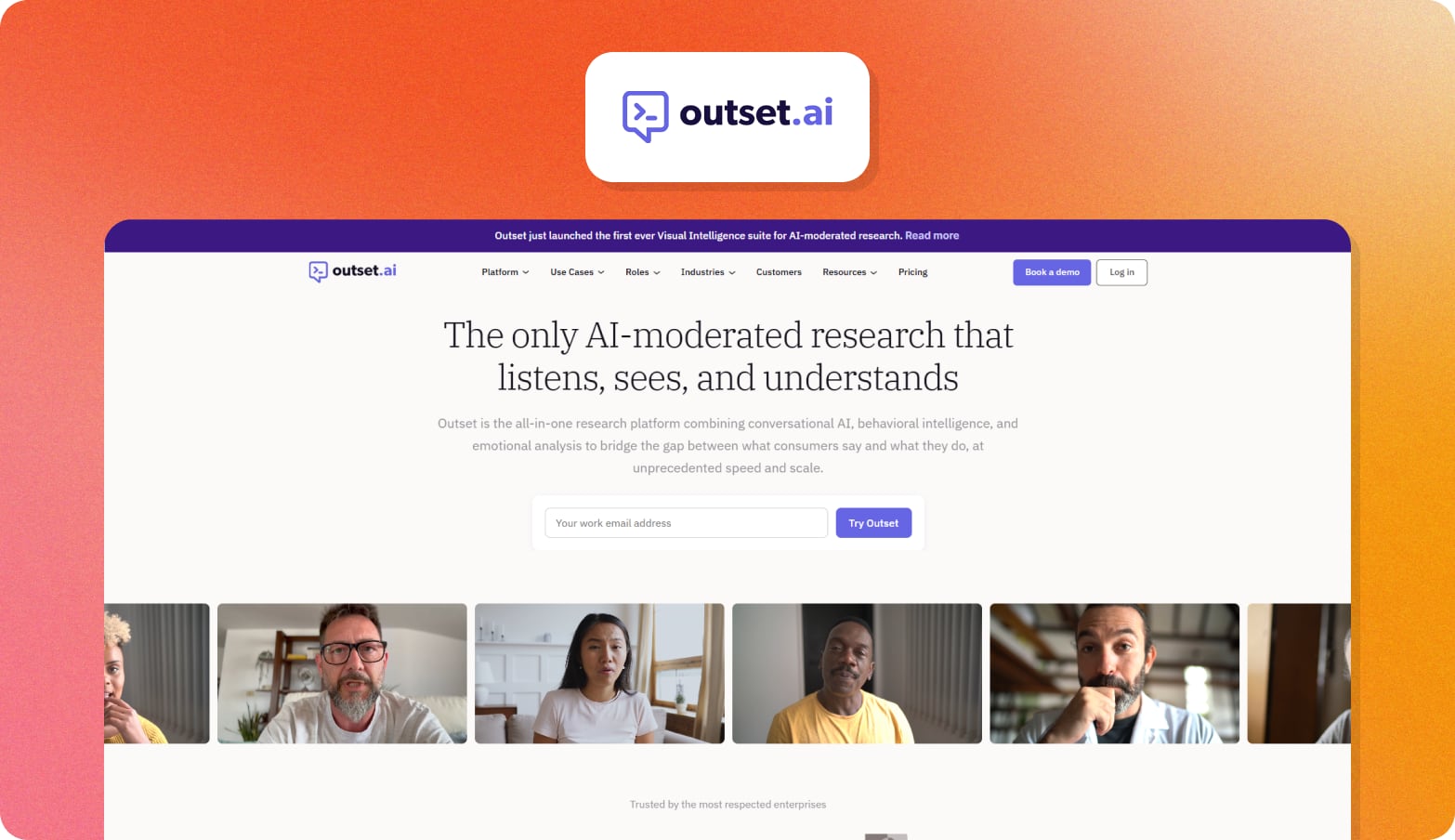
Outset is an AI-moderated research platform focused on running qualitative studies at scale. It combines interview moderation with participant recruitment, so teams can source participants and run research from the same platform.
Strengths:
AI can generate follow-up questions based on each participant's answers, letting researchers explore unexpected responses during the interview.
Findings can be traced back to the quotes and video clips they came from, giving teams access to the participant evidence behind a finding.
Built-in recruitment provides access to a large global research panel, which makes it easier to run studies without sourcing participants separately.
Limitations:
Outset doesn't provide a built-in way to connect findings across past studies, so teams need another tool to build a longer-term view of customer feedback.
Best for: Product and UX teams that need to run qualitative research at scale and don't want to build their own participant pool.
9. Discuss
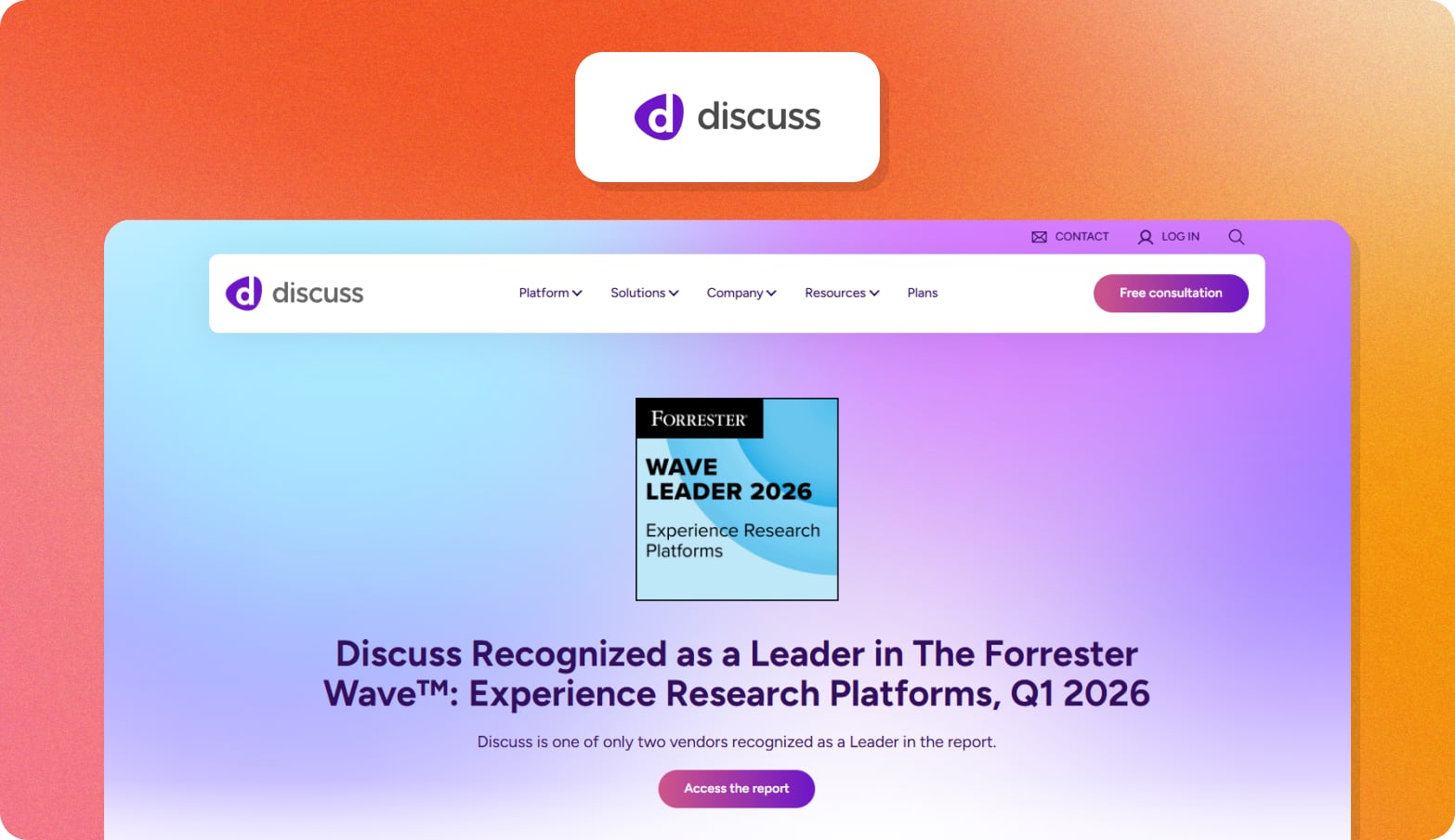
Discuss runs qualitative interviews with a choice of AI or human moderators, and teams can switch between the two within the same study. For a VOC program, that means most interviews can run on AI, with a human moderator brought in only for the conversations that need more judgment.
Strengths:
Any quote can be highlighted and turned into a timestamped clip, synced back to the original video.
A cross-study repository lets teams look across past research, with an AI assistant (Genie) surfacing trends and themes across multiple studies at once.
Supports interviews in 80+ languages, with accuracy that varies by language tier.
Limitations:
Data is hosted in the US, and SOC 2 certification isn't publicly confirmed. Teams with strict data residency or governance requirements should check directly with Discuss.
Translation only runs one way, from the session's language into English.
Best for: Enterprise teams running qualitative research across multiple languages and markets who want the option of human moderation when needed.
10. UserTesting
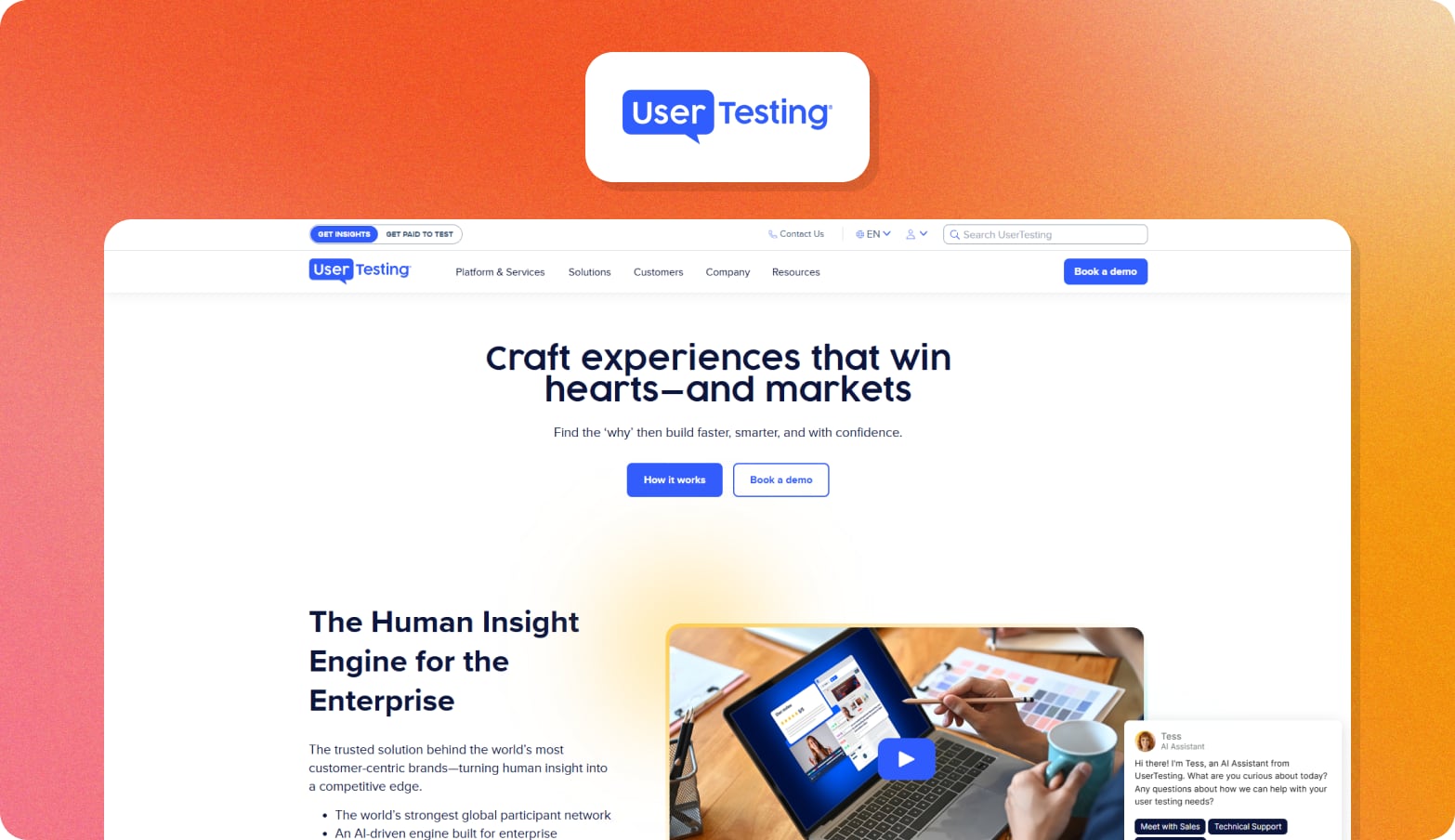
UserTesting is primarily a usability testing platform, built around watching people use products and experiences and hearing their reactions as they go. It also supports live moderated sessions for research that needs a deeper conversation.
Strengths:
A large participant panel makes it easier to recruit people who match specific target criteria for product and customer research.
EnjoyHQ and Insights Discovery give teams a place to organize and search research across projects, including the ability to query past findings.
Strong compliance coverage, including SOC 2 Type II and GDPR, with data hosting options across the EU, US and APAC.
Limitations:
Most research is unmoderated, task-based testing. Teams that need a live, adaptive conversation generally need a human moderator.
Cross-study search is limited to higher-tier plans or an additional purchase, and doesn't currently cover live moderated sessions.
Best for: Enterprise product, UX and CX teams that run frequent usability research and need access to a large participant pool.
11. Remesh
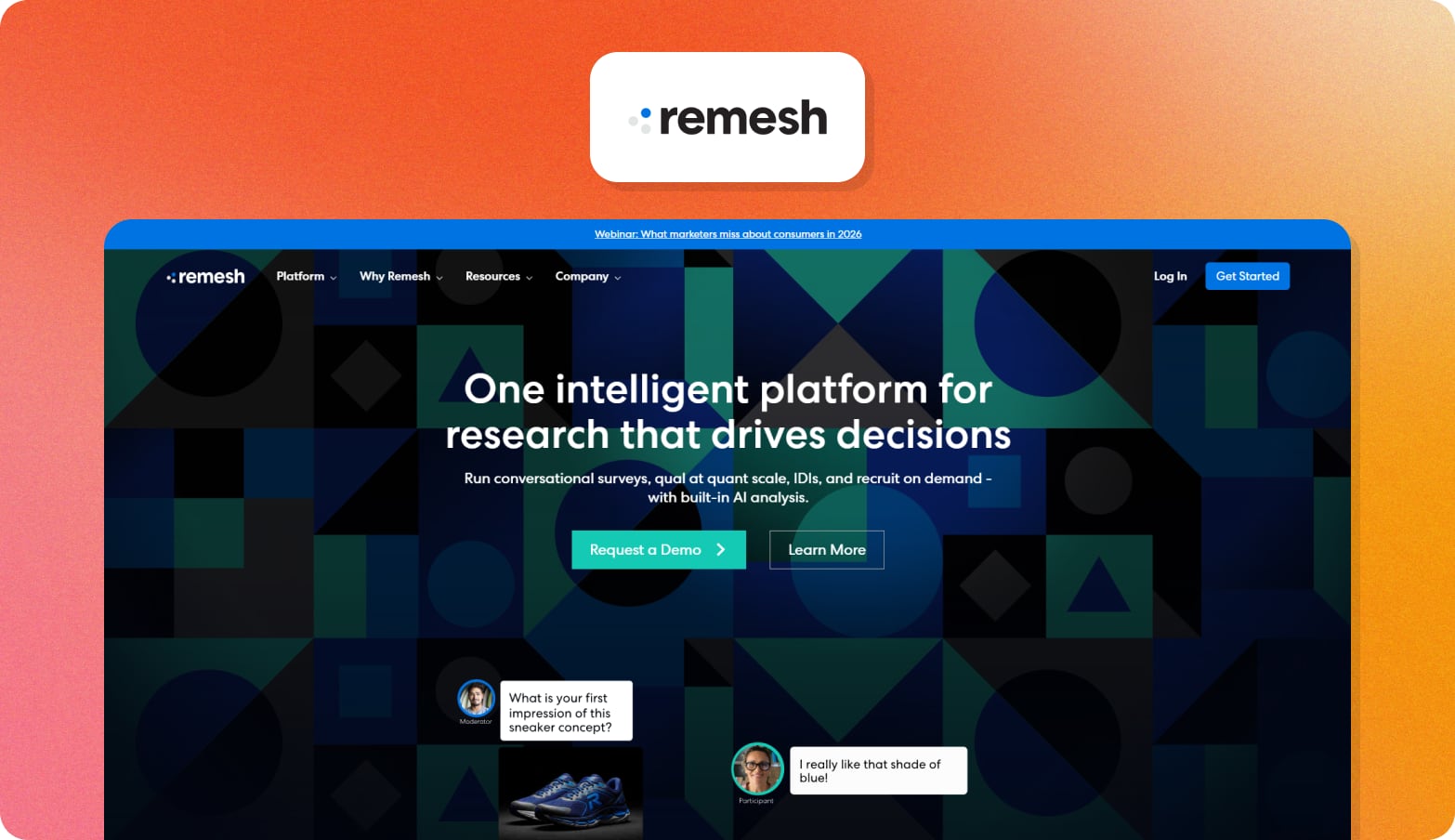
Remesh runs group research sessions where participants respond to questions and vote on each other's answers. An add-on, Remesh Video, adds human-moderated 1:1 and small-group interviews for topics that need more depth.
Strengths:
AI analysis can answer natural-language questions about research sessions and cite the original participant responses, making findings easier to verify.
Conversation Merge lets teams combine up to 10 past studies and analyze them together, so researchers can compare findings across related projects.
Remesh Connect lets teams query research through Claude, ChatGPT or Copilot while keeping links back to the underlying responses.
Holds SOC 2 Type II and supports GDPR requirements.
Limitations:
AI moderation applies to the group sessions. Follow-up interviews through Remesh Video require a human moderator.
Data is processed and stored in the US, with no EU hosting option.
Best for: Market research and consumer insights teams running large-group concept or messaging research where areas of agreement and disagreement matter.
Consumer intelligence platforms
Consumer intelligence platforms help teams organize and analyze the customer feedback they already have, making it easier to find patterns and reuse research.
12. Dovetail
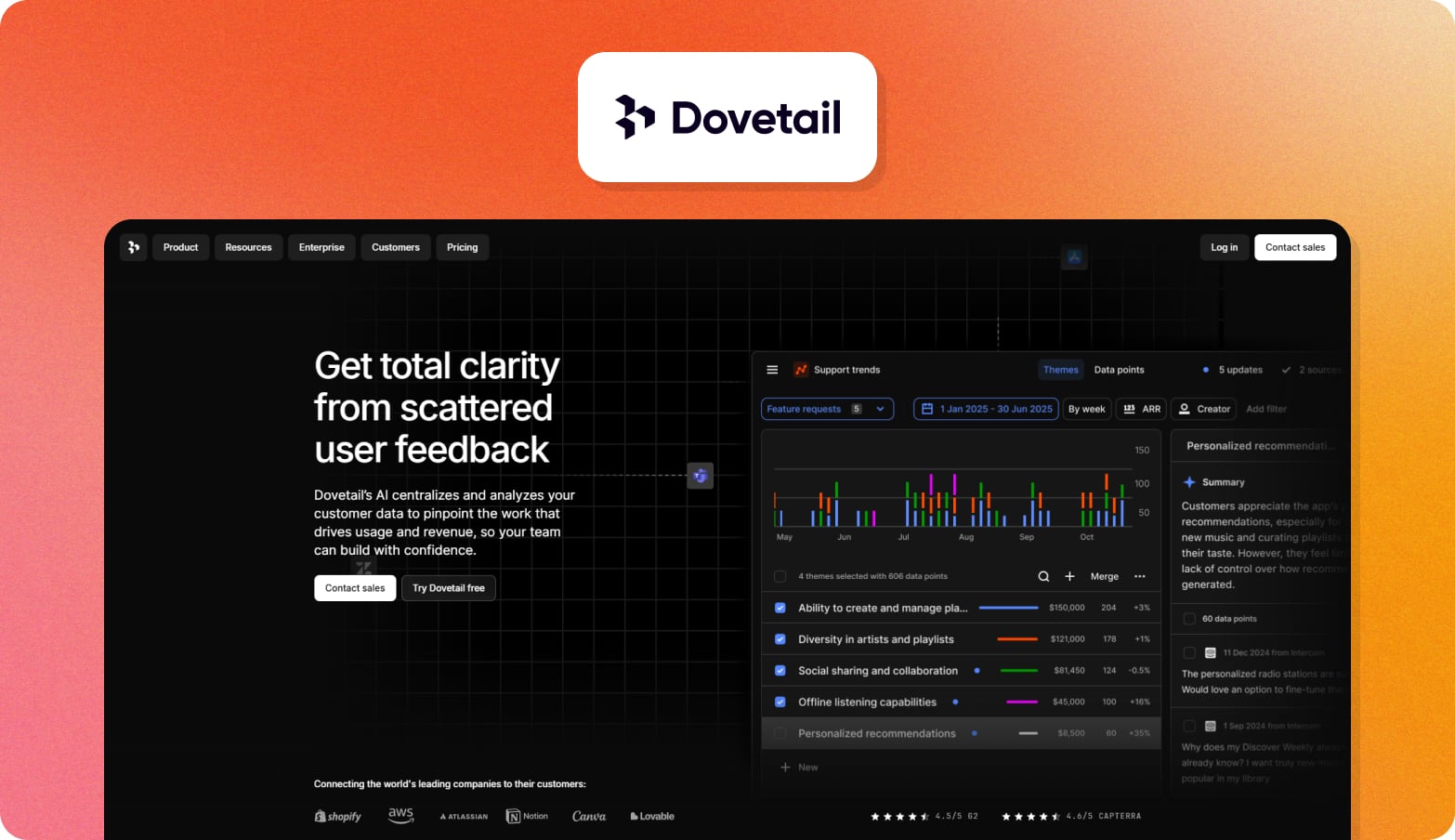
Dovetail is a research and customer insight platform for making sense of feedback a company has already collected. It brings that feedback together in a repository so teams can search across it and analyze patterns.
Strengths:
Links AI-generated insights back to their source material, making it easier to check the evidence behind a finding.
Lets teams query accumulated customer feedback in natural language, including through its Digital Twins feature, which creates AI representations of customer segments from underlying customer data.
Integrates with tools such as Salesforce and Zendesk, making it easier to bring existing customer feedback into one place.
Limitations:
Dovetail doesn't moderate interviews or recruit participants. Teams need to collect feedback through another tool before Dovetail can organize and analyze it.
Some advanced controls, including audit logs and role-based permissions, are available only on the Enterprise plan.
Best for: Companies that already have large amounts of primary research and customer feedback to organize and reuse.
13. Thematic
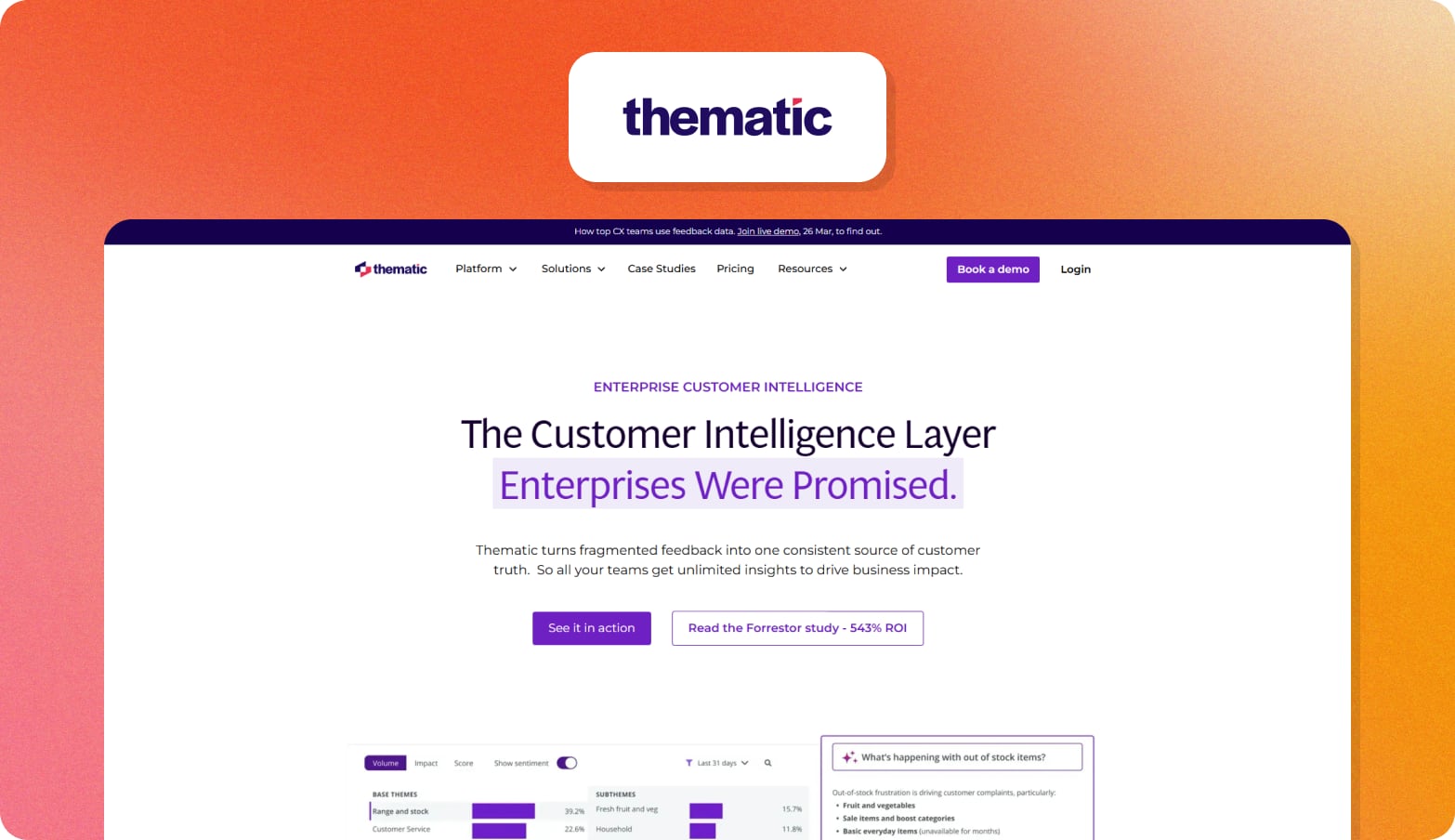
Thematic is a customer feedback analysis platform that helps teams find patterns across the feedback they already collect and connect them to business metrics.
Strengths:
Automatically identifies themes across large volumes of feedback and can surface new themes as they emerge.
Connects themes to VOC metrics such as Net Promoter Score (NPS), Customer Satisfaction Score (CSAT), Customer Effort Score (CES) and customer retention.
Gives different teams tailored views of the same feedback, with permissions and audit trails for managing access.
Limitations:
Thematic focuses on analyzing existing feedback, so teams need another tool to run surveys or interviews and collect new responses.
Some languages are covered through translation, without native-language theme detection.
Pricing starts at $25,000 per year, with no free trial.
Best for: Enterprise teams with substantial amounts of existing customer feedback that want to connect recurring themes to business performance.
CX suites with VOC modules
CX suites with VOC modules connect customer feedback with the systems teams already use to manage customer relationships and service.
14. Salesforce Service Cloud
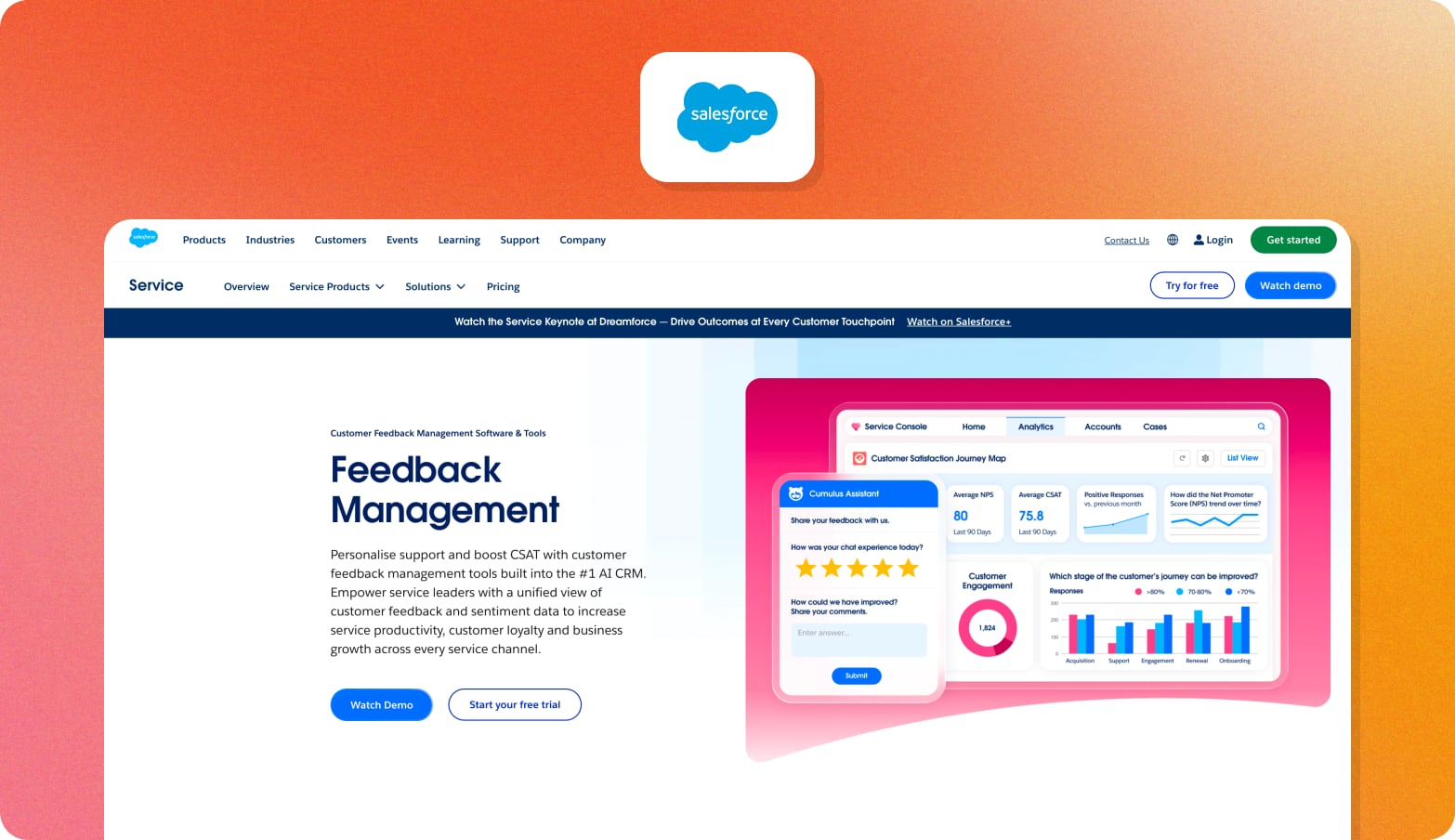
Salesforce sells Voice of the Customer capability as an add-on to Service Cloud, where teams already manage support cases and customer records.
Strengths:
Data Mapper connects survey results directly to case records, automating escalations and follow-ups through no-code workflows.
AI Survey Generation and Translation cut down the manual work of building and localizing surveys for different regions.
Agentforce for Service summarizes what's driving sentiment and can draft knowledge articles from what it finds.
Limitations:
Feedback Management isn't a standalone tool, so how much VOC capability a team gets depends on which edition and add-ons they've already bought.
There's no qualitative interview capability. It's built around surveys and existing service interactions.
Best for: Teams already running Service Cloud for support who want feedback data and case workflows in the same CRM they use for everything else.
15. Forsta
Forsta is an enterprise research and experience platform with VOC as one part of a broader set of research and customer experience tools. Its VOC capabilities bring customer feedback together with other customer and business data, then use AI to identify themes, sentiment and emerging issues.
Strengths:
Connects VOC feedback with other customer data, giving teams a broader view of the factors affecting customer experience.
Lets teams automate follow-up actions when feedback identifies an issue, routing it to the relevant team.
Offers EU hosting and on-premises deployment options, giving organizations more control over where customer data is stored and processed.
Limitations:
VOC is one part of a much broader platform, so teams looking specifically for dedicated VOC capabilities may find the wider product more than they need.
Best for: Enterprise teams already using Forsta for research or customer experience programs that want to add VOC data to the same platform.
AI credibility in VOC software: what to audit
Most Voice of the Customer software uses AI in some shape or form, whether to moderate interviews or analyze feedback. To get reliable, actionable insights, you need to know how the system checks the quality of its inputs and validates its findings. Here's how to check different AI offerings against VOC best practices:
| What to audit | What to look for | Why it matters for AI |
|---|---|---|
| Participant authenticity | Video-first capture and behavioral screening that can filter out professional panelists | AI can only produce credible findings if it works from genuine customer input |
| Interview moderation | A moderator that recognizes contradictions or hesitation and asks relevant follow-up questions | Poor follow-up can leave important context unexplored and give the AI incomplete evidence to analyze |
| Theme validation | Human-coded samples that can be compared with AI-generated themes | Shows whether the AI is identifying meaningful patterns or misreading the data |
| Evidence traceability | Each theme linked to a quote, participant ID, timestamp and video clip | Lets researchers check whether an AI-generated finding is supported by what the participant actually said |
Conveo is built by researchers, and its AI research assistant is designed to follow up when participants contradict themselves or hesitate. Findings trace straight back to the original participant evidence, so you can check the source behind an AI-generated theme before using it to support a decision.
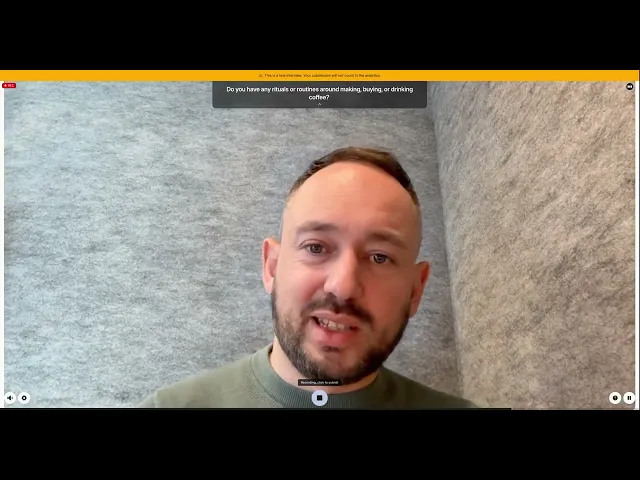
See how AI-moderated interviews work:
Conveo vs. survey-led VOC platforms
Survey-led Voice of the Customer solutions are built for monitoring customer feedback at scale. That approach has its merits, and it can't answer every research question. When choosing between a survey-based solution and an in-depth research platform like Conveo, start from what you need the research to accomplish.
| If you need to... | Use... |
|---|---|
| Track satisfaction and sentiment over time | Survey-led VOC |
| Find out what's driving a change in feedback | Conveo |
| Explore an unexpected issue or customer response | Conveo |
| Test a concept or understand churn | Conveo |
For teams that rely on agencies for qualitative research, Conveo can also bring more of this work in-house. Researchers can investigate questions as they arise, without waiting for a new project to be commissioned, so findings arrive while the decision is still open.
Who Conveo isn't right for
Conveo is less suited to teams focused on high-volume signal monitoring, such as tracking NPS or CSAT trends, where the reasons behind customer feedback matter less.
How to run an always-on VOC program
Customer needs and behaviors change over time, so research needs to keep pace. An ongoing VOC program keeps customer understanding current, with each study building on the last.
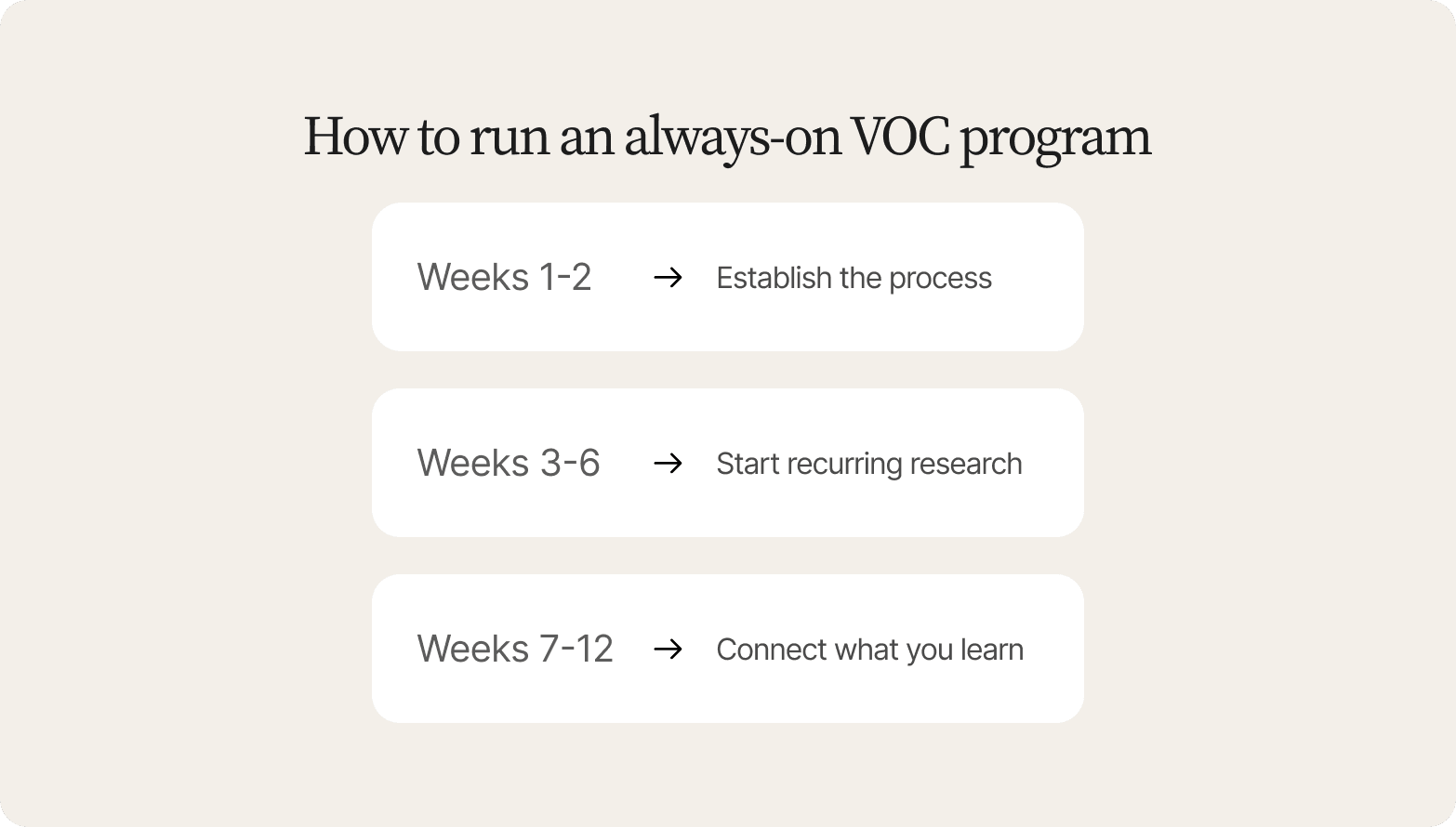
A practical rollout could look like this:
Weeks 1 to 2: Establish the process. Run a pilot study and set up a simple stakeholder intake process for submitting and prioritizing research requests. Use the pilot to agree on how findings will be reviewed and shared.
Weeks 3 to 6: Start recurring research. Use Conveo StoryLines, which delivers AI-moderated research in recurring waves, to set a bi-weekly or monthly cadence. Review each wave against current research priorities and use the results to shape upcoming studies.
Weeks 7 to 12: Connect what you learn. Use Conveo's searchable insight library so findings from different studies can be connected and reused. Track how themes change over time and check existing evidence before commissioning new research.
This approach creates a research process that keeps pace with new questions while building on what the team has already learned.
Frequently asked questions
What are Voice of the Customer tool examples?
Voice of the Customer tools help teams gather customer feedback and turn it into useful information about customer needs and preferences. Common types are survey tools for quantitative feedback on satisfaction and preferences; customer interview platforms for qualitative feedback on why people think or behave a certain way; feedback analysis tools that find trends in surveys, support tickets and online reviews; digital experience analytics tools that combine direct feedback with behavioral data; and customer experience platforms that consolidate feedback from multiple channels alongside other customer data. The right tool depends on whether you need to measure what customers think, understand why, or connect feedback with behavior.
What are good Voice of the Customer interview questions?
Good customer interview questions leave room for participants to raise unexpected issues. Ask "What has your experience been like with [product or service]?" and, if they mention a specific experience, ask what happened and why it mattered. Ask "What would you change about the experience?" and, if they suggest a change, ask what problem it would solve. Ask "What influenced your decision to choose this option?" and, if they mention an unexpected factor, ask them to explain why it mattered. The interviewer adapts each follow-up to the response, which uncovers qualitative feedback a fixed script may miss.
What is a Voice of the Customer template?
A Voice of the Customer template is a standard set of questions or fields for gathering feedback from customers. It keeps data collection consistent, but fixed questions can miss useful information customers raise unexpectedly. A feedback form might capture a customer's dissatisfaction without exploring the unexpected reason behind it. An interview can follow up and uncover what is driving the response.
How do I know AI-moderated interviews are as rigorous as human-moderated research?
Evaluate the evidence behind the findings. Rigorous AI-moderated research uses real participants, adapts questions when responses need clarification, and connects findings back to the original qualitative feedback. Stakeholders should be able to check the evidence behind a finding before they trust an AI-generated conclusion.
How long does it take to get decision-grade VOC findings?
Anywhere from a few days to several weeks, depending on the research method and how quickly participants and analysis can be completed. Speed only helps if the research also has enough depth and evidence to answer the question and support the decision that follows.
How do VOC tools help improve customer satisfaction and loyalty?
VOC tools help teams see where customer expectations aren't being met and understand what is driving dissatisfaction. That feedback can inform changes to the customer experience and create a loop between what customers say and how teams respond. Over time, acting on recurring concerns can improve customer satisfaction and loyalty.

About the author
Dieter De Mesmaeker
Co-Founder & CEO
Dieter is CEO and co-founder of Conveo. Before starting the company, he founded DataCamp and scaled it into one of the leading edtech platforms in the world.
More by Dieter →Qualitative insights at the speed of your business.
Conveo runs AI-moderated video interviews and structures everything they say.