In this article
TL;DR
Relevance needs a knowable brand. Agents doing marketing groundwork need a specific, well-defined brand platform to work from.
Consistency builds trust. Rebrands that ignore nostalgia or miss a cultural shift show how fast relevance can slip.
Process over preference. Large organizations avoid death by a thousand pilots by standardizing on the best version.
Follow the model. Use cases that fail today may work one to three model cycles from now.
Measure the middle. Most consumer behavior sits mid-funnel, and last-click attribution hides it.
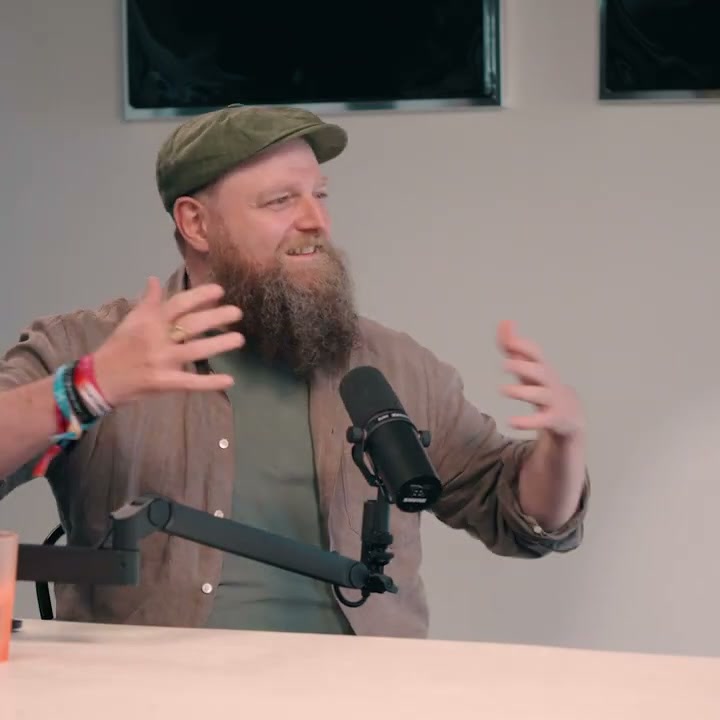
Wesley ter Haar thinks brand relevance in the AI era comes down to how clearly a brand knows itself. The founder of MediaMonks and Chief AI and Revenue Officer at Monks/S4Capital argues that as machines take on more of discovery and decision-making, the brands that stay relevant will be the ones with a consistent, well-defined platform that agents and people can work from.
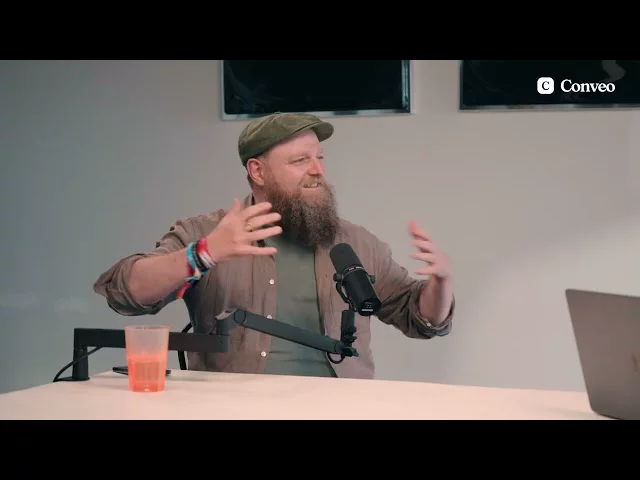
He made the case on Conveo's podcast, recorded live at Cannes Lions 2026. Over the conversation he covered the Cracker Barrel rebrand, why process beats individual preference in an AI transformation, how a same-day social pipeline works, and why last-click attribution misleads marketers.
Relevance now depends on whether machines understand your brand
Ter Haar founded the company 25 years ago, and he says it now has about 6,500 people in 32 countries. He frames that history simply: "we look at it as a race to relevance." When technology shifts, the question becomes what relevance means for colleagues and for clients.
Attention is the constraint. Screen time has stopped growing, he says, while AI has made content far easier to produce. "So there is sort of constrained space and more supply, which I think fundamentally means it's going to be more difficult to grab attention in those spaces."
The industry likes to believe in the single big idea that turns a viewer into a lifelong fan. Ter Haar thinks the bigger shift is quieter. Brands need to be pulled up when someone's personal AI searches a category, and algorithms need the right content to work with, because "machines are doing more of the heavy lifting when it comes to I guess consumer journeys and decisioning and discovery."
That raises the stakes on brand strategy.
"Those agents need to be grounded in an understanding of the brand."
Wesley ter Haar, Founder, MediaMonks; Chief AI & Revenue Officer, Monks/S4Capital
A brand needs a knowable space: who it is, how that space differs from competitors and what it means for consumers. In his view, "that heavy lifting brand platform brand strategy work is, I would say, more important than it's ever been." Our article on brand positioning research covers how teams map that space with consumers.
Consistency builds trust, and rebrands often break it
Ter Haar points to Dove's Real Beauty as some of the industry's best creative work of the last two decades. What he admires most is the commitment. Unilever has executed against the same platform for about 20 years. Some campaigns were brilliant and some were fine, and the consistency held.
"If you're constantly hearing different messages as a consumer, there's nothing for you to anchor on."
Wesley ter Haar, Founder, MediaMonks; Chief AI & Revenue Officer, Monks/S4Capital
"Consistency I think breeds a certain level of trust," he adds, and the industry undervalues it because every new agency wants a new platform, tagline or character. He is direct about where he stands: "But also I fundamentally hate rebrands." He could not name one that people loved.
On Cracker Barrel, he notes that the brand went for a modernized logo in the middle of a broad wave of nostalgia. Jaguar, another heritage brand, is his second example. He thinks the team was "probably spending a year in the work and then sort of just missing the cultural pivot," which in his telling happened about a month before launch. "So if they would have launched that maybe 8 months earlier, it would have been hailed as a super brave thing to do." His lesson for brands is to be more agile and light on their feet.
Consistency leaves plenty of room to experiment. He thinks brands should experiment far more, inside the guardrails of the platform. The old habit of spending eight weeks in a room on one idea, then months producing it, leaves a lot on the table: "Maybe we should have tried 100 things in that time as well. As long as it's consistent to who we are as a brand."
Process over preference keeps AI from becoming a thousand pilots
Ter Haar says his current role, with AI in the title, is the first title he has ever taken, and he took it as a signal to his own team. He says Monks sees AI as existential, because there is no relevant version of the business if it does not lead.
He sees two challenges for agencies. One is commercial: the industry gets paid for people's time, and "Time and people aren't really great proxy for value creation anymore." The other is organizational: "AI is sort of a collapsing function, right? It's much better to have small teams tightly integrated working close to real time."
His first lesson from running the change is about how large organizations adopt AI.
"The most important part to the change is process over preference."
Wesley ter Haar, Founder, MediaMonks; Chief AI & Revenue Officer, Monks/S4Capital
Agencies have historically bet on their best people's preferences. Applied to AI, that produces many versions of the same solution, and "you can sort of die by a thousand pilots," with 20 teams solving the same problem in 20 places. Monks centralized the work, paired subject matter experts with technologists so the tools reflect the real job to be done, and doubled down on the best version.
His second lesson is to follow the model. People try a tool, find it lacking and write it off. Ter Haar says capability keeps improving with scale: "You have to sort of follow the model in any use case where it's not quite there. We're maybe one, two, at most three cycles away." With the process in place, a team can move as soon as the model catches up.
He also notes a bottleneck outside the agency's control. In one case, his team showed it could run a client's campaign path in about two weeks, compared with the usual three to four months. The real campaign still took three months, because "the process is designed to take 3 months."
Speed has become part of quality in social
Ter Haar argues most consumer behavior sits between brand advertising and lower-funnel performance. "Most of the actual consumer behavior sits between those two things," he says, and social is the best channel for that mid-funnel space. Monks' concept for it is "strategy in the morning, ship in the afternoon."
He described an agentic production pipeline built for SC Johnson's Mr. Muscle around the World Cup. Agents grounded in the brand, the customer and the category ingest data in near real time and flag opportunities. One was Japanese fans cleaning the stadium before leaving, a natural fit for a cleaning brand. People then decide which ideas are worth pursuing, and a production pipeline renders the brand's animated character into new scenes. He says this collapses what used to be a week of work into real-time collaboration between talent and machine.
Grounding is the difference. "One of the big problems with AI adoption in our industry is people using off-the-shelf and going well this idea isn't good," he says. Without context, models land near the expected average. And on quality: "I think quality to some extent is speed."
What it means for insights and marketing leaders
Ter Haar's argument puts research closer to the center of marketing. If agents are going to spot opportunities, generate ideas and make taste calls, the quality of what they know about the brand and its consumers sets the ceiling. He says data collected from real people at scale has risen sharply in value as a result.
He also calls out the metric he trusts least. Last-click attribution gives the final click credit for all the work, when, as he puts it, "realistically it just ended up being at the end of a person's decision-making process." Budget follows that click and underfeeds the parts of the journey that are harder to measure.
His fastest route to understanding a consumer is watching people use your product in user testing. Teams design something that seems logical and then watch people click around without knowing what is happening. "You have to be extremely respectful how you want and expect them to use that time," he says, because a brand is always borrowing a small pocket of someone's attention.
For insights and marketing teams, the takeaways are:
Write down the brand platform in enough detail that an agent could use it, including how you differ from competitors in consumers' eyes. Testing that with real people is the job of brand messaging research.
Build a shared, reusable base of consumer evidence that outlasts any single deck. Customer intelligence management explains how.
Pair conversion data with qualitative evidence from the mid-funnel, where last click goes blind.
Matt Hammel covers the search side of this shift in his episode on answer engine optimization.
A brand that knows itself stays relevant
Ter Haar's race to relevance comes back to clarity. Agents, algorithms and overloaded consumers all reward brands that are consistent, specific and quick to act on what is happening now. That depends on a well-defined platform and a steady supply of real consumer understanding.
Conveo's AI research assistant runs video conversations with real consumers, so insights teams can get to the why behind behavior faster and keep that understanding current for the people and systems that use it.
Frequently Asked Questions
What does Wesley ter Haar mean by a race to relevance?
He says Monks has treated its 25 years as a race to relevance: staying relevant to colleagues and to clients. Big technology shifts force a company to rethink what relevance means and then execute on it.
Why does ter Haar say brand strategy matters more with AI?
Marketing teams will want agents to do some of the groundwork, and those agents need to be grounded in an understanding of the brand. A clear, specific brand platform that shows how a brand differs from competitors gives them that grounding.
What went wrong with the Cracker Barrel and Jaguar rebrands, in his view?
He links Cracker Barrel's modernized logo to a wider wave of nostalgia, and says Jaguar likely spent a year on the work and then missed a cultural pivot. He argues brands need to be more agile and that consistency is underappreciated.
What does process over preference mean?
Agencies have historically relied on their best people's preferences. With AI, that leads to many versions of the same solution and death by a thousand pilots, so ter Haar argues for a process-driven approach that doubles down on the best version.
Why does ter Haar call last-click attribution overrated?
The last click often just sits at the end of a person's decision process. Crediting it with all the work sends budget to the bottom of the funnel and underfeeds parts of the journey that are harder to measure.

About the author
Tom Husson
CMO
Tom is CMO at Conveo, where he leads marketing and builds the company's AI-native go-to-market engine. He hosts the Conveo podcast, recorded at Cannes Lions 2026 with brand, insights and marketing leaders.
More by Tom →Qualitative insights at the speed of your business.
Conveo runs AI-moderated video interviews and structures everything they say.