In this article
TL;DR
Most of AEO is still SEO. Hammel estimates 60 to 75% of what gets a brand found in ChatGPT overlaps with ranking in Google. The work is in the rest.
Off-site content shapes the answer. Reddit, YouTube and a long tail of niche sites influence whether, how accurately and how favorably an LLM mentions you.
The channel now spans the funnel. Agents evaluate, choose and use products, so your website and docs become an instruction manual for them.
Feedback loops are fast. LLMs pick up new information within days, so AEO needs a repeatable operating system.
Quality is a team rule. AirOps treats AI slop in a meeting as a reason to stop the meeting.
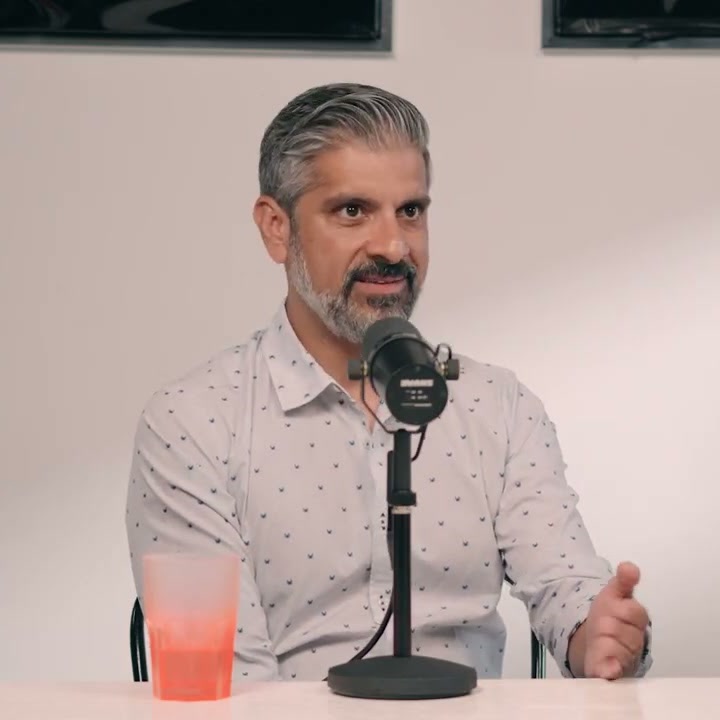
Answer engine optimization is mostly SEO, and the slice that is different is where brands win or lose. That is the view of Matt Hammel, Growth/GTM lead at AirOps, which builds products that help growth teams get discovered in AI search. Hammel estimates that most of what makes a brand show up in ChatGPT overlaps with what made it rank in Google. AirOps put its effort into the remainder: content that lives off your website, a channel that now runs the full funnel, and feedback loops measured in days.
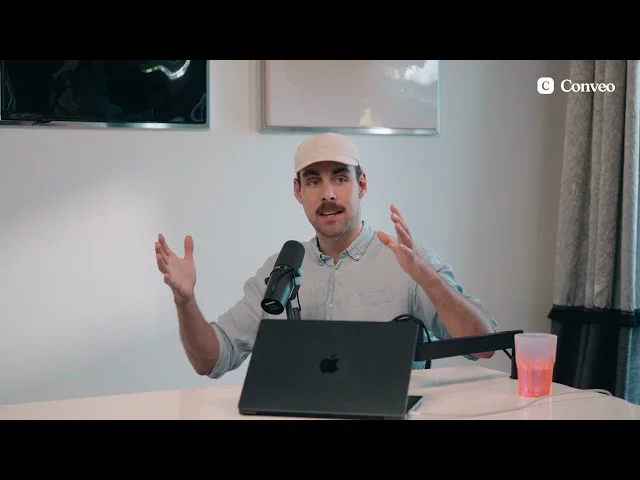
Hammel made the case on Conveo's podcast, recorded live at Cannes Lions 2026. He also explained how AirOps launches products by letting customers tell the story, why his team has zero tolerance for AI slop, and why he thinks NPS is the wrong way to measure how much customers love you.
Answer engine optimization is mostly SEO, and the gap is where brands win
Over roughly the last 18 months, Hammel says, the world woke up to the fact that people use ChatGPT, Claude and Perplexity alongside Google or in place of it. AirOps was already working with some of the strongest SEO practitioners when that shift began, which gave it a grounded view of how much was really new.
"Probably 60 to 75% of what makes someone get discovered in [ChatGPT] is overlapping with the old way of doing it in Google."
Matt Hammel, Growth/GTM lead, AirOps
The key, he says, was identifying the roughly 25% that would behave differently and investing ahead of where the channel was heading. Much of that direction came from AirOps customers working on the front lines. He also reminds marketers that Google remains the dominant player, both in classic search and in the volume of AI-generated answers people see through AI Overviews and AI Mode. Google is very good at catching tricks such as prompt jacking. What does pay off is structuring page content so LLMs can read it.
Content off your website now decides how AI describes you
The first thing marketers underestimate, in Hammel's view, is the weight of everything a brand does not publish itself. Off-site content shapes "not only whether or not you show up in a [ChatGPT] prompt or query, but how accurately and how favorably you do as well."
In classic SEO, a team might trade links to earn a few backlinks that fed Google rankings. Generative answers work differently.
"They actually can just circumvent your entire website and produce information about you. It's why Reddit is super important. It's why YouTube is super important."
Matt Hammel, Growth/GTM lead, AirOps
Beyond the big platforms sits a long tail of sites most brands have never heard of, and those sites carry real weight in LLM answers. This used to be work that was outsourced and rarely reached the CMO. Hammel notes that in pharma and life sciences, a niche blog or product review that gets the facts wrong and feeds into an answer can lead to bad outcomes. Accuracy matters there as much as growth.
AI search now runs the whole funnel, so write for agents
The second shift is newer and, for now, most relevant to B2B. SEO used to be a top-of-funnel channel that brought people to a blog and handed them to nurture campaigns. Now an LLM can assess a product, choose it, sometimes pay for it and then use it on the user's behalf. Anyone who has vibe coded an app has watched the model pick a hosting stack without asking.
That pulls the work out of a niche corner of marketing and into product, growth and customer experience. Help centers and knowledge bases now instruct the model as much as the user. Hammel's advice is that "you should really think about your website as an instruction manual for an agent."
"Think of it as it's now an instruction manual for the agent to do action on behalf of the user."
Matt Hammel, Growth/GTM lead, AirOps
He expects consumer categories to follow as agents shop on people's behalf, and uses an AI travel agency as an example. Ads add another variable. AirOps is researching a hypothesis that strong on-site content will also improve the performance of paid ads inside AI platforms. Hammel also points out that OpenAI has drawn a line against showing ads on its higher paid tiers and enterprise accounts, which makes organic mentions the main route to those high-value users.
Launches give AI new facts to learn, and fast loops reward fast teams
Launches, rebrands and new product lines are among the biggest triggers in AirOps' sales process, Hammel says, because any change in what you sell creates information models must learn before they can recommend you. His launch playbook starts as early as possible with pillar content that explains what the product is, from the press release down to documentation and user manuals, plus early reviews. Then it goes off-site.
"One thing that we found to be really effective in launches around [LLM] visibility is using partner sites in content."
Matt Hammel, Growth/GTM lead, AirOps
Co-announcement posts with partners help smaller challengers most when they launch against incumbents. He names Carta and Chime as AirOps customers that have done this well.
The bad news is that AI search is probabilistic. A Google ranking moves slowly. An LLM answer is a matter of how often you appear when the same prompt is asked, and that varies by user, segment and region. The good news, he says, is that "the feedback loops are much faster for [LLMs]." In his words, "[LLMs] are fiends for new information," because a model that hallucinates or cannot answer is failing at its job. AirOps has seen new content lift customers' mention rates "in as little as a couple days or a week sometimes." That speed turns AEO into a channel that needs a repeatable system, with live context flowing in from the rest of the business.
Launches are a habit at AirOps for the same reason. Hammel disagrees with the common view that launches are one-off boosts. A steady cadence, he argues, gives a startup "launches as a forcing and organizing function," and every launch shows how well the whole system works together.
Quality depends on context, and on a team that refuses slop
Quality is AirOps' second most important operating principle, Hammel says, and one of the hardest parts of his role is "making sure that you don't lose critical thinking on your teams when they're using AI." A sales rep can ask an AI tool for a deck that is just off enough for the customer to notice, while the rep, moving fast, does not.
His first defense is context.
"Any sort of AI system is a product of the context that has available to it."
Matt Hammel, Growth/GTM lead, AirOps
Much of AirOps' internal effort goes into context pipelines: playing back sales calls and customer interactions into a company brain, then feeding what the team learns back to the people who need it. The second defense is cultural. Hammel describes "a no tolerance, stop the meeting, go back, don't pass, go, don't collect $200 rule" for anyone who brings vibe-slopped work to a meeting. He argues that a ten-person meeting spent on output nobody thought through is the most expensive thing a startup can do. He still wants people to take risks. He wants them to do it at the right altitude, a test he frames as "are you working and thinking and having conversations at the right altitude."
The same thinking shapes how he would stand out when AI pushes creative work toward sameness. He would "barbell the strategy": draft off what is proven in the most competitive part of the budget, and "ratchet up the insanity" of the experimental part.
What insights and marketing leaders should take from AEO
AEO looks like a search problem. Much of it is a customer understanding problem.
Your brand story lives in other people's words. The off-site content that shapes AI answers is largely what customers, reviewers and communities say about you. Knowing that language firsthand now feeds visibility as well as positioning. For what this means at the point of purchase, see the rise of the AI-powered shopper.
Measure revealed preference. Hammel calls NPS a weak metric when your audience is inclined to be nice to you. He wants behavioral, product and outcome signals, because "you have to find the revealed preferences of the end user." He would track customer advocacy and referrals as growth metrics: "customer love is a better growth metric than retention metric." Our guide to VOC metrics covers how to pair those signals.
Watch customers do the work. His fastest route to understanding a customer is "reverse demoing the customer," getting them on a call to walk through their own process live. The same principle drives good user interviews.
Feed context back to the team. The pipelines that keep AI outputs sharp also keep people informed. Insights that sit in an unread deck help neither.
Brand relevance in AI answers is a theme other guests picked up too, including Wesley ter Haar on brand relevance in the AI era.
The brands AI describes well are the ones that know their customers
Hammel's argument comes back to one point. AI search reflects what the world says about a brand, and it updates fast. Brands that know how customers describe their problems, and keep their content, partners and documentation current, give models better material to work with. That is why AirOps builds its launches around customers telling the story.
Conveo's AI research assistant runs video conversations with real consumers, so insights teams can get to the why behind behavior faster. As answer engines lean on how people talk about brands, knowing that language firsthand becomes a practical advantage.
Frequently Asked Questions
What is answer engine optimization?
Answer engine optimization, or AEO, is the work of getting a brand discovered and accurately described in AI answers from tools like ChatGPT, Claude, Perplexity and Google's AI Overviews. Matt Hammel says most of it overlaps with SEO.
How is AEO different from SEO?
Hammel points to three differences. Off-site content carries more weight, AI search now spans the whole funnel as agents choose and use products, and LLMs update on new information much faster than Google rankings move.
How fast can new content change AI search visibility?
Hammel says AirOps has seen new content lift customers' mention rates within a couple of days or a week, sometimes faster. Results vary because AI answers are probabilistic and differ by user, segment and region.
How should brands prepare a product launch for AI search?
Start early, publish pillar content that explains the product from the press release down to documentation, seek early reviews, and use partner sites for co-announcement posts, which Hammel says helps LLMs pick up the news.
Why does Matt Hammel call NPS a weak metric?
When customers are inclined to be nice to you, stated answers mislead. Hammel prefers behavioral, product and outcome signals that show revealed preferences, and he would track customer advocacy and referrals as growth metrics.

About the author
Tom Husson
CMO
Tom is CMO at Conveo, where he leads marketing and builds the company's AI-native go-to-market engine. He hosts the Conveo podcast, recorded at Cannes Lions 2026 with brand, insights and marketing leaders.
More by Tom →Qualitative insights at the speed of your business.
Conveo runs AI-moderated video interviews and structures everything they say.