In this article
TL;DR
Impressions lead, outcomes count. Avalos treats impressions as a leading indicator and judges campaigns on MQLs, pipeline and revenue.
Precision beats scale when budgets shrink. Reaching 100 of the right people fully can beat a big number from the wrong audience.
Data creates hypotheses, customers confirm them. Platform data spots trends, and conversations with customers explain them.
Know the buying group. In B2B you sell to many people, and each needs a message pitched at the right altitude.
Time with customers reveals what data hides. A day in Mexican homes turned Pantene into sachets.
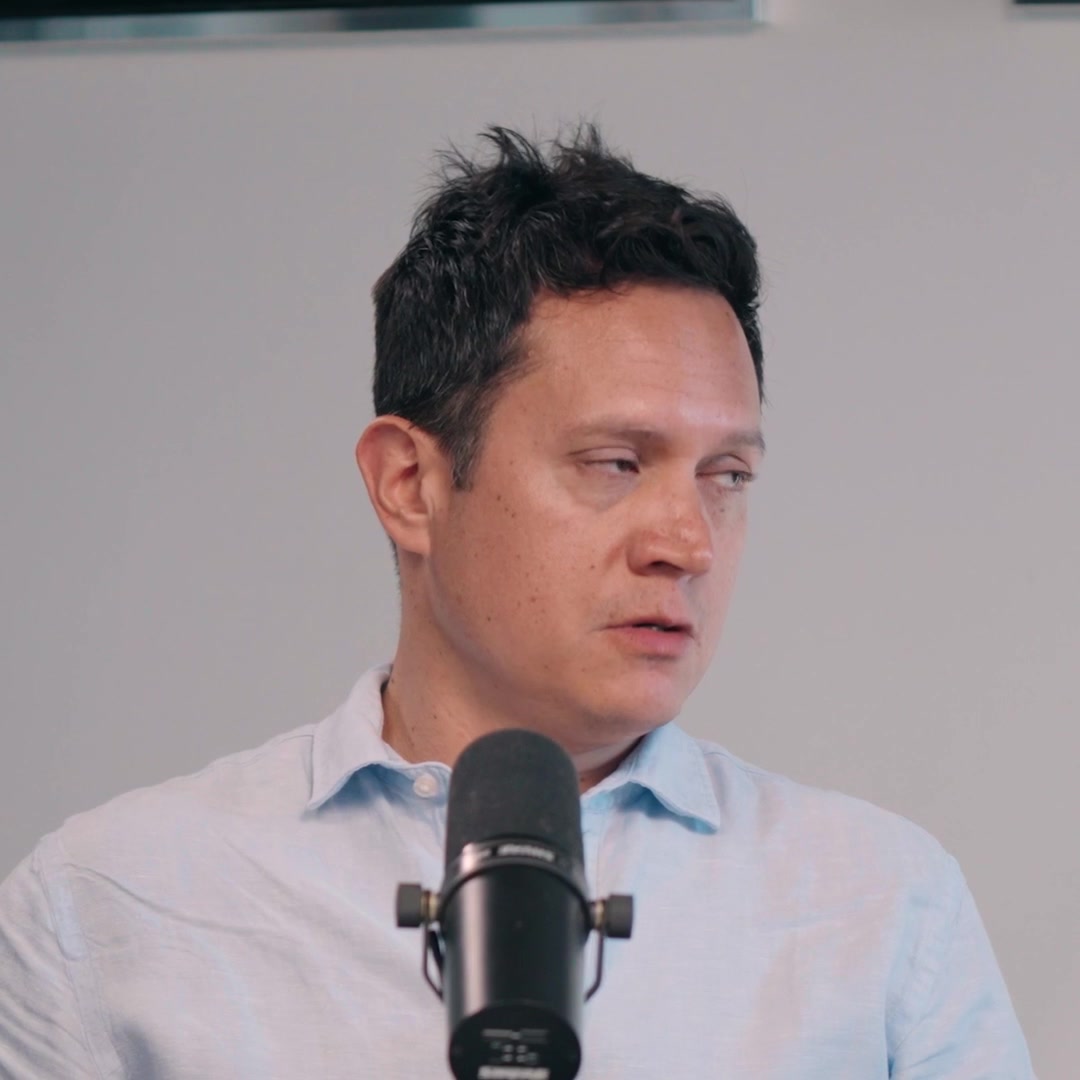
Miguel M. Avalos sells advertising for a living, and he still calls impressions one of the most overrated metrics in marketing. As a Senior Director at LinkedIn Ads, with earlier roles at Google, Procter and Gamble and Samsung, his argument is that marketers should judge campaigns by outcomes: the business results a campaign drives, grounded in a precise understanding of who the audience is and what they need.
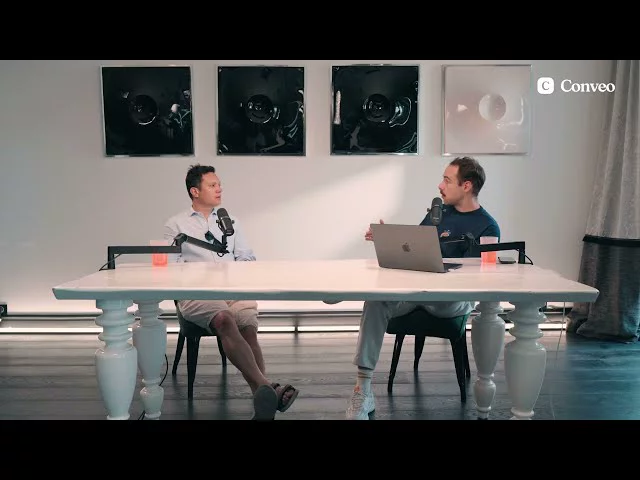
He made the case on Conveo's podcast, recorded live at Cannes Lions 2026. His stories run from B2B targeting and a qualitative study in Germany to a Google product built from scrappy research and a day in a Mexican home that reshaped how P&G sold shampoo. The thread connecting them is that insight and outcomes belong together.
Impressions are a leading indicator, and outcomes are the scoreboard
Avalos still values impressions. "Obviously impressions are good, right? But it's a leading indicator," he says. What changed is the bar the industry has to clear.
"We as an industry and advertising marketers, we need to be commercially savvy. We need to be able to explain what is the outcome in the business."
Miguel Avalos, Senior Director, LinkedIn Ads
He says that about a year before Cannes, LinkedIn "started talking more about outcomes not optics." Optics are impressions. Outcomes are the questions a CFO asks: did the campaign produce more MQLs, more pipeline, more revenue? Different businesses will pick different metrics, but the platform itself is shifting toward outcomes and using impressions as an early signal.
He applies the same logic to engagement. Engagement, he argues, is often an attribution problem dressed up as success. A post liked only by your mom and your friends does nothing if you are trying to reach buyers. His favorite example is the webinar boast: "people say oh we have like thousand people joining our webinar. I'm like okay but how long did they stay in the webinar? 1 minute. It's like that doesn't count."
The fix is to break the number down. For a one-hour webinar, count how many people stayed 30 minutes or more. Look at the length and depth of the interaction. His advice: do not read metrics at a very high level, and dig until you can see whether they drive the outcome you want. Our piece on data-driven decision making covers the same discipline from the research side.
Precision wins when every budget is scrutinized
Avalos hears the same thing from customers across the industry: marketing budgets have been cut or reduced, and the pressure to prove results is higher. His conclusion follows directly.
"When you have less room to play, you need to be more focused. You need to be more precise."
Miguel Avalos, Senior Director, LinkedIn Ads
Precision, in his view, starts with sizing the addressable audience honestly. Going viral is rarely the right goal. "Your target audience may be 100 people but you get 100% engagement of those then that's better than getting a higher number for a bigger audience," he says. From there, think full funnel: move people from impression to consideration to a lead.
He points to LinkedIn's own email campaigns as proof of what specificity does. Some get around a 2% conversion rate, which he describes as roughly the industry norm. Others get more than 20%. "When you get 20%, it's because you get very specific," he says.
There is a second reason precision matters now. Desk research is easy with any AI assistant, so the volume of available insight keeps growing. As Avalos puts it, "insights is actually something that you have now more of, not less of." The hard part is finding the right one, the insight that will move the needle.
B2B marketers underestimate geography and the buying group
Asked what successful B2B launchers do differently, Avalos names two questions teams tend to skip.
The first is geography. Teams assume that what works in the US or Europe will work everywhere, or that countries keep the same ranking across industries. He cites the auto industry, where the US, Germany, China and Korea dominate, as an obvious example of how much the right market depends on the vertical.
The second is the audience. In B2B you sell to a buying group, which in enterprise deals can mean 10 or 12 people across procurement, marketing and finance, with different backgrounds, seniority and nationalities. Each needs a different message. If you are speaking with the CMO or the CEO, he says, "you need to play at a different altitude versus a practitioner." And the most senior person is not always the one to target. Sometimes the junior practitioner has budget and moves faster.
He is also wary of the word narrative. "I think that narrative is just like a very overused word," he says. What matters is the value proposition: the specific pain you solve for a specific person, translated into the KPI that person is measured against. "You need to understand what is the KPI of your audience," he says. Get that right and the narrative, the channel and the conversion rate follow. For a deeper look at researching multi-person decisions, see our framework for B2B market research for buying committees.
Data spots the trend, and customers explain it
LinkedIn has an enormous amount of behavioral data, and Avalos uses it. When the company saw video growing fast, he says, the team broke the trend down by format length, time of day and region before pushing it. Video, he notes, is growing six times faster than LinkedIn's other formats combined.
For him, data is where the work starts. His method is to use trends and data points to create hypotheses, "and then you need to validate those hypothesis." For a recent study of the German Mittelstand, the mid-market companies many firms want to reach, the team sat down with around 20 customers to understand how they thought about the platform and what stopped them from adopting it.
One answer stuck with him. LinkedIn is well known, but depending on the country, people still associate it mainly with jobs. One customer told the team: "I had low awareness, but now that you explain to me what it is, I have high curiosity." That turned a data point into a plan. The opportunity was education, specifically how the product works and how to measure success, and the conversations showed exactly where to focus marketing and sales.
His Google story follows the same pattern. Spotting a sharp rise in companies advertising abroad, his team had a strong gut feeling about an export tool but no budget. So "we ran a scrappy market research in 12 countries," a survey of 20 to 25 questions through an agency. He stresses that internal data is never perfect and always needs complementing. The research showed the first need was knowing where to export, since companies default to the US even when Germany fits better. The resulting product, Market Finder, was a website whose entire UX and flow came from that insight. After launch, the team kept talking to customers and running A/B tests to refresh it.
A day in customers' homes turned Pantene into sachets
Asked for the fastest way he has ever understood a customer, Avalos goes back to his early career in sales at P&G in Mexico. The company had a practice of spending a day with customers. His team visited the flat of a lower-income family while researching shampoo and looked at what was in the bathroom and bedroom.
The family used a cheaper shampoo every day and kept Pantene, which he describes as "more of a premium brand, especially in Mexico, as a treat for the weekend." The reason was price: Pantene cost roughly 1.5 to 2 times more. That constraint seems obvious in hindsight, he says, and it was invisible from the office.
"You don't see it until you spend time with them that they actually cannot stretch their budget."
Miguel Avalos, Senior Director, LinkedIn Ads
The marketing team responded with smaller sizes and sachets. Sachets, he says, became one of the highest selling shampoo formats in Latin America, because a low price point made the brand accessible to people who could not or would not buy the bottle. Ethnographic work of this kind is covered in our guide to ethnographic market research.
The lesson shaped how he runs teams today. At LinkedIn, he tells his people the organization needs to be "insight and outcome oriented, like you need to think about the business."
What this means for insights and marketing leaders
Avalos's view gives insights and marketing leaders a shared agenda.
Tie insight to a business metric. Every study should connect to an outcome the business tracks, such as pipeline, conversion or revenue, so findings land in budget conversations.
Break vanity numbers down. Pair every top-line metric with a depth measure, like time in a webinar or the share of the target audience reached.
Treat data as the start. Use behavioral data to form hypotheses, then talk to customers to learn why the pattern exists and what would change it.
Map the buying group. In B2B, research each role in the decision separately and tailor messages to each one's KPI.
Keep refreshing. Avalos's Market Finder team kept checking with customers after launch. Understanding decays as behavior changes, and he notes that shifts in consumer behavior show up again and again as a top challenge in companies' earnings calls.
Insight is what turns outcomes from hope into plan
Avalos's argument hangs together: marketers have to prove outcomes, budgets demand precision, and precision depends on knowing customers well enough to pick the right market, the right person and the right message. Impressions tell you a campaign was seen. Insight tells you why it will work.
That is the gap Conveo works on. Conveo's AI research assistant runs video conversations with real consumers, so insights teams can get to the why behind behavior faster. For Avalos, the mantra stays simple: be insight and outcome oriented. Fellow Cannes guest Carole Irgang reached a similar verdict on vanity metrics in her conversation about consumer truths.
Frequently Asked Questions
Who is Miguel Avalos?
Miguel M. Avalos is a Senior Director at LinkedIn Ads. Earlier in his career he worked at Google, at Procter and Gamble in Mexico, and on smartphones at Samsung.
What does outcomes, not optics mean?
It is the framing Avalos says LinkedIn started using about a year before Cannes 2026. Optics are impressions. Outcomes are the business results a campaign produces, such as MQLs, pipeline or revenue. Impressions still matter as a leading indicator.
Why does Avalos call engagement an overrated metric?
Engagement can look healthy without meaning anything, for example when only friends and family like a post or when a thousand people join a webinar and leave after a minute. He recommends breaking metrics down, such as how many attendees stayed 30 minutes or more.
How did customer insight shape Pantene in Mexico?
Spending a day with low-income families, the P&G team saw people using Pantene only as a weekend treat because of its price. That led to smaller sizes and sachets, which Avalos says became one of the highest selling shampoo formats in Latin America.
What does Avalos say B2B marketers underestimate most?
Geography and audience. Markets do not stack rank the same way across verticals, and B2B buyers are buying groups of up to 10 or 12 people with different backgrounds and seniority, each needing a different message.

About the author
Tom Husson
CMO
Tom is CMO at Conveo, where he leads marketing and builds the company's AI-native go-to-market engine. He hosts the Conveo podcast, recorded at Cannes Lions 2026 with brand, insights and marketing leaders.
More by Tom →Qualitative insights at the speed of your business.
Conveo runs AI-moderated video interviews and structures everything they say.