In this article
TL;DR
A focus group is a structured qualitative research method where a moderator guides a small group discussion to explore people's views and reactions.
Focus groups work well when you need to understand how people influence each other's views, such as whether someone changes their initial reaction after hearing another participant's perspective.
Focus groups can produce distorted findings when dominant voices steer the conversation or participants change what they say because of social pressure.
For sensitive topics or questions that require individual depth, interviews can get more candid responses without the influence of the group.
Research teams sometimes default to focus groups as a tried-and-true way to gather multiple perspectives. A well-run focus group can be a useful way to see how people respond to an idea together, with the discussion allowing participants to build on each other's reactions. The group format also creates trade-offs. Getting everyone together and analyzing a group discussion takes time, which can delay findings. And because participants are hearing each other's views as they respond, the discussion can also affect what people are willing to say.
Traditional focus groups still have their place. For sensitive topics or questions that require candid individual responses, though, another research method may give you a clearer answer. This guide explains what focus groups are, when they work well, where they can distort the findings, and how to assess alternative research methods for your use case.
What is a focus group? Definition and core characteristics
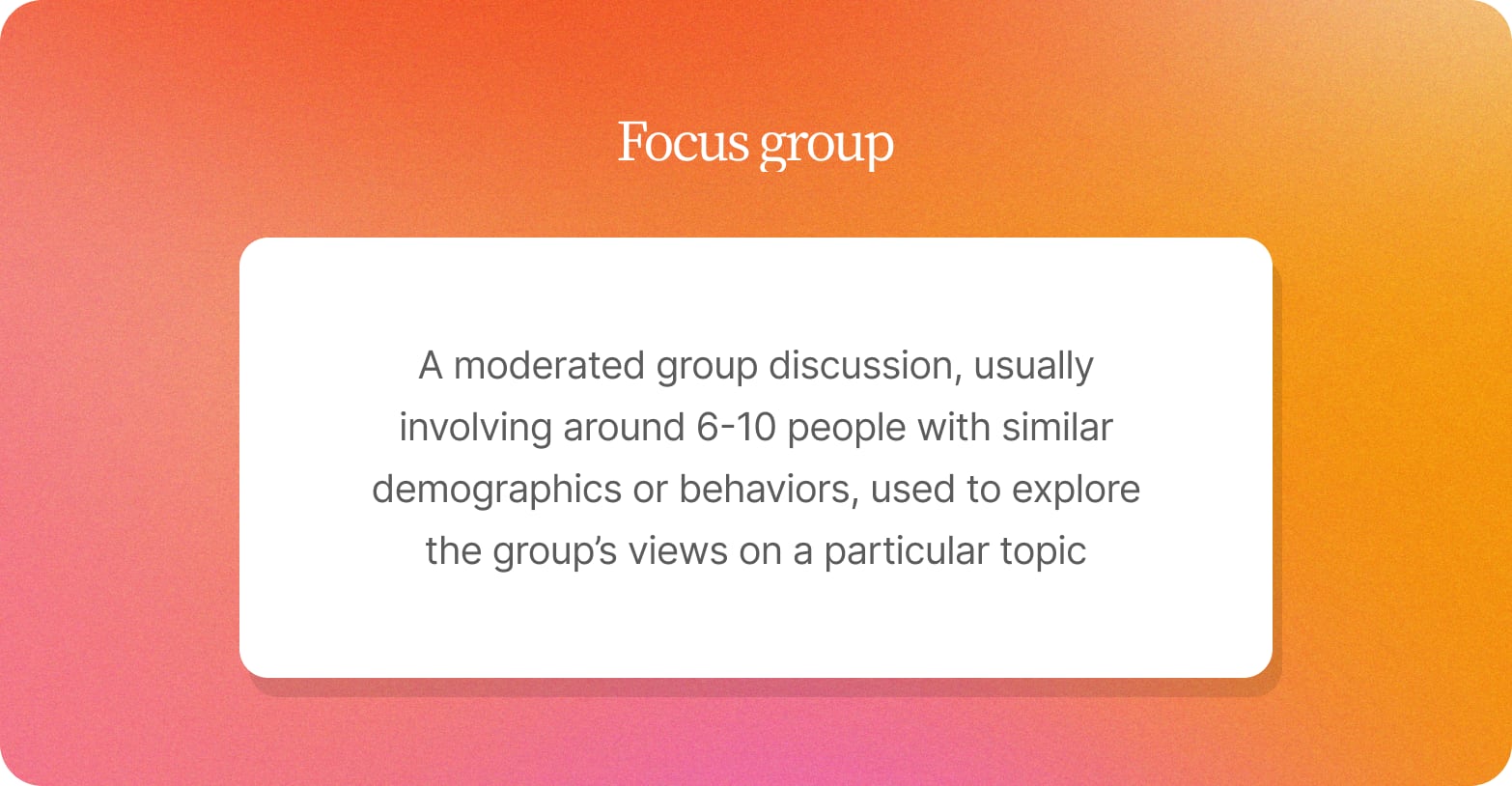
A focus group is a moderated group discussion, usually involving around six to 10 people with similar demographics or behaviors, used to explore the group's views on a particular topic. A moderator steers the conversation with open-ended questions and keeps the discussion focused.
The method surged in popularity after World War II, when advertisers adapted wartime propaganda tracking to study consumer psychology. Today, in-person and online focus groups are commonly used to test concepts and explore reactions to a particular product or idea. Interaction between participants is central to conducting a focus group, allowing researchers to observe how people respond to each other as well as what each person says.
A focus group session usually lasts around one to two hours and is recorded so researchers can review the discussion during analysis. For more complex discussions, two moderators may work together, with one leading the conversation while the other watches for areas that need further exploration or participants who haven't had a chance to contribute.
When focus groups work: use cases and research objectives
Focus groups are most useful when researchers want to understand how people react to an idea in a social setting. Hearing another participant's response can prompt someone to challenge an assumption or reconsider their initial reaction. That makes the discussion itself a source of research data. Here are some common use cases where conducting focus group research offers several advantages.
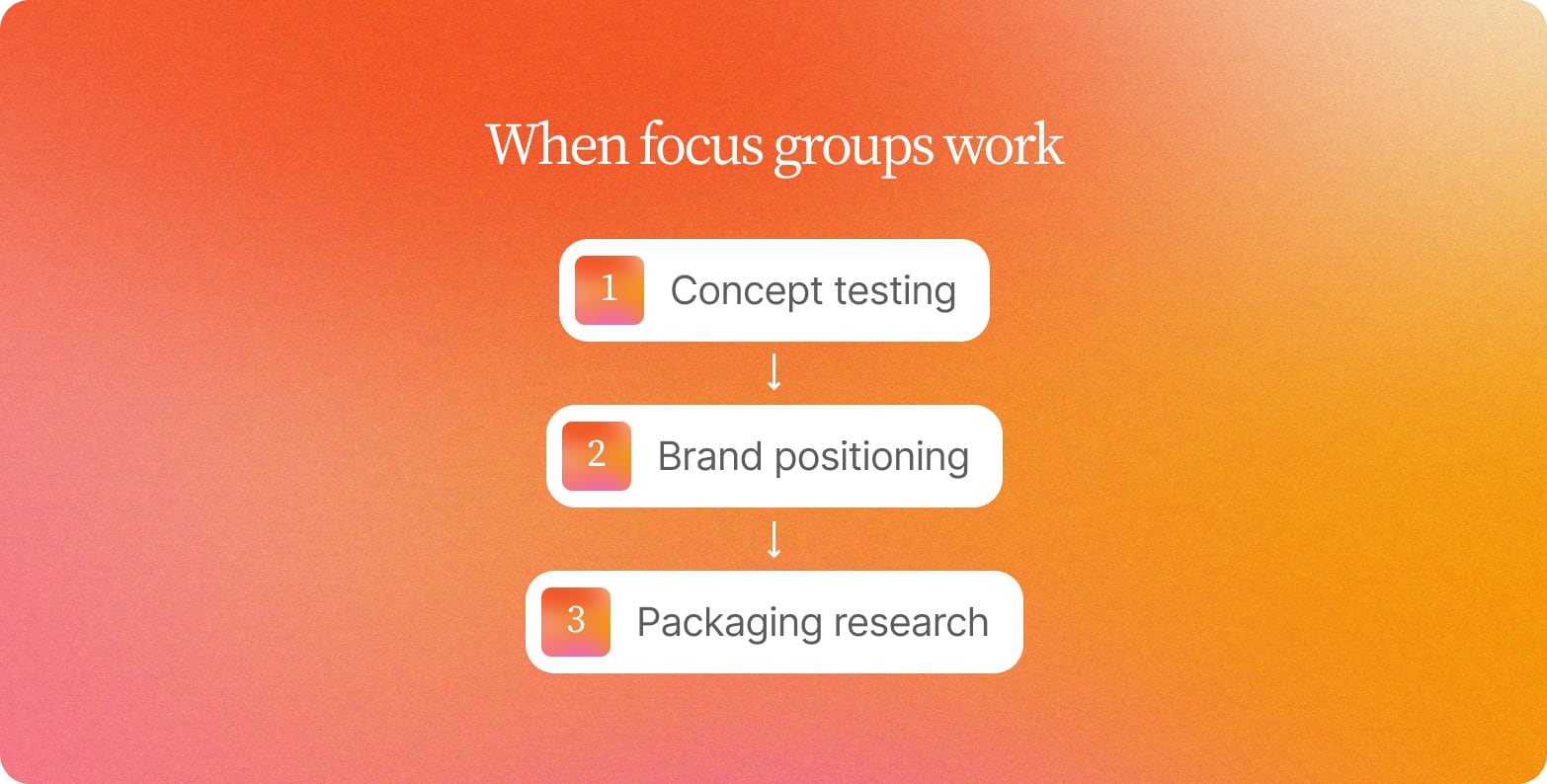
1. Concept testing
Concept testing shows you how people react to new ideas in the early stages of development. Focus groups suit this well because you can watch new opinions develop as people talk the idea through.
Say a food brand shows a group a new snack concept and asks what they think it's for. One person might raise a doubt nobody else had considered, and soon the rest of the group is either backing them up or pushing back. That kind of exchange often shows you a concept's weak spots faster than individual answers would.
2. Brand positioning
Brand positioning research asks where a brand sits in people's minds compared with the alternatives. When you're testing a new position, a focus group helps you see whether people come away with the same impression or read it in different ways.
A company moving toward a sustainability message, for instance, could share its new messaging with a group of consumers. If participants pick up on the message and build on each other's comments, the position is probably landing. If they start debating what it means, the messaging likely needs more work.
3. Packaging research
Packaging research looks at what people notice on a pack and how that shapes what they expect from the product inside. In a group, people tend to point out details the others missed, which makes it easier to understand why their reactions differ.
A consumer goods company might put two designs on the table and ask which one catches people's eye first. As the discussion goes on, you'll often hear why a color or a logo jumps out for some participants and barely registers for others.
When focus groups fail: 3 common pitfalls and what to use instead
The group discussion that makes focus groups useful can also change what people say. Participants hear other views before they've settled on their own, and some adjust their answers to fit the room. Here are three pitfalls to watch for.
1. When one person takes over
Focus groups tend to favor confident speakers, who'll often speak more and earlier than others in the group. Once that person sets the direction, others are less likely to bring up a different view or question what's already been said.
The findings can then look like group agreement when they mostly reflect one person's influence. A good moderator can draw quieter participants in, but in the focus group process, it's hard to fully undo the pull of the first strong opinion in the room.
Interviews avoid this problem because each person answers alone, with nobody else's view to react to. They're the better choice when you need to understand individual reasoning more than how people respond to each other.
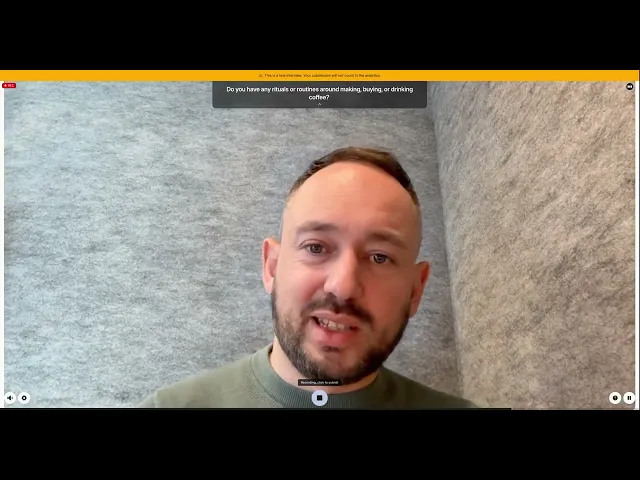
See it in action: here is what a one-to-one AI-moderated interview looks like.
2. When people don't feel comfortable speaking honestly
People tend to give answers that make them look good in front of others. In a group, a participant might soften criticism of a product or skip over a habit they find embarrassing. Researchers call this social desirability bias.
The effect is strongest on sensitive topics, such as how much people are willing to pay or why they stopped using something they bought. Teams often need these answers most, and a group setting is the most likely to distort them.
Asynchronous video interviews take the audience away. Each participant talks one-to-one with an AI research assistant that asks follow-up questions, at a time that suits them and with nobody else in the room, so they have less reason to change what they say.
3. When agreement hides real differences
A group can sound broadly aligned even when individual opinions are more mixed. People nod along or stay quiet instead of challenging a view that seems to have settled.
This is easy to miss because the transcript reads like agreement. If you report it as a shared view, you could end up making a decision based on support that doesn't exist.
Online communities are a better fit when you want to see how opinions form and change over time. Participants share their views individually over days or weeks. That means you can see where each person started before anyone else influenced them, and how their thinking moved as they read other people's posts.
Focus group formats: in-person, online, and asynchronous alternatives
Focus groups can run in person or online, and each setup affects how the discussion plays out. Some teams skip the group entirely and use asynchronous interviews, which work better when individual answers matter more than the conversation. Here's an overview of how the alternative focus group approaches compare.
| Factor | In-person focus groups | Online video focus groups | Asynchronous AI-moderated interviews |
|---|---|---|---|
| Timeline | Longest, since venues and travel need arranging | Shorter, with no venue to book | Days |
| Cost | Highest | Moderate | Lower |
| Group interaction | Strongest, with live reactions and body language | Present, but harder to read on video | None, since each person answers alone |
| How openly people respond | Moderate, with some pressure from the room | Moderate | Higher, as there's no one else in the room |
| Useful when you need to | See how people influence each other | Run a group discussion when participants are spread out | Hear from many people one at a time |
The main question you need to answer is whether group interaction is a core aspect of what you're studying. If you need to see how opinions form and shift in a room, in-person focus groups are still the strongest option. If the group mostly gets in the way of honest individual answers, an interview-based method like Conveo's will give you cleaner data.
Conveo runs video interviews in 50+ languages, so you can gather individual answers from multiple markets. It's SOC 2 Type II and GDPR compliant, with data hosted in Europe.
Conducting focus groups: planning, recruitment, and moderation
Most problems in a focus group session start during planning. Vague answers usually come from a vague objective, and a discussion that agrees too easily often means the group was recruited too narrowly. Follow these steps to plan your focus group effectively.
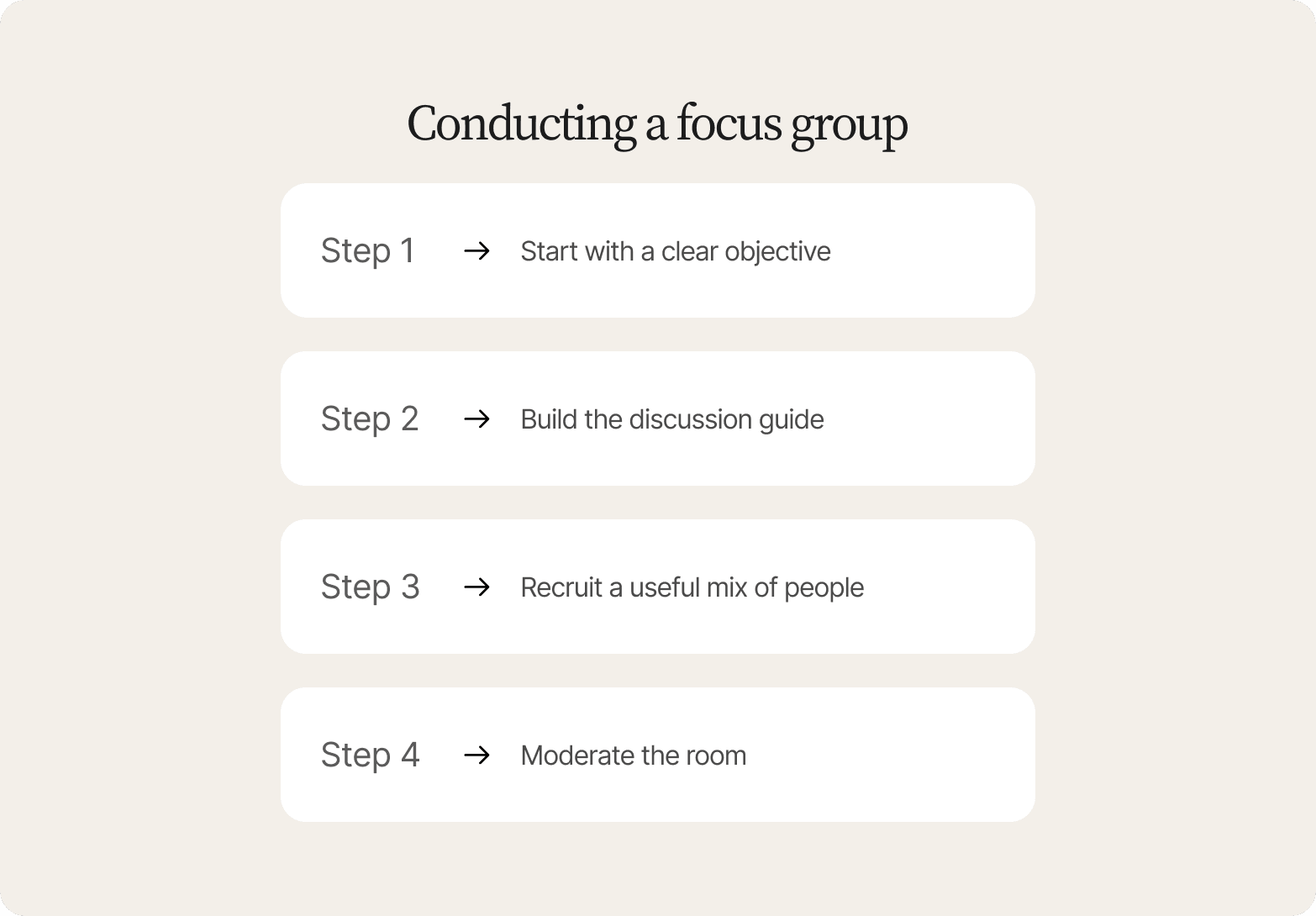
1. Start with a clear objective
Before writing any focus group questions, write down the decision the research needs to inform. "Understand how people feel about our snacks" is too broad to guide a discussion. "Find out whether parents see our new snack as a lunchbox option" tells you what to ask and where to dig deeper.
2. Build the discussion guide
A discussion guide moves the group from easy questions to harder ones, with time set aside to follow up on interesting answers. Here's how you might structure a 90-minute session testing a new snack concept:
| Stage | Example | What it's for |
|---|---|---|
| Warm-up (10 min) | "Tell us your name and what you usually pack for your kids' lunch." | Every participant speaks early, so quieter people have already joined in before the harder questions. It also gives you context for their later answers. |
| Key questions (45 min) | Show the concept. Ask everyone to write down their first reaction, then ask "Who do you think this is for?" | Captures first impressions before the group can influence them. |
| Probing (25 min) | "You said it looks too healthy. What would make it more appealing?" / "Does anyone see it differently?" | Gets past surface answers and invites disagreement, so the group doesn't settle on one view too early. |
| Wrap-up (10 min) | "If you could change one thing about this concept, what would it be?" | Gives each person a final individual say, which often shows what they care about most. |
3. Recruit a useful mix of people
Recruit for behavior as well as demographics. "Parents who've bought a lunchbox snack in the past month" is a better criterion than "parents aged 30 to 45" because it finds the people who actually make the decision you're studying.
Within those criteria, aim for some variety in views and backgrounds. A group that's too similar will agree easily, and you'll miss the range of reactions the product will meet in the market. It also helps to screen out people who know each other or who take part in research often, since both affect how openly people talk.
4. Moderate the room
The moderator's main job is to keep the discussion balanced. When one person starts to dominate, thank them and turn to someone else by name: "That's helpful. Sam, what did you think?"
Quieter participants often open up when they're asked directly or given a moment to write their thoughts down first. The moderator also needs to stay neutral, because reacting to answers teaches participants what the moderator wants to hear.
How to analyze focus group results for market research
Analysis turns hours of focus group discussion into a small number of findings that inform decision-making. Here's how to do it step by step.
1. Pull out the main themes
Start by reading through the transcripts and grouping similar comments together. A theme is a point that comes up across several participants, such as "the packaging looks too clinical" or "parents doubt kids will eat it."
Count how many participants raised each theme. A raw count of mentions misleads: one talkative person can mention the same point six times and make it look like a pattern. As you go, tag each quote with the participant and the video timestamp so anyone can check it later.
2. Check what might have skewed the results
If you ran more than one session, compare them. Rotating the order you show concepts or ask key questions from one group to the next helps here. If a concept only did well when it was shown first, the order may have influenced the result more than the concept itself.
Look at the moments of disagreement too. If the moderator asked "does anyone see it differently?" and nobody answered, note that as well, and don't assume everyone agreed. Non-verbal cues such as laughter or someone going quiet after a strong opinion can also show where people had doubts they didn't say out loud.
3. Separate group agreement from individual views
What a group agrees on in the room may differ from what each person genuinely thinks. If participants wrote down their first reactions before the discussion, compare those notes with what they said later. When people moved toward the majority view, report both: where they started and where the group ended up.
This distinction affects how confident you can be in a finding. A view that most people held before the discussion is stronger evidence than one that only emerged after someone persuasive made the case for it.
Once you've analyzed your focus group data, you should have a series of in-depth insights you can present to stakeholders. If those insights will feed into a high-stakes decision, you'll also want to document the evidence behind them.
What good focus group deliverables look like
A strong insight on its own still asks stakeholders to take the researcher's word for it. Without the evidence behind it, they can't see how many people held the view or whether anyone disagreed, and the insight is more likely to be dismissed. A stakeholder-ready deliverable puts that evidence next to each insight and includes:
Themes with supporting quotes. Each theme is backed by quotes from more than one participant, with the number of people who raised it.
Video clips with timestamps. If the session was recorded, include short clips of participants making the point in their own words, linked to the exact moment in the session.
Participant details. Who was in each group, so readers can see whether a theme came from a particular type of participant.
Where opinions diverged. Points where participants disagreed, or where individual views changed during the discussion.
Implications for the decision. What each finding means for the choice the research was set up to inform.
The difference that evidence makes is clear when you compare the approaches side by side. Take these two findings:
| Insight on its own | Insight presented with evidence |
|---|---|
| Theme: Packaging feels too clinical. "It looks like something from a pharmacy." | Theme: Packaging feels too clinical. Raised by 5 of 8 participants, mostly parents of younger children. "It looks like something from a pharmacy" (P3, Group 2, 00:34:12, clip linked). Two participants disagreed, saying the plain design made it look healthier. |
Stakeholders can feel more confident in the second insight, because it's instantly clear who said it and where the view was challenged, and anyone can open the clip to check it.
Focus groups vs depth interviews vs surveys: how to choose
Focus groups are one of several ways to learn what consumers think. The most common alternatives to traditional and AI focus groups are depth interviews, which are one-to-one conversations with a researcher, and surveys, which ask a large number of people the same fixed set of questions. Asynchronous video interviews sit between the two, giving you one-to-one answers from a larger group of people.
Each method suits a different kind of research question, and each has a point where its answers become less reliable. Start with what you need to learn, then check the method's weak spot before you commit.
| If you need to... | Use | Why it fits | Watch out for |
|---|---|---|---|
| See how people respond to each other | Focus groups | The discussion shows how participants build on each other's ideas and challenge views as they go. | Avoid them for sensitive topics such as pricing, where people may change their answers because others are present. |
| Understand one person's reasoning in depth | Depth interviews | A one-to-one conversation gives the interviewer time to follow an individual's thinking and explore topics they may not discuss in a group. | Each interview takes time to run and analyze, so they are less practical when you need responses from a large sample quickly. |
| Measure how common a view is | Surveys | Surveys can reach large numbers of people and show how widely a particular view is held. | They work less well when you don't yet know what answers or issues matter, because participants can only respond to the options you provide. |
| Get individual responses without scheduling live interviews | Asynchronous video interviews | Participants answer on their own schedule, giving them space to explain their views without other participants influencing the discussion. | They can't show how people respond to each other because participants answer separately. |
Many projects use more than one method. A common pattern is to use interviews to find out why people think the way they do, then a survey to check how widely those views are held. It also matters that you keep individual depth once you need to hear from a larger number of people, or across more than one study.
How Conveo brings always-on consumer understanding alongside focus groups
Focus groups remain a valuable tool when you need to watch group dynamics play out. When you need deeper insights from individual consumers, Conveo runs AI-moderated interviews where each person answers alone, so the rest of the room can't shape their answers. Here's what else the platform brings you:
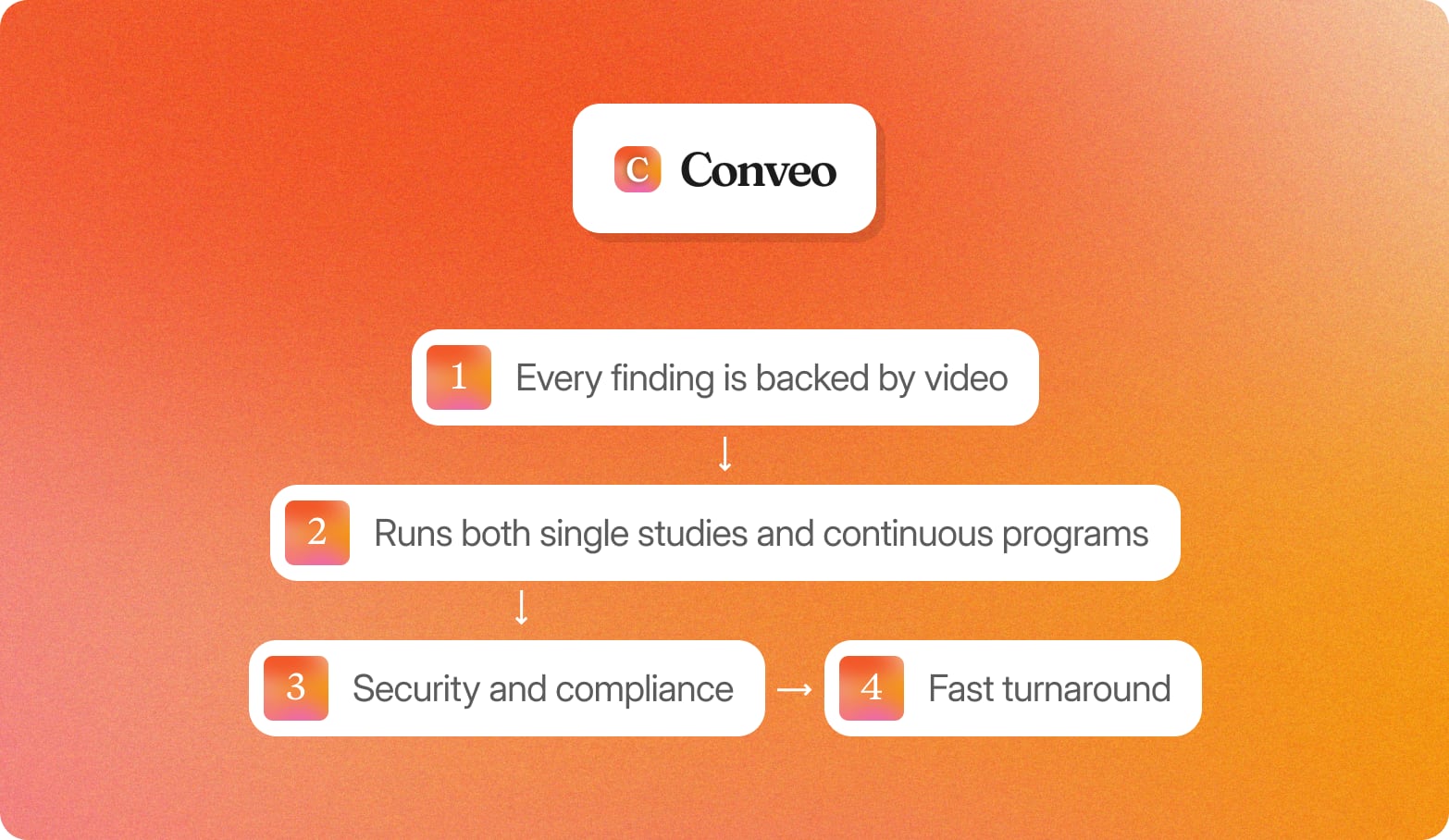
Every finding is backed by video. Themes link to the video clips of the participants who raised them, so stakeholders can check any insight.
Conveo runs both single studies and continuous programs. With Conveo StoryLines, research runs in waves on a set cadence, for example every two weeks or monthly. After each wave closes, Conveo compares the new results against earlier waves and reports changes in consumer behavior and emerging themes.
Security and compliance. Conveo is SOC 2 Type II and GDPR compliant, with data hosted in Europe.
Fast turnaround. AI-moderated interview studies typically complete fielding and analysis within days.
That combination helps research teams keep individual depth as their work grows, including across markets.
"The pace, responsiveness, and research expertise of the Conveo team, on top of the top AI-moderated qual platform, have been invaluable to us in scaling brand advertising internationally."
Matt Harris, Research & Insights Lead, EMEA, Canva
Frequently asked questions
What is a focus group in psychology?
In psychology, a focus group is used to explore how people understand and experience a particular issue. For example, a researcher might bring together people who have experienced the same situation and ask them to discuss it in their own words.
What is a focus group example?
A company developing a new meal delivery service might invite people from its target audience to discuss the concept. The moderator could ask what focus group participants think about the idea and what would make them interested in using it, helping the company understand their reactions before the service launches.
What is a focus group in marketing?
In marketing, a focus group brings together people from a target audience to discuss their response to a marketing idea. For example, a company could show participants an early version of an ad and ask what they think the message means.
What are focus groups in politics?
A focus group in politics brings together a small group of people to discuss a political issue or campaign message. Researchers can use the discussion to understand why participants hold certain views and how they respond to different ideas.
What are the advantages and disadvantages of a focus group?
Focus groups can provide valuable insights because participants have time to explain their views and respond to other people, which can bring up ideas researchers may not have anticipated. However, group dynamics can influence what people are willing to say, and findings from a small group may not reflect the wider population.
What is a focus group job?
A focus group job usually means taking part in a research session as a participant. You discuss a particular topic with a moderator and other group members, sharing your opinions and experiences to help with the research.

About the author
Alex de Hemptinne
Head of Customer Success
Alex is a Business Impact Lead at Conveo, partnering with enterprise teams to embed AI-led research into their workflows. From the first study to full-scale rollout, she helps customers shift from project-based research to continuous customer intelligence.
Meet Alex on film →Qualitative insights at the speed of your business.
Conveo runs AI-moderated video interviews and structures everything they say.