In this article
TL;DR
Followers are rented. A platform controls them; an email list you own is a direct relationship.
Pick your audience first. Choose who you want to serve, then shape the message for them.
Talk to ten people. A handful of one-on-one conversations with the right customers reveals shared problems quickly.
Votes and behavior differ. Johnson checks polls against what people actually do.
Raw beats polished. Posting often with imperfect, real content builds quality and growth.
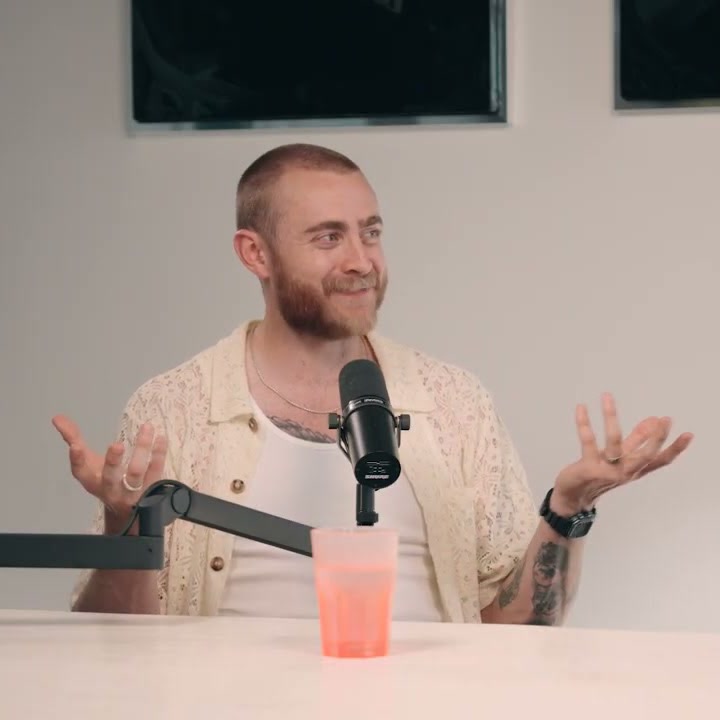
Brock Johnson, co-owner of InstaClubHub and an Instagram growth coach, has a blunt message for brands that count followers: that audience is rented territory. A platform can take it away with a hack, an algorithm change or a trend shift. What a brand owns is the relationship, and the cleanest form of that is an email list of people it can contact directly.
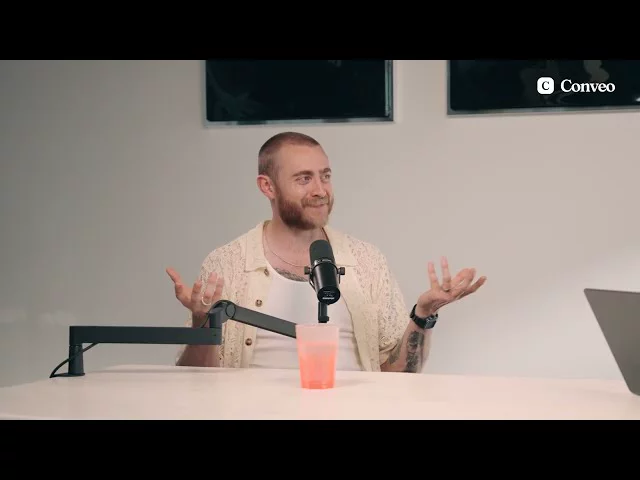
Johnson made the case on Conveo's podcast, recorded live at Cannes Lions 2026. Underneath the social media advice is a point about customer understanding. You cannot own a relationship with people you do not understand, and Johnson's methods for getting to know an audience are simple enough for any marketing or insights team to copy.
A follower count is rented, and an owned list is the real asset
Johnson learned the lesson early. His mother is an early creator, and more than a decade ago her account was hacked. As a family, they lost a large number of followers in a very short period. The experience, he says, taught him something many creators are only now learning: "your followers aren't worth very much."
What matters is the actual customer, and more concretely the people on your email list, on a platform you own.
"You own those contacts. You own the right to message them, to send them emails and broadcasts."
Brock Johnson, Co-owner, InstaClubHub
Followers, by contrast, are "really just rented territory that can be taken away from you." Hacks are the dramatic case. The everyday risks are algorithm changes, platform changes and the ebb and flow of trends. You can have many followers and few views. "It's a lot more reliable and secure to have an owned platform like an email list," Johnson says.
A follower without a relationship is close to useless. If someone does not know much about you and is not engaged, Johnson says, "it's almost worthless." He would prefer to hear that someone sees his posts all the time without following him than that a follower of three years has not seen a single post.
Knowing your audience starts with choosing it, then talking to it
Asked how he builds a deep understanding of the people on the other side, Johnson starts with a choice. Many creators define their market by whoever they happen to attract, then chase the demographics.
"I like to teach people that you actually pick who that market is going to be first and then you can tailor your messaging to said market."
Brock Johnson, Co-owner, InstaClubHub
From there, the work is old-fashioned. Part of it is empathy: imagining what customers are going through, their struggles and pain points. A big part is direct conversation. "A huge part of that is listening, listening in the most literal sense of the word of just having conversations with these people," he says, by email, by direct message, old school. He adds that data, AI and analytics now help: "With data and with AI and with analytics, you can do a lot more listening in a lot shorter of an amount of time."
The sample does not need to be large to be useful, as long as it is the right sample. Johnson cannot talk to hundreds of thousands of followers. But if he knows exactly who his customer is, he says, "I might talk to 10 over the course of a week or two who perfectly fit my demographic." If most of those ten echo the same problems, he takes it as a signal the wider audience will relate. Researchers will recognize the logic: once interviews with a well-defined group start repeating themselves, the core themes are on the table.
His fastest lesson in customer understanding came from the same principle at full intensity. At the start of 2020 he oversold his one-on-one coaching and spent months on back-to-back calls, with protein bars slid under the door between sessions. It burned him out, but it was "like drinking from a fire hydrant of just so much customer knowledge and hearing the same problem." Hearing the exact same sentence on six calls in a day told him the problem was real.
Polls show what people say, and behavior shows what they do
Johnson polls his audience on everything, from a product launch to a YouTube thumbnail, and he tells people with only a few hundred followers to start doing it too. When his team debates a name or a time slot, his answer is to ask the audience and let them vote.
The host pushed on selection bias: the people who answer polls are not necessarily the people who buy. Johnson agreed, and described how his team corrects for it after the fact. In one case, the audience voted for a 7 a.m. webinar, but a 1 p.m. session drew far more attendees.
"People don't always know what they want. They'll vote for things that they think that they want, but they don't actually want. So, you have to look at what are people actually doing as well."
Brock Johnson, Co-owner, InstaClubHub
That is the say-do gap in miniature, and it is why a single poll result should never close a decision. Our article on research participant bias covers the forms this takes, and the guide to what a voice of the customer survey can and cannot tell you explains where stated answers need behavioral or qualitative backup.
Brands lose on social when they polish too much
Asked what brands get wrong on Instagram, Johnson says they are "overemphasizing the branding, the aesthetics, how perfect everything looks, how cohesive everything looks." Large corporations with legal review on every post may have no choice. For most brands, especially smaller ones and personal brands, he says speed should be the name of the game. In his experience there is a direct correlation between posting frequency and growth rate.
His argument on quality is practical. Nobody should post bad content on purpose, but practice is how content gets good. "It's quantity that breeds the quality," he says. He wants brands to give whoever creates their content, an agency or an in-house creator, permission to make mistakes. He makes them nearly every day, with typos and edits he does not love. "No one's paying as close attention to you as you are to yourself," he says.
On brand voice, he points to Duolingo's owl. He doubts the team mapped its whole personality before posting; he would bet much of its character, the quirks and inside jokes, was found over time. Brands built around a real person have it easier, because that person simply shows up as themselves.
He extends the same logic to launches. His first product, built at 19 while playing college football, was a course teaching parents how to keep their teens safe on Snapchat. He had spotted a fear in the news and knew he could solve it uniquely, because he used Snapchat daily and had just taught his own parents. The videos were rough, but the course shipped and it started the path to his current business. His advice: "look for the gap in the market that you can uniquely solve and then just move quickly."
What it means for insights and marketing leaders
Johnson speaks as a creator, but his rules map neatly onto how brands should run consumer understanding.
Value direct relationships over reach. Follower counts and panel sizes say little about how well you know the people inside them. Johnson calls followers "very much a dinosaur metric to focus on," and puts views and engagement ahead of them. For insights teams, the parallel is depth of contact with real customers.
Define the audience before you study it. Picking who you want to serve first makes every conversation more useful, because you know whose problems you are trying to hear.
Small, well-chosen samples go a long way. Ten conversations with people who fit the profile can surface the shared problems that matter, as long as you run the interviews well.
Check stated preference against behavior. Polls are fast and cheap. Pair them with what people actually do before you commit budget.
Expect people to want the real thing. Asked which customer truth his industry still refuses to believe, Johnson said audiences want raw, real and authentic content. "People want real, especially as we move into the world of AI where everything is perfect," he says. "People are going to want real. They're going to want honest. They're going to want vulnerable."
The relationship you own is built on real conversations
Johnson's case against follower counts is a case for knowing people. An email list is valuable because those people chose a direct relationship, and a direct relationship only works if you understand what they are going through. His methods, from ten one-on-one calls to polls checked against attendance, all aim at the same thing: hearing customers in their own words, then watching what they do.
That is the work insights teams do at scale. Conveo's AI research assistant runs video conversations with real consumers, so insights teams can get to the why behind behavior faster, and pair what people say with how they say it. For another Cannes conversation on judging marketing by what moves people, see Miguel Avalos on outcomes over impressions.
Frequently Asked Questions
Why does Brock Johnson call followers rented territory?
Because a platform controls them. Hacks, algorithm changes and shifting trends can take followers or their attention away overnight, while an email list on a platform you own gives you the right to contact those people directly.
Who is Brock Johnson?
Brock Johnson is co-owner of InstaClubHub and an Instagram growth coach with nearly a million followers. He spoke on Conveo's podcast, recorded live at Cannes Lions 2026.
How does Brock Johnson recommend getting to know an audience?
Pick the market you want to serve first, then talk to people in it one on one. He also polls his audience constantly, and checks the votes against what people actually do, since people do not always know what they want.
What mistake do brands make on Instagram?
Johnson says most brands overemphasize polish, aesthetics and visual cohesion. For smaller brands especially, posting more often with raw, real content builds both growth and quality faster.
What is the most overrated metric on social media?
Johnson names follower count. He says views and engagement matter, while followers are a dinosaur metric to focus on.

About the author
Tom Husson
CMO
Tom is CMO at Conveo, where he leads marketing and builds the company's AI-native go-to-market engine. He hosts the Conveo podcast, recorded at Cannes Lions 2026 with brand, insights and marketing leaders.
More by Tom →Qualitative insights at the speed of your business.
Conveo runs AI-moderated video interviews and structures everything they say.