In this article
TL;DR
A customer intelligence strategy is the operational system that turns customer data into decisions before approval gates close.
Most organizations have research projects rather than a strategy: studies run, decks get filed, and findings expire before they influence any business outcomes.
Customer intelligence (CI) draws on identity, behavioral, attitudinal, and transactional data, but which data you hold matters less than whether the explanation arrives in time.
The three components that make customer intelligence work are: decision-window alignment, a searchable insight library, and a video-first evidence infrastructure.
Always-on understanding infrastructure closes the gap between when questions surface and when evidence arrives.
The measure of a working strategy is informed decisions and actionable insights, rather than completed studies.
A customer intelligence strategy is the operational system that determines how customer understanding is collected, stored, distributed, and used to influence decisions before approval gates close. Customer intelligence (CI) is the practice of analyzing customer data, feedback, and interactions to explain why people behave as they do. The strategy determines whether any of it reaches a decision in time.
What most teams actually have is a collection of research projects. A concept test runs in Q1, a brand tracker launches in Q3, and depth interviews are commissioned when a campaign brief raises questions nobody can answer. Each study produces a deck that is presented, filed, and rarely retrieved. Customer insights exist. They are simply stranded because there is no repository that connects findings across studies, no alignment between when research is commissioned and when decisions require evidence, and no shared definition of what counts as credible enough to act on.
The failure mode is structural. Agency-led qualitative research runs on multi-week cycles. Product sprints close in two weeks, campaign approvals in three, and innovation stage-gates do not pause during fieldwork. By the time findings arrive, the decision has already been made on instinct, competitive pressure, or whoever presented last. Research that arrives after the window closes is a historical document.
What matters is rigor that survives the speed, because research that moves fast and cuts corners produces findings nobody trusts. What closes the decision-window gap is a customer intelligence strategy built on an always-on understanding infrastructure: AI-moderated research that delivers research-grade findings while decisions are still open, with every study compounding into a searchable library rather than expiring in a deck. Conveo is built by researchers to deliver exactly this, narrowing the gap between question and evidence enough that decisions can wait for it.
The 3 Components of a Customer Intelligence Strategy That Gets Used
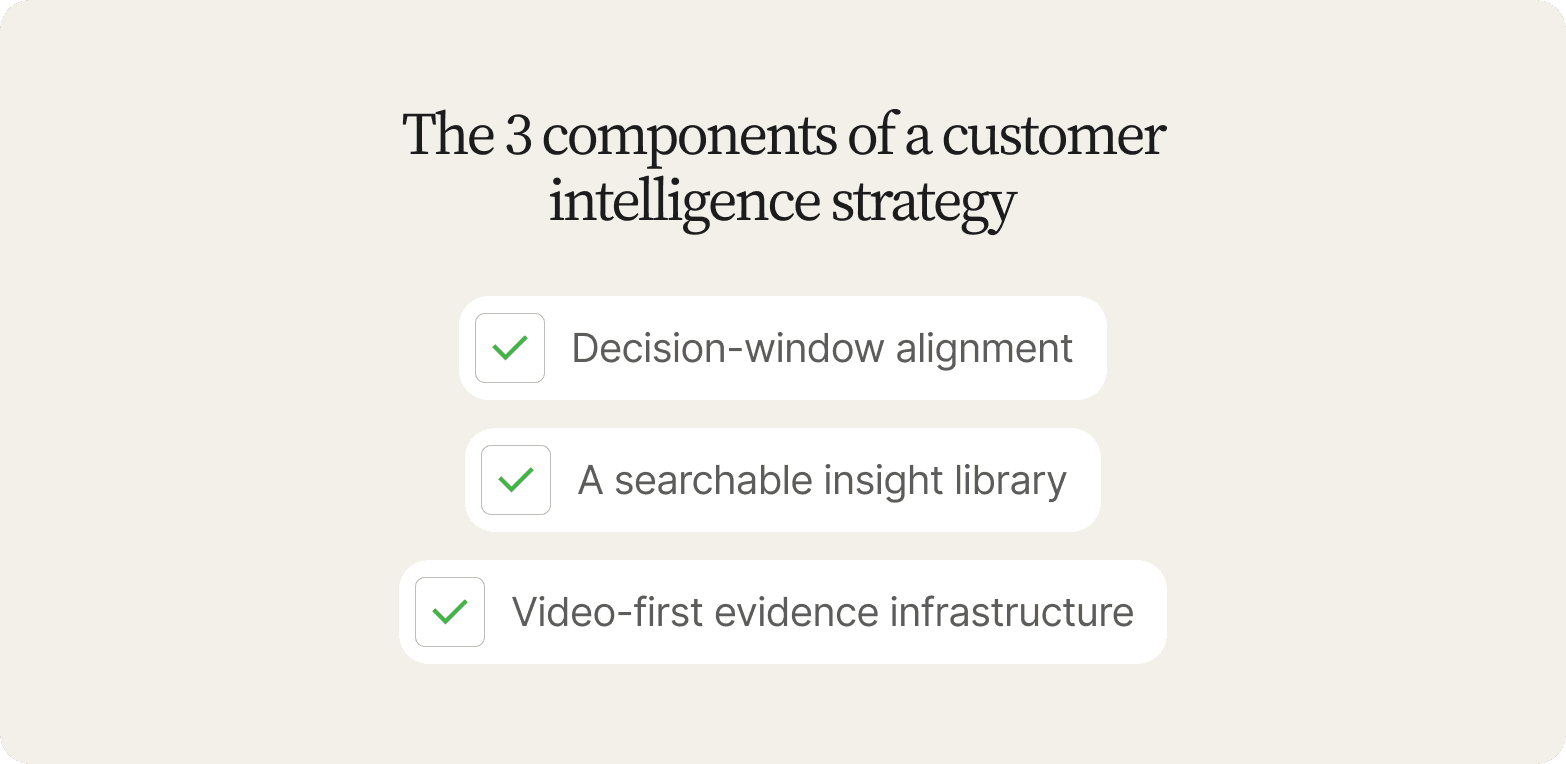
An effective customer intelligence strategy requires three operational components most organizations are missing. Learning to develop customer intelligence that yields a deeper understanding of why customers act, rather than just another record of what they did, means building around it from the start.
1. Decision-Window Alignment
Research that arrives after a roadmap locks validates the decision retroactively rather than changing it. The gap is structural: agency-led qualitative cycles run weeks to months, while the product sprints and campaign planning windows that marketing teams work inside close in two to three weeks. Those timelines are incompatible by design.
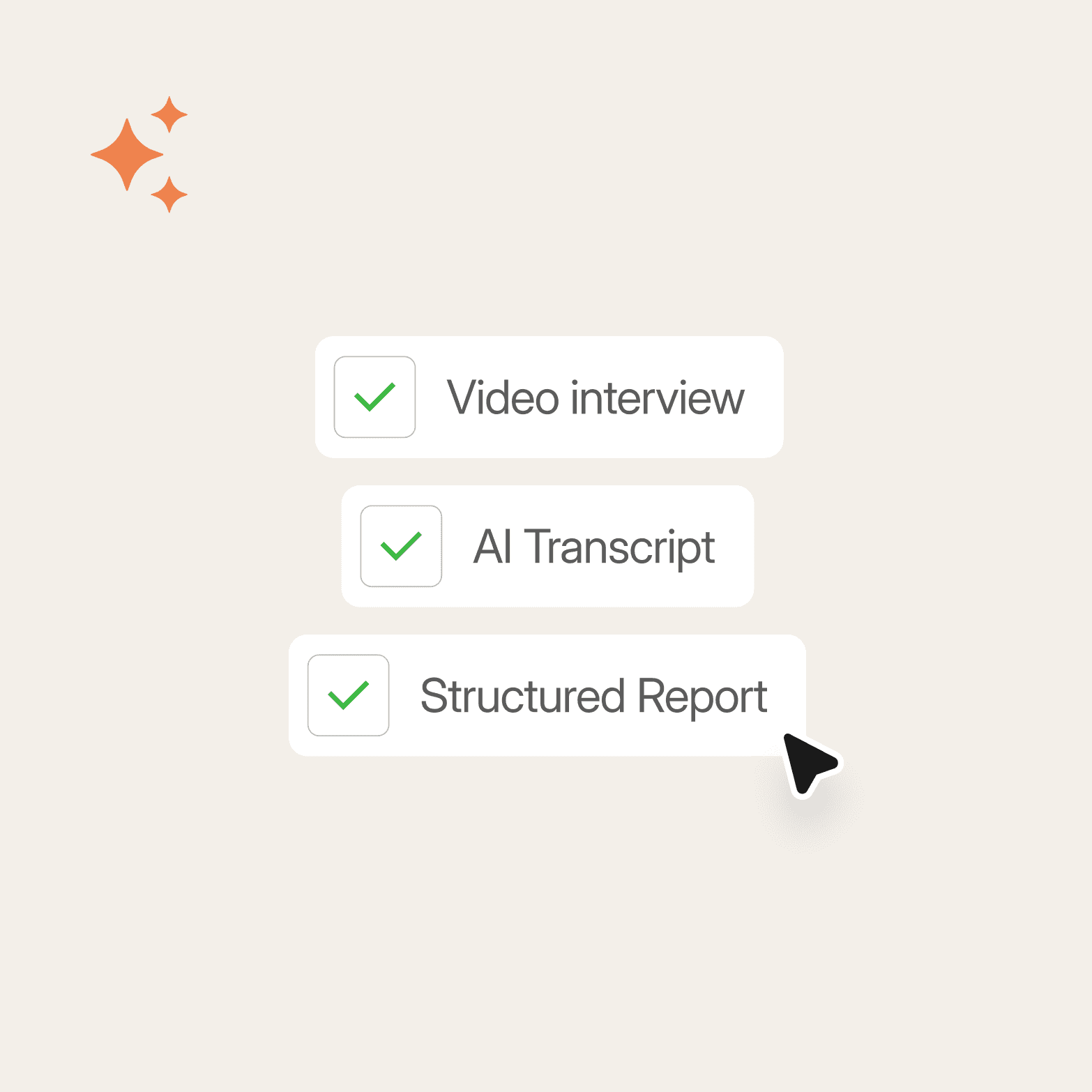
Asynchronous AI-moderated video interviews resolve this by removing the scheduling bottleneck that slows traditional qual. Instead of coordinating calendars across dozens of participants and a moderator, hundreds of conversations run in parallel and findings reach stakeholders while choices are still open.
2. A Searchable Insight Library
Without a repository indexing clips, themes, and verbatim quotes for reuse, research dies in the deck where it was first presented. Teams study the same questions twice because no one can locate what was learned six months ago. Stakeholders make calls without evidence because customer intelligence data is not readily available when they need it, even when they trust the research itself.
A searchable insight library breaks the start-from-scratch cycle by making intelligence continuous. Conveo calls this compounding library the Knowledge Layer: every study connects to the last, contradictions surface, and the valuable insights buried in past projects remain retrievable rather than evaporating between them.
3. Video-First Evidence Infrastructure
Claims about customer needs and customer pain points get dismissed as workshop outputs. The question that kills a presentation is "Who actually said this?" If the answer is "our synthesis," the room loses confidence.
Video-first evidence infrastructure makes persona claims defensible by linking every theme to timestamped clips and verbatim quotes. Stakeholders verify what participants said in their own words rather than trusting an interpretation filtered through several synthesis steps. That traceability separates findings that influence decisions from findings that get filed.
How to Develop Customer Intelligence: The Research-Grade Operating Model
Learning how to develop customer intelligence that changes decisions starts with a problem most teams never name: the research that underpins their understanding of customers lacks standards. Sampling criteria are vague. Probing follows a script regardless of what participants say. Synthesis is a deck no one can trace back to a real person. The result is intelligence that feels credible in a workshop and falls apart in a stakeholder review. A research-grade customer intelligence strategy treats collection, validation, and defensibility as non-negotiable.
The Types of Customer Intelligence and Where They Come From
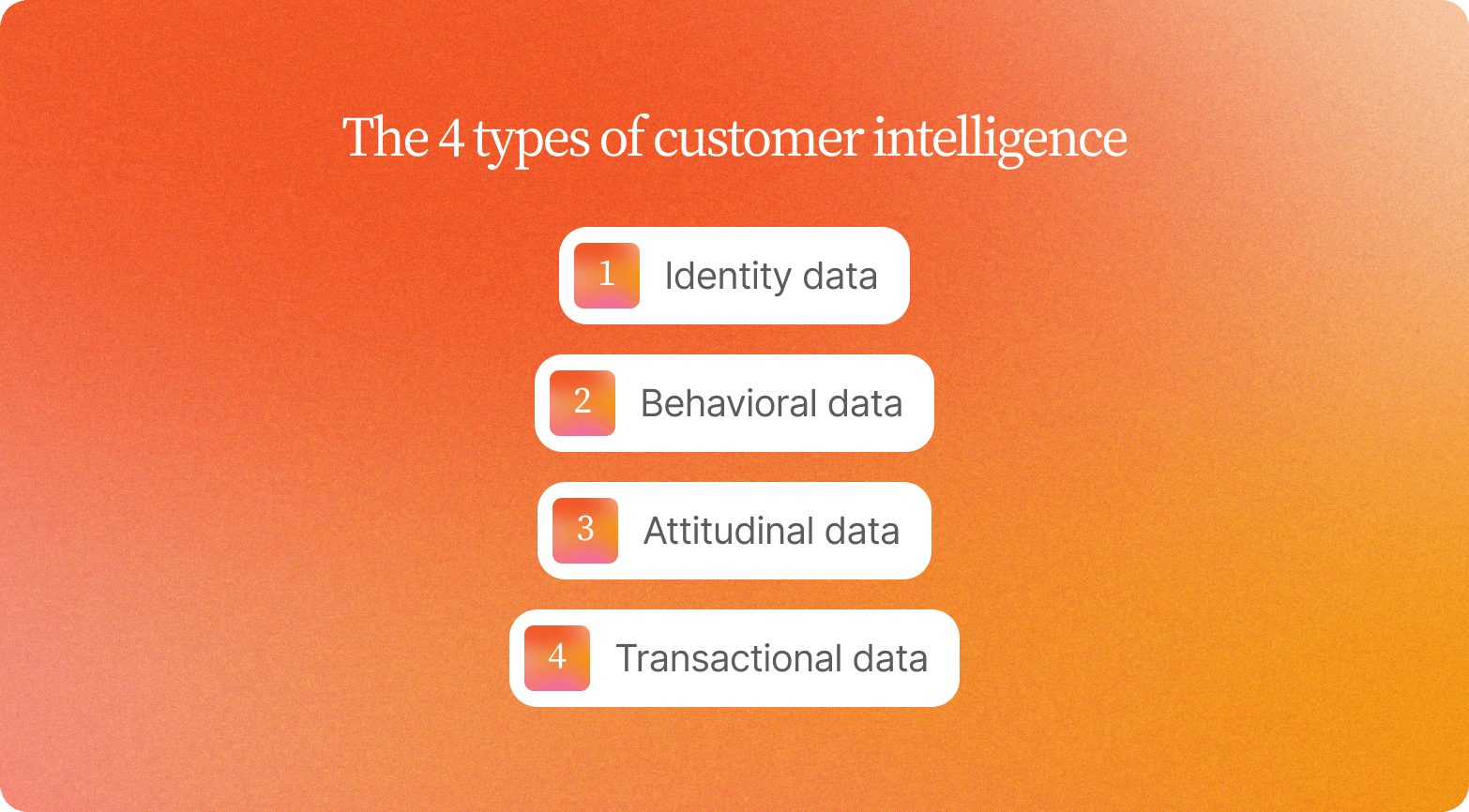
The types of customer intelligence most teams work with fall into four groups:
Identity data (who someone is)
Behavioral data (what they do, including purchase history, average order value, and how customers interact with the product)
Attitudinal data (what they say they want, from customer surveys, customer complaints, and support tickets)
Transactional data (what they bought and when)
Most organizations collect customer data across all four and still cannot explain a single decision. Identity data, behavioral data, and transactional data are records of what happened; they describe patterns without accounting for them. Attitudinal and psychographic data should close that gap, but survey-based feedback captures stated customer preferences rather than the underlying reasoning. Third-party data sources and purchased consumer data widen the picture, adding data sources without adding explanation.
Qualitative evidence explains the rest. First-party data tells you that two in five trial users abandon at the same step. It cannot tell you why. That answer only exists in a conversation.
Sampling and Segmentation
Demographic cuts describe who your customers are. They rarely explain why customers choose you, stay, or leave. Behavioral segmentation, built around triggers, risks weighed, channels used, and workarounds adopted, produces customer segments and personas that can guide screener design and campaign targeting.
Most products need two to five personas grounded in real differences in customer behaviors, rather than arbitrary slices. Define segment criteria before recruiting, so every interview maps to a decision-relevant audience. When criteria are specific, five to fifteen participants per segment typically reach thematic saturation. The number matters less than the screener's precision.
Probing and Synthesis
Surveys move fast, but they miss hesitation, tone shifts, contradictions, and the workarounds participants build around a product they find frustrating. Those signals are where the actionable understanding lives.
An AI moderator that probes based on what participants actually say, rather than advancing to the next scripted question, surfaces the reasoning behind stated preferences instead of confirming what the discussion guide assumed. That is the difference between recording customer expectations and understanding customer preferences well enough to design against them. Synthesis that traces themes to timestamped clips and verbatim quotes is what lets a researcher stand behind a finding under challenge.
Traceability and Governance
Personas built from workshop assumptions collapse the moment a stakeholder asks for evidence. Video-first research makes every claim defensible: each theme links to a timestamped clip, each quote to a real participant, with the full recording available if the synthesis is challenged.
Where Customer Intelligence Tools Fit
No single platform does all of this, and confusion about the customer intelligence tools category is part of why strategies stall. A customer data platform unifies identity and behavioral records. Customer relationship management systems track accounts and customer interactions. Business intelligence and customer analytics tools turn those records into dashboards. Machine learning models score customer churn risk or perform sentiment analysis at volume across support transcripts.
All of that is analyzing customer data that already exists. Customer intelligence focuses on what the reporting stack cannot produce: the reasoning behind the numbers. Business intelligence tells you what happened; customer intelligence explains why.
That has a practical consequence for tool selection. Advanced analytics and customer intelligence improve as data integration and data quality improve, making investment in them an investment in data management. A customer intelligence platform for qualitative evidence is a separate purchase solving a separate problem: generating explanation rather than organizing records. Teams that buy customer intelligence software as a reporting upgrade get better dashboards and the same unanswered questions.
This operating model ensures intelligence is credible enough to run decisions on. The remaining condition is timing: findings that arrive after the decision window closes serve as historical record rather than decision support.
3 Ways to Integrate Customer Intelligence Into Your Business Strategy
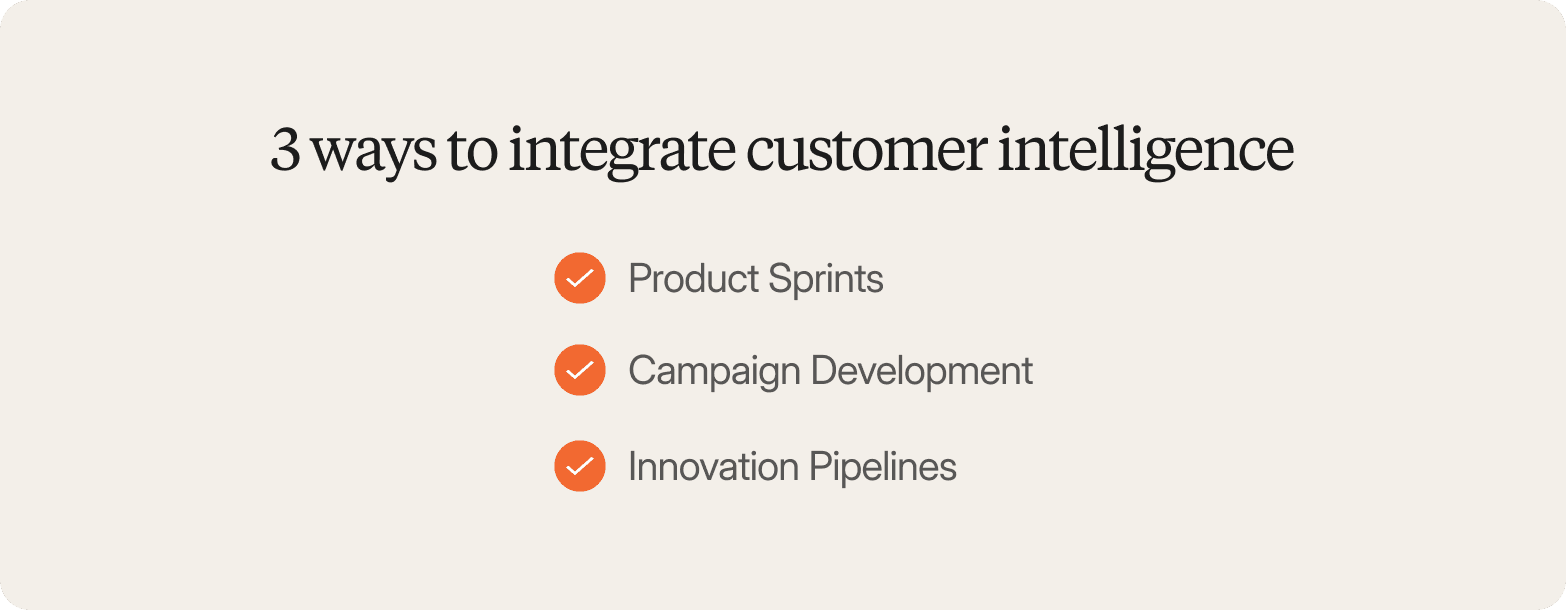
Research that arrives after the campaign brief is locked produces a deck that gets filed. The methodology can be rigorous and the sample well-recruited; none of it matters if findings land after the decision window closed. The fix is to align research triggers and delivery timelines with the decision calendars that govern your organization, which means knowing which stage of the customer lifecycle each decision touches and which moment in the customer journey it will change.
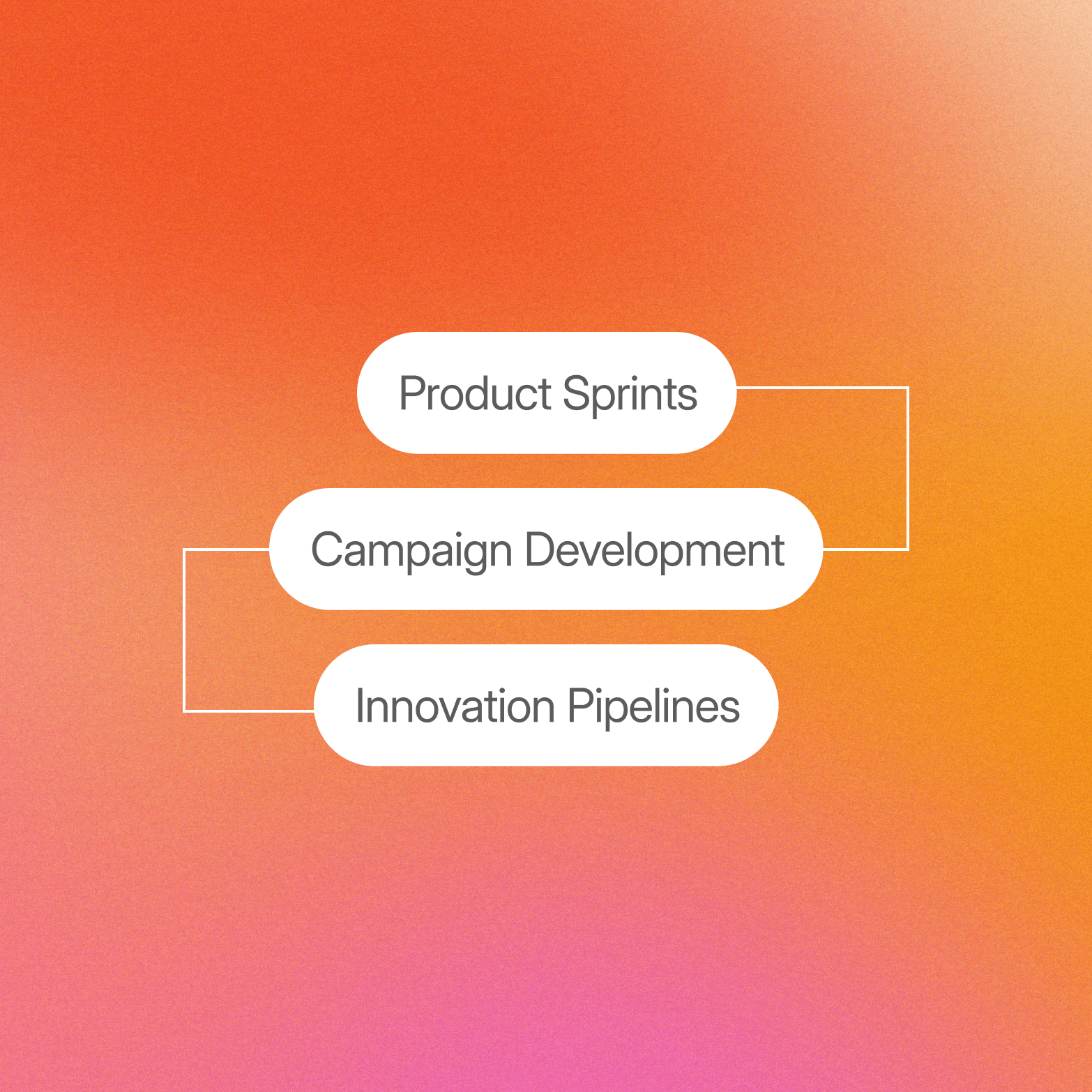
1. Product Sprints
Product teams operate on two- to three-week sprint cycles. A study that takes weeks to complete falls outside that window. To influence sprint planning, findings need to be available while the sprint is still forming.
Because asynchronous AI-moderated interviews run hundreds of conversations in parallel rather than in sequence, teams report going from launch to research-grade findings in days. A question raised in sprint planning gets answered before the next sprint begins, and the resulting change to the customer experience ships in the same cycle.
2. Campaign Development
Campaign briefs lock four to six weeks before launch. Persona research, message testing, and audience validation must be completed before creative development begins. With traditional agency cycles, findings routinely arrive after the brief is written and the creative direction chosen, so marketing efforts get built on last year's read of the audience.
A continuous customer intelligence strategy replaces that project-by-project model with always-on infrastructure. Conveo StoryLines runs wave-based programs, typically bi-weekly or monthly, that update persona understanding between campaigns. Continuous Consumer Understanding means insights are ready when the brief opens rather than commissioned in response to it, and that consumer intelligence teams monitor emerging and broader market trends rather than confirming them a quarter late.
3. Innovation Pipelines
Innovation gates require evidence of customer need, but long research cycles make it impractical to validate every concept before a gate review. A searchable insight library changes that calculus.
When clips, themes, and quotes from previous studies are indexed and retrievable, teams can answer "have we already researched this?" before commissioning new work. Concepts that map to existing findings move forward with evidence in hand, and only novel questions require new fieldwork. That is what makes it realistic to anticipate customer needs rather than react to them.
The Searchable Insight Library: How to Prevent Repeated "Start From Scratch" Studies
Six months after a deck is presented, a stakeholder asks a question the team already answered, and the cycle starts over. A searchable insight library is the component of a customer intelligence strategy that prevents this: a repository indexing clips, themes, and verbatim quotes for reuse, making intelligence continuous rather than periodic.
How It Works
Every AI-moderated interview produces timestamped clips linked to themes as the conversation closes. Teams search by topic, persona, product area, or market segment and retrieve relevant clips and quotes in seconds. When a brand manager asks whether price sensitivity came up in last quarter's concept test, the answer is a query away rather than a multi-week research request.
Compounding Intelligence
Each study adds to the repository rather than replacing it. The library connects findings across projects, surfaces contradictions between waves, and flags when new evidence shifts a prior conclusion. That compounding effect distinguishes always-on consumer-understanding infrastructure from periodic research projects. Teams ten studies in build on established explanation, so every new question on study eleven begins from a base of evidence rather than a fresh set of data points.
Governance and Access
Enterprise customer intelligence programs stall at procurement without governance-ready infrastructure. Conveo is SOC 2 Type II certified, GDPR compliant, EU hosting (Belgium). Because consumer data obligations now span regimes including the GDPR and the California Consumer Privacy Act, consent and retention management belongs in the platform rather than in a spreadsheet. Role-based access controls keep sensitive findings restricted while making general insights broadly available: product, brand, and strategy teams query the library directly, and the same clips support improving customer service by giving customer service agents the language customers use for the problems they call about.
Video-First Evidence: How to Make Persona Claims Defensible in Stakeholder Reviews
Personas fail stakeholder reviews for one reason: the room cannot answer "who actually said this?" Labels like "values authenticity" collapse the moment a skeptical VP asks for the source. There is no source. The trait came from a synthesis session, and everyone knows it.
Video-first evidence solves this at the source. When AI-moderated interviews produce timestamped clips linked to themes, every persona attribute carries its own proof. A claim like "this segment prioritizes transparency over price" becomes a theme backed by participants saying exactly that, on camera, at a timestamp anyone can verify. That is the credibility mechanism that makes a customer intelligence strategy defensible rather than debatable, and it moves the review from "do we believe this?" to "what do we do about it?"
See it in action: How Themes Link to Timestamped Evidence
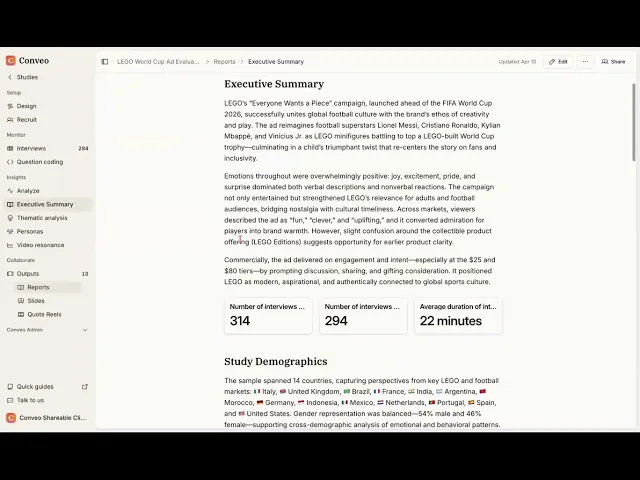
The same principle applies across markets: AI moderation in 50+ languages means parallel studies run across regions at once, with findings ready to compare before a translated discussion guide has been reviewed.
Customer Intelligence Strategy Example: How Enterprise Teams Operationalize Always-On Research
In a representative scenario, a product team at a global SaaS company runs continuous discovery before sprint planning. When a concept surfaces, it triggers AI-moderated interviews with 10 to 15 users, yields thematic findings within the sprint window, and stores clips, verbatims, and themes in a searchable insight library organized by feature area.
The operational structure matters as much as the method. Before commissioning any new study, product managers search the library first. The question is "have we already researched this?" rather than "what do users think?" That single habit keeps attention on genuine unknowns.
Decision-window alignment is what makes it work. The team runs two-week sprints, and because conversations run in parallel rather than one at a time, findings land inside that window while the decision is still open. By month six, the library holds hundreds of clips across feature areas, personas, and segments, and each new study surfaces contradictions and flags assumptions the team did not know it was making.
4 Common Failure Modes: Why Customer Intelligence Strategies Stall
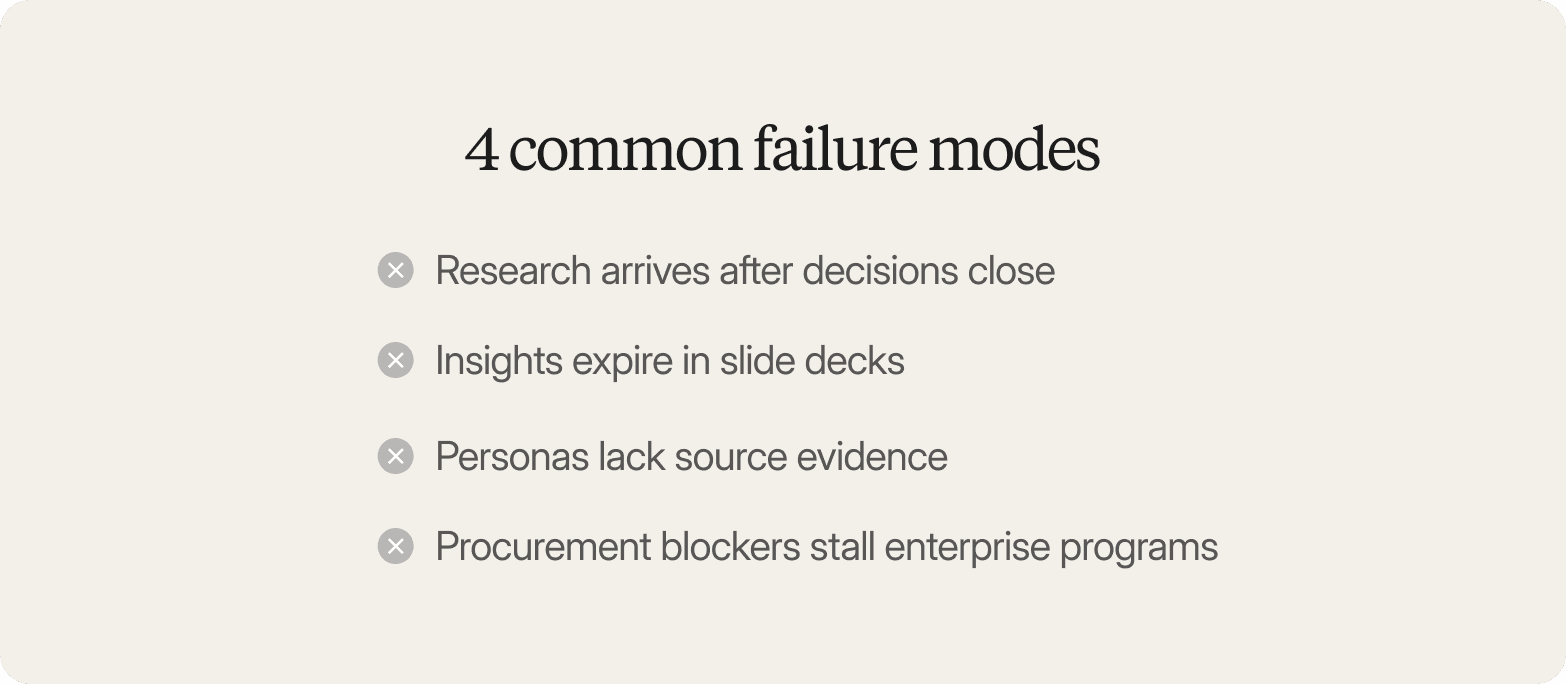
Most customer intelligence efforts fail because of operational misalignment between how research is conducted and how decisions are made, even when the methodology itself is sound.
1. Research arrives after decisions close
Sprints and gates run on two- to three-week windows; traditional research runs on multi-week cycles. Align triggers and delivery timelines to decision calendars.
2. Insights expire in slide decks
Without a repository connecting studies over time, teams research the same questions repeatedly. A searchable insight library makes research a continuous asset.
3. Personas lack source evidence
Workshop-built personas collapse in review because there is no participant evidence behind the attributes. Link each attribute to timestamped clips and verbatim quotes.
4. Procurement blockers stall enterprise programs
A robust customer intelligence program still stalls when the platform behind it cannot clear security review. Compliance, regional hosting, and role-based access are entry requirements rather than differentiators.
How to Measure Whether Your Customer Intelligence Strategy Is Working
Most organizations measure research activity by studies launched, participants interviewed, and reports delivered. None of those tell you whether customer intelligence changed a decision. Measure decision-window alignment, reuse rate, stakeholder adoption, and time to insight relative to approval gates instead.
Decision-window alignment is the primary metric. The question is whether findings arrive before the approval gate closes, rather than how fast a study runs in isolation. Track the share of major decisions informed by customer intelligence versus those made without evidence. That ratio signals whether research is shaping outcomes or analyzing data after the fact to explain them.
The reuse rate distinguishes continuous intelligence from periodic research. When findings live in a searchable insight library, stakeholders should check what is already known before commissioning new work. How often the library is searched before a new brief tells you whether knowledge is compounding.
Stakeholder adoption is the ultimate measure. If customer intelligence is influencing outcomes, it appears in decision documents, campaign briefs, and roadmap reviews as cited evidence.
Time to insight earns its place only when tracked against decision windows rather than an abstract speed target. A study that closes quickly but lands after the budget is approved has not moved the needle.
Downstream metrics follow, and they are where the benefits of customer intelligence become legible to a CFO. Customer satisfaction, customer loyalty, and customer retention respond when decisions are grounded in explanation rather than assumption. Customer churn declines when teams understand the reasons for cancellation rather than its timing, and customer lifetime value rises as stronger customer relationships extend customer lifetime. None of those are research metrics, which is why they connect the program to business growth.
Why Conveo Fits
Consumer Understanding Infrastructure is what Conveo builds: the always-on layer that sits alongside the CRM and the ERP and becomes part of how the enterprise operates.
For teams building a customer intelligence strategy, Conveo closes the gap between when questions surface and when evidence arrives. AI-moderated video interviews run at scale across 50+ languages and 50+ markets, with adaptive probing that follows participants' responses. Findings compound in a searchable insight library rather than expiring in decks, so nothing gets researched twice.
What makes it credible is research rigor. Conveo is built by researchers and positions with the researcher rather than around them. Every insight traces back to a real person who said it, supported by verbatim quotes and video.
"You can see genuine research fluency in the product decisions"
Matt Harris, Research & Insights Lead, EMEA, Canva
For teams that need an ongoing read of their market rather than a one-off answer, Conveo StoryLines runs continuous wave-based programs with themes tracked across waves.
Conveo is SOC 2 Type II certified, GDPR compliant, EU hosting (Belgium). Teams at Google and Canva rely on Conveo to understand their customers.
Conveo is not for everyone
Teams looking for a low-cost survey tool, or organizations without a research function to own the methodology, will find a better fit elsewhere. Conveo is built for enterprise teams that need research-grade understanding rather than data collection.
Frequently Asked Questions
What is a customer intelligence strategy?
A customer intelligence strategy is the operational system that determines how customer understanding is collected, stored, distributed, and used to influence decisions before approval gates close. It requires three components: decision-window alignment so research reaches stakeholders while choices are still open, a searchable insight library that compounds across studies rather than resetting with each project, and video-first evidence infrastructure that gives stakeholders traceable, verifiable findings they can stand behind.
How do you develop a customer intelligence strategy?
Developing a customer intelligence strategy starts with aligning research triggers and delivery timelines to decision calendars, building a searchable insight library that indexes clips and themes for reuse, and grounding persona claims in video-first evidence that stakeholders can verify directly. This requires moving away from project-by-project agency cycles toward always-on infrastructure that delivers research-grade findings while decisions are still forming.
What is an example of a customer intelligence strategy?
In a representative scenario, a product team at a global SaaS company runs continuous discovery by triggering AI-moderated interviews with 10 to 15 users per feature concept, receiving findings within the sprint window. Every session flows into a searchable insight library organized by feature area. Before commissioning new research, product managers search the library first. If the question has already been answered, they act on what exists. If a gap remains, they launch a new round.
How do you integrate a customer intelligence strategy into existing research and decision-making workflows?
The most practical starting point is a single study type your team already runs, such as concept testing or brand tracking, run through an AI-moderated platform alongside your current process. That parallel run lets you compare outputs and demonstrate the quality of the findings before committing to a broader shift. From there, the insight library becomes the integration point: findings feed into a searchable repository that product, marketing, and innovation teams query directly, including for customer journey mapping, which requires evidence rather than assumptions at each stage.
How do you measure whether a customer intelligence strategy is working?
Measure decision-window alignment (percentage of major decisions informed by customer intelligence versus those made without evidence), reuse rate (how often the insight library is searched before commissioning new work), stakeholder adoption (whether intelligence appears as cited evidence in decision documents and briefs), and time to insight relative to approval gates. Activity metrics like studies launched or participants interviewed do not tell you whether research changed a decision.

About the author
Alex de Hemptinne
Business Impact Lead
Alex is a Business Impact Lead at Conveo, partnering with enterprise teams to embed AI-led research into their workflows. From the first study to full-scale rollout, she helps customers shift from project-based research to continuous customer intelligence.
Meet Alex on film →Qualitative insights at the speed of your business.
Conveo runs AI-moderated video interviews and structures everything they say.