In this article
TL;DR
Inertia is the real blocker. Plaue says most CMOs face organizational resistance to AI, and AI infrastructure needs the whole company on board.
Fraud is a live risk. Paid surveys and interviews are easy for AI bots to fill, so blocking fraud is now basic hygiene.
Synthetic needs real data underneath. Plaue sees synthetic as one answer among many, legitimate only when backed by first-party research.
Short-term AI pressure can erode brand. CMOs cutting brand building to fund quick AI wins undermine the content AI search depends on.
Real data belongs behind every campaign. Plaue is puzzled by teams that launch without primary research on the people they want to reach.
Noah Plaue, VP Commercial at NewtonX and a former Bain consultant, has a simple diagnosis for why so many companies are stuck on enterprise AI adoption. The tools are ready, and the organization has to catch up. Real AI infrastructure has to permeate the entire company, he argues, and a single team that is nervous about doing things differently can slow everything down.
Plaue made the case on Conveo's podcast, recorded live at Cannes Lions 2026. Along the way he covered fraud in paid research, the difference between good and bad synthetic data, why panels so often deliver almost the right respondent, and what a founder's pitch tells you about the product.

Organizational inertia is what holds AI back
Plaue's clearest evidence comes from a global CMO study NewtonX worked on with Bloomberg Media, which he says looked at 500 CMOs. The finding he chose to share stood out.
"Something like 80% of CMOs have dealt with organizational inertia or organizational blocking."
Noah Plaue, VP Commercial, NewtonX
There are plenty of ways to use AI, he says, from AI interviews to synthetic data. None of them work if the organization is not set up so that people support each other and support innovation. In his words, "if you have a cog in the machine that's just not helping you turn the wheel and it's just nervous about doing things differently, man, it's going to slow down everything."
Plaue walks through why inertia hurts AI more than earlier waves of change.
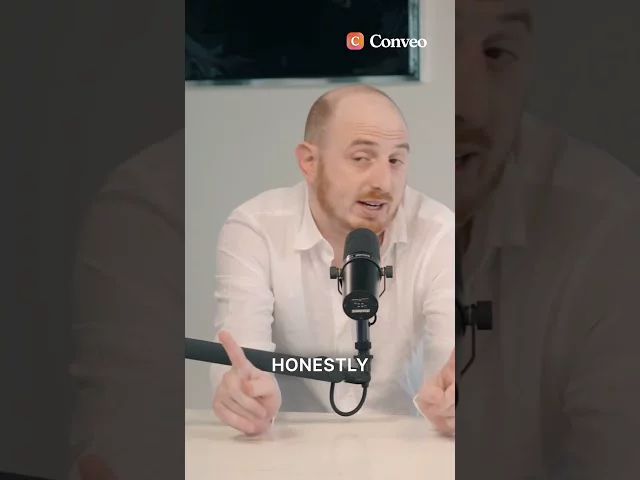
The host pointed out that resistance to change is as old as companies. Plaue's answer is that AI in marketing needs everyone on board in a way older tools did not. "There are other solutions that you can do in a silo and real AI infrastructure can't be," he says. "It needs to permeate the entire company." The host compared it to deciding not to use electricity in one room of a building, and Plaue agreed: once a room is left out, the wiring to the next one rarely gets built.
The same study points to a second trap. CMOs are under heavy pressure to launch AI products, often from people who are unsure what that should mean. To show quick wins, Plaue says, "these CMOs are forced to be in the position where they have to cut long-term spending and long-term strategies on things like website design, brand building." That backfires, because being found by large language models only works if you keep producing good brand content. Cutting one to fund the other leaves CMOs in what he calls an impossible position.
Bad data is the risk that compounds in an AI world
Plaue's interest in data quality is personal. At Bain he would race to speak to dozens of experts in a week with a client waiting, and then, he says, "you find out that 30% of them are complete trash," usually the night before the presentation is due. He says that experience, shared by NewtonX's leadership, is why the company focuses on B2B research with zero fraud.
AI makes the problem sharper. Paying people to fill out surveys or join interviews creates an incentive for someone to run AI bots that pose as a VP of engineering at a large manufacturer. "If you're not thinking about that, you're kind of already behind in the game," Plaue says. Teams that rely on paid samples should treat survey fraud detection as standard practice.
Panels raise a quieter version of the issue. Plaue says he was being hyperbolic when he once called panels dead and still sees a use for good ones. His worry is the near miss. At Bain, providers would give consultants "the person that was almost the person that you wanted to speak to," and that is often the worst outcome, because the answers half make sense.
"The data becomes completely useless but you don't know where in the data it's useless."
Noah Plaue, VP Commercial, NewtonX
He cites a NewtonX study in which boosted synthetic data landed within about 98% of the actual survey results, while panels of various kinds averaged about 70%. Readers weighing those options will find more on running consumer research panels well.
Synthetic data is one answer, and only as good as the primary research behind it
Plaue is direct about the current market.
"There are good synthetic options and that most of the synthetic options right now are terrible."
Noah Plaue, VP Commercial, NewtonX
The problem is sharpest in B2B. Little reliable information about a specialized buyer exists on the open web, so a persona built from scraped websites and social chatter is, in his words, "garbage in garbage out." Good synthetic output should extrapolate the range of answers a real audience segment could give, and that requires strong primary research data from the client or a provider behind it. Without that, he is not sure what you would use it for.
He is equally clear about limits. Asked whether synthetic personas can catch the outlier signal that starts a trend, he says he would be careful: you would be asking AI to tell you something that does not exist yet. He likened it to asking a robot to predict the future and said you would be better off talking to a 19-year-old.
Plaue gives synthetic data a defined place. "I don't think it's the answer. I think it's one in a multitude of solutions," he says. He would use it to get a fairly accurate B2B read quickly without a large budget, to dig further after a campaign, or to help design the questions for real research. He would not rely on it for a full campaign. The distinction between synthetic respondents and real participants matters most when the decision is big. His bottom line: "if you have the budget, if you have the time, going and speaking to those real people is the best way to go."
Even a future where AI companies sell chat histories would not remove the need to ask, he thinks. "You still need to ask and frame the right questions to the right people," he says. Context comes from the conversation itself.
A founder's pitch tells you most of what you need to know
Plaue's fastest route to understanding a customer is to watch them speak to their own customers. At Bain he would ride along with sales leaders on visits to key clients and pay attention to how they talked about the product, whether there was a real relationship and which topics they avoided. The same instinct applies to vendors.
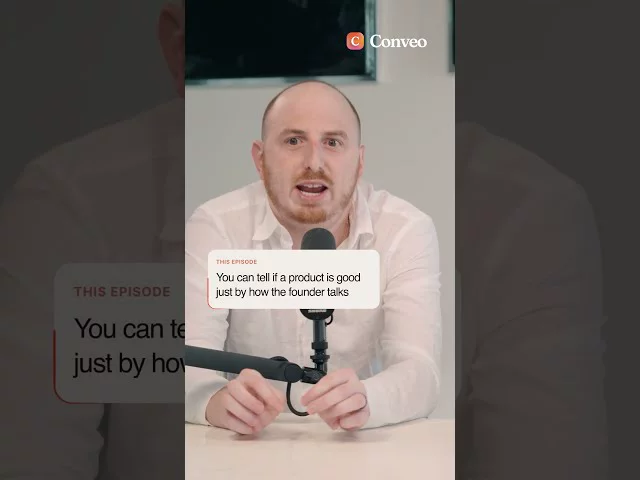
"I can tell you, I would say 80 or 90% of the time, if a product is good just based on hearing the founder talk about it."
Noah Plaue, VP Commercial, NewtonX
The tell is candor. "A founder that's really confident in their product will lean into the things it doesn't do well," he says. A confident early-stage founder will say what the product does brilliantly, admit what it cannot do yet and pair that with a clear grasp of what the customer needs.
What it means for insights and marketing leaders
Plaue's points add up to a practical checklist.
Treat AI adoption as an organizational project. Map which teams are nervous and why before buying another tool. One blocked team can stall the rest.
Protect the long term. Quick AI wins funded by cutting brand building weaken the content that AI search relies on.
Audit your sample. Ask how respondents are verified and how fraud is blocked, especially when incentives are paid.
Use synthetic where it fits. Quick reads, follow-up questions and study design are reasonable uses. Big bets and emerging trends need real people.
Measure what matters. Plaue calls impressions the most overrated metric: "I hope we're moving away from impression based metrics." The case for outcomes over impressions runs in the same direction.
Real data has to sit under every decision
Plaue's industry truth is plain: "you need real data behind things." He says a NewtonX survey of about a hundred enterprise marketing leaders found that "only 13% strongly believed that their agencies had the right data about their audiences." He also warns that asking a general AI model what your buyer thinks tends to make the problem worse, an echo chamber dressed up as insight.
That ties back to his opening argument. AI pays off when it runs through the whole organization and rests on real evidence about real people. Conveo's AI research assistant runs video conversations with real consumers, so insights teams can get to the why behind behavior faster and bring that evidence into decisions across the company.
Frequently Asked Questions
Why does Noah Plaue say enterprise AI adoption stalls?
He points to organizational inertia. In a CMO study NewtonX worked on, he says something like 80% of CMOs had dealt with organizational inertia or blocking. Real AI infrastructure cannot live in a silo, so one nervous team can slow the whole effort.
What does Plaue think about synthetic data in market research?
He says there are good synthetic options and that most current ones are poor, especially for B2B, where little reliable information about buyers exists online. Synthetic output is only legitimate when strong primary research data sits behind it.
Can synthetic personas predict outlier trends?
Plaue would not make that his first use. Predicting an outlier means asking AI for something that does not exist yet, and he suggests talking to real young consumers instead.
Are research panels dead?
Plaue says he was being hyperbolic when he called them dead. He still sees a use for panels, depending on their quality, but warns that panel respondents are often almost the right person, which can corrupt data without showing where.
How can you judge a product quickly, according to Plaue?
Hear the founder talk about it. He says a founder who is truly confident will openly name what the product does not do yet while showing a clear grasp of what the customer needs.

About the author
Tom Husson
CMO
Tom is CMO at Conveo, where he leads marketing and builds the company's AI-native go-to-market engine. He hosts the Conveo podcast, recorded at Cannes Lions 2026 with brand, insights and marketing leaders.
More by Tom →Qualitative insights at the speed of your business.
Conveo runs AI-moderated video interviews and structures everything they say.