In this article
TL;DR
This article compares 15 Qualtrics competitors across research method, workflow, evidence, and compliance.
Conveo runs video-first AI interviews at survey speed, giving enterprise teams actionable insights without a six-week wait.
It's built for research operations teams, UX researchers, and market research analysts evaluating recurring feedback-collection needs, not for one-off studies.
The main decision factor when picking a Qualtrics alternative is whether your team needs survey scale, qualitative depth, or both.
Qualtrics covers everything from surveys and experience management to customer feedback analysis. That breadth makes it a strong fit for many organizations. Other teams choose a different platform because they want to spend less, simplify their workflow, or do more qualitative research.
The choice is no longer just between online survey tools. Some platforms specialize in questionnaires to collect feedback, while others use AI to run and analyze customer interviews at scale. This guide compares 15 alternatives to Qualtrics to help you find the platform that best fits the way your team works.
Why Teams Look for Qualtrics Alternatives to Collect Feedback
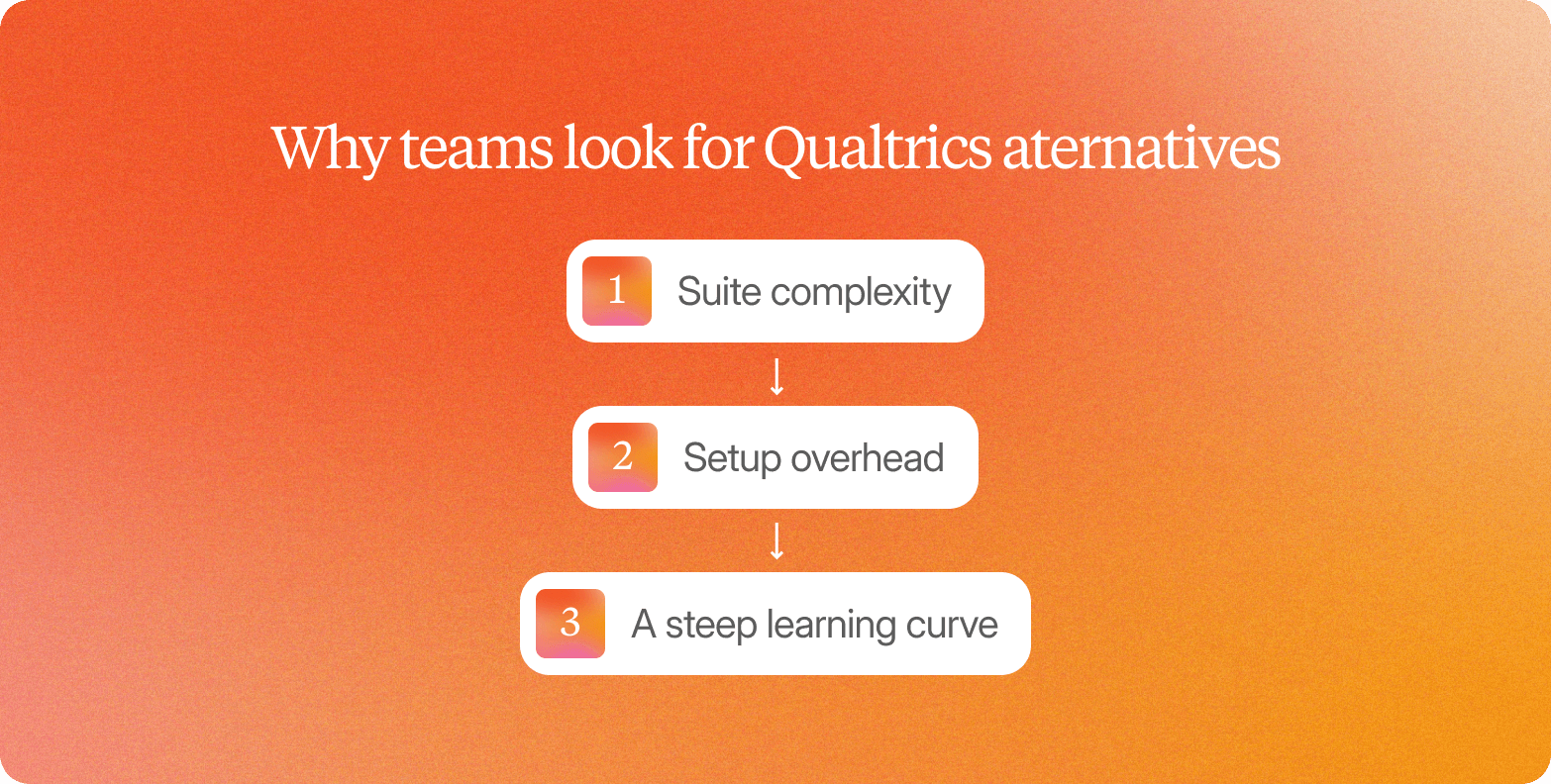
Three common problems usually prompt teams to start evaluating competitors to Qualtrics:
Suite complexity. Qualtrics bundles customer experience, employee experience, and market research into one platform. That works well for a company running enterprise-wide programs across all three. A one- to five-person insights team usually needs one of those, so the other two just add extra menus and settings to work around.
Setup overhead. Getting Qualtrics running well enough for a full program usually means bringing in implementation support, not just creating an account and building a study. That's real time and cost spent before any research happens.
A steep learning curve. New users need real ramp-up time to get from account setup to a first study, simply because there's so much to learn before any of it feels automatic.
Another roadblock Qualtrics users run into is that every interview needs a human moderator, so the number of conversations you can run depends on the time your team has available. Qualtrics recently introduced Agentic Research, but based on what's been published so far, it covers study design, fielding across human and synthetic panels, and synthesis, not moderation.
With this limitation, even studies with a few dozen participants can take weeks, which makes it harder to answer questions on the same timeline as product launches or marketing campaigns.
What to Look for in a Qualtrics Competitor: Key Features to Compare
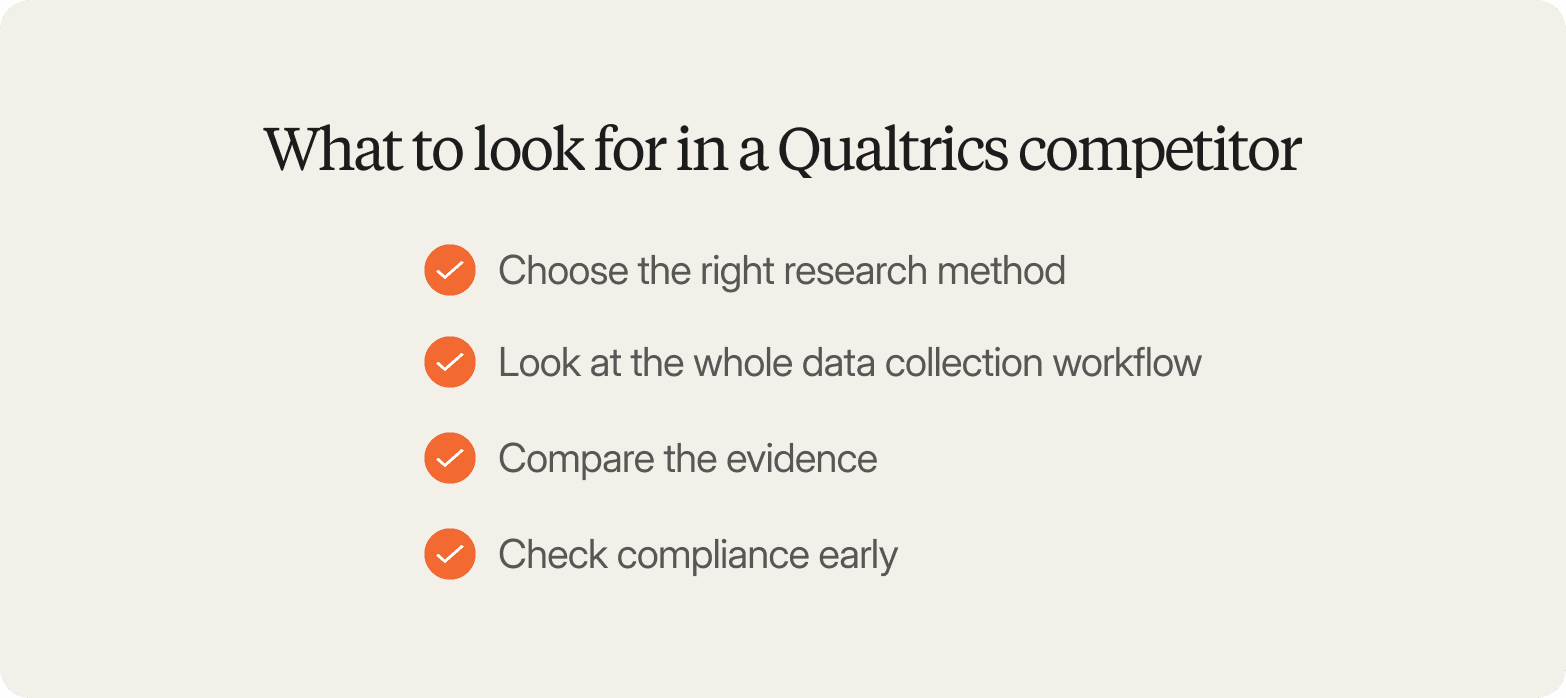
The right Qualtrics alternative depends on how your team collects feedback across the customer journey today, how often you run research, and what decisions the results need to support. As you compare platforms, focus on these four areas.
Choose the Right Research Method
Start with the kind of research you do most. If you mainly run customer surveys and need large volumes of structured feedback, traditional survey software is usually the right fit. If your team needs to understand why customers behave the way they do, you'll also need qualitative research. Choosing the wrong method often means running a second study to answer the questions the first one couldn't.
Look at the Whole Data Collection Workflow
Map out every step of your research process, from recruitment and feedback collection to analysis and reporting. If your team spends hours moving data between multiple tools, an end-to-end platform can save time. If you already have tools that work well to create surveys, collect feedback, and report on results, a specialist platform, for example, to analyze data, may fit better than replacing your entire workflow.
Compare the Evidence
Think about what your stakeholders need before they'll act on the findings. Structured feedback is useful for spotting patterns. Video interviews explain why those patterns exist by capturing tone, hesitation, and follow-up answers alongside what people say.
Look beyond the dashboards too. Data analytics and reporting tools help you analyze data, but they're only as good as the feedback data they receive. Basic analytics can highlight trends, while advanced analytics and sentiment analysis can uncover deeper patterns.
Check Compliance Early
If procurement, legal, or IT review every new platform, don't leave compliance until the end. SOC 2 certification, GDPR compliance, and regional data hosting are often mandatory requirements for enterprise buyers. Shortlisting vendors that meet those requirements from the start can save weeks later in the buying process.
Qualtrics vs Competitors: Side-by-Side Comparison
This table compares Qualtrics against four of the most popular alternatives on the four questions above: research method, workflow, evidence, and compliance. Two more factors round it out. Turnaround time determines whether findings arrive before a decision gets made without them. Language support determines whether a global research program runs on a single platform or requires a separate tool for each market.
| Criteria | Qualtrics | Conveo | Discuss.io | Listen Labs | SurveyMonkey |
|---|---|---|---|---|---|
| Workflow coverage | Covers the research process end-to-end within its broader XM suite. Interviews still require a human moderator. | Covers the research process end-to-end with AI-moderated video interviews using real participants. | Covers the research process end-to-end, including both AI- and human-moderated interviews. | Covers the research process end-to-end with AI-moderated video interviews, automated analysis, and reporting. | Covers survey creation through AI-assisted analysis but doesn't support qualitative interviews. |
| Depth of insight | Provides structured feedback with clip-level video evidence for each study. | Uses adaptive AI probing in video interviews, with every insight linked to a timestamped clip and quote. | Links transcript quotes to timestamped video clips from interviews. | Combines video, audio, and text, scoring tone and facial expressions for every question. | Analyzes text responses with AI-powered thematic and sentiment analysis. |
| Turnaround time | AI speeds up study design and analysis, but interviews still require scheduling and moderation. | Most studies finish in days rather than weeks. | Depends on whether you choose AI-led or human-led interviews. | Most studies complete within a day. | Results are available as responses come in after a survey launches. |
| Language support | Supports multi language surveys in 76 languages and video analysis in 22 languages. | Supports AI-moderated interviews in 48+ languages. | Supports transcription in 80+ languages and live translation into English. | Supports text and analysis in 90+ languages and AI voice interviews in 40+ languages. | Supports multilingual surveys on Business plans and above. |
| Enterprise compliance | SOC 2 Type II, GDPR compliant, with EU hosting available. | SOC 2-certified, GDPR-compliant, with EU hosting available. | GDPR compliant, but SOC 2 and EU hosting aren't publicly confirmed. | SOC 2 Type II, GDPR, ISO 27001, ISO 27701, and ISO 42001 certified. EU hosting isn't publicly confirmed. | SOC 2 Type II and GDPR compliant. SSO and data center selection require an Enterprise plan. |
If your team needs qualitative depth at survey speed, book a demo to see how Conveo compares in practice.
15 Qualtrics Competitors Compared
The side-by-side comparison above covers four popular alternatives, but not every category buyers consider. These fifteen competitors to Qualtrics fill in the rest, spanning AI-moderated interview platforms, survey tools, experience management suites, and research repositories. Use the profiles below to match a tool to what your team is missing.
1. Conveo
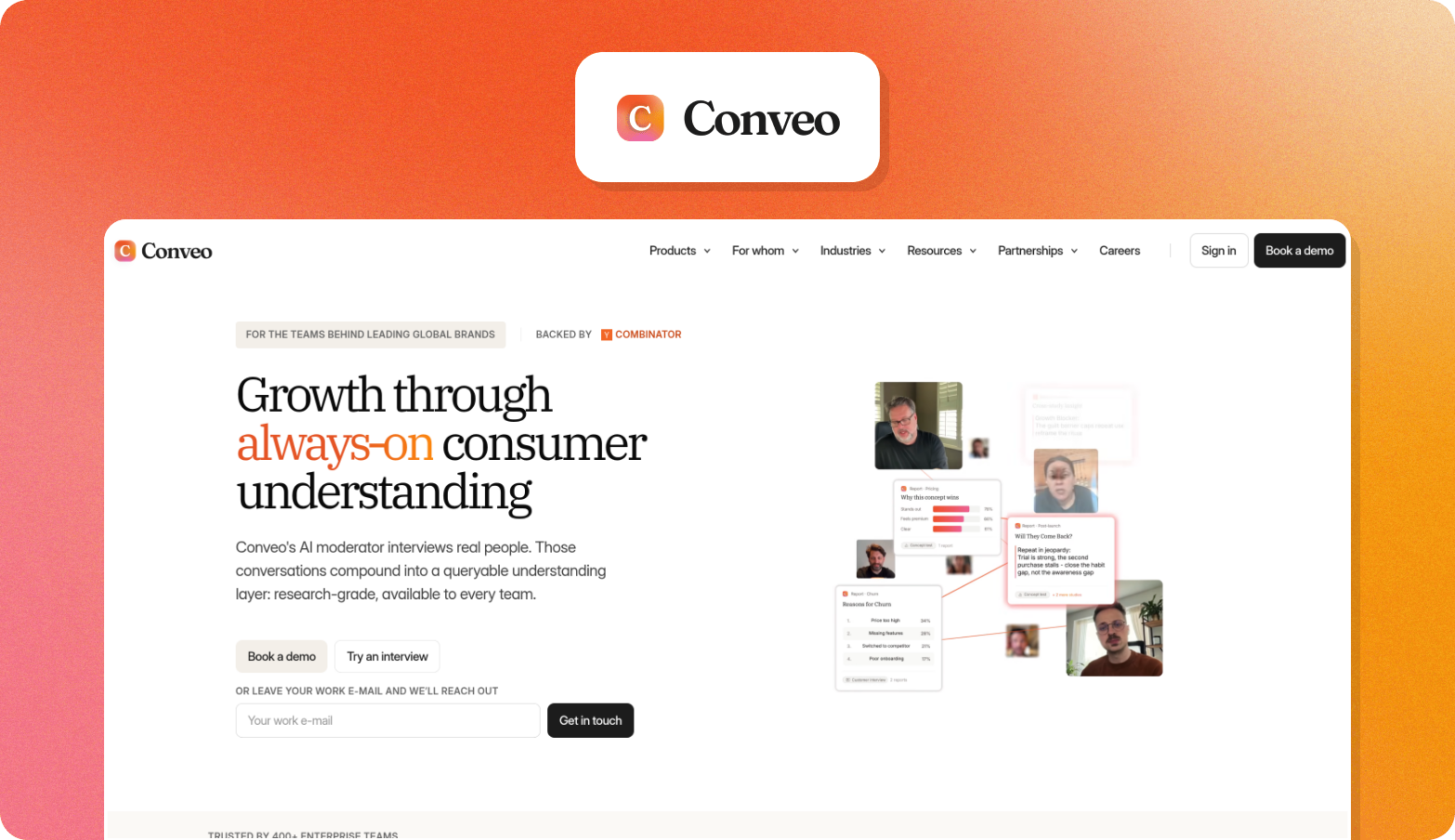
Conveo runs AI-moderated video interviews at the scale and speed Qualtrics offers for surveys, without needing a human moderator booked for every session. Where a Qualtrics interview depends on a single person's calendar, Conveo's AI can run hundreds of adaptive conversations in parallel, each shaped by what the participant just said.
See it in action: How AI-Moderated Interviews Actually Work
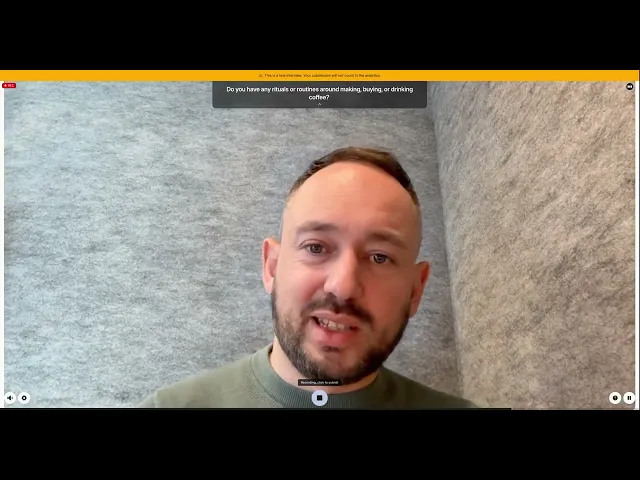
Every interview features a real person, too. Qualtrics offers AI-powered synthetic participants alongside its traditional panels; Conveo works with real participants only, so what comes back reflects the person's words and hesitation, not a modeled guess at how someone might respond.
Best for: Enterprise teams that need qualitative depth at survey speed, without agency dependency.
Core strengths:
Ties every insight back to a timestamped clip and quote, so stakeholders can check the evidence instead of just having a summary.
Builds a searchable insight library across studies, so past research keeps informing new work instead of sitting in a deck.
Runs interviews in 48+ languages, so global teams don't need a separate vendor for each region.
Key limitation: Conveo is built for continuous qualitative research, so it’s not suited to teams whose only need is quantitative survey data.
Pricing: Credits-based and enterprise plans are priced on request.
“The pace, responsiveness, and research expertise of the Conveo team, on top of the top AI‑moderated qual platform, have been invaluable to us in scaling brand advertising internationally.”
Matt Harris, Research and Insights lead at Canva
2. Discuss.io
Like Qualtrics' research arm, Discuss serves CX and UX teams running qualitative studies with enterprise-grade feedback volume, but lets them choose between AI and human moderation per session instead of committing to one.
Best for: Enterprise teams that want the option to switch between AI and human moderation on the same study, across many languages and markets.
Core strength: Any transcript quote can be used to generate a timestamped video clip.
Key limitation: There’s no EU data hosting (data sits in Virginia, USA), and translation only runs one way, from the session language into English.
Pricing: There are four tiers, all priced on request. Features like recruitment, screener writing, and human-led project coordination are add-ons on the lower tiers.
3. Listen Labs
Listen Labs covers many of the same qualitative research use cases as Qualtrics, including concept testing, brand tracking, and persona development, but uses AI to moderate interviews instead of a human researcher.
Best for: Lean insights and product teams that need fast qualitative research with large numbers of participants.
Core strength: Runs many video interviews at the same time and links every insight to a timestamped video clip, including tone, word choice, and facial expressions.
Key limitation: EU data hosting isn't publicly confirmed, which may be a consideration for European buyers.
Pricing: Not publicly available.
4. Outset
Outset automates the follow-up questions that a Qualtrics moderator would normally ask on a call, so interviews run asynchronously rather than waiting for a scheduled session.
Best for: Product and UX teams running high-volume async discovery interviews who don't need native recruitment or a built-in insight library.
Core strength: An AI interviewer asks adaptive follow-up questions across hundreds of parallel interviews, spanning time zones without live scheduling.
Key limitation: There’s no native insights library, so you’ll need a separate Dovetail subscription to search across all your findings.
Pricing: Custom, based on research and support needs.
5. GetWhy
GetWhy runs the same concept and packaging testing Qualtrics' research arm offers, but adds a researcher who checks every AI-moderated session against a quality framework.
Best for: CPG, FMCG, and retail teams running concept testing, creative testing, and packaging evaluation who want expert oversight built in.
Core strength: GetWhy turns a business question into a live study the same day, running an AI moderator in 100+ languages
Key limitation: Best suited to enterprise CPG-style programs. Lean teams may find the expert-oversight layer to be more structured than they need.
Pricing: There are three tiers, all priced on request.
6. Voicepanel
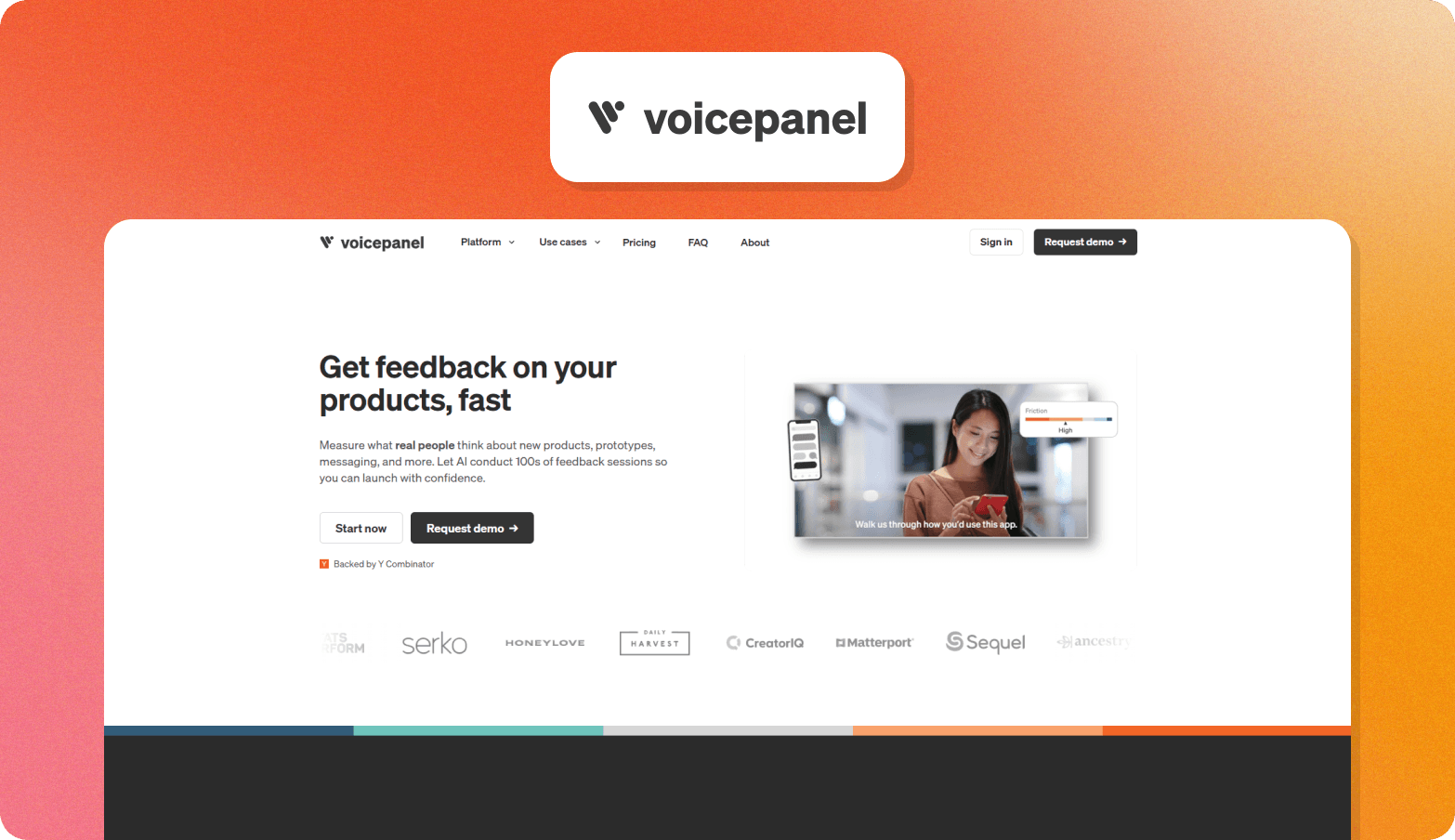
Voicepanel combines the survey and interview components of Qualtrics into a single platform.
Best for: Product and UX teams who need a mix of quantitative and qualitative methods.
Core strength: Voicepanel connects to external LLMs via MCP, so teams can query study data directly in tools like Claude or ChatGPT rather than exporting it first.
Key limitation: No cross-study library to connect feedback across projects. Its "chat with your data" feature only queries a single project at a time.
Pricing: There are Agent and Enterprise plans, but pricing isn’t publicly listed.
7. Strella
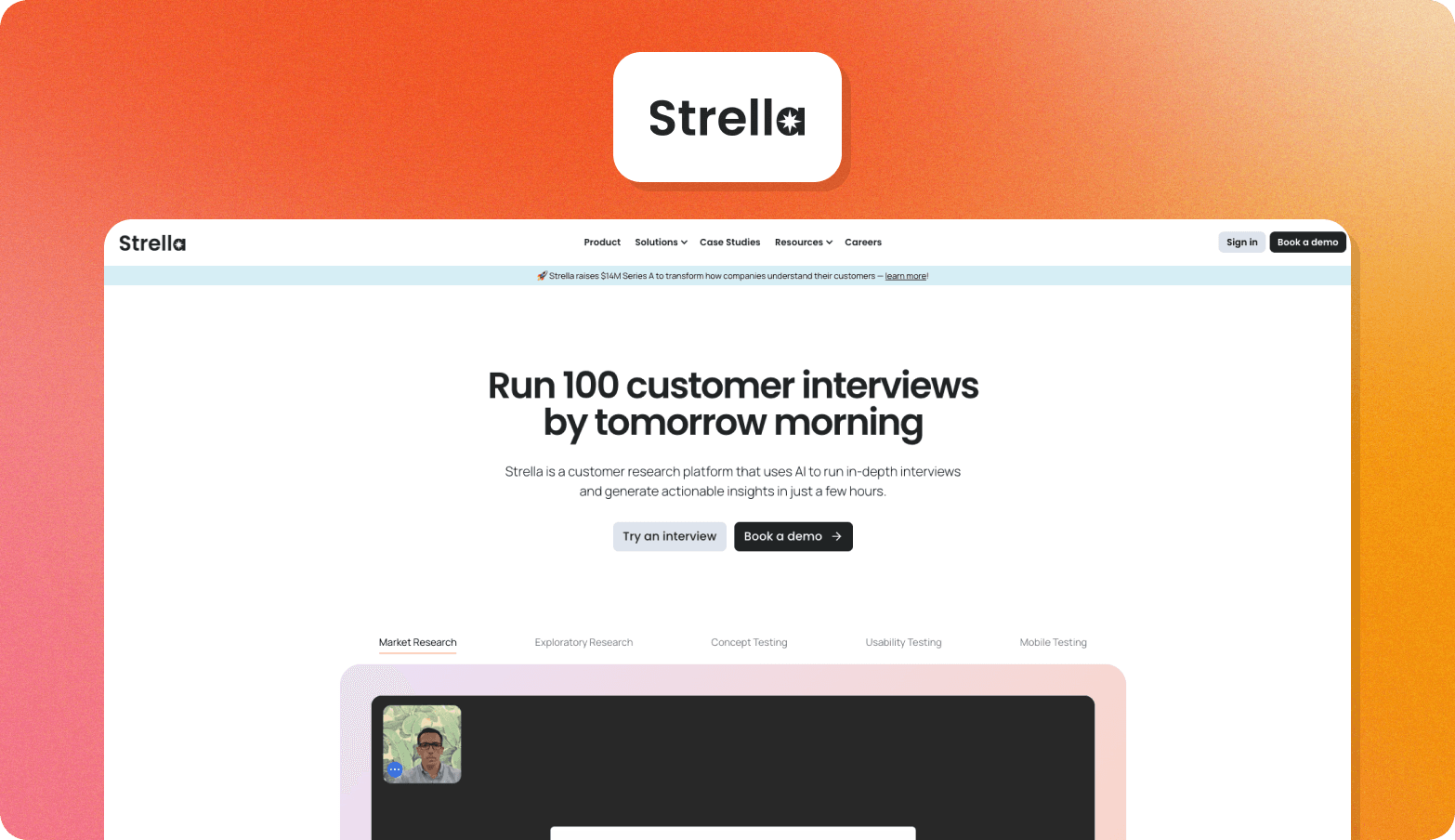
Strella is a self-serve customer research platform that lets product and marketing teams launch AI- or human-moderated interviews without Qualtrics’ setup overhead.
Best for: Product and marketing teams that need answers from customer research without relying on a dedicated research team.
Core strength: Explorer, a chat interface, lets you search for any past study in natural language and jump straight to the supporting video clips.
Key limitation: There’s no EU data hosting available; it’s hosted exclusively in the US.
Pricing: Not publicly listed.
8. SurveyMonkey
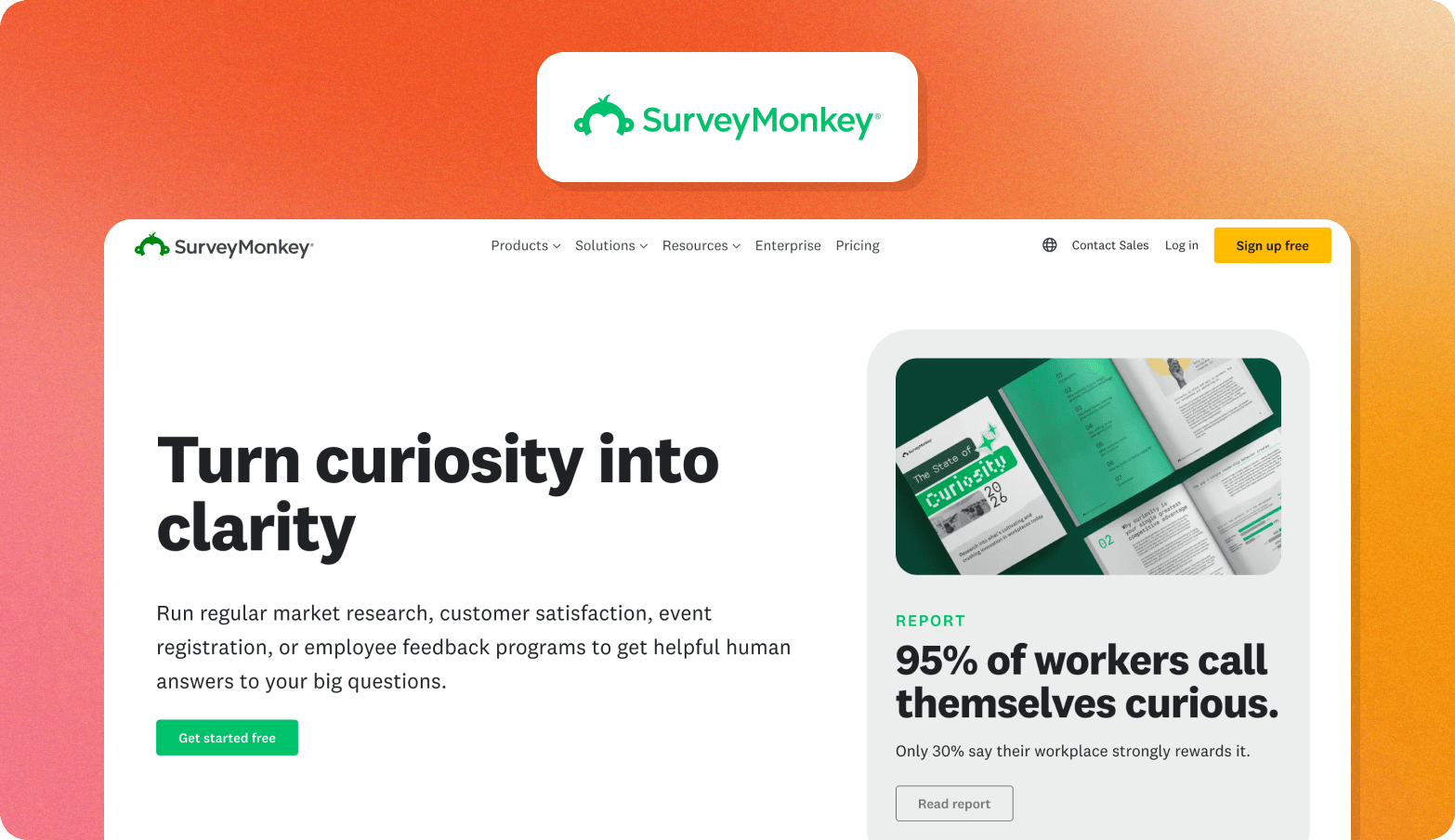
SurveyMonkey covers the same quantitative survey ground Qualtrics does, minus the broader experience-management layer built around it.
Best for: Product and UX teams running quantitative feedback programs who need panel access and analysis in one place.
Core strength: SurveyMonkey offers 400+ survey templates and built-in methodologies, so you can start collecting targeted feedback quickly.
Key limitation: There’s no qualitative interview capability at all, as it’s designed for quick, simple surveys.
Pricing: Pricing starts at $30 per user per month.
9. Typeform
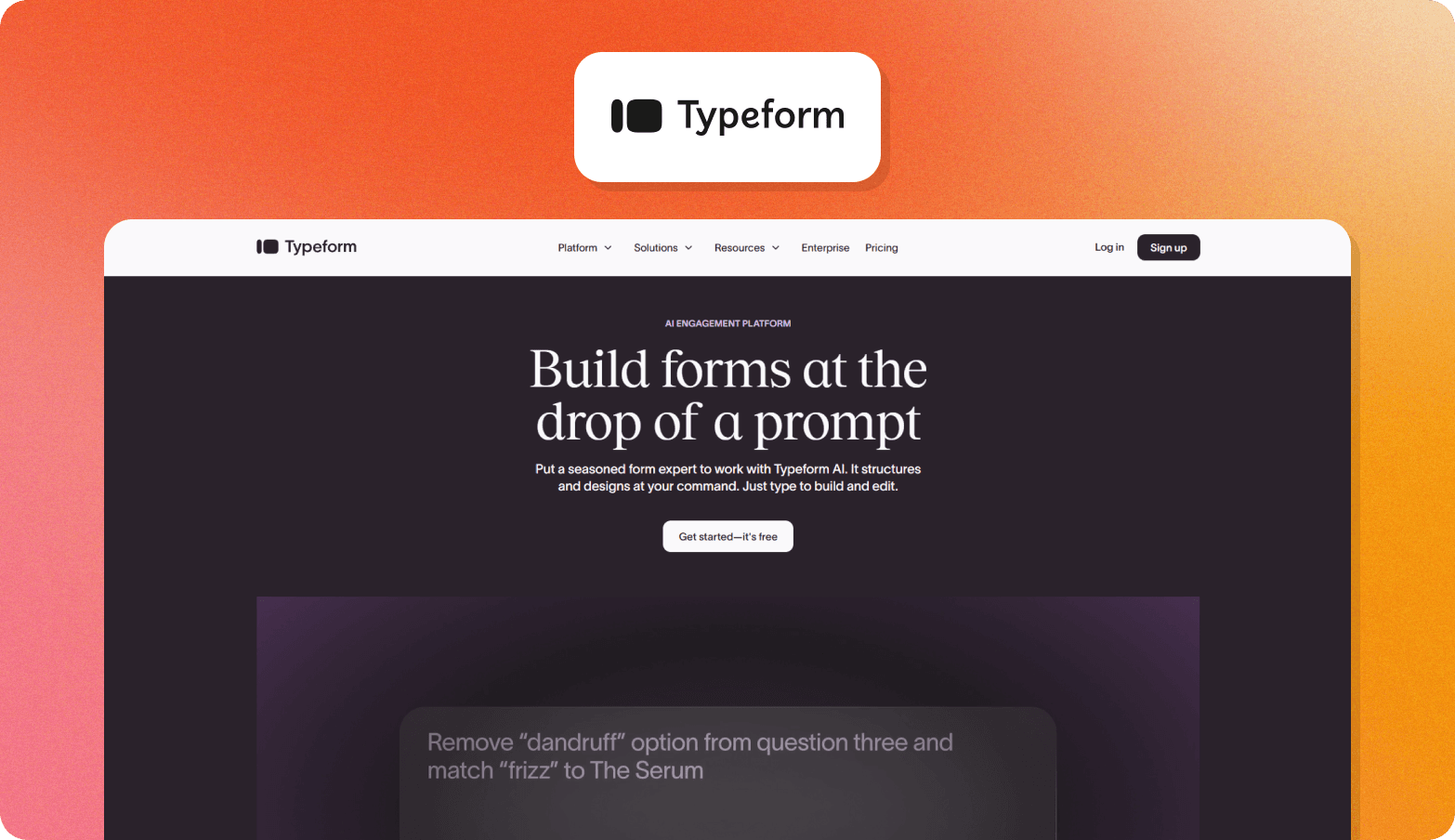
Typeform replaces Qualtrics' survey builder with a one-question-at-a-time format, and its beta Research Flow product already moderates interviews with AI, a piece Qualtrics' own research automation doesn't cover yet.
Best for: Lean or embedded researchers who want to improve response rates with conversational surveys.
Core strength: Research Flow lets teams already using Typeform trial AI-moderated interviews without first adopting a new vendor.
Key limitation: Research Flow is capped at 10,000 responses per month and isn't intended for sensitive or health data.
Pricing: Plans start at $39 per month, with Research Flow priced separately on request.
10. Survicate
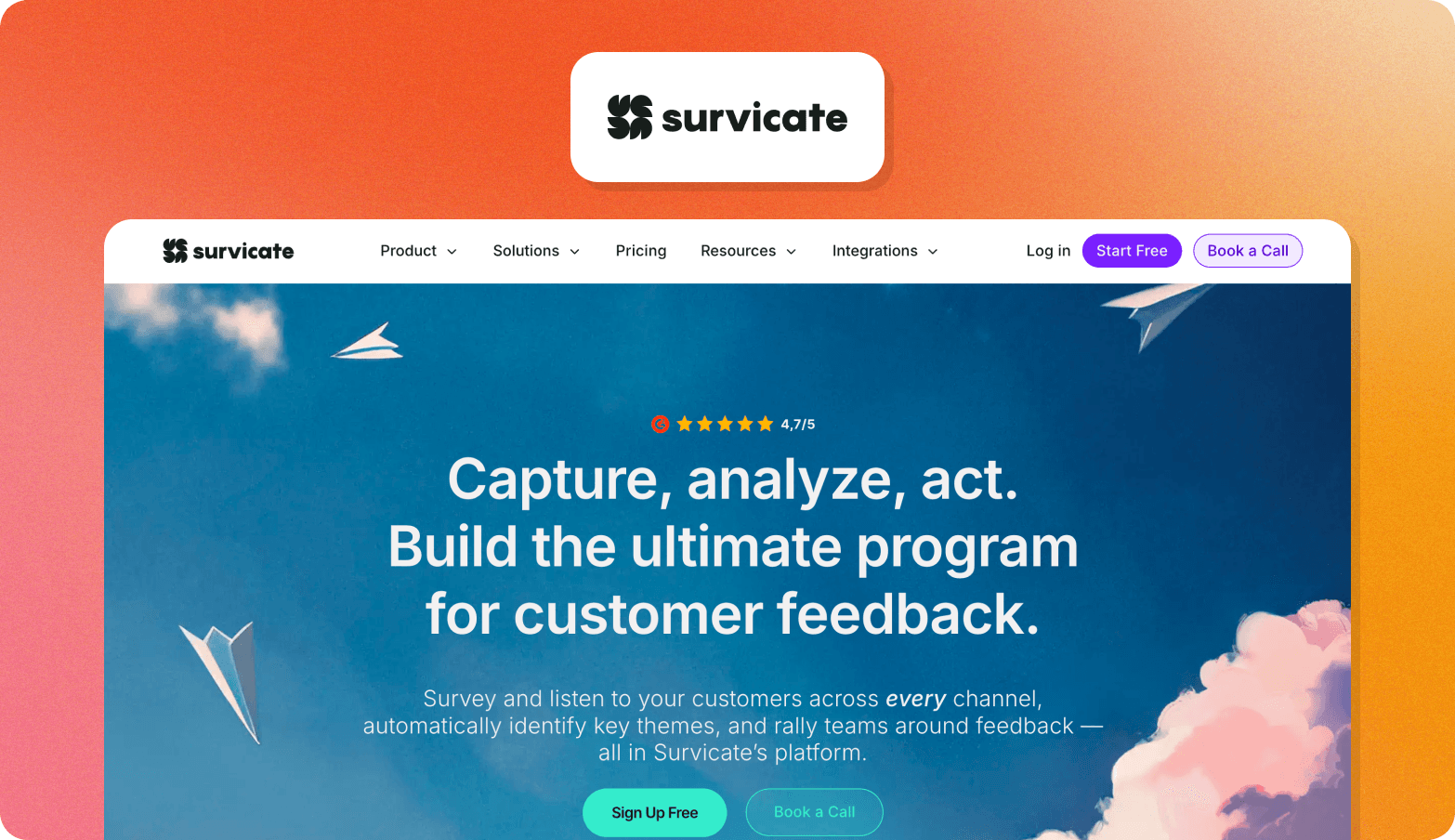
Survicate takes on the in-product feedback side of Qualtrics, pulling survey responses into the same hub as reviews and support tickets, rather than leaving them siloed.
Best for: Product teams running multi-channel feedback programs who want to centralize all their findings.
Core strength: Every survey auto-translates for global audiences without a separate localization step.
Key limitation: There’s no video or audio traceability.
Pricing: Prices start from $114 per month.
11. Medallia
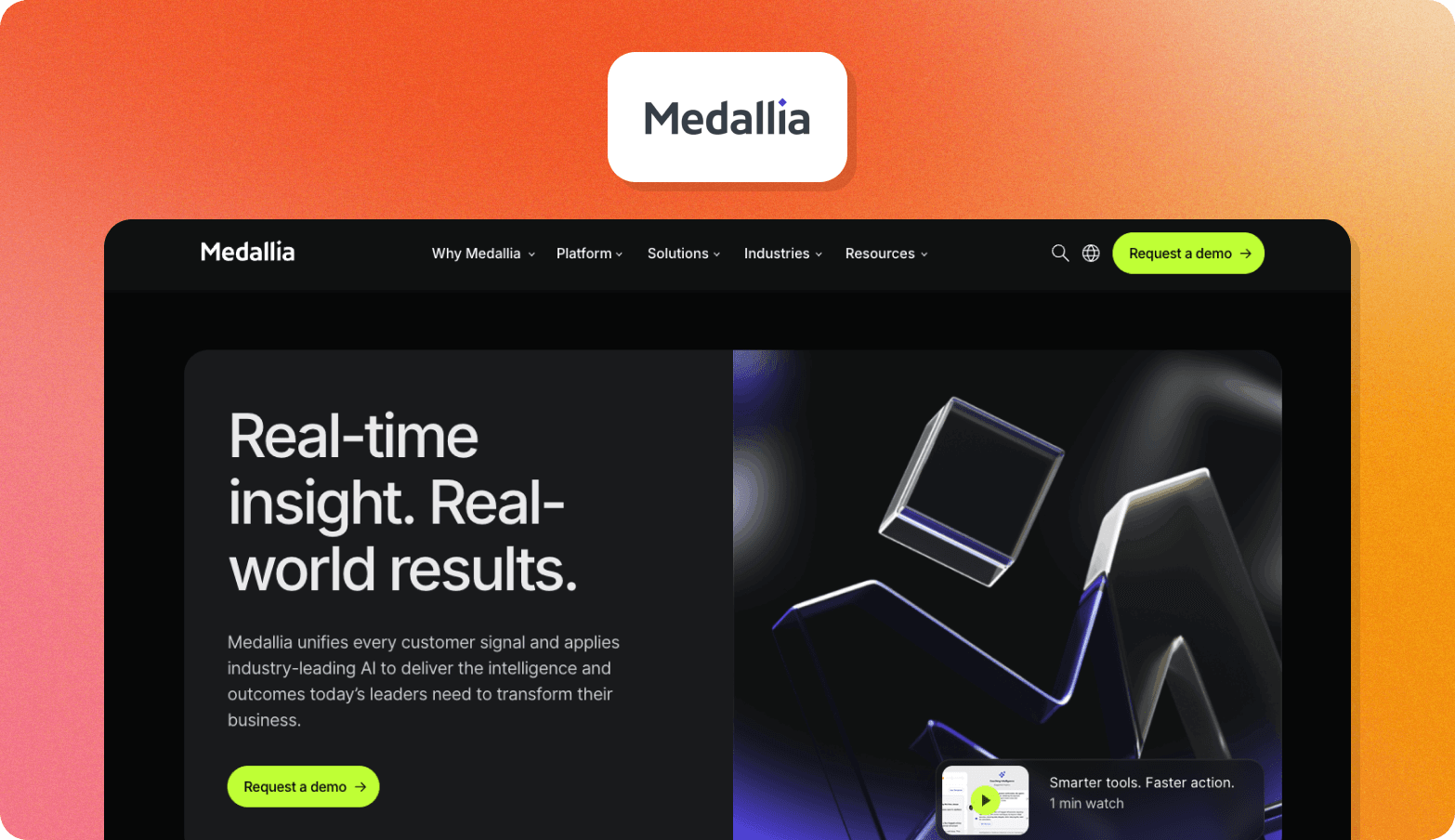
Medallia covers customer, employee, and operational experience management, making it one of the closest alternatives to Qualtrics' broader XM platform.
Best for: Large enterprises that want customer feedback and experience management on a single platform.
Core strength: Athena uses AI to analyze feedback from channels including email, social media, and in-app feedback to identify patterns and predict customer behavior.
Key limitation: Medallia doesn’t conduct qualitative interviews.
Pricing: Custom pricing on request.
12. InMoment
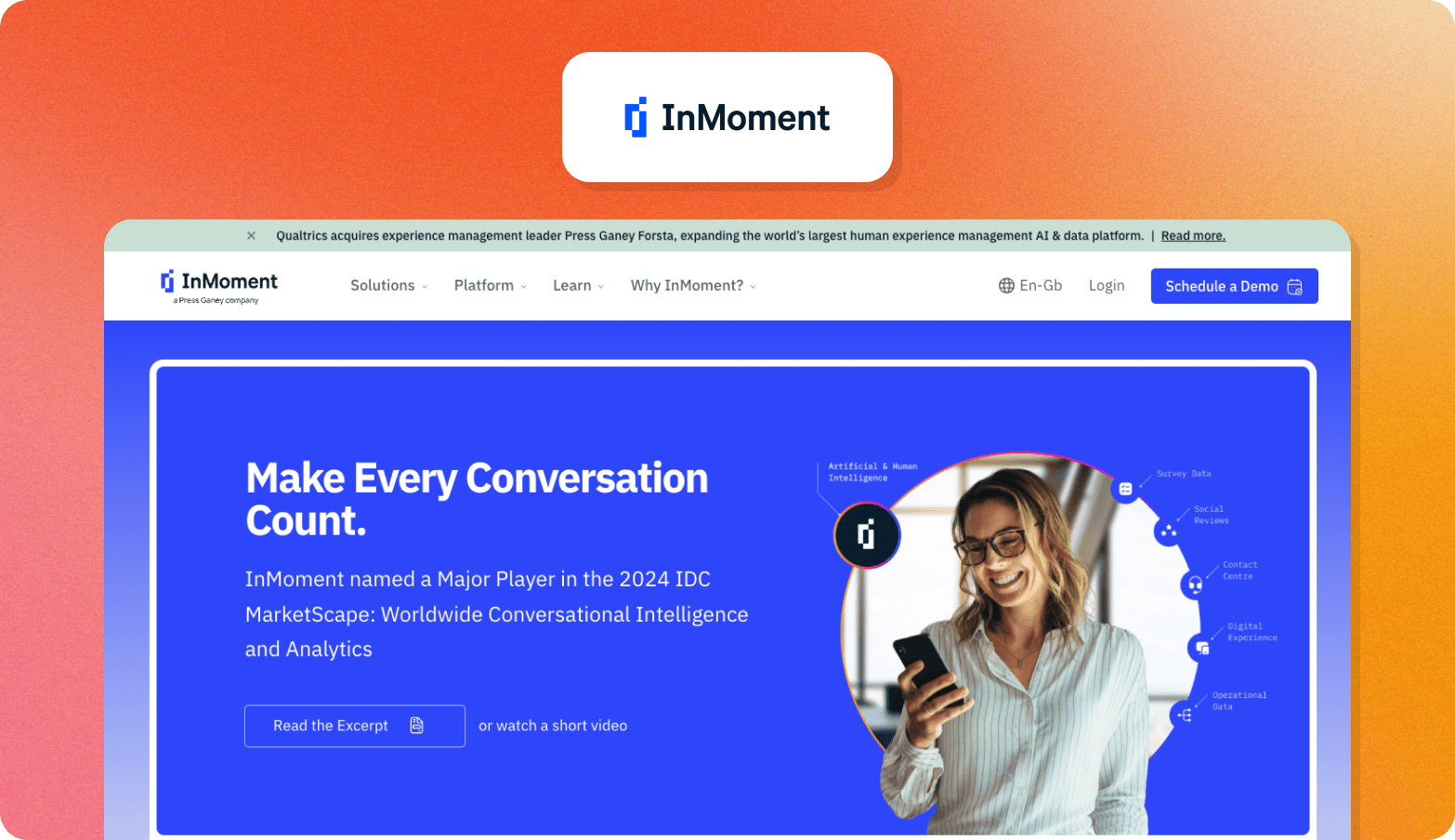
InMoment covers the same experience management ground as Qualtrics, but focuses on feedback collection and text analytics rather than a full research suite.
Best for: Enterprise teams that want customer feedback, journey mapping, and case management in one platform, without the price tag of the bigger suite players.
Core strength: InMoment’s AI-driven conversation intelligence that listens in on customer interactions as they happen.
Key limitation: Like Medallia, it doesn't run structured qualitative interviews.
Pricing: Quotes are based on response volume, user count, and which modules you need, so pricing requires a sales conversation.
13. Dovetail
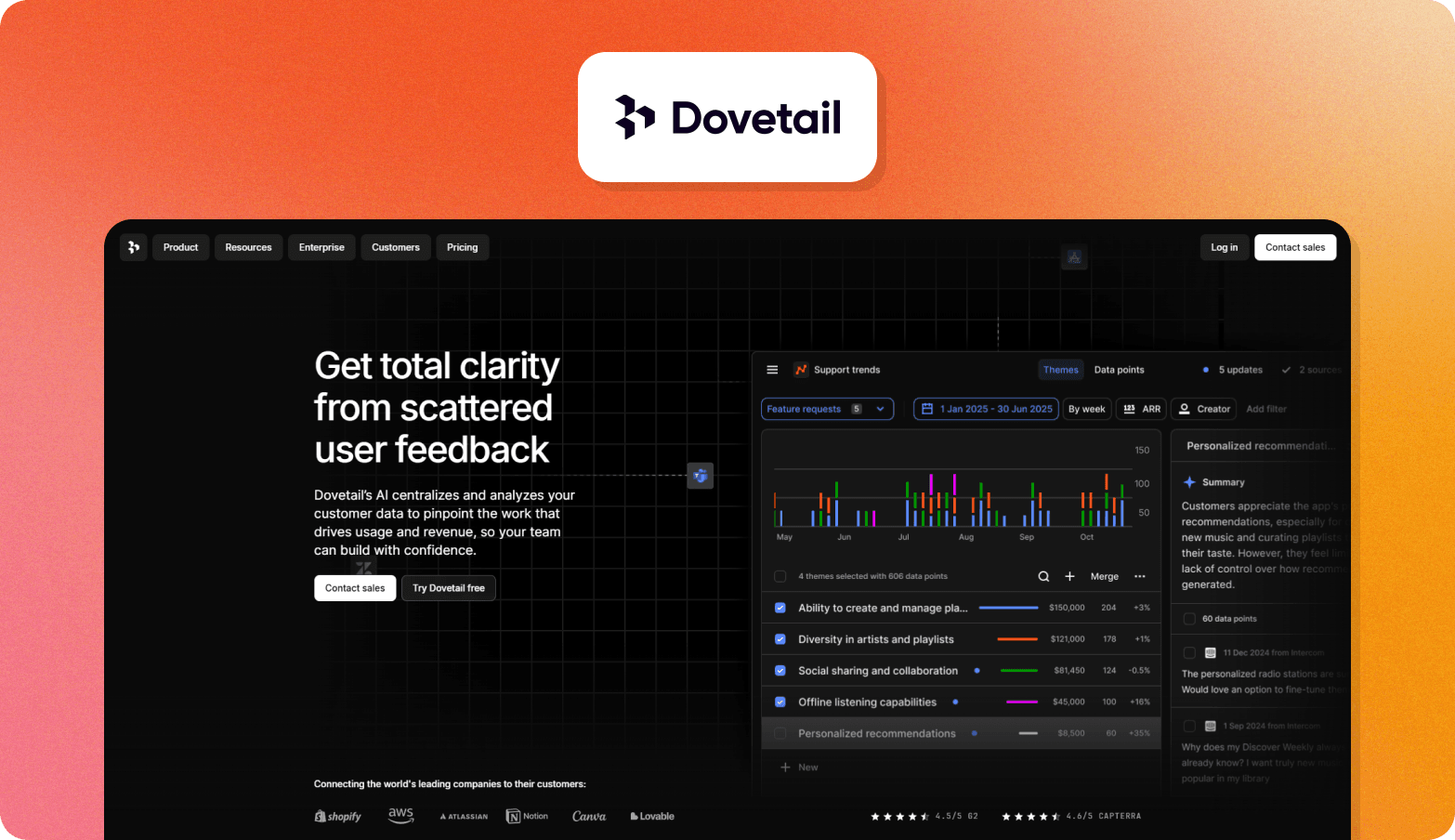
Dovetail picks up after the research is done, turning transcripts and studies a team already has into a searchable repository.
Best for: Teams happy to run research on Qualtrics or another platform who primarily want a stronger repository than Qualtrics' own Research Hub provides.
Core strength: Dovetail integrates with Gong, Zoom, and Salesforce to pull customer data from across the business.
Key limitation: Teams still need a separate tool to conduct primary research.
Pricing: There’s a free plan for individuals with enterprise plans custom-priced on request.
14. Marvin
Marvin covers the customer-feedback-analysis piece of what Qualtrics offers: sales calls, support tickets, and surveys pulled into one searchable hub, plus its own AI-moderated interviews to fill in the gaps.
Best for: Cross-functional teams that want direct access to customer feedback rather than submitting a request to the research team each time.
Core strength: AI connects patterns across the feedback, then routes the resulting insights straight to the tools and teams where decisions get made.
Key limitation: There’s no native participant recruitment, so teams have to share a study link to their own list or a third-party panel.
Pricing: There’s a free plan for repository access with paid tiers priced on request.
15. UserTesting
UserTesting overlaps with Qualtrics on usability and video-based research, but stays focused on unmoderated testing at scale rather than a broad survey and experience-management suite.
Best for: Enterprise product, UX, and CX teams running high volumes of unmoderated testing to understand user behavior.
Core strength: EnjoyHQ, a cross-project repository, lets teams run natural-language searches across past user feedback and jump straight to the exact video timestamp a finding came from.
Key limitation: That AI search doesn't yet cover live, moderated conversations, only unmoderated studies.
Pricing: Not publicly listed.
How Conveo Complements or Replaces Qualtrics for Customer Feedback and Market Research
Qualtrics is a genuinely strong choice for quantitative research and customer experience management at enterprise scale. It runs qualitative interviews too, but every one needs a human moderator, so scaling a study means adding more moderator time. That's where Conveo comes in, built to deliver that same depth without the scheduling limit.
Conveo's AI runs the interview itself, so teams can hold hundreds of conversations at once and get results back in days instead of weeks. It also handles transcription and automatically extracts the key themes, so nobody has to read through 30 transcripts by hand.
Every insight links back to the exact video clip and quote it came from. Stakeholders can watch the moment firsthand rather than just trusting a written summary, which is often why AI-generated research doesn't make it into real business decisions.
A searchable library keeps every study's findings in one place, so past research continues to inform new work rather than getting buried in a slide deck after one meeting.
Some teams keep Qualtrics for quantitative tracking and NPS programs, then bring in Conveo for concept testing, ad testing, messaging validation, and continuous discovery: the recurring qualitative work a human moderator can't easily scale to.
Over 400 teams, including Google and Canva, already run research this way, with turnaround measured in days rather than six-plus weeks and research spend up to 75% lower than traditional methods.
“My team is pretty cutting edge and uses a lot of new technology, and I have to say Conveo is the best research tool I've seen so far. You can tell it has a doctorate in research.”
Research Lead at a Fortune 500 consumer goods leader
Frequently Asked Questions
What are the main competitors to Qualtrics?
Answering who Qualtrics ' competitors are means looking at four main categories. AI-moderated interview platforms like Conveo, Discuss.io, and Listen Labs focus on qualitative research. Survey platforms like SurveyMonkey and Typeform compete with Qualtrics' survey software for customer surveys and online surveys. Experience management platforms like Medallia and InMoment manage customer experience across multiple channels, while research repositories like Dovetail organize and analyze research rather than collecting new customer feedback. Which of Qualtrics’ main competitors fits depends on whether you need survey scale, qualitative depth, or both.
What is the best alternative to Qualtrics for qualitative research?
If qualitative research is your priority, an AI-moderated platform is usually a better fit than a general-purpose survey tool. Qualtrics still relies on a human moderator for every interview, while Conveo, Discuss.io, and Listen Labs use AI to conduct interviews and adapt follow-up questions automatically. Conveo links every finding to a timestamped video clip and quote, making it easy to check the evidence behind each insight and share it with stakeholders.
What are cheaper alternatives to Qualtrics?
Qualtrics doesn't publish its pricing, and third-party estimates suggest many enterprise customers spend well into five figures each year. SurveyMonkey starts at $30 per user per month, while Typeform starts at $39. For basic feedback collection, free tools like Google Forms and Zoho Survey are a much cheaper alternative to Qualtrics, although they don't offer the enterprise compliance, advanced analytics, or qualitative research capabilities that larger organizations often need. Qualtrics also supports academic research alongside enterprise customer experience programs, which contributes to its broader feature set.
What features should you compare across Qualtrics competitors?
A few features matter most when comparing top survey tools and interview platforms. Check how each one handles survey logic, if you can create and launch surveys quickly, and whether the user interface feels simpler than Qualtrics' own. Feedback intelligence is worth weighing too: some platforms surface customer sentiment and predictive analytics automatically, others leave that analysis to you.
How does Conveo compare to Qualtrics?
Qualtrics is an experience management platform with research as one part of a broader product. Conveo focuses on qualitative video research and AI-moderated interviews. Qualtrics interviews still require a human moderator, whereas Conveo's AI conducts interviews automatically and links every finding to the corresponding video clip and quote. For teams running recurring qualitative research, that can reduce study timelines from weeks to days.
Can Conveo replace Qualtrics entirely?
Not always. Qualtrics remains a strong choice for large-scale quantitative tracking, brand health studies, and enterprise survey programs. Conveo focuses on qualitative video research instead. Many organizations use both platforms together: Qualtrics to measure customer feedback at scale and Conveo to explain the reasons behind those results. Teams that only run qualitative research can use Conveo on its own.

About the author
Meg Gerli
Research Impact Lead
Meg is a Research Impact Lead at Conveo, working with insights and research teams on the studies they run with Conveo.
Meet Meg on film →Qualitative insights at the speed of your business.
Conveo runs AI-moderated video interviews and structures everything they say.