In this article
TL;DR
Behavior beats stated values. An all-natural commune bought the cheapest, harshest detergent, which changed how one fabric care study understood sustainability.
Sustainability depends on proximity. People cared most about products that go in them and products others can see.
Foresight is a daily practice. Teams can read signals and prepare for several scenarios.
Backcast from an ambition. Set the goal for a few years out, then work back to what has to be true today.
Make it bite-sized. IKEA and Kerry turn big shifts into small, regular inputs that working teams can use.
Meredith Smith's most memorable research moment is a lesson in the say-do gap. On a sustainability study for a big fabric care client, she walked into the shared laundry room of an all-natural commune in Portland, Oregon, and found the cheapest, harshest detergents on the shelf. Smith, a Strategic Foresight consultant at SAMY who spent five years in the futures practice at Kantar, uses moments like that to argue that real behavior is the most reliable signal of where consumers are heading.
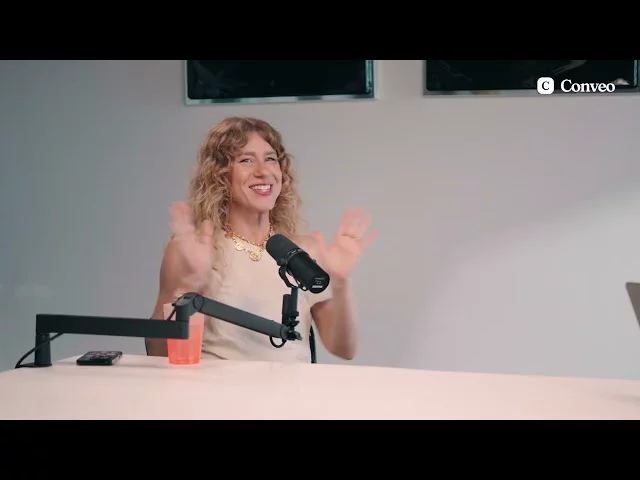
She spoke on Conveo's podcast, recorded live at Cannes Lions 2026, about sustainability research, the practice of foresight, and how brands can act on change before it becomes table stakes. Her governing idea: human needs stay remarkably stable, the ways people meet them keep changing, and teams that watch what people actually do can plan for that change with confidence.
The say-do gap shows up in the laundry room
Earlier in her career, Smith worked at an ethnography agency. The team went into people's homes, spent long hours with them and went shopping with them. One project took them to Portland for a multinational fabric care client that wanted to know whether it could deliver on sustainability.
The team visited the commune that the TV show Portlandia makes fun of, home to people who had chosen to live an all-natural life for a decade or more. In the communal laundry room, the detergent was the cheapest, most chemical-heavy option available. Smith calls it a "popping candy" moment, and she says it revealed a lot about even the most dedicated sustainable consumer.
After a week in market with many cohorts in Portland, and further work in other countries, the team found a pattern she sums up in four words: "in me, on me, around me, about me."
"So if the product would go in me, if I was going to consume it, I really cared how sustainable it was."
Meredith Smith, Strategic Foresight Consultant, SAMY
Products that go on the body mattered less. Fabric care, the category the client sold, sat in the "around me" group. "If it is around me, like your fabric care, things you put under a drawer, I don't care as much," she says. The "about me" products told a different story.
"If it is something around my life, but it sits on my kitchen counter where other people can see it, I care a lot."
Meredith Smith, Strategic Foresight Consultant, SAMY
She notes the work was done more than ten years ago, so the specifics may have shifted. The method holds up. Seeing the shelf showed where stated commitment to sustainability actually turned into purchases, and where it did not. She calls these "assumption busting like bright light in your eyes kind of moments to understand real people." Our guide to research participant bias covers why stated answers drift from behavior, and ethnographic market research explains how in-context observation closes the gap.
Anyone can practice foresight
Smith keeps a crystal ball at home. It is a paperweight, and a bit of theater she uses to open team meetings. Her actual position on prediction is firm.
"Anyone who tells you definitively they can predict the future is either they're lying to you or they're lying to themselves."
Meredith Smith, Strategic Foresight Consultant, SAMY
What teams can do is bring in enough information to see higher-probability outcomes. Societies run on patterns, some lasting three to five years, some much longer. Foresight looks for signals of what is brewing, looks back and forward, and prepares for several scenarios so a business can help shape the future.
She describes the practice like yoga: skip it and you lose flexibility. Her starting framework is slightly academic, a STEEP or PESTLE scan of social, technological, economic, environmental and political shifts, read across many news sources for as little as 15 minutes a day. The patterns reveal consumer need states, and those are steadier than people expect. Security, belonging and identity persist. In her words, "those basic needs, identity, those don't change, but how we meet them changes."
She also rejects the idea that foresight belongs to a handful of experts in turtlenecks. Everyone can do it, she says, if they look beyond their category and their everyday remit.
Foresight pays off when it becomes a plan for today
To make this concrete, Smith worked through travel. The cost of living affects whether and how far people travel. Shifting geopolitics, and the soft power that South Korea and Japan have built, change where people want to go. A turbulent world builds escapism, so travelers want places that feel far from their lives. Even an airline lounge menu that feels transportive can act on a signal with three to four years of legs.
Timing comes next. She uses Rogers' diffusion of innovation curve to ask how much of the population is driving a change, such as in-flight connectivity, and how long a brand has before acting becomes urgent. Most of the money sits in the early and late majority, so the goal is to make those consumers feel comfortable with the change.
Then she backcasts. An airline might set an ambition for 2031: customers can always rely on being connected, and it is the only airline they choose. The team asks what must be true a year before that, and a year before that. Plans, negotiations and go-to-market work can start now. For Smith, the future becomes "a pathway that you can walk to grow your success."
The inputs matter. "I want to see what real people are doing and thinking and feeling and then I want to see what the market is doing," she says, alongside the forces consumers cannot control, such as legislation and climate.
The companies that do foresight well make it bite-sized
Smith worked with two organizations she says get this right. IKEA refreshes a framework of big forces every year and feeds it in small doses to the teams that design products, run marketing and manage the supply chain. Most teams are measured weekly, monthly and quarterly, so digestible inputs are what fit their jobs.
"IKEA is very good at having one team that thinks really big and then making it bite-size and digestible"
Meredith Smith, Strategic Foresight Consultant, SAMY
Kerry, the Ireland-headquartered ingredients company, starts from a big existential question about the future of the food chain. Smith helped build scenarios on climate, population and technology, and Kerry runs regular workshops with its teams and food clients on what each scenario means for a category. Chocolate is her example. She says it takes about eight years from planting to harvesting cacao, so the future of chocolate is a problem to solve today, alongside consumers who want less sugar and the same taste.
None of this happens by accident: "it has to be a mandate from the top down and passion from the bottom up and support from agencies in between," she says.
What it means for insights and marketing leaders
Smith's advice for insights professionals centers on storytelling grounded in real lives. After a piece of qualitative research, take what you learned about a person's day and march it forward. If one thing changed in the world, "what would their Wednesday be like 3 years from now?" She argues this kind of imagining is often dismissed, when it is "one of the few ways that you can create based on real human need" and anticipate needs before they arrive.
She sees that skill becoming more valuable as AI spreads. Generative AI is backward-looking, she says, and she suggests it might better be called aggregate AI. People still have to supply the questions.
"Unless you have a real deep actual understanding of humans you can't ask the unthinkable questions of these machines."
Meredith Smith, Strategic Foresight Consultant, SAMY
She also flags a metric she expects to fade. Share of voice on the biggest social platforms, along with follower counts, will soon matter less, she predicts, because platforms are changing the customer journey and brands will be able to follow consumers through to conversion.
For insights teams, the practical takeaways are:
Watch behavior in context. The commune's laundry room said more than any stated preference would have. Qualitative consumer research is where that context comes from.
Separate stable needs from changing behaviors, and track the second over time.
Translate big shifts into small, regular inputs that category, marketing and supply chain teams can use this quarter.
Ozge Akcizmeci tells a related story about finding insight in what consumers actually do with a product in her episode on Swiffer.
Real behavior is the anchor for every forecast
Smith's foresight practice starts and ends with real people. Big forces set the context, and frameworks and scenarios give it structure. The signal that keeps the work honest is what consumers actually do, which can differ sharply from what they say, as the Portland laundry room showed.
Conveo's AI research assistant runs video conversations with real consumers, so insights teams can get to the why behind behavior faster, and see where stated values and real choices part ways.
Frequently Asked Questions
What is the say-do gap in sustainability research?
It is the distance between what consumers say they value and what they buy. Meredith Smith saw it in Portland, Oregon, where residents of an all-natural commune stocked their shared laundry room with cheap, high-chemical detergent.
What is the in me, on me, around me, about me framework?
It describes how much people cared about sustainability by product type in Smith's research. They cared most about products they consume, less about products on their body, little about products like fabric care, and a lot about products other people can see.
Can brands predict the future?
Smith says no one can. What teams can do is gather enough diverse information to see higher-probability scenarios, track signals across society, and prepare for several possible futures.
What is backcasting?
Backcasting sets an ambition several years out, then asks what must be true a year before that, and the year before that, until the team has a pathway with actions it can start today.
How can insights teams practice foresight day to day?
Smith suggests treating it like yoga: around 15 minutes a day reading news from many sources across social, technological, economic, environmental and political shifts, and noticing how fast patterns move through society.

About the author
Tom Husson
CMO
Tom is CMO at Conveo, where he leads marketing and builds the company's AI-native go-to-market engine. He hosts the Conveo podcast, recorded at Cannes Lions 2026 with brand, insights and marketing leaders.
More by Tom →Qualitative insights at the speed of your business.
Conveo runs AI-moderated video interviews and structures everything they say.