
TL;DR
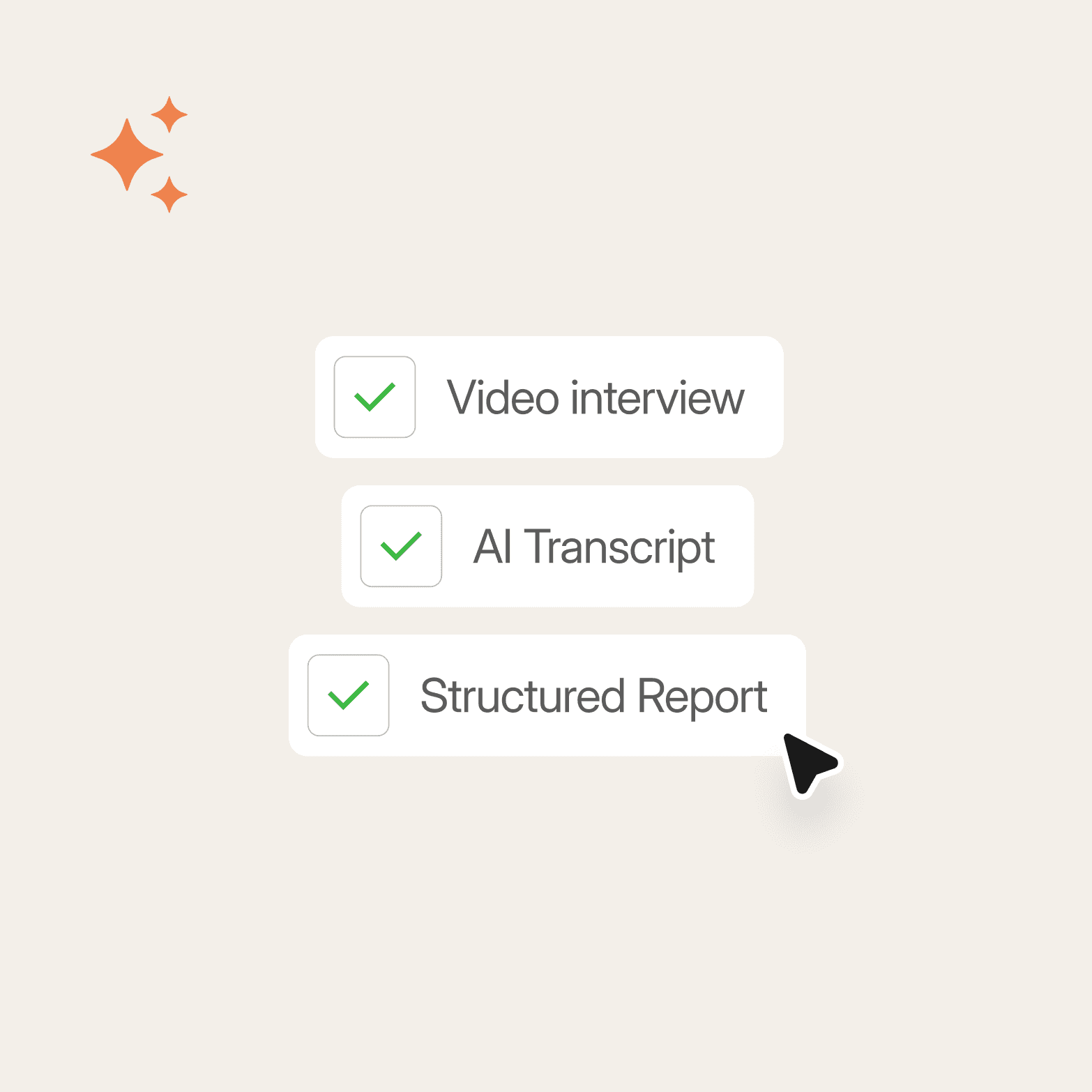
Asynchronous, AI-moderated video interviews compress the qual cycle from 6 to 12 weeks to 3 to 5 days without cutting methodological corners.
Consumer insight usually fails on timing, not method: agency-led qual runs 6 to 12 weeks, so findings arrive after the decision is already made.
Start every study from the business decision it serves. If the insight won't change a decision, don't run it.
Match method to question: use qualitative interviews for why, surveys for how many, and run qual first so you measure the right things.
Video and traceable, source-linked findings are what make insight credible to skeptical stakeholders, support informed decisions, and clear enterprise procurement.
Most teams already know their customers matter. The harder problem is timing: insight tends to arrive after the decision window has closed. A marketing campaign goes live before the messaging is validated. A roadmap locks before anyone has spoken to the people it serves. The research lands six weeks after the call was made, and the customer insights that could have shaped the decision, and the customer experience that follows, arrive as a postscript instead.
That gap is structural, not accidental. Agency-led qualitative research runs 6 to 12 weeks from brief to delivery by design. Recruiting, scheduling, moderation, transcription, coding, and synthesis are sequential manual steps, each handoff adding days. For two or three researchers serving an organization of thousands, that pipeline is nearly impossible to compress without cutting corners.
The result is predictable: decisions are made on assumptions or on survey data that show what customers chose, but not why. This guide covers how to gather consumer insights, or customer insights, that arrive before the decision window closes, using methods that keep qualitative depth without the timelines that make it impractical. The right approach depends on three things: the question you're answering about your target audience, the timeline you're working within, and the level of stakeholder trust your findings need to carry.
Why understanding customer behavior arrives too late to matter
A team of three serving a marketing organization of 300 cannot keep up by design. Requests arrive faster than capacity: brand needs a read on a campaign concept, product wants to know why trial isn't converting, innovation asks whether a reformulated SKU resonates. Each is legitimate. Most wait weeks, and each one is really a request for a deeper understanding of customer behavior under a deadline.
The agency model solves capacity but creates a timing problem. Briefing, recruiting, scheduling, moderation, and reporting span 6 to 12 weeks. By the time findings land, the campaign has launched, and the budget is committed. Consumer insight research, and consumer research more broadly, becomes retrospective validation of a choice no one can revisit, and market trends have often moved on by the time the deck is delivered.
"Within days we had insights that would've taken a traditional agency a month"
— Head of Customer Insights, JDE Peet's
Surveys fill the gap on paper but not in practice. Common proxies fall short in the same way:
A net promoter score tells you the number moved; it doesn't tell you why.
Support tickets tell you what broke, not why customers tolerated it as long as they did.
Scanning social media posts and online forums surfaces stray sentiment, but it can't capture the hesitation when someone describes a price point, the language they reach for when packaging confuses them, or the emotional context behind a brand association.
The "why" is exactly what drives the decisions that matter most: positioning, messaging, product direction, and investment priority.
The fix is not better briefs or faster agencies. It removes the coordination overhead and manual synthesis that stretch the qual cycle from days to months, so real conversations about consumer behavior can happen while decisions are still open, producing valuable insights that are still actionable.
The decision framework for marketing strategies: why versus how many
The single most useful question in any brief is deceptively simple: are you trying to understand why, or measure how many? Get it wrong, and you run a 2,000-respondent survey to answer what 15 conversations would have resolved in days, or you spend weeks in fieldwork to confirm something a tracker could have quantified in 48 hours.
Qualitative interviews | Surveys | |
Best for | The question is why they switched, bought, or avoided it: motivations, hesitations, contextual triggers behind purchasing habits | Qualitative work has already surfaced what matters, and you need to know how widespread it is |
Surfaces | Workarounds, emotional reactions, the moments between words: a pause before a price question, a tone shift when a competitor is named | How many or which segment: prevalence, incidence, statistical segmentation of specific customer groups |
Evidence type | Video clips and verbatim quotes stakeholders can inspect, not a summary they have to trust | Benchmarked, trackable variables like customer satisfaction or churn risk over time, using behavioral data you've already validated qualitatively so the numbers carry meaningful insights rather than noise |
The sequencing matters more than most teams acknowledge. Starting with surveys means measuring things that may not be the right things. Qualitative interviews surface what actually drives consumer behavior; surveys then confirm how broadly those drivers apply across the customer base, turning that signal into actionable data instead of a guess. Quantitative signals like purchase history or a net promoter score tell you what happened; qualitative interviews tell you why. Most teams need both. The question is which comes first, and the answer is almost always qualitative.
One constraint changes the calculus: the decision window. When a launch or positioning call has a timeline in days rather than months, a traditional agency cycle won't fit. That is exactly where asynchronous, AI-moderated qualitative interviews compress the timeline without collapsing depth.
Conveo, a video-first AI research platform, runs sessions in parallel across time zones with no scheduling overhead and works only with real participants, no synthetic respondents, so teams can complete 50 or 100 real video conversations in the time it once took to recruit a single focus group and reach a deeper understanding of what's actually driving the numbers, the kind of understanding that supports informed decisions instead of a best guess.
A 5-step approach to gather consumer insights in time
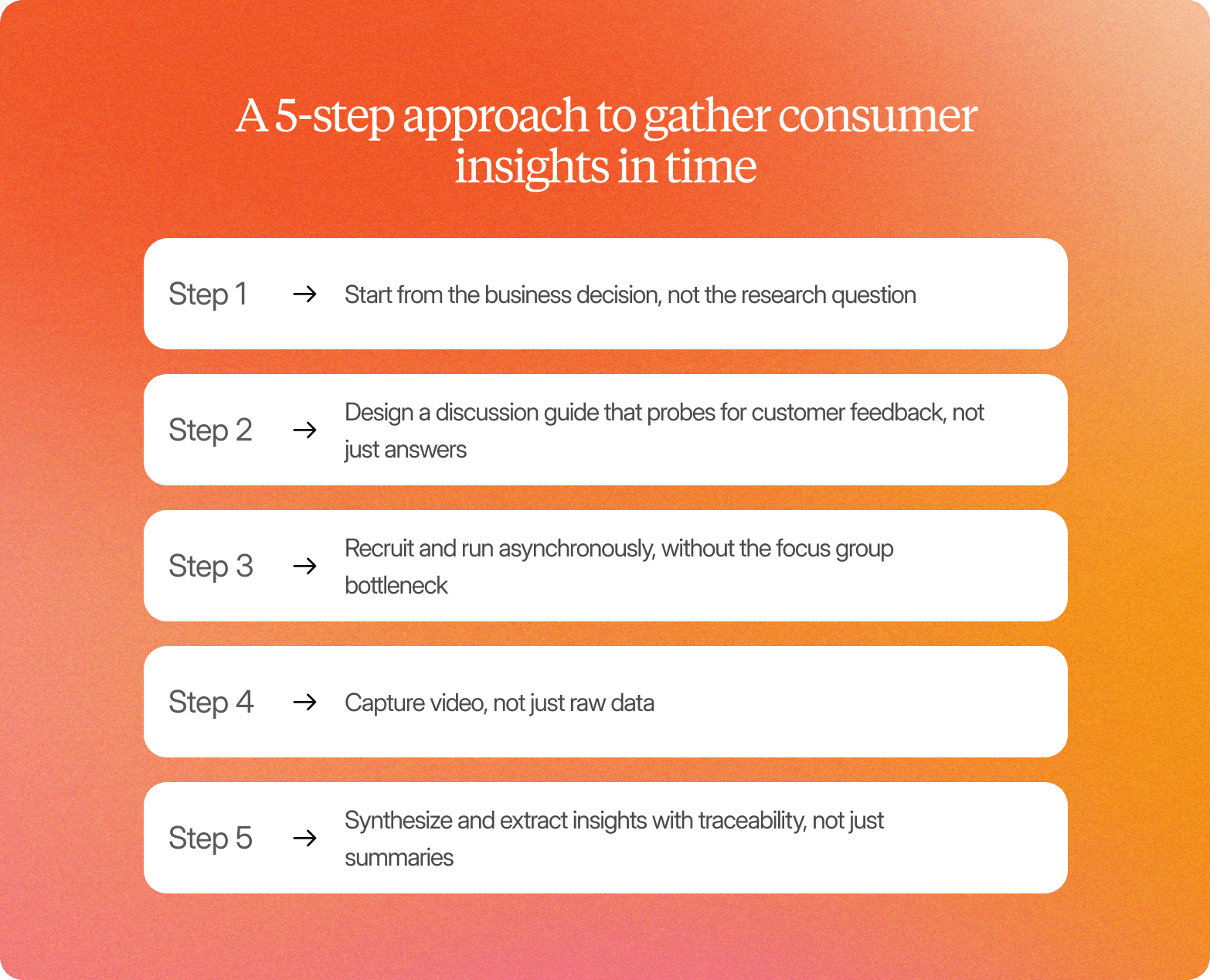
Step 1: Start from the business decision, not the research question
Before you write a discussion guide, name the decision the research has to serve. Not the topic. The decision. That means a decision artifact: a concrete description of what will change based on what you learn. Will you price the new SKU at a premium or match the category, and what does that do to customer lifetime value? Which of three messaging angles goes to the sales team for the next pitch deck?
In practice, a decision artifact looks like:
"We need to know what unmet need justifies paying 40% more, because that determines whether we launch the premium tier at all."
"We need to know whether revisiting pricing strategies will protect margin without accelerating customer churn."
"Should we redesign the loyalty program, and does bundling actually create cross-sell opportunities customers want, or just more clutter at checkout?"
The principle is strict: if the insight won't drive a decision, the study isn't worth running. Starting from the decision, every subsequent choice, sample, guide, and depth of analysis becomes easier for the sales team and every other stakeholder to make and defend.
Step 2: Design a discussion guide that probes for customer feedback, not just answers
A fixed survey script asks the same question in the same order regardless of what a participant says. It is blind to hesitation and to the motivations sitting beneath a polite answer. When someone says "it's fine," and the script moves on, you've lost the most important moment in the interview, and the customer pain points behind that shrug go unrecorded.
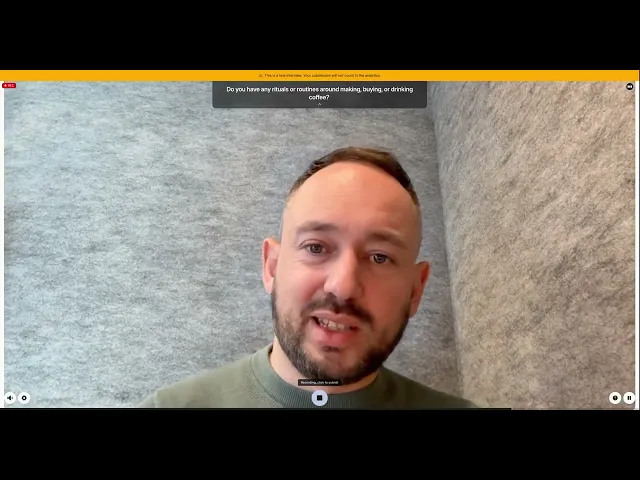
Adaptive probing changes that moment. Instead of advancing, Conveo's AI moderator recognizes the vague answer and follows up: "What would make it better than fine?" Those follow-ups are generated in response to what the participant just said, which is how expert human moderators identify pain points that a script would skip past and encourage customers to say more than a polite first answer. Conveo's AI moderator is trained to detect the signals fixed scripts miss: hedged language, a pause before answering, a shift in tone, a contradiction with something said two minutes earlier. Build your guide around open anchors, not closed sequences: define the territory, then let the adaptive layer handle the depth and gather feedback the participant wouldn't have volunteered unprompted, surfacing the customer pain points that would otherwise stay buried in a shrug.
See it in action: How AI-Moderated Interviews Actually Work →
Step 3: Recruit and run asynchronously, without the focus group bottleneck
Scheduling is where traditional qual loses weeks before a single question is asked. Coordinating live sessions across participant time zones, moderator availability, and stakeholder windows turns a two-day design into a three-week calendar negotiation, and multi-market studies make the math worse.
Asynchronous interviewing removes that bottleneck. Each participant opens a link on their own schedule; the AI moderator greets them, adapts, and probes where warranted, whether that's 9 AM in London or 11 PM in Seoul. Because sessions run in parallel rather than sequentially, teams can run hundreds of conversations with potential, new, and existing customers in the time it takes a human moderator to complete a handful, and split findings by customer group without adding weeks to the fieldwork.
Recruitment runs through Conveo's integrated panel network and panel partners, with support for:
Your own participant lists
CSV uploads
QR codes
WhatsApp
Built-in fraud filtering and incentive handling keep consumer data clean and compliant throughout. For multi-market work, the AI moderator conducts sessions in 20+ languages with automated transcription and translation, so a study across Germany, Brazil, and Japan needs no separate moderation team per market.
A single discussion guide runs across all contexts, and adaptive probing lets cultural nuances surface without compromising comparability: a German participant's sustainability concern and a French participant's packaging comment both get explored in depth, even though they represent very different customer groups and underlying consumer preferences beneath a similar surface answer. Conveo's recruitment reach spans 50+ markets.
Step 4: Capture video, not just raw data
A transcript records what someone said. It doesn't record the half-second pause before it, the flattened tone that followed, or the slight frown when a price point landed. Those signals are where interpretation happens in concept and messaging work, and they are the raw data behind purchasing habits and individual customers' reasoning that surveys simply can't collect.
Conveo captures voice, video, tone, and facial cues together and analyzes them as a single layer, so a furrowed brow at a packaging concept or a shift in tone when a competitor is mentioned gets flagged alongside the verbal response. Watching how consumers interact with a concept on camera and hearing how they talk about it in their own words surface customer sentiment and the emotional register behind it that a Likert scale flattens into a single number.
The stakeholder benefit is concrete: when a CMI director presents to a skeptical leadership team, a 90-second highlight reel of three participants reacting to the same concept, on camera and in their own words, is a different category of evidence than a thematic summary. Stakeholders can inspect it rather than trust it.
Step 5: Synthesize and extract insights with traceability, not just summaries
Decisions stall when stakeholders can't trace a finding back to a real conversation. "Consumers prefer the premium variant" carries no weight in a product review if no one can verify its source; the debate becomes an opinion contest, and the research gets sidelined.
Conveo's synthesis layer ties every theme, sentiment arc, and quote to its original video context, so a CMO or brand director can inspect the evidence rather than accept an interpretation on faith. General-purpose AI summarization can't provide that audit trail; the analysis may be accurate, but there's no way for a stakeholder to verify it, and enterprise procurement teams increasingly question findings that can't be traced to source.
Those clips and themes flow into a searchable insight library rather than dying in a slide deck, so the team can extract insights from last quarter's conversations instead of starting each brief from zero, and knowledge compounds across studies, embedding itself into the decision-making process rather than restarting with each brief.
5 common mistakes when gathering insights across your customer base
Most insight work fails early, at the point where a study was designed without a clear connection to a decision.
Starting with the research question instead of the business decision
Studies framed around curiosity rather than consequence produce findings that feel interesting but move nothing. Before scoping, name the decision: go-to-market, pivot, or stop? If the answer changes nothing, reframe the study.
Using surveys when the question is actually "why"
Surveys measure what people say they do. They rarely explain why a customer switched or what made them hesitate. Use surveys to quantify what qualitative work has already surfaced; use interviews when the question is behavioral or motivational, and when the goal is a deeper read on consumer preferences rather than a top-line score.
Producing 40-slide decks that bury the finding
A summary without access to the underlying evidence asks stakeholders to trust interpretation rather than inspect data. Outputs with timestamped clips and verbatim quotes let stakeholders see what participants actually said, which builds confidence, supports faster, more informed decisions, and reduces the back-and-forth that delays decisions, whether the goal is to boost satisfaction with a redesign or to defend a pricing call.
Treating insights as one-time deliverables
Findings that live only in a deck can't be searched, reused, or connected to future studies, so every project starts from scratch. A searchable insight library turns past clips, themes, and quotes into reusable assets and protects the institutional memory that drives customer retention strategy, helping teams retain customers by fixing what actually drives them away, not just a single campaign.
Waiting for sample sizes qualitative research doesn't require
In qualitative work, thematic saturation matters more than volume. A focused study with 15 to 20 individual customers often surfaces the behavior patterns and the unmet customer needs behind them that a survey of 500 would still fail to explain.
3 ways teams put this into practice
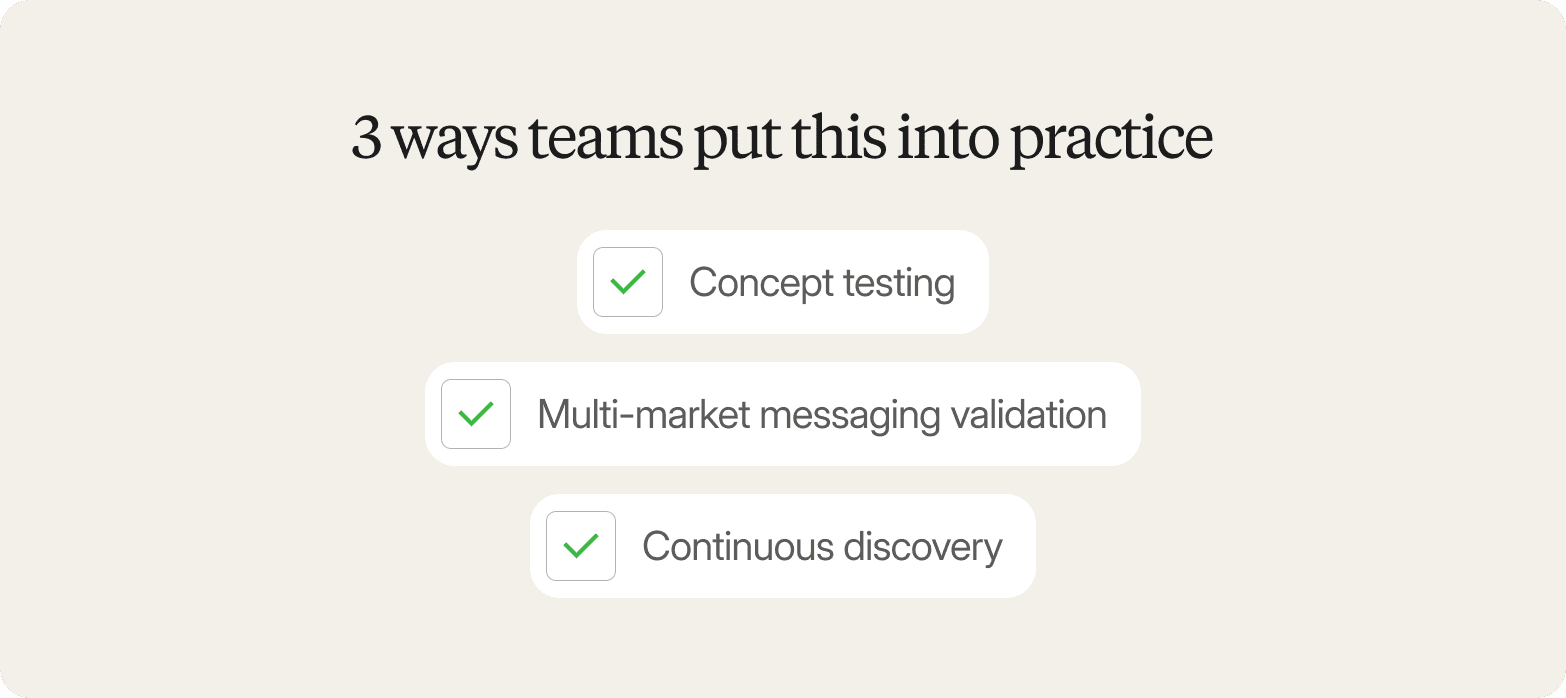
The scenarios below are representative illustrations of common use cases across different types of consumer insights work, not results from named Conveo clients.
Concept testing under a launch deadline
A CPG team needs to know whether a new concept addresses a genuine unmet customer need before committing to production, with a proceed/pivot/stop call already in motion, and with customer satisfaction on the line if the launch misreads the market. AI-moderated video interviews ask two questions that cut to fit. The AI moderator probes hesitation in real time and maps clips and quotes directly to the decision, delivered in 3 to 5 days, so the sales team has proof points before the launch date rather than after it.
Multi-market messaging validation to sharpen marketing efforts
A global team preparing a US, UK, and German launch runs a single study rather than three agency engagements to inform targeted marketing before the campaign goes live. Participants respond asynchronously in their own language, moderated in 20+ languages, and the output is a side-by-side view of how each market interprets the core message and shapes marketing content, with video clips surfacing the pause or tone shift a transcript would miss, and with early signal on whether the messaging is building brand loyalty, or eroding brand loyalty already built, or falling flat.
Continuous discovery for product teams
A UX team runs a focused study at the start of each sprint, with five to ten participants and one or two targeted questions, and has findings ready before the sprint ends. Each session flows into the insight library, so when a pain point resurfaces in week 14, the team can check whether it appeared in week 3 and track how customer engagement with a feature shifts at each stage of the customer journey as the product evolves.
How Conveo helps you gather customer insights before the window closes
Traditional agencies deliver depth but run 6 to 12 weeks. Survey platforms return data in hours but answer what customers said, not why. General-purpose AI synthesizes text quickly but produces outputs stakeholders can't trace to a real person. That gap between depth, speed, and trust is where most insights teams get stuck, and it's why customer insights so often arrive too late to shape targeted marketing campaigns or pricing decisions.
Conveo is built to close it. Study design, recruitment, fraud filtering, incentive management, AI-moderated interviewing, and synthesis occur within a single workflow, so there are no handoffs between point systems and no waiting on a vendor before analysis can begin. That is what compresses a multi-week process into 3 to 5 days, without removing methodological steps.
From there:
Every finding links to timestamped video clips and verbatim quotes.
Those clips flow into a searchable insight library, so teams can use consumer insights and gather customer insights, again in the next study instead of re-running the same discovery work, and knowledge compounds toward more sustainable business growth over time.
Conveo is SOC 2 certified and GDPR-compliant, with optional EU data hosting for consumer data, clearing the procurement blockers that quietly stall research programs.
Frequently Asked Questions
How is qualitative market research different from a survey?
How fast can AI-moderated qualitative research deliver findings?
How many participants do I need for a qualitative study?
Does AI moderation lose the depth of a human moderator?
How does Conveo handle multi-market research?
How does Conveo make findings credible to skeptical stakeholders?