In this article
TL;DR
Thematic analysis helps insights teams find patterns in interviews and other open-ended data by labeling what participants say, then grouping those labels into themes.
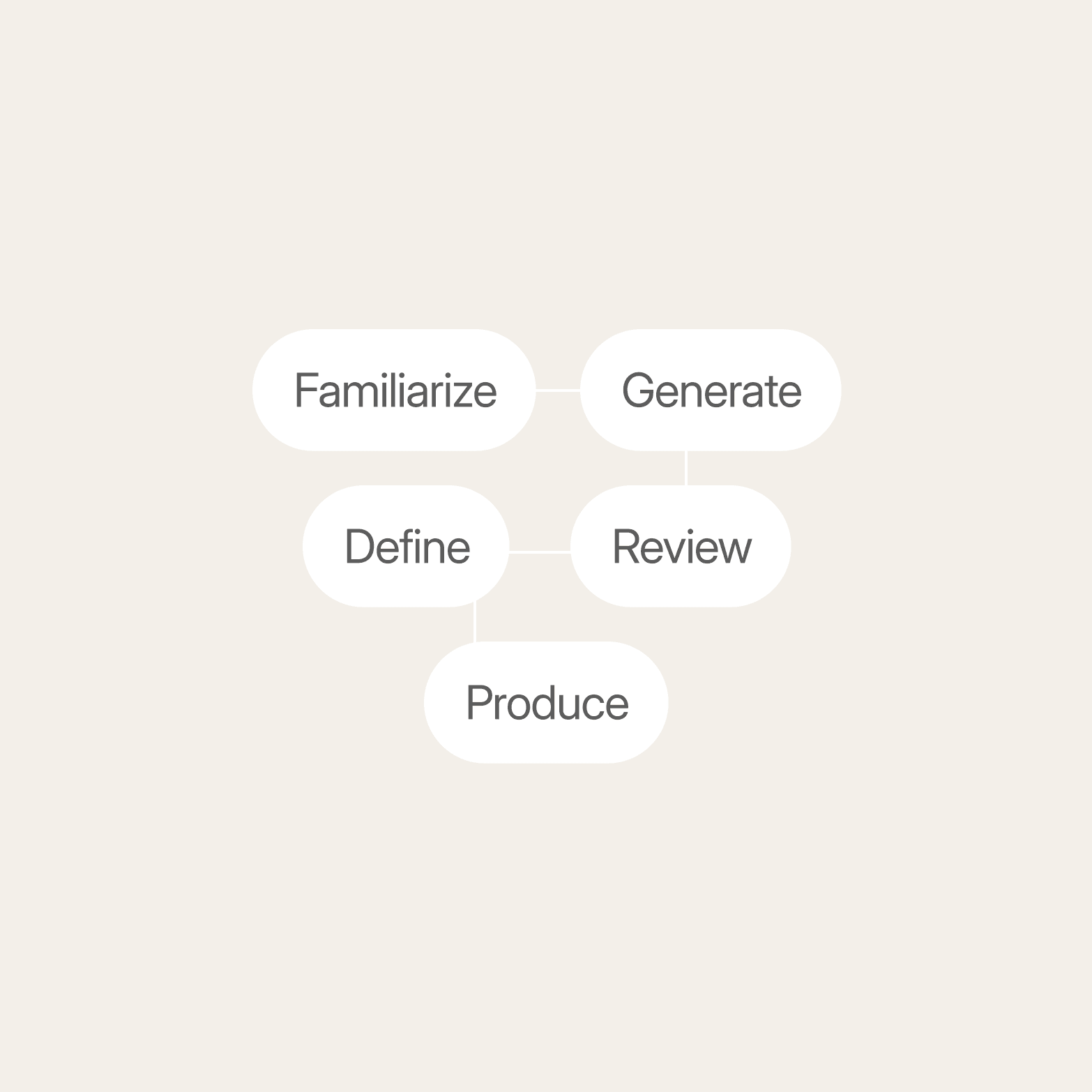
A six-phase framework covers familiarizing yourself with the data, coding, developing and reviewing themes, defining them, and reporting the findings with supporting evidence.
An auditable approach lets stakeholders check where a finding came from, which can make it easier to review and act on the research.
This guide is for researchers and insights teams who need a systematic way to do qualitative data analysis and show how their findings were reached.
After a round of interviews, you can end up with hours of recordings and no systematic way to turn them into findings. Without a set method, it's easy to fall back on grouping comments by topic, like "delivery" or "price." Stakeholders then get a summary of what participants talked about and still have to work out what it means for their decision.
Thematic analysis is a step-by-step method for turning qualitative data into themes that explain what participants mean. This guide walks through the six-phase framework step by step, using a meal delivery study as the example throughout. It also covers how to work with video data and how to run the same qualitative analysis across repeat studies.
What is thematic analysis?
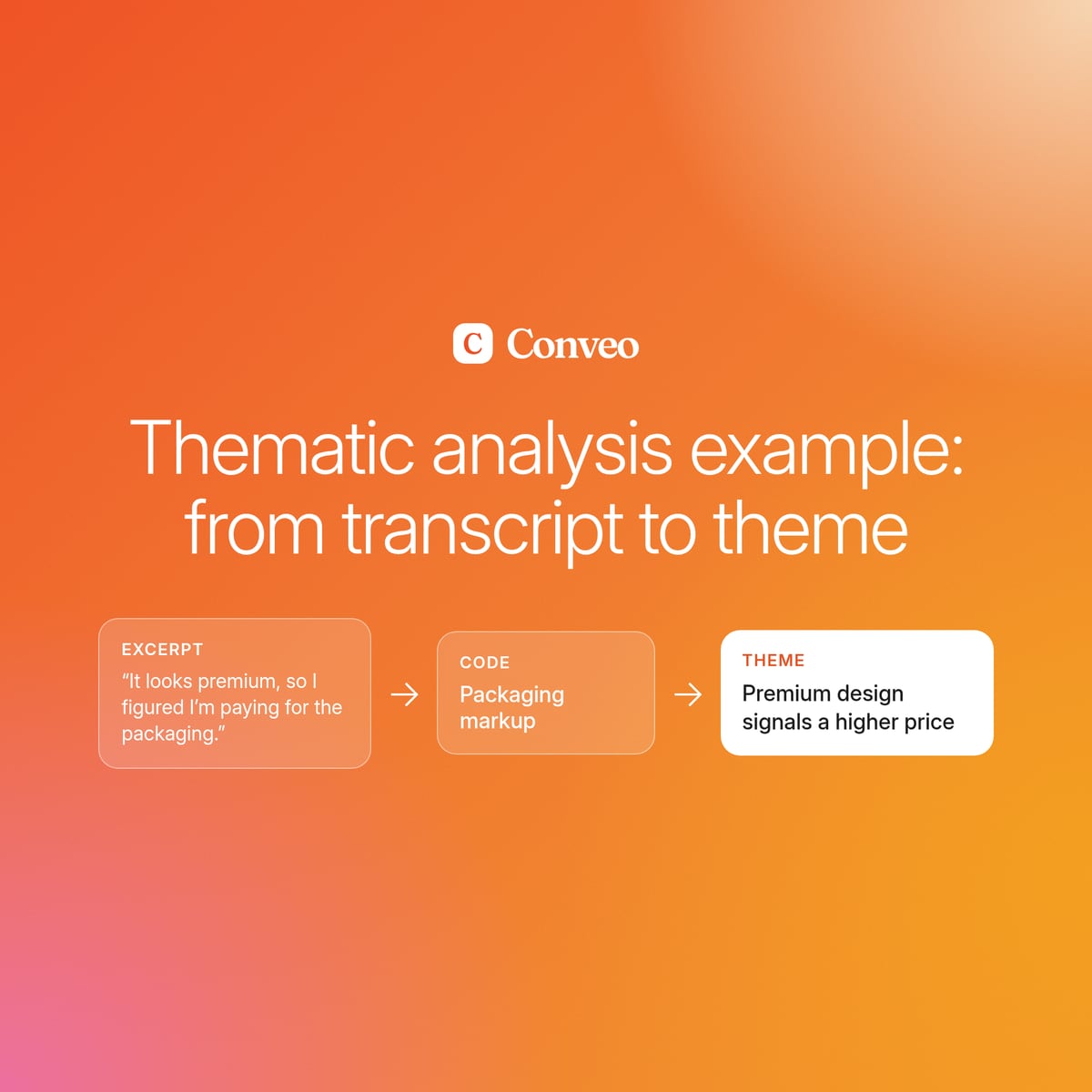
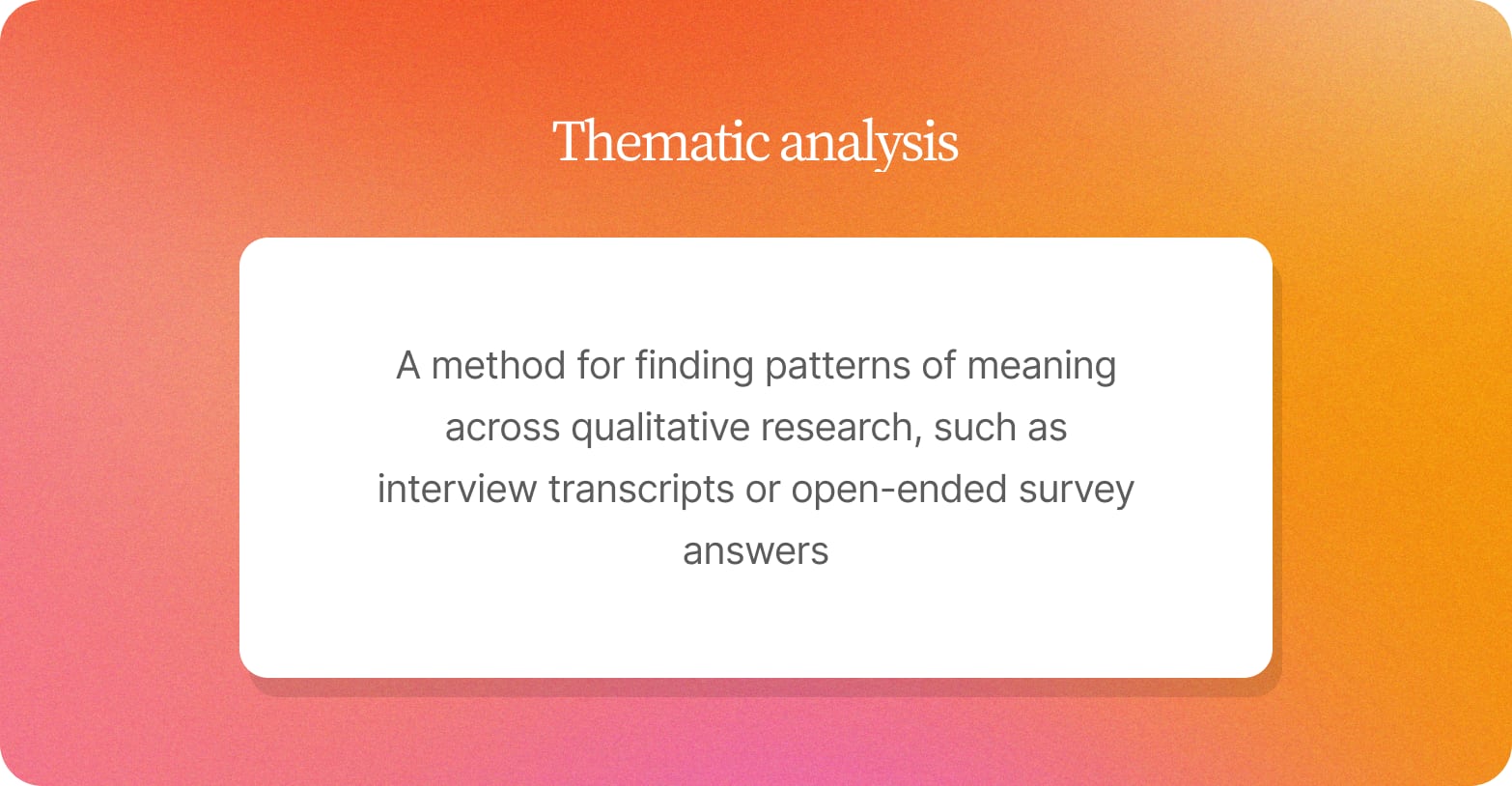
Thematic analysis is a method for finding patterns of meaning across qualitative research, such as interview transcripts or open-ended survey answers. You label what participants say, then group those labels into recurring themes to examine what they mean.
For example, if you interview customers about a new meal delivery service, several people might mention late deliveries and missing ingredients. You could group these responses under a broader theme: customers can't plan meals around their orders.
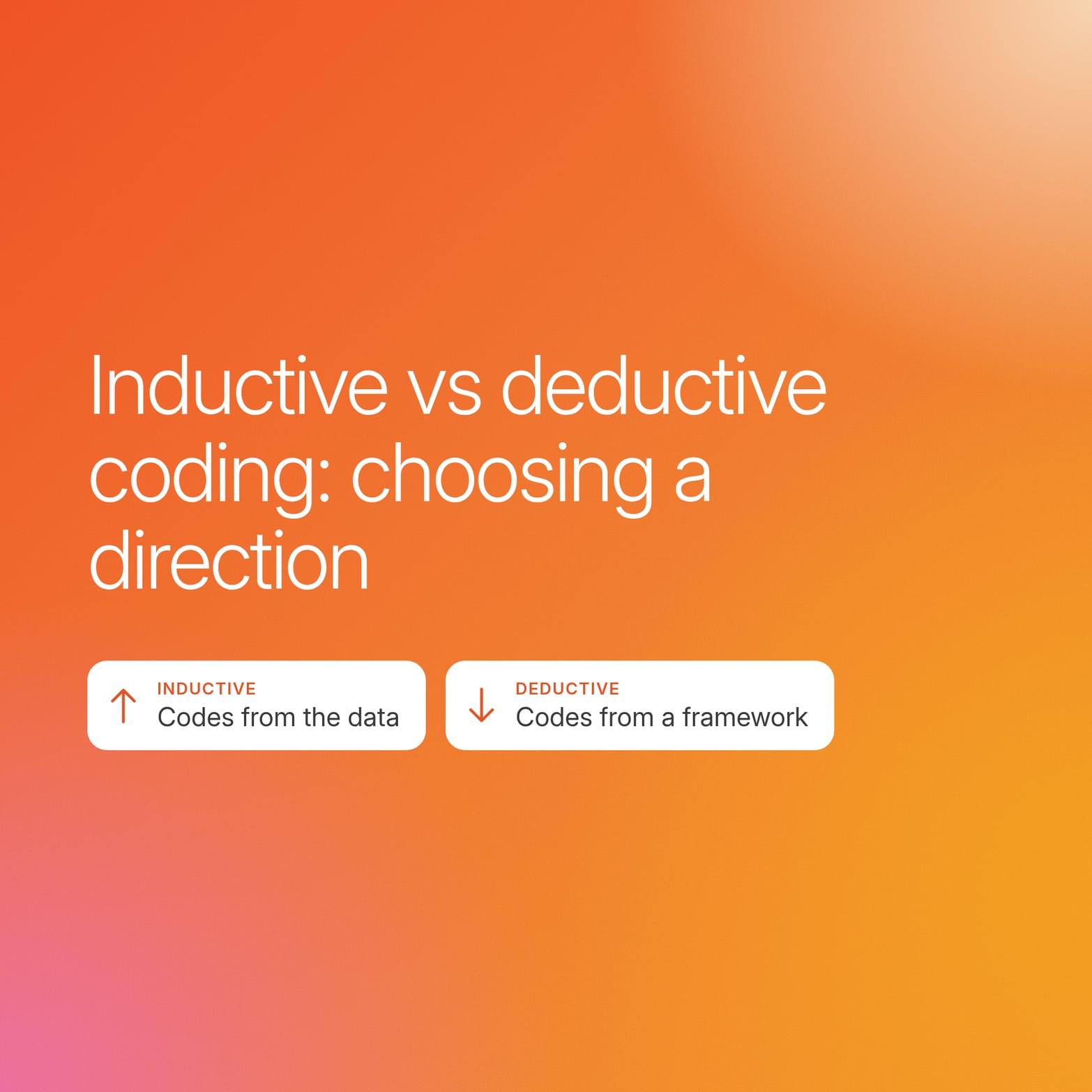
You can create codes from the data as you go (inductive thematic analysis) or start with codes from earlier research (deductive thematic analysis). Either way, the aim is to work out what the responses mean. That sets thematic analysis apart from quantitative content analysis, where the aim is to count how often certain words or ideas appear.
When to use thematic analysis
Thematic analysis is useful for qualitative research methods, where you need to explain why people behave the way they do, based on what they say in their own words. That makes it appropriate for analyzing different types of data collection and research methods:
| Type of research | When thematic analysis fits |
|---|---|
| Concept testing | You need to know what to change about a concept before launch, such as why shoppers like a new snack bar idea but would not buy it. |
| Exploratory research | You are moving into a new category or audience and do not yet have a list of needs to test. |
| Ad testing | You need to find which parts of an ad drive people's reactions, so the creative team knows what to edit. |
| Customer journey research | You need to find where people lose interest or get frustrated, and what is causing it. |
If you want to find out how many people do something or how often, a survey or content analysis may answer it faster than thematic analysis. If thematic analysis fits your research objective, there's a six-phase framework to help you run it.
The 6-phase framework for conducting thematic analysis
Psychologists Virginia Braun and Victoria Clarke developed the six-phase framework for thematic analysis and first published it in 2006. It gives qualitative researchers a systematic workflow for moving from raw data to themes while keeping the analysis traceable and reducing the risk of confirmation bias. Their later reflexive thematic analysis keeps the same six phases and puts more weight on the researcher's own interpretation.
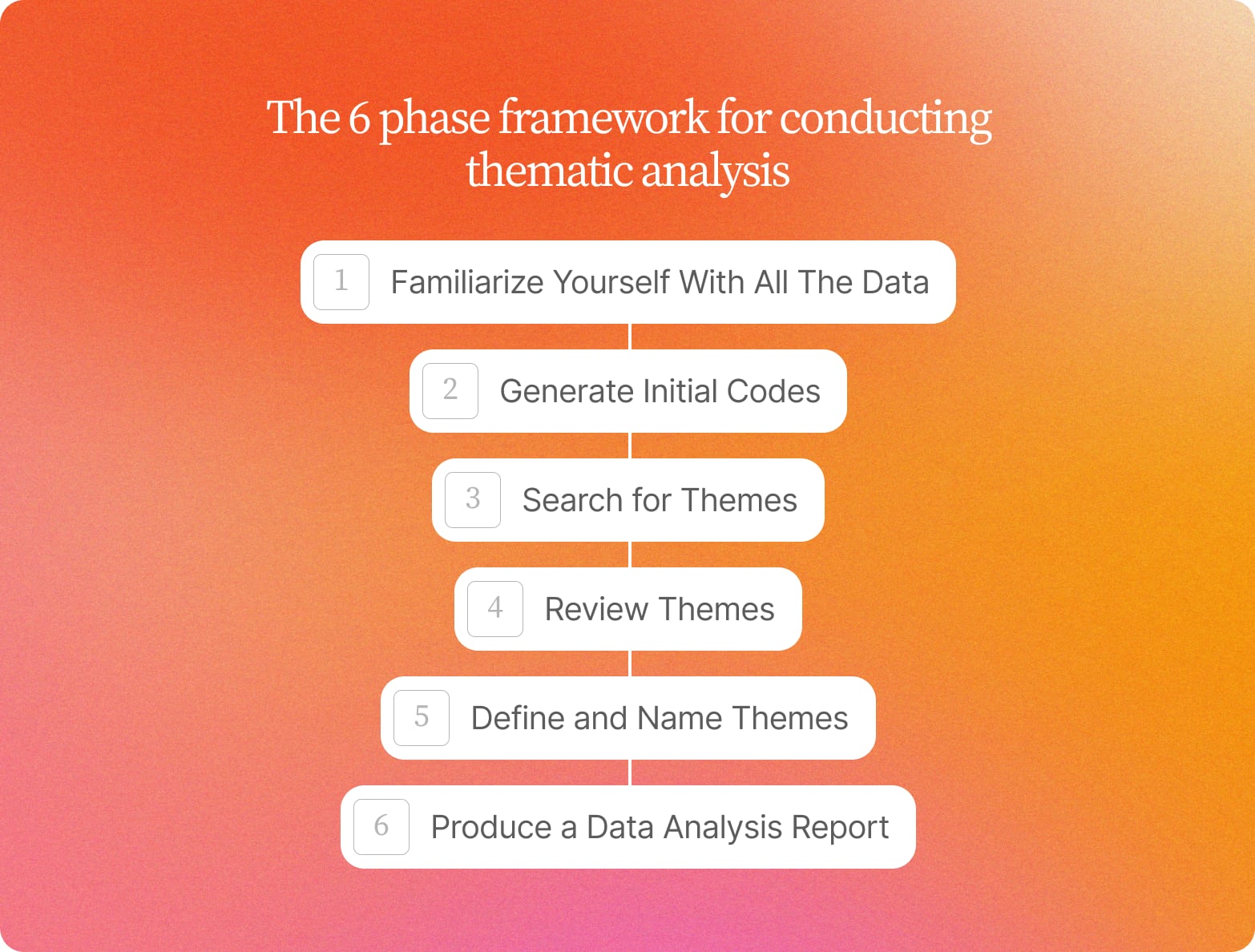
1. Familiarize yourself with all the data
Start by reading or watching every session before you begin coding. The goal is to know all your data well enough that you can recall examples and key patterns without having to search for them each time.
For example, if you interview 10 customers about a new meal delivery service, watch all 10 interviews before you start coding. You might notice that delivery problems come up in several interviews, but at this stage, you're simply getting a sense of what people discussed.
Note: With video data, this step can give you context that a transcript leaves out, such as tone or changes in expression.
2. Generate initial codes
Next, label meaningful parts of the data with short, descriptive codes. For example, if customers mention that their meals arrive late, you could code those responses as late delivery. Apply the codes consistently across the dataset, including responses that contradict any emerging patterns.
Conveo links each theme to the verbatim quotes and video clips behind it, so you can go back to the original response and keep contradicting examples in view.
3. Search for themes
Once you've coded the data, group related codes into themes that describe what the pattern shows.
For example, late delivery and missing ingredients could be grouped under the theme "customers can't plan meals around their orders." The theme captures the wider issue that customers can't count on an order arriving on time and complete when they need it.
4. Review themes
Review each developing theme against the supporting data and look for evidence that challenges it.
For example, if most customers describe late or incomplete orders but several say their deliveries have always been reliable, check that the theme still reflects the range of responses. You might narrow it to "some customers can't plan meals around their orders." If the responses point to two distinct patterns, you might split the theme into two.
At this stage, you might also merge separate themes if they describe the same underlying ideas.
5. Define and name themes
Write a short definition for each theme that says what it includes and which coded findings support it.
For example, the definition might be "customers can't rely on an order arriving on time and complete enough to plan a meal around it." The supporting evidence would be responses describing late deliveries or missing ingredients, alongside responses showing that some customers received their orders reliably.
You can then turn the theme into a clear finding for stakeholders: "Some customers can't plan meals around their orders because deliveries arrive late or with missing ingredients."
6. Produce a data analysis report
Put together your finding with relevant evidence and include the implications for the decisions the research is intended to inform.
For example, a report might present the theme finding alongside two clips of customers who experienced problems with their delivery. If your original research was designed to improve customer satisfaction scores, the implication could be that satisfaction scores are unlikely to improve until customers can plan meals around their deliveries.
Keep the connection between each finding and its source data visible so stakeholders can see how the conclusion was reached. Conveo preserves this traceability by linking findings back to the original interview clips.
5 common thematic analysis process pitfalls (and how to avoid them)
Even with a set framework to follow, mistakes can creep in that bring errors into your analysis. Here's what to check for:
| Pitfall | What it looks like | How to avoid it |
|---|---|---|
| Treating themes as topic summaries | You label a theme "delivery problems" because several customers talked about late orders. The label could cover any comment about delivery, so it tells stakeholders nothing about what customers experienced. | Write the theme as a claim about what the responses show. For example, "customers can't plan meals around their orders" ties the late delivery and missing ingredients codes together and says what they mean for customers. |
| Ignoring contradictory evidence | You identify "customers can't plan meals around their orders" from several complaints about late deliveries, but leave out customers who said their orders always arrived on time. | Check each theme against the full dataset, including responses that don't fit the pattern. Refine the theme if the wider evidence doesn't support it. |
| Using quotes as analysis | You include several customer quotes about late deliveries but don't explain what those responses show as a pattern. | Add a sentence explaining what the quotes show about the theme. |
| Making claims the data doesn't support | You conclude that "customers are unhappy with the service" when your interviews only show that some customers experienced delivery problems. | Check that the scope of each finding matches the evidence. Keep each claim within what the data supports. |
| Using AI without being able to check its work | An AI tool for thematic analysis produces "customers can't plan meals around their orders" as a theme, but you can't see which responses led to that theme or check whether the coding reflects what participants said. | Keep each theme linked to the source responses it came from. Review AI-generated thematic analysis before using the resulting themes in your findings. |
How to do thematic analysis for video-first data
Video-first data like video interviews can give you additional signals to code on top of what participants say. For example, if six of your 10 participants say "the price is fine" but pause before answering, you could code each of those responses "paused before answering on price." Because the same cue shows up across most interviews, it can support a theme such as "customers accept the price but aren't sure it's worth it."
Here are some dos and don'ts for using video signals in thematic analysis, so you can use these cues as evidence without overstating what they mean:
| Do | Don't |
|---|---|
| Describe what you saw: "paused for four seconds before answering" | Describe what you think they felt: "was unhappy with the price" |
| Base a theme on cues that repeat across several participants | Build a theme from one person's facial expression |
| Link each cue to the timestamped clip so others can check it | Report tone or expression without the clip that shows it |
Conveo's AI-moderated video interviews use multimodal analysis to analyze facial cues alongside what participants say, so you can spot changes in expression without manually reviewing every video.
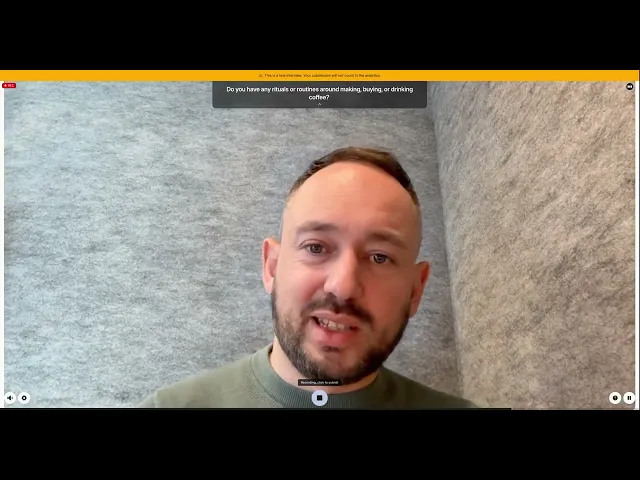
See it in action: here is how Conveo's AI research assistant probes a participant's reaction to a concept.
How to make thematic analysis auditable
Stakeholders are more likely to act on a finding when they can see which participant responses it came from. An auditable analysis keeps that link for every finding, so when someone questions a result, you can show them the evidence without repeating the analysis.
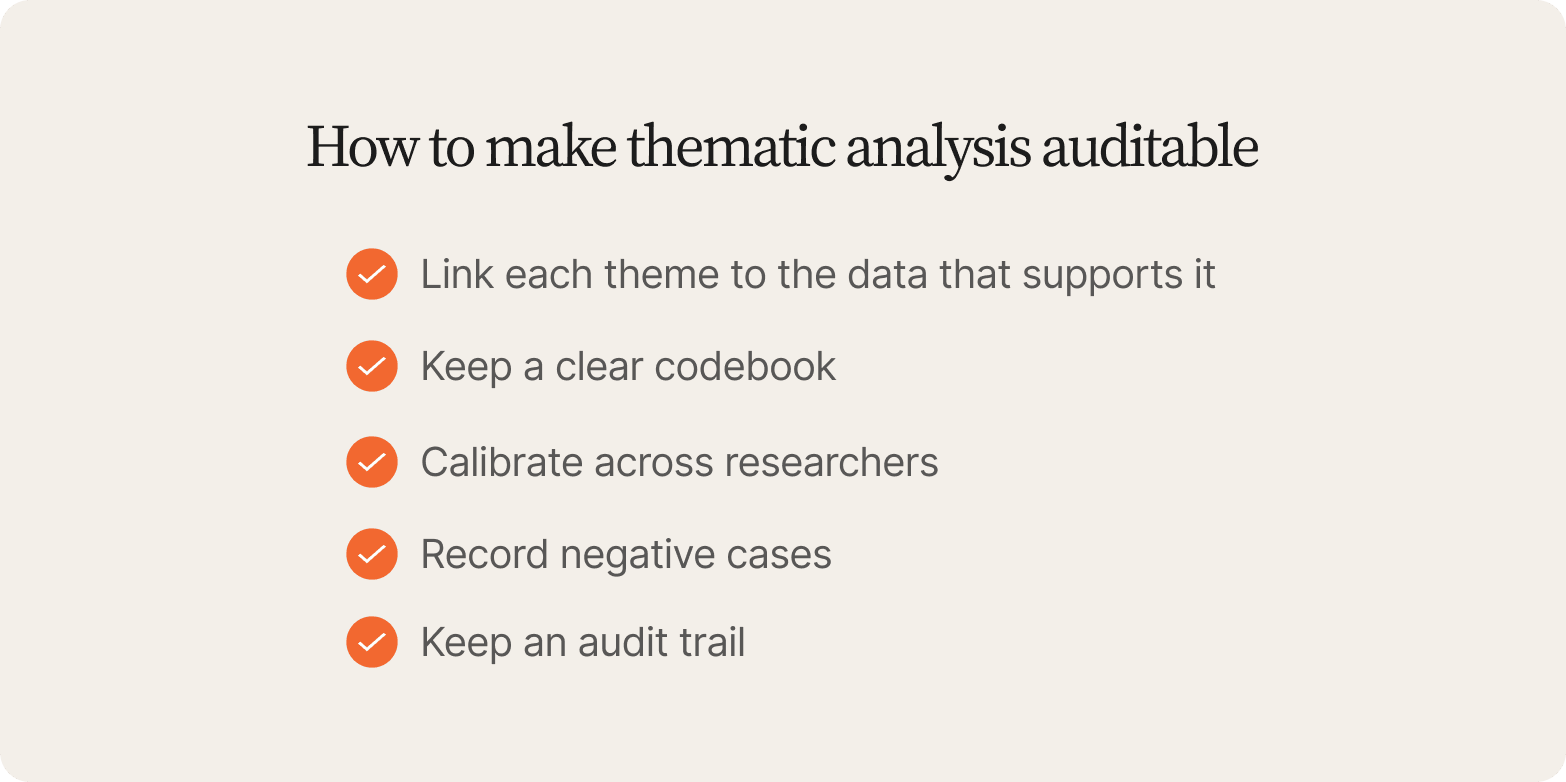
To make your analysis auditable:
Link each theme to the data that supports it. Keep the relevant quotes, transcript sections, or timestamped video moments alongside each theme so another researcher can check the evidence.
Keep a clear codebook. Record what each code means and how it should be applied. This helps multiple researchers code the same type of response consistently.
Calibrate across researchers. If more than one person is coding the data, compare how you have applied the codes before analyzing the full dataset. Resolve differences and update the codebook where needed.
Record negative cases. Keep examples that don't fit a theme in the analysis. This gives you a record of the evidence you considered when deciding whether a theme held up.
Keep an audit trail. Record important changes to codes and themes as the analysis develops. This lets someone reviewing the work understand why the final themes look different from the initial ones.
Linking each theme to its evidence also helps when you run the same research process again, because you can compare the responses behind a theme and see whether it still means the same thing.
Running thematic analysis continuously
Continuous thematic analysis means running research in regular waves and comparing the themes each time, so you can see how customer views change.
To compare waves fairly, use the same codes and theme definitions each time. If "customers can't plan meals around their orders" comes up in fewer interviews in the second wave, you can be more confident that the change reflects what customers said, because the coding stayed the same.
Also check for drift, where a theme keeps its name while the responses behind it change. In the first wave, most responses under "customers can't plan meals around their orders" might be about late orders. By the third wave, most might be about missing ingredients. The name stays the same while the underlying issue shifts, and you'll only see that by checking the responses behind the theme in each wave.
Conveo StoryLines runs continuous research in waves, such as every two weeks or monthly, alongside your one-off studies. As each wave closes, it compares the results with earlier waves and flags shifts in existing themes and any new ones, so you can spot a change while the decision it affects is still open. Every study also goes into a searchable insight library, so the team can pull up what earlier research found.
How Conveo supports thematic analysis across every study
Thematic analysis keeps paying off after a study closes, because each theme can inform the next product or marketing decision. Conveo helps insights teams produce themes their stakeholders trust enough to act on, then keeps those themes in use across every study. Here's how:
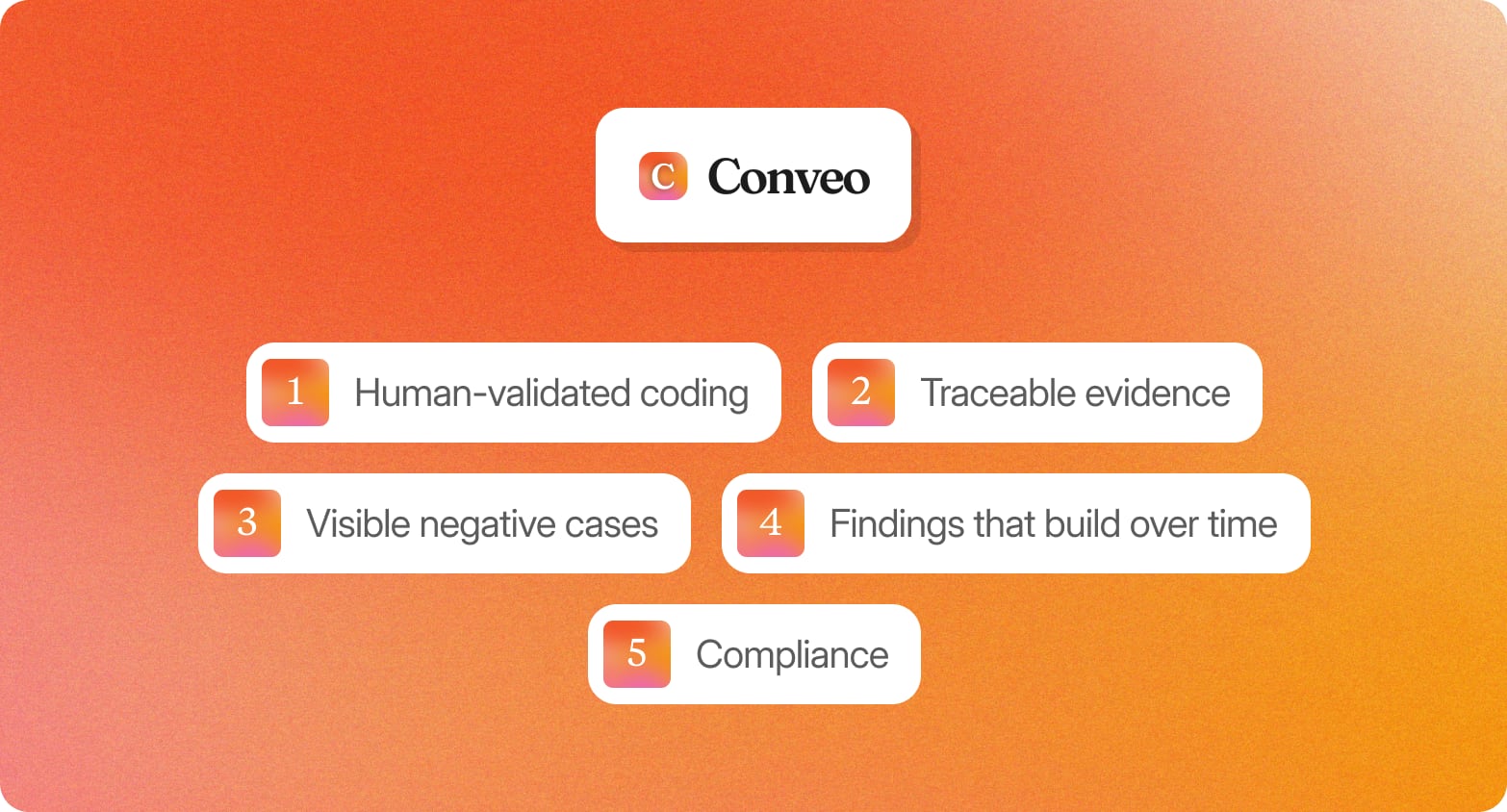
Human-validated coding. AI-moderated interviews come with first-pass coding that you can review and finalize.
Traceable evidence. Every theme links to verbatim quotes and timestamped video clips, so stakeholders can check a claim themselves before acting on it.
Visible negative cases. Because the quotes and clips behind each theme stay attached to it, responses that contradict a theme are easy to find and keep in the analysis.
Findings that build over time. Conveo connects themes across studies automatically, so each new study starts from what the team already knows.
Compliance. Conveo is SOC 2 Type II, ISO 27001:2022 and GDPR compliant, with data hosted in Europe.
For budget holders, themes that hold up under scrutiny mean fewer studies rerun to double-check a finding and quicker sign-off on the decisions you support.
"The pace, responsiveness, and research expertise of the Conveo team, on top of the top AI-moderated qual platform, have been invaluable to us in scaling brand advertising internationally."
Matt Harris, Research & Insights Lead, EMEA, Canva
Frequently asked questions
What is thematic analysis in qualitative research?
Thematic analysis works with most kinds of qualitative data, including interviews, focus group transcripts, and open-ended survey responses. Qualitative thematic analysis involves researchers coding qualitative data, then grouping related codes into themes that explain what participants mean in relation to the research questions.
How do you define thematic analysis?
Braun and Clarke, who developed the most widely used version, give the thematic analysis definition as "a method for identifying, analyzing and reporting patterns (themes) within data."
What is reflexive thematic analysis?
Reflexive thematic analysis is a form of thematic data analysis that recognizes the researcher's perspective and assumptions as part of how themes are developed. Researchers reflect on how their own interpretation shapes the coding and analysis, and treat themes as something they build from the data.
What is the difference between thematic analysis and content analysis?
Thematic analysis interprets what participants mean, and content analysis counts how often something comes up. If several people in a meal delivery study mention late deliveries, content analysis records how many. Thematic analysis looks at what those comments say about the service, such as whether customers can plan meals around their orders.
How long does thematic analysis take?
Timelines vary widely depending on how much data a team has and the tools it uses. When AI handles first-pass coding, researchers start from coded data and spend their time reviewing and refining the themes. In-house teams can then analyze more of their own studies.
Can AI do thematic analysis?
AI can handle first-pass coding by tagging data excerpts and suggesting potential themes across large amounts of qualitative data. The researcher checks those codes against the data and makes the final call on how each theme is defined and what it can support, or if further analysis is needed.

About the author
Meg Gerli
Research Impact Lead
Meg is a Research Impact Lead at Conveo, working with insights and research teams on the studies they run with Conveo.
Meet Meg on film →Qualitative insights at the speed of your business.
Conveo runs AI-moderated video interviews and structures everything they say.