In this article
TL;DR
Traditional retail market research often takes longer than the decisions it needs to inform. By the time findings arrive, teams may already have made a call on a campaign or pricing change.
Shopper questions also keep changing as new products launch and customer behavior shifts, making one-off studies difficult to rely on for long.
AI-moderated interviews mean you can run hundreds of interviews simultaneously while ensuring every finding can be traced back to a real customer.
A continuous research approach gives teams recent shopper evidence to draw on when making decisions that affect business performance, rather than starting a new research project every time a question comes up.
Retail and brand teams have more data than ever about what shoppers are doing. What that data doesn't always explain is why shoppers made those choices, and traditional research that could answer that question often takes too long. Teams end up choosing between acting on a guess or acting too late, and either way, the decision moves ahead without the evidence that should have shaped it.
This article covers where qualitative research in retail fills that gap across five key areas. By the end, you'll have a clear view of where shopper interviews add the why behind your data and what a continuous retail consumer research cadence looks like, so you don't have to choose between moving fast and getting it right.
Why Retail Business Decisions Outrun Traditional Research
In the past, retail decisions were primarily organized around predictable seasonal and promotional cycles. Today, those cycles are only the starting point. Demand can change between planning periods seemingly overnight, in response to anything from competitor discounts to viral social media trends.
That creates a growing tension between how quickly retailers need to act and how slowly traditional research delivers customer insights. Surveys and focus groups can provide valuable context, but by the time the findings arrive, the market may already have moved on.
Modern qualitative research, such as AI-moderated interviews, gives retailers consumer insights while there's still time to act. When customer interviews and supporting evidence are available in step with the decision cycle, teams can act with confidence rather than relying on assumptions.
When Traditional Qualitative Research Fits Retail Decision Cycles, and When It Doesn't
Traditional qualitative research still has a role in retail business intelligence. You might run a focus group to hear shoppers debate several early-stage product concepts or observe shoppers in a store when you need to see how they physically move through an aisle.
However, several practical constraints can make traditional methods harder to fit into shorter retail planning cycles:
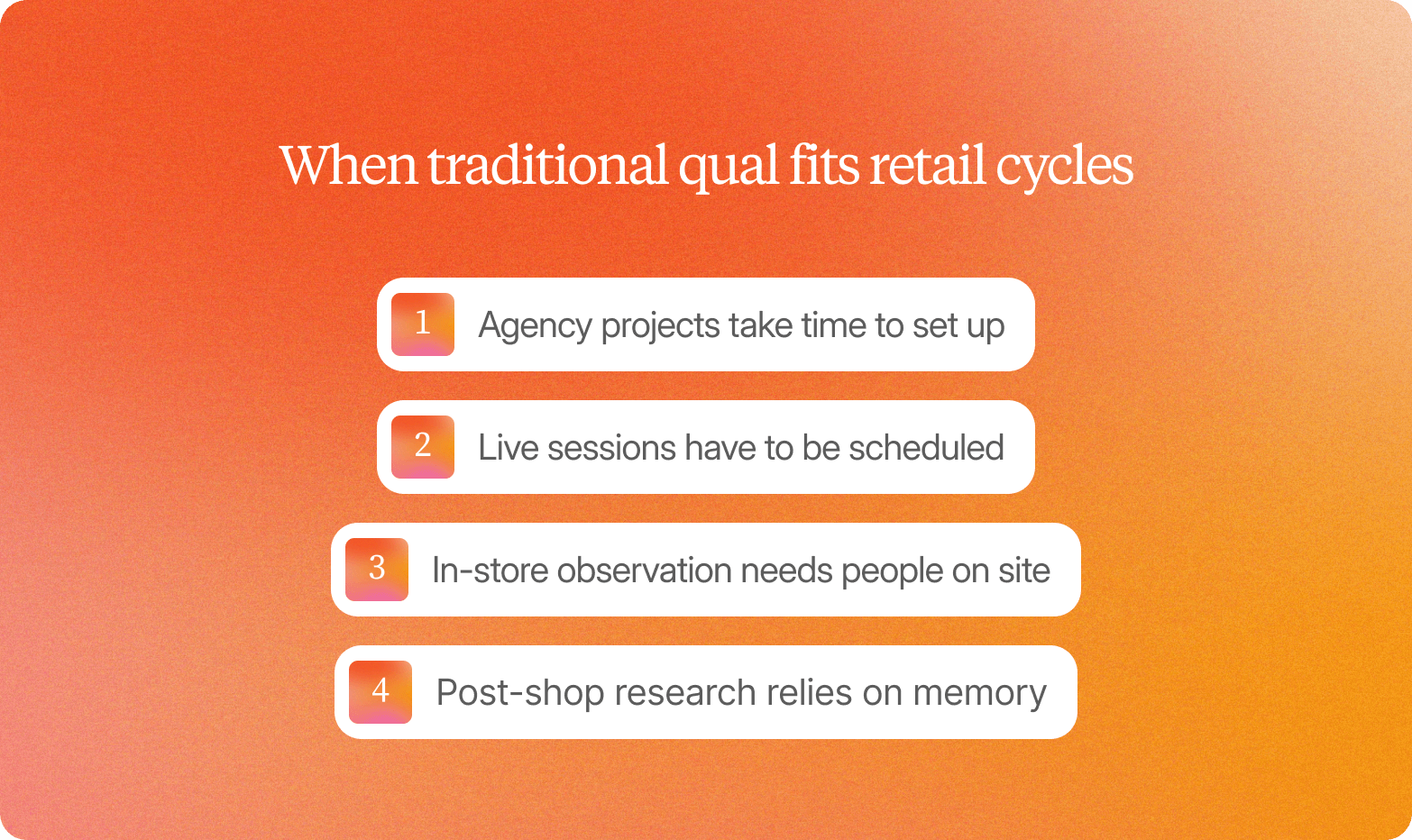
Agency projects take time to set up and deliver. Recruitment has to be coordinated before the research can run, and analysis follows afterward. The answer can arrive after the team has already had to make the decision.
Live interviews and focus groups have to be scheduled. The researcher and participants need to be available at the same time, which makes it harder to quickly run another round when a new question arises.
In-store observation requires people on the ground. Researchers need access to the relevant stores, making it harder to run the same research across different markets at once.
Research after the shopping trip depends on what shoppers remember. Someone may remember which coffee they bought but not that they considered another pack first or nearly changed their mind because of a promotion.
If you need to understand why shoppers are responding to a new pack before next month's rollout, waiting for a traditional research project may mean getting the answer too late to use it.
How AI-Moderated Interviews Keep Pace With Retail Decisions
AI-moderated interviews give retail companies an ongoing picture of what shoppers think and feel, and how those views change over time.
See it in action: How AI-Moderated Interviews Work
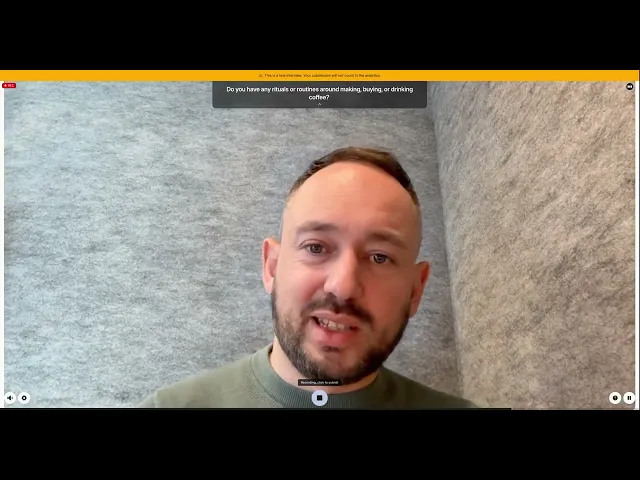
Because retail customer research can run continuously, insights teams can answer new questions as they arise, rather than waiting for the next research project. Here’s how:
Run large-scale research without scheduling interviews. Studies can include hundreds or even thousands of asynchronous video interviews running in parallel. Participants take part when it suits them, making it practical to gather feedback across different markets or customer groups within the same planning cycle.
Ask follow-up questions automatically. The AI moderator adapts each interview based on what the shopper says. If a shopper says, “I'd probably choose the cheaper one,” the moderator can ask what makes the price difference matter.
Show shoppers what you're testing. Teams can share packaging or promotional material during the interview and ask shoppers to react. That creates a richer picture than gathering customer feedback in a survey.
Review the evidence behind every finding. Multimodal analysis combines voice and behavioral signals to provide context beyond what a transcript alone can. Every finding links back to the original video clip from a real participant, so researchers can check the evidence themselves.
From merchandising and pricing to product development, continuous retail shopper insights support decisions across many teams. The examples below show what that looks like in practice.
"Within days we had insights that would've taken a traditional agency a month"
Head of Customer Insights, JDE Peet's
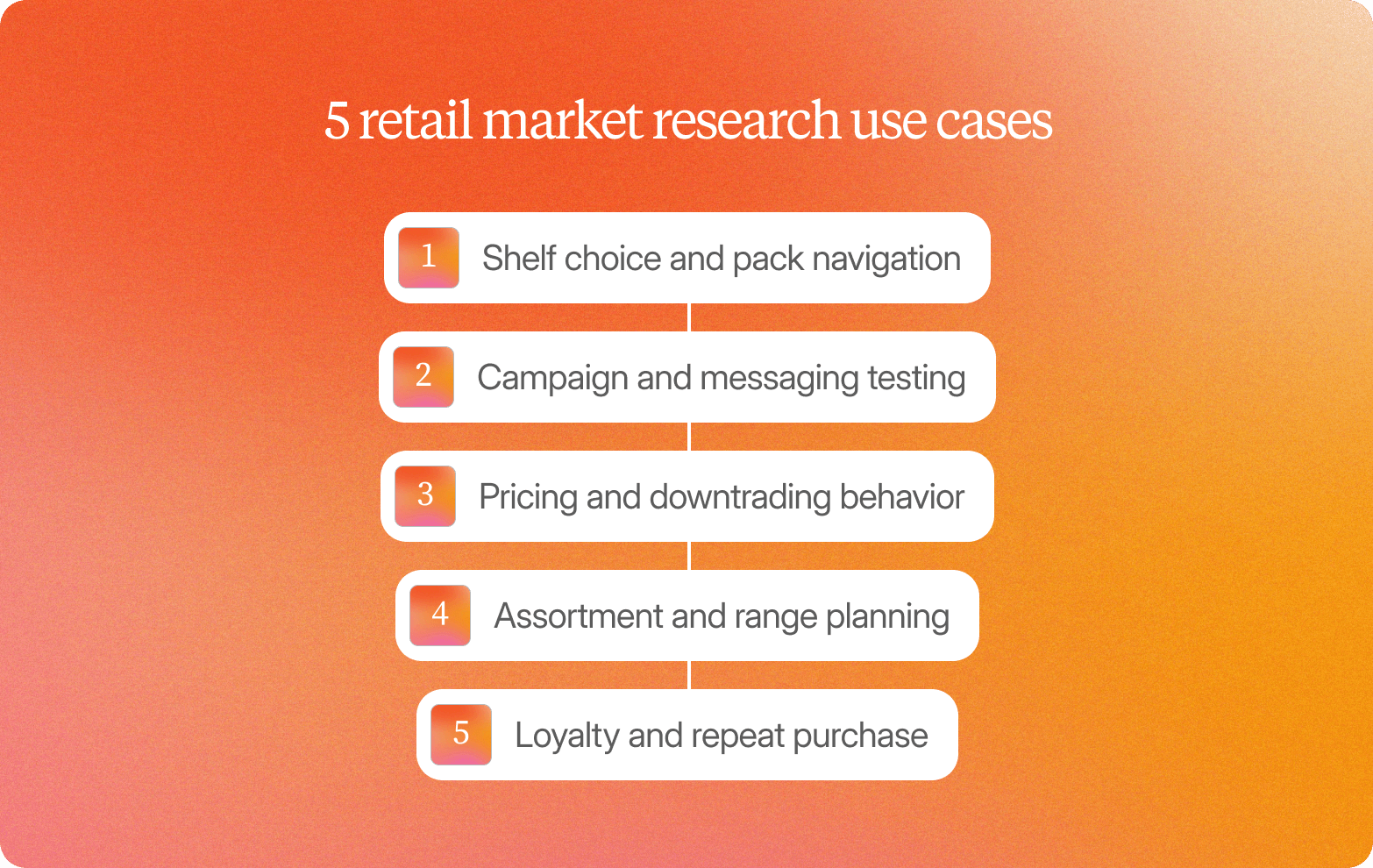
Use Case 1: Why Shoppers Choose One Product Over Another On The Shelf
Retailers and brands need to understand how shoppers navigate a shelf before changing a display or pack design. Video interviews let teams show shoppers the same shelf or packaging stimuli and ask them to talk through their choices. Follow-up questions can then uncover what caused someone to hesitate or change their mind.
For example, say a coffee brand wants to understand why shoppers are overlooking a particular range at the supermarket. During an interview, a shopper initially chooses one pack, then notices a promotional sign and changes their mind. The AI moderator can ask what caught their attention and why it changed their choice.
If another shopper keeps moving between two packs before choosing one, the moderator can ask what they're comparing. The answer might reveal that they can't tell the products apart or that an important claim isn't as visible as the brand expected.
The brand can use those findings to decide what needs to change. Each finding links back to the original shopper video, so anyone on the team can review what the shopper said. On the next wave of research, you can see if the confusion went away, with the earlier research still accessible as your baseline.
Use Case 2: Getting Customer Feedback On Marketing Campaign Messaging Before It Launches
A marketing campaign message can drive customer engagement without being strong enough to change what someone buys. Video interviews give marketing teams more room to test that response by asking shoppers what a claim means to them and whether it gives them a genuine reason to act.
For example, say the same coffee brand wants to test a campaign idea. The concept describes the coffee as "barista quality at home." A shopper says they like the message, but when the AI moderator asks what "barista quality" means to them, they struggle to explain it. Asked whether the claim would make them switch brands, they admit that it doesn't sound very different from what their current brand already promises.
The team can test another concept at the same time and see whether shoppers provide a more compelling reason to respond to it. Because the interviews run asynchronously, different concepts can be tested in parallel while there’s still time to change the campaign.
"The pace, responsiveness, and research expertise of the Conveo team, on top of the top AI-moderated qual platform, have been invaluable to us in scaling brand advertising internationally."
Matt Harris, Research & Insights Lead (EMEA), Canva
Use Case 3: Understanding Shifts In Customer Demand Toward Cheaper Products
Retail business intelligence software can show when shoppers start buying cheaper products, but sales data doesn't explain what they're weighing up when they make that choice. Qualitative interviews can provide that context by showing how price affects shoppers' choices.
For example, say a grocery retailer notices more shoppers choosing cheaper coffee. Within the interview sample, the research team can see how often price concerns come up. They can then explore what those concerns mean for individual shoppers.
One shopper might say their usual coffee has become too expensive. A follow-up reveals that they haven't stopped buying it completely. They now wait for a promotion and choose a cheaper alternative between purchases.
This context can help pricing teams understand patterns they are already seeing in sales data or quantitative models so they can prioritize next steps.
Use Case 4: Deciding Which Products Deserve Shelf Space
Range decisions depend on understanding what role different products play for shoppers. When teams are deciding which products to keep or whether a new one adds something useful, previous consumer research can provide important context
For example, the coffee brand might want to explore whether a new product is different enough from its existing range to take to retailers. Conveo's Knowledge Layer connects findings from every existing study, recognizing when the same themes and shopper groups recur so the team can compare them. Earlier shelf research might show that shoppers already struggle to tell two of the brand's products apart.
That gives the team a useful starting point for the new study. Instead of asking the same questions again, they can focus on whether shoppers understand what makes the new product different and where they see it fitting within the range.
Previous findings remain connected to the original participant evidence, so the team can check the context before using them in a new decision. As more research is completed, the Knowledge Layer gives each new study a stronger starting point.
Use Case 5: Finding Out What Impacts Customer Loyalty And Repeat Purchases
Customer experience research becomes less useful when teams only get a snapshot once a year. Running interviews in recurring waves helps teams see when the shopper experience starts to change, giving them a chance to investigate emerging problems earlier.
For example, say the coffee brand wants to understand whether shoppers keep buying a product after trying it. Conveo's StoryLines runs this as a continuous program in waves, analyzing what shifts between them and surfacing the reason behind the change.
Early interviews might show that people who try the coffee intend to buy it again. A later wave could reveal that some have stopped because they can't reliably find their preferred pack in store.
That gives the brand a reason to investigate distribution or availability with its retail partners before purchase frequency declines become obvious in customer loyalty data.
Building an Always-On Retail Research Cadence for Understanding Customer Behavior
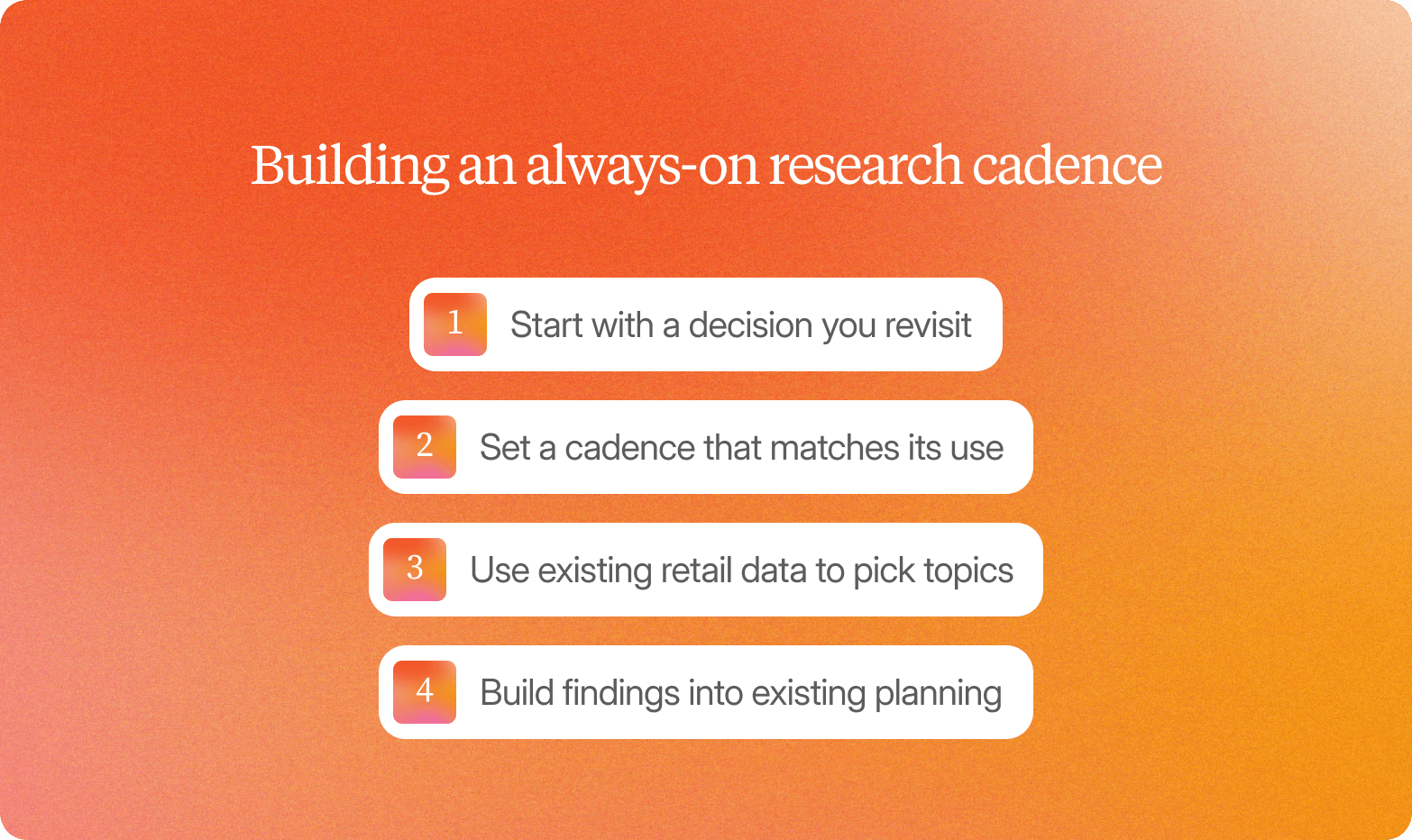
Moving to always-on customer intelligence doesn't mean continuously researching everything. The goal is to identify the shopper questions that recur in retail planning and create a regular way to keep the evidence behind them up to date. Here’s how retail, brand, and CPG insights teams can build that cadence step by step.
1. Start With a Decision You Revisit Regularly
Look back at your last few planning cycles and note which questions keep appearing in research requests or as recurring agenda items. For example, a CPG brand might regularly need to explain why shoppers are switching to cheaper products, or whether the reasons people choose its brand are changing.
Choose one of these recurring questions as your starting point. It's easier to establish an always-on program around something the business already needs to understand repeatedly than to create a new research agenda from scratch.
2. Set a Cadence That Matches How You'll Use the Research
Decide how often the evidence needs to be refreshed. StoryLines can run new waves of interviews every two weeks or once a month. A team could, for example, speak to around 600 consumers every two weeks and use each wave to build a more current picture of its category.
The research cadence doesn't need to match every planning meeting. A merchandising team making weekly decisions can draw on evidence accumulated in recent waves rather than commission a new study each week.
3. Use Your Existing Retail Data to Decide What to Explore
Retail business intelligence solutions already provide teams with data that can prompt new research questions. A category manager might spot a change in a key performance indicator or an unexpected pattern in point-of-sale (POS) data. Historical sales data might show that customer demand for a product is falling.
The team can use an upcoming research wave to investigate what might be behind that change in your retail BI data. For example, interviews could explore whether shoppers now see better value elsewhere or whether their needs within the category have changed.
StoryLines works alongside the reporting stack you already have. Your business intelligence tools and customer relationship management platform tell you what changed. StoryLines tells you why, in shoppers' own words, wave after wave.
4. Build the Findings Into Existing Planning
Decide where each wave will be reviewed and who needs to see it. StoryLines delivers the findings as a stakeholder deck, including a thematic summary and a quote reel, along with the underlying evidence and suggested next steps.
The aim is to make current shopper evidence part of the planning process teams already use. As the next cycle begins, teams have recent consumer intelligence research to put alongside their business data and can decide what the next wave needs to explore.
How Brands Use Conveo for Continuous Retail Business Intelligence
Running research continuously only works if teams can trust the results, build on previous studies, and meet the requirements of an enterprise research program. Here’s how Conveo’s always-on consumer understanding makes that possible:
Evidence stakeholders can check. Every finding links back to the original participant clip, so anyone reviewing the research can see what was said and the context around it. Conveo is also built by experienced researchers, bringing research expertise into how studies are designed and findings are produced.
Previous research stays useful. Conveo's Knowledge Layer connects findings across studies, so teams can check what they already know before deciding what needs fresh research. Each new study adds to that evidence base rather than sitting separately from the work that came before it.
Recruitment is built into the process. Teams can recruit through Conveo's eight integrated panel providers or bring their own participant list. That removes the need to arrange recruitment separately when reaching a new market or audience, while still giving teams the option to research their own customers.
Enterprise data requirements are covered. Conveo is SOC 2 Type II certified and GDPR compliant, with EU regional data hosting available for teams with European data requirements.
Findings arrive while there's still time to act. Qualitative findings can come back within days, so packaging research can inform a design before production or campaign research can shape messaging before you commit media spend.
Frequently Asked Questions
How do retail and brand insights teams get to the "why" behind shelf choice and brand switching without expensive in-store ethnography?
Remote video interviews let teams show shoppers shelf images, packaging, or other stimuli and ask them to explain their choices. An AI moderator can follow up on an individual response to understand why someone rejected one product or switched to another.
What should I look for in market research for retailers if I need shopper context, not just transaction and loyalty data?
Retail data like customer satisfaction scores, customer retention or sales growth rates can tell you what happened, but qualitative research helps explain why. Look for a research platform that lets shoppers describe the context around the raw data and gives researchers access to the original evidence behind each finding. That makes qualitative research a useful complement to business intelligence in retail operations. Transaction data might show market trends, for example that a customer segment is buying a product less often, while interviews can help explain what changed about their needs or choices.
How are teams combining existing customer data with qualitative research to explain price sensitivity and downtrading?
Teams can use existing customer data to identify patterns and qualitative research to investigate what might be driving them. A retailer might see in its POS systems data that shoppers are moving toward cheaper products, then interview shoppers to understand the trade-offs behind that change. The interviews might reveal that some shoppers are waiting for promotions rather than abandoning their preferred brand completely. Those findings add context to the data analysis and can help teams make better-informed inventory and pricing strategies.
If I want continuous shopper understanding rather than quarterly studies, what does a realistic always-on program look like?
Always-on research doesn't require running a new study every week. Teams can run waves of shopper interviews every two weeks or once a month, building a current body of qualitative evidence that complements their existing retail data. If a team spots a change in sales performance or another key metric, it can explore that question in an upcoming wave. The research doesn't automatically monitor retail business intelligence dashboards or other BI tools. It gives teams a regular way to investigate the customer behavior behind changes they identify themselves.
How do you validate "why" findings from remote or digital qual research so stakeholders trust it as much as in-person store work?
Stakeholders should be able to check the evidence behind a finding rather than relying only on an AI summary. In Conveo, every finding links back to the real participant and original video clip, so teams can review what was said and the context around it. That traceability also helps with data quality. If a conclusion seems surprising, the research team can go back to the underlying evidence before turning it into actionable insights or using it to support a decision.
How do you make shoppers' account of pack choice, shelf navigation, and substitutions reliable enough to act on, without full in-store ethnography?
Give shoppers something concrete to respond to rather than relying only on their memory of a previous shopping trip. Teams can show shelf or packaging stimuli during an interview and ask shoppers to talk through what they notice and which option they would choose. The AI moderator can then probe the response. If someone changes their choice after noticing a promotion, for example, it can ask what changed their mind.

About the author
Florian Hendrickx
Head of Growth
Florian is Conveo’s Chief Growth Officer, leading growth strategy and go-to-market execution as the company scales. He’s held growth leadership roles at companies like Deliverect, Robovision, and Aikido Security, and brings hands-on experience across marketing, sales, and product.
More by Florian →Qualitative insights at the speed of your business.
Conveo runs AI-moderated video interviews and structures everything they say.