In this article
TL;DR
Best for: UX researchers and product teams running continuous discovery who need flexible methods without a separate study setup for each question type.
Most teams default to one or two UX research methods because switching methods means starting a separate research project, not because those methods match the research goals in front of them.
Behavioral questions get asked in user interviews, and attitudinal questions get tested in usability sessions. The method ends up deciding the answer before the research question does.
When findings don't persist between studies, every sprint starts from zero: no searchable archive, no connected themes, no institutional memory.
Conveo supports multiple user research methodologies against one accumulating participant base and insight library, so method choice becomes a tactical call instead of a project-planning event.
Most UX research methods are chosen the way most decisions are made under pressure: by defaulting to what is already in place. A team comfortable running user interviews reaches for interviews when a behavioral question surfaces. A team with a usability testing workflow runs usability sessions when what it needs is attitudinal depth.
The mechanism is straightforward. Starting a new method type means starting a new study from scratch: a separate recruiting brief, screener, consent flow, and research synthesis pass. For a UX researcher serving several product teams inside a two-week sprint, that overhead is enough to make the familiar method feel like the right one.
The cost compounds quietly. Teams end up with quantitative data when they need the qualitative explanation behind user needs, or attitudinal themes when they need to observe how users interact with the product. Neither gap is obvious until a product decision lands badly.
The solution is to remove the friction that makes method switching feel like a separate project. When user research methods share a participant base, a study setup, and a cumulative findings library, method choice becomes a research design decision instead of a logistical one.
Conveo's position is specific: the question should pick the method, and continuous discovery only holds up when switching methods carries no setup penalty. What becomes possible, then, is user experience research that fits the question being asked.
How UX research methods are typically classified
Most frameworks for classifying UX research methods organize along three axes.
| Axis | What it separates | The question it settles |
|---|---|---|
| Qualitative vs. quantitative | Qualitative research explores why target users behave as they do. Quantitative research measures what they do and how often, usually through surveys, analytics, and A/B testing | Why is this happening, or how often does it happen? |
| Attitudinal vs. behavioral | Attitudinal research captures what people say they prefer about a product or service. Behavioral research observes what they actually do, ideally in the natural environment where the product gets used | What do people say, or what do they do? |
| Generative vs. evaluative | Generative research methods uncover problems worth solving. Evaluative methods test whether a proposed solution works. Ethnographic research sits at the far generative end, trading sample size for depth of context | Are we solving the right problem, or solving it well? |
These frameworks are genuinely useful. They give UX researchers a shared vocabulary and a principled basis for matching research techniques to questions. When a product manager asks whether a new onboarding flow is confusing, the framework points to usability testing rather than a series of generative interviews. That clarity has real value for anyone conducting user research inside a fixed decision window.
The problem is that classification does not equal execution. Knowing which user experience research method fits a question is a different skill from having the capacity to run it within the decision window. A two-week sprint does not pause while a team recruits test participants, builds a discussion guide, schedules sessions, transcribes recordings, and works through data analysis by hand.
So teams default to the methods they already know how to run. Familiarity wins over fit, because each unfamiliar method carries its own recruiting logic, consent flow, moderation approach, and research synthesis process. No stack of UX research tools removes that on its own, because the barrier sits in study setup. Classification is the straightforward half of method selection: the framework does the thinking, and the execution barrier makes the actual choice.
Core UX research methods and when to use them
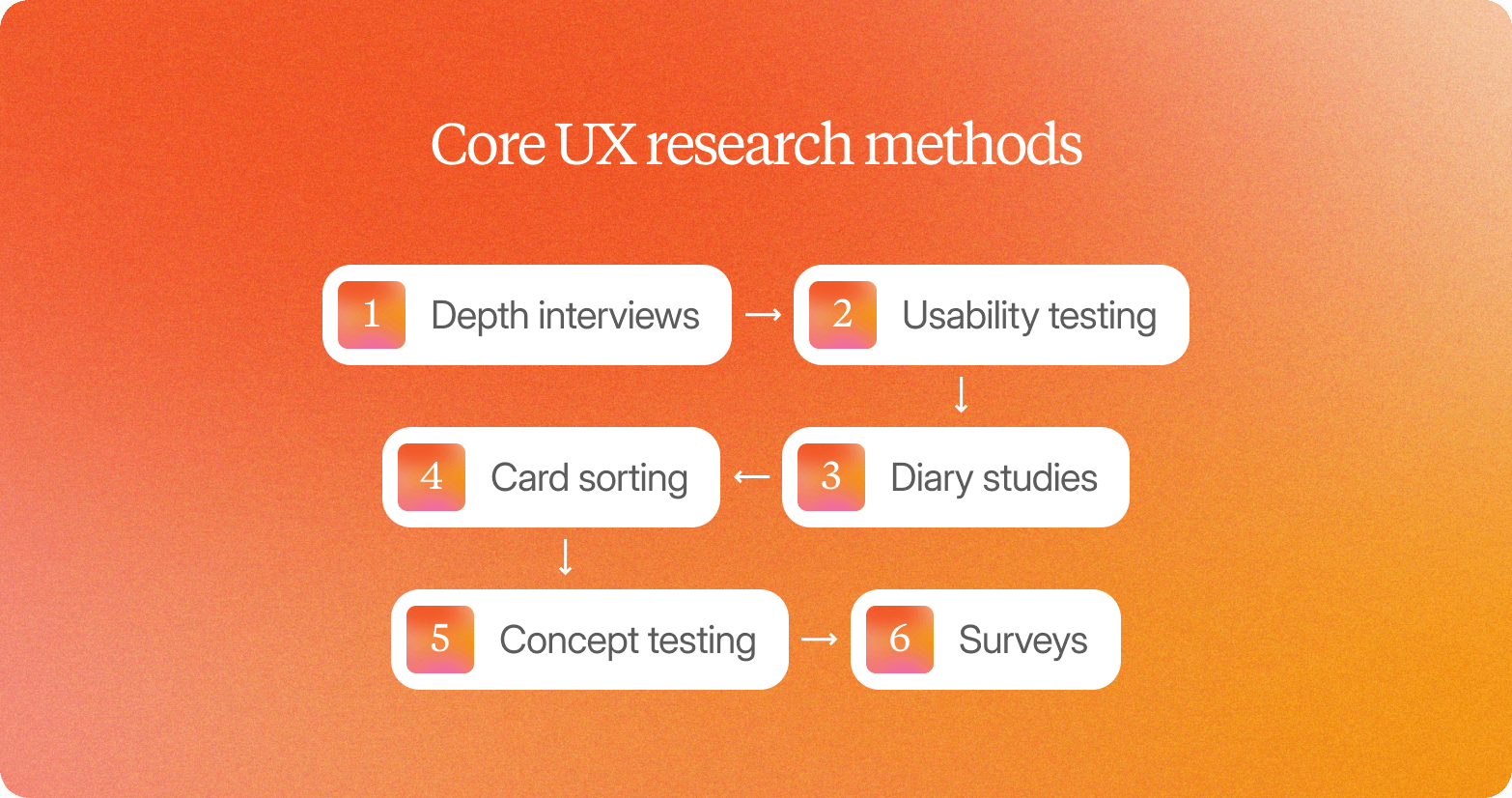
Six core methods cover most of what product teams need. Matching the right UX research method to the question is the first decision any team makes when a study surfaces, and it sets the ceiling on how useful the research data will be.
| Method | What it is | Use it when |
|---|---|---|
| Depth interviews | One-on-one user interviews that explore motivations, decision processes, and the context behind behavior | You need to understand why target users act a certain way, rather than only what they do |
| Usability testing | Structured observation of real users attempting to complete tasks with a product or prototype | You need to see how users interact with the user interface, and where friction or confusion appears before it reaches production |
| Diary studies | Longitudinal self-reporting where participants log experiences and behaviors over days or weeks | The behavior unfolds gradually in the participant's natural environment and will not fit inside one session |
| Card sorting | An exercise asking participants to group concepts or labels into categories that feel intuitive to them | You are designing navigation, user interface structure, or content taxonomy and need to know how different user groups expect information to be organized |
| Concept testing | Early ideas, prototypes, or stimulus shown to participants before development resources are committed | You need to gather feedback on whether an idea is worth building, rather than a polished evaluation of something already built |
| Surveys | Closed-ended questions distributed across a large sample, usually through a survey tool that handles routing and quotas | You need quantitative signals at scale and can trade the "why" for breadth of coverage |
Five things the table leaves out:
Teams conduct usability testing on live flows and early prototypes alike. Qualitative usability testing adds the reasoning behind each stumble, because participants narrate what they expected to happen.
Diary studies yield verbal and written feedback that a one-hour session cannot structurally capture. As a qualitative research method, it trades session control for a truer view of routine.
Card sorting sits early in the UX design process, and tree testing is its natural counterpart: card sorting builds the structure, and tree testing checks whether people can find things inside it.
Focus groups have traditionally filled the concept testing slot, and they still generate ideas quickly, though the loudest voice in the room tends to shape what gets said.
Concept testing is the cheapest point in the design and development process at which to learn how users perceive a proposition. Surveys are the standard instrument for measuring user satisfaction over time.
Knowing which user research methods fit a given question is the more straightforward half of the problem. The harder half is having the operational capacity to run the right method inside the window the decision allows.
Most sprint-based teams have one or two methods they can stand up quickly, because the recruiting approach, consent flow, screener, and synthesis workflow already exist. When the question demands something different, starting a new method type means building a new research project from scratch: new participant criteria, a new recruitment channel, a new moderation guide, and a new analysis process.
The result is a quiet form of research distortion. Teams use depth interviews to answer questions better suited to diary studies, and they field surveys when they need a usability session. None of the six methods above is obsolete. The overhead distorts the choice. The method a team picks reflects its operating constraints more than its research judgment.
Choosing between methods: decision criteria beyond definitions
Most teams do not conduct UX research by working through a decision tree. They choose based on what they can execute before the sprint closes or the roadmap meeting lands.
Four criteria shape that decision in practice. The UX research process runs more smoothly when teams rank them in operational order, starting with the research goals, rather than treating them as equally weighted.
| Criterion | The question to answer | What it does to the timeline |
|---|---|---|
| Recruiting effort | How tightly defined are the target users? | Any active user can launch in days. A specific failure event in a specific window, such as abandoning onboarding in the last seven days, can take two to three weeks to fill. A broad target audience buys speed and costs precision |
| Scheduling constraints | Does every session need a shared calendar slot? | Live moderation caps most teams at 10-15 sessions before logistics become the project. Asynchronous sessions remove that ceiling |
| Analysis turnaround | How fast does the data collected need to turn into a decision? | Video synthesis takes longer than survey tabulation, and buys evidence a stakeholder can verify |
| Stakeholder evidence | Will the finding be inspected, or trusted? | Roadmap prioritization, accessibility, and compliance-sensitive calls need clips and quotes. Lower-stakes decisions accept summary themes |
Two of these deserve more than a row. On scheduling, asynchronous moderated interviews let participants complete sessions on their own schedule, so a team can conduct user interviews with 50 or 100 people in the window a live study would need for 12.
On evidence, the tradeoff with video is defensibility. Every claim links to a timestamped clip and a verbatim quote, which is what a product manager needs to point to when justifying a six-month investment to a skeptical engineering lead.
The practical move is to stop treating these criteria as four separate studies. Conveo supports multiple UX research methods within a single accumulating body of participants and findings, so selecting a different method for a follow-up question does not mean starting over. Rank the four before the method debate starts, and the decision usually resolves itself in one conversation. In our experience, the most valuable insights come from the method a team can actually run while the decision is still open.
Combining methods: mixed-method research as standard practice
The traditional two-study approach in UX research follows a familiar and expensive pattern:
A quantitative signal surfaces in usage analytics. Say 58% of users abandon onboarding at step three.
The team commissions follow-up interviews to understand why.
Those interviews take weeks to recruit, run, and synthesize.
The product team ships a fix based on the drop-off metric alone before the qualitative explanation arrives.
That sequencing is the real cost, more than the budget for two studies. The gap sits between the decision and the evidence.
Mixed-method research closes that gap by collecting quantitative data and qualitative explanations from the same participant in the same sitting. A well-designed onboarding study collects three things in one session:
Behavioral signal: participants complete tasks in the flow while thinking aloud
Quantitative signal: a confidence rating at each step, on a structured scale
Qualitative explanation: probing the moments where they hesitated
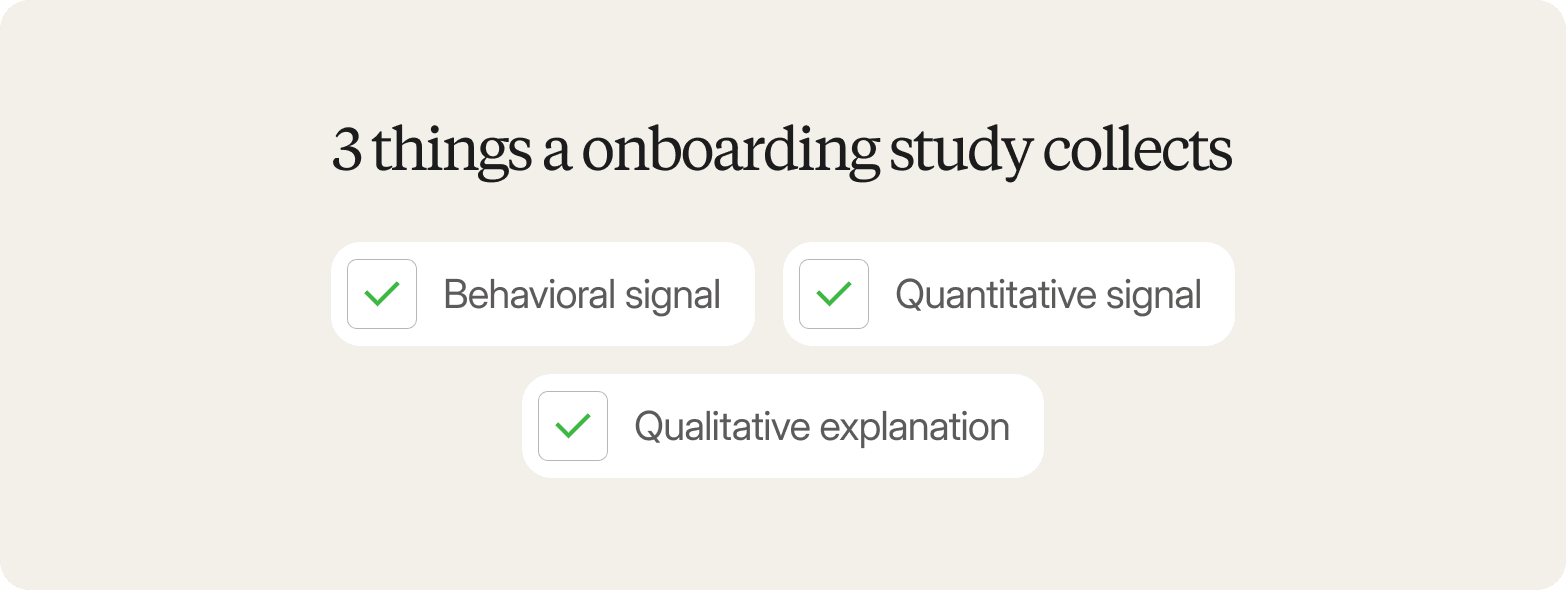
One session, one recruitment effort, and a two-study timeline compressed into one. Findings arrive while the decision is still open.
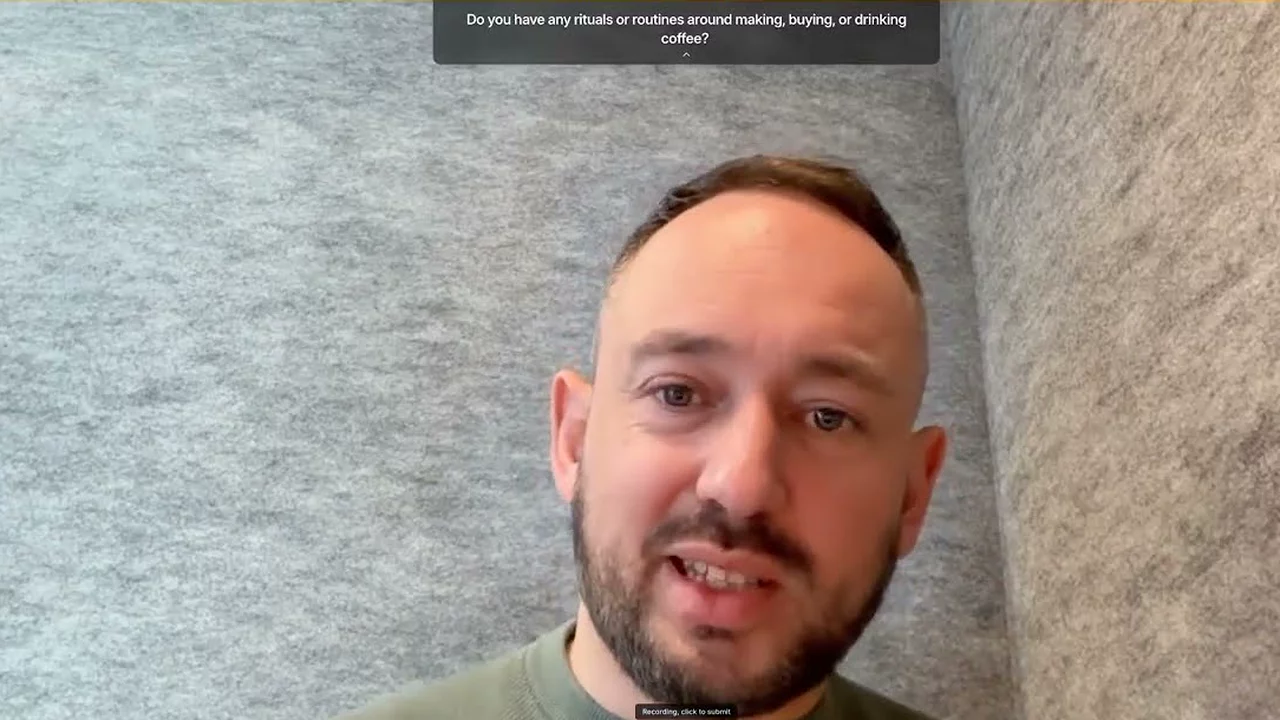
Researchers running mixed-method sessions in Conveo move between closed-ended rating questions and open-ended probing within a single session because the AI research assistant follows what a participant actually says rather than a fixed script. When someone gives a low confidence rating at step two, the probing logic surfaces the reason there and then. The qualitative data and the numbers come from the same person about the same moment, which is what makes the two halves comparable.
See it in action: how the AI research assistant probes inside a live session:
For teams running continuous discovery, that is the difference between data that describes a problem and understanding that points to user-centered solutions.
Modern remote realities: asynchronous, global, and multilingual research
Most UX research teams are no longer conducting research in a single market, in a single language, during business hours. The user base is global, and participants sit across EMEA, APAC, and the Americas. That collides with the core constraint of live-moderated sessions: every conversation requires a shared calendar slot.
Scheduling
Calendar coordination across time zones, with shift workers, caregivers, or other hard-to-schedule segments, is where research timelines quietly collapse. Asynchronous user research methods resolve this directly: participants receive a link and complete the interview on their own schedule, whether that is 7 a.m. before a commute or 10 p.m. after the kids are asleep.
Removing scheduling friction does more than save coordinator hours. It opens the sample to user groups that live-moderated research structurally excludes, and it lets studies run at a scale calendar-bound methods cannot reach. Teams report moving from weeks to days after switching from live moderation to asynchronous, AI-moderated interviews, because sessions run in parallel across markets and time zones rather than one at a time. Some teams complete 100 interviews in three days this way. Remote testing also changes the cost base, since asynchronous interviews and unmoderated user testing both run without travel, facilities, or a booked lab.
Language
A global product needs research in the languages its users speak. Multi-market qualitative work has long been one of the most expensive lines in a market research budget, because hiring native-speaking moderators for each target market extends both timelines and costs.
Teams running multilingual research in Conveo interview participants in 50+ languages without standing up a moderator team per geography. The AI research assistant probes adaptively in the participant's own language, and the researcher shapes the guide and interprets the findings. Language coverage becomes part of the research design.
Governance
Video recordings, verbatim transcripts, and other research data need to be stored and shared securely, particularly in regulated industries. Conveo is SOC 2 Type II certified, GDPR compliant, and EU-hosted (Belgium), which addresses the blockers that otherwise stall procurement reviews before a study launches.
The takeaway for distributed teams: geography and language stop shaping the sample once sessions no longer depend on a shared calendar slot.
Maintaining rigor: traceability, consent, and audit-friendly evidence
The governance concern that surfaces most often around UX research methods at scale is straightforward. Stakeholders cannot verify that AI-synthesized findings trace back to real users who actually said them. When a roadmap decision rests on a thematic cluster, a product manager or legal reviewer needs to know whether that theme reflects genuine participant voices. Without a clear evidence trail, findings get challenged, deprioritized, or quietly ignored.
The requirement is concrete. Every claim should link to:
a timestamped video clip
a verbatim quote in the participant's own words
a participant ID
That chain, from theme to quote to recording, is what makes a finding defensible. Teams running Conveo sessions keep every session recorded in full, with each response timestamped and linked to the participant who gave it. When a product manager challenges a finding, the researcher pulls the exact clip where three test participants described the same friction point.
Consent and PII handling are handled within the platform, removing that burden from the research team. Participants consent to recording as part of the session flow; recordings are stored with access controls, and PII redaction is available in the platform. Conveo is SOC 2 Type II certified, GDPR compliant, and EU-hosted (Belgium), which is what makes the evidence trail hold up in research governance and compliance reviews.
The standard by which to hold any of these research methodologies is auditability: a finding a stakeholder can inspect is worth more than a finding they have to trust.
Continuous discovery: Running UX research as a system, not a series of one-off studies
Most UX research programs run as a series of discrete projects. A question surfaces, a study gets scoped, recruiting starts from scratch, and weeks later findings land in a slide deck that gets referenced twice. The next time a similar question surfaces, the process starts over.
The compounding opportunity sits in changing that structure. When every study feeds into an accumulating body of findings, the UX research process no longer resets with each new project. Teams query past findings before designing a new study, and spend their time testing forward hypotheses rather than re-establishing a baseline understanding of user needs.
"I don't think it's the case anymore that doing research has to be this big investment in time and money, mainly time, this chore that slows everything down. I think it can be a resource that you can just, and should just, tap into constantly and frequently as you're making decisions."
Matt Harris, Research & Insights Lead, Canva
The mechanism that makes this work is the searchable insight library. A searchable insight library is a single repository where every interview, synthesized finding, and video clip from every study stays queryable by segment, theme, or verbatim language. The unit of retrieval is the participant's own words, which a folder of past reports cannot offer.
In practice: a team researching onboarding friction queries the library for past conversations with users who abandoned sign-up, reviews what those participants said in their own words, and designs the new study to test hypotheses grounded in real language. The difference between a team on their fifth study and a team on their fiftieth is the depth of context available before a single participant is recruited.
For teams that need an ongoing read of their market, beyond a one-off answer, Conveo StoryLines runs continuous programs in chapters and waves, for example, every two weeks or monthly per market. It sits as the understanding layer between waves, surfacing where a theme is strengthening or fading, which is a different job from repeating a research project on a timer.
The benefit shows up twice. Operationally, follow-up studies take days rather than weeks, because recruiting profiles, screener logic, and context are already in place. Strategically, a team that has run 50 studies through Conveo holds 50 studies' worth of connected context, which makes research an input to the product development process rather than a periodic report.
How Conveo removes the setup penalty on method choice
The problem this article describes, method selection constrained by execution overhead rather than research design, is what Conveo is built to address. When the choice of method is a logistical decision rather than a research one, the quality of understanding suffers before a single participant is recruited.
Conveo supports always-on consumer understanding by removing that friction. Five things run in one place:
Study setup
Participant recruitment through Conveo's integrated panel network
AI moderation
Transcription
Data analysis
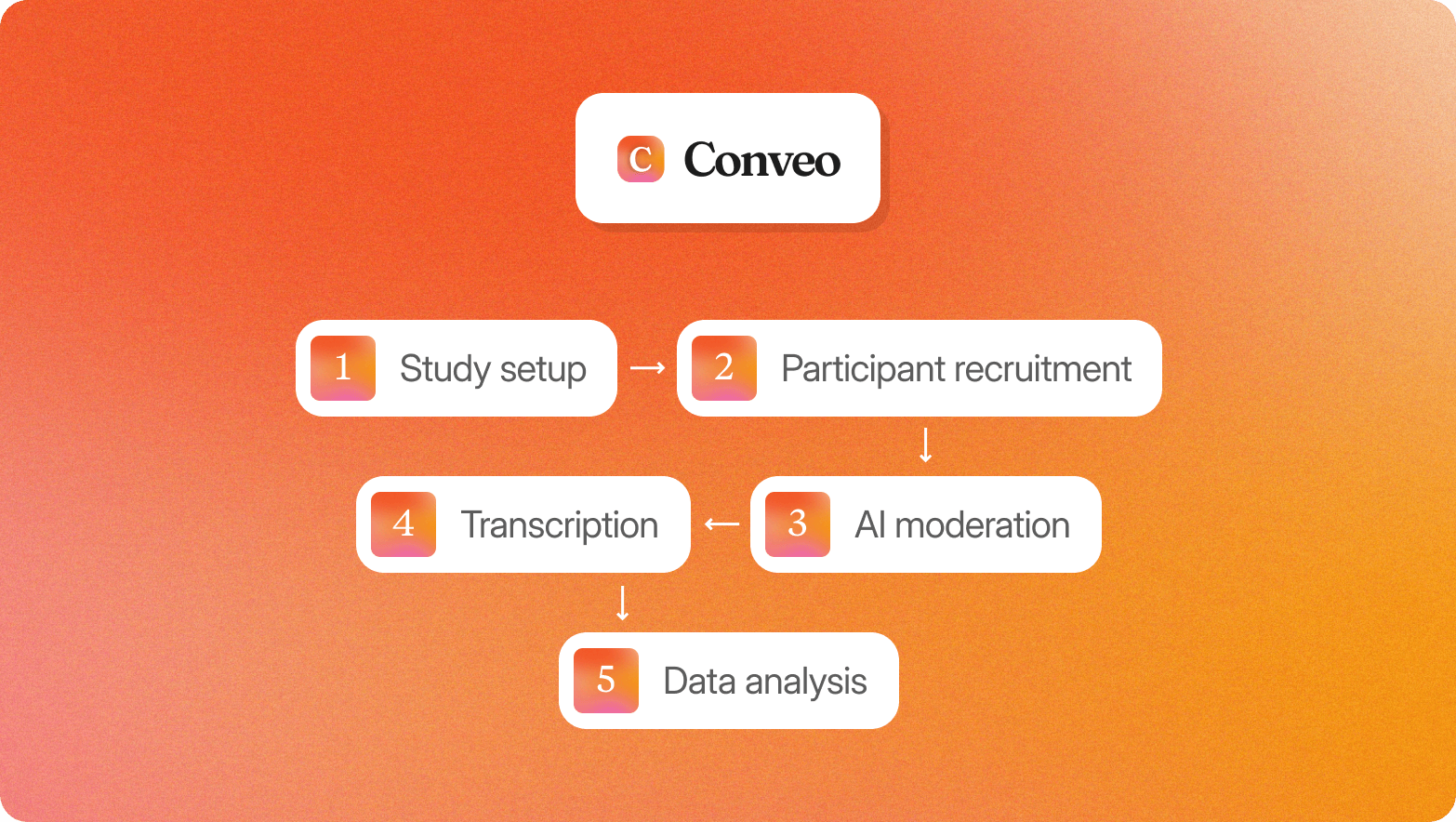
Switching from a depth interview to a concept test to a ranking question does not require starting a new project.
The rigor argument matters here as much as the efficiency one. Every finding in Conveo traces to a timestamped video clip and a verbatim quote from a real participant. The researcher still sets the research goals, designs the study, and interprets the findings.
The compounding benefit is what separates a research program from a research archive. Every study adds to an insight library that persists across sprints, quarters, and product cycles. Enterprise teams at Google, Unilever, and Canva rely on Conveo to build that kind of institutional understanding across studies.
Frequently Asked Questions
What is the difference between qualitative and quantitative UX research methods?
Qualitative UX research methods explore why users behave a certain way through open-ended conversations, contextual inquiry, and related techniques. Quantitative methods measure what users do at scale, through surveys, usage analytics, and A/B testing. Qualitative data provide richer context but require more time for research synthesis, while quantitative research scales faster and rarely reveals the reasoning behind the numbers. Mixed-method sessions that pair closed questions with AI-moderated probing collect both signals from the same participant in the same sitting.
How do I choose between moderated and unmoderated UX research?
Choose moderated when you need to probe responses, follow unexpected threads, or understand the reasoning behind a behavior. These user research methods serve different purposes: moderation adds interpretive depth, while unmoderated user testing prioritizes scale and speed. The practical constraint with live moderation is scheduling, which caps most teams at 10 to 15 sessions per study, whereas asynchronous AI-moderated sessions run in parallel. If the task is self-explanatory and your question is "how many people experience this?" rather than "why does this happen?", unmoderated is the right call.
What are the best UX research methods for early-stage product development?
Generative research methods work best for early-stage discovery: depth interviews, diary studies, and ethnographic research in the user's natural environment. They surface unmet user needs, workarounds, and decision criteria before a team commits to a solution direction, which keeps discovery ahead of the design process rather than trailing it. The operational challenge at this stage is recruiting, because early discovery often requires a highly specific target audience, such as users who recently abandoned a competitor's product. Conveo's integrated panel network, plus support for custom lists via CSV or QR codes, removes that friction so studies launch in days rather than weeks.
How many participants do I need for qualitative UX research?
For most qualitative research studies, 5 to 15 participants per behavioral segment are sufficient to surface reliable patterns, provided segments are defined before recruiting begins. Segment by decision-relevant criteria, such as purchase triggers, hesitations, and workarounds, rather than by demographics alone, and resist designing for an average user who does not exist. Without that upfront segmentation, even 30 interviews produce noise rather than usable themes. Because AI-moderated interviews run in parallel, recruiting 10 participants across three segments completes in roughly the same calendar time as a 10-person live-moderated study.
Can I combine UX research methods in one study?
Yes, and combining methods in a single study often produces stronger findings than running separate studies, because you collect data of both kinds from the same participant in the same session. A usability study can pair task-completion observation with confidence ratings and follow-up probing at moments of hesitation, without breaking the session into separate phases. That gives you both the behavioral signal and the reason behind it. It also compresses what would otherwise be a two-study timeline into a single study, with no second recruitment effort.
What UX research methods work best for remote teams?
Asynchronous AI-moderated interviews, unmoderated remote testing, and diary studies work best for remote teams because they remove the scheduling friction that makes live moderation impractical at scale. When participants span EMEA, APAC, and the Americas, coordinating calendar availability across time zones becomes a project of its own. Asynchronous methods sidestep this: participants complete sessions on their own schedule, which also tends to produce more candid responses than time-pressured live calls. In practice, a study that would take weeks to complete with live moderation across multiple markets can be completed in days.

About the author
Hendrik Van Hove
Founder & CPO
Hendrik is Conveo’s Chief Product Officer and co-founder. He's extremely passionate about technology and the real positive impact it can bring. Before Conveo, he ran AI strategy projects at McKinsey for the Fortune 2000, working with boards and every function from marketing, to sales to insights.
More by Hendrik →Qualitative insights at the speed of your business.
Conveo runs AI-moderated video interviews and structures everything they say.