In this article
TL;DR
Brand tracking software measures changes in consumer perception, with solutions ranging from agency-run trackers to self-serve platforms and hybrid approaches with AI-moderated interview platforms.
For brand and insights teams building a shortlist, consider how often new data arrives and whether the tool can explain why a metric moved up or down.
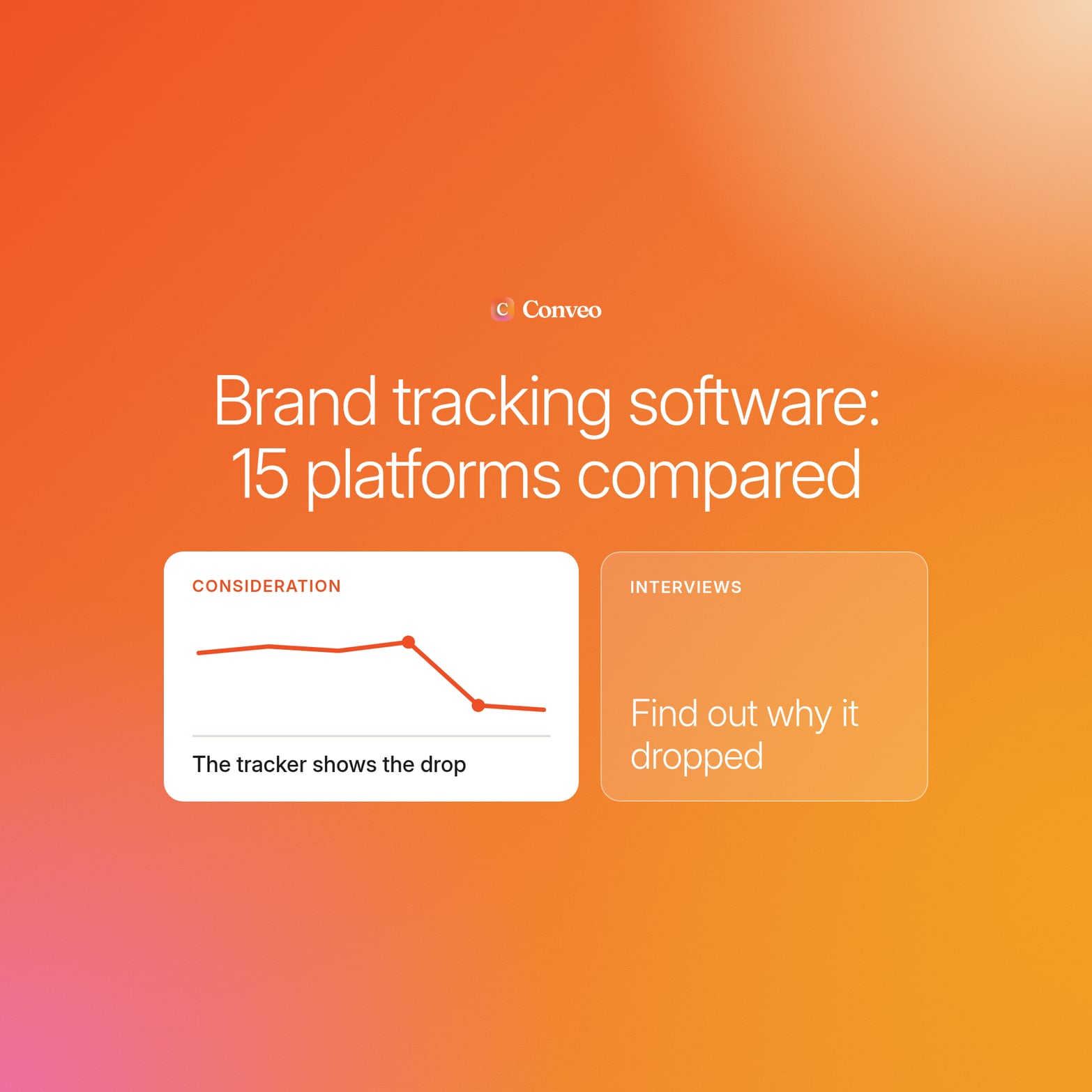
A tracker shows which group moved and by how much, but finding out why usually takes a separate study.
Teams that already run a tracker can add Conveo’s AI-moderated interviews alongside it, so the reasons behind a change arrive in time for the decision.
When you make a change in your business, whether it's launching a major marketing campaign or expanding into a new product category, you need to know whether it changes how people see your brand. Are more people aware of you? Has consideration improved? Do consumers associate you with something new?
Brand tracking software helps you measure these changes over time, but platforms differ in how much they explain behind the numbers, and how easily you can connect brand metrics to business decisions.
This guide compares 15 brand tracking platforms and gives you six criteria for building a shortlist, plus an example of how you might use brand tracking and qualitative research in tandem.
What brand tracking software measures, and what it can’t explain
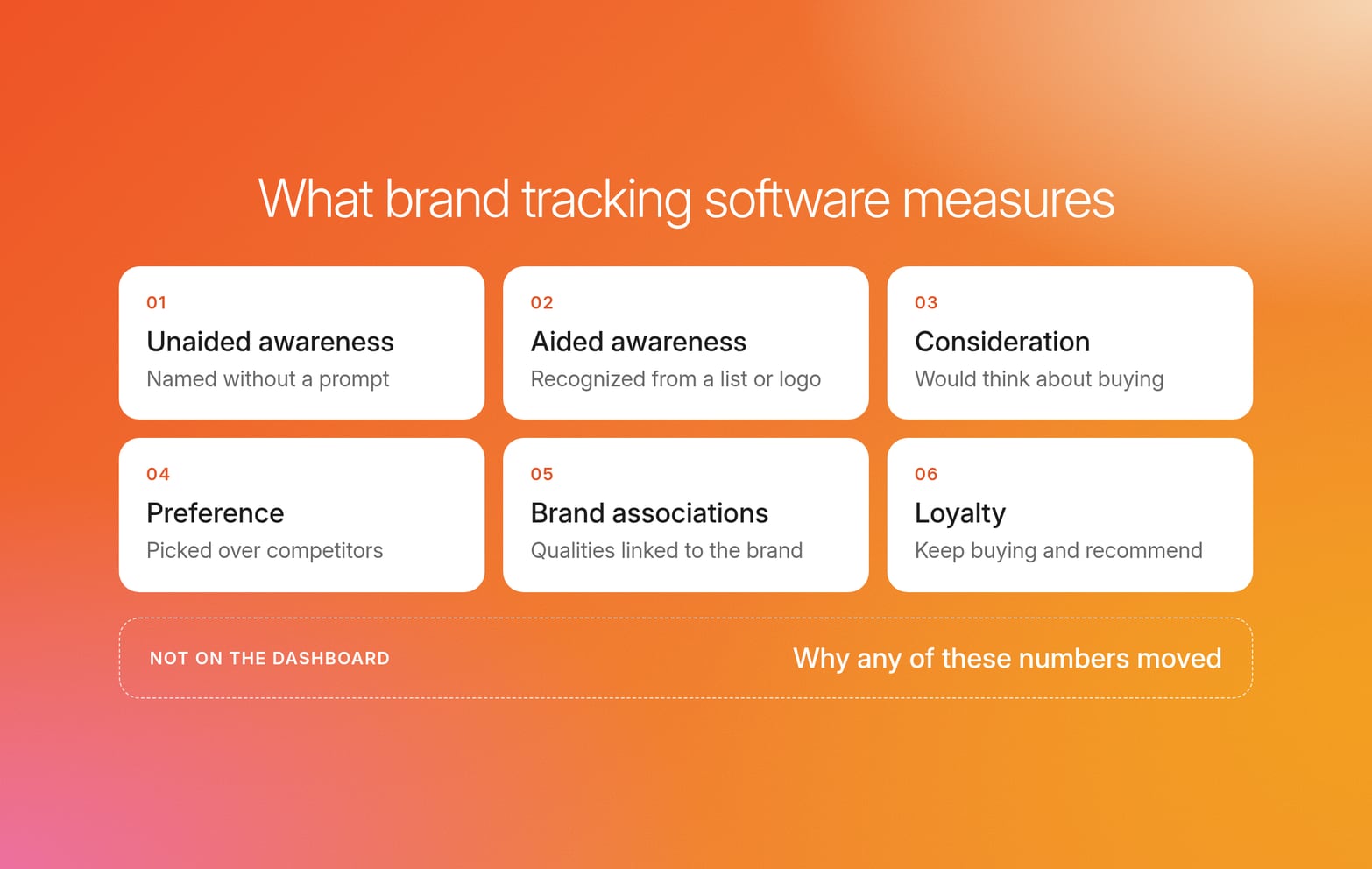
Brand tracking software measures how consumers perceive your brand over time by tracking metrics including:
Unaided awareness. The share of your audience who name your brand without a prompt, for example, when asked which snack brands they know.
Aided awareness. The share who recognize your brand when they see it in a list or a logo.
Consideration. Whether people would think about buying from you the next time they shop the category.
Preference. Whether they’d pick you over the competitors they’re also considering.
Brand associations. The qualities people link to your brand, such as “good value,” “premium,” or “sustainable.”
Loyalty. Whether existing buyers keep choosing you and would recommend you.
The goal for using brand trackers is to see how your campaigns, competitors, or changes to things like pricing impact how consumers see you, and to spot those changes early enough to influence them.
Brand tracking software shows you which brand health indicators moved and for which group, and some tools go part of the way toward explaining it. But for the most part, you’ll need to run a separate study to understand the reason behind the change, which you may not get until weeks after a drop in brand health data.
6 criteria for comparing brand tracking software
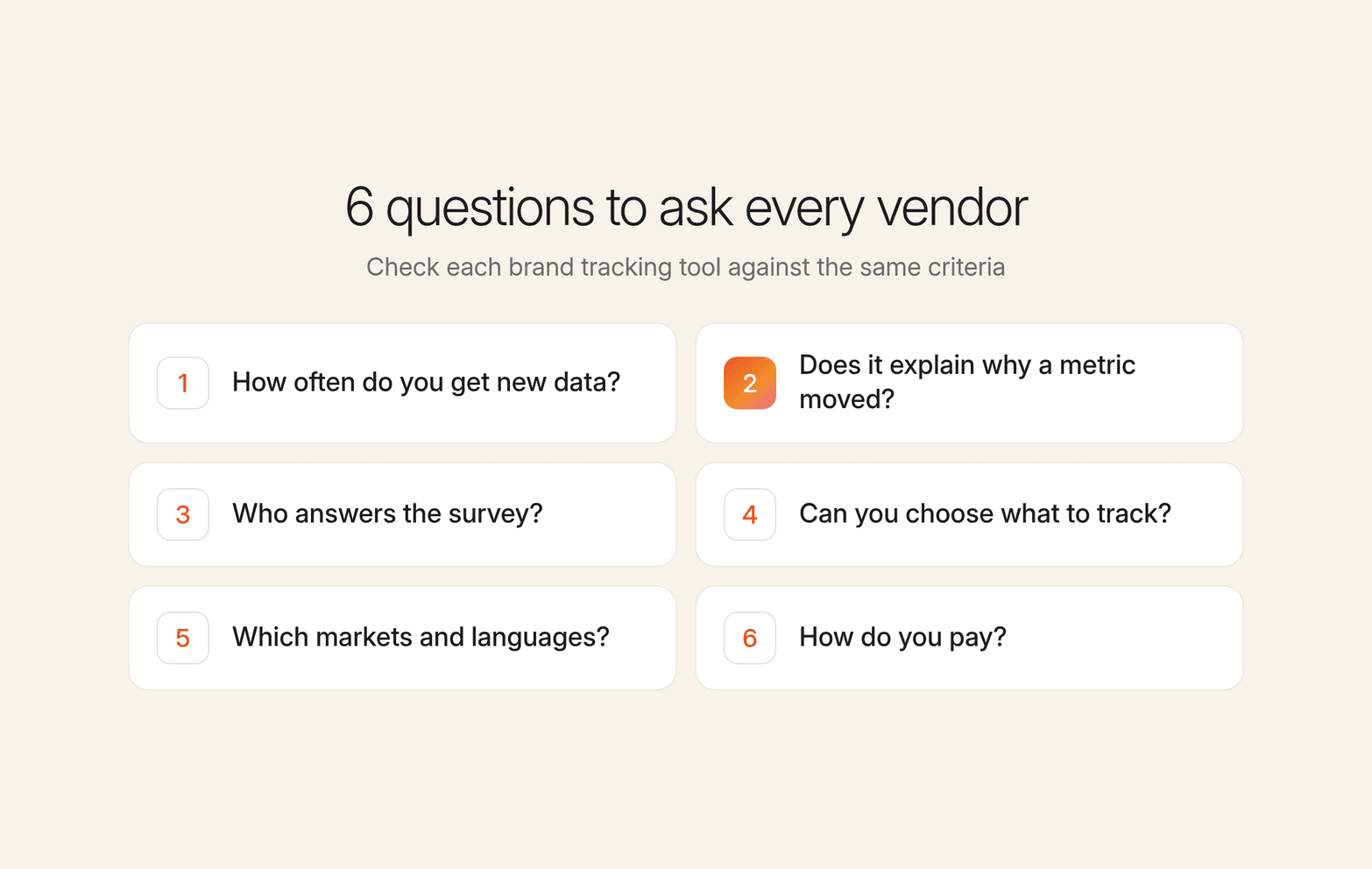
Being clear on what you need from brand health tracking software makes it easier to create your shortlist. Use this table to check each vendor against the same six criteria.
| Criterion | Why it matters | What to look for |
|---|---|---|
| How often you get new data | It sets how soon you see a shift after it starts. | A schedule that matches how often you make brand and budget decisions, whether that’s monthly, quarterly, or always on. |
| Whether it explains why a metric moved | A number without a reason is hard to act on. | Open-ended responses or a qualitative add-on that reports in the same cycle as the survey. |
| Who answers the survey? | If the people answering change between waves, a metric can move even when the market hasn’t. | Clear information on where respondents come from, and the same audience mix in every wave. |
| Whether you can choose what to track | Standard lists may leave out the brands or qualities you actually compete on. | The option to pick your own competitors and split results by groups such as age or region. |
| Which markets and languages it covers | Setting up each market as a separate project adds cost and makes results harder to compare. | Surveys in the local language in every market you sell in, with the same questions everywhere. |
| How you pay | The same setup can cost very different amounts depending on the pricing model. | Pricing can be per response, per market per year, a subscription, a project fee, or credits. Ask for a quote based on the markets and sample size you actually need. |
These criteria give you a consistent way to assess what each platform offers when you look at them side by side.
15 best brand tracking software options compared
| Tool | How often you get new data | Whether it explains why a metric moved | Who answers | Whether you can choose what to track | Markets and languages | How you pay |
|---|---|---|---|---|---|---|
| Conveo | Interview waves on your schedule, for example, monthly | Yes, through video and voice interviews with follow-up questions | Consumers from 8 panel providers or your own contact lists | Your own questions, saved for reuse in every wave | 50+ languages | Custom pricing |
| Kantar | Daily benchmarks with BrandDynamics | Through agency reporting and analysis | Kantar’s consumer panels | Agreed with the agency team | BrandZ covers 54 markets | On request |
| Ipsos | Set per tracker; Brand Health Essentials gives a quicker read | Through agency reporting and analysis | Ipsos panels | Fully custom design | Brand Health Essentials in nearly 30 markets | Custom, based on frequency, markets and sample |
| YouGov BrandIndex | Daily | Partly, through the BrandIndex Voices interview add-on | YouGov’s own panel of 30M+ members | 16 standard metrics across 27,000+ brands | 55+ markets | Subscription, on request |
| Qualtrics Brand Tracking | Set by you, with automated alerts | Partly, through driver analysis | Check with vendor | Custom survey design | Check with vendor | Enterprise license |
| Tracksuit | Monthly, with a first benchmark in 30 days | Partly, through unprompted word associations | Nationally representative samples from vetted panel partners | Your brand and competitors on standard funnel metrics | 25 markets | From $19.5k |
| Latana | Monthly | Partly, through brand associations and purchase drivers | People reached through ads on apps and websites | 4 brands on Essential, up to 50 on Custom | 150+ markets | From €7,900 per market per year |
| Attest | Set by you | Yes, through Attest Explore interviews (newer product) | 150M+ people through panel providers | Custom tracker, with a research manager’s help | 59 markets, 70 languages | Flat audience cost, not published |
| Zappi | Monthly | Partly, through category entry points | Not stated on the tracker page | Up to 15 brands in one framework | Not listed | Subscription plus credits |
| Pollfish | Each time you run a wave | Partly, through open-ended answers | Prodege’s first-party panel | Fully DIY | 160+ countries; you translate the questionnaire | From $0.95 per response |
| Brandwatch | Real time | Partly, through sentiment and conversation trends | Public posts, with no defined audience | The brands and topics you choose to monitor | Public online sources worldwide | On request |
| GetWhy | Per study | Yes, through AI-moderated video interviews | Multiple panel vendors, 300M+ consumers | Self-serve, or designed with GetWhy’s team | 100+ languages | Tiers on request |
| Voxpopme | Per study, or ongoing communities | Yes, through video surveys and AI-moderated interviews | Own panel or your own participants | Your own questions | Panel in 27 countries | On request |
| Suzy | Per study, plus a live trends feed | Depends on the methods in your plan | Panel partners or your own contacts | Your own studies, plus trends set to your category | 44 languages | Credits, not published |
| Listen Labs | Per study | Yes, through AI-moderated interviews | Own pool of 30M+ participants | Your own questions | 45+ countries | On request |
For more information about each tool, read through the detailed profiles below.
1. Conveo
Conveo runs AI-moderated video and voice interviews with real consumers. Brand teams use it alongside the tracker they already have to find out why a brand metric moved.
With Conveo StoryLines, interviews run in waves, for example monthly or in step with each tracker wave. When a wave closes, Conveo compares the results with earlier waves and flags views that have shifted and themes that are new.
Teams can save their screener and interview questions in a question bank, so every wave asks the same things in the same words. Follow-up questions can be limited to the brands each person says they buy, and participants can be grouped, for example, into loyal buyers and people who’ve stopped buying.
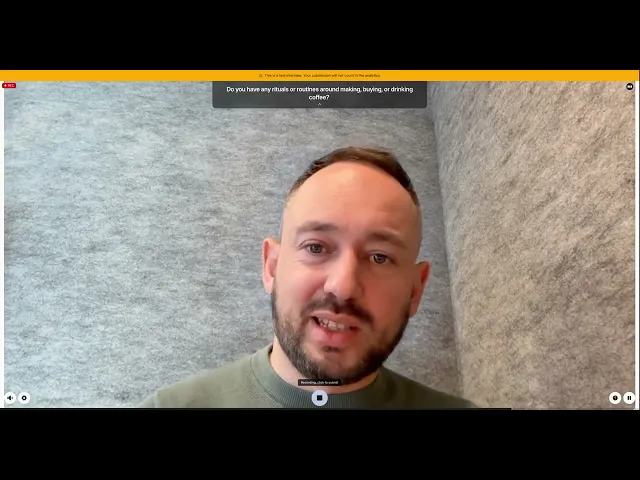
During each interview, Conveo’s AI research assistant asks follow-up questions when an answer is vague or leaves a gap. Carousel (grid) questions let participants score brand statements and then explain some of those scores on camera. Conveo also flags brands people mention or show on camera, competitors included. Interviews run in 50+ languages, with participants from 8 integrated panel providers or your own contact lists.
Best for. Brand and insights teams at consumer brands that already run a tracker and need the reason behind a shift before the next budget decision.
Strength. Researchers can interview the group behind a drop as soon as the wave reports. Each theme links to the participants behind it, with clips and quotes so stakeholders can check where the explanation came from.
Tradeoff. Teams that need syndicated awareness benchmarks across thousands of brands keep a panel tracker for that. Conveo StoryLines asks the brand's core score questions in every wave, so each score sits next to the reason, from the same person. On small samples, read the scores as direction.
Pricing. Start for free, or book a demo for enterprise pricing.
2. Kantar
Kantar sells brand tracking as an agency service. Its range includes BrandDynamics, an always-on tracker with daily benchmarks, and the BrandZ database for comparing brand equity across markets.
Best for. Large global brands that want an agency to run the tracker and give them benchmarks against thousands of other brands.
Strength. BrandZ draws on more than 4.6 million consumer interviews across 54 markets, so teams can compare their brand with category norms almost anywhere they sell.
Tradeoff. Kantar runs the tracker as an engagement, so changing questions or adding a market goes through the agency team.
Pricing. Pricing on request.
3. Ipsos
Ipsos is a research agency that designs and runs custom brand health trackers. Its Brand Health Essentials product gives a quicker read in nearly 30 markets.
Best for. Teams that want a fully custom tracker designed by an agency with a strong methodology team.
Strength. Ipsos builds trackers around its Brand Desire metric, which it says has been checked against real sales data.
Tradeoff. Custom trackers are set up as projects, so the schedule and design are agreed with Ipsos at the start.
Pricing. Custom pricing based on how often you track, which markets you cover, and your sample size.
4. YouGov BrandIndex
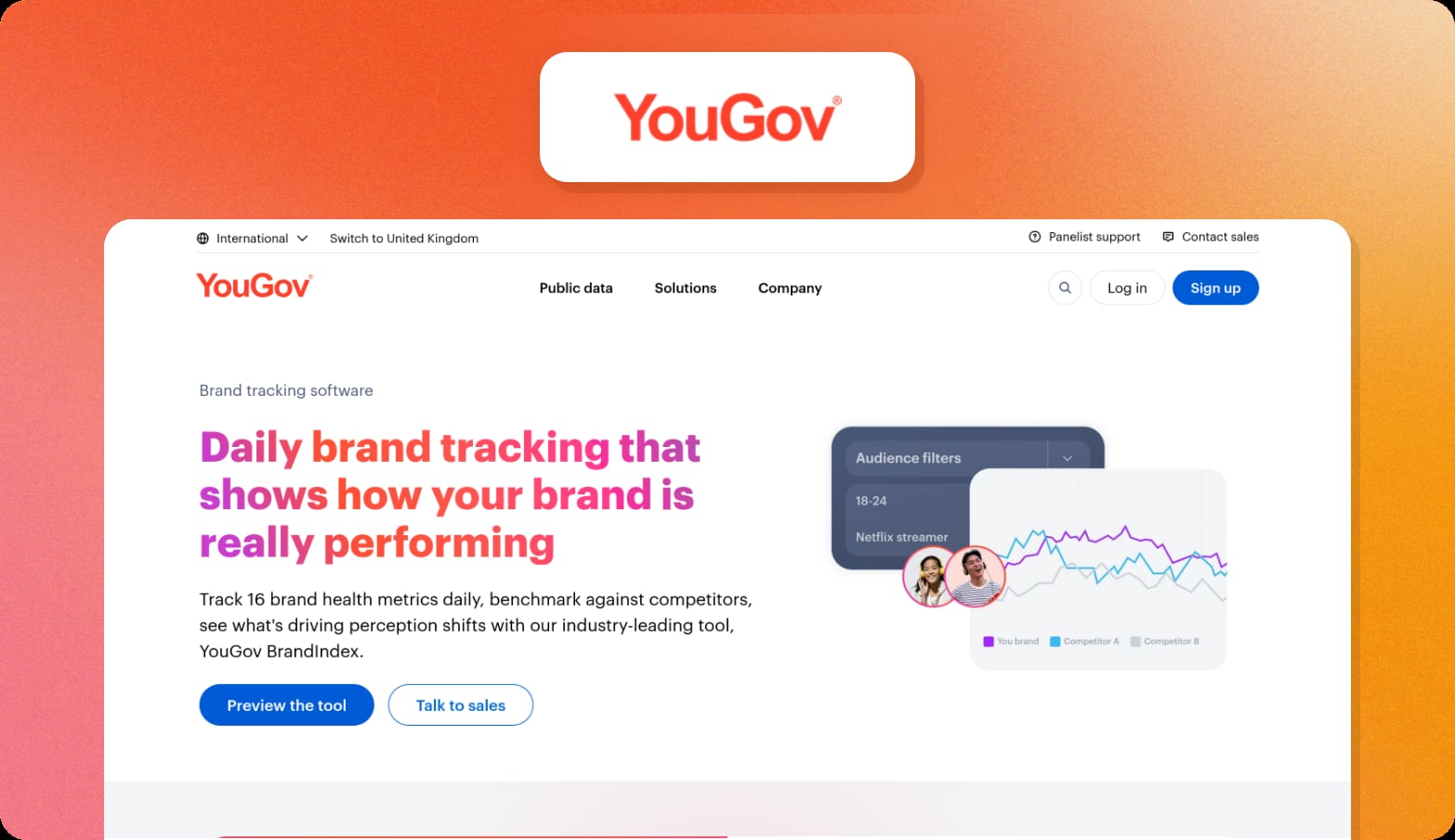
YouGov BrandIndex is a syndicated tracker that continuously measures public perception and brand health across thousands of brands.
Best for. Brand and comms teams that need to see quickly how a campaign, a news story, or a crisis is affecting their brand.
Strength. Daily data on 16 metrics, including consideration, purchase intent, and reputation, with years of history to compare against. BrandIndex Voices adds AI-moderated interviews for some qualitative context.
Tradeoff. Every brand is measured on the same metrics, which keeps benchmarks comparable but leaves less room for attributes specific to your brand.
Pricing. Subscription, pricing on request. A free BrandIndex Lite preview is available.
5. Qualtrics brand tracking
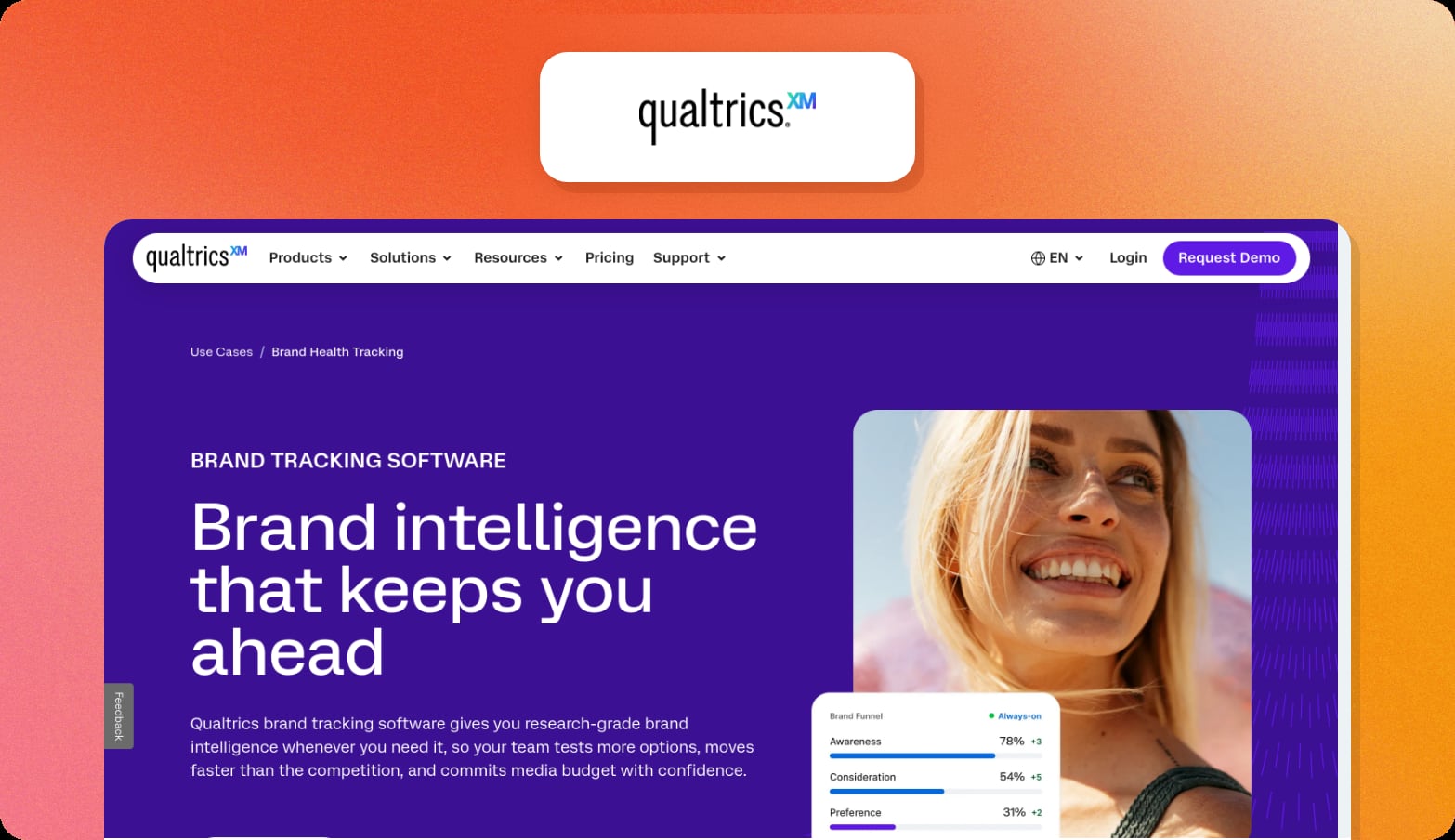
Qualtrics Brand Tracking is part of Qualtrics’ experience management suite and runs survey-based trackers on the same platform as customer and employee research.
Best for. Large companies that already use Qualtrics and want brand data next to their other experience data.
Strength. Driver analysis shows which attributes are linked to a change in a metric, and automated alerts flag shifts as they happen.
Tradeoff. It’s built around surveys, so explaining a shift in consumers’ own words usually needs separate qualitative research. See more in our guide to Qualtrics competitors.
Pricing. Enterprise license, pricing on request.
6. Tracksuit
Tracksuit is an always-on brand tracker built for marketing teams, with a dashboard that updates every month.
Best for. Marketing teams at consumer brands that want a tracker they can run themselves, without an agency or a big budget.
Strength. You get a first benchmark within 30 days, then monthly updates on brand funnel metrics compared with your competitors, plus the words people link to your brand unprompted.
Tradeoff. It covers 25 markets, so teams selling more widely should check which of their markets are included.
Pricing. Starts at $19.5k, according to Tracksuit’s product page.
7. Latana
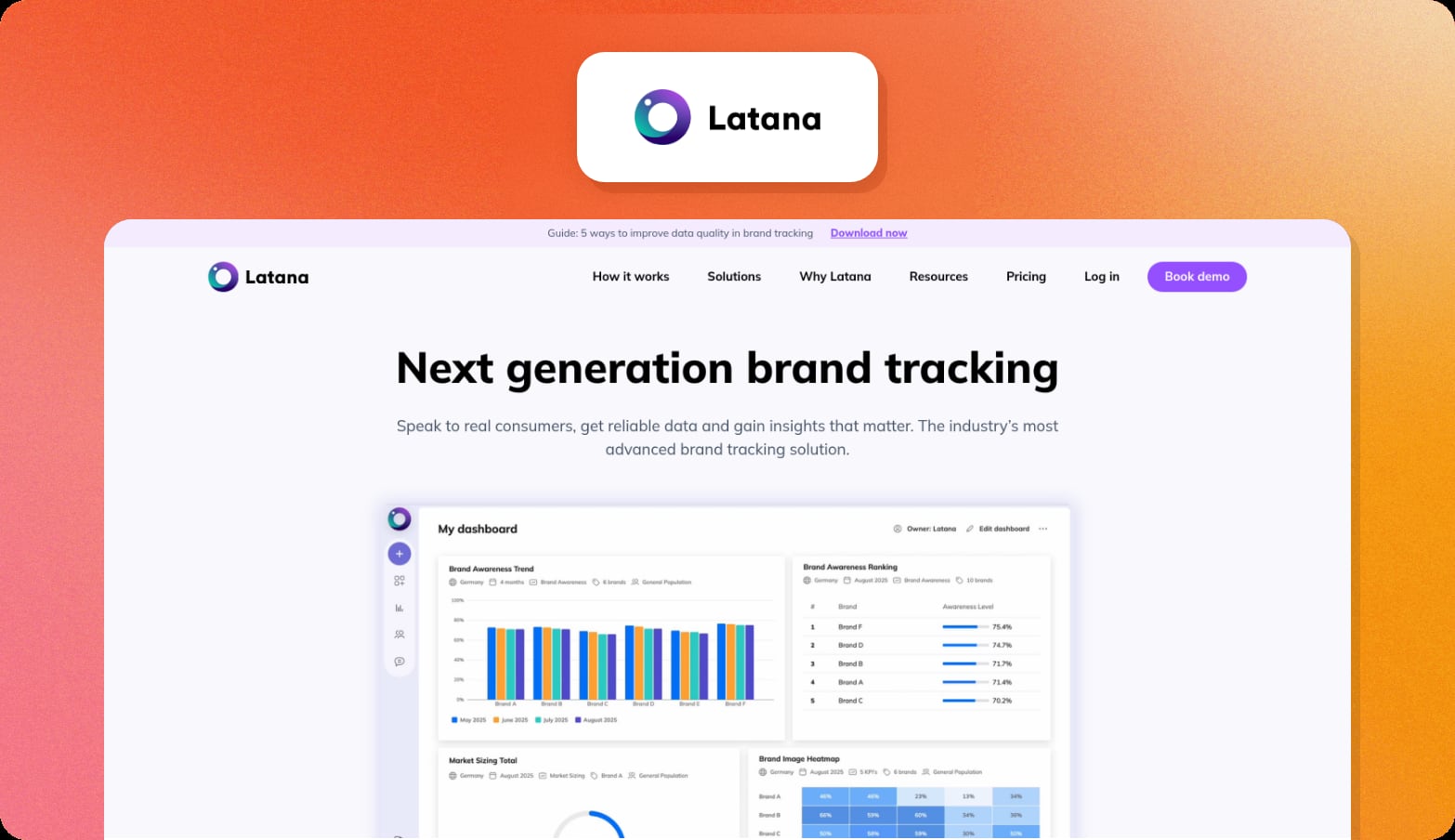
Latana is a brand tracking solution that reaches respondents through ads on apps and websites and updates results every month.
Best for. Teams tracking brands in many countries, including smaller markets that panels cover less well.
Strength. It covers more than 150 markets and can split results by audience segment, with margins of error shown on the dashboard.
Tradeoff. Pricing is per market, so costs rise quickly as you add countries. Contracts start at 12 months.
Pricing. Essential starts at €7,900 per market per year, Pro starts at €18,900, and Custom is on request.
8. Attest
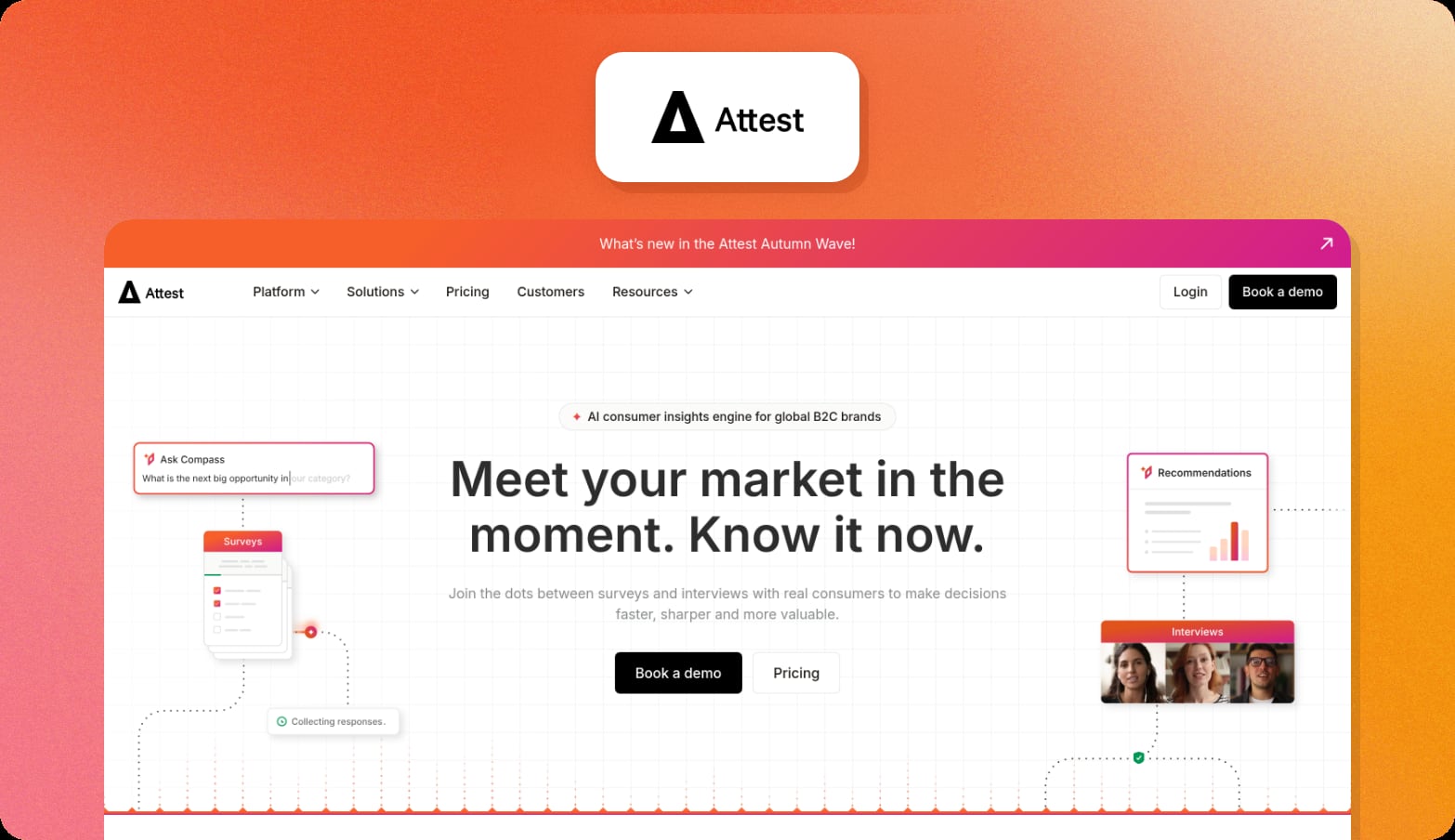
Attest is a consumer research platform where teams build their own brand tracker, with help from a dedicated research manager included.
Best for. Brand teams that want to run a custom tracker in several markets themselves, with expert support when they need it.
Strength. It reaches 150M+ people in 59 markets. Attest Explore adds AI-moderated interviews next to the tracker, so teams can look into a shift without changing vendors.
Tradeoff. Explore is much newer than the survey product, so check which markets and features it covers before relying on it for every wave.
Pricing. Not published. Attest prices survey audiences at a flat cost, whatever their location or makeup.
9. Zappi
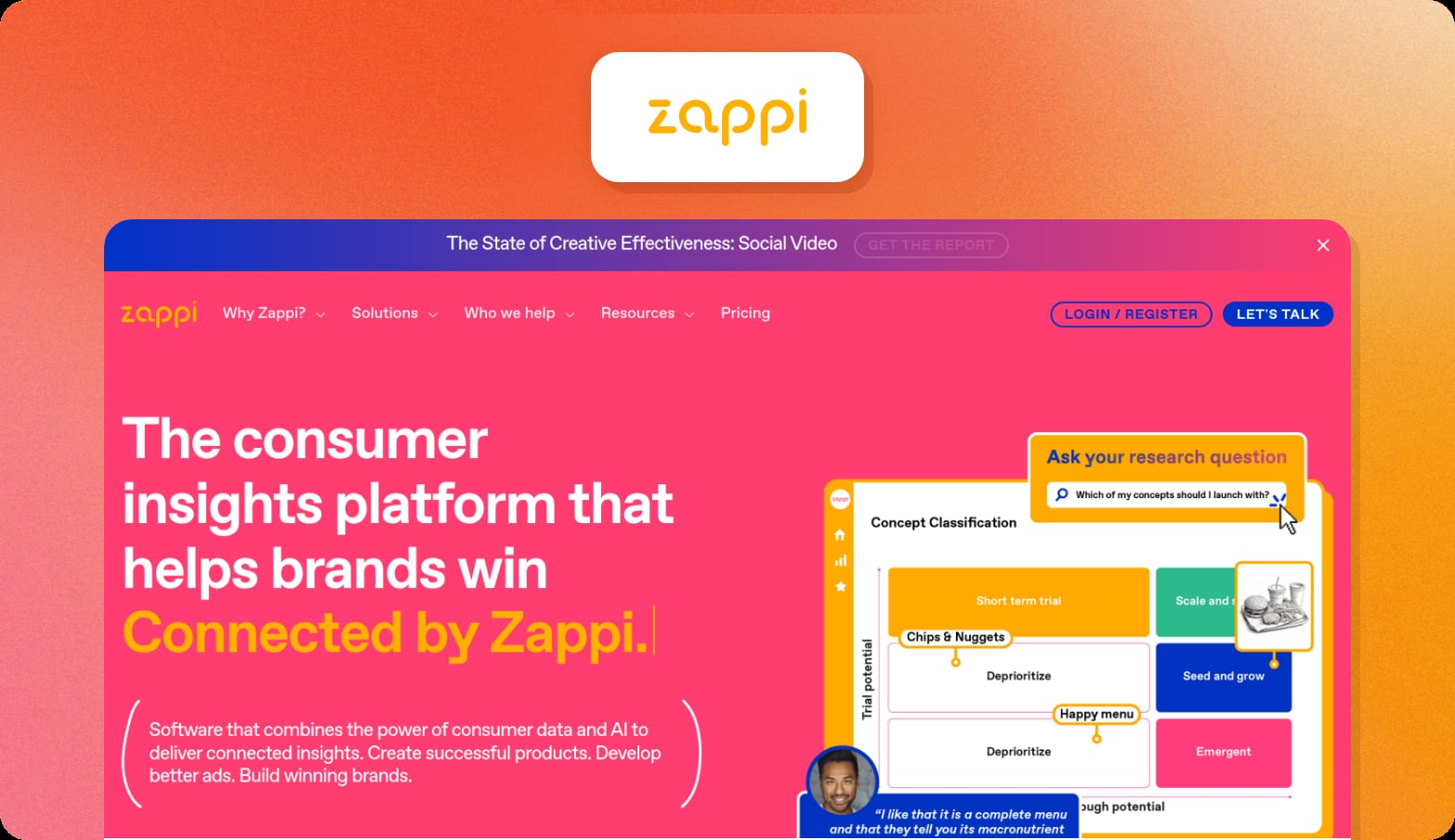
Zappi offers a Brand Health Tracker alongside its ad and innovation testing, with data that refreshes every month.
Best for. Teams that already test ads or concepts on Zappi and want brand tracking in the same place.
Strength. It tracks up to 15 brands with one framework and maps your brand to category entry points, with dashboards inspired by Ehrenberg-Bass metrics such as mental market share.
Tradeoff. The tracker is built on quantitative KPIs, so teams that want interviews explaining a change would add a qualitative tool.
Pricing. Platform subscription plus research credits. No prices published.
10. Pollfish
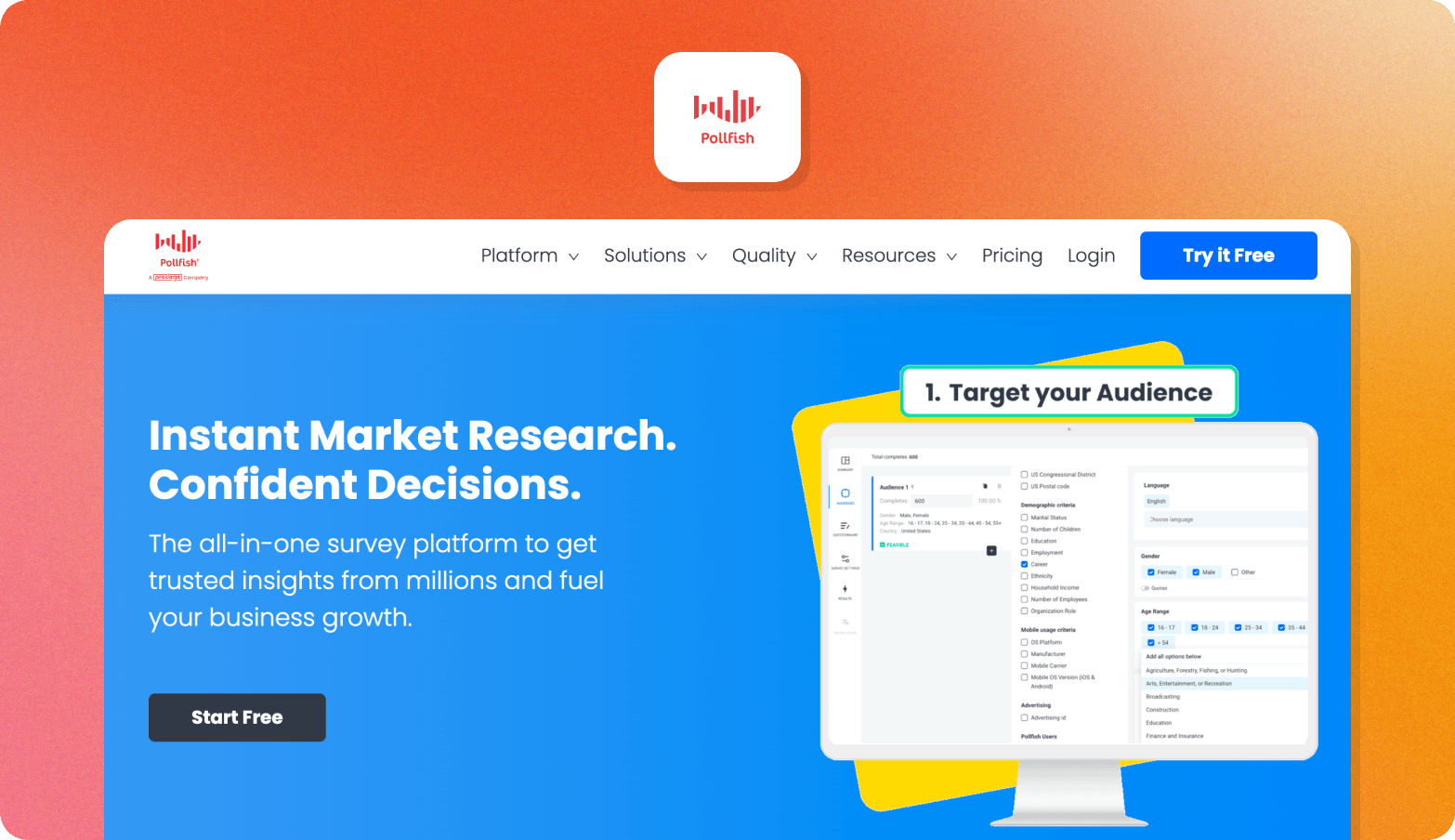
Pollfish is a do-it-yourself survey platform, so teams can build their own brand tracker and run each wave through its panel.
Best for. Teams on a tight budget that are happy to design and run the tracker themselves.
Strength. It reaches respondents in 160+ countries at a low cost per response, which makes frequent waves affordable.
Tradeoff. Analysis works one survey at a time, so comparing waves takes manual work. Questionnaires also have to be translated before launch.
Pricing. DIY from $0.95 per response. Full-service projects start at $5k.
11. Brandwatch
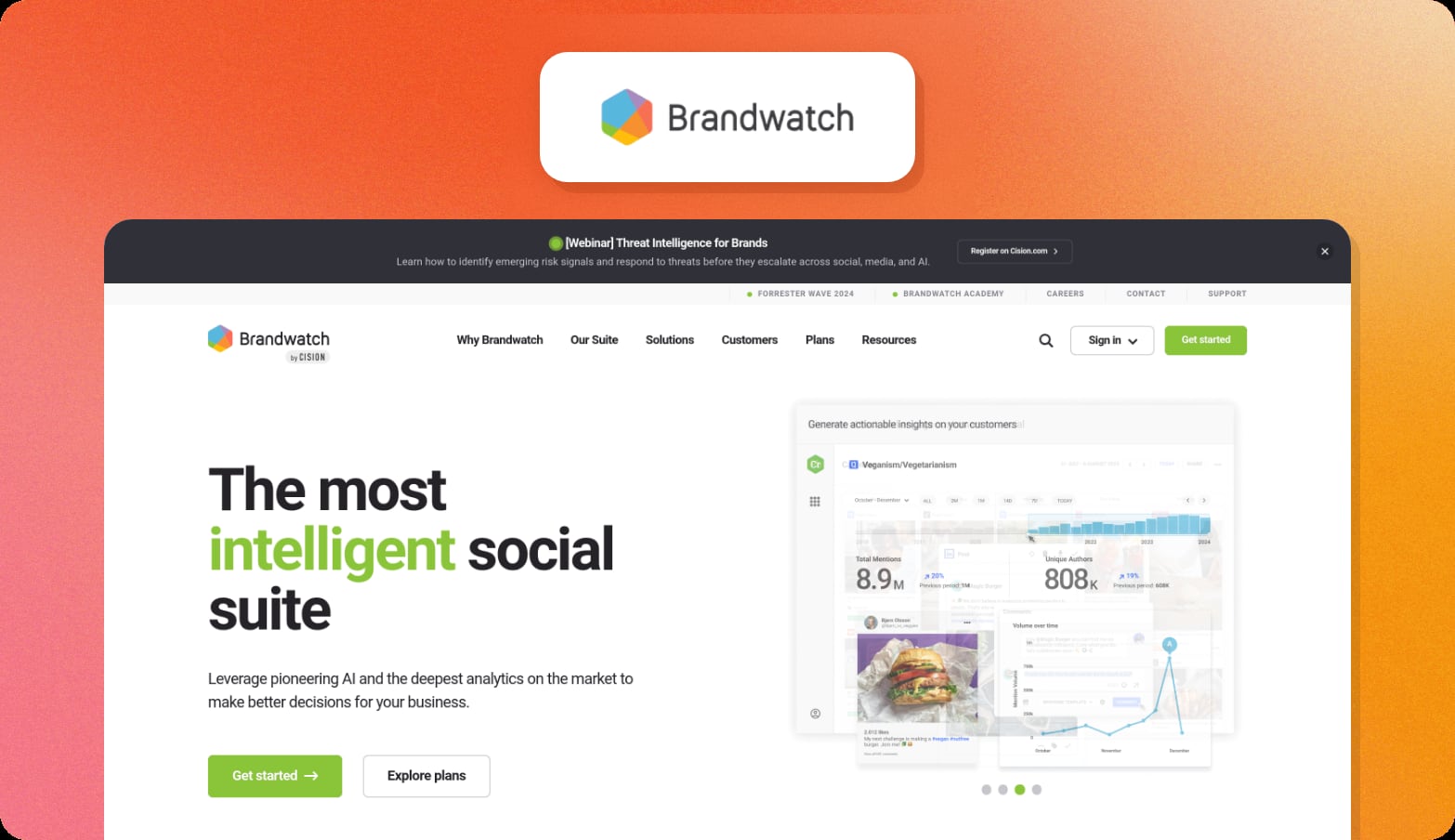
Brandwatch is a brand monitoring tool that tracks public conversation. It doesn’t survey a defined audience, so it measures something different from a brand tracker.
Best for. Brand and comms teams that need to watch sentiment and spot a problem in public conversation early.
Strength. It tracks mentions and sentiment across social media, reviews, and news in real time, with alerts when conversation changes.
Tradeoff. The data comes from people who post in public, so it can’t measure awareness or consideration among your target audience.
Pricing. Pricing on request.
12. GetWhy
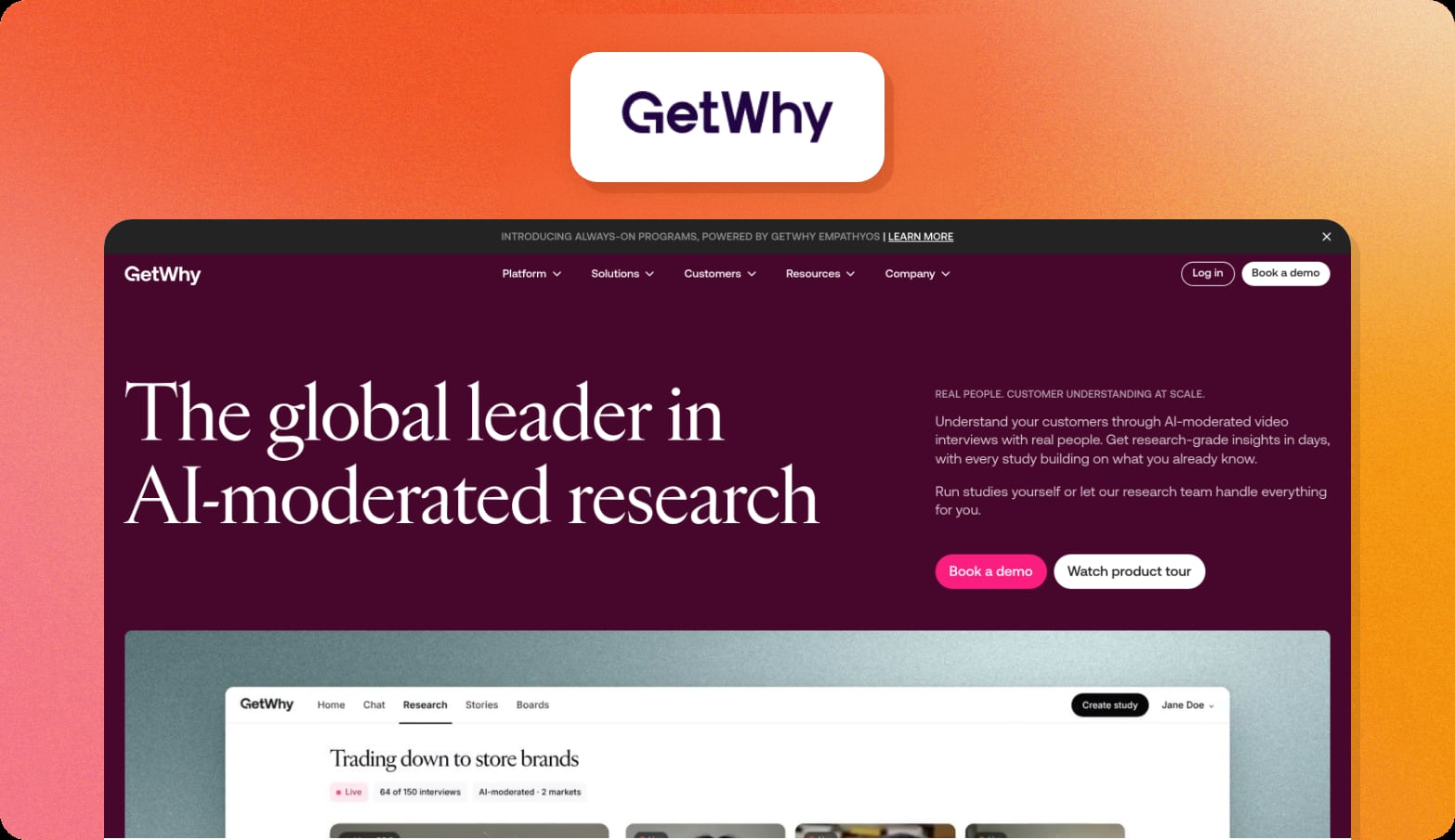
GetWhy runs AI-moderated video interviews with consumers, and teams can choose self-serve studies or have GetWhy’s researchers deliver them.
Best for. Consumer brands that want to look into a tracker shift with help from an outside research team.
Strength. Interviews run in 100+ languages with panel recruitment built in, so teams can get to the group behind a drop in several markets at once.
Tradeoff. Teams that want to keep study design and analysis in-house should check which parts stay self-serve.
Pricing. Starter, Basic, and Custom tiers, all priced on request.
13. Voxpopme
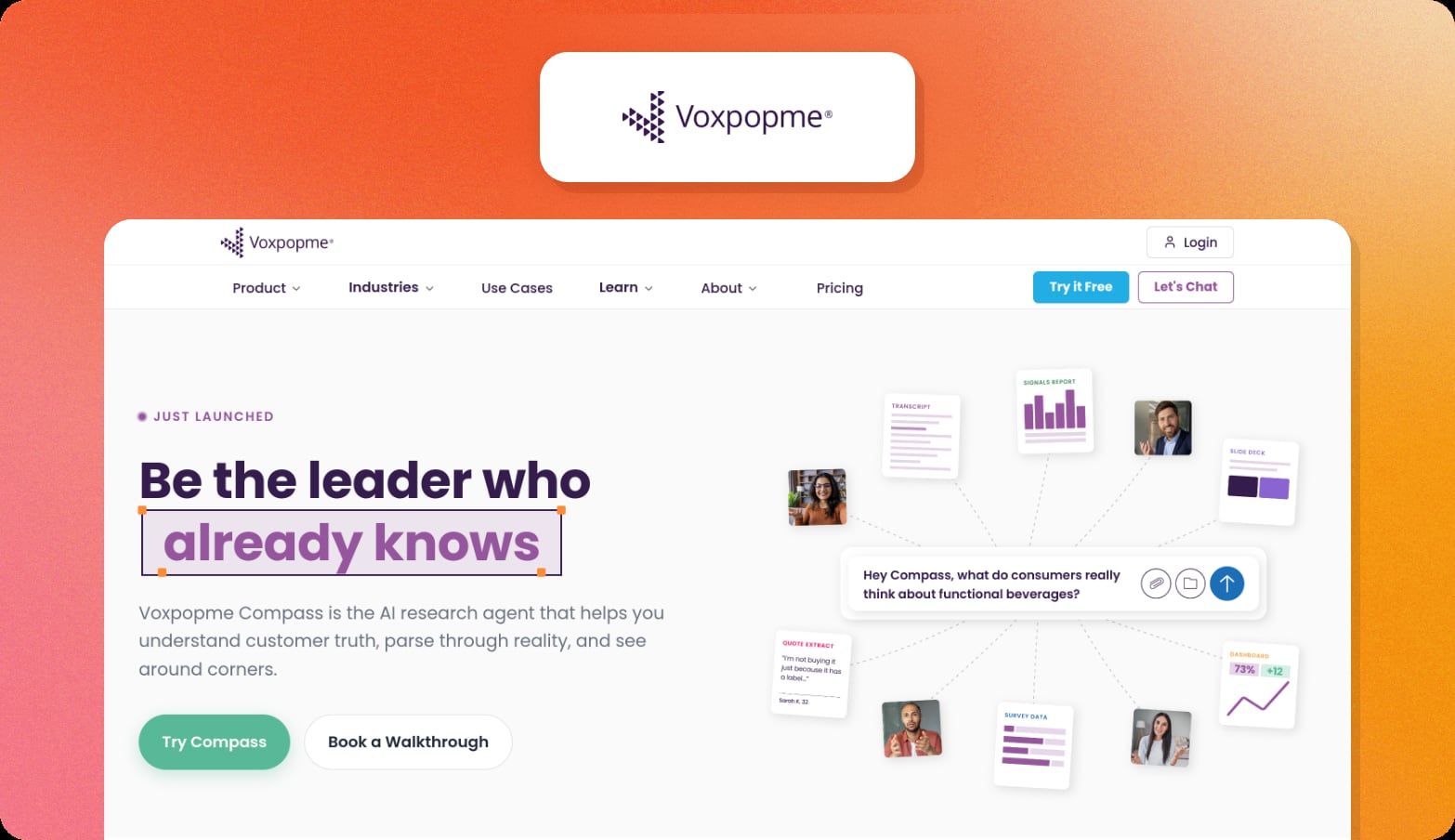
Voxpopme collects video answers from consumers through recorded video surveys and AI-moderated interviews, and lists brand tracking among its main uses.
Best for. Teams that want to add video answers to their tracking program, including longer-running communities of the same participants.
Strength. Each theme links to the video moment where people raised it, so teams can show stakeholders the reaction behind a number.
Tradeoff. Its own panel covers 27 countries, so teams tracking further afield may need to bring their own participants.
Pricing. Pricing on request.
14. Suzy
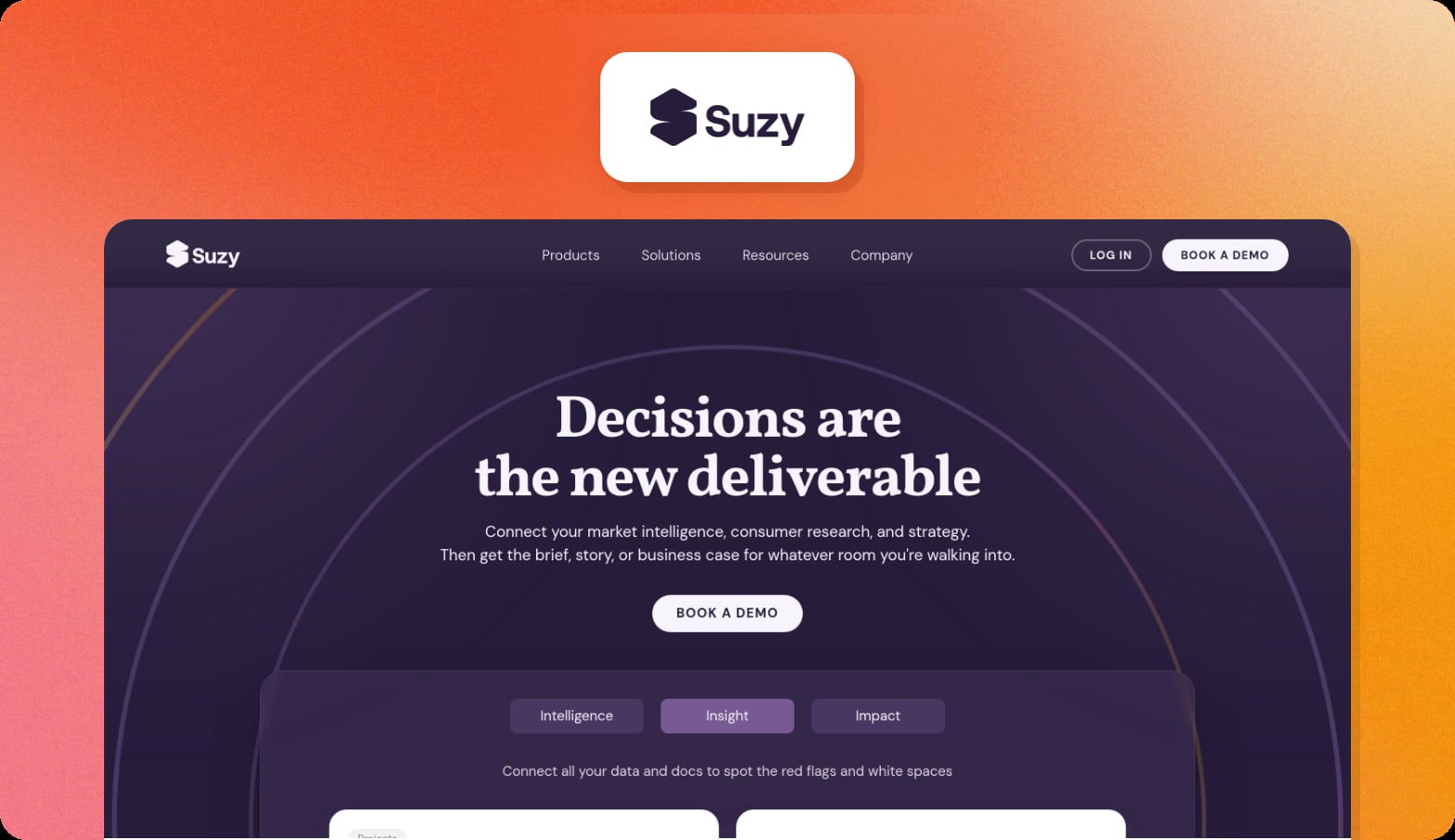
Suzy is a consumer insights platform that combines research with a feed of market trends and turns findings into ready-made deliverables.
Best for. Brand teams at consumer goods and retail companies that want research and trend data in one workspace.
Strength. Suzy Signals tracks trends set to your brand and category, so teams can set a tracker shift against what’s happening in the market.
Tradeoff. Suzy now leads with deliverables more than research methods, so check which interview and survey options come with your plan.
Pricing. Credits-based. Not published.
15. Listen Labs
Listen Labs runs AI-moderated consumer interviews at high volume and lists brand tracking among its use cases.
Best for. Teams that want large numbers of interviews quickly, with recruitment and analysis handled in one place.
Strength. Rating, NPS, and MaxDiff questions can run inside the interview, and its cross-study view follows how themes change over time.
Tradeoff. Salesforce announced a deal to acquire Listen Labs in September 2026, and plans for pricing and standalone availability haven’t been announced.
Pricing. Pricing on request.
If a brand tracking platform on this list meets your needs but may not offer enough qualitative insight, remember you can always pair it with a separate research tool.
Example: how a brand and marketing team might find out why consideration dropped
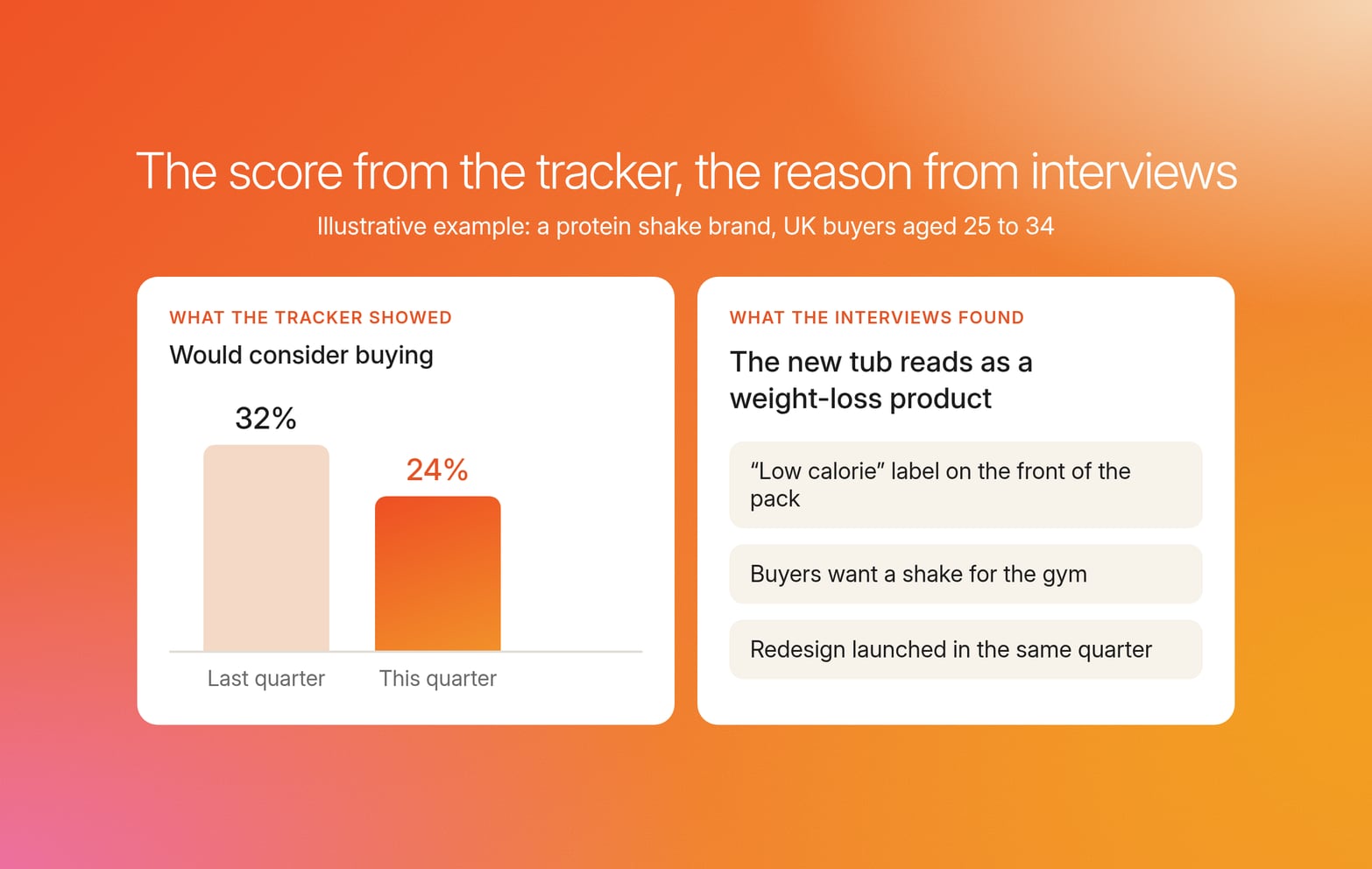
Say a protein shake company’s brand tracking software showed it that fewer 25 to 34-year-olds in the UK would consider buying their shake, down from 32% last quarter to 24% this quarter.
The company’s tracking software gives it the score but doesn’t give it any insight into why consideration dropped. To find out what happened, the brand and marketing team decides to run a round of AI-moderated interviews. Here’s what that might look like:
The team recruits 100 protein shake buyers aged 25 to 34 in the UK through a consumer panel. Half bought the brand in the past year but say they wouldn’t consider it now.
An AI research assistant runs each interview on video. It asks people which protein shakes they’ve bought recently and why they chose those over this brand. When an answer is vague, it asks a follow-up question.
Within a few days, the same theme keeps coming up. The brand redesigned its tub in the spring, and many younger buyers now read the new pack as a weight-loss product. Participants point out the “low calorie” label on the front, then explain that they want a shake for the gym.
The researcher reviews the themes and watches the clips behind them. They check the findings against the brand’s own timeline. The redesign launched in the same quarter as the drop.
The brand team takes the clips to the product meeting and recommends testing a pack that leads with protein content to see whether the target group would consider the brand again before it goes on shelves.
To avoid setting up a new study next time a number drops, the team implements continuous AI-moderated research waves alongside the brand tracker.
How to choose the right brand tracking software for the decisions your team makes
Trackers that look the same in a demo can turn out to be good at very different things. Starting with what your team needs to do, rather than comparing key features like AI summaries or dashboards, helps you see where one tool might be a better fit than another.
Here’s what brand tracking software needs to do for the decisions teams make most often:
| If you need to… | What the tool needs to do | For example |
|---|---|---|
| Know why a metric moved before the next decision | Run interviews with the group that moved, alongside your existing tracker | Conveo |
| See whether a campaign moved awareness | Report monthly or more often, so results arrive soon after launch | YouGov BrandIndex, Tracksuit |
| Check whether a brand repositioning is resonating | Let you add your own brand attributes, with interviews to hear how people describe you now | Conveo, Attest, Qualtrics |
| Benchmark against competitors over several years | Give you long historical data across many brands | Kantar, Ipsos |
| Set a baseline before entering a new market | Cover that market with surveys in the local language | Latana, Attest |
| Track on a tight budget | Let you build and run each wave yourself at a low cost per response | Pollfish |
Once you've chosen a platform, you'll need to run your tracking consistently so you can compare results from one round to the next.
3 mistakes that make a brand metric move when nothing has changed
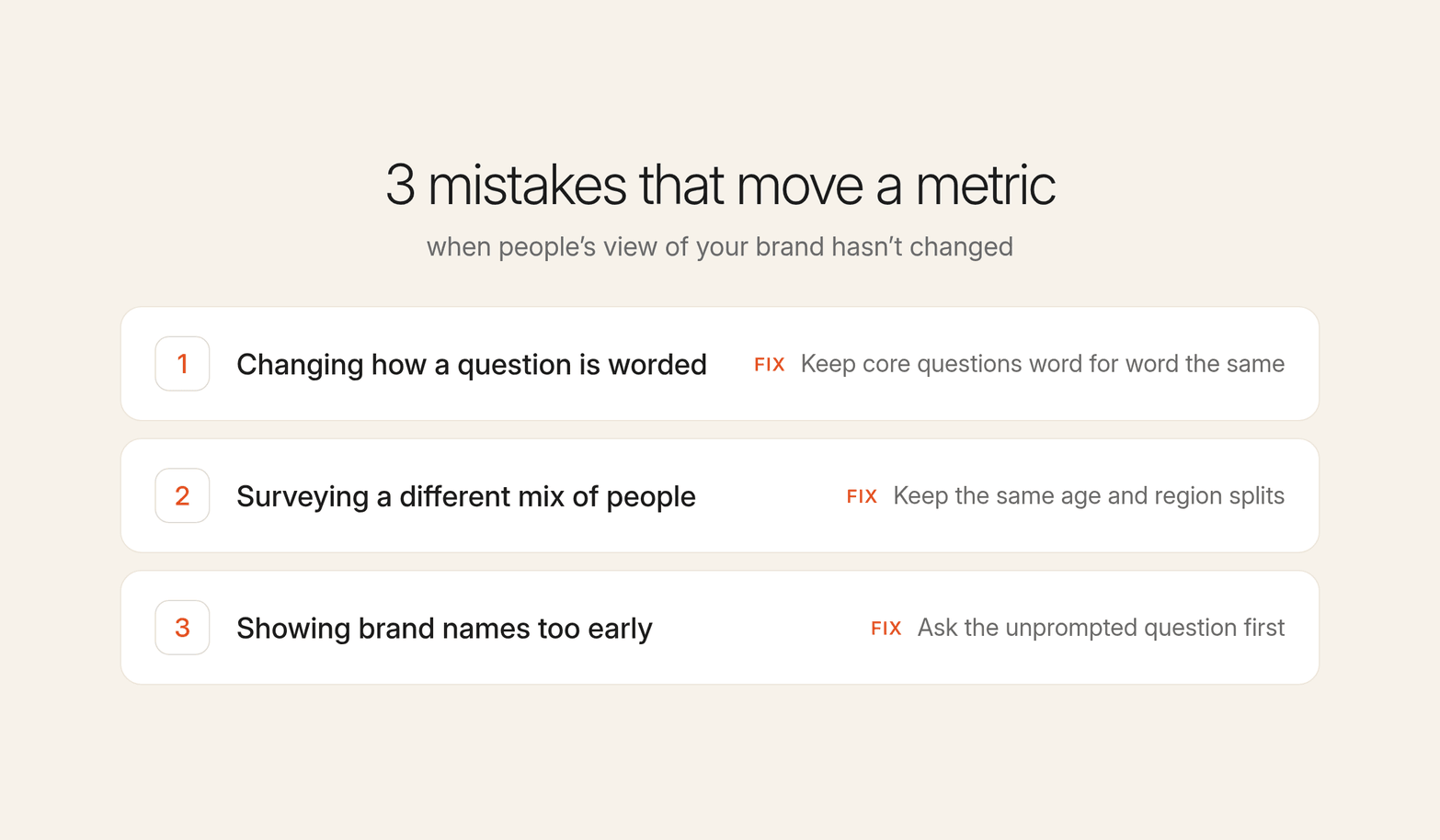
Whichever software you choose, brand tracking research relies on comparing research results over time. If you change how you run a survey between tracking rounds, the numbers can move even when people's perception of your brand hasn't. Avoid these mistakes each time you run your research to keep your results accurate:
Changing how a question is worded. Small edits, like swapping “would consider buying” for “might buy,” can change how people answer. Keep your core brand tracking survey questions word for word the same in every round.
Surveying a different mix of people. If one round has more older buyers than the last, or comes from a different panel, the results move with the sample. As with any longitudinal study, keep the same age and region splits each time.
Showing brand names too early. If people see a list of brands before you ask which ones they know, they’ll remember more of them and unaided awareness goes up. Set up your brand tracking survey so the unprompted question comes first, and shuffle the order of the brand list so no brand benefits from always appearing at the top.
Keeping your research consistent is easier when your tracking approach is built around understanding what people think and why.
Where Conveo fits in a brand tracking stack
Conveo runs AI-moderated video and voice interviews with real consumers, so brand and insights teams can hear the reasons behind a shift from the people who moved. More than 400 enterprises, including Google, Unilever, AB InBev and Canva, use Conveo to understand their consumers.
Here’s how Conveo helps teams explain their tracker results:
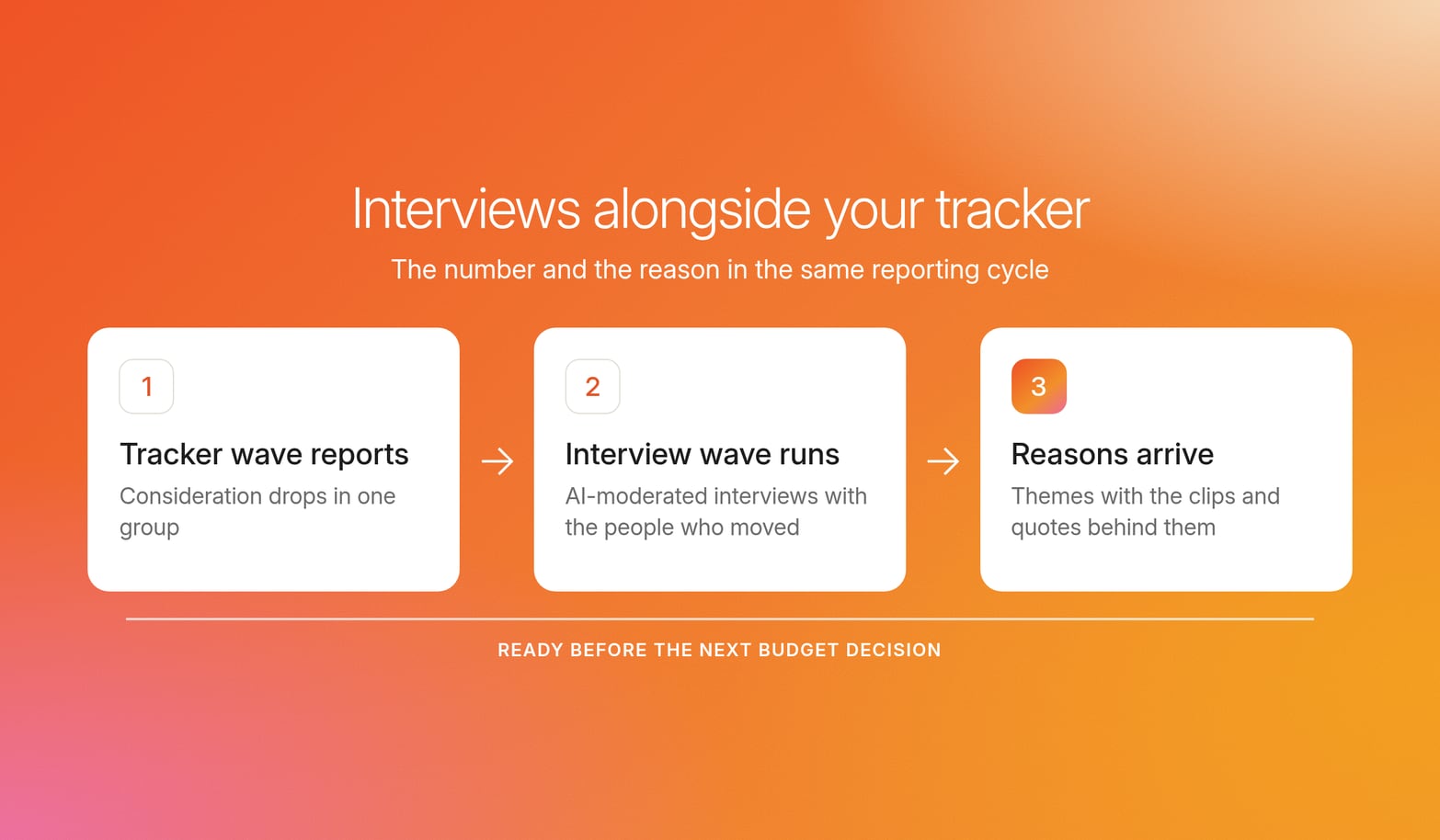
Interviews on the same schedule as your tracker. With Conveo StoryLines, interview waves run alongside each tracker wave. Conveo compares every wave with the one before and flags views that have shifted, so teams have the reasons ready when the numbers come in.
Findings stakeholders can check. Every theme links to the video clips and quotes behind it, and researchers can review and correct the analysis before it goes into a report.
The same questions in every market. Interviews run in 50+ languages, so teams can look into a drop in one country without setting up a separate local project.
Answers while the decision is still open. Researchers can investigate a shift as soon as it shows up, and fielding and analysis typically wrap up within days.
Conveo works alongside a tracker to tackle brand performance. Teams that only need multi-year benchmarks or a low-cost DIY survey will be better served by a syndicated tracker or a survey platform.
"The pace, responsiveness, and research expertise of the Conveo team, on top of the top AI-moderated qual platform, have been invaluable to us in scaling brand advertising internationally."
Matt Harris, Research & Insights Lead, EMEA, Canva
Frequently asked questions
What is brand tracking software?
Brand tracking software measures brand health over time. It surveys a defined audience at regular intervals and reports brand tracking metrics such as brand awareness and consideration, usually in a dashboard. Most tools also show how your brand performs against competitors. Options range from self-serve brand health tracking tools you run yourself to brand tracking companies that design and run the research for you.
What is the difference between brand tracking and brand monitoring?
Brand tracking asks a fresh sample of your target audience the same core questions in every wave, so you can measure brand awareness and brand perception among the people you want to reach. Brand monitoring software follows online mentions on social media and review sites, and uses sentiment analysis to show how the conversation is changing. Monitoring helps you track brand mentions and share of voice as they happen. Tracking shows how your target audience sees your brand.
How much does brand tracking software cost?
Prices vary widely. A DIY survey platform can cost less than $1 per response, while dedicated brand tracking tools often start at several thousand to tens of thousands of dollars a year, and some charge per market. A brand tracking agency usually prices each tracker as a custom project. Costs depend mostly on the number of markets, sample size, competitors tracked, and how often you run waves, so ask each vendor to price your actual setup.
How often should you run a brand tracking wave?
It depends on how quickly your category moves and how often you make brand decisions. Quarterly waves are common. Monthly or always-on tracking suits brands with frequent marketing campaigns, because you see a shift soon after it starts. Whatever schedule you choose, keep it steady so your historical data stays comparable from one wave to the next.
Can AI-moderated interviews work alongside quarterly brand tracking surveys?
Yes. The survey shows how much views have changed, and AI-moderated interviews with real consumers help explain why. When a wave shows a drop in one group, teams can interview people from that group soon after and bring the reasons to the same meeting as the numbers. The tracker stays as it is, so you keep your trend lines and add the context behind consumer behavior on top.
How do you find out why a brand metric moved?
Start by checking data quality. If the question wording or the mix of people answering changed between waves, either one can move a metric on its own. Next, look at what happened in the market, such as a competitor’s price cut or a new campaign. To confirm the cause, talk to the people behind the change. Interviews with that group give you the reasons in their own words.

About the author
Florian Hendrickx
Head of Growth
Florian is Conveo’s Chief Growth Officer, leading growth strategy and go-to-market execution as the company scales. He’s held growth leadership roles at companies like Deliverect, Robovision, and Aikido Security, and brings hands-on experience across marketing, sales, and product.
More by Florian →