In this article
TL;DR
The best tool for extracting consumer insights depends on the question you're trying to answer, from measuring how widely a view is held to understanding why customers behave a certain way.
The most useful findings can be traced back to their original source, give enough context to understand why something is happening, and arrive in time to influence a strategic decision.
The 15 tools in this guide fall into six categories: qualitative research, surveys, VoC and text analytics, social listening, product analytics, and insight libraries.
Compare platforms based on what your team needs to do with the insight. This guide covers each tool's strengths, limitations, and the factors to check before building your shortlist.
Most companies collect insights from their customers in one form or another, whether that’s video interviews or product data dashboards. But not all companies have systems in place to turn those valuable customer insights into decision-making tools. Without those systems, teams spend time and money gathering customer data, but can’t get a clear answer when they need one.
This guide covers 15 tools for extracting actionable consumer insights, from qualitative research and survey platforms to social listening, product analytics, and insight libraries. You'll learn what each category is designed to answer, how the platforms differ, and what to look for when choosing.
What Makes Consumer Insights "Actionable"
The difference between consumer insights you use for decision-making and ones that sit forgotten in a folder usually comes down to three things:
You can trace the insight back to a real person. You can see the original source, whether that’s a verbatim quote in a transcript or a clip from an interview.
You understand why people think or behave the way they do. Demographic splits and percentages show what’s happening, but they rarely explain why. You need qualitative, multimodal research for that.
The insight arrives while the decision is still open. Even a well-supported finding has limited value if it comes back after you need to make a decision.
If your team can’t feel confident in the findings or get the full context behind them, it becomes much harder to know what action to take.
Tool Categories: Which One Answers Your Question?
Because you can extract actionable insights in a variety of different ways, the kinds of tools available span a wide range of categories. Choosing the category that matches your situation first helps you avoid comparing platforms built for different jobs.
| Tool category | Best for answering | Use it when | Keep in mind |
|---|---|---|---|
| Primary qualitative interview platforms | Why people think, feel, or decide the way they do | You need detailed answers to an important or unclear question and want to follow up on what participants say | Small groups provide depth, not percentages you can apply to a whole market |
| Survey platforms | What people prefer and how widely a view is held | You need to measure opinions or preferences across a larger group | A survey can show that a pattern exists without fully explaining why |
| VoC text analytics platforms | What patterns appear in customer feedback | You want to analyze large volumes of existing customer feedback, both internal and external | The findings depend on what customers have already chosen to report |
| Social listening platforms | What people are saying about a brand or topic publicly | You need to track brand perception, conversations, or emerging trends | Public conversations may not represent your target audience |
| Product analytics platforms | What users do in your product | You need to understand product data like usage or customer journeys | Behavioral data shows what happened, but often cannot explain the reason behind it |
| Insight libraries | What your team already knows from past research | You need to search and reuse findings across previous studies | They organize existing knowledge but don’t collect new consumer insights |
Many companies use more than one of these tools to handle different parts of their customer insights research. For example, a software company might see in their behavioral analytics platform that a third of users drop off during account setup. They might then run video interviews with users for more meaningful insights into what’s causing the drop-off.
What to Look for in a Platform That Extracts Consumer Insights
Once you've narrowed down the right research tool category, the following criteria can help you determine how actionable a platform’s findings will be:
Can you trace a finding back to a real person? Each insight should link to the participant who said it and their original response, so you can see where the finding came from.
Can it ask useful follow-up questions? For interview-based research, the platform should respond to what participants say and ask further questions when an answer needs more explanation or doesn't fully add up.
Can it support research across your markets? Check whether the platform can moderate and analyze research in the languages your participants speak without long translation delays.
Can your team keep using past research? Clips, themes, and quotes should stay searchable after a study ends, so useful evidence doesn't disappear into old reports.
Does it meet your company's requirements for handling research data? Check its approach to SOC 2, GDPR, personal data deletion, and regional hosting. You can cover the specific procurement requirements in more detail during your vendor review.
Can people outside the research team use the findings? Stakeholders should be able to understand a finding and see the evidence behind it when they need to check or defend a decision.
Keep this list handy and use it to help narrow down your shortlist.
15 Tools for Extracting Actionable Consumer Insights
Use the table to quickly compare your options before reading the complete profiles below.
| Tool | Best for | Pricing | Evidence behind findings? | Keeps evidence over time? |
|---|---|---|---|---|
| Conveo | Enterprise insights and CMI teams that need fast answers backed by real participant evidence | Enterprise | Video clips, transcripts, and quotes linked to findings | Yes. Research stays searchable across studies, so past evidence can be reused |
| Outset | Product and UX teams running asynchronous discovery interviews | Mid-market | Clips and quotes within each study | No, usually paired with Dovetail |
| Discuss.io | Enterprise teams researching different audiences and markets | Enterprise | Timestamped video clips linked to transcript quotes | Yes |
| UserTesting | Product and UX teams running large volumes of usability testing | Enterprise | Video timestamps through Insights Discovery on the top plan | Partly, on the top plan only |
| Remesh | Market research and insights teams running group concept and message testing | Enterprise | Links to participant responses; video clips available as an add-on | Yes, across up to 10 studies |
| Qualtrics Strategy & Research | Large organizations already using Qualtrics | Enterprise | Survey and dashboard data; video feedback also available | Partly, on newer plans |
| SurveyMonkey | Product and UX teams running surveys at scale | Mid-market | Survey responses and dashboard data | No |
| Thematic | Enterprise teams analyzing feedback from multiple channels | Enterprise | Themes linked to the original comments | Yes |
| Medallia | Large organizations managing several experience programs in one platform | Enterprise | Themes linked to individual responses and comments | Yes, through ongoing feedback and experience data |
| Brandwatch | Brand and communications teams tracking online conversations | Enterprise | Original public posts and conversations | Yes, through historical listening data |
| Sprinklr | Enterprise teams that want social listening alongside CX and social tools | Enterprise | Original public posts and conversations | Yes, through ongoing listening data |
| Amplitude | Product and growth teams analyzing how people use a product | Freemium | Product and session data, plus survey responses | Yes, through ongoing product data |
| Mixpanel | Product teams that want ongoing monitoring of user behavior | Freemium | Session replays and behavioral data | Yes, through ongoing product data |
| Dovetail | Research teams organizing and searching research they already have | Freemium | AI findings linked to the original source | Yes, as teams add more research |
| Stravito | Enterprise teams organizing existing research and using AI Personas | Enterprise | Research stored in the Insight Library; AI Personas are based on existing research | Yes, as new research is added |
The solutions in the list below are organized by tool category, so you can select the ones that best fit your research objectives.
Primary Qualitative Platforms
1. Conveo
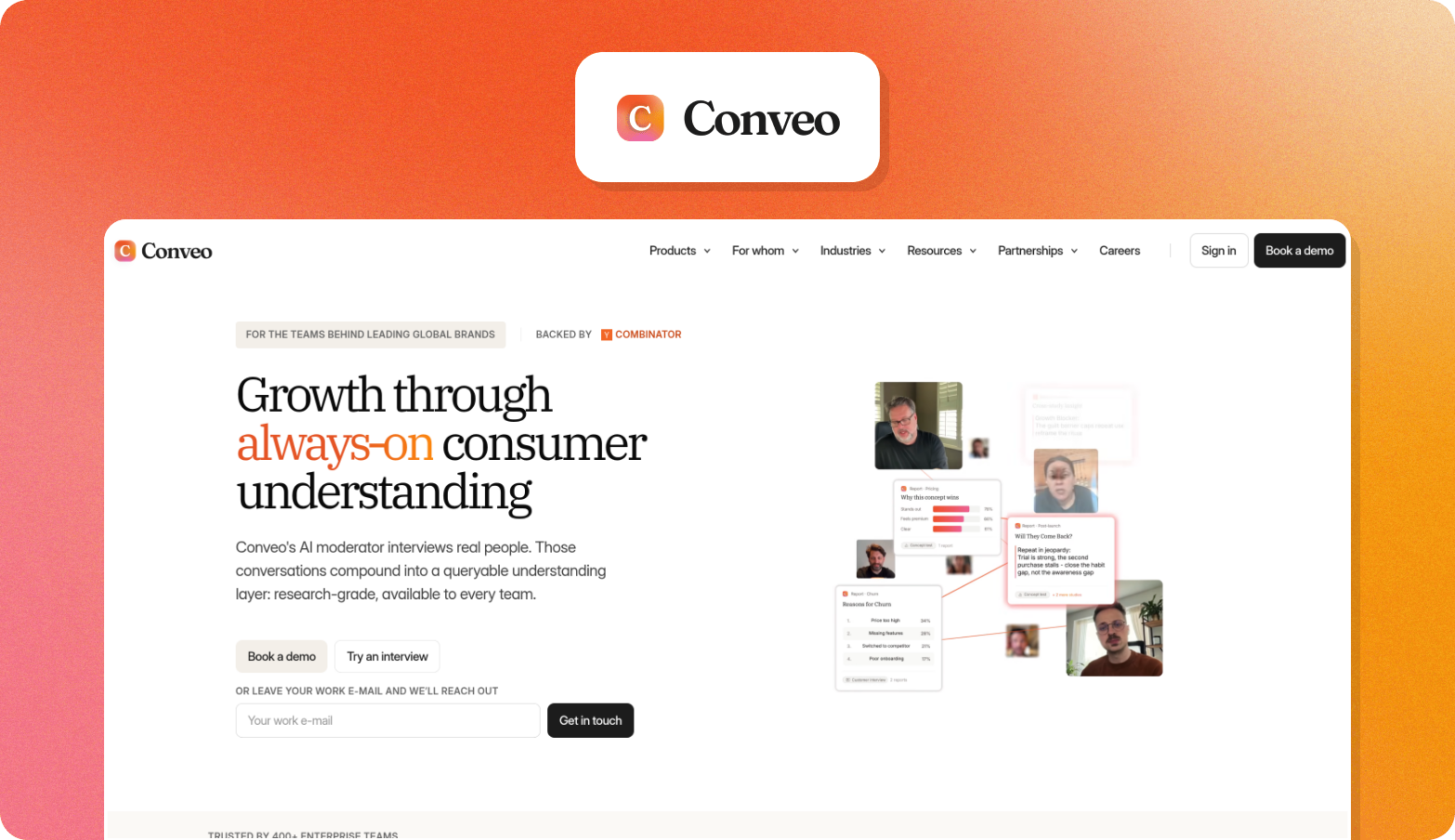
Conveo is a video-first consumer understanding platform built to help teams keep customer evidence available beyond a single research project. Here's what that looks like in practice:
Run interviews without scheduling live calls. AI-moderated video interviews can be completed asynchronously in 50+ languages.
See the evidence behind each finding. Themes and analysis can be traced back to the original participant responses, including clips and quotes.
Build on what you've already learned. Clips, themes, and quotes from past studies stay searchable, so teams can return to existing evidence when new questions arise.
Understand both what people do and why. Participants can provide structured responses alongside more detailed qualitative insights in the same research session.
Conveo fits enterprise insights and CMI teams that need video-backed, custom qualitative research without waiting weeks.
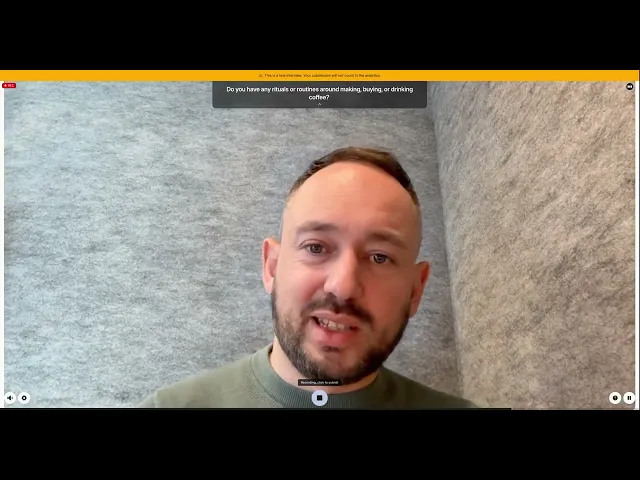
See it in action: How AI-Moderated Interviews Actually Work
2. Outset
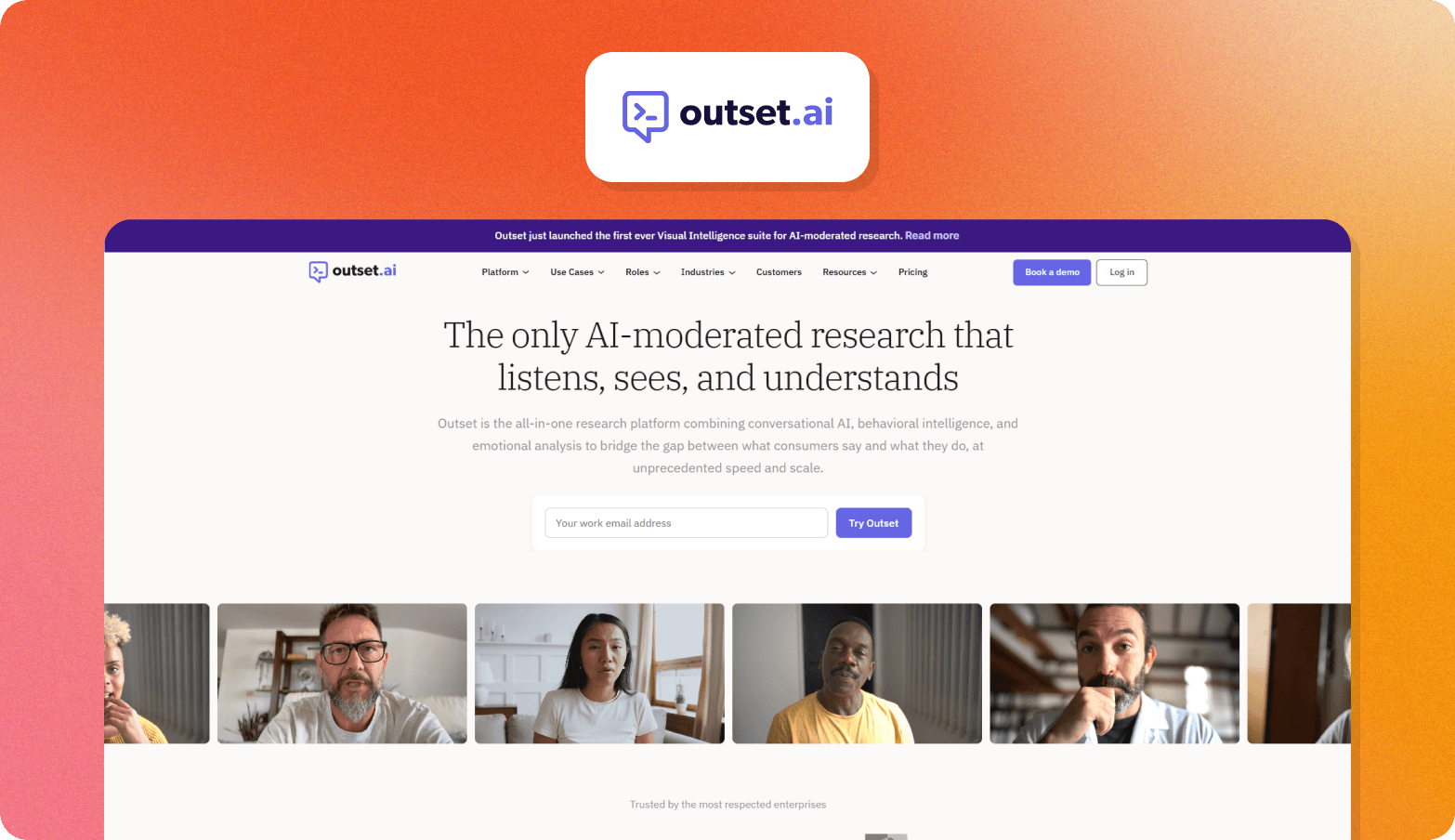
Outset uses AI to run asynchronous interviews over video, voice, and text. Its interviewer can ask follow-up questions based on what participants say, making this AI market research tool useful for product and UX teams that need to run research across time zones.
Findings can be shared and analyzed within individual studies, but teams that want to build a searchable record across studies will typically need to connect Outset with a tool such as Dovetail.
3. Discuss.io
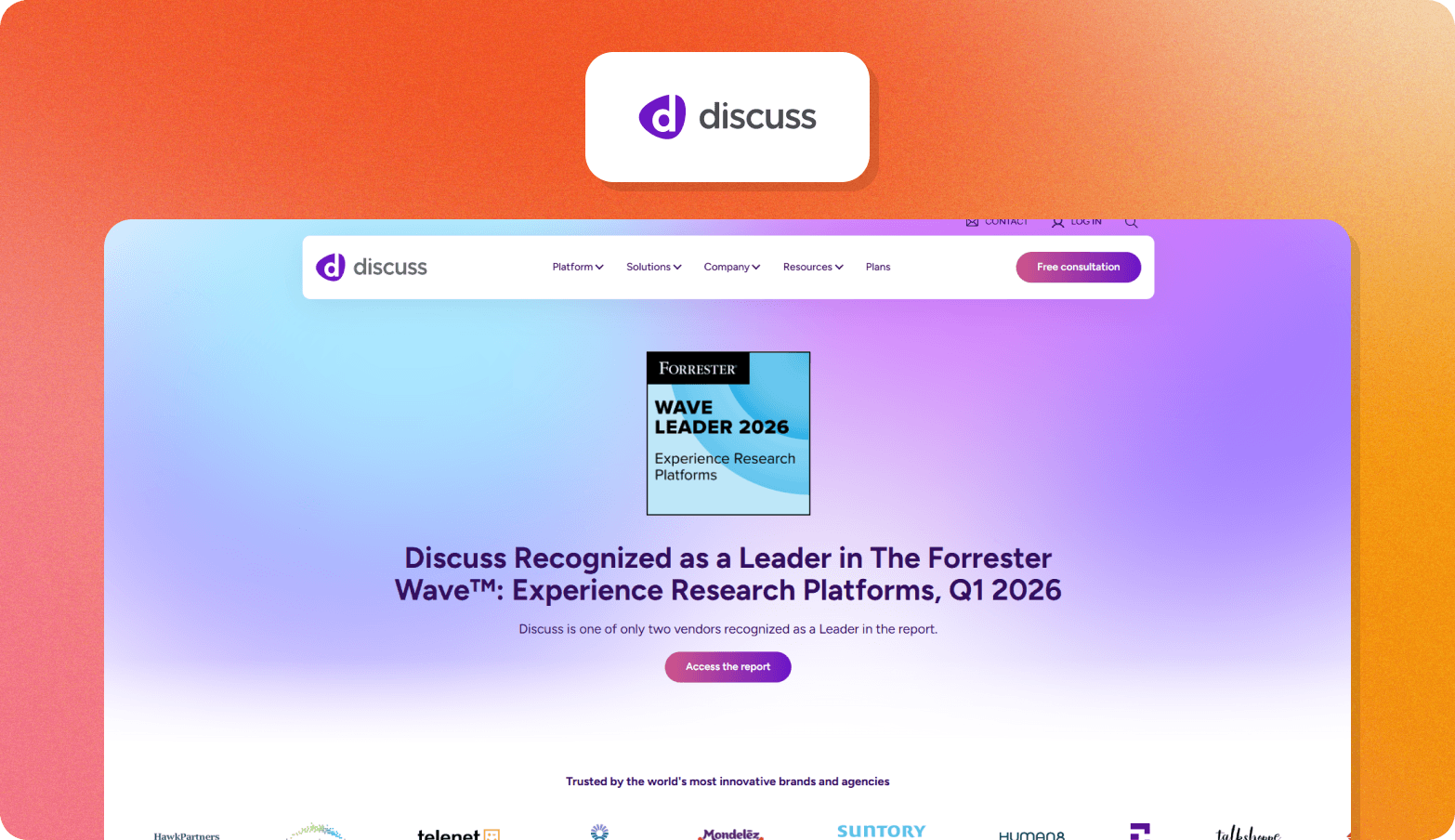
Discuss.io supports both human-moderated and AI-moderated qualitative research. Transcripts are linked to the original video, so researchers can quickly turn a quote into a timestamped clip.
The platform works well for enterprise insights and CX teams researching different audiences and markets, particularly when they want to combine AI and human moderation. Its translation is designed primarily to bring sessions into English, which may be less useful for teams that need research outputs in multiple languages.
4. UserTesting
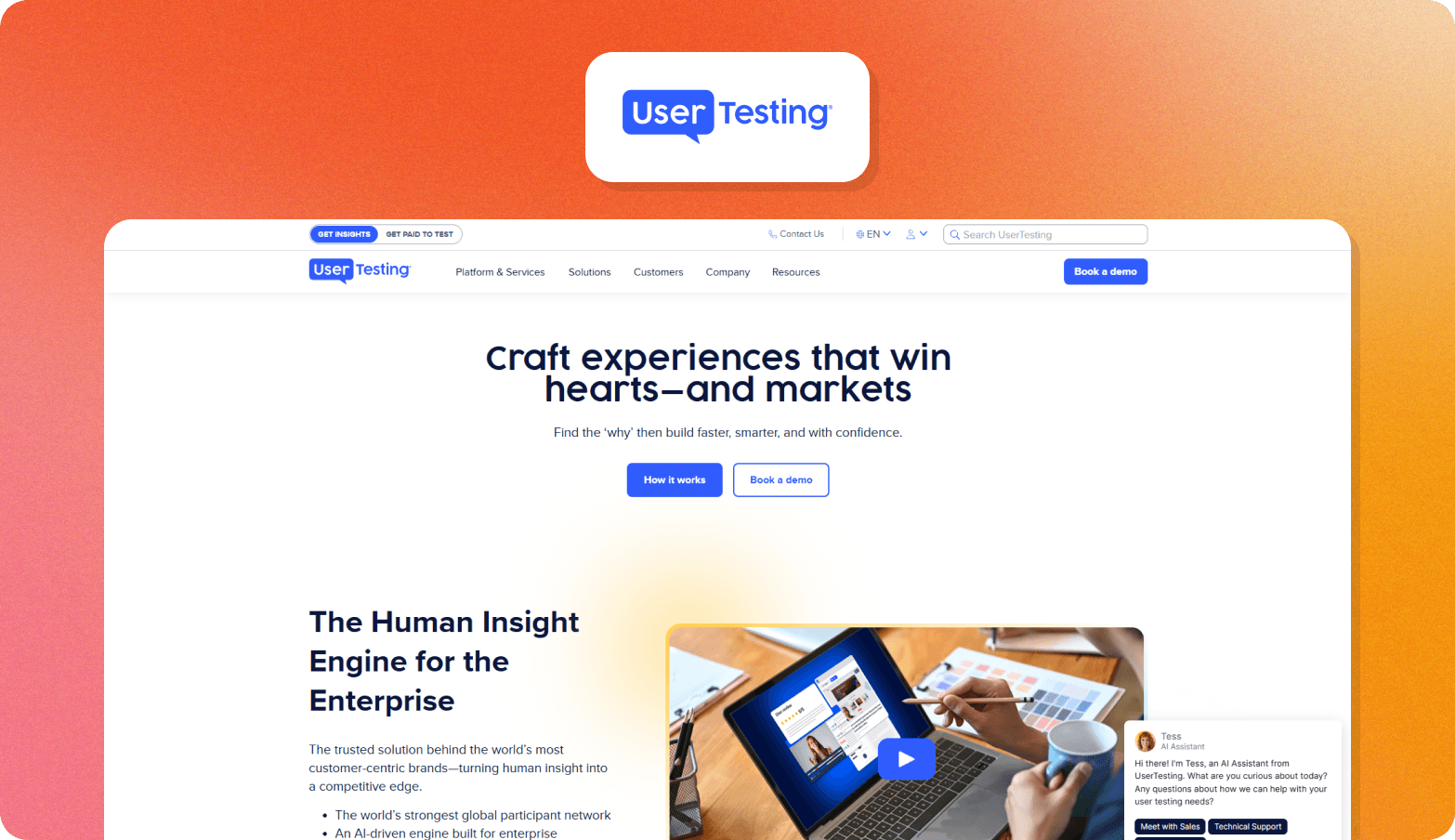
UserTesting brings together unmoderated usability tests, live moderated sessions, and AI-powered analysis, with access to a large customer research panel. It’s particularly well suited to product and UX teams running large volumes of tests on user interactions.
Teams that want to search for and connect findings across past research should check the plan they need, as Insights Discovery, its Insights Discovery feature, is limited to the highest pricing tier and doesn’t currently cover live moderated conversations.
5. Remesh
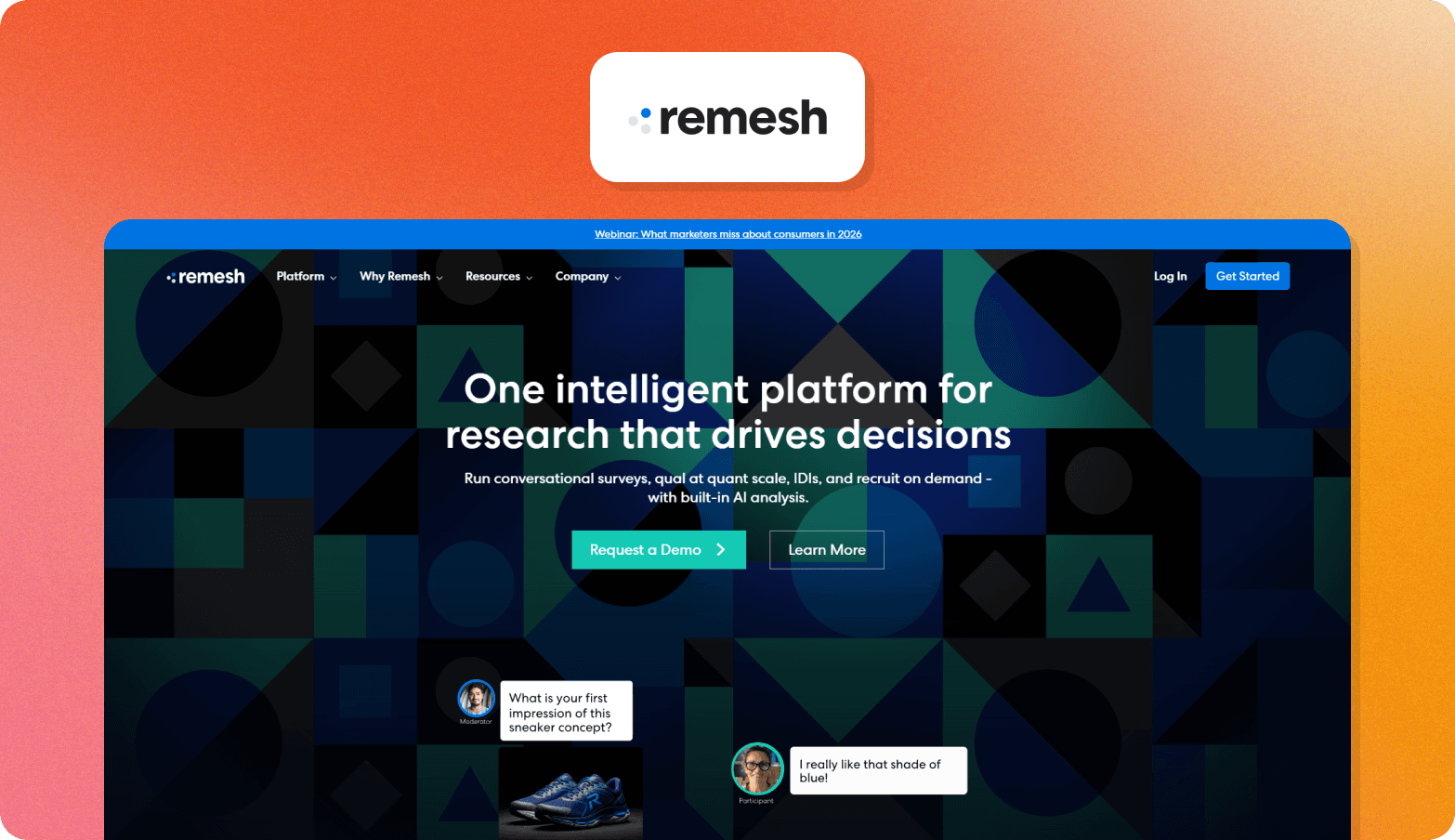
Remesh helps teams run live and asynchronous research with large groups. Participants can respond to questions and vote on each other's answers, making it particularly useful for concept testing, message testing, and other research where group agreement or disagreement matters.
Its AI assistant, Remy, can answer questions about the research and link its analysis back to participant responses, while video clip-level evidence is available through the separate Remesh Video add-on.
Survey Platforms
6. Qualtrics
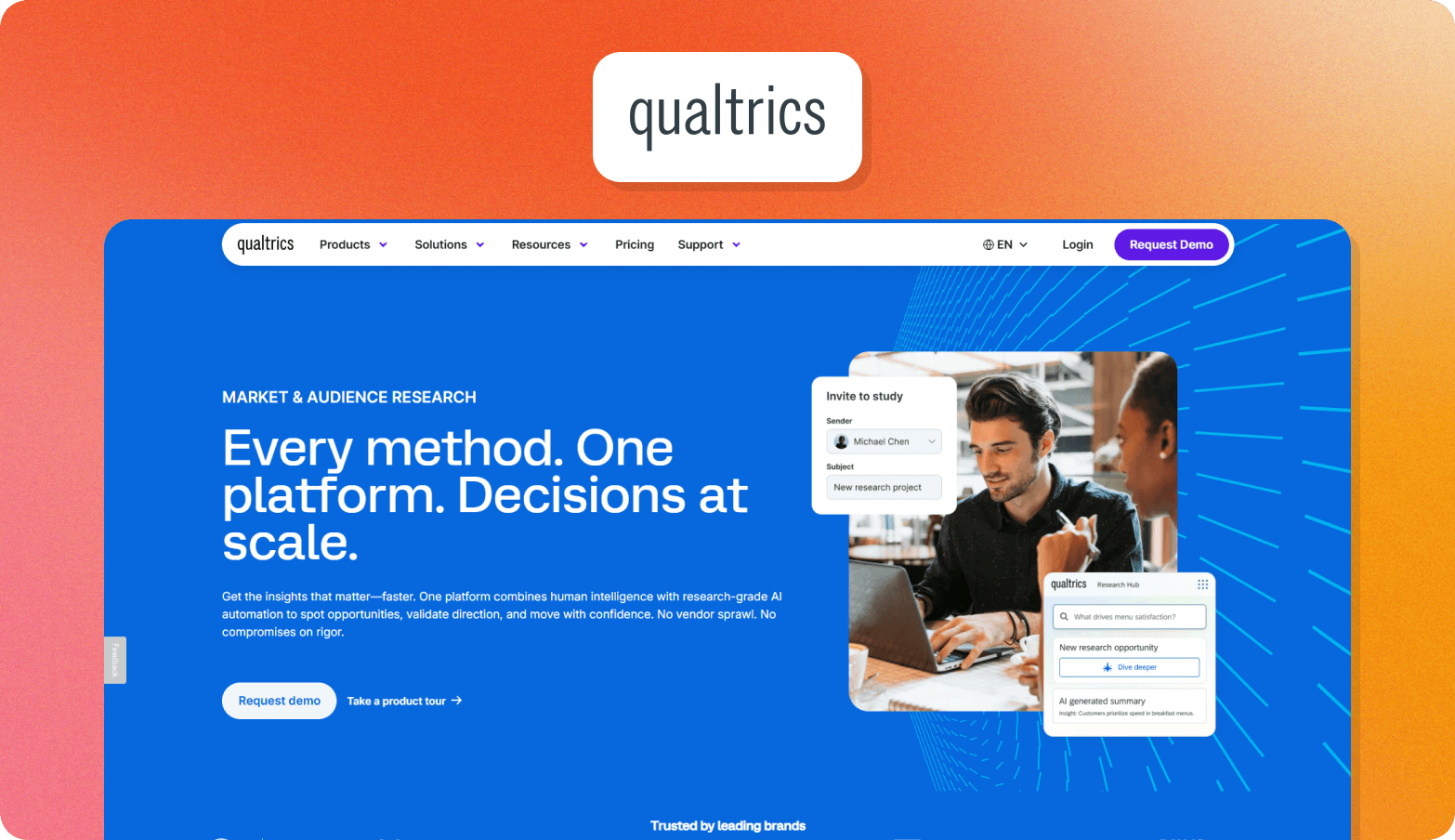
Qualtrics Market Research is an enterprise research platform for running surveys, as well as methods such as concept testing and video feedback. It works well for large organizations that want to run different types of structured research within the wider Qualtrics product suite.
Teams that mainly need to collect structured feedback from a large number of people can use its survey tools and built-in research methods. Teams looking for AI-moderated qualitative interviews will need a different approach. While it does offer video interviews, AI moderation isn’t live yet.
7. SurveyMonkey
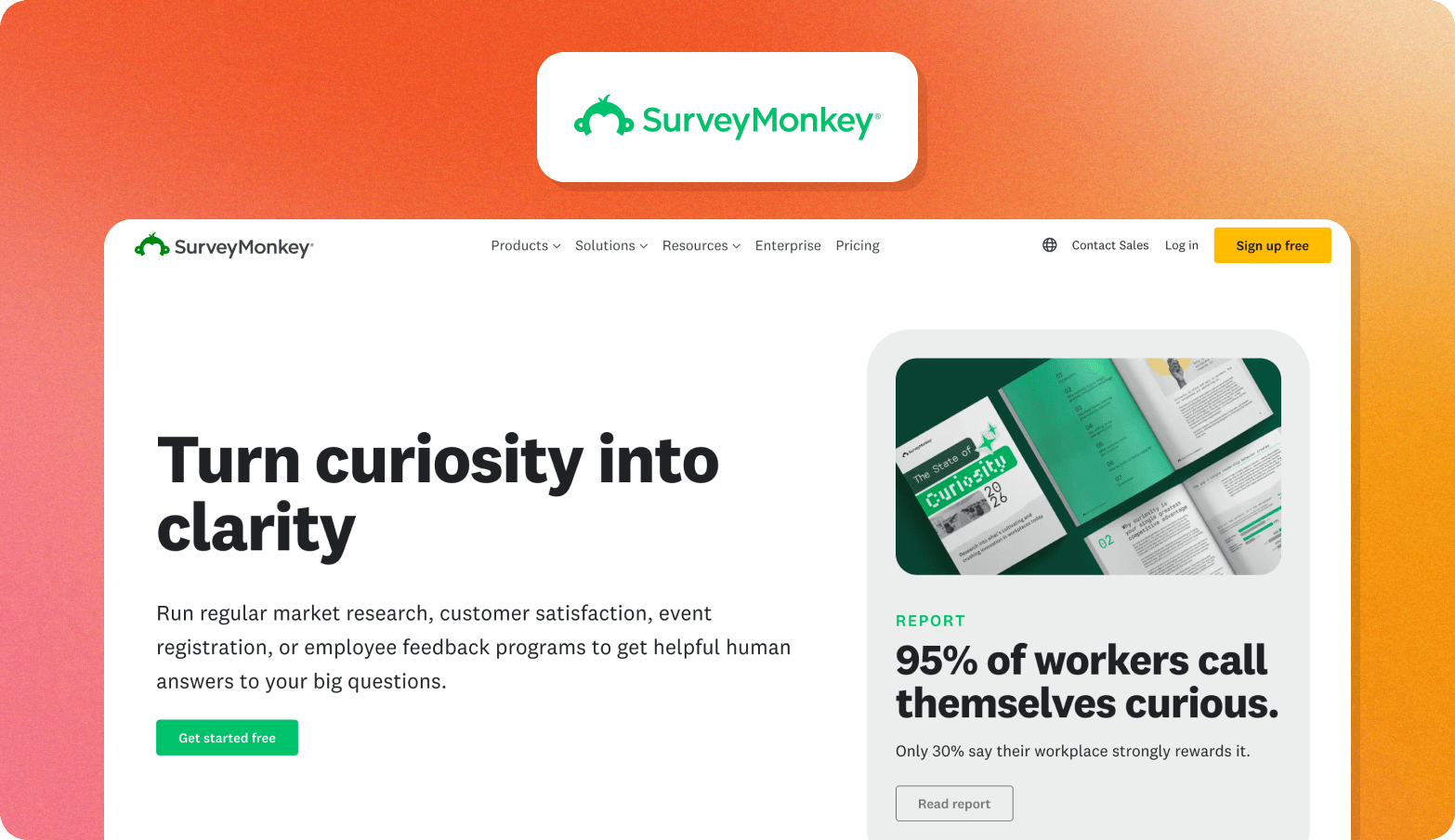
SurveyMonkey offers survey templates, built-in research methods such as MaxDiff and Van Westendorp pricing analysis, and access to a global participant panel. It works well for product and UX teams running quantitative research at scale who want panel access and analysis in the same platform.
Multilingual surveys are only available on Business plans and above, so teams running research in multiple languages will need one of those plans.
VoC and Text Analytics Platforms
8. Thematic
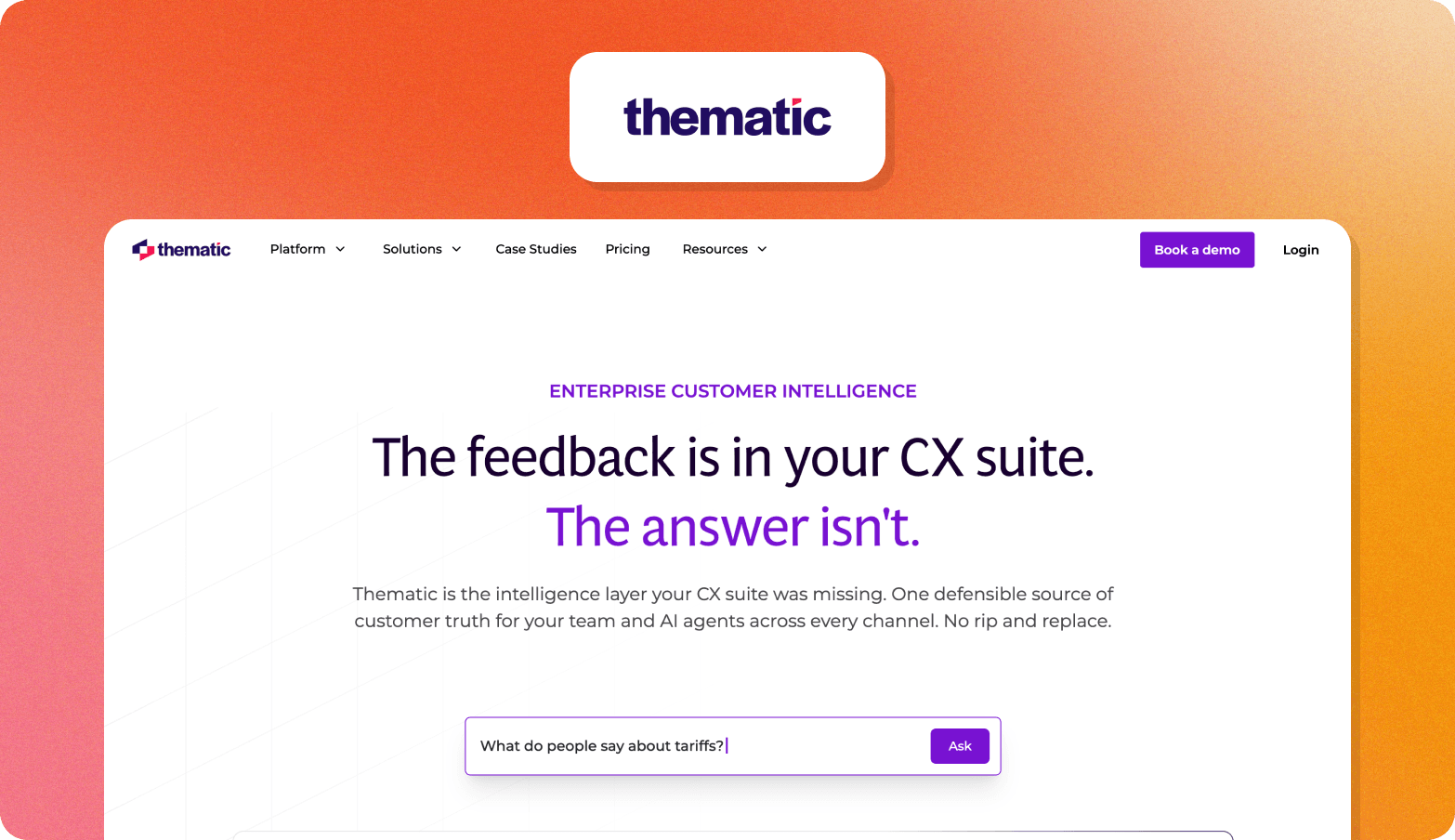
Thematic brings together feedback from surveys, support tickets, calls, reviews, and social media platforms in one place. Its AI identifies recurring themes, links them back to the original comments, and shows how those themes relate to metrics like Net Promoter Score (NPS) and churn.
It works well for enterprise teams managing feedback from multiple channels that want to understand what is driving changes in their customer metrics. With pricing starting at $25,000 per year, it’s likely to make more sense for organizations with an established VoC budget.
9. Medallia
Medallia is a broad experience management platform that covers customer experience, digital experiences, contact center interactions, employee feedback, and market research. Its Athena AI helps teams find patterns and deeper insights across the data collected through those different parts of the platform.
It makes sense for large organizations that want to manage several experience programs in one system. The tradeoff is product complexity: Medallia covers a lot of ground, which can mean a steep learning curve and more time spent configuring the platform than with a more focused insights tool.
Social Listening Platforms
10. Brandwatch
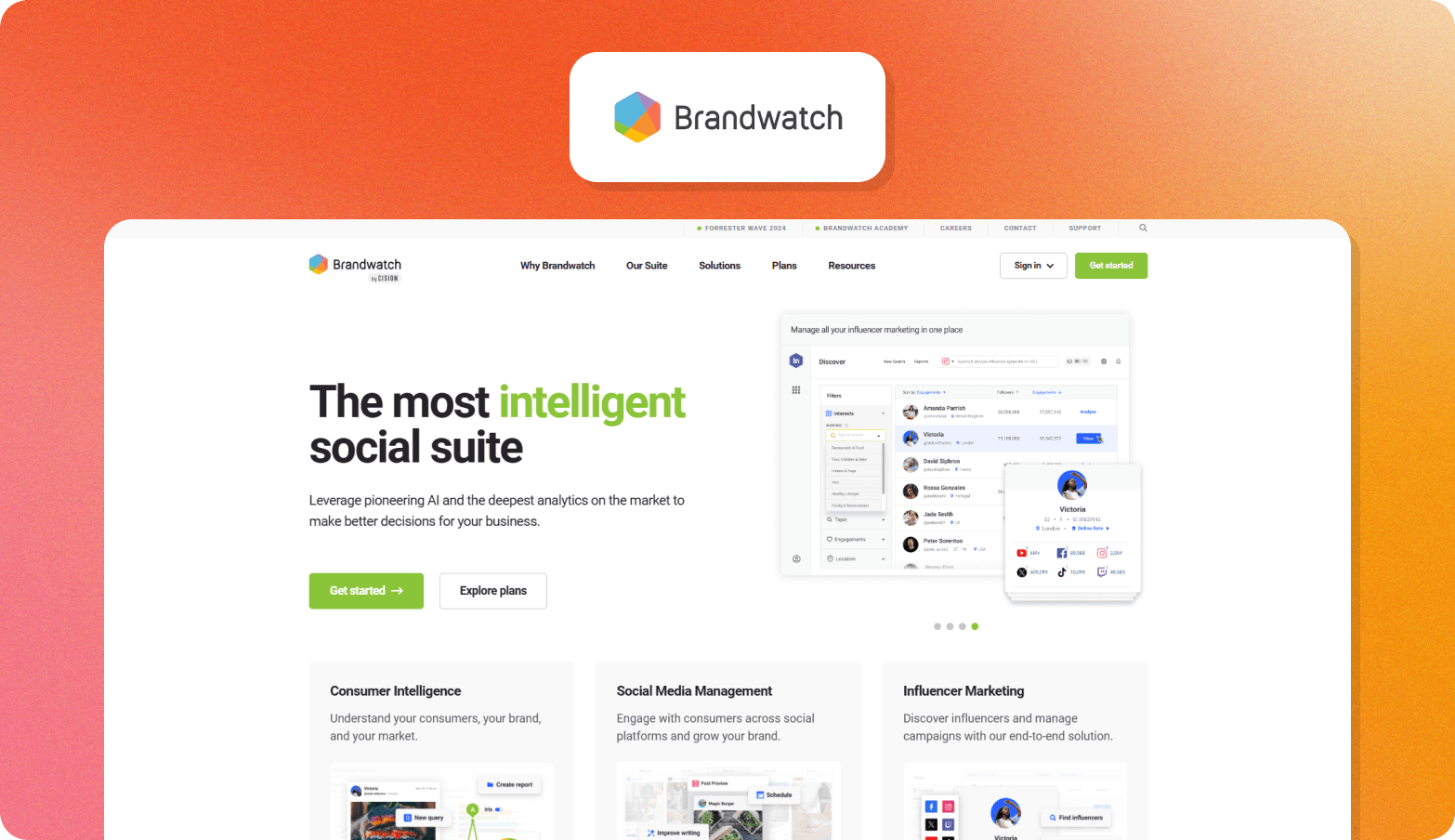
Brandwatch tracks brand mentions and conversations across more than 100 million sources, using AI to help teams with sentiment analysis and spotting emerging market trends. It works well for brand and communications teams that want social listening as part of a wider platform, with publishing, advertising, influencer marketing, and GenAI search intelligence in the same product.
That means teams primarily looking for social listening are getting tools to manage social channels and social marketing strategies, whether they need them or not.
11. Sprinklr
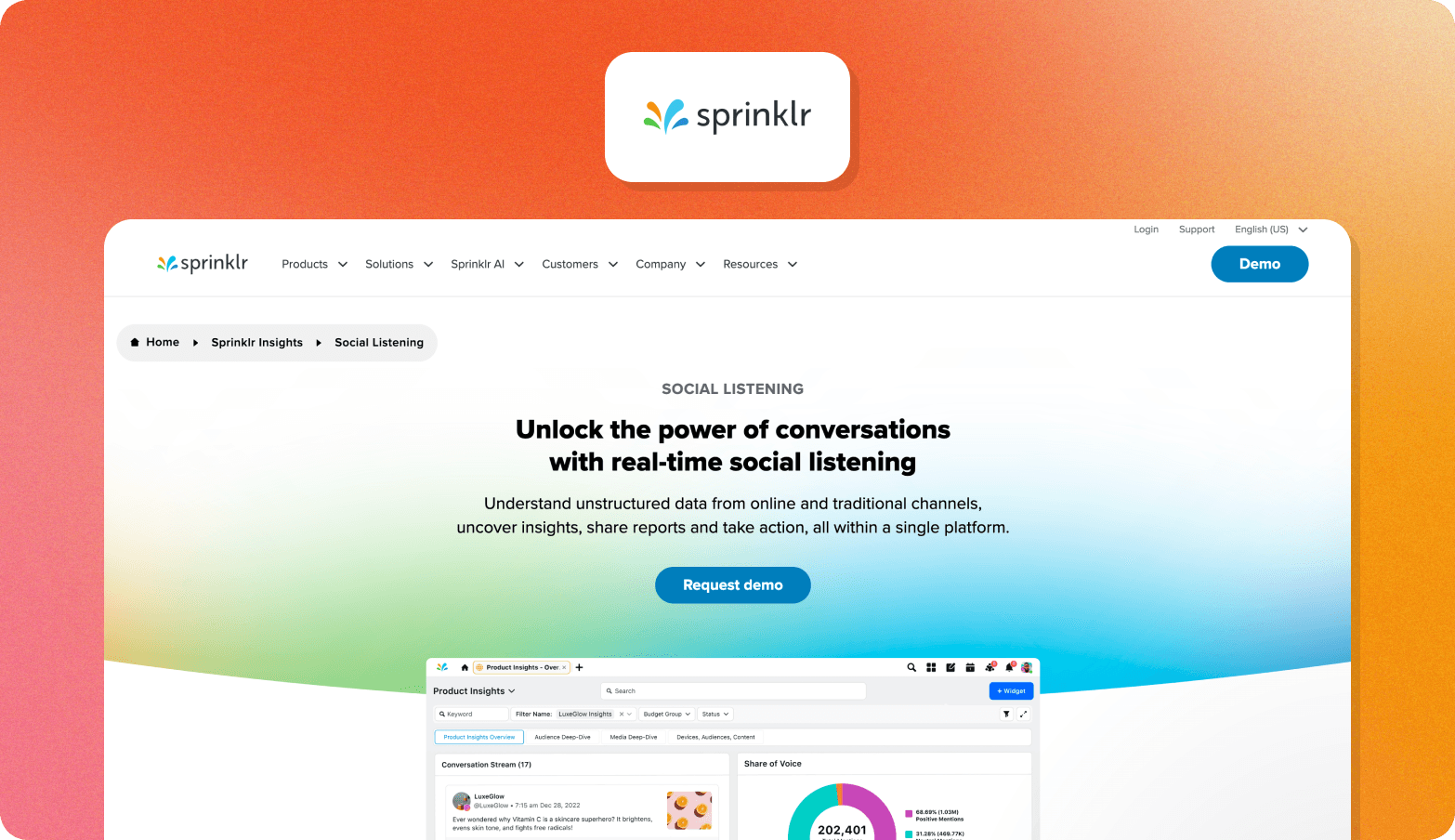
Sprinklr Social Listening monitors conversations across social and digital channels in real time, using AI to help teams track how their brand appears online and identify emerging trends. Its ability to detect logos in images and video also makes it useful for monitoring visual brand mentions.
It’s built for large organizations that want social listening as part of a wider platform for managing social and customer interactions. That breadth comes with more complexity, so teams may need more time to set up and learn the platform than they would with a more focused listening tool.
Product Analytics Tools
12. Amplitude
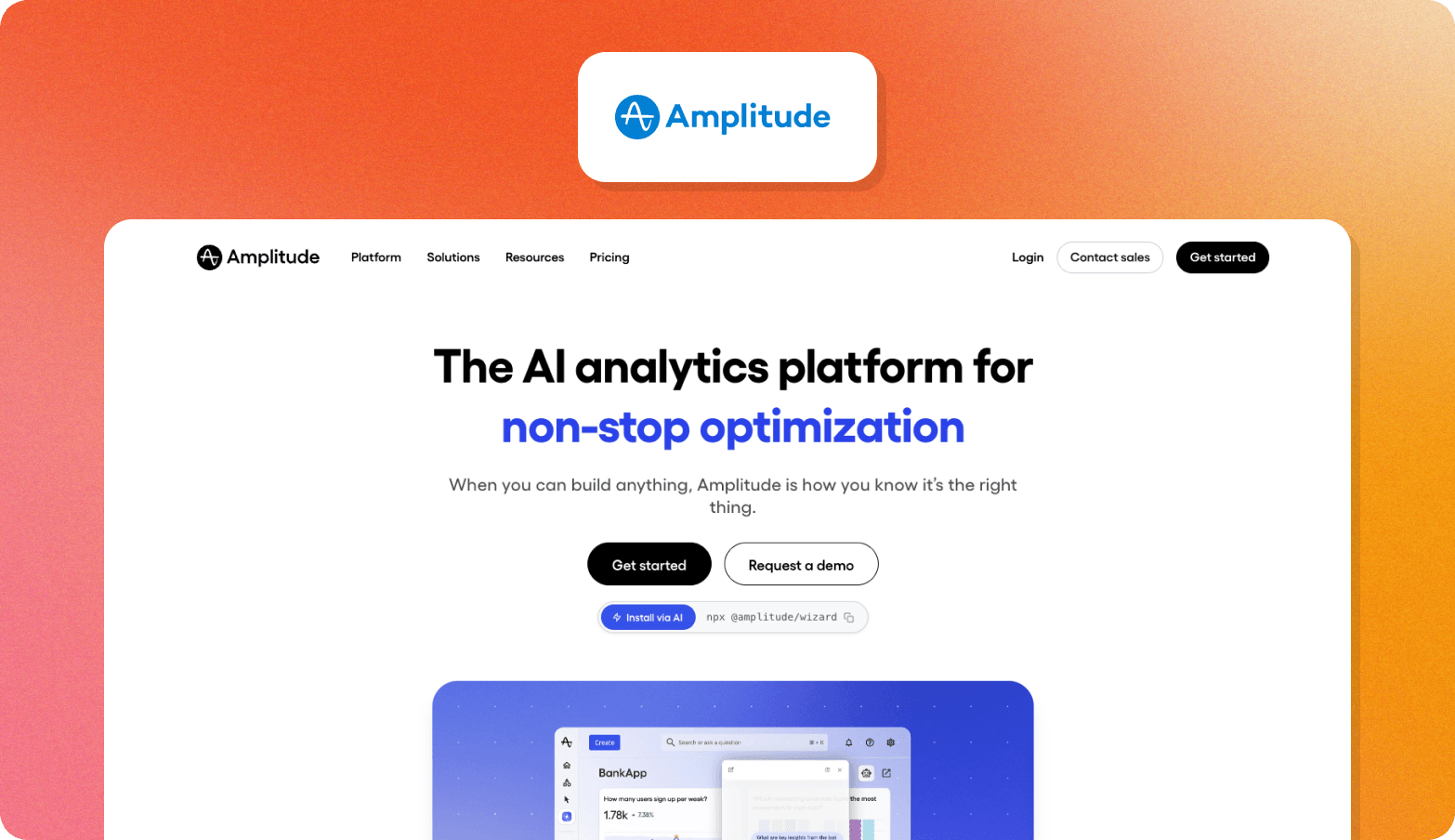
Amplitude tracks how people use a product and helps teams spot patterns in their behavior, such as where users drop off during a journey. It works well for product and growth teams that want to make data-driven decisions about what to improve or build next.
Amplitude also includes surveys and AI-powered feedback tools for collecting customer input. But these tools collect individual responses rather than holding a conversation, so they can’t ask follow-up questions when an answer is unclear or unexpected.
13. Mixpanel
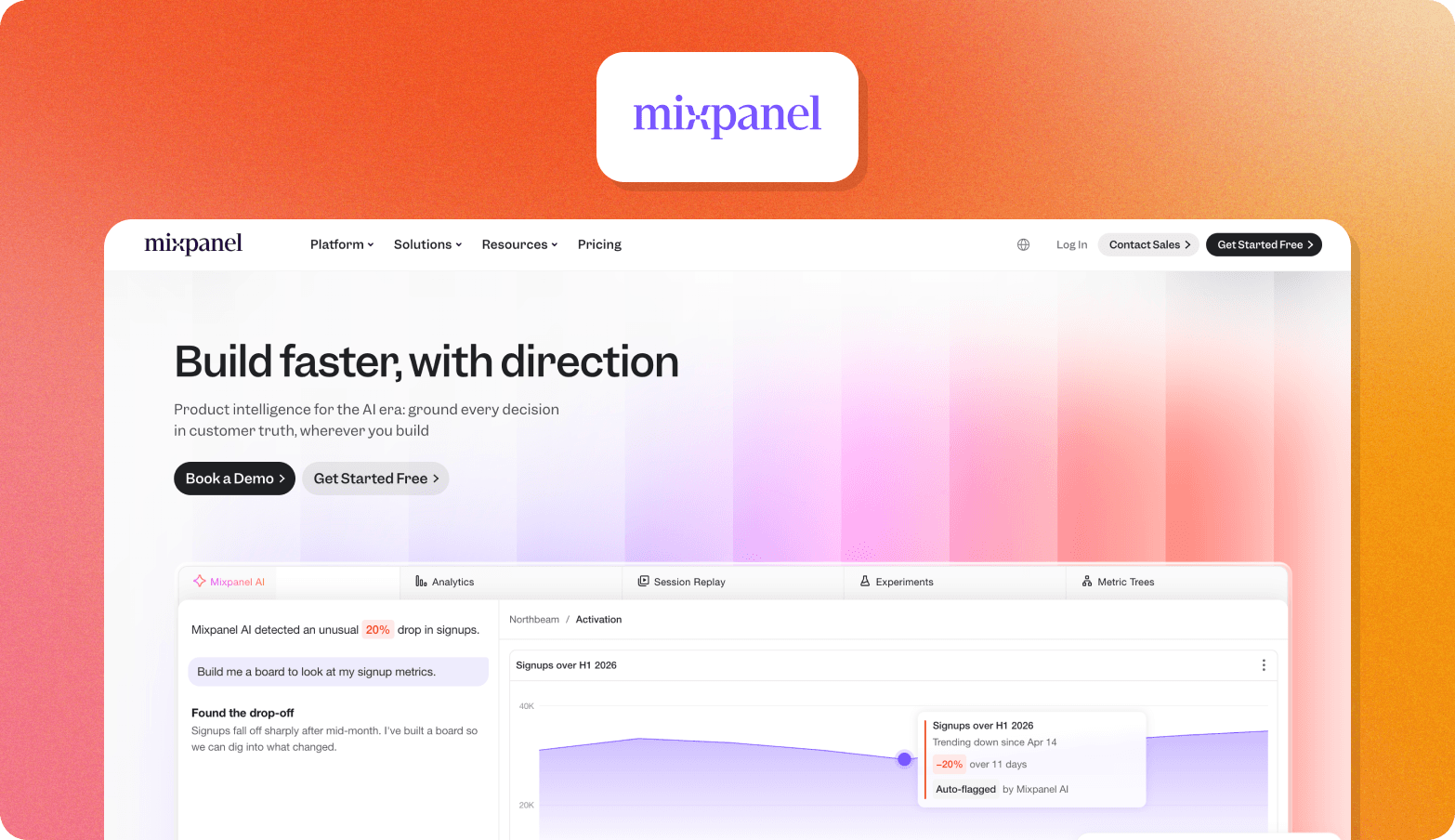
Mixpanel helps product teams track behavior and understand the drivers of changes in their key metrics. Its AI Agent can automatically investigate those changes and identify possible causes.
It works well for teams that want continuous monitoring without having to build reports manually. However, its explanations come from behavioral data and session replays, so it can’t ask users why they made a particular choice.
Insight Libraries
14. Dovetail
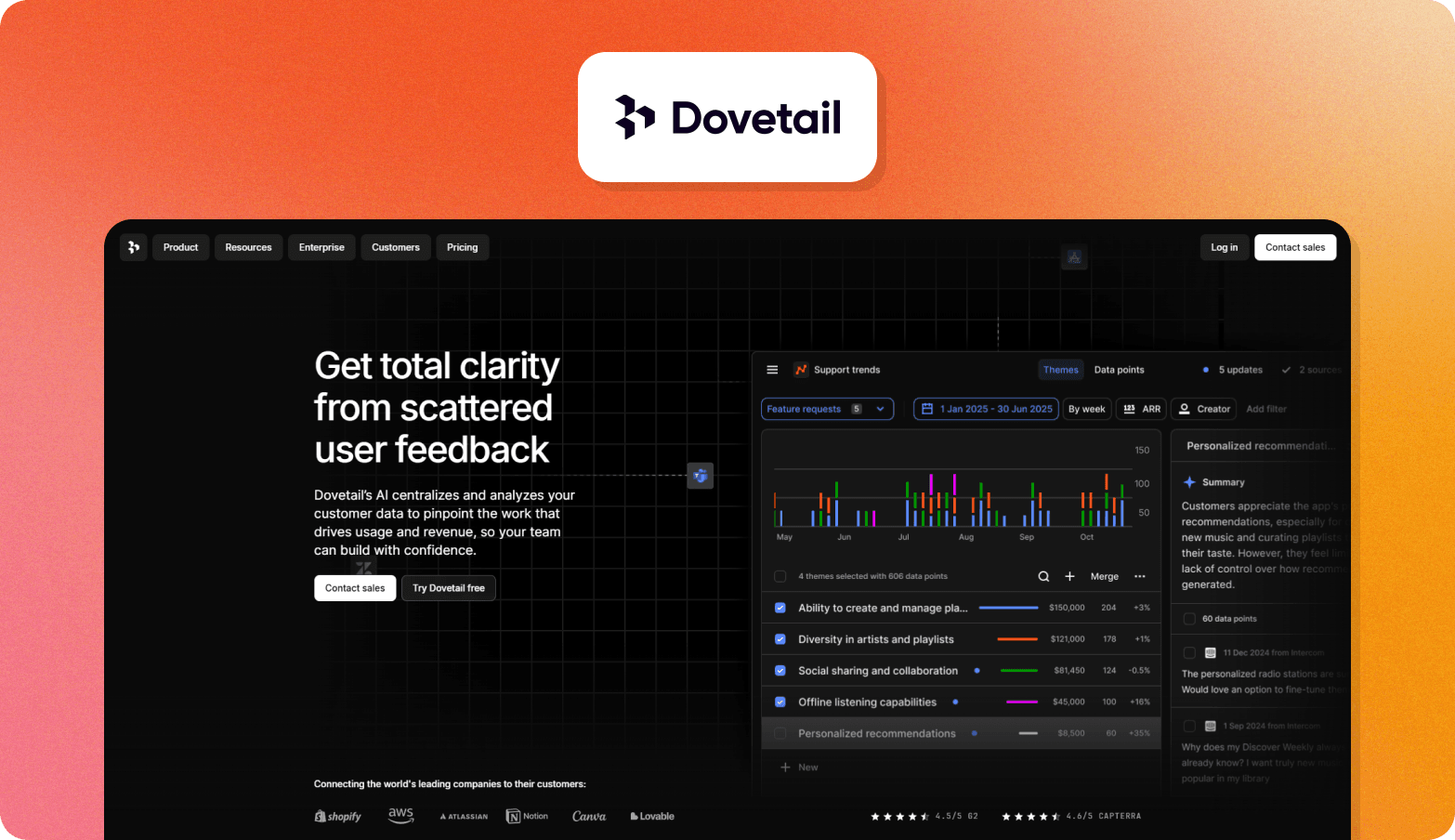
Dovetail brings feedback from calls, support tickets, research, and surveys into one place. Its AI-generated insights link back to the original source, so teams can see the evidence behind each finding.
The platform works with research and feedback you’ve already collected. That means the value you get from it depends on how much useful evidence you have to put into it. Teams with limited or outdated research will eventually need to gather new feedback to keep their understanding up to date.
15. Stravito
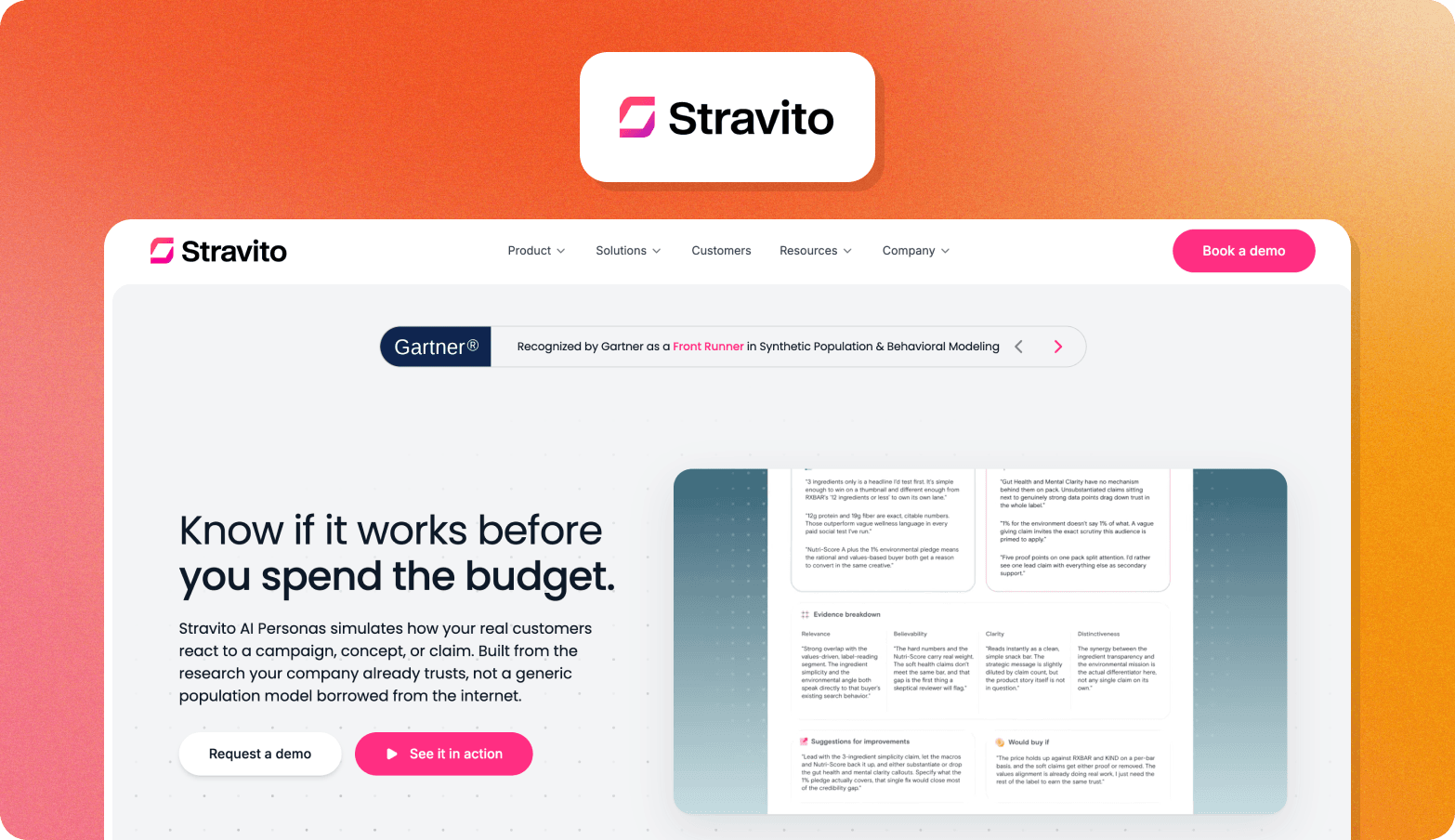
Stravito brings a team's own research together with content from external research providers into a single searchable library. Its AI assistant can answer questions using research stored on the platform, helping teams find and use information that might otherwise be scattered across different documents and sources.
It also offers AI Personas that simulate how a customer segment might respond to the research. However, AI Personas can only work from what the platform already knows and can’t provide evidence about how real customers would respond.
Building Always-On Customer Understanding
Some of the platforms covered above run a single study or occasional studies well. You run the research, analyze the results, and use them to help guide a decision. But when you move to a tool that helps you continuously extract customer insights, the research doesn't stop being useful once that decision is made. Instead, you build on what you've already learned and have a body of evidence to refer to when the next question comes up.
When research isn’t limited to annual strategy reviews or large projects, teams can use customer insights to make day-to-day decisions, like:
A campaign that isn't getting the expected results and needs to change before the quarter ends
A feature the product team needs to decide whether to prioritize
A choice between different messages before a launch
To do this, you need a platform that keeps past research in one searchable place, with the original clips, quotes, and findings still connected. That way, when a new question comes up, your team can first check what it already knows instead of starting from scratch. You can reuse relevant evidence and focus new research on the questions that still need answering.
Procurement Checklist for Primary Research Platforms
If you're collecting video interviews and transcripts directly from participants, procurement needs to check how the platform handles that data before a wider rollout. Use the following checklist when evaluating primary research platforms:
How is participant data protected? Confirm that video and transcripts are encrypted both when stored and transferred. Ask for the vendor's data retention policy and check how long participant data is kept.
Can the vendor meet your security and privacy requirements? Check its SOC 2 status, GDPR compliance, and whether it can provide the documentation your security team needs to review.
How can personal data be deleted? Ask how the platform handles a participant's right to erasure and whether personal data can be deleted automatically when required.
Where is your research data hosted? Confirm whether regional hosting is available and, if needed, whether participant data can be stored in the EU.
Can the platform work with your company's identity management system? Check for SSO and how access is managed across different users.
Once a platform meets your procurement requirements, test it with a low-risk pilot before you commit.
How to Pilot a New Customer Insights Platform
Running a pilot is a helpful way to judge the quality of any customer insights platform, as it shows how it handles real-world data instead of cleaned-up demo datasets. Here’s how to run one:
Pick a genuine research question you’d like an answer to and pick a deadline so you can accurately assess the results.
Run it on 15 to 30 real responses (whether that’s survey responses or video interviews). It’s enough volume to see whether the analysis holds up without creating too much work.
Bring in all relevant stakeholders from the start so you can spot any issues that might affect other teams or workflows.
Pick a small number of findings from the report and test how you can trace them back to the original source.
Once you've run a pilot this way, you'll have a clear idea of whether the approach fits how your team works and provides the valuable insights you need.
Who Conveo Isn't the Right Fit For
The tools in this guide are designed for different ways to gather customer insights. Conveo is built for teams that need to collect and analyze qualitative feedback and evidence on an ongoing basis, but there are situations where another type of tool will be a better fit. For example:
If you mainly need quantitative research from a large number of people and measure how widely a view is held, a dedicated survey platform may be the better choice.
If your main goal is to analyze behavioral data and see how users interact with a product, start with a product analytics tool.
And if your team already has plenty of research and mainly needs a better way to organize and search it, an insight repository may be enough.
For teams that do want to build continuous customer understanding, Conveo takes a different approach.
"The pace, responsiveness, and research expertise of the Conveo team, on top of the top AI-moderated qual platform, have been invaluable to us in scaling brand advertising internationally."
Matt Harris, Research & Insights Lead, EMEA, at Canva
Why Insights Teams Choose Conveo for Building Continuous Consumer Understanding
Conveo is built for teams that need to continuously collect customer insights, rather than commissioning a new research project every time a question arises. This means you can have relevant customer evidence ready when you need to make a decision, whether you're planning a new marketing campaign or trying to understand changing customer preferences.
Here’s how Conveo makes continuous customer understanding possible:
Have customer evidence ready when a decision comes up. Conveo helps teams gather consumer insights continuously, so they can collect new evidence when they need it instead of waiting weeks for a traditional research process.
Know exactly where a finding came from. Every finding can be traced back to a real participant through their video response, transcript, and quotes. The interviews are designed and overseen by researchers, and teams can inspect how follow-up questions led to the final findings.
Build on what you've already learned. The insight library keeps clips, quotes, and findings searchable, while StoryLines connects related research over time. This turns individual studies into a growing body of consumer intelligence that teams can return to when new questions come up.
Meet enterprise data requirements. Conveo is SOC 2-certified, GDPR-compliant, and offers EU data hosting.
Get answers in days rather than weeks. By bringing the research process into one platform, Conveo can help teams move from a traditional research timeline of around six weeks to as little as three days.
Frequently Asked Questions
What are the best tools for extracting actionable consumer insights?
The best tool depends on the question you need to answer. Qualitative research platforms help you understand why people think or behave in a certain way. Survey tools measure preferences and opinions across larger groups. VoC and social listening tools help identify patterns in existing customer feedback and public conversations, while product analytics tools show how users interact with a product. When comparing customer insight tools, look for findings you can trace back to their source, enough context to understand what they mean, and results that arrive in time to support a decision.
What is the difference between consumer insights and market research?
Market research is the process of collecting data about customers, markets, and consumer trends. This can include surveys, focus groups, interviews, and other ways of gathering information. Consumer insights are what you learn from that research. They help explain what the data means and, more importantly, why people behave the way they do. Research might show, for example, that customer satisfaction has fallen. A consumer insight helps explain the reasons behind that change.
How do I validate the quality of AI-generated insights?
Start by checking whether you can trace an AI-generated finding back to the original evidence. For interview research, that could mean reviewing the video clip or transcript behind a finding and checking whether it supports the conclusion. You should also look at how the AI reached its findings. Review the follow-up questions it asked and compare its themes with the original responses. If you can't check the evidence behind an insight, it is harder to know whether it is accurate enough to use for an important decision.
What are free AI tools for market research?
Some market research AI tools offer free plans, although they usually limit how much data you can analyze or which features you can use. Dovetail offers a free plan to organize and analyze research you have already collected. Amplitude and Mixpanel offer free plans for analyzing customer behavior and usage data. These tools can help teams get started with data analysis, but they serve different purposes. The best AI tools for market research and the best tools for market research more broadly will depend on your research goal, not just price.
How long does qualitative research take?
Traditional qualitative research can take several weeks, from planning and recruitment to analyzing interviews and reporting the findings. The exact timeline depends on the size and complexity of the study, and whether you use an agency or a market research tool. AI-moderated interviews can shorten that process by running and analyzing interviews asynchronously, while researchers design and oversee the study. Depending on the study, teams can get findings back in days rather than waiting weeks.
What is always-on customer understanding?
Always-on customer understanding means treating research as an ongoing source of evidence rather than a series of isolated projects. Instead of collecting data for one question, creating a report, and starting again from scratch next time, teams keep past findings accessible and add new evidence over time. This can give teams a deeper understanding of customer needs and make relevant insights easier to find when new decisions come up.

About the author
Meg Gerli
Research Impact Lead
Meg is a Research Impact Lead at Conveo, working with insights and research teams on the studies they run with Conveo.
Meet Meg on film →Qualitative insights at the speed of your business.
Conveo runs AI-moderated video interviews and structures everything they say.