In this article
TL;DR
AI user research platforms differ in how much of the research process they cover, how much qualitative depth they provide, and whether findings stay connected to the original participant conversations.
This guide ranks the best user experience research software in AI, Conveo, Listen Labs, Dovetail, Outset, and Great Question, and tells you which ones run the whole research process versus just one piece of it.
Conveo stands out as a video-first platform that combines AI-moderated interviews, built-in analysis, and a searchable insight library for continuous discovery.
UX and product teams are supposed to talk to customers every sprint, but the research process rarely moves fast enough to keep up. By the time interviews are scheduled and the transcripts are usable, the sprint's already over. That’s why AI user research software has become a priority for stretched teams.
This article compares platforms on how much of the workflow they cover, how much depth you get from a real conversation rather than a form, how quickly results come back, whether findings can be traced to what someone said, and whether that knowledge builds over time rather than disappearing after one study.
It’s written for enterprise UX and product teams with one to five researchers serving a much larger stakeholder group, who need research running every week.
What Makes AI User Research Software "Best" for UX Teams
The best AI user research software is the one that removes enough manual work from the research process that a small team can run studies continuously without adding headcount. Enterprise buyers tend to weigh five things to find the best platform:
How much of the workflow it covers. Before adding a new tool to that stack, it's worth checking whether it covers a full stage of your research process or just a fragment. If you run interviews through one AI moderator, move notes to sticky notes on a shared board, and export tags to a spreadsheet, that’s three separate research tools and three places for insights to get lost.
How much depth you get from a conversation. Surveys and forms are fast, but people only tell you what they choose to type. AI for user research works best with voice or video, where hesitation, tone, and follow-up questions show you the "why" behind user behavior and pain points, not just the "what."
How fast results come back. If findings don’t arrive in time for the decision you need to make, the research doesn't help, no matter how good the underlying analysis process is.
Whether you can trace findings back to what someone said. Stakeholders trust results they can check for themselves. A platform that links a finding straight back to the original clip or quote is easier to defend than a summary alone. Video-first platforms like Conveo take this further, connecting every real human insight to the exact moment it came from in the conversation.
Whether that knowledge builds over time. Without a shared, searchable place to store it, teams often struggle to find previous interviews or insights when similar questions come up again. With one, AI assistants in user research operations can pull up what a past study already answered instead of the team running it again.
The more frequently a team runs research, the more valuable these capabilities become. Small inefficiencies in a single study quickly add up when researchers are running interviews every week. Teams with $40K to $100K or more in annual research budgets, looking to run more research than an agency engagement allows, tend to be the strongest fit for this type of software.
"The pace, responsiveness, and research expertise of the Conveo team, on top of the top AI-moderated qual platform, have been invaluable to us in scaling brand advertising internationally."
Matt Harris, Research & Insights Lead at Canva
Comparison Table: AI UX Research Platforms
Use this table to compare popular AI in user research platforms against the five criteria above.
| Platform | Workflow | Conversation depth | Speed to insight | Traceable evidence | Reusable knowledge |
|---|---|---|---|---|---|
| Conveo | End-to-end, from recruitment to searchable repository | AI-moderated voice and video interviews with real-time follow-ups | Fast, with async interviews and automated analysis | Every insight links to the original clip and quote | Every study adds to a searchable research library |
| Listen Labs | End-to-end, including recruitment, interviews, analysis and library | AI interviews with adaptive follow-up and structured questions | Fast, designed for large interview volumes | Links findings to quotes and video | Mission Control stores and searches past studies |
| Dovetail | Repository and analysis tool only | Depends on interviews run elsewhere | Not applicable; doesn't conduct studies | Depends on uploaded recordings and notes | Searchable repository with AI-powered themes |
| Outset | Recruitment and AI interviews; repository requires Dovetail | AI interviewer across video, voice and text | Fast, with interviews running in parallel | Links themes to quotes and video | Cross-study search requires Dovetail |
| Great Question | Recruitment, scheduling and studies; interviews are human moderated | Depends on the interviewer | Slower, because interviews are scheduled and moderated by people | Recordings can be linked manually | Searchable repository with AI search |
The comparison highlights the key differences at a glance. The detailed profiles below explain how each platform approaches AI user research in practice.
The 5 Best User Experience Research Platforms With AI Features
These platforms all use AI to support UX research, but they aren't direct replacements for one another. Some help teams collect richer qualitative data, others organize and analyze existing research, and others cover the entire workflow from interviews to insight sharing. Use the profiles below to compare them based on the problem you want to solve.
1. Conveo
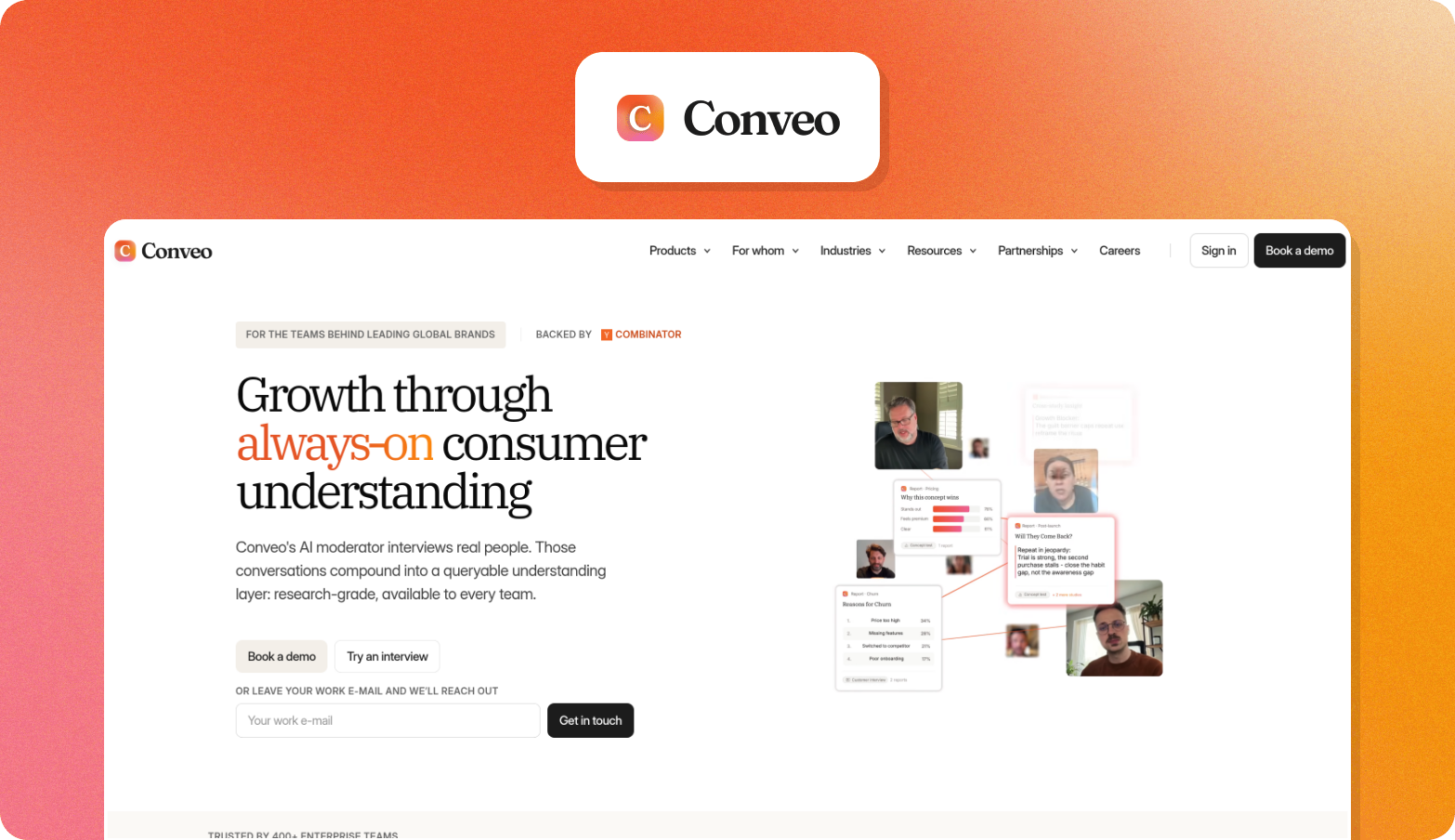
Conveo is the video-first AI research platform built to help teams develop a real understanding of customers at enterprise scale. It does this by running AI-moderated interviews that ask follow-up questions as a live researcher would, rather than relying on static survey questions.
See it in action: How AI-Moderated Interviews Actually Work
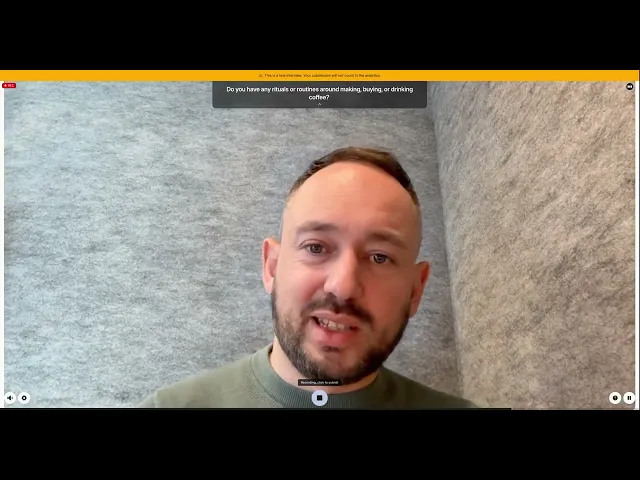
For UX teams specifically, that means capturing the hesitation, tone, and reasoning behind a design decision, the kind of behavioral context a click-through rate or a typed survey answer can't show.
Conveo’s key features for AI user experience research include:
AI-moderated interviews. The AI follows up on vague or interesting answers in real time instead of moving on to the next scripted question in the interview template.
Traceable evidence. Every theme gets auto-coded and linked back to the exact clip and quote it came from, so a UX finding can be checked against the original conversation, not just trusted on faith.
Cross-study intelligence. A searchable library stores every past study, so a new usability question can be checked against what customers said months ago rather than starting from scratch.
Enterprise compliance. SOC 2, GDPR compliance, and EU data hosting are built in, so the platform can clear procurement before a research team even starts using it.
Whether Conveo is the right fit depends on the type of user research you do and how your team is set up.
Best for: Conveo is best for enterprise UX and product teams with one to five researchers running continuous discovery.
Key limitation: Conveo isn't the right fit for teams running purely quantitative user research or organizations without a dedicated research function.
Pricing: Custom enterprise pricing is available on request.
2. Listen Labs
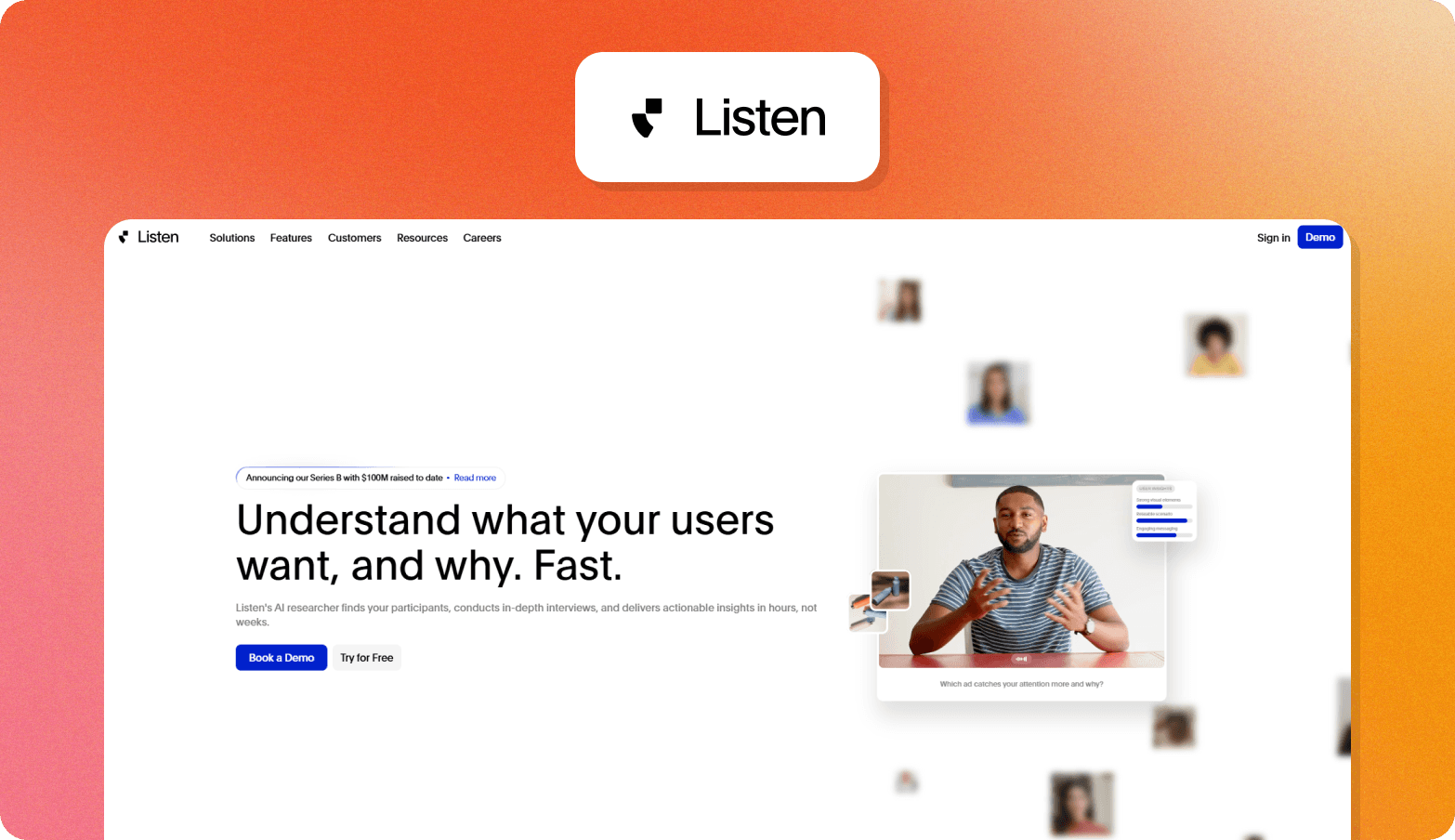
Listen Labs is an AI interview platform that pairs adaptive, AI-moderated interviews with built-in statistical analysis, allowing teams to mix structured questions like NPS or MaxDiff with open-ended conversation in the same study.
Best for: Listen Labs is best for teams that want to run large-scale qualitative studies without building out a research-ops function of their own.
Core strength: It covers the whole research process, sourcing participants from its own panel, moderating with AI, running analysis, and keeping a searchable library called Mission Control, so results come back fast even across large interview volumes.
Key limitation: EU data hosting isn't publicly confirmed, which is worth checking directly if that's a requirement for your organization.
Pricing: Pricing isn't publicly disclosed.
3. Dovetail
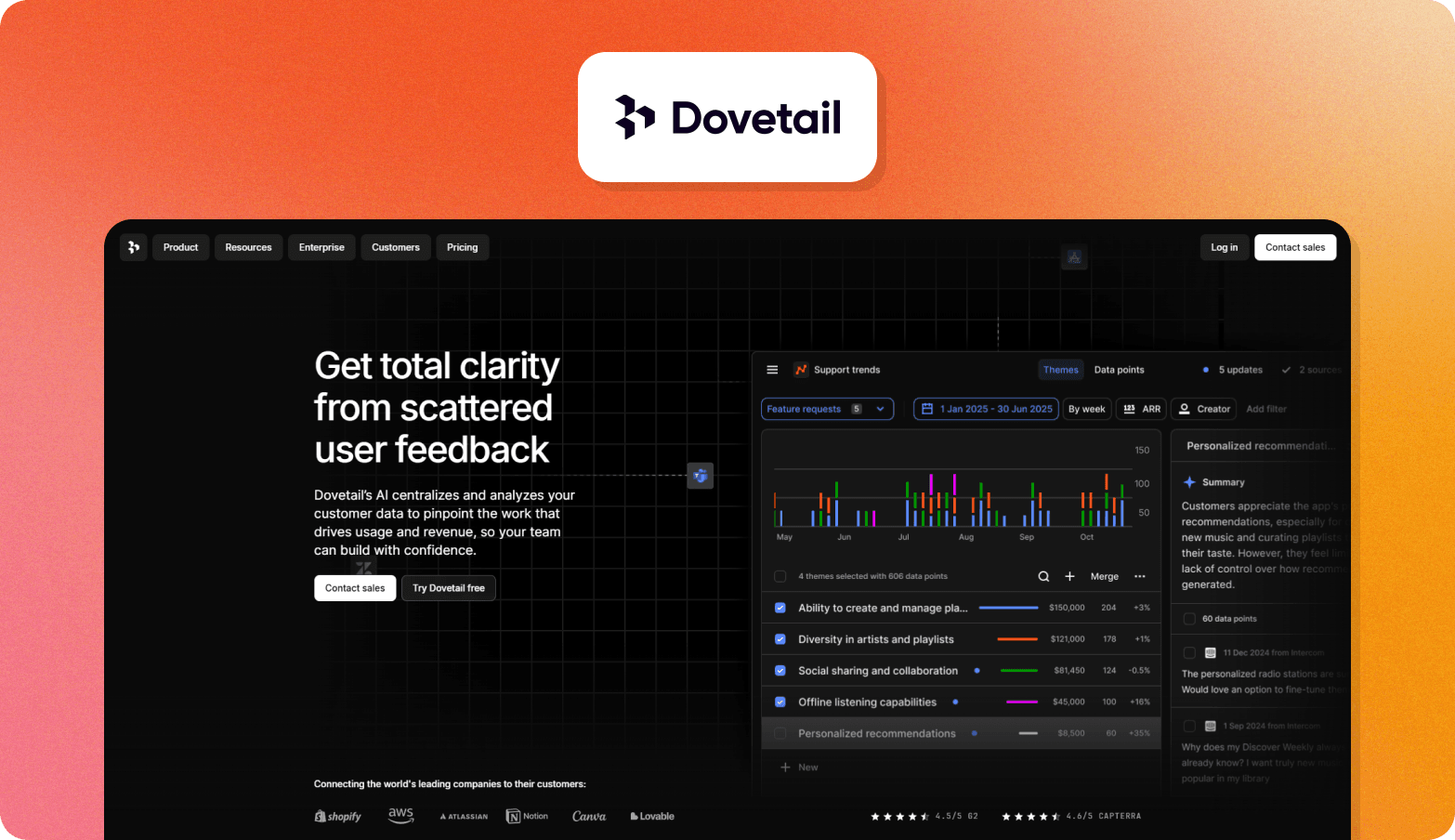
Dovetail turns existing interview recordings and notes into a searchable repository, using AI to surface themes and patterns across everything a team uploads.
Best for: Dovetail is best for teams with an existing interview process who need a central place to organize what they've already collected.
Core strength: It uses AI to automatically surface themes and patterns, keeping that knowledge usable as more studies are added over time.
Key limitation: It covers analysis and storage only, meaning you’ll still need other tools to conduct research and gather behavioral data.
Pricing: There's a free plan for individuals, and enterprise pricing is available on request.
4. Outset
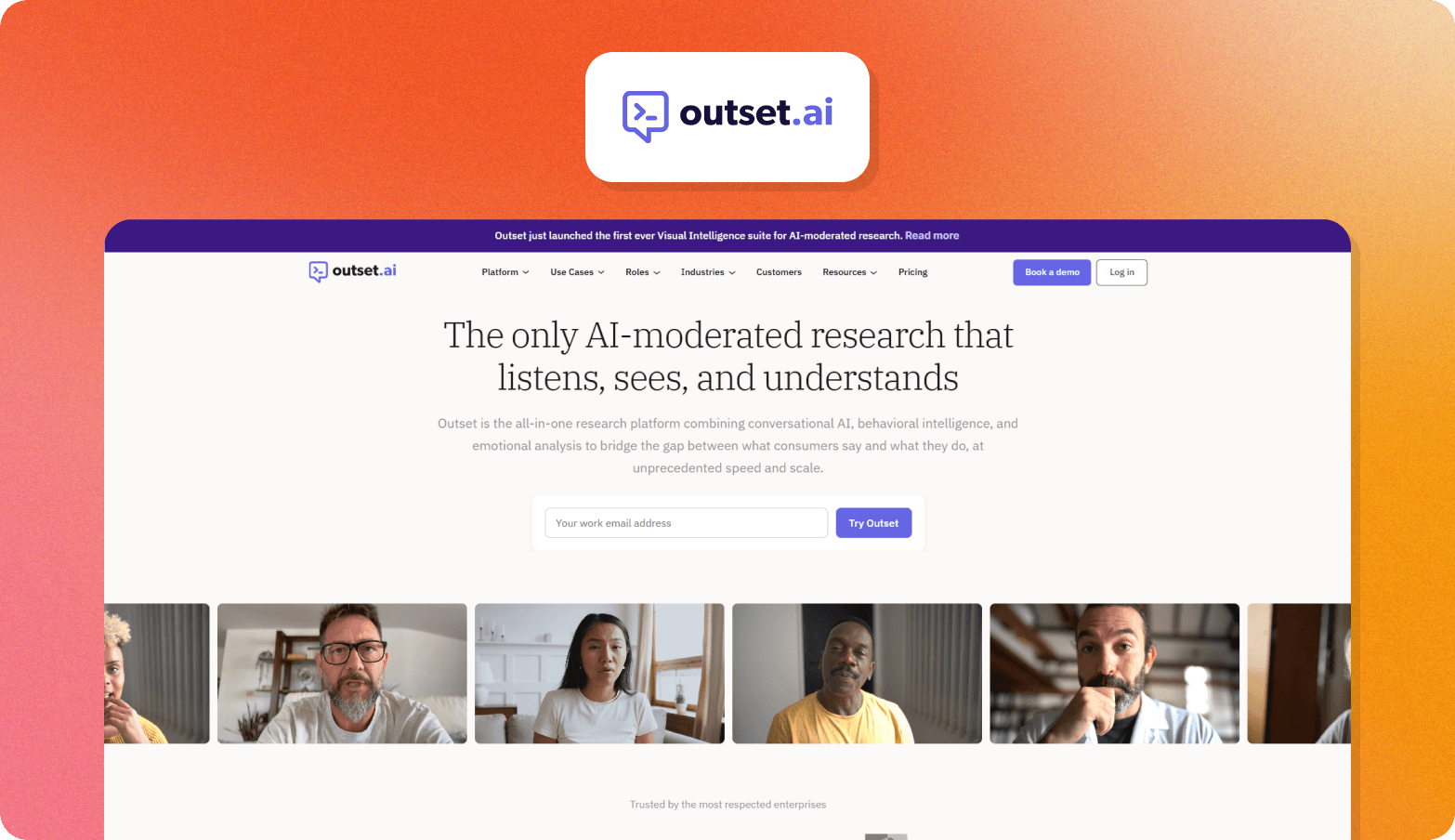
Outset conducts interviews via an AI interviewer named Leo, who asks adaptive follow-up questions across video, voice, or text and lets participants complete sessions in their own time rather than on a live call.
Best for: Outset is best for teams needing large volumes of AI-moderated interviews without waiting on live scheduling.
Core strength: It recruits directly from a network of over a billion global participants and runs interviews itself, so results come back fast even when hundreds of sessions run in parallel across time zones.
Key limitation: There's no built-in way to search across studies, so that runs through a Dovetail integration instead, and knowledge doesn't build in one place on its own.
Pricing: Pricing is custom, based on research and support needs.
5. Great Question
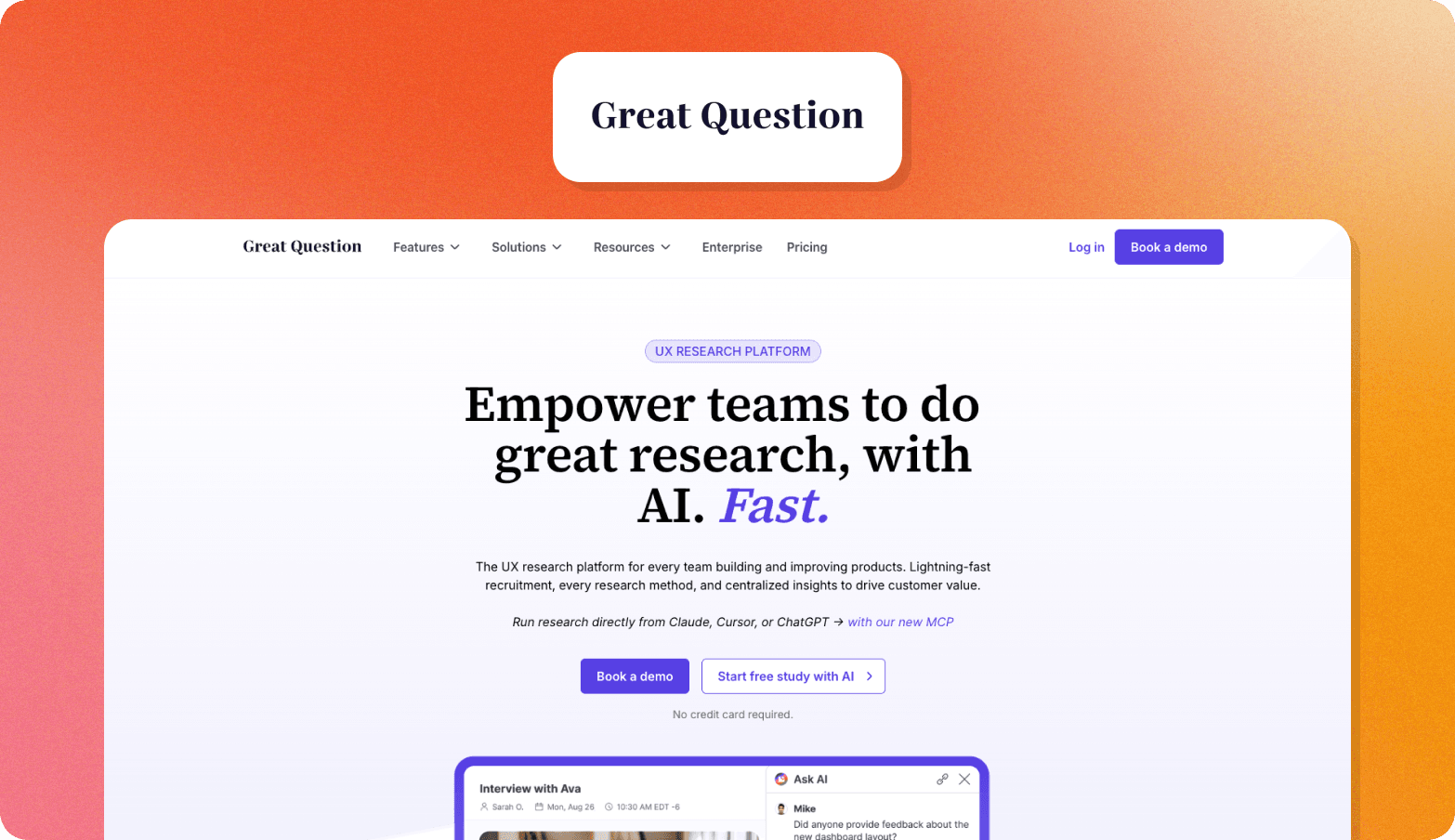
Great Question is a self-serve platform built for product managers and designers to run interviews, surveys, and usability tests without relying on a dedicated research team.
Best for: Great Question is best for UX design teams and product teams that want to run their own research without commissioning a dedicated researcher for every study.
Core strength: It lets teams build a participant panel straight from a CSV or CRM import, and it connects directly to tools like Claude and ChatGPT so teams can query their research without leaving their existing workflow.
Key limitation: AI moderation isn't live yet; it's listed as coming soon on Great Question's site, so for now someone on the team still has to run and moderate every interview themselves.
Pricing: Self-serve pricing starts at $1,290 per seat per year, capped at 5 seats, and enterprise pricing is custom.
Although these platforms take different approaches, they all aim to solve the same problem: helping teams leverage AI to run more research.
How AI User Research Software Speeds Up Research Without Losing Depth
One of the biggest concerns about AI in user research is whether faster research means lower-quality insights. In practice, teams have often had to compromise. Traditional research agencies deliver detailed findings, but projects can take several weeks from planning to final report. Surveys are much quicker, but they rarely explain why participants think or behave the way they do.
AI-moderated interviews speed up the parts of research that take the most time:
Interviews can run as soon as participants join a study, without coordinating calendars.
Transcripts are created automatically, and AI groups similar responses into themes instead of requiring researchers to tag every interview by hand.
Because interviews happen asynchronously, hundreds of participants can take part simultaneously rather than one after another.
This is where generative AI in user research and design thinking is most valuable. Large language models help organize and summarize large volumes of real data, enabling teams to conduct more user research and review findings much sooner.
Researchers are still a vital part of the process. They decide what questions to ask, who to recruit, and how to interpret the results. AI models speed up the work of running studies and organizing data, but they don't replace research expertise.
Why Enterprise UX Teams Choose Video-First AI Research Platforms
If stakeholders can't see where an insight came from, they're less likely to use it to support product decisions.
Video makes that evidence easier to trust. Instead of relying on written interview summaries, stakeholders can watch the original interview, hear what real users said, and understand the context behind each finding. It also captures reactions and body language that surveys and text-based research methods can’t.
For example, a written report might say that users struggled with a new checkout flow. That's difficult for a product manager or UX designer to evaluate. With video interviews, they can watch the clips behind that finding, see participants pause at the same specific moments, hear them explain what confused them, and decide whether the evidence supports making a design change.
Conveo uses real participants in real video conversations rather than AI-generated personas or synthetic users, helping you get genuine feedback and encouraging user diversity in your research. Every insight links back to the original interview, making it easy to review the evidence.
How Insight Libraries Help You Get the Most Out of Customer Feedback
Every research study answers some questions, but it often raises new ones later. If teams can't find past interviews or compare them with newer studies, they end up repeating generative research work they’ve already done.
Conveo's searchable insight library helps teams find interviews, quotes, and video clips from previous studies using plain-language search. New researchers can quickly understand what has already been learned, while stakeholders can review existing customer feedback before requesting another study.
Some tools store recordings or transcripts only for individual projects. Conveo connects findings from across studies into a single searchable library, making the repository more useful as more research is added.
How Conveo Supports Continuous UX Discovery
Continuous discovery works best when research stays connected from the first interview through to the final insight. Conveo brings participant recruitment, AI-moderated interviews, analysis, and a searchable insight library together in one platform, so teams don't have to move research between different tools.
Every finding stays linked to the original video conversation, making it easy for stakeholders to review the evidence behind a decision. As more studies are completed, the insight library becomes a stronger source of evidence for future product decisions.
Frequently Asked Questions
What does "best" mean for AI user research software?
The best AI user research software depends on how your team works. Some AI tools focus on user interviews, while others specialize in analysis or participant recruitment. Look for software that fits your research process, produces reliable research findings, and gives teams access to the original evidence behind every insight.
Can AI research platforms replace human researchers?
No. AI can speed up repetitive tasks such as thematic analysis, tagging themes, and creating AI summaries of interviews, but researchers still decide what questions to ask and how to interpret the results. The best platforms focus on enabling researchers rather than replacing them.
How do AI-moderated interviews compare to human-moderated sessions?
An AI moderator can run multiple research sessions simultaneously, making it easier to collect qualitative data from more participants. Human moderators remain valuable when studies require complex follow-up questions or careful facilitation. Many teams use AI-moderated interviews for continuous research and reserve moderated studies for more specialized projects.
What's the difference between AI research platforms and transcription tools?
Transcription tools convert interviews into text-based data, but they usually stop there. AI research platforms support more of the research process by combining participant recruitment, qualitative analysis, searchable research repositories, and links back to the original interviews. That makes past research easier to find and reuse, rather than leaving it scattered across different tools.
How much does AI user research software cost?
Pricing varies depending on the platform and the features included. Some tools charge per researcher or study, while others offer custom enterprise pricing based on research volume and team size. When comparing costs, consider the whole workflow rather than individual AI features, especially if replacing multiple research tools or reducing agency spend.
What compliance certifications matter for enterprise UX research?
Enterprise teams should look for platforms that support common security and compliance requirements such as SOC 2, GDPR, and, where needed, ISO 27001 or CCPA. It's also worth checking where participant data is hosted, whether the platform supports single sign-on, and how it manages consent and data retention.

About the author
Florian Hendrickx
Head of Growth
Florian is Conveo’s Chief Growth Officer, leading growth strategy and go-to-market execution as the company scales. He’s held growth leadership roles at companies like Deliverect, Robovision, and Aikido Security, and brings hands-on experience across marketing, sales, and product.
More by Florian →Qualitative insights at the speed of your business.
Conveo runs AI-moderated video interviews and structures everything they say.