In this article
TL;DR
The best AI for market research and analysis gives you findings that arrive before you need to make a decision, and a clear understanding of where those findings come from.
AI market research tools fall into three groups: AI interview platforms collect new responses from real participants, synthetic research tools generate simulated responses, and desk research tools analyze information that already exists.
This guide compares 10 AI market research tools on research quality, whether you can reuse past findings, security and compliance, and whether each finding traces back to its source.
Heads of Consumer Insights and CMI Directors can use the framework to build a vendor shortlist.
AI is now built into many market research tools, but it's used in very different ways. Some tools run interviews with real participants and analyze what they say. Others generate answers from a model or summarize published data.
The outputs can look alike, with accurate-sounding themes and quotes, but they aren't equally reliable. A language model can cite a statistic that doesn't exist, and a synthetic respondent can give answers that no real person would ever give.
Choosing the best AI for market research and analysis comes down to whether you can check where each finding came from. This guide compares ten AI market research tools on how they reach their findings and whether you can trace them back to the source, with the questions to ask each vendor before it reaches your shortlist.
Make defensibility the starting point for your AI research shortlist
Research only helps when it reaches the decision in time and gives stakeholders enough confidence to act on it. AI makes it possible to produce research faster, but it’s not always clear how those findings were reached. When you can’t back up your research, basing high-stakes decisions on it becomes a risk.
For example, imagine a snack brand runs a concept test to choose between three packaging designs for a new product. The consumer insights team uses AI market research intelligence that says their target market prefers Design B, and they send it to print.
The market research tool they used doesn’t show them what individual participants said about the designs, so they can’t tell whether the research was wrong or how the data analysis arrived at Design B. They’re left in the dark as to whether the design is contributing to poor sales, and if it is, what they could do to fix it.
When you evaluate market research platforms, check that every finding comes with evidence you can review, as well as how quickly the results arrive.
How to evaluate AI market research platforms (4 things to look for)
Having criteria to compare platforms against saves you time at the evaluation stage and keeps you focused on the capabilities most important for your research. Here are four key areas to keep in mind as you look at AI market research tools.
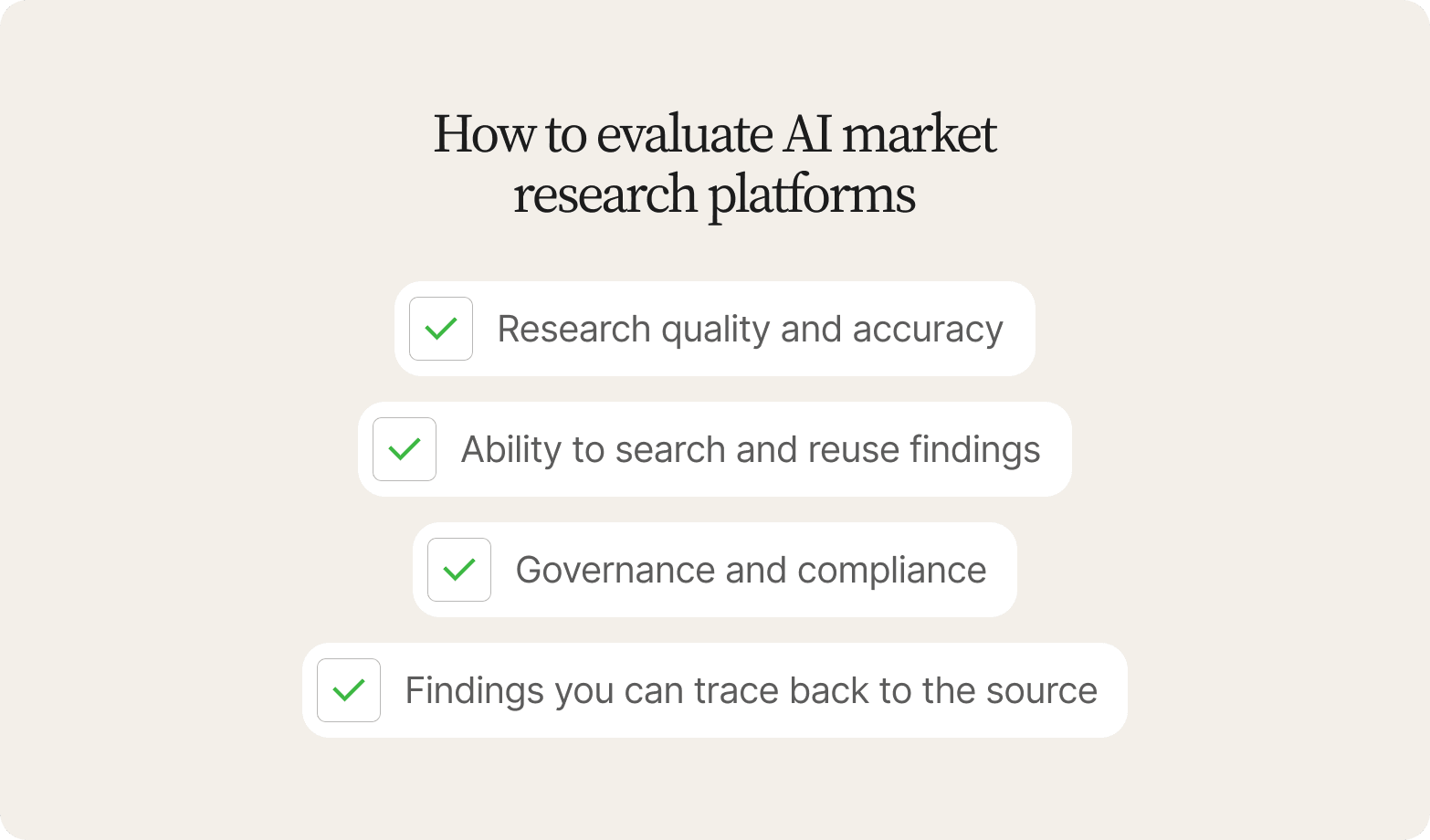
1. Research quality and accuracy
The quality of the findings from AI market research companies determines how confidently you can use them to support business decisions. Here’s what to check:
| Look for | How to check it | Why it matters |
|---|---|---|
| Follow-up questions that go deeper | Ask how the AI responds when a participant gives an unexpected or incomplete answer. Look for evidence that it adapts its follow-up questions to the participant's responses. | Strong qualitative market research explores what participants mean and uncovers detail beyond their initial answers. |
| Controls for bias | Ask how the platform identifies and reduces bias during recruitment, interviewing, and analysis. | Clear controls help produce findings that reflect participant perspectives and support reliable decisions. |
| Verified participants | Check how participants are recruited and verified, and what evidence the platform provides about the people who took part. | Research findings need a clear connection to relevant, verified participants. |
| A clear way to review AI findings | Ask how the AI analysis is reviewed, whether researchers can inspect it, and how findings connect to the original participant evidence. | Reviewable analysis adds human expertise to AI-generated findings, so research teams can trust their accuracy and relevance. |
2. Ability to search and reuse findings
Research findings become more valuable when teams have a way to find and use them after a study is complete.
Without a searchable system for past research, teams have to manually search through qualitative data from previous studies when they need to answer a new question. That takes time and makes it easier to overlook key insights or commission new research into questions the team has already answered.
Look for platforms that keep every study in a searchable library, so research teams can bring relevant evidence from previous work into new projects and avoid duplicated research. Over time, each study adds to a growing body of knowledge that informs future decisions and helps the research function run more efficiently.
3. Governance and compliance
Research platforms handle sensitive participant data, so governance needs to cover how that data is protected, accessed, stored, and managed. Here’s what to look for:
| Look for | How to check it | Why it matters |
|---|---|---|
| SOC 2 Type II certification | Confirm the platform has a current SOC 2 Type II certification and check what systems and services it covers. | Provides evidence that the platform has controls for protecting customer data. |
| GDPR compliance | Ask how the platform handles participant consent, personal data, data processing, and data subject requests. | Helps ensure participant data is handled in line with European privacy requirements. |
| EU hosting | Confirm where research data is stored and processed, including the location of primary infrastructure. | Supports organizations with EU data residency requirements. |
| Access controls | Ask whether the platform supports SSO and role-based access controls, and how permissions can be configured. | Helps organizations control who can access research data and manage access through existing security systems. |
| PII deletion | Ask how users can identify and remove personally identifiable information and whether deletion can be requested on demand. | Gives research teams control over participant data when deletion is required. |
| Audit trails | Check whether the platform records user activity and what events are included in the audit trail. | Creates a record of how research data is accessed and managed. |
4. Findings you can trace back to the source
AI models can minimize human error and are good at identifying patterns humans might miss, but they can also create “data” that doesn’t really exist. The best AI to do market research should let you move from an actionable insight back to the raw data behind it. With that evidence, you can feel more confident in your decisions and be able to explain them clearly.
For example, if an analysis says customers are confused by a product feature, you should be able to open the finding, see the theme behind it, read what the participant said, and watch the relevant part of the interview.
When a platform offers this level of transparency, you can easily check whether the evidence supports the conclusion. Whether it’s possible depends on how the tool approaches data collection and how it implements AI features.
The 3 AI market research approaches for consumer insights
AI market research tools differ in how they collect or analyze data. Some collect new responses from real people, while others work from existing data to produce market insights. Here are the three main approaches.
1. AI-moderated interviews with real participants
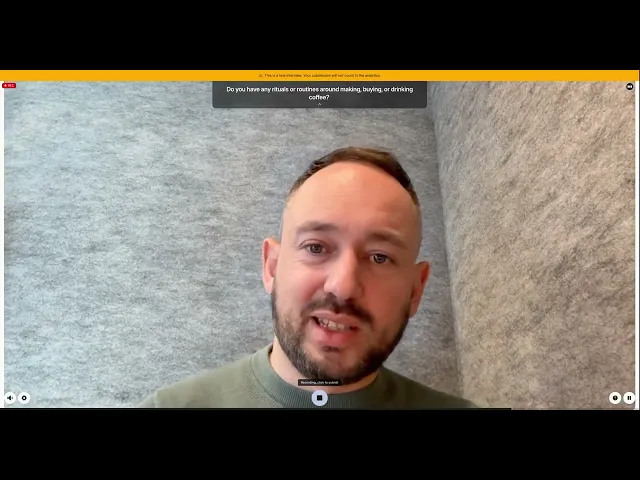
AI-moderated interviews use an AI interviewer to ask participants questions and adapt the conversation based on their answers. These follow-up questions can help produce deeper insights by exploring unexpected points as they come up or clarifying unclear responses.
Because the interviews are recorded, stakeholders can trace each finding back to the person who provided the evidence through video clips and transcripts. For enterprise research, this creates a stronger basis for decisions.
See how an AI-moderated interview works in practice:
2. Synthetic proxy research and digital twins
Synthetic personas are AI-generated profiles built from historical data, like past research or reviews, that simulate how your target audience might answer a question. Digital twins work the same way but get built around a specific customer or account, using that customer's own data to guess how they'd respond.
Consumer insights teams and marketing teams choose these approaches to run market research faster and at lower cost than traditional methods. But because synthetic responses reproduce patterns in the source data, they can’t reveal genuinely new information or tell you whether a hypothesis will hold up among real consumers.
3. Desk research LLMs
Desk research involves using AI to analyze existing data like industry reports, articles, websites, or user files and organizing it into findings. Some tools can also analyze social conversations to understand brand perception and carry out consumer sentiment analysis.
This approach can be useful for gathering information about competitors or catching up on a market before a project starts. A desk research LLM can scan through dozens of sources and flag patterns or emerging trends across them faster than a person doing the same search manually.
However, it can’t produce a new insight. If nobody has written about how a specific group of users feels about a new feature, the LLM has nothing to summarize.
Table: 10 AI tools for market research compared
Compare the best tools at a glance before diving into the full profiles below.
| Tool | Approach | Answers come from real people? | Findings trace back to… | Builds on your past research? | Security and privacy |
|---|---|---|---|---|---|
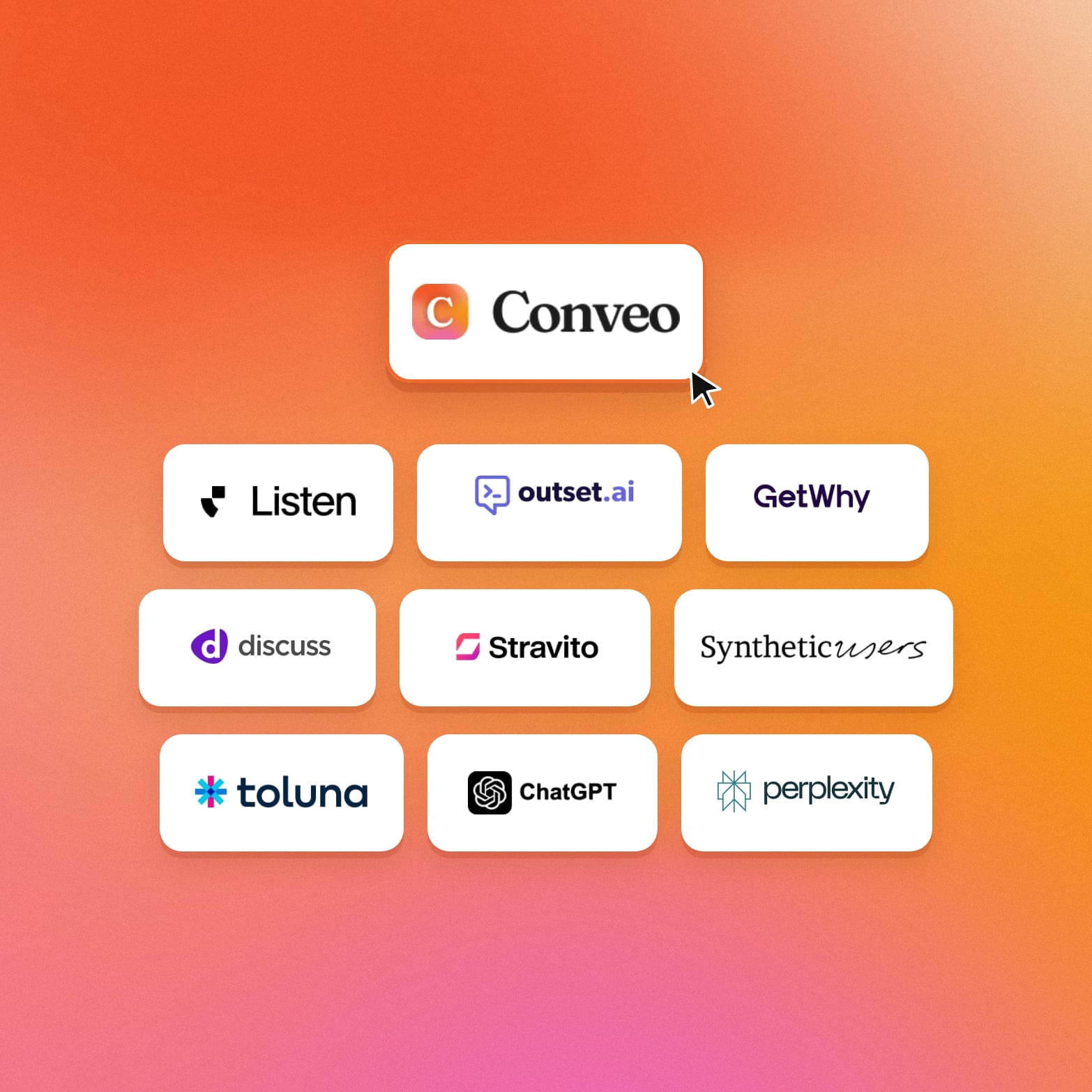
| Conveo | AI-moderated video and voice interviews that build an always-on understanding of consumers | ✓ | Every theme links to the timestamped video clip and quote | Every study lands in a searchable insight library. Conveo StoryLines compares each new wave of research against earlier ones to flag changes. | SOC 2 Type II ✓ GDPR ✓ |
| Listen Labs | Interviews | ✓ | Recording and quote | Search across studies in plain language, with trend tracking over time | SOC 2 Type II ✓ GDPR ✓ |
| Outset | Interviews | ✓ | Recording and quote | Search across studies in plain language | SOC 2 Type II ✓ GDPR ✓ |
| GetWhy | Interviews | ✓ | Recording and quote | Search across studies in plain language | SOC 2 ✓ (Type II not confirmed) GDPR ✓ |
| Discuss | Interviews | ✓ | Recording and quote | Search across studies in plain language | SOC 2 ✓ (Type II not confirmed) GDPR ✓ |
| Stravito | Simulated | ✗ | The company's own research | Searchable library of the company's research | SOC 2 Type II ✓ GDPR ✓ |
| Synthetic Users | Simulated | ✗ | Simulated transcripts | Uploaded files only | SOC 2 Type II ✓ GDPR ✓ |
| Toluna | Simulated | ✗ | Not stated on its pages | Built from Toluna's panel data | SOC 2 Type II not confirmed GDPR ✓ |
| ChatGPT | Published sources | ✗ | Cited web sources | Uploaded files and connected apps | SOC 2 Type II ✓ GDPR ✓ (Business and Enterprise plans) |
| Perplexity | Published sources | ✗ | Cited web sources | Searches company files and apps (Enterprise) | SOC 2 Type II ✓ GDPR ✓ (Enterprise plans) |
Detailed platform profiles: 10 best AI tools for market research
The tools in this list are split into the three categories identified earlier. Each profile covers what the tool does, its strengths and limitations, and who it's built for, so you can create the right shortlist for your team.
AI-moderated interview platforms
AI-moderated video interviews involve real people answering questions in their own words while an AI research assistant follows up based on their responses. Findings can be traced back to the original interview, so teams can see the evidence behind the conclusions. The AI handles repetitive research tasks like transcription and first-pass coding, so researchers can spend their time on deeper analysis.
1. Conveo
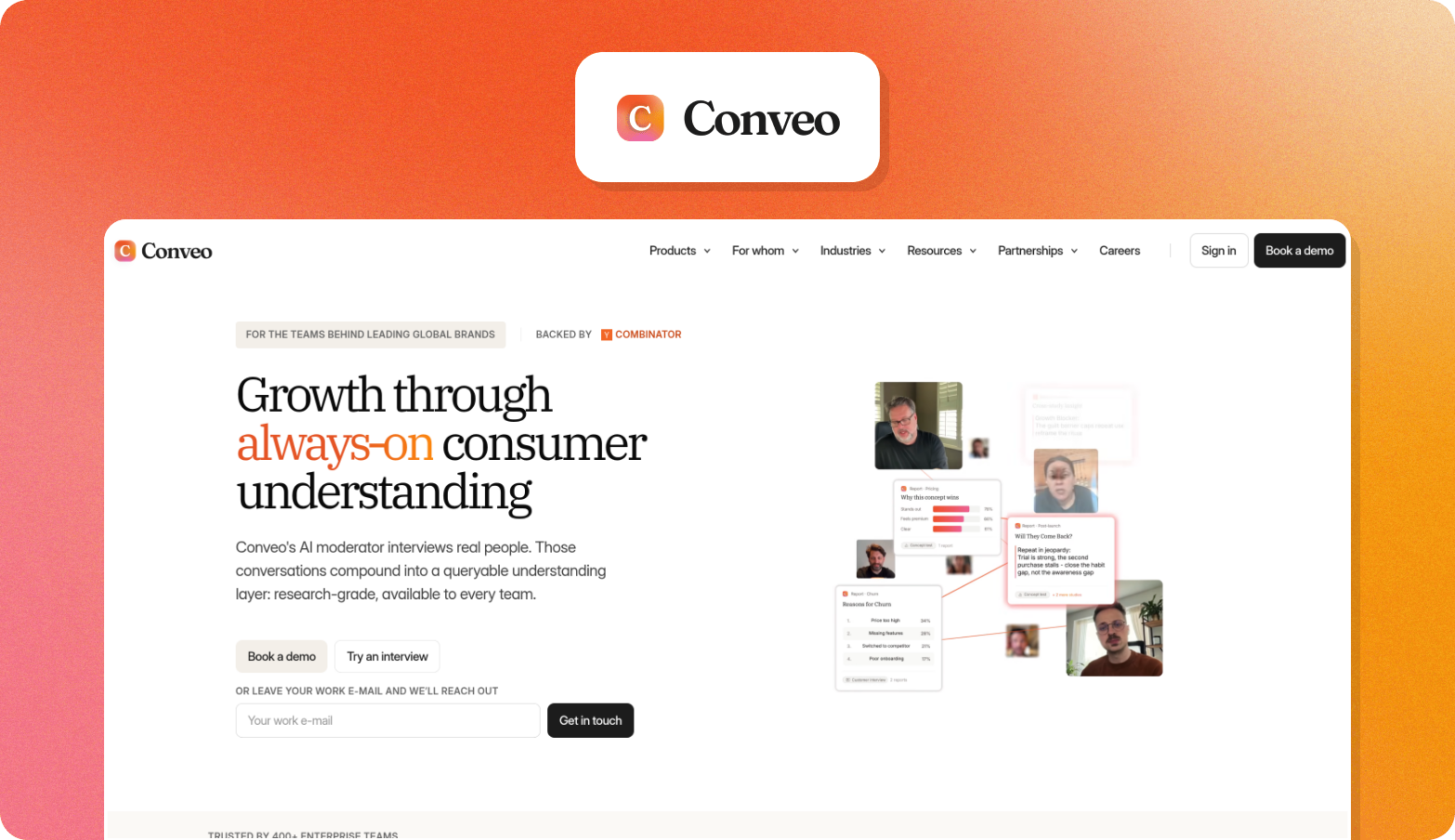
Conveo is Consumer Understanding Infrastructure that runs AI-moderated video interviews with real participants across 50+ languages. Participants come through Conveo's integrated panel network of eight providers or from a team's own contact lists.
Strengths
Screener questions qualify participants before the interview starts, including AI screening of open-text answers, and every session is recorded, so each finding traces back to someone who took part.
Conveo’s AI research assistant asks follow-up questions when an answer is vague or leaves a gap, building on what the participant said earlier, and researchers can inspect and correct the analysis before it reaches a report.
Every theme links back to the participants behind it, with the timestamped video clip and quote, so stakeholders can check the evidence themselves.
Every study lands in Conveo’s searchable insight library, and Conveo counts how many participants raised an issue, tracing each count back to the quotes behind it.
With Conveo StoryLines, research runs in waves, and each wave is compared against earlier ones to surface shifts and emerging themes.
Conveo is SOC 2 Type II certified and GDPR compliant, with EU hosting in Belgium.
Limitations
Conveo is built for teams running new primary research. It can analyze interview recordings you upload, but teams that mainly need to analyze published reports or social conversations will still need a complementary tool.
Best for
Insights and CMI teams at consumer brands that are accountable for research quality and need stakeholder-verifiable evidence that arrives in time to influence decisions. Enterprise insights teams at Google, Unilever, AB InBev, Kellanova, General Mills and JDE Peet's use Conveo.
"The pace, responsiveness, and research expertise of the Conveo team, on top of the top AI-moderated qual platform, have been invaluable to us in scaling brand advertising internationally."
Matt Harris, Research & Insights Lead, EMEA, Canva
2. Listen Labs
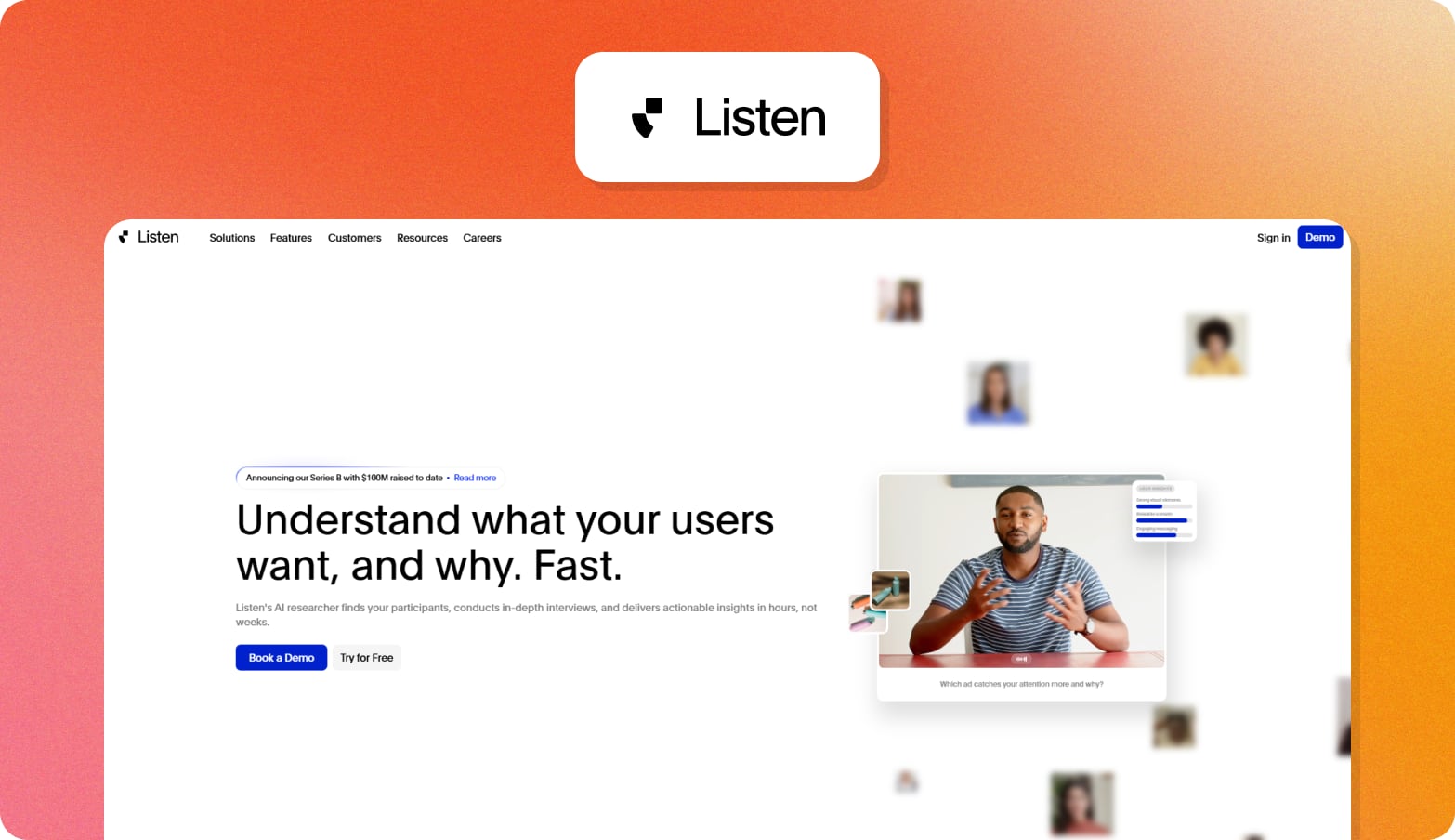
Listen Labs focuses on using AI-moderated interviews to test concepts, brands, and creative ideas with real participants. Its market research offering is particularly geared toward understanding how audiences respond to ideas and identifying the reasons behind those reactions.
Strengths
Quality Guard monitors every interview in real time, flagging rushed and scripted responses as they happen.
Research Agent links each insight to quotes and timestamped clips, and Mission Control supports natural-language queries across studies.
Listen Labs is SOC 2 Type II certified and GDPR compliant.
Limitations
It's built for teams that want to run research without a dedicated research function, so established insights teams with their own methodology may find it less tailored.
Best for
Consumer insights and market research teams without a large in-house insights function that need high-volume qualitative research with recruitment built in.
3. Outset
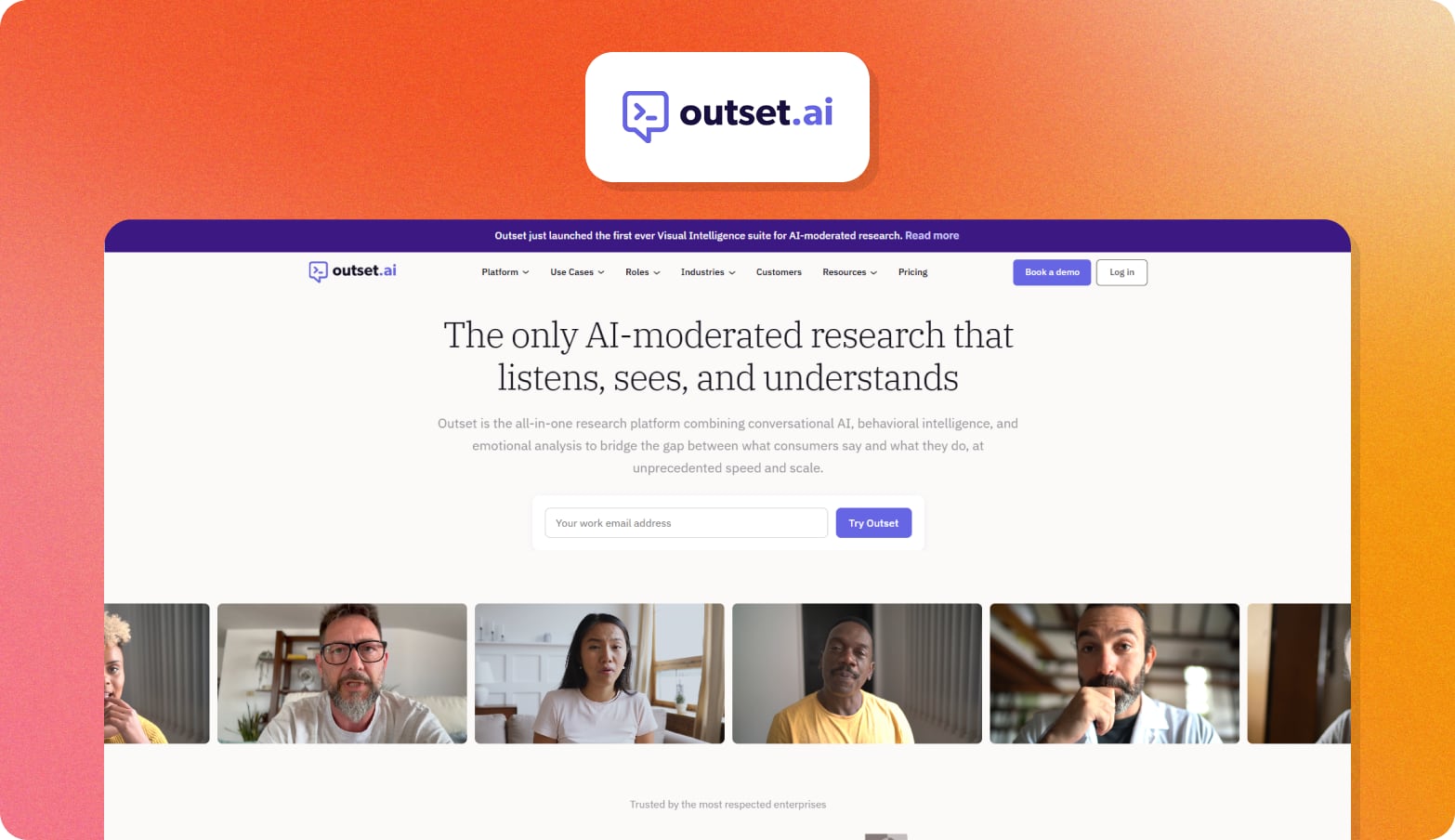
Outset combines AI-moderated interviews with participant recruitment and analysis for qualitative market research. It supports research across the customer journey, from early discovery and concept testing through to understanding customer experiences.
Strengths
An AI Guide Companion drafts the discussion guide from the research goals, with a live preview and quality checks before launch.
Recruitment runs through Prolific and User Interviews, and an AI fraud agent screens sessions in real time.
Themes trace back to participant quotes and video clips.
Outset is SOC 2 Type II certified and GDPR compliant.
Limitations
Outset runs on Microsoft Azure but doesn’t publicly state a hosting region, so EU hosting isn’t confirmed.
Best for
Product, UX and market research teams running high-volume discovery and concept studies.
4. GetWhy
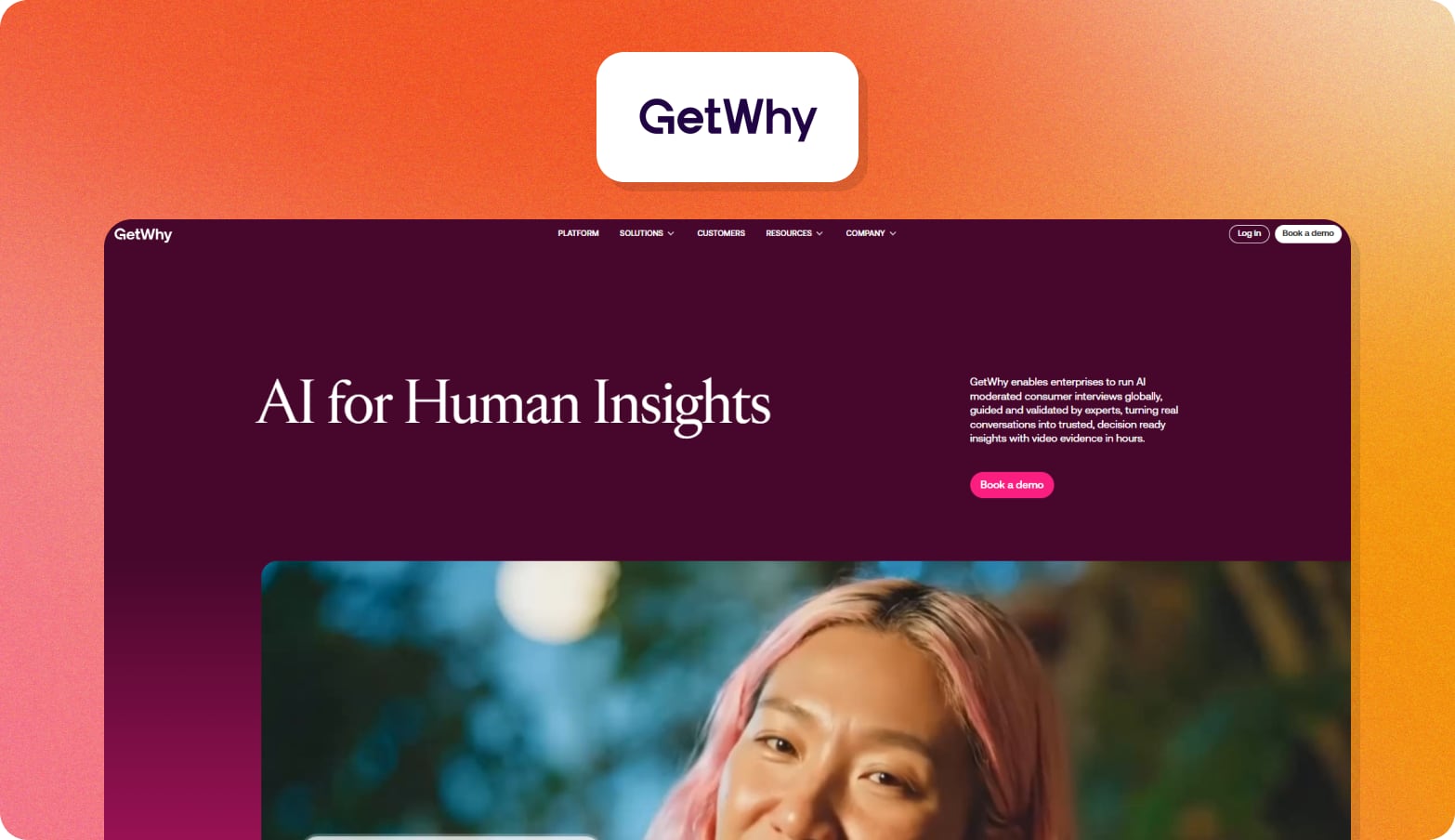
GetWhy runs AI-moderated video interviews with real participants, with the option to brief GetWhy’s research team for full-service delivery.
Strengths
A 17-criteria quality framework scores every interview before it is included in the synthesis. Interviews that fail moderation checks are re-run with a new participant.
Fraud detection runs before, during, and after each interview, including face detection and face matching.
Research Agent answers questions across studies in plain language, with sources shown.
GetWhy is SOC 2 certified and GDPR compliant, with EU hosting.
Limitations
GetWhy’s trust center lists SOC 2 but doesn’t state whether it’s Type I or Type II, so procurement teams may need to request the report.
Best for
CPG, FMCG, and retail insights teams running concept research or creative testing, with the option of a full-service research team.
5. Discuss
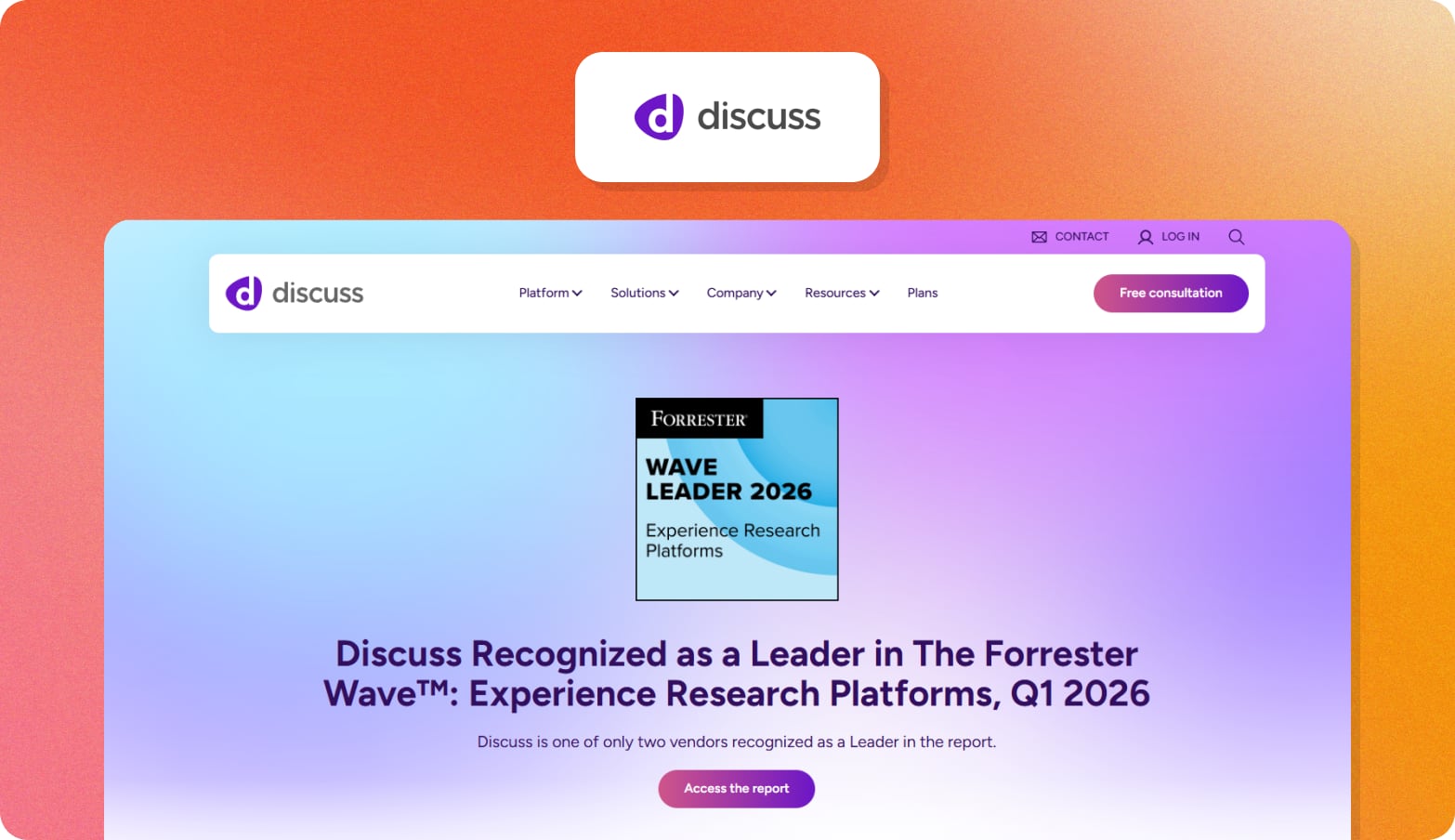
Discuss combines AI-led and human-led qualitative interviews, with teams able to switch between the two within the same platform.
Strengths
Teams can turn any quote into a timestamped video clip linked to the original interview.
Discuss Intelligence lets teams search past research in natural language, with answers linked back to the original quotes and video.
Transcription supports more than 80 languages, although accuracy varies by language tier.
Limitations
Data is hosted in Virginia, USA.
Translation only runs from the session language into English.
Best for
Enterprise insights teams running qualitative research across multiple markets who want the option to use human moderation when needed.
Synthetic research tools
Synthetic research tools simulate how a group of consumers might answer, using machine learning models trained to identify consumer behavior patterns from existing data.
6. Stravito
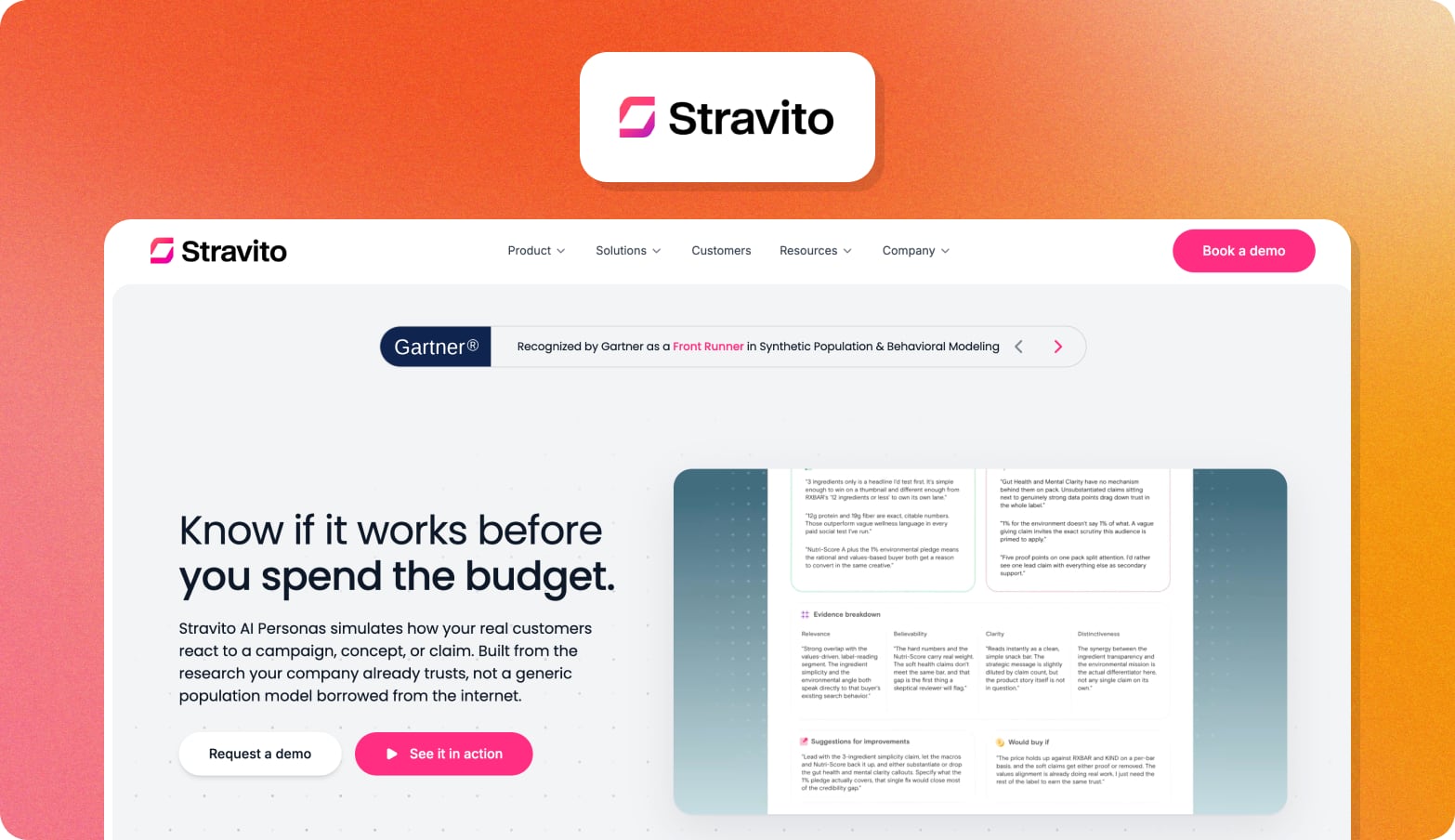
Stravito is an insights knowledge platform whose AI Personas feature builds always-on consumer profiles from a company's own research.
Strengths
Teams can see the research behind each persona and fine-tune it, so the personas reflect the consumer behavior and purchasing habits their own studies found.
Ideas can be shared in any format, from a rough outline to a finished packaging design, and a virtual focus group shows how different segments react side by side.
Each idea gets a fit rating, and the results export to PowerPoint, Excel or PDF.
Stravito is SOC 2 Type II certified and GDPR compliant.
Limitations
Answers come from AI market research personas, so no real participant stands behind them.
Best for
Insights and marketing teams that already hold a large body of their own research and want to query it through consumer profiles.
7. Synthetic Users
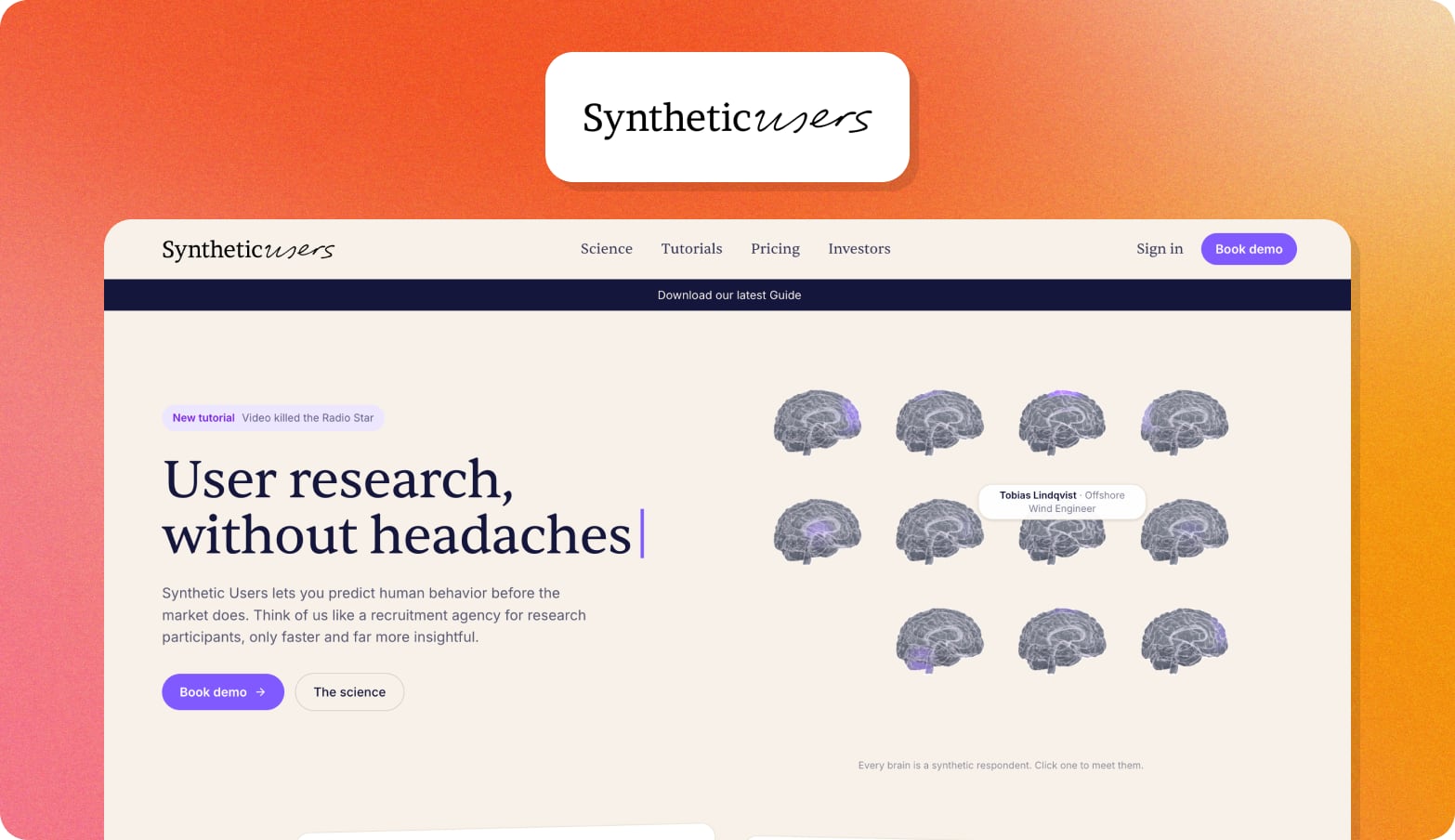
Synthetic Users lets teams describe a target audience in as much detail as they need, such as profession and behavior, and then interviews AI-simulated participants that match it.
Strengths
Each simulated participant gets its own personality profile and keeps track of earlier answers throughout an interview.
Teams can add their own proprietary data, such as past interview transcripts and support tickets, to ground the participants, and it doesn't train shared models on that data.
Reports turn the simulated interviews into qualitative insights with key themes and recommendations, and teams can read the individual transcripts and ask follow-up questions.
Synthetic Users is SOC 2 Type II certified and offers a Data Processing Addendum for data protection.
Limitations
Every participant is simulated, so there's no real person behind an answer, and Synthetic Users itself says real user research stays essential for validation.
Best for
UX, product, and marketing teams that want simulated interview responses on demand.
8. Toluna
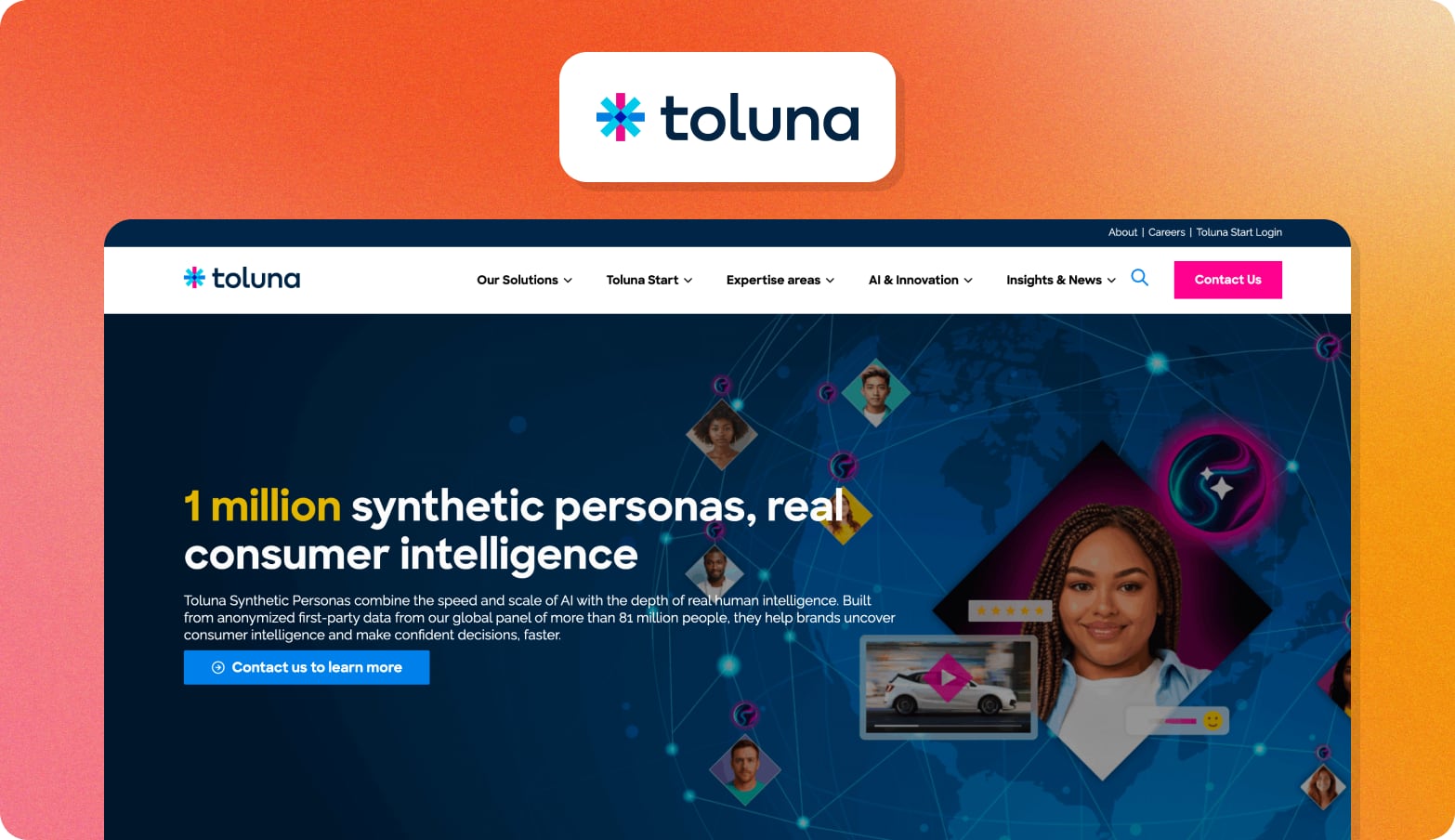
Toluna is a market research company whose Synthetic Personas are simulated respondents built from anonymized data about people on its own consumer panel.
Strengths
Because the personas draw on data about real panel members, they're designed to reflect real demographic characteristics and consumer behavior.
They can react to a wide range of test materials, from written claims to video ads, across multiple markets and languages.
Toluna's ad testing product combines the personas' reactions with validated benchmarks, which gives teams a reference point for judging the results.
Limitations
Because the answers come from simulated respondents, no real participant can be verified, and no recording exists to review.
Best for
Insights teams that pre-test new ad concepts or formats and have no past results of their own to compare against.
Desk research AI tools
Desk research AI tools use natural language processing to work through existing information like public survey data, research papers, or emerging market trend reports. Because they read many data sources simultaneously, they can help teams investigate key trends in a market or research a competitor without collecting new responses from consumers.
9. ChatGPT
ChatGPT can be used for AI market research through its Deep Research feature, which searches and analyzes information from multiple sources into a report. For market research teams, that makes it useful for investigating questions where the relevant evidence already exists online or in internal business data.
Strengths
Deep Research produces cited reports, giving teams a way to check the evidence behind its findings.
Teams can restrict research to specific websites or connect supported apps and data sources, giving them more control over what information the research uses.
ChatGPT can also act as an AI data analyst: teams upload a spreadsheet, and it runs the analysis and turns the results into charts.
ChatGPT business products have SOC 2 Type II coverage, with enterprise controls for access and data handling.
Limitations
OpenAI says ChatGPT can produce incorrect or misleading information, including fabricated citations or references, so important findings still need to be checked against the original sources.
Deep Research works from existing sources, so it can’t provide the participant-level evidence that primary research produces.
Best for
Teams on a budget that need to investigate a market research question using existing online or internal sources.
10. Perplexity
Perplexity is a question-answering tool built around cited answers from real-time search results. Its Deep Research mode can be used for competitive intelligence, such as comparing how competitors position themselves or checking competitor pricing.
Strengths
Deep Research runs multiple searches, reads a large number of sources, and produces a report that you can export or share.
Enterprise plans add premium sources such as PitchBook and Statista, as well as search across the web, files, and connected apps.
Enterprise plans are SOC 2 Type II and GDPR compliant and support SSO.
Limitations
Deep Research works from web sources and documents, so it doesn’t produce new evidence from participants.
Some enterprise controls, including audit logs and data retention settings, are limited to higher-tier plans or require a custom contract.
Best for
Teams that want cited answers and report generation based on external sources with the option to search internal files and apps.
How to run an AI market research tool pilot project
Use a real research question to test whether the platform can generate actionable insights your team can verify against participant evidence. Set clear criteria before the pilot begins, then assess the research at each stage to make sure the tool is a good fit. Here’s what that could look like:
| Pilot stage | What to do | What to check |
|---|---|---|
| Choose the research question | Pick a research question your team would genuinely investigate. Define what you need to learn and what a useful answer would look like before starting the study. | Does the platform generate evidence that answers the research question, including the reasons behind participant responses? |
| Set up the study | Define your target audience, screener, and discussion guide. Review how the AI handles follow-up questions when participants give unclear or incomplete answers. | Does the AI adapt its questions to the participant's answers? Does the discussion go beyond the initial questions when there is something worth exploring? |
| Recruit participants | Recruit people who match the audience you would normally research. If the platform provides recruitment, review how participants are sourced and verified. | Can you confirm that participants meet your screening criteria? Is there enough information about the recruitment and verification process to assess the sample? |
| Review the interviews | Review a sample of completed interviews before assessing the final findings. Look at the participant responses themselves, including the video and transcript where available. | Are participants giving detailed answers? Does the AI follow up appropriately? Are the interviews producing evidence that could support the decision the research is intended to inform? |
| Trace the findings | Review the synthesis against the original research question. Select several important findings and work backward through the analysis to the participant evidence. | Can you trace each finding through the theme or code to the participant response, transcript, and timestamped video clip? Can a market researcher or stakeholder verify how the finding was reached? |
| Assess the results | Compare what the pilot produced with the success criteria defined at the start. Record any limitations and consider whether they affect the intended use case. | Does the platform provide the interview depth, methodological controls, and source-level evidence your team requires? |
A pilot should give your team enough evidence to decide whether the platform can support research that needs to withstand scrutiny after the study is complete.
Why enterprise insights teams shortlist Conveo as the best AI for market research and analysis
An insight that arrives after the decision has closed, or can't be defended once someone questions it, carries no value. The best AI for market research and analysis for an enterprise insights team is the one whose evidence survives that scrutiny and keeps building with every study.
Conveo is Consumer Understanding Infrastructure built around that standard. It runs AI-moderated interviews with real participants, connects each theme to the video and quote behind it, and carries what one study learns into the next. Here's how that shows up for your team:
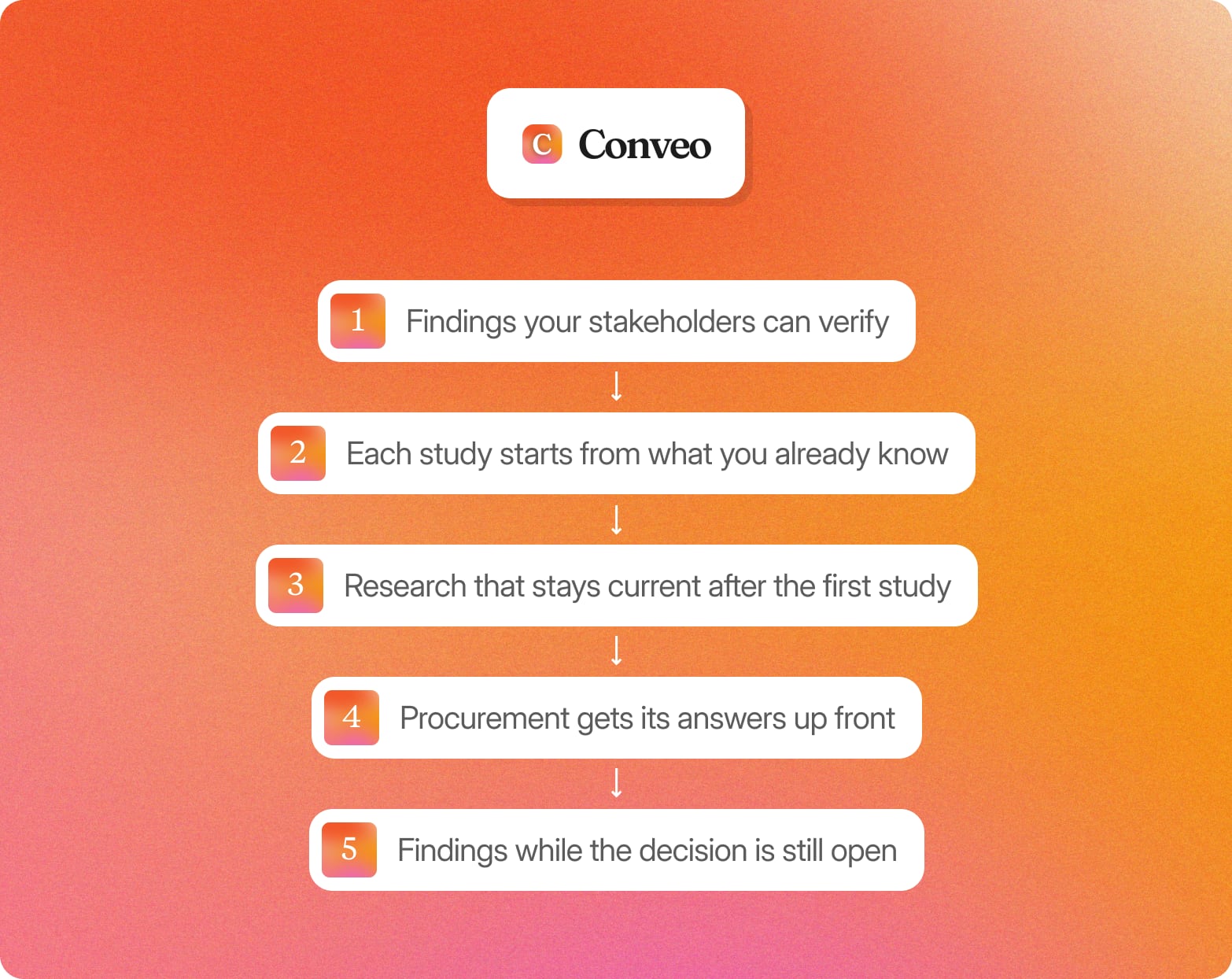
Findings your stakeholders can verify. When someone questions a finding, your team can open the clip and quote behind it.
Each study starts from what you already know. Your team checks what earlier research covers before commissioning new work, and Conveo automates repetitive research tasks like counting mentions.
Research that stays current after the first study. With Conveo StoryLines, continuous programs run in waves, so your team sees how consumer views shift from one wave to the next.
Procurement gets its answers up front. Security reviews start from SOC 2 Type II, GDPR compliance and EU hosting in Belgium, with SSO and data deletion on request.
Findings while the decision is still open. Researchers can investigate consumer insight questions as they arise, so results arrive while the people deciding can still act on them.
Frequently asked questions
What key features should you look for in an AI market research tool?
Look for four things: real participants whose interviews are recorded and can be checked, that findings from earlier studies are kept in a searchable library, SOC 2 Type II certification and GDPR compliance, and a clear link from every finding back to its source, whether that's a video clip, a quote, or a cited document. Check whether the tool generates actionable insights and a finished report automatically, or leaves your team to build one from raw output. Ask whether the vendor tests participants for fraud, how it handles data quality, and whether it acts as a research partner with its own analysts, or expects your team to bring that expertise.
Will AI provide the same depth as human moderators?
It can, when AI adapts its questions to each participant's answers. Rather than following the same script with everyone, it can ask follow-up questions when a response needs more detail. For research teams, the important part is being able to trace a finding back to a real participant and the evidence they provided. The analysis should also be easy to review.
How do I ensure methodology standards with AI-generated findings?
Start by checking how the research is conducted. Does the AI ask useful follow-up questions? How does the platform reduce bias? How are participants verified? You should also be able to review the AI's findings and see the evidence behind them. AI can minimize human error and bias in data analysis, but these checks are how you confirm it has.
Can we run a compliant pilot without triggering a lengthy procurement review?
Yes, if you check the main requirements before the pilot begins. Look for SOC 2 Type II certification, GDPR compliance, and EU hosting if you have EU data residency requirements. You should also check how the platform manages access and deletes PII. A structured pilot can then test the research workflow while giving procurement and security teams the information they need.
What are the best free AI tools for market research?
Free AI tools for market research, including ChatGPT and Perplexity, can help with desk research, trend analysis, and competitive analysis. They are less suitable for primary consumer research because they do not verify participants or provide the governance controls enterprises may require.
How do AI-moderated interview platforms compare on rigor and governance?
On rigor, interview platforms that use real, verified participants and let an AI research assistant follow up when an answer is vague or leaves a gap produce stronger evidence than approaches with no participant. Synthetic research generates responses from a model, so there's no participant behind an answer to check, and desk research tools summarize what's already published, so their rigor comes down to how clearly they cite where a claim came from rather than to interviewing anyone.

About the author
Dieter De Mesmaeker
Co-Founder & CEO
Dieter is CEO and co-founder of Conveo. Before starting the company, he founded DataCamp and scaled it into one of the leading edtech platforms in the world.
More by Dieter →Qualitative insights at the speed of your business.
Conveo runs AI-moderated video interviews and structures everything they say.